
Posted on Leave a comment

Fuelab Offers Microscopic Fuel Filtration With Big Flow Capabilities

Fuel filters for high-performance or all-out racing have a greater duty than many consider. We’ve seen scores of racers using a strainer-style filter within a funnel at the track and calling that “good enough.” Today’s fuel pumps, electronic injectors, carburetors, sensors, and more continue to tighten their tolerances to achieve a better fuel feed to meet higher horsepower demands, and fuel filters need to step up their game to protect these components.
Flow Criteria for Filters

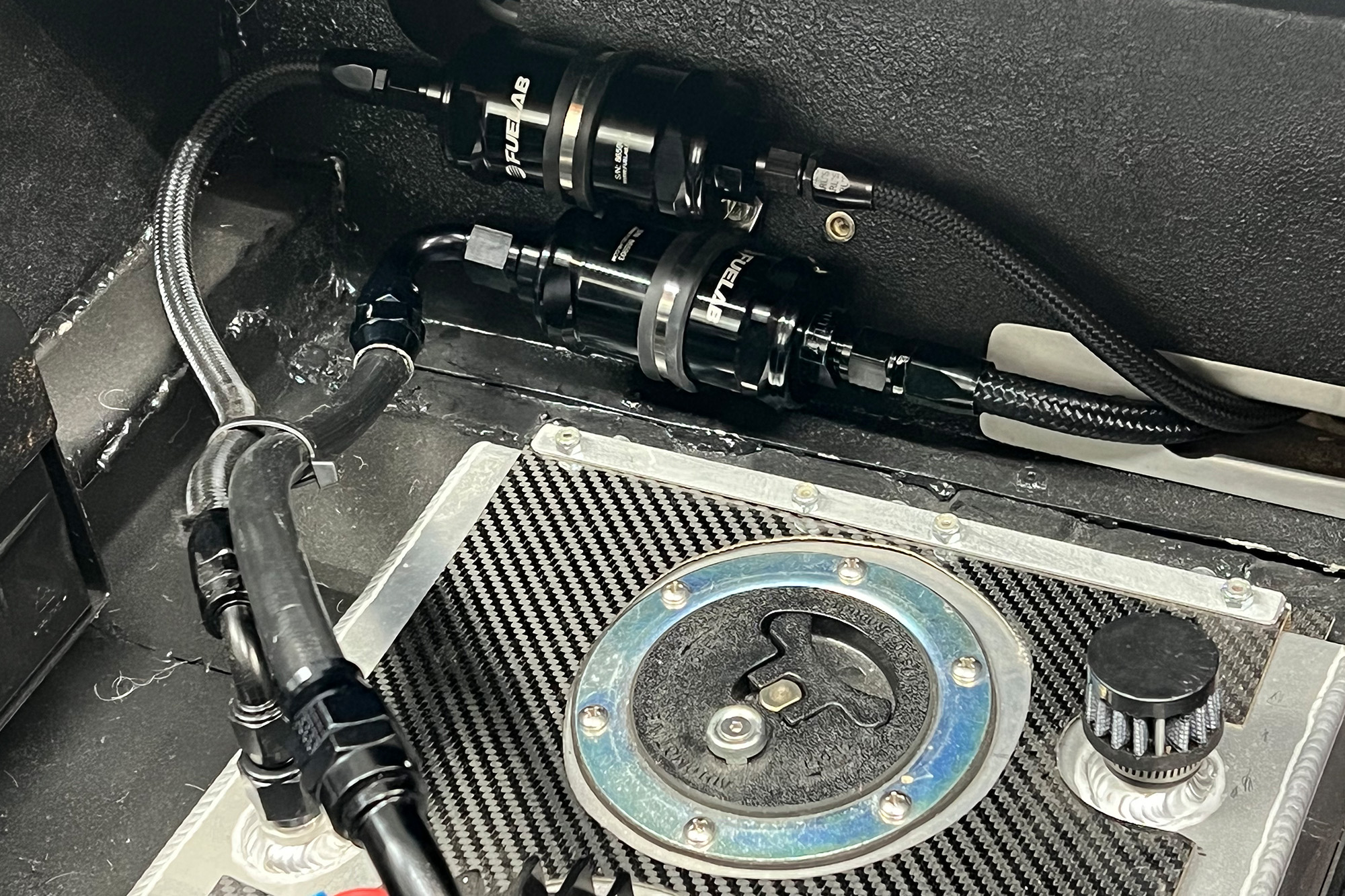
The overall flow of a fuel system is only as good as the combination of components and how they either feed or circulate your fuel supply. We outfitted the Project Rover Camaro with a pair of Fuelab in-line filters for our E85-fueled, electronic fuel injection system. Brian Paitz, President at Fuelab, provided some insight into the proper filtration of a racing or extreme performance fuel system.

“The one thing that I can’t stress enough when you’re setting up a fuel system is that you look at it as an entire system,” Paitz begins. “It goes beyond just a pump, it goes beyond the regulator — it also has a lot to do with your filters.”

Filter Sizing and Location

The success of feeding your engine for its peak fuel demands will depend greatly on two critical locations in your filtration: filtering the fuel before and after the fuel pump is the most effective layout.  These two filtering points ensure your fuel system is optimized for flow — yet protected.
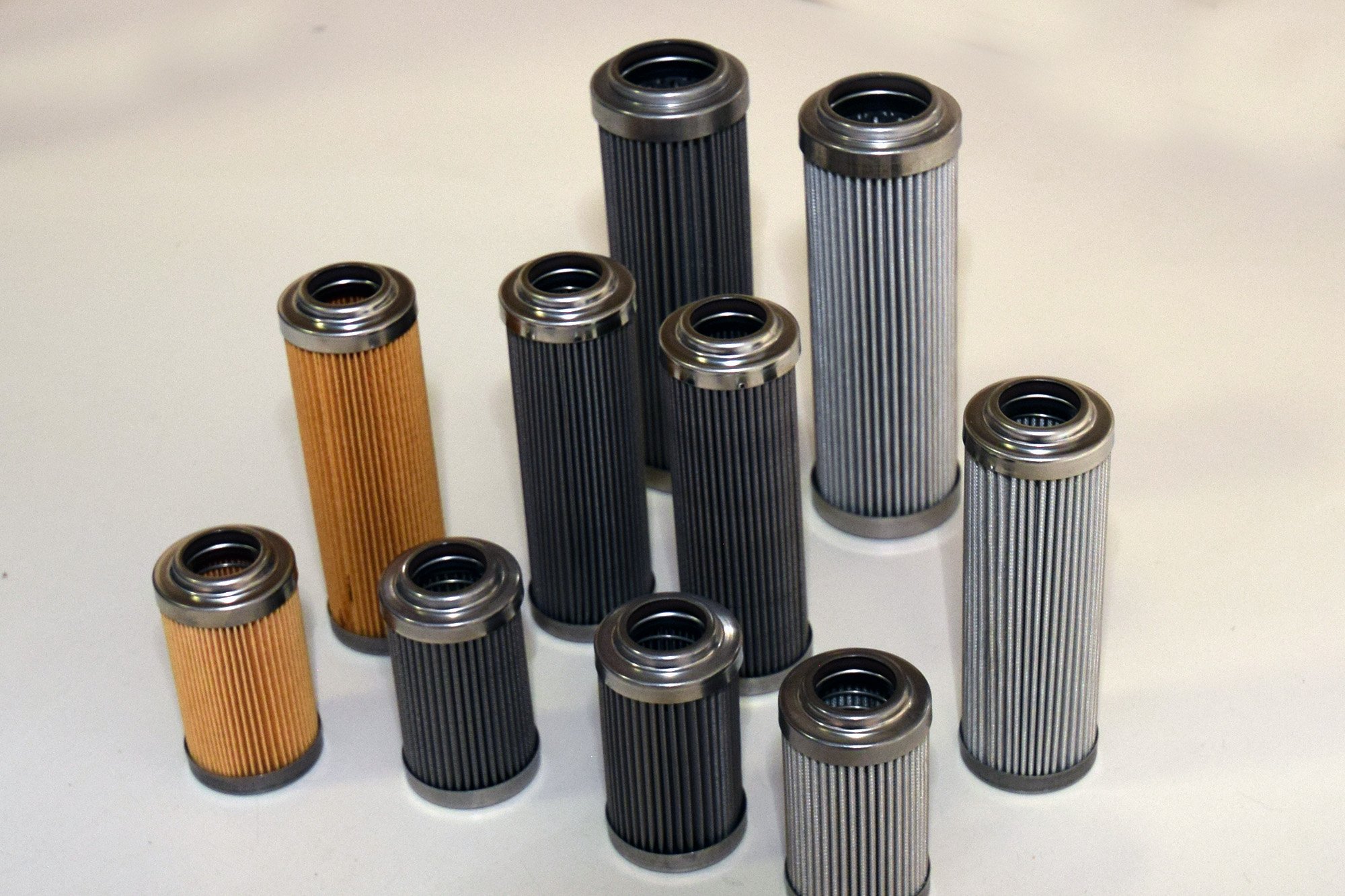
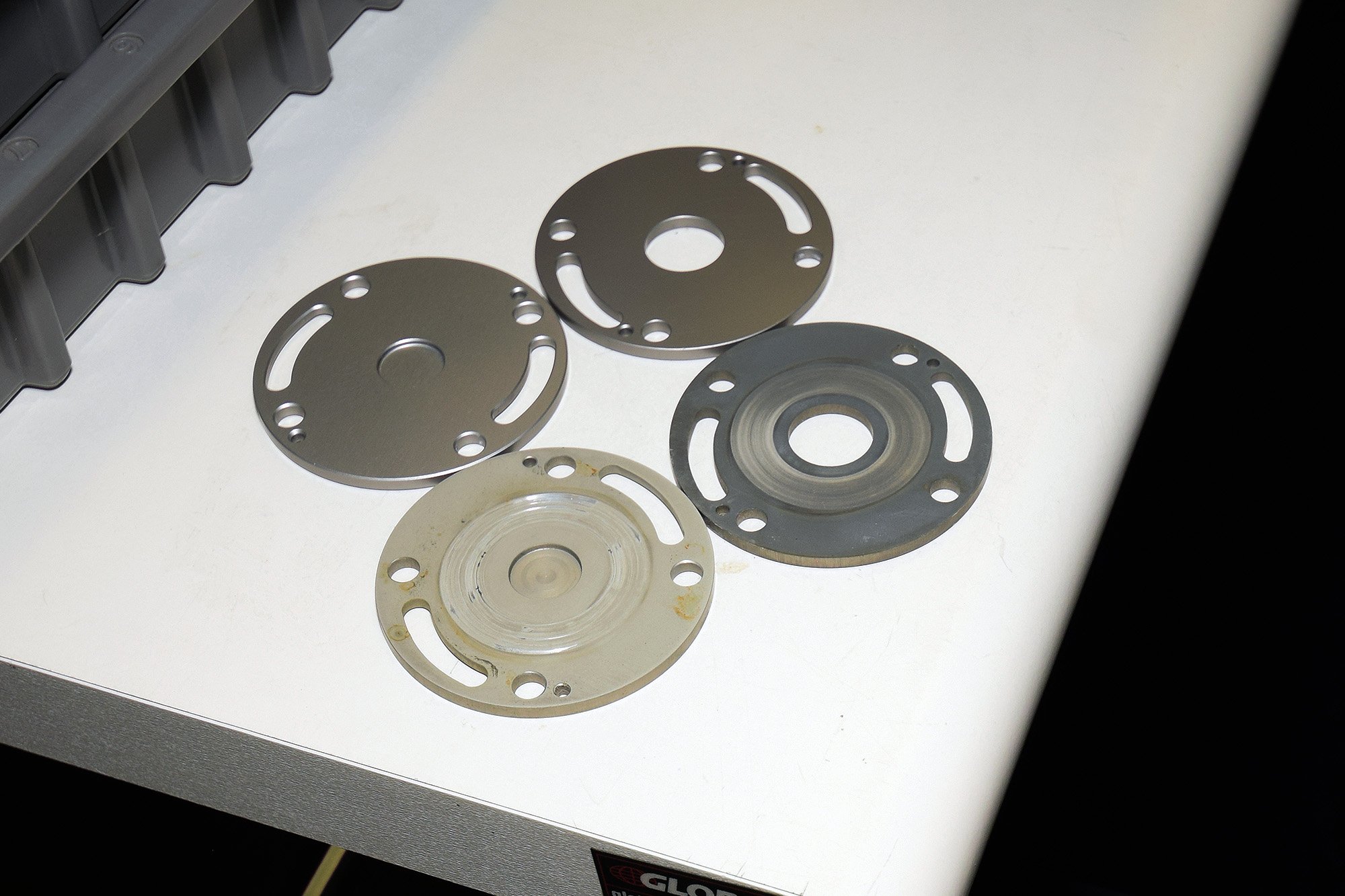
Fuelab offers a variety of filter choices in paper/cellulose, fiberglass, and stainless steel mesh filter media that best apply to your filter size and fuel type. While in their shop, they showed two scored fuel pump plates alongside originals that demonstrated the result of not using proper filters before and after your fuel pump.

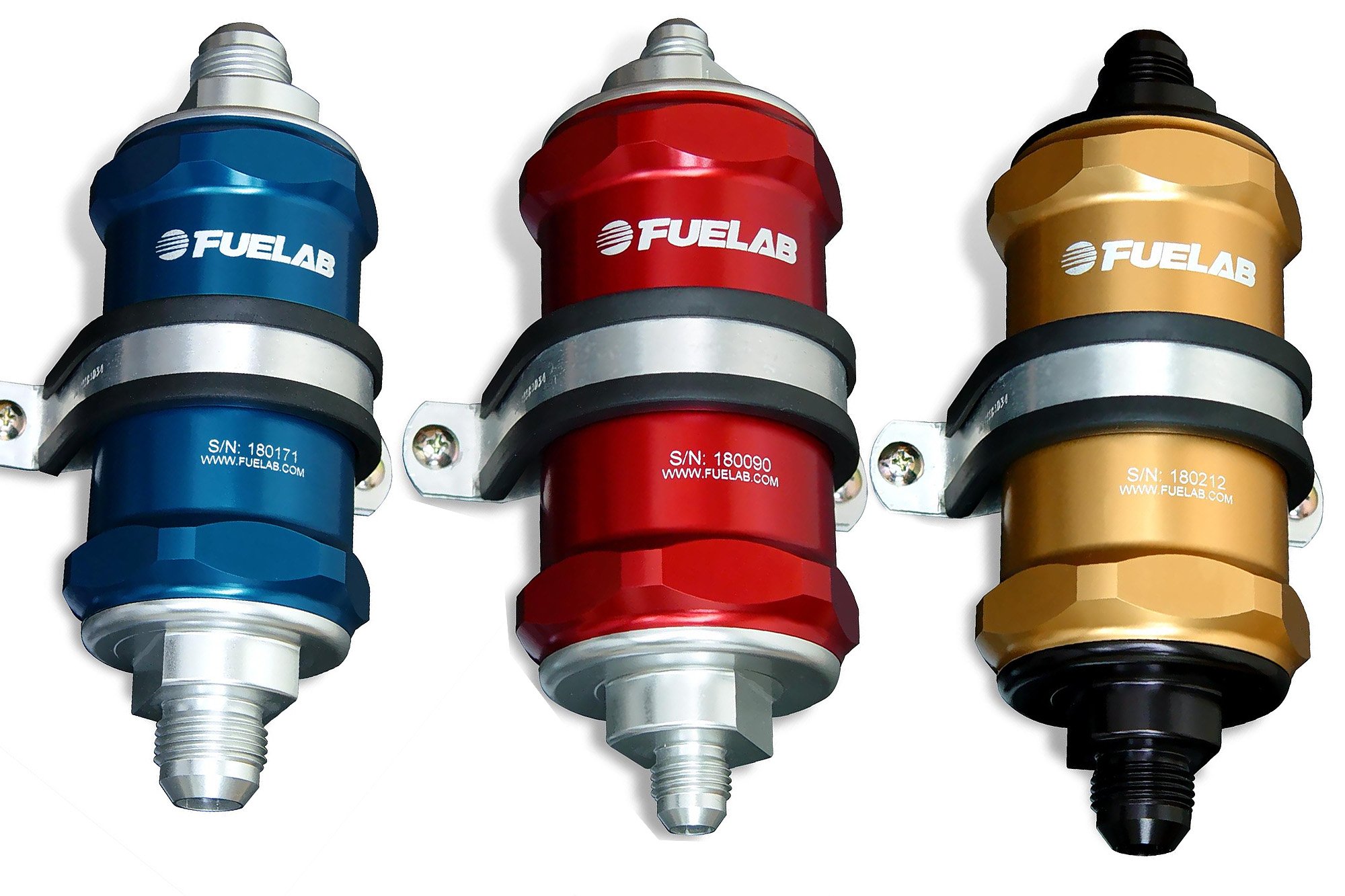
Fundamentally, we spec’d out our in-tank fuel pump at 150 gallons per hour (GPH). With that, we researched the Fuelab filter GPH offerings and chose the 818 Series in-line fuel filters, which can handle 200 gph. These feature male 37-degree flared fitting end caps on both ends, and can be ordered with various size combinations across -6AN, -8AN, -10AN, or -12AN male inlets and outlets.

Paitz explains that you must choose filter sizing to prevent pressure drops. “You want to be sure you get a pump filter that can handle the fuel capacity leaving the pump,” he says. “You want to minimize pressure drop across the filter. Blowing 10 gallons per minute through a filter that has a -6AN inlet and outlet is going to create a pressure drop across that filter, potentially losing a couple of pounds of pressure.”

Our EFI system dictated our remaining hose sizes; it calls for a -8AN inlet hose and a -6AN return line. We took advantage of Fuelab’s unlimited combination of AN fittings at the filters’ inlet and outlet ports to plumb a -10AN filter inlet from our pump to a -8AN filter outlet towards our EFI system, and a -6AN filtered return to the tank.

Outside of our selection, Fuelab also offers filters in larger sizes. The 828 Series inline filters are the same diameter as the 818 filters we’re using, but hold a 5-inch-long filtering element compared to the 818 models’ 3-inch-long filter. The 828 Series supports 350 gph of flow.

Their new 868 PRO Series Extreme Flow inline fuel filters have a 10 GPM rating for maximum flow and minimal pressure drop. Wait, GPM? Yes, this filter will flow 10 gallons per minute with -10AN male inlets and outlets and a 5-inch diameter filtering element.

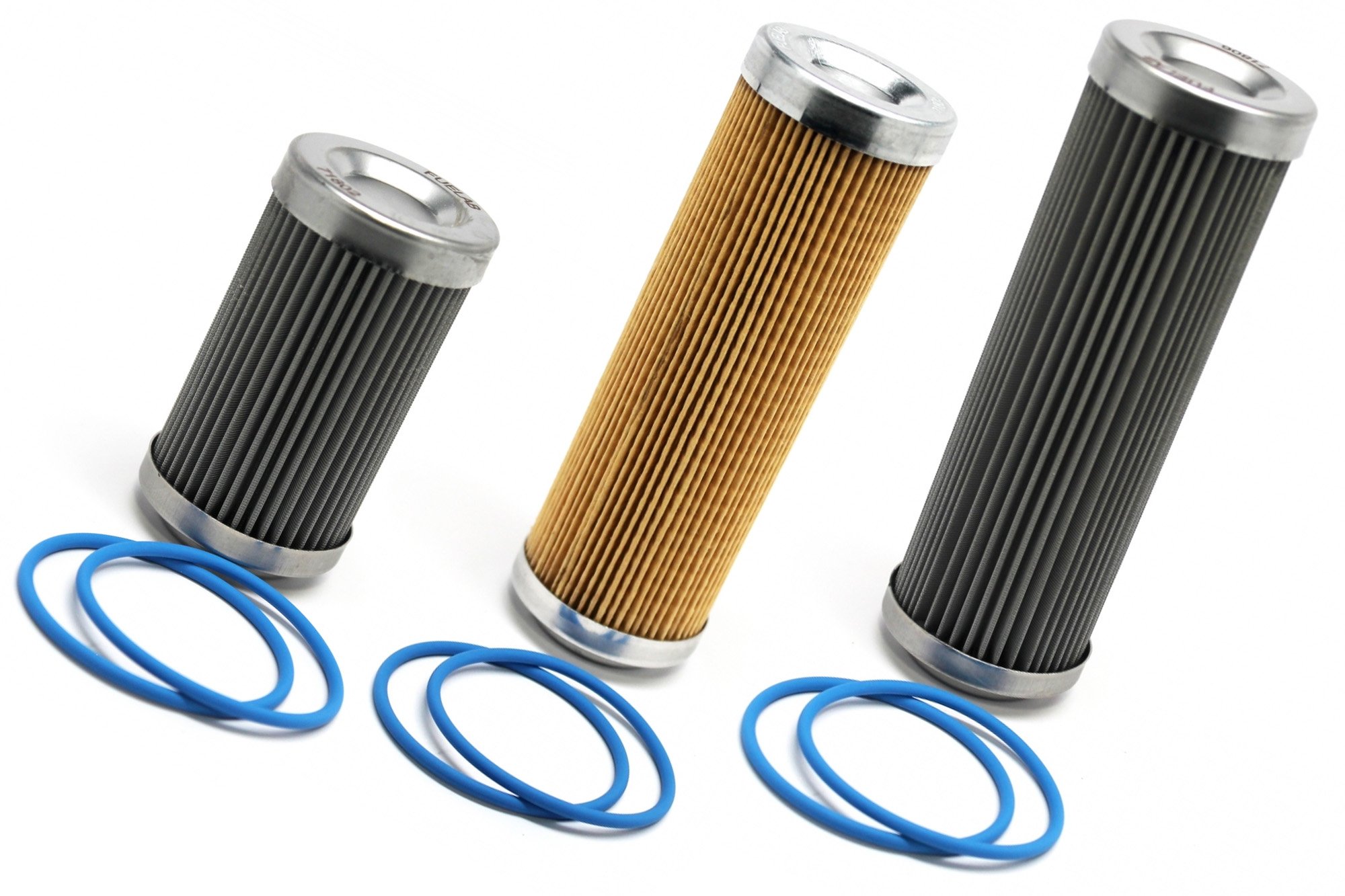
They do put the word “lab” in the company name at Fuelab for a reason: its extensive testing equipment helps to develop the highest internal flow characteristics to prevent low-pressure points within the filters. Their 3-inch fiberglass, 5-inch paper/cellulose, and 5-inch stainless steel filter media are shown.


Filtering Media and Fuel Type

Fuelab offers multiple choices of filter cartridges to insert into your filter cases. “We recommend that you use a filter with the 100-micron rating or finer before any performance type pump,” Paitz explains. “It’s super important to get the properly sized pre-filter before the fuel pump. This stainless filter element should only be used as a pre-filter for fuel pumps — it helps prevent pump cavitation with an extremely low-pressure drop.”

A finer element (lower numerical micron rating) is recommended directly following your fuel pump to protect injectors, carburetors, and other downstream components, such as fuel sensors. There is a variety of filter media choices; the deciding factor is your fuel type used.

A numerical rating describes a filter’s capabilities. For instance, a 100-micron filter will stop a particle as small as 100 microns. Our micro-fiberglass element offers extra protection by eliminating particles down to 6 microns in size. – Brian Paitz, Fuelab


Filter Media Choices

The Fuelab stainless steel filter is available in 40 and 100 micron filtration levels and is compatible with gas, diesel, ethanol, and methanol. In addition, the stainless filter is cleanable and does not necessarily require replacement for maintenance.

“Our 100-micron cellulose paper element is economical, and commonly used as a pre-pump filter element, but can only be used with gasoline and diesel fuels,” Paitz says. “Our most advanced filter is our micro-fiberglass element — it provides extra particle protection with improvements in filter efficiency. This disposable element is compatible with gas, diesel, ethanol, and methanol.”
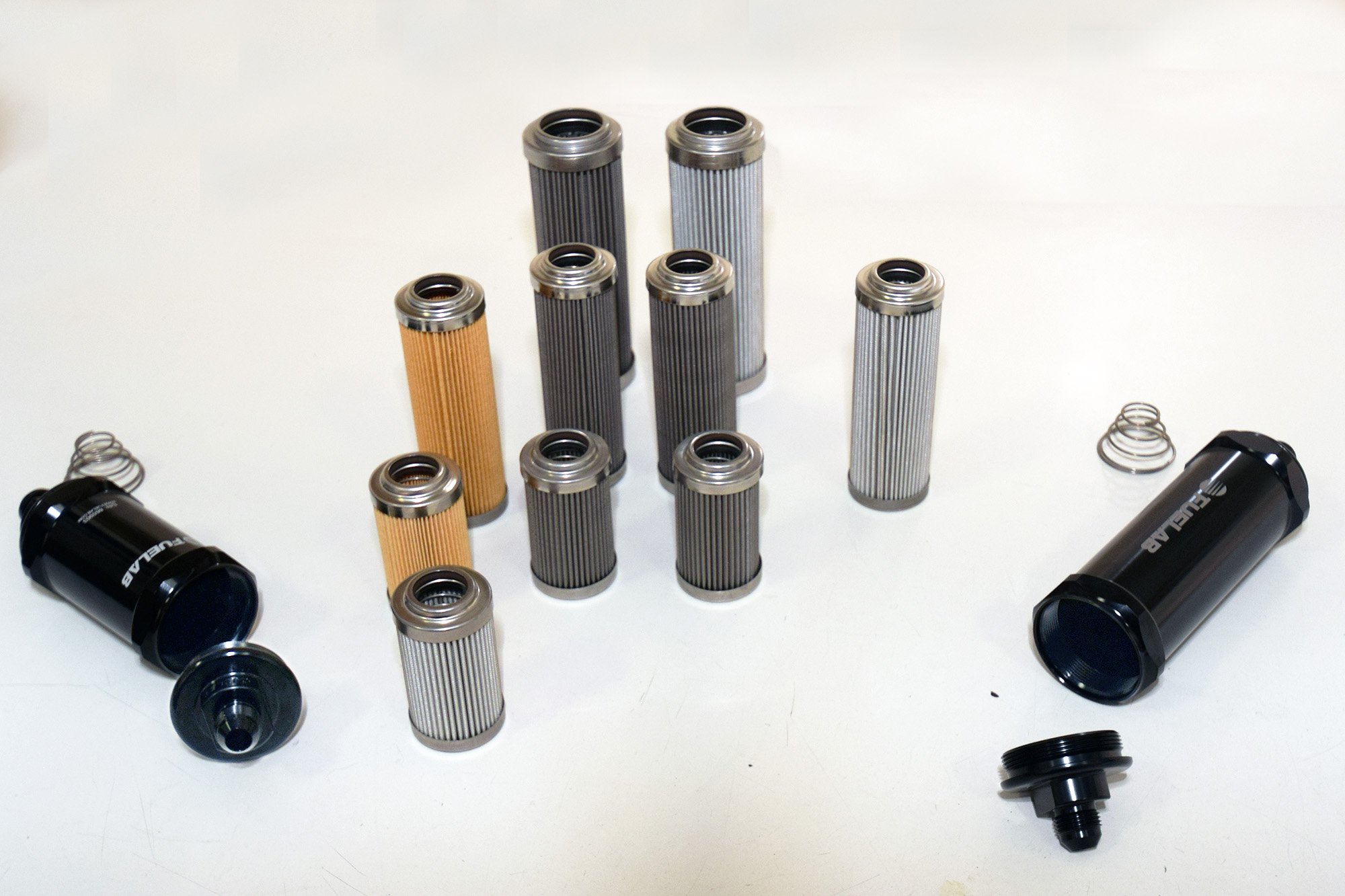
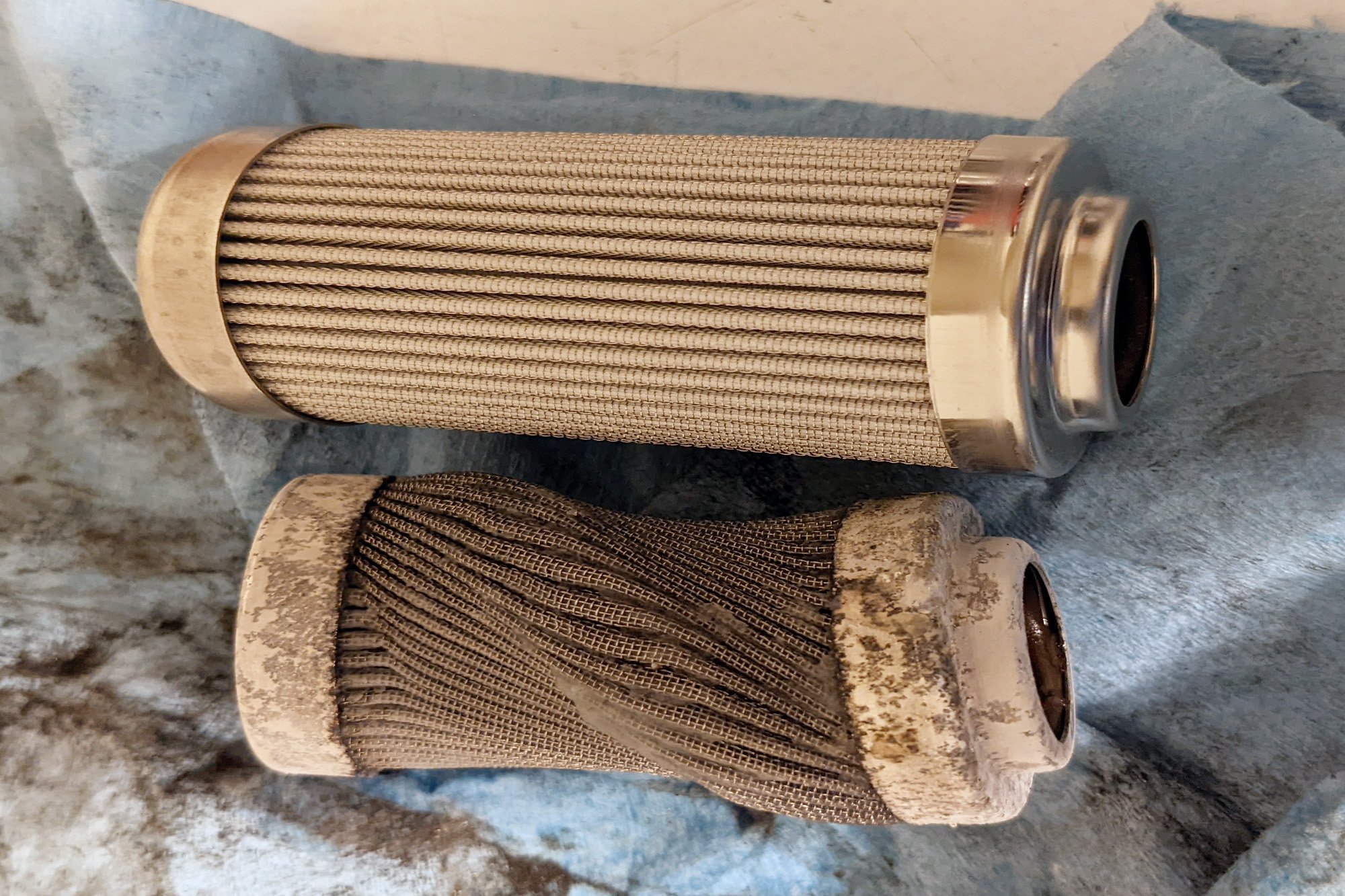
The filter housing offers a threaded cap allowing access to the filter area. Paitz shows us a fiberglass media filter that did its job to filter E85 to the point of collapsing. He told us this customer did not replace his filter for over two years.

Our E85-fueled project Camaro has a recirculating fuel system that uses a return line to the in-tank pump. We installed Fuelab’s stainless-steel 100-micron filter before the tank’s return line inlet and their inline filter with a 6-micron fiberglass element directly following the pump’s output.

One curveball that Paitz cautioned with cellulose/paper filters is the use of oxygenated fuels. Even if you’re racing with gas or diesel, if that fuel is oxygenated, definitely choose the micro-fiberglass option.

If you’re using the stainless-steel screen filters at one or more points, cleaning and reusing these filters is reasonably easy. Scrubbing with carburetor cleaner, a catch pan, and compressed air will do the trick; we go a little further and use a parts-cleaning toothbrush and a small ultrasonic cleaner in our filter maintenance.
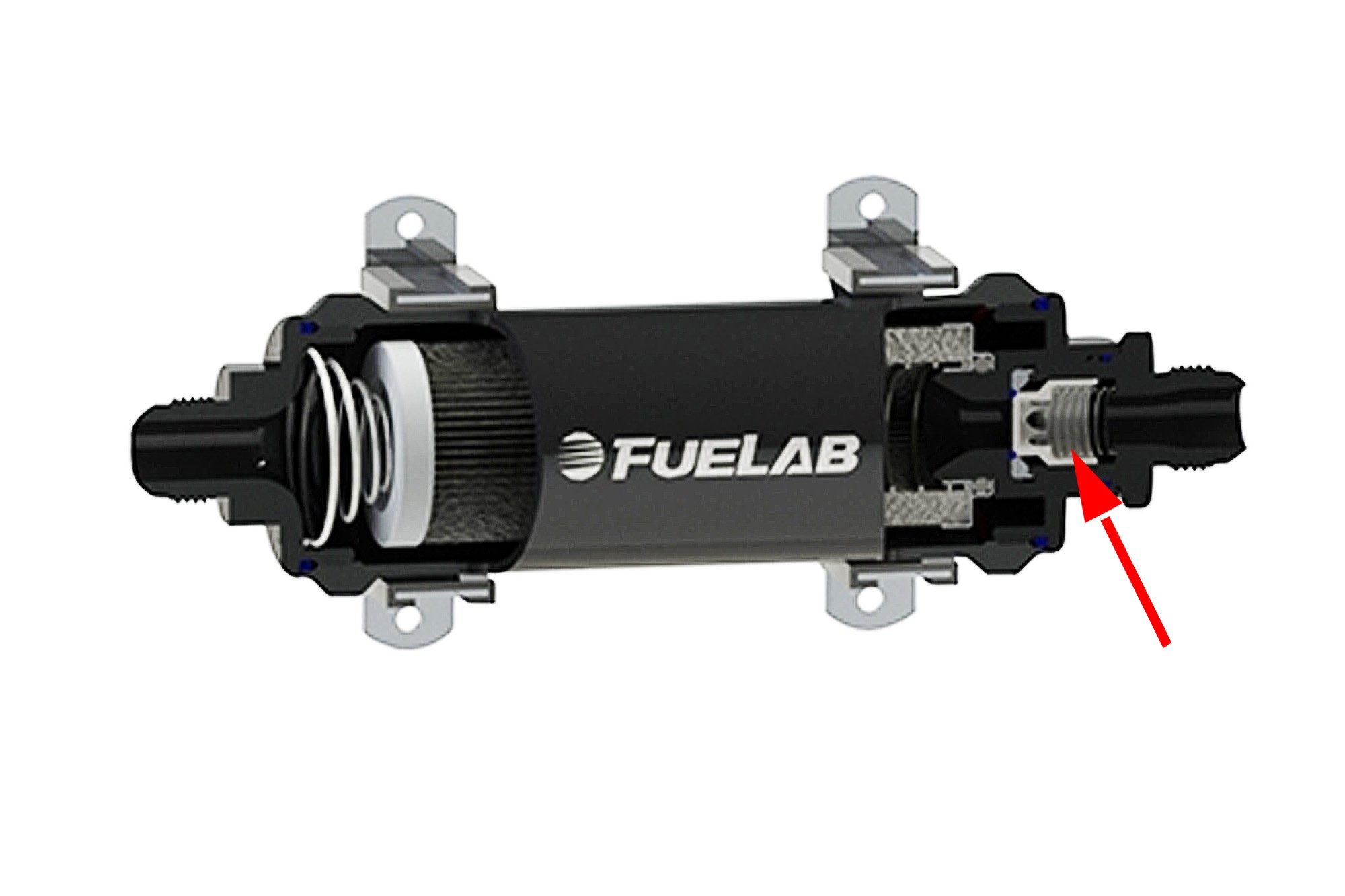

Another option is the check valve (arrow) integrated into the housing. This allows the benefits of your fuel system remaining pressurized when your fuel pump is not running. Their pumps, filters and regulators are anodized per military MIL-A-8625 with a high-tech laser etching of your product and serial number on the case.

It is wise to make sure you have spare O-rings from Fuelab in your tool box in case one is damaged during the disassembly of the filter housing. For paper/cellulose or fiberglass filters, there is no recleaning option. All replacement filters from Fuelab come with replacement fluorosilicone O-rings.

Additional Features

All Fuelab filters are machined from billet aluminum and finished with a fuel-durable anodizing per military specification MIL-A-8625 (Type II). They are available in a variety of anodized colors.

The filter housing is designed with machined internal radius points along the internal flow of the filter housing from inlet to outlet. These radiused provisions allow for minimal pressure drop in the fuel flow. An internal spring forces the filter against the downstream port of the housing to seal it; this causes the fuel to travel through the filter from the outside inward.
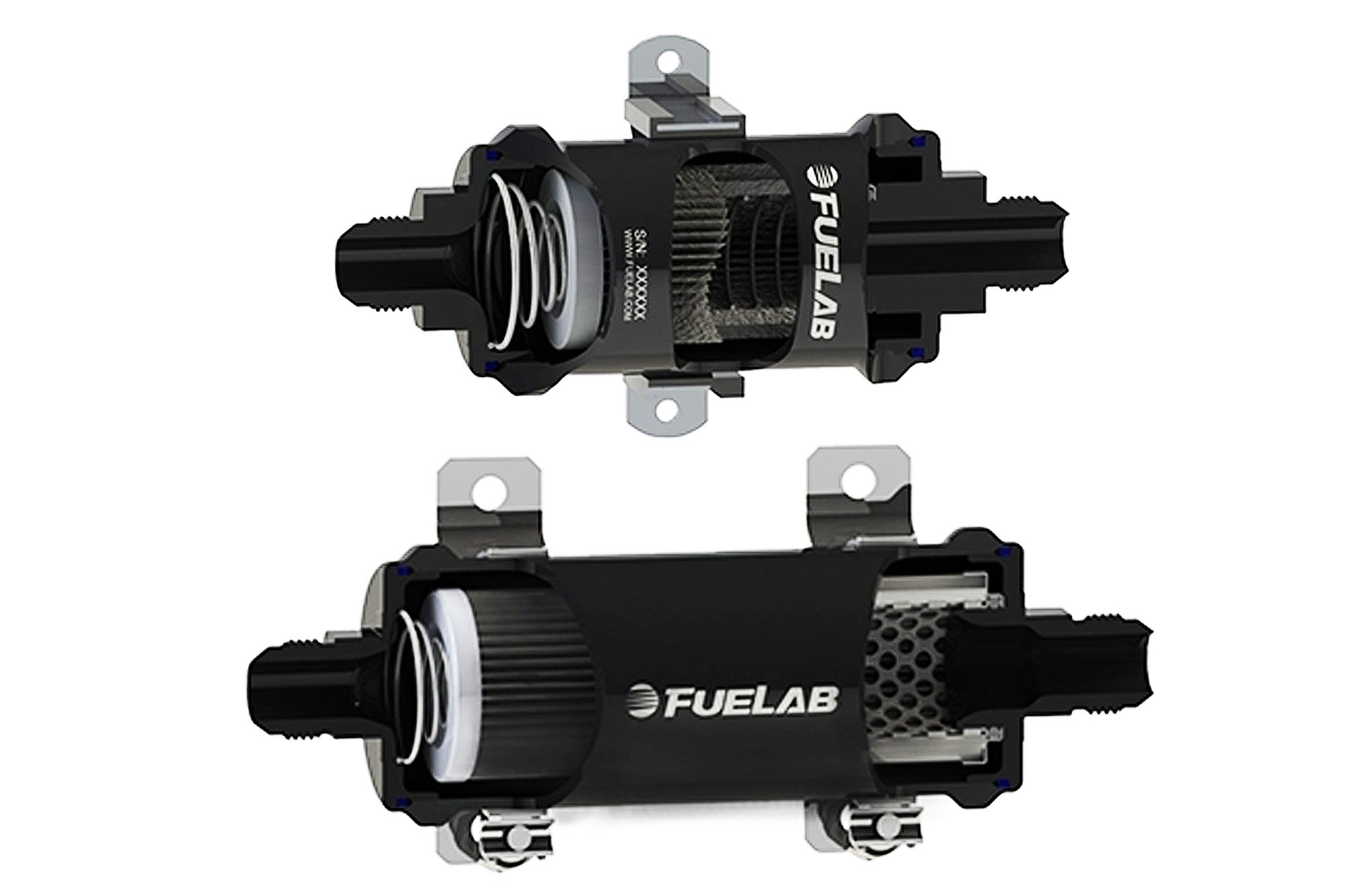
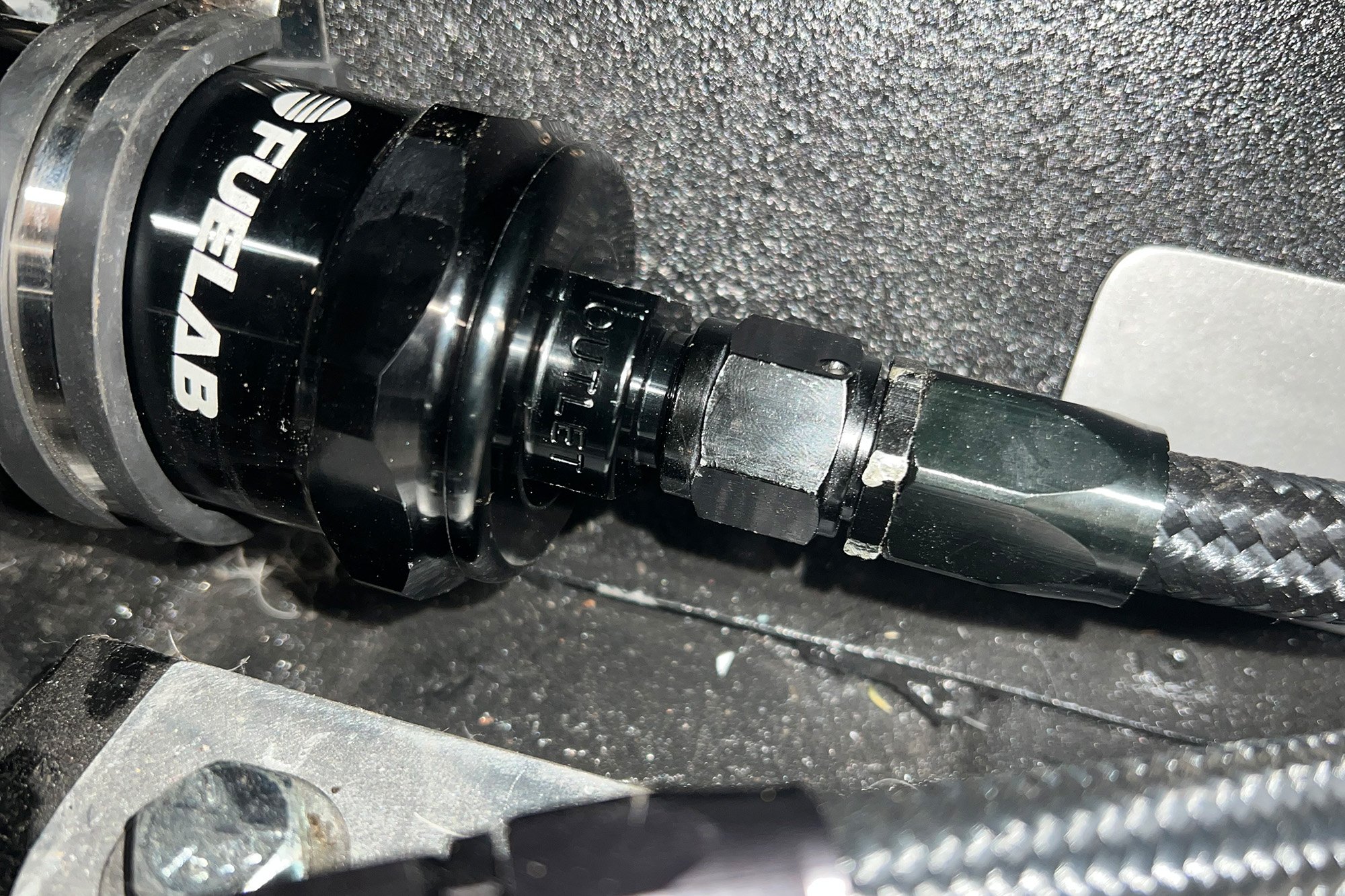
Inside, you can see the extensively developed flow radius corners that offer the best flow numbers. An internal spring forces the filter element over the exit port where all fuel travels from the outside of the media, inward for best flow. An outlet indicator is machined into the housing.

For Fuelab’s 848 and 858 series filters, there is an integrated check-valve option that allows your fuel system to maintain fuel pressure when the pump is dormant. The compact valve is located at the exit port of the filter for contaminant protection and easily alleviates the use of an outside check valve into certain systems.

We’re Protected

With a 100-micron and 6-micron filter installed on our recirculating fuel system, we are confident that no contaminants within the fuel will affect our electronic fuel injection or wreak damage to our fuel pump. Paitz finished by adding his recommended maintenance schedule.
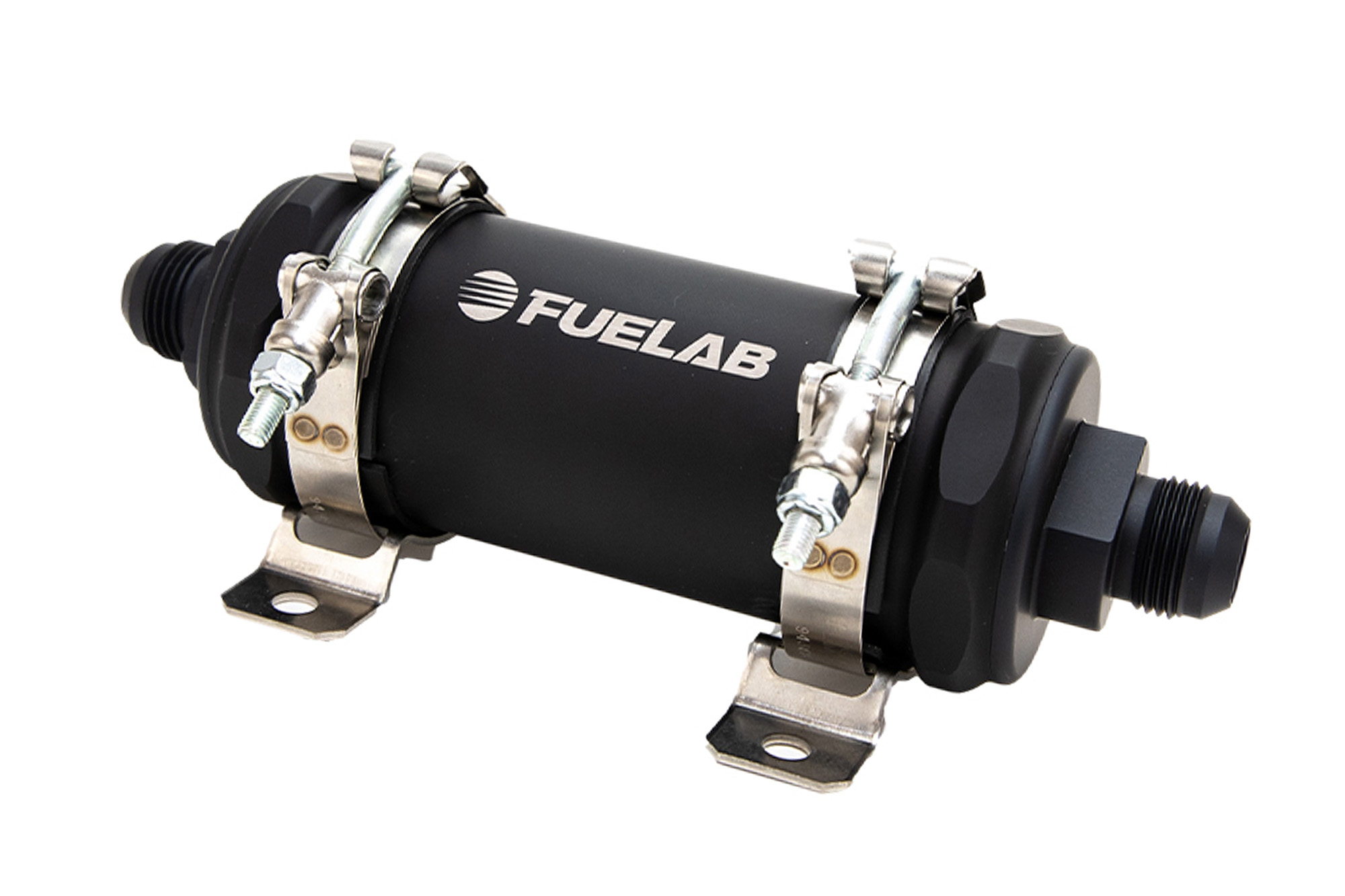
Fuelab’s “beast” of a filter is the 868 PRO Series Extreme Flow inline filter. With a 6-inch filter length, it can flow a massive 10 gallons-per-minute with -10 AN fitting ends.

“So, people ask me how often I should change the fiberglass filter? For drag racing guys, make it a once-a-season inspection for the filter, plus a thorough cleaning of the stainless filter. But there are so many variables, such as where do you get your fuel? Is it going into a stock tank? Is it E85? Are you straining the fuel before putting it into a cell? These variables should have you considering a tighter inspection and maintenance schedule.”

If you consider the many gallons of fuel that pass through your racing fuel system, keep in mind how quickly particles or even the slightest degradation of your fuel lines can affect your fuel system. Think about these quality filters as a protective component for your fuel system and monitoring devices to inspect what tiny micron-sized “hitchhikers” are corrupting your performance carbs or injection system.

Posted on Leave a comment

Discussing Piston Rings And Cylinder Honing


When considering parts for an upcoming engine build, I’m reminded of a conversation I overheard many years ago between a teenager and an older gentleman. The young boy was looking at a car to purchase and was exclaiming all the benefits of his recently-located dream car such as the new brakes, new exhaust system, and on and on. The older gentleman listened and then asked, “Are you buying a car or a bunch of car parts?” While an assemblage of quality parts is always a plus, they won’t be much good if the rest of the package isn’t up to the task as well. The same goes for the engine in your car. Choosing the right piston rings is as important as any other part of your engine.

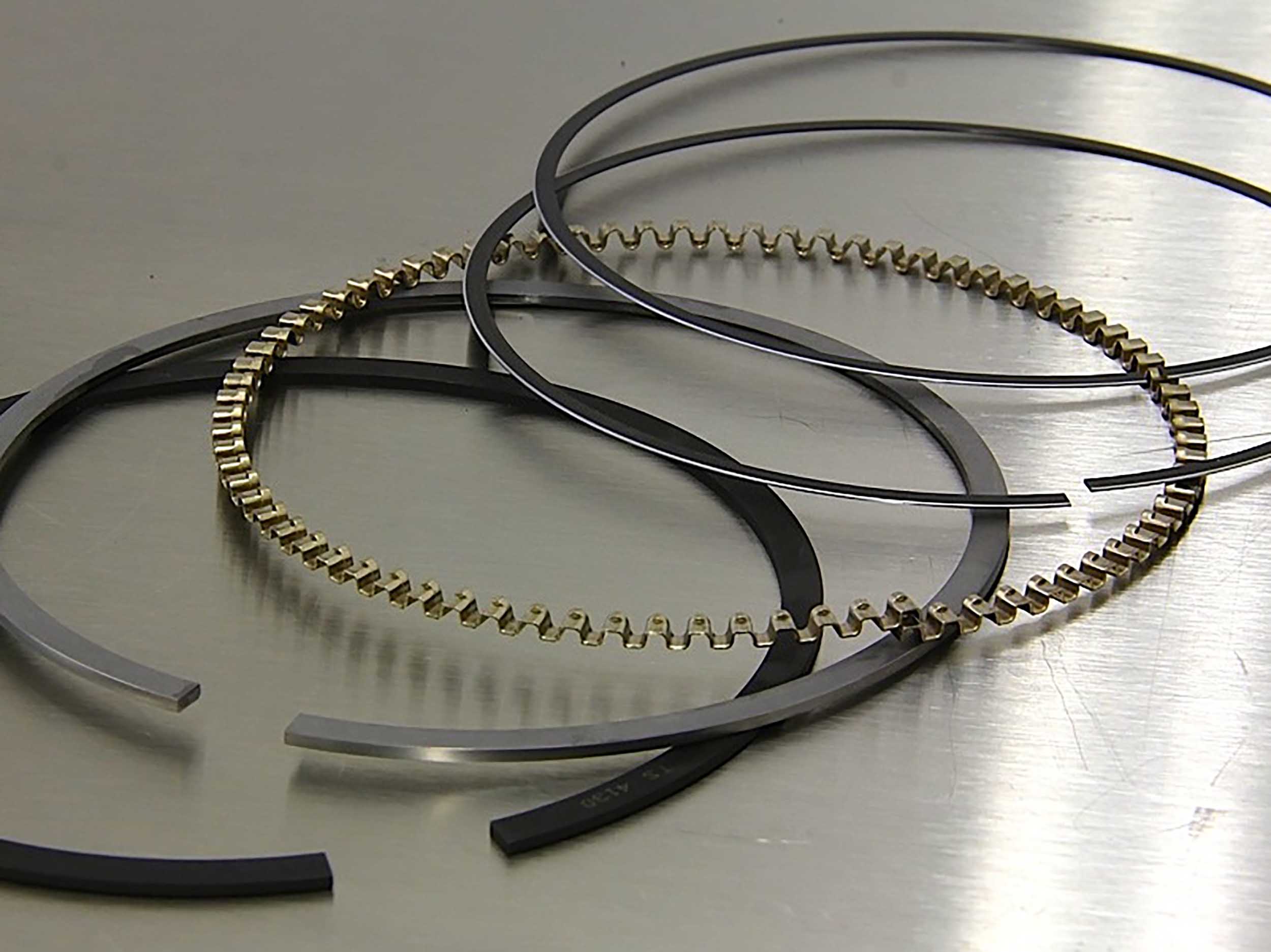
Piston ring technology has changed a lot since the “chrome or moly” option. Today’s rings use a variety of materials and coatings to tailor them to a specific application.

We must choose individual components for our engines in much the same way, fully understanding how they must work together to get the best results — piston rings included. Today’s rings employ much more technology than they did just a few years ago. Choosing the right path when shopping for piston rings without an understanding of why these advancements have come about can be quite daunting. We spoke with Lake Speed, Jr. from Total Seal to help us better understand today’s piston ring technology and how the machining process needs to work together to ensure any engine rebuild is a success.

Types Of Piston Rings

Many of us can remember when there were only two types of piston rings – ductile-iron moly-faced or chrome-faced. Before that, there were simple cast-iron rings, but since we’re talking LS-based engines, let’s stick with technology from this century. The latest material to come into the piston ring market is steel. This durable material has enabled cylinders to seal using the thinnest of surfaces. If you’ve been shopping for piston rings lately, you’ve no doubt noticed how thin some rings have become.

The oil acts as a gasket, as well as a lubricant. – Lake Speed Jr., Total Seal

There are also a variety of coatings available on piston rings, such as plasma moly, gas nitriding, and various PVD coatings. PVD (Physical Vapor Deposition) has become more popular as of late. It is a thin coating process that deposits hard films on the surface of the ring. The PVD process offers many options, such as CrN (Chromium Nitride) and TiN (Titanium Nitride), both feature excellent temperature and wear resistance. With so many different choices, you may wonder if anyone can really know what type of piston ring is best for their application. Yes, you can. We asked Total Seal’s Speed how to do just that.

Let Your Power Determine Your Piston Ring

As with so many areas of concern when building an engine, knowing your power expectations for the engine is the best way to determine which piston ring will work best. Even the fuel you intend to use can make a difference in the best piston ring choice for your application. Speed explains, “The key is, you have to know how the engine is going to be used. Is it going to be naturally aspirated or boosted? Is it going to see nitrous? Each of these considerations has an impact on what ring material is best used.”

Rings have also become much thinner than what you may be used to seeing. There are so many benefits to a modern, thinner ring that many OEMs have begun using them from the factory.

Running pump-gas or E85 can make a big difference, too. For a naturally aspirated engine running pump-gas, a ductile iron ring with a moly coating works perfectly. The moly face coating is porous, so it holds oil well to lubricate the cylinder wall. For that reason,  ductile moly rings don’t rely on the cylinder wall’s machining to retain oil as heavily. Conversely, if you are looking at boosting or running E85 in your engine, you’ll want to use a steel ring. Steel rings are harder than chrome or moly-coated rings, and they are not porous, so oil needs to be retained in those small valleys in the cylinder wall, which are created by the honing process.

Longevity In The Valley, Power In The Plateau

“EVERYTHING you do has an impact on the rings’ ability to seal the cylinder!” says Speed. “Even supporting the engine with an engine plate versus traditional motor mounts can make a difference.” It is widely accepted that using a torque plate during honing builds power by ensuring the cylinder is perfectly round once the head is installed. Just the same, getting the proper cylinder wall finish for your choice of rings is important for longevity and how the rings will seal to the cylinder wall. Speed explains that every ring type is going to have its own recipe for preparing the cylinder bore. That proper finish is, more often than not, a two-part equation that includes the smoothness of the highs and the depth of the lows, called plateau honing.

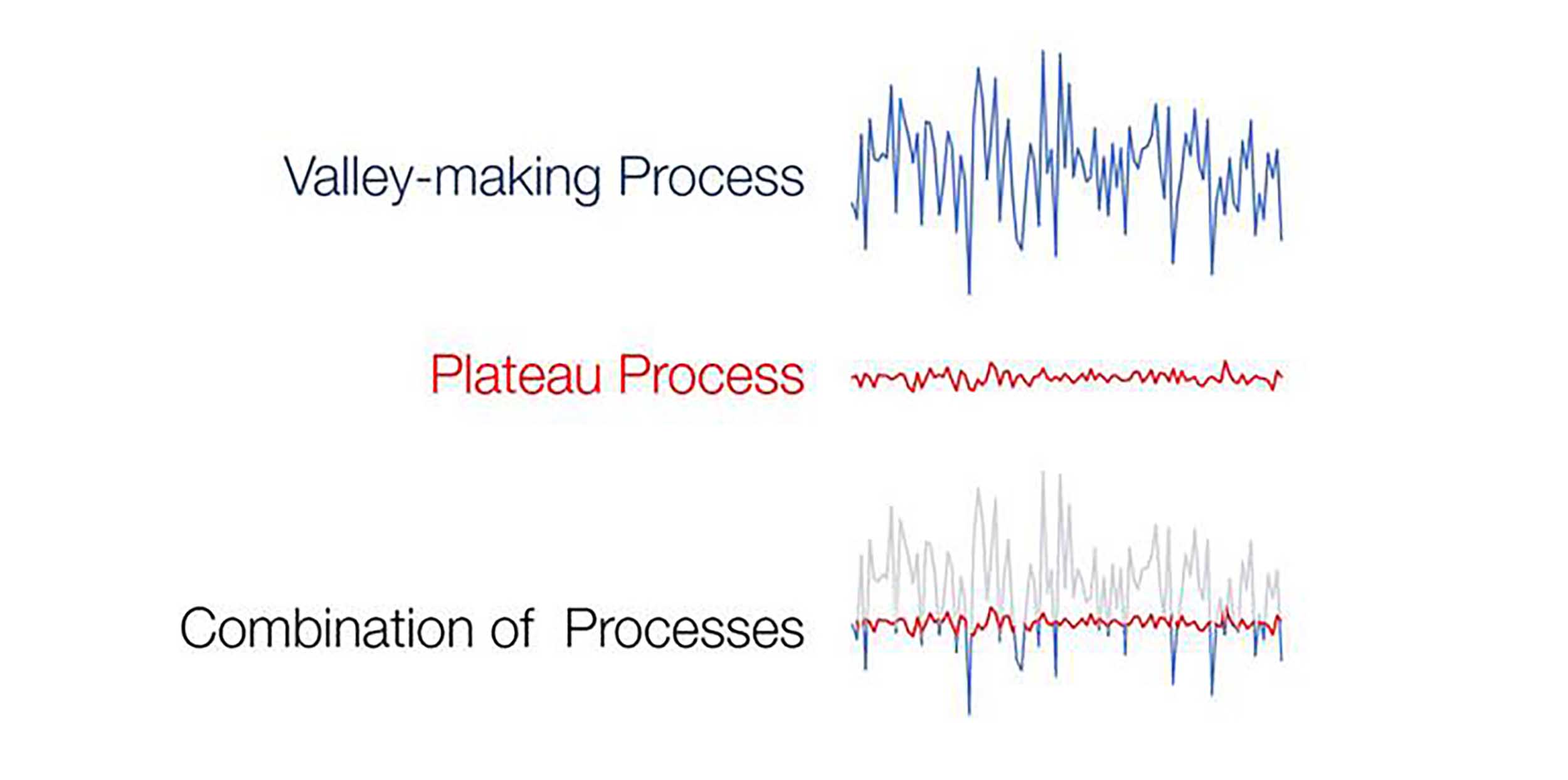
Plateau honing begins with a rough stone to create a deeper “valley” into the machined surface of the cylinder. Then, a finer stone creates a smoother surface by removing the peaks from the previous machining process.

The oil in a cylinder acts as a gasket, as well as a lubricant. There needs to be adequate oil within the cylinder so the rings will have the lubrication they need. Speed explains that fuel is the enemy once it gets down to the area where the piston rings and cylinder walls meet because it washes away the layer of lubricating oil. The more fuel that goes into the cylinder (as in the case of boost, nitrous, or E85), the more it will wash down the cylinder wall and remove the oil film that provides for the longevity of your rings. In these instances, it is imperative to retain enough oil to lubricate the piston rings.

  • Oil’s Four “R”s

    • The RIGHT AMOUNT
    • Of the RIGHT OIL
    • In the RIGHT PLACE
    • At the RIGHT TIME

Just as importantly, the cylinder wall needs to be smooth enough so the rings will seal completely. The answer is plateau honing, where two different grit stones are used. The first round is with a coarse stone to create a surface finish with enough “valley” for oil to reside without being washed away by the fuel. The second pass uses a finer stone to smooth out the peaks of the minuscule mountains on the surface of the cylinder wall (much like a broken-in engine would have) to ensure a good seal with the rings. “Seating the rings” was once a process that occurred over time during the running of the freshly built engine. Today, the ring set in a properly plateau-honed engine with the right ring package can be broken-in much faster. The exception is chrome-faced rings, which require a different finish, specific to the material.

Power Solutions For Stock Components

With so many junkyard LS-based engine builds going on, we asked Speed about finding the right cylinder finish and ring package solution for a low-budget, stock-based build. He reaffirmed, “Be honest with yourself and what you’re REALLY going to do with it.” He explained that on a pump gas engine, a ductile iron ring will work great with a 320-grit hone on the cylinder walls. At that point, the strength of the piston to handle the engine’s power output becomes the limiting factor.

If you’re going to boost it and you want it to last, Speed recommends starting with at least a 280-grit hone and finishing off with a 400-grit stone to provide the necessary plateau. Once the cylinder surface is correct, you can also have the piston skirts coated with an abradable coating to help keep them square in the bore. When choosing the rings, you can opt for a gas-ported top ring to help improve the seal around the entire cylinder’s circumference.

To help the ring seal to the cylinder wall, you can opt to use either a ported ring or a piston that uses porting. This allows cylinder pressure to flow behind the ring and evenly push the ring out toward the cylinder.

Speed also spoke about the importance of having the proper end gap in the rings. You want to give those rings room to expand under heavy loads without butting together and ruining your engine. He also explained too many folks worry about keeping a tight end gap to prevent leak-down. Speed says the risk of ruining your engine by having your piston ring end gaps too tight is geater than the power you might lose by giving your rings some gap. If you’re really concerned about losing that last horsepower through the end gap, you could always employ a set of gapless rings to fill in the gap, so to speak.

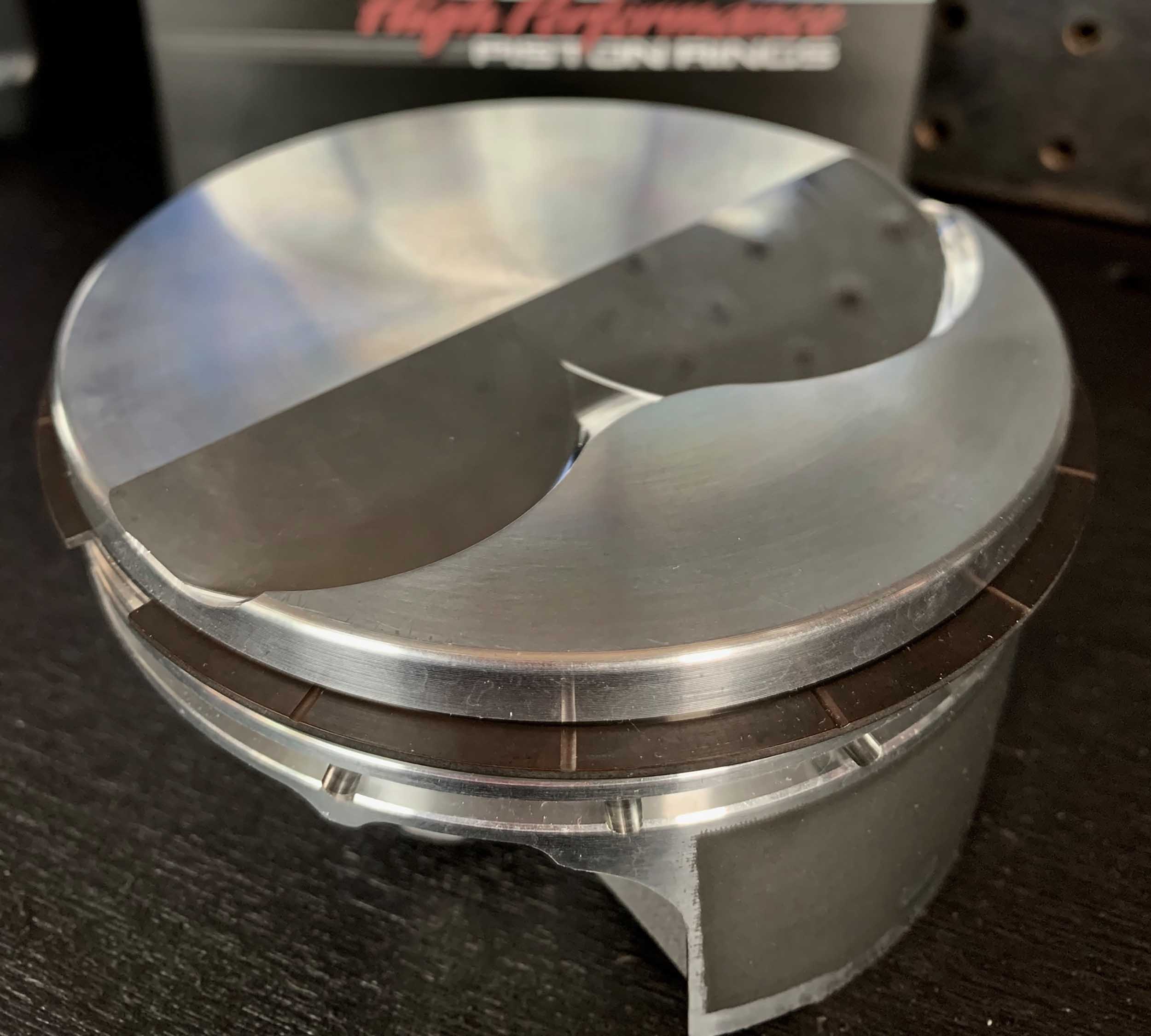
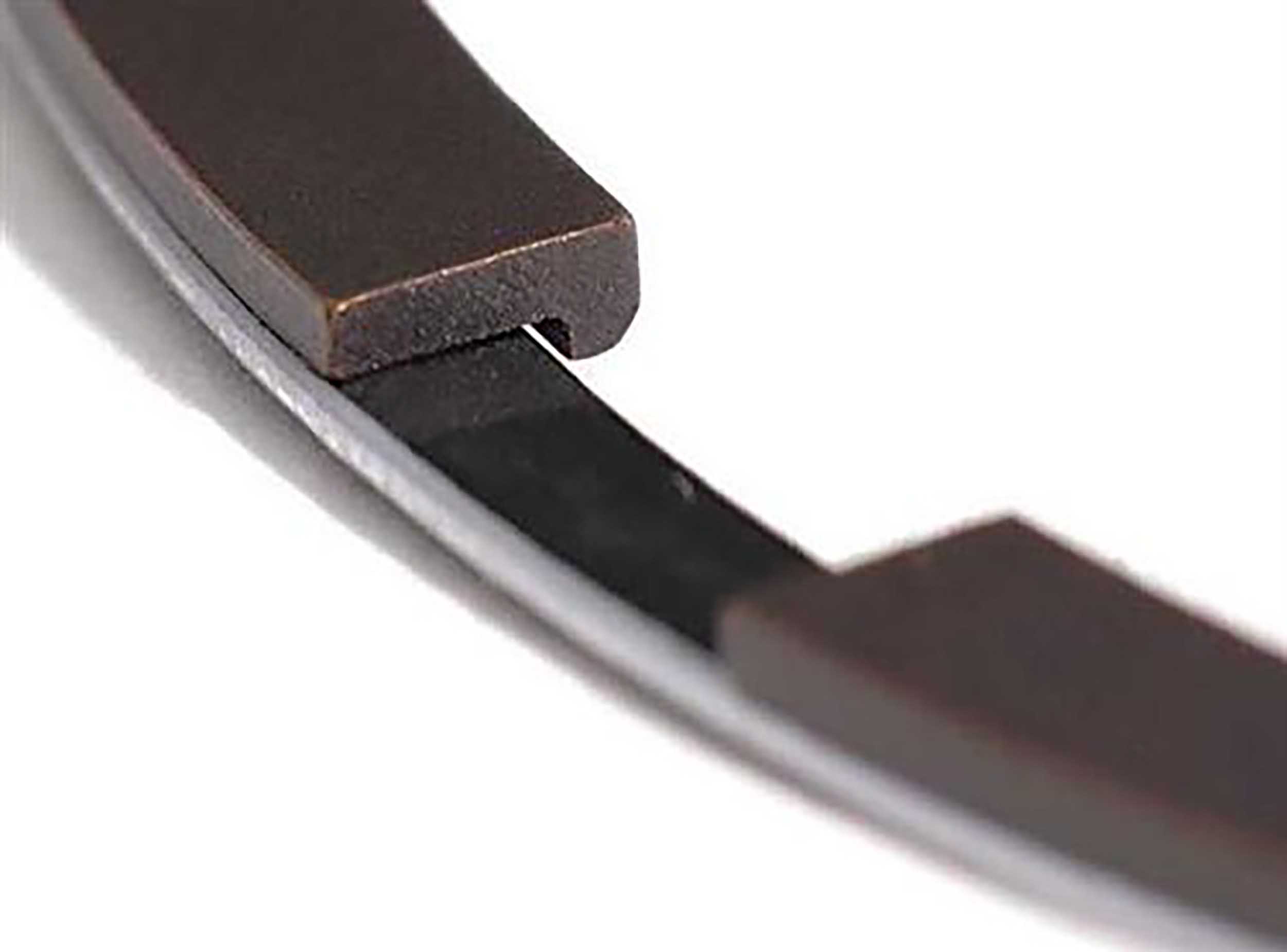
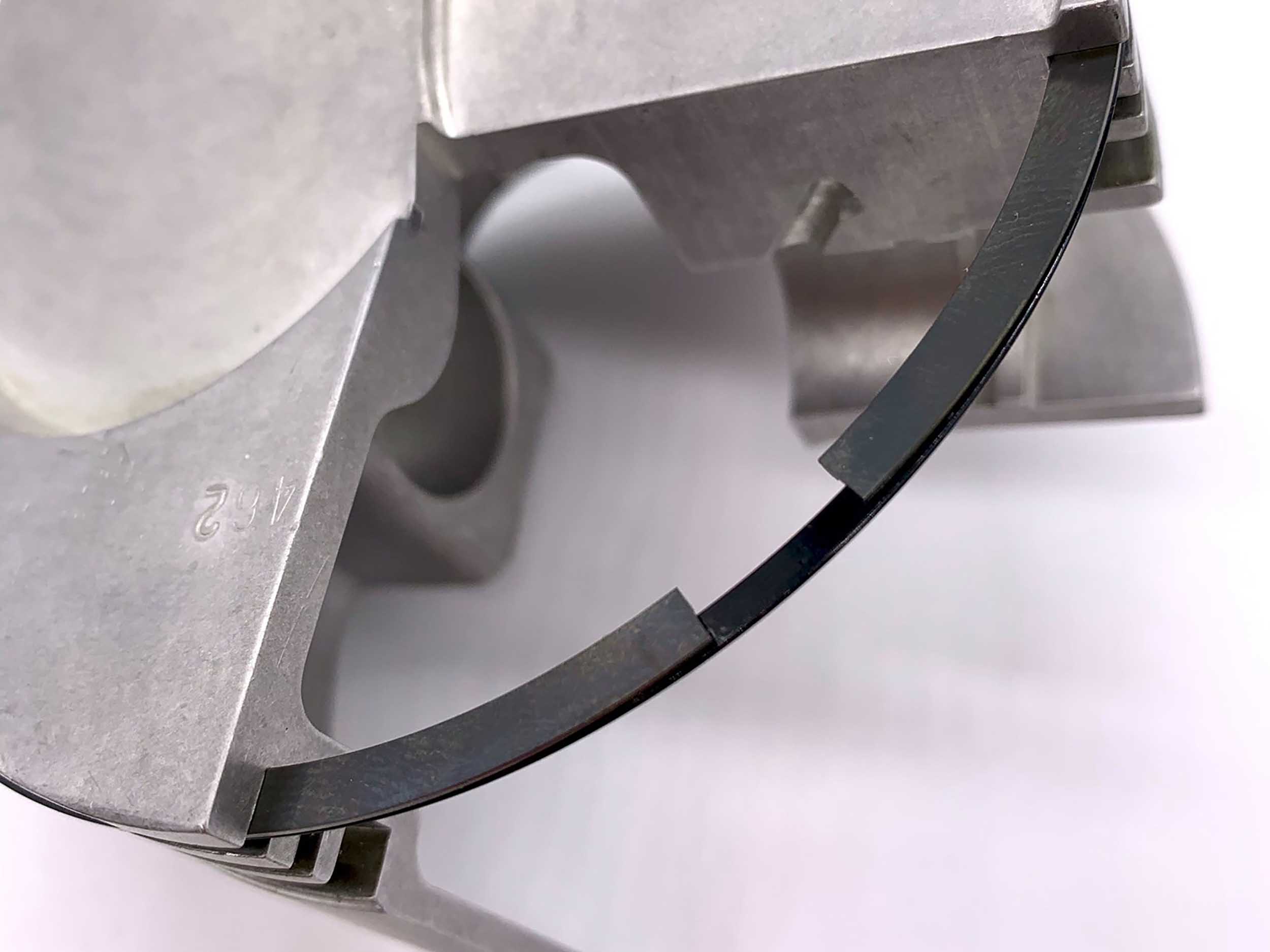
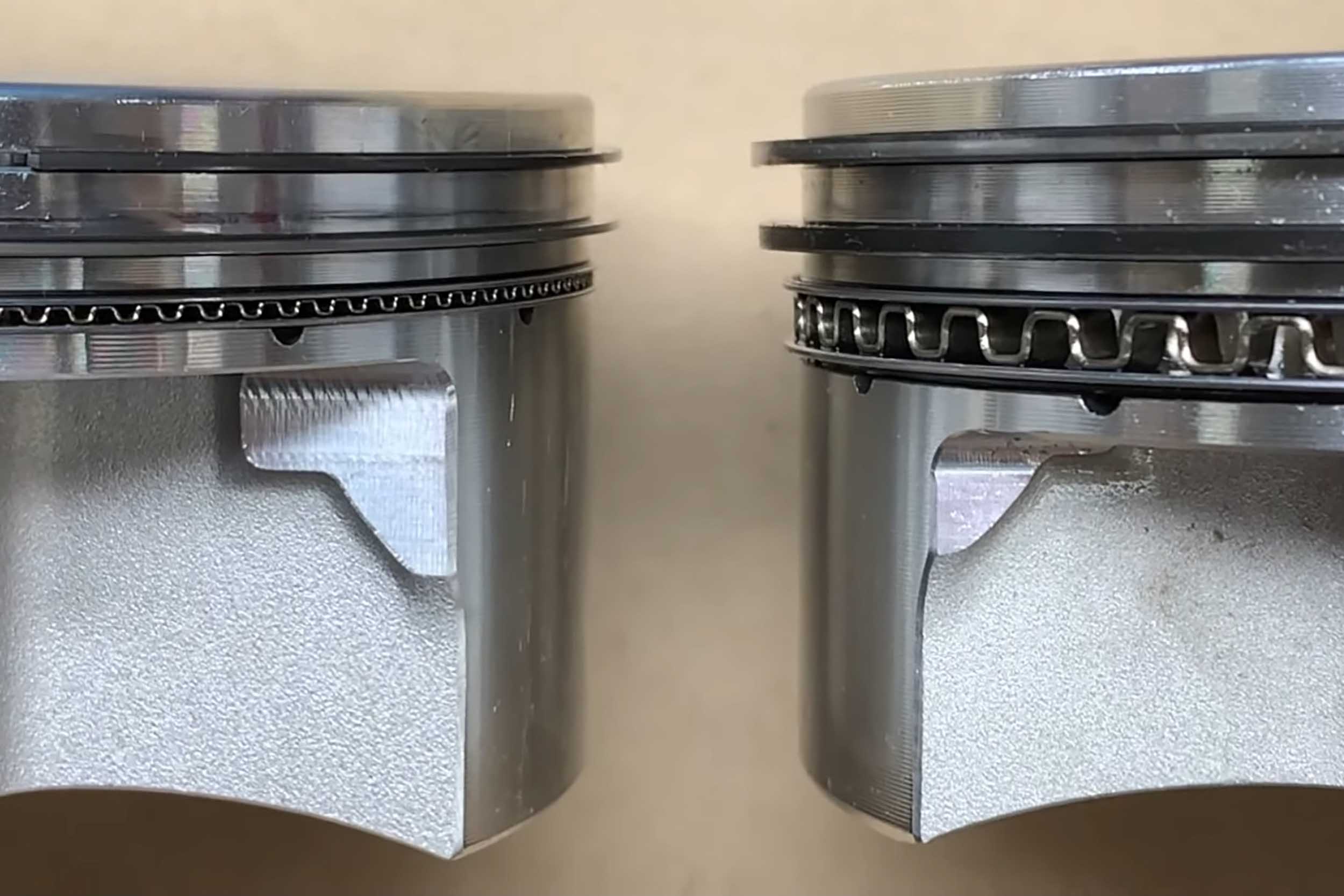
Gapless rings employ a second ring within the same ring land. The gaps are staggered between the two rings, effectively filling in the gap area while allowing each ring enough room to expand due to heat.

Without a profilometer, you’re just guessing. – Lake Speed, Jr.

Knowing the expectation for your engine will help you decide on the best components and machining process for your application. When it comes time to scratch the surface of your cylinder walls, make sure your machinist can verify the work with a profilometer.

A profilometer shows the details of your finish on the machined cylinder wall. Getting the proper plateau hone is a two-step process focusing on the depth of the oil-retaining valleys as well as the height of the peaks of the surface where the rings will contact the cylinder wall. A profilometer is a tool to ensure the proper machining.

Speed was quite adamant, “without a profilometer, you’re just guessing.” We’ve spent most of this story extolling the importance of getting the proper finish for your rings and it would be a shame to drop the ball at this point in the game. If you think about it, it’s kind of like laying the foundation for a house without a level. While you may not be the one holding the profilometer during the machining process, we hope this helps shed some light when choosing the next set of rings for your engine build. If you have any questions, the knowledgeable folks at Total Seal are just a phone call away.