Posted on Leave a comment

Oil On The Spark Plug Threads

What I Learned Today With Jeff Smith —

Over the years, we’ve seen many street engines with a significant amount of oil on the threads of the spark plugs. Our first thought was usually some type of external leak, like weeping valve cover gaskets, which might cause this. But, further evidence suggests this oil almost always enters the engine on the combustion chamber side. The test then becomes locating the source of the oil. Let’s look at the possibilities

This scenario is not unusual. The oil enters the chamber and finds its way around the exposed end of the spark plug. Under cylinder pressure, this oil is pushed further into the threads until the oil hits the sealed end of the threads. Insulated from high combustion temperatures, the oil just sits there in liquid form ready to be discovered when the spark plugs are removed. It’s also possible that not all the cylinders will be affected.

oil on spark   plug threads

Oil on the spark plug threads is present on all the cylinders in this photo. This engine suffered from detonation problems, which were at least partially caused by oil in the combustion chamber. So oil on the plugs can lead to more serious problems if not repaired promptly.

Of course, it is possible that oil can find its way past the piston rings, entering the combustion chamber and squeezing past the threads in the spark plug hole. For the purposes of this tech treatise, we will assume the rings and short-block assembly are in good shape and the rings are doing their job.

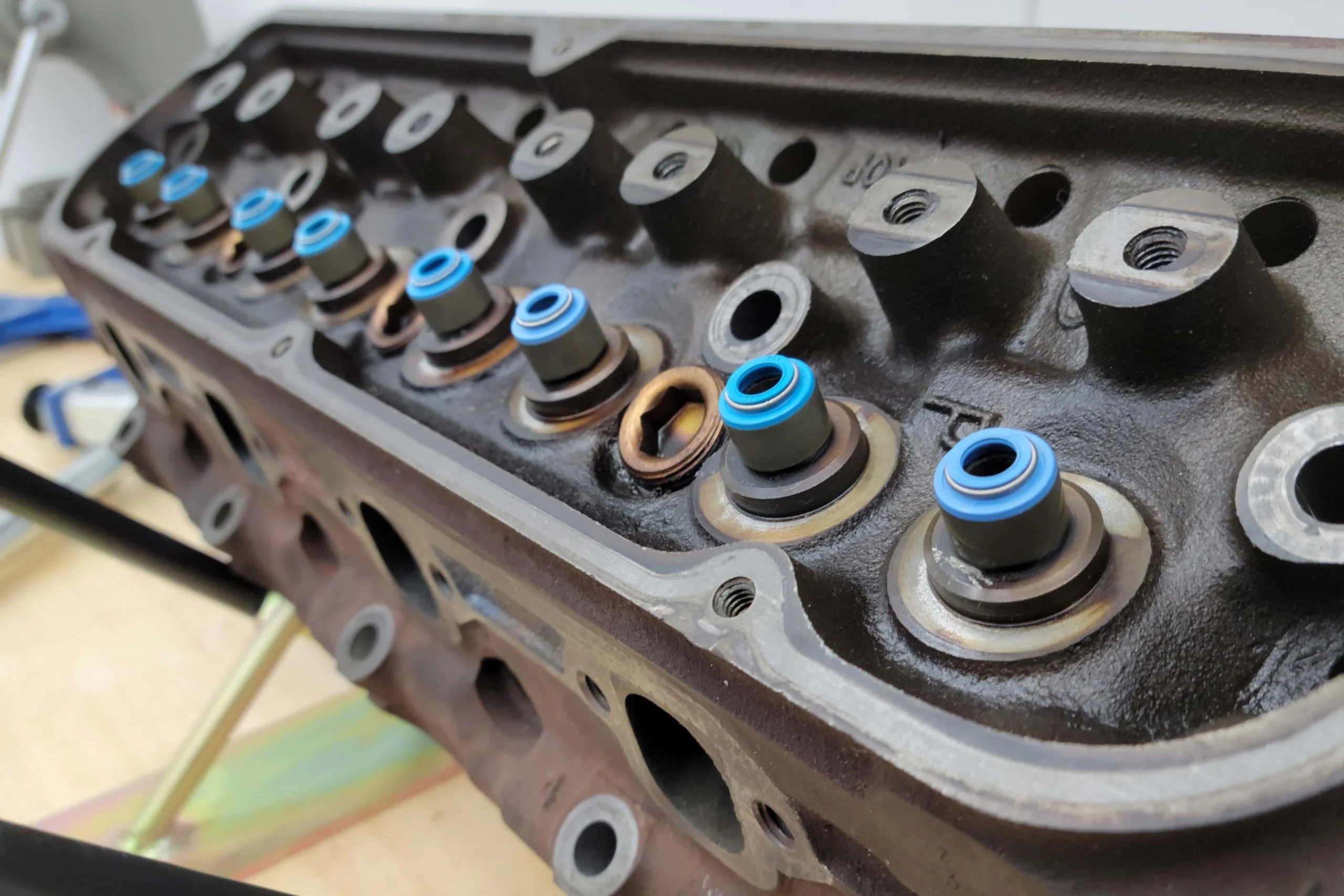
This leaves the intake side of the engine as the source of this unwanted oil. We see three potential avenues where oil could enter the chamber before the combustion event. The first (in no particular order) is a broken, leaking, or bad intake valve guide seal. This will allow oil to travel along the intake valve stem with manifold vacuum pulling it into the chamber. This is where only selective cylinders may be affected but this does not rule out the possibility that all the intake seals are bad.

oil on spark   plug threads

Worn valve stem seals can be a source of oil getting into the combustion chambers. They are inexpensive and easy enough to change if you are already in the engine.

The next avenue of approach is poor positive crankcase valve (PCV) operation. Some PCV valves can actually pull a serious amount of oil out of an engine. The early LS truck engines were especially vulnerable to this. We won’t get into all the possibilities here as this subject is covered in other online stories. Often the solution involves using a separate oil separator tank that will prevent pulling liquid oil into the intake manifold through the PCV valve.

A final avenue for this errant oil is found on engines that use the intake manifold to seal the lifter valley like a small-block Chevy or Ford. In this situation, the intake manifold is sealed properly at the bottom of the intake ports and intake manifold vacuum pulls the oil past the intake gasket and into the intake port where it enters the combustion chamber. In some cases, the engine is affected only on one side of the engine, the side where the intake is leaking disclosing an obvious clue to the repair. A leaking intake gasket can pull a tremendous amount of oil through the engine in a relatively short time.

oil on spark   plug threads

The Positive Crankcase Ventilation (PCV) valve can actually be a cause of oil on the spark plug threads, so it should be on the troubleshooting checklist.

Posted on Leave a comment

Do You Know Which Antifreeze Is Best For Your Engine?

When was the last time you thought about the cooling system in your classic car, diesel truck, off-road rig, or late-model ride? As long as it’s cooling the engine, nobody really thinks much about it. But, no matter what type of vehicle you drive, all must operate between the boundaries of water boiling and freezing. Those two temperature extremes make knowing which antifreeze you should be using and its proper maintenance essential.

With colder months looming for many areas of the country, we thought it might be a good idea to take a good look at the antifreeze that you should have in the cooling system of your car. Having the proper type and a correct water-to-antifreeze ratio is paramount for keeping your cooling system operating at peak efficiency. To find everything we needed to know, about which antifreeze should be used when, we reached out to the professionals at Old World Industries, the makers of Peak antifreeze to clear up a few things and get some solid information.

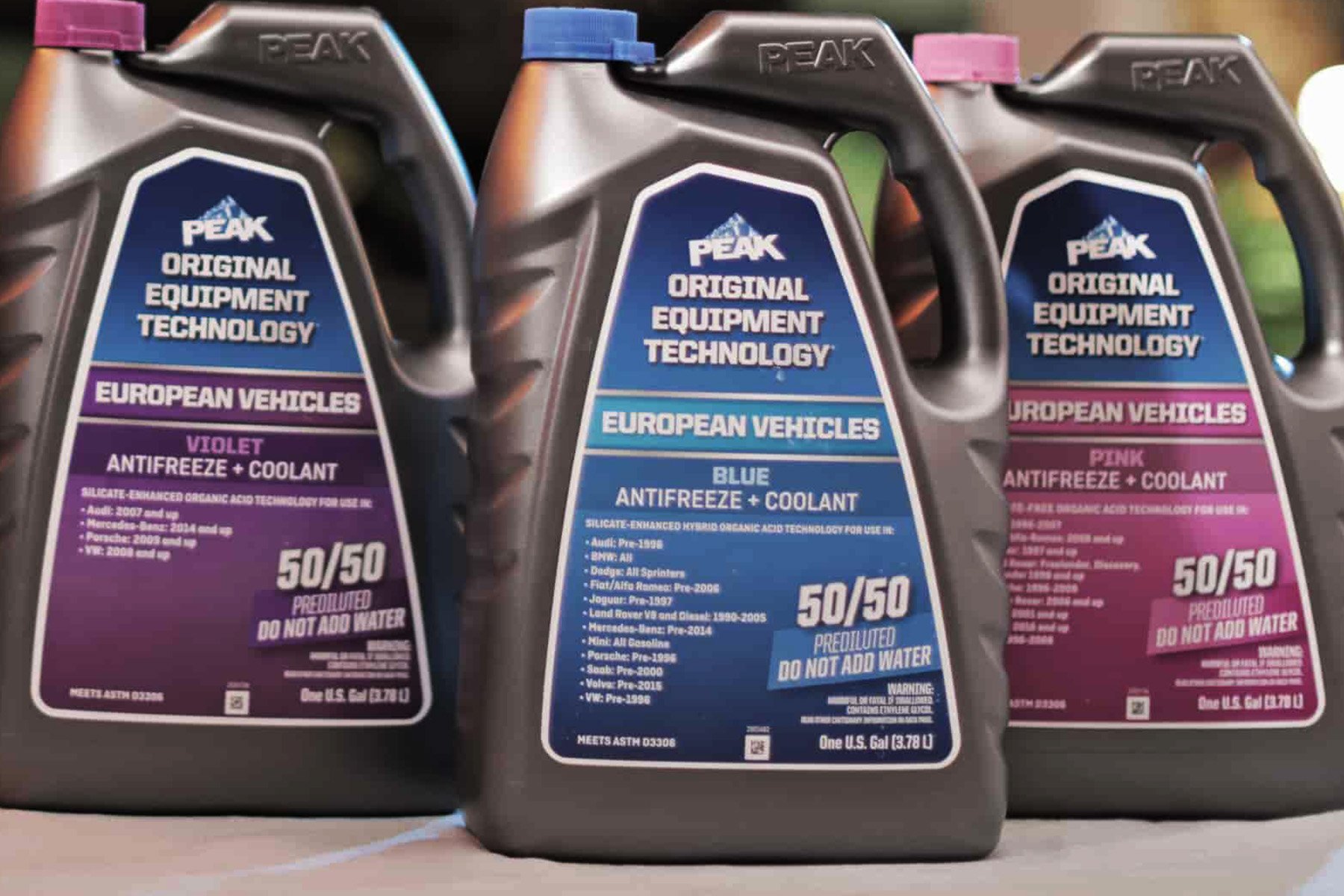
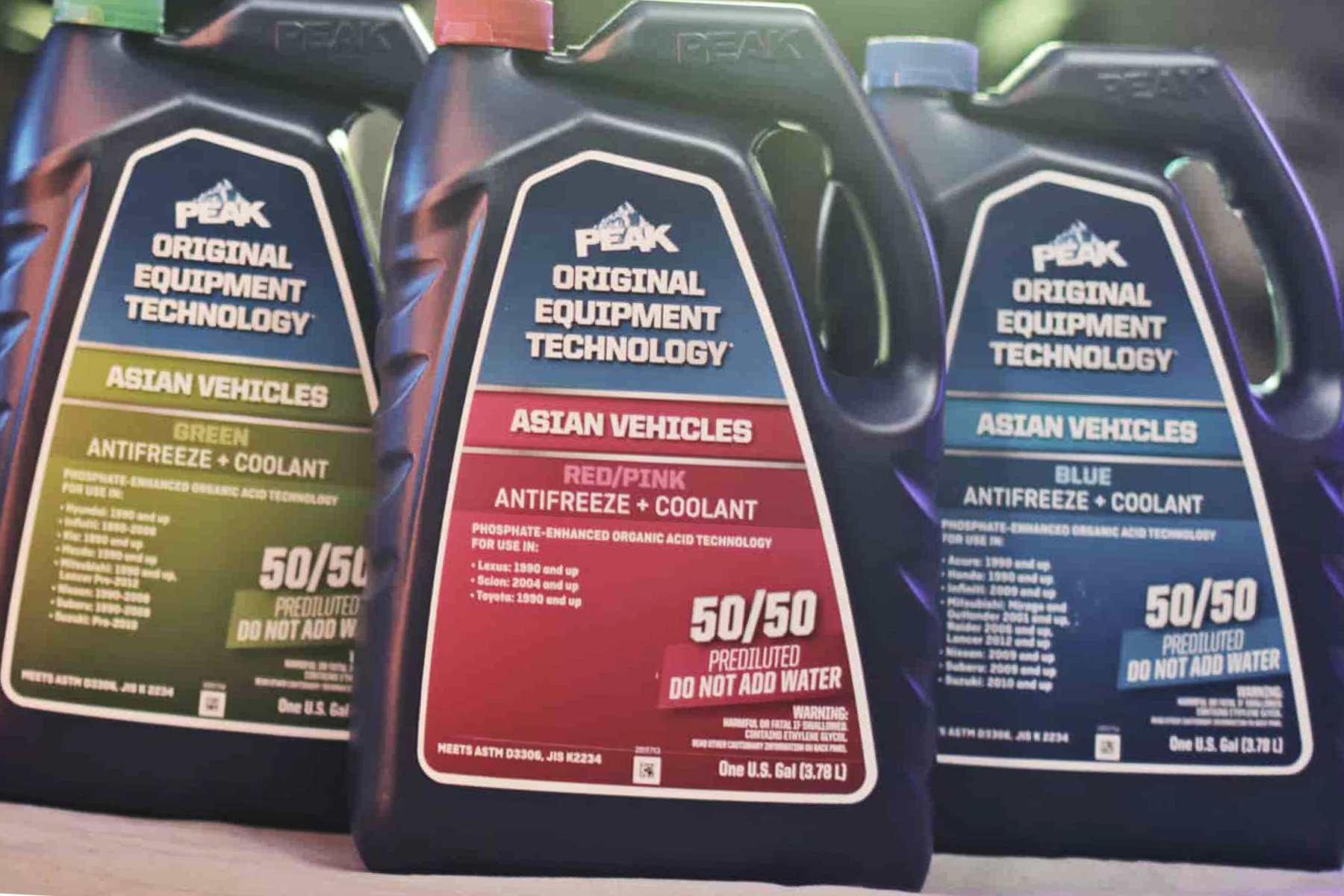
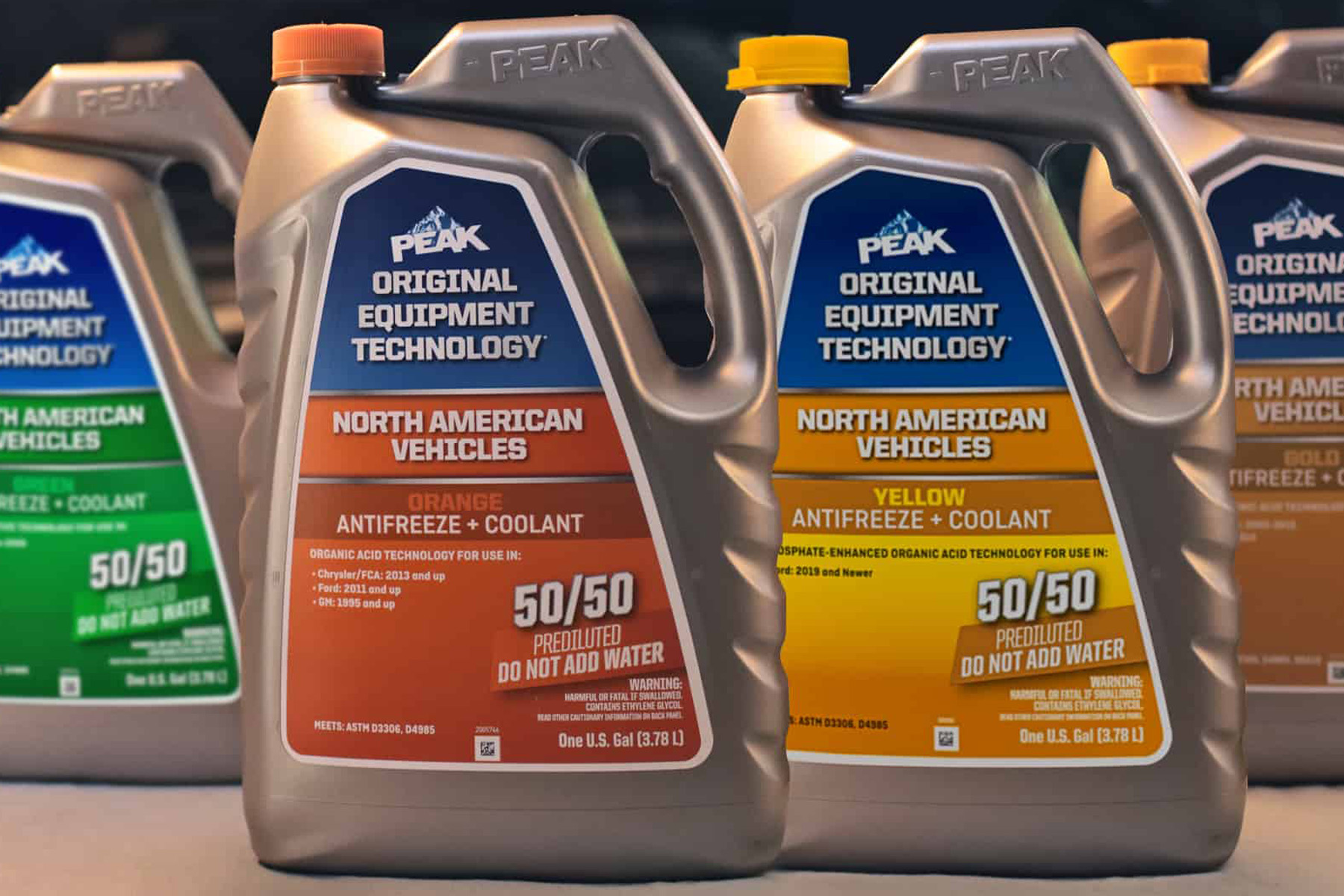
The wide choices of today’s differently colored antifreeze/coolants are color-indicated by automaker-specific formulations. The Asian and European manufacturers each have three different formulas for varied make and years of manufacture.

So Many Colors
Addressing the subject of antifreeze comes from the inevitable confusion when we walk into the friendly auto parts store and find multiple antifreeze containers with more than ten colored formulas for use with different Asian-, European-, and North American-manufactured vehicles.

The myriad of choices is cause for frantic research to learn if one of these various colors of coolant could contain magic pixies that will increase the cooling effectiveness of the ride in question. That is why we reached out to the brain trust of Brian Bohlander and John Turney of Old World Industries.

which antifreeze

Our late-model truck with aluminum heads and an iron block specifies the orange OAT formulation (Organic Acid Technology). It is also a good choice for performance engines with aluminum head(s) and an iron block.

“With various alloys of metal used in new engines and cooling systems, multiple manufacturer-specified antifreeze formulas now exist,” says Old World’s Chief Technology Officer, John Turney. “These different antifreeze/coolant compositions also are designed to keep specific engines corrosion-free and be more friendly to new seals and gasket technology.”

With that, the bottom line is that, no, there is no purple or orange version of OEM formulations that is a magic elixir for performance engine applications. But your most effective choice is matching coolant specified for factory engines with iron/iron, aluminum/iron, or all aluminum blocks and heads.

The Antifreeze/Coolant Timeline
Inorganic Acid Technology (IAT) is your typical green antifreeze that has been used for years. This formulation contains silicates and phosphates, and this IAT composition effectively prevents rust in the coolant passages when the engine block and head(s) are cast iron. Think classic and heavy-duty applications (diesel).

“In recent times, more aluminum heads, blocks, and rubber seals make up engine components,” says Bohlander. “With that, Organic Acid Technology (OAT) antifreeze was developed to reduce heavy scale deposits within the aluminum coolant passages, phasing away the previously used IAT antifreeze.”

Turney continues, “But, these silicate and phosphate components in the older IAT antifreeze design offer the benefit of covering all surfaces quickly for better heat transfer. This benefit is one of the reasons why you’re seeing manufacturers returning to IAT compounds at varying compositions.”

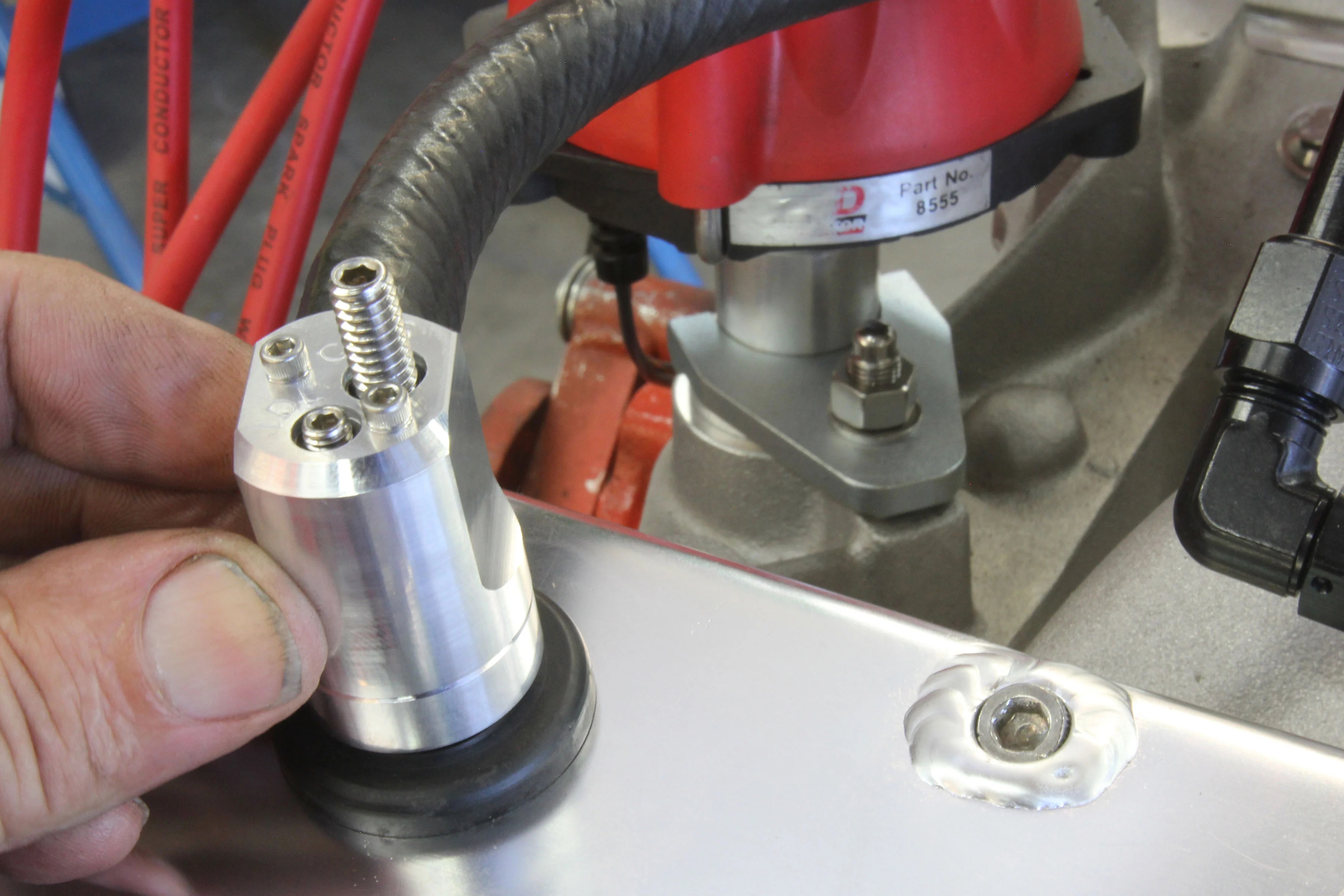
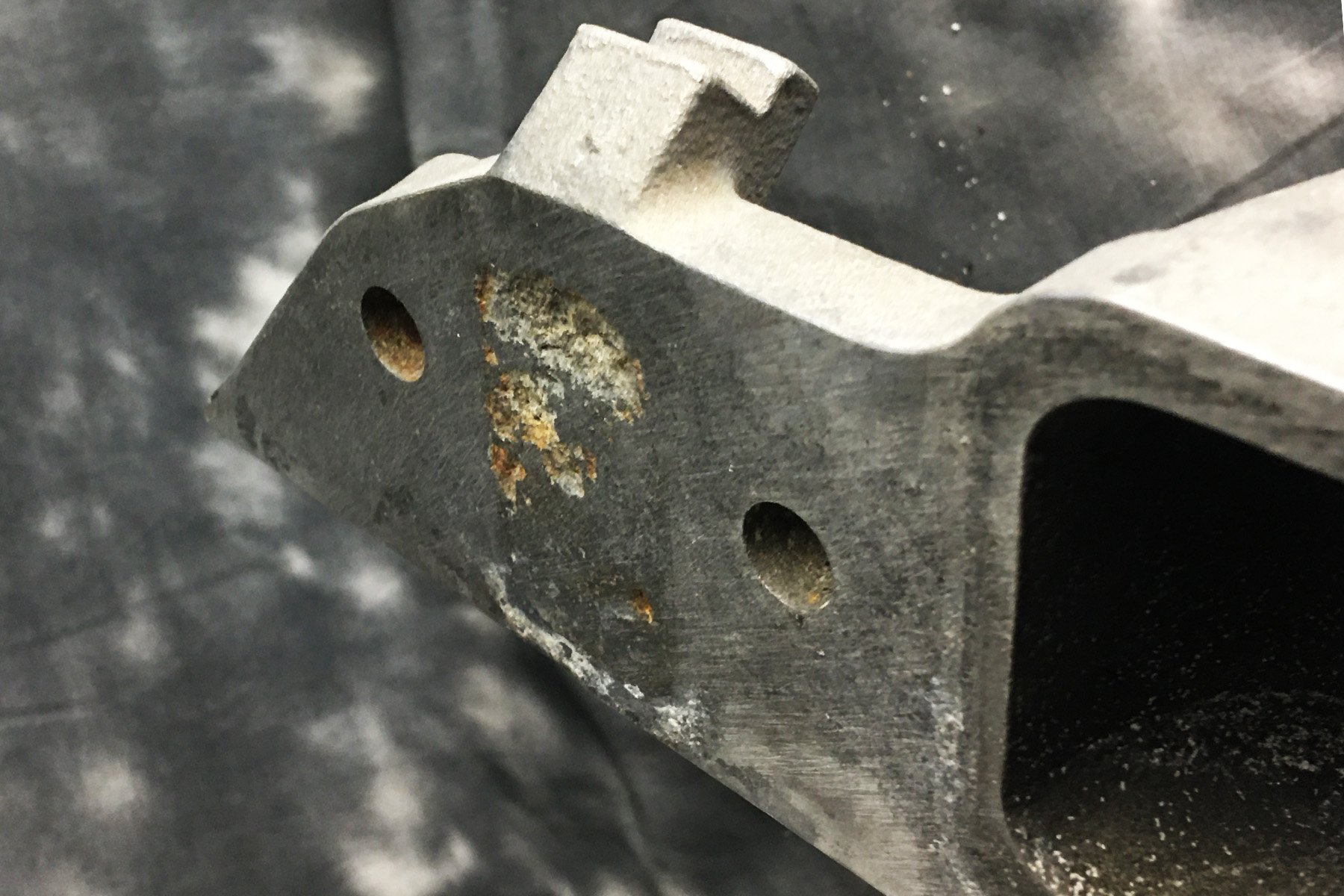
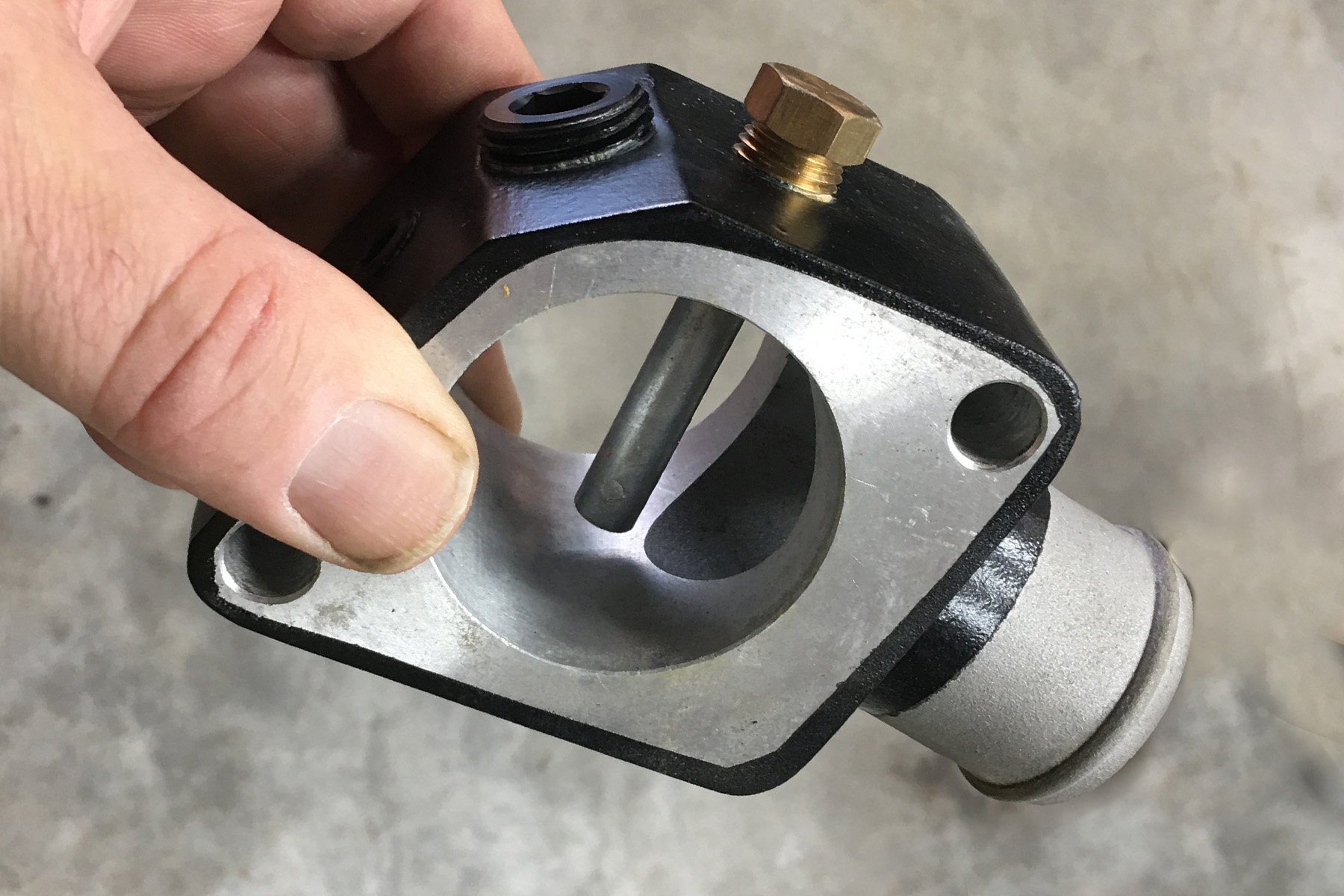
Electrolysis is an enemy of mixing aluminum and iron engine parts, note the damage to the aluminum intake surface (left). A zinc anode (right) is shown inserted into a thermostat housing. Since electricity follows the path of least resistance, the electrolysis reacts with the anode and not coolant passages.

Antifreeze needs dictate that many coolants are silicate-free, phosphate-free, or a compound of multiple chemicals. The compound formulations of antifreeze are called Hybrid Organic Acid Technology (HOAT.)

Performance Engines And HOAT Technology
Aluminum heads and intakes are the building blocks of a high-performance engine. If that sounds like your engine, you’ll want to know the best antifreeze/coolant you should use with an aluminum and iron combination performance engine.


“A mixed-metal cooling system, such as iron block and aluminum heads, tends to be more challenging. Different metals, when combined galvanically or electrically, can promote corrosion simply because the dissimilar metals can cause electrons to flow.” – John Turney, OWI

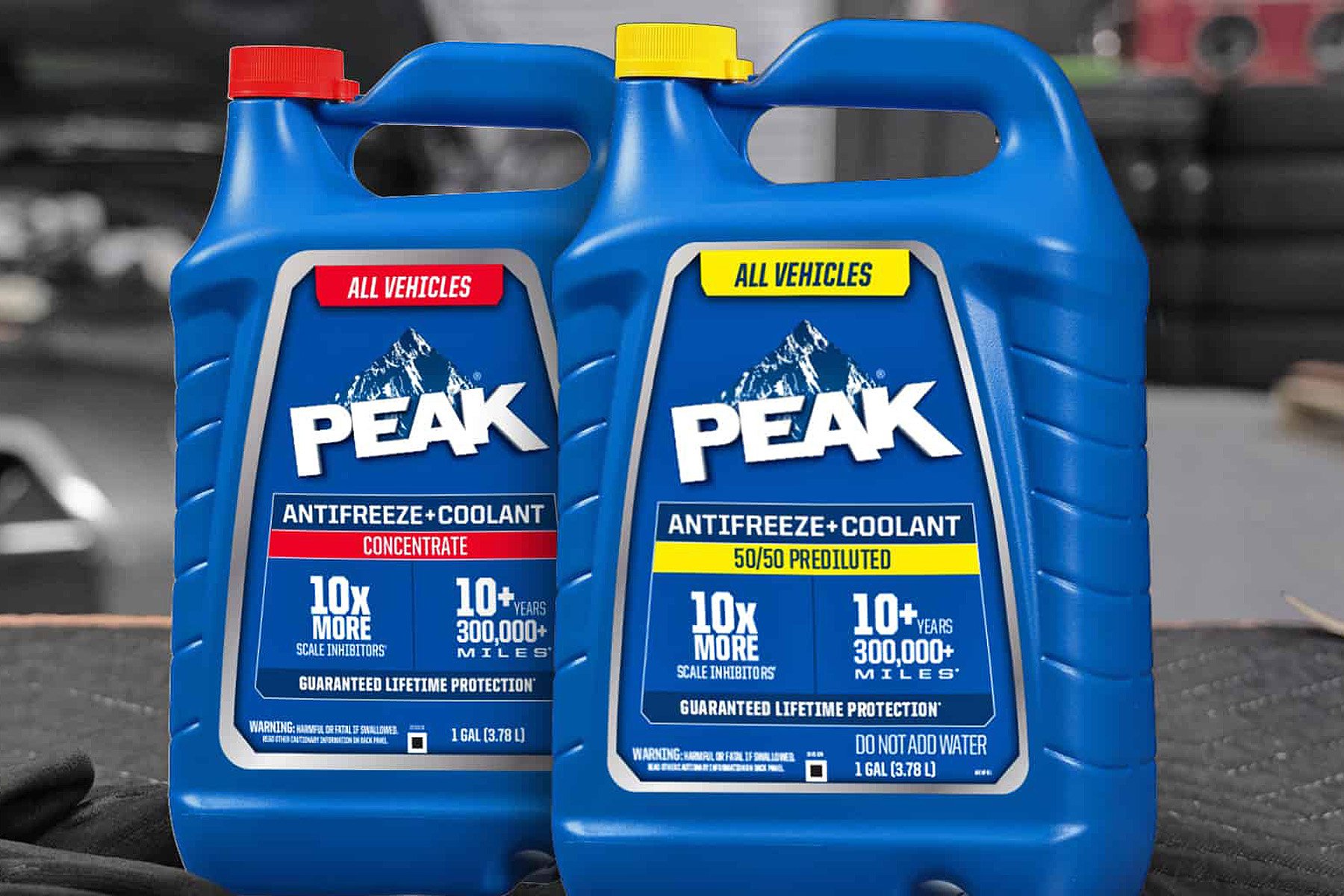
The best answer for an engine with a hybrid of metallurgy comes from the previously mentioned hybrid (HOAT) antifreeze. One such hybrid antifreeze/coolant is Peak’s All Vehicle 10x Technology product. This big blue Peak bottle (with no specific color coding) offers compatibility for use with any color or type of antifreeze/coolant currently in your car’s system. In other words, it can be mixed with other formulations of coolant.

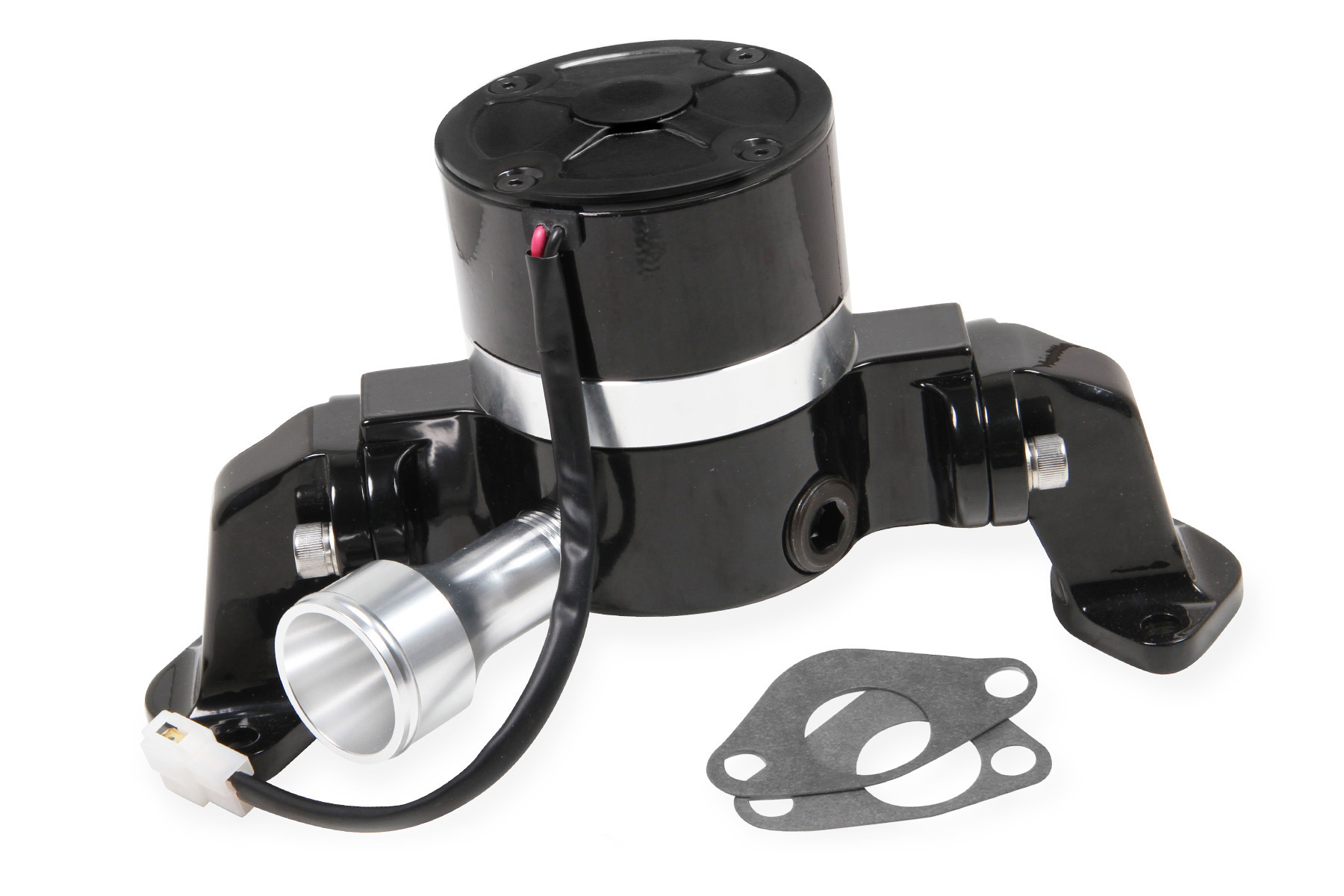
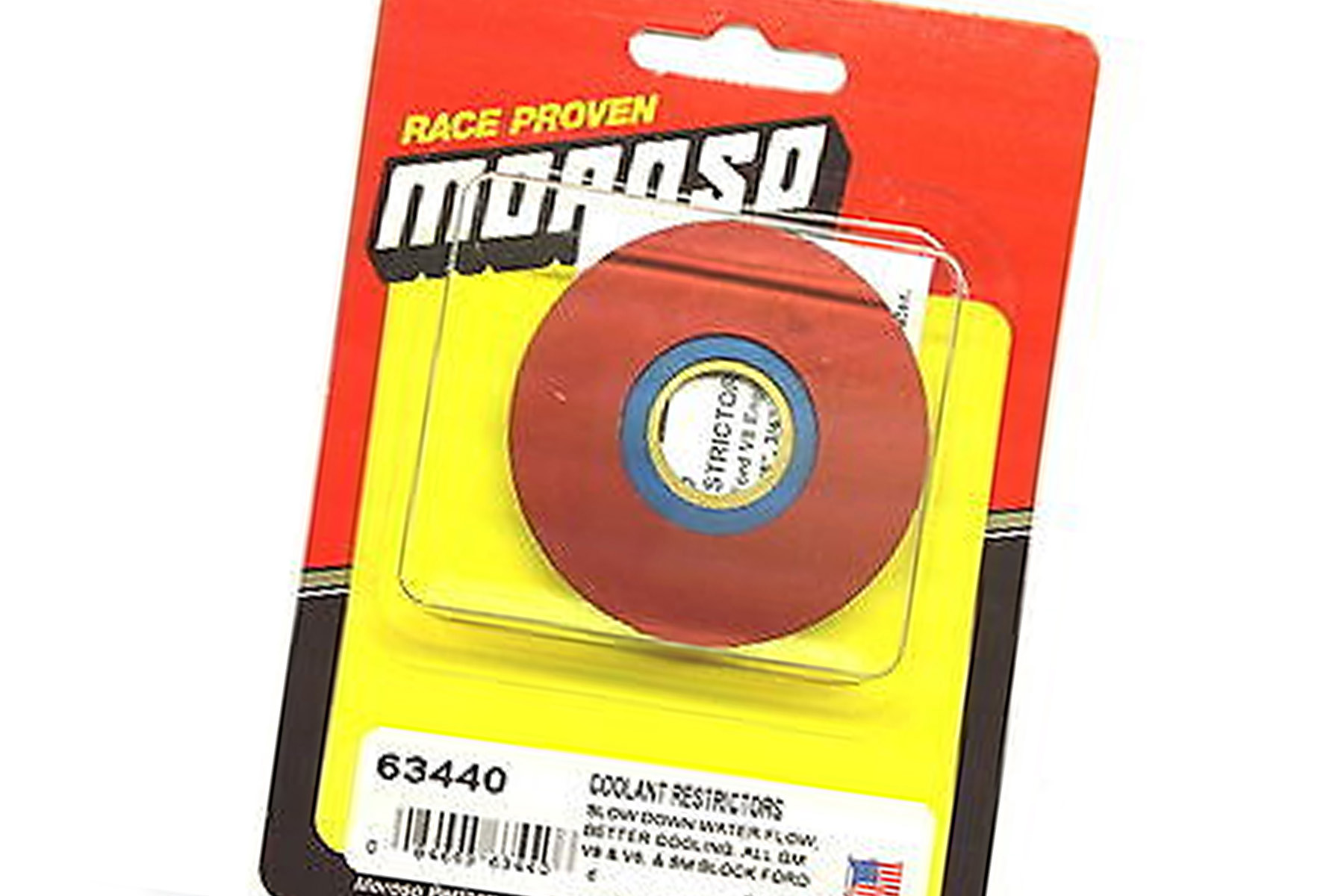
Coolant circulation flow can be too fast or slow. Water pumps with huge flow rates can circulate so quickly that coolant does not have time to absorb the engine’s heat or allow the radiator to exchange heat away. Holley/Frostbite electric pumps flow at 35-gallon-per-minute, a rate many engine builders recommend. Moroso Performance also offers coolant restrictor plates with three orifice options to use in place of a thermostat to regulate flow speeds.

“Now, PEAK offers all of the antifreeze formulas (colors) specifically as a direct match for your factory antifreeze,” mentions Bohlander. “But the 10x formula is designed for use in all North American, Asian, and European cars and trucks, regardless of make, model, or year. This formulation is safe for use with countless iron/iron, iron/aluminum, or all aluminum engines. This type-O antifreeze (referring to type-O blood which is compatible with all other human blood) may be a good choice for performance aluminum/iron engines.”

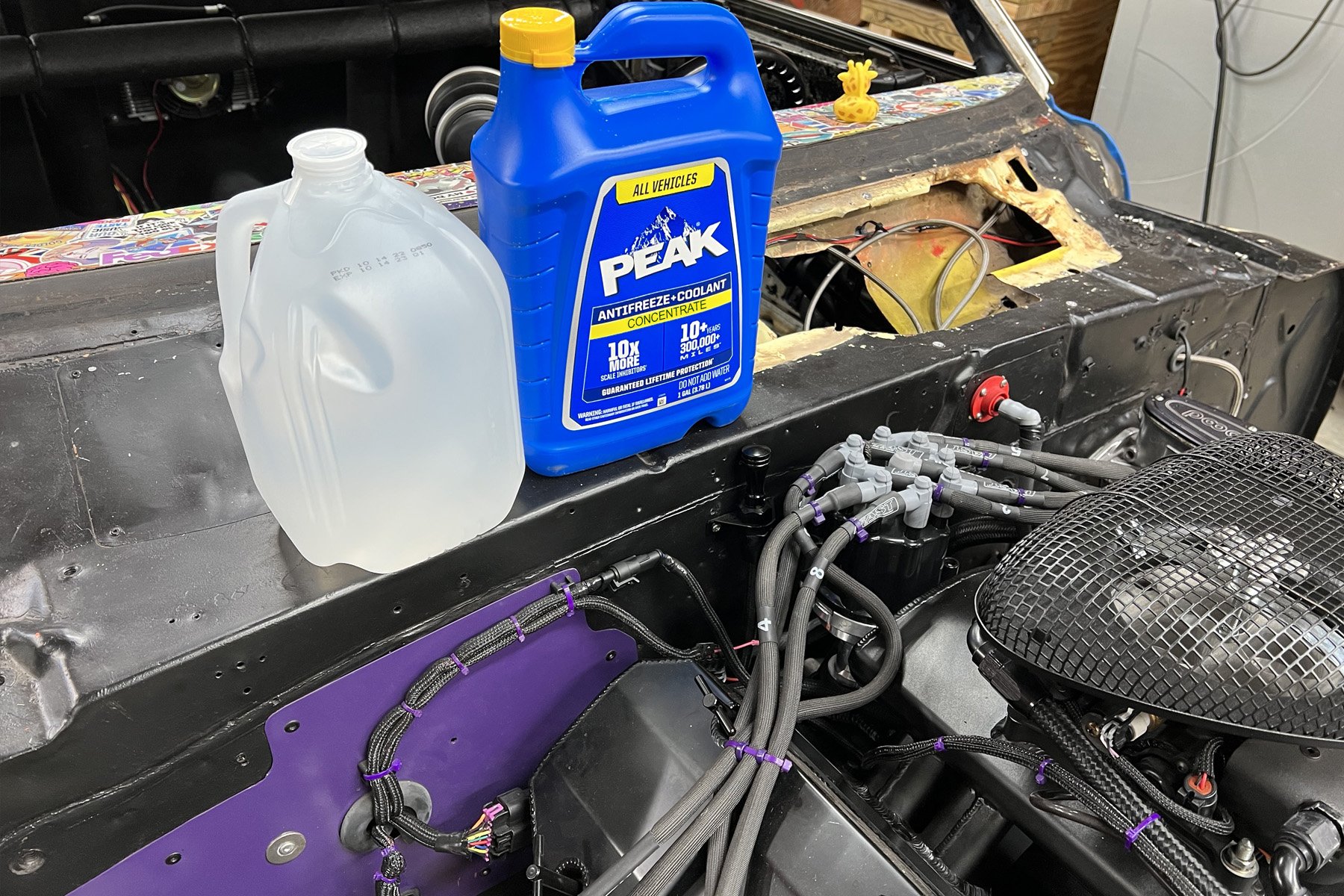
Another motivating factor with specialized formulas is the conditions of tap water in different locations around the world. Turney told us that hard water and/or other minerals reduce a coolant’s effectiveness. Plus, it promotes scale and electrolysis in the cooling system. It is good practice to use prediluted antifreeze, which uses distilled water, or else always blend your concentrate with distilled water.

Peak’s 10x antifreeze is available in 50/50 prediluted or as a concentrate. The enthusiasts who blend their own need to be aware of possible tap water concerns. Hard water and some minerals found in this source can lower your coolant’s effectiveness. Always using distilled water with a concentrate removes any threat of contamination.

Universal antifreeze offers two-fold advantages. First, as explained by Turney, “PEAK’s 10x antifreeze additives are free of 2-EHA, silicate, nitrite, borate, and amines. The 2-EHA refers to 2-ethyl hexanoic acid that is extremely harsh on silicone gaskets and cooling system components.”

We mention the 2-EHA additive because though it was used in older coolants from years ago, you can still find it in many discount brands of antifreeze/coolants. This acidic compound can damage today’s gaskets, water pump seals, and even aftermarket aluminum radiators.

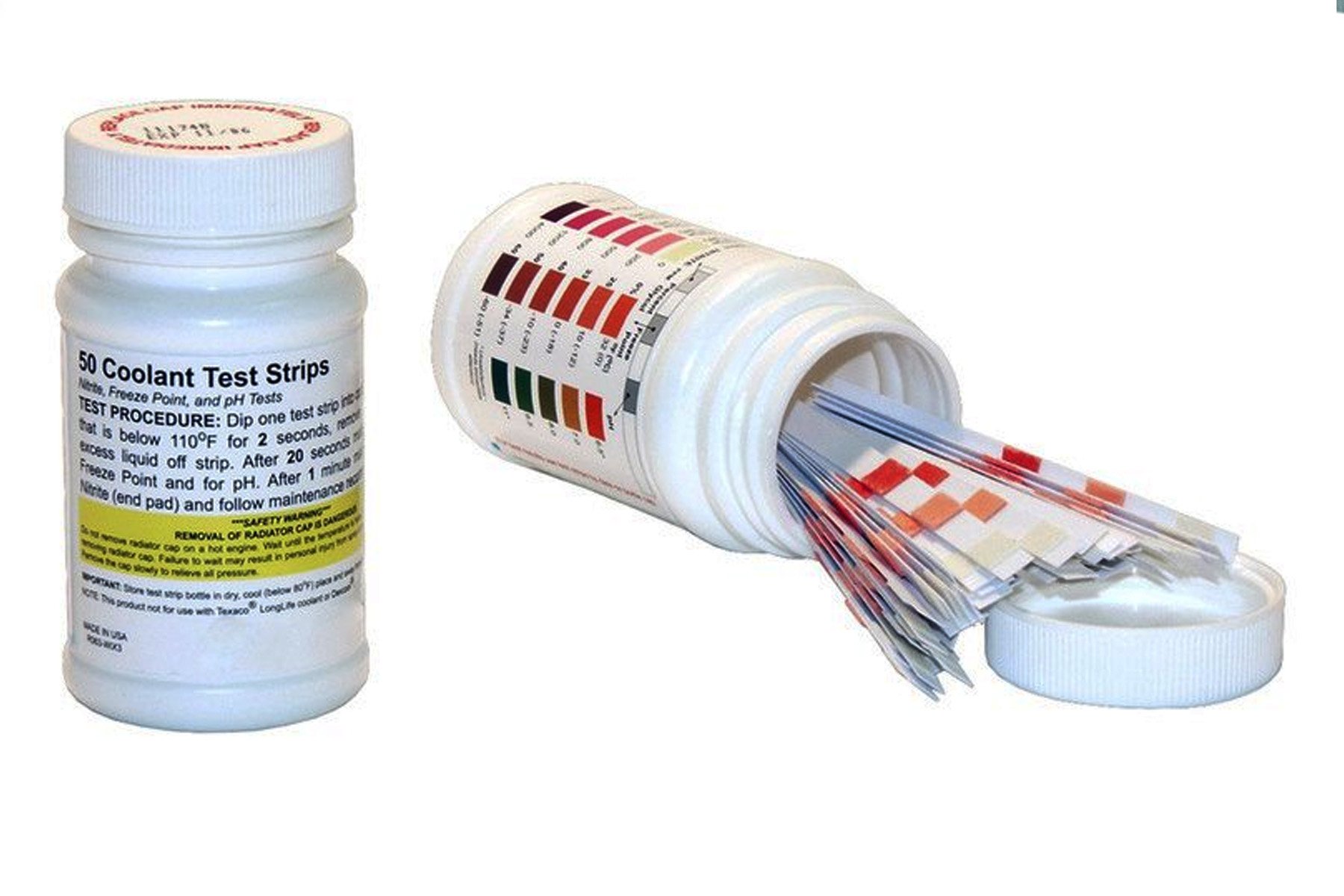
Test strips can monitor your antifreeze chemical balance. These strips by WIX filters dip into your coolant, then compare the color chart with their chemical reaction. They indicate nitrite level, freeze point, and pH level. Our toolbox also has a refractometer. This precision device costs well under 20-bucks and measures the freezing point of either propylene or ethylene glycol-based antifreeze.

The second advantage of Peak’s 10x is its tough organic additives that ward off the negative effects of both scale deposits (aluminum) and corrosion (iron). A multi-use formula can be beneficial to keep all coolant passages clean and heat transfer as efficient as possible.

Coolant Meets Metal
For a coolant to be most effective, the cohesion between the surface of the engine’s metal cooling passages and the actual antifreeze/coolant is necessary. The coolant will then absorb more heat from the engine and expel that heat in a radiator with clean passages.

A major intent of antifreeze chemistry is to keep your cooling passages clean. The “10x” in Peak’s all-makes antifreeze represents the ten times more scale and corrosion-fighting inhibitors within the formula. This provides for a more pristine coolant passage, better contact with the coolant, and more effective heat transfer.

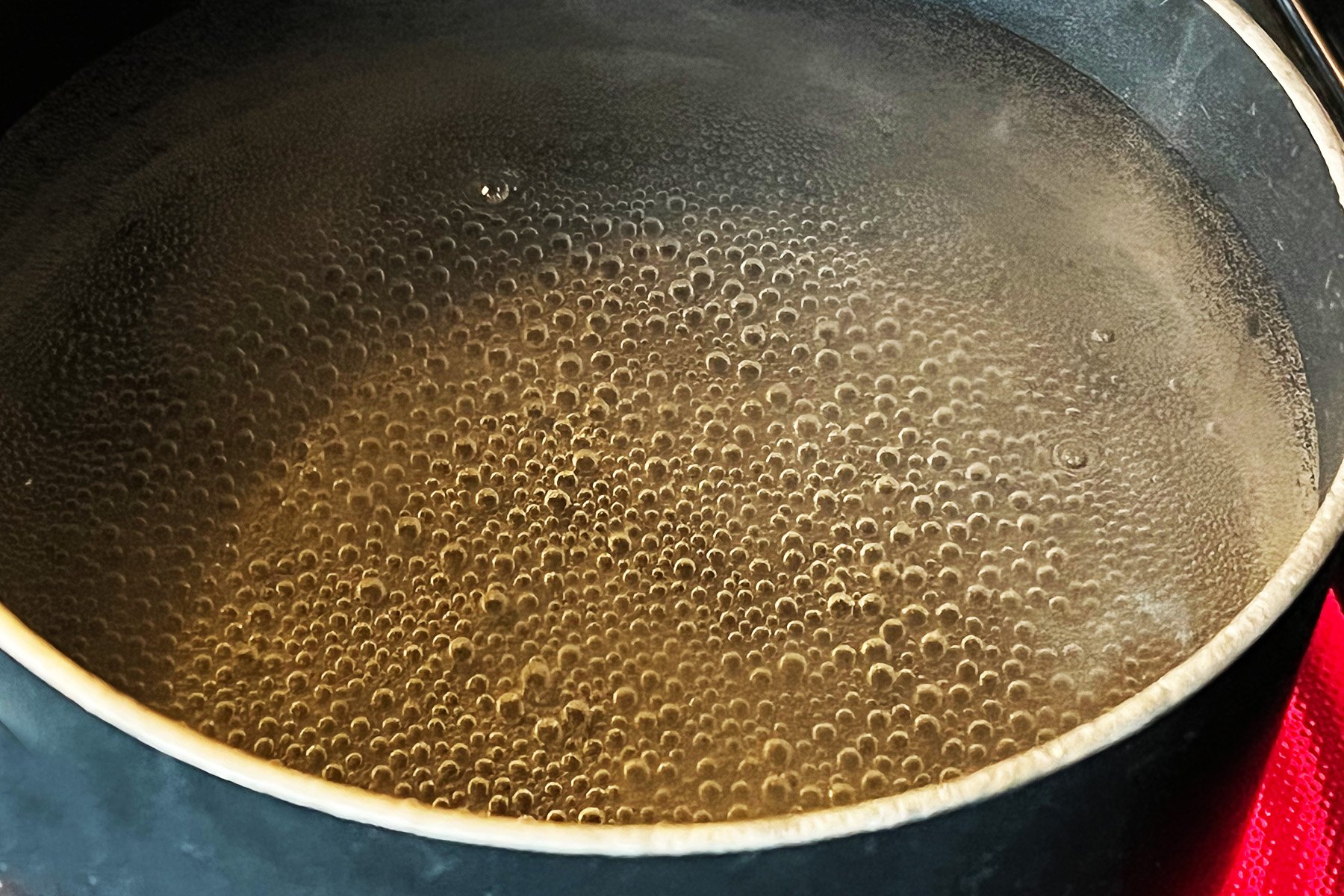
This boiling water shows the formation of air bubbles against the surface of the metal. These bubbles and high-temp steam pockets prevent your coolant from drawing heat from your block and heads. The rust in this block’s coolant passages also lowers the contact efficiency of the coolant. The effect is comparable to the bubbles.

“This is also why a cooling system flush can be more important than many give credit,” comments Turney. “A good engine flush cleaner has neither low nor high pH to do the job correctly. A good cleaner flushes the internal cooling passages with a process called chelation. Chelation is a bonding of ions and molecules to metal ions.” Flushing your cooling system at five-year intervals will help keep your cooling system clean and working at its optimum potential.

If you need to add or change the coolant in your ride, don’t let deciding which antifreeze on the rack at your favorite store confuse you. The new hybrid coolants can ward off corrosion with all specific manufacturers’ metals yet be forgiving to gaskets and seals. And finally, hybrid coolants match a hybrid of metals in your hot rod engine.


Posted on Leave a comment

Fuelab Offers Microscopic Fuel Filtration With Big Flow Capabilities

Fuel filters for high-performance or all-out racing have a greater duty than many consider. We’ve seen scores of racers using a strainer-style filter within a funnel at the track and calling that “good enough.” Today’s fuel pumps, electronic injectors, carburetors, sensors, and more continue to tighten their tolerances to achieve a better fuel feed to meet higher horsepower demands, and fuel filters need to step up their game to protect these components.

Flow Criteria for Filters

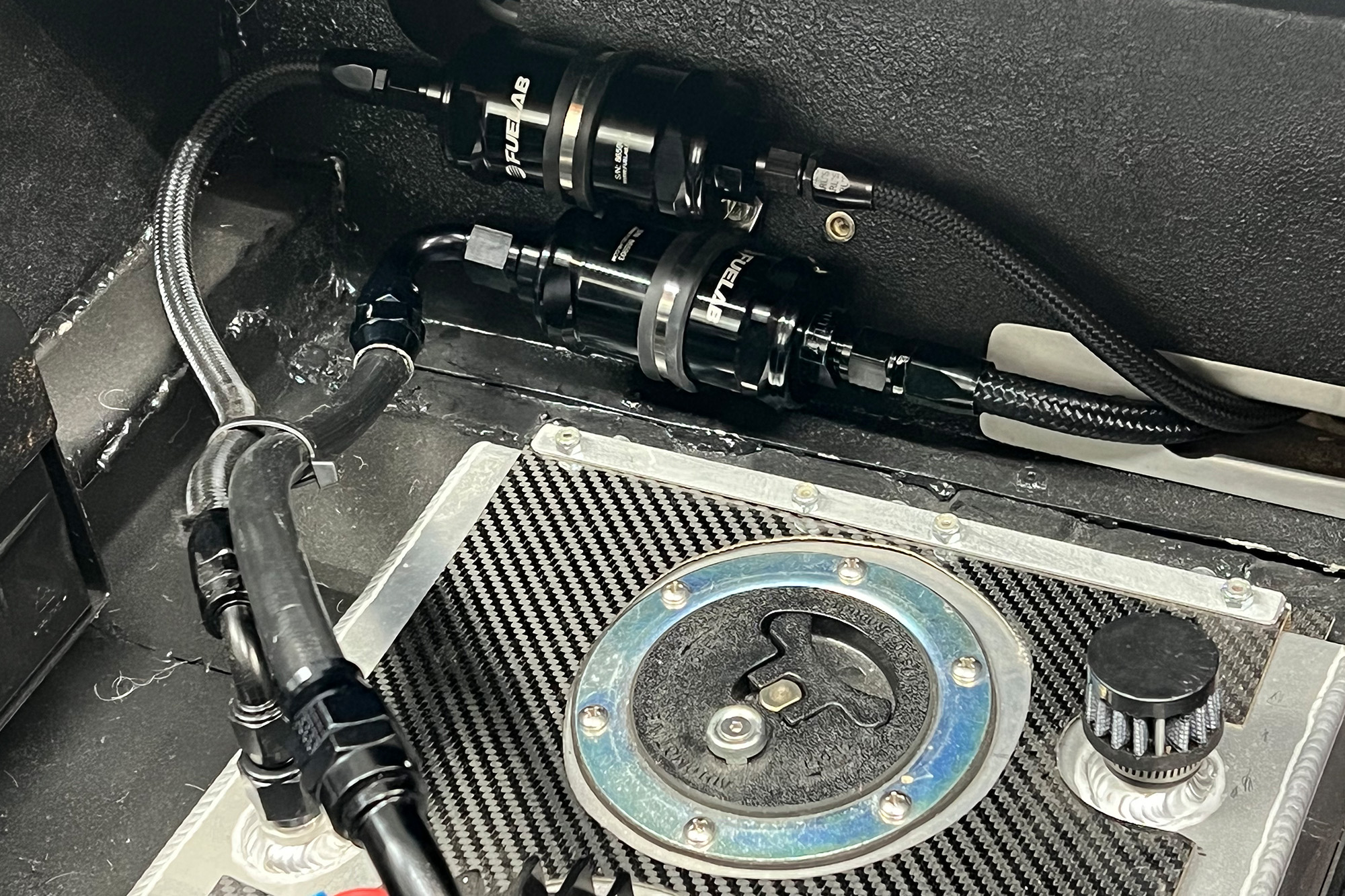
The overall flow of a fuel system is only as good as the combination of components and how they either feed or circulate your fuel supply. We outfitted the Project Rover Camaro with a pair of Fuelab in-line filters for our E85-fueled, electronic fuel injection system. Brian Paitz, President at Fuelab, provided some insight into the proper filtration of a racing or extreme performance fuel system.

“The one thing that I can’t stress enough when you’re setting up a fuel system is that you look at it as an entire system,” Paitz begins. “It goes beyond just a pump, it goes beyond the regulator — it also has a lot to do with your filters.”

Filter Sizing and Location

The success of feeding your engine for its peak fuel demands will depend greatly on two critical locations in your filtration: filtering the fuel before and after the fuel pump is the most effective layout.  These two filtering points ensure your fuel system is optimized for flow — yet protected.

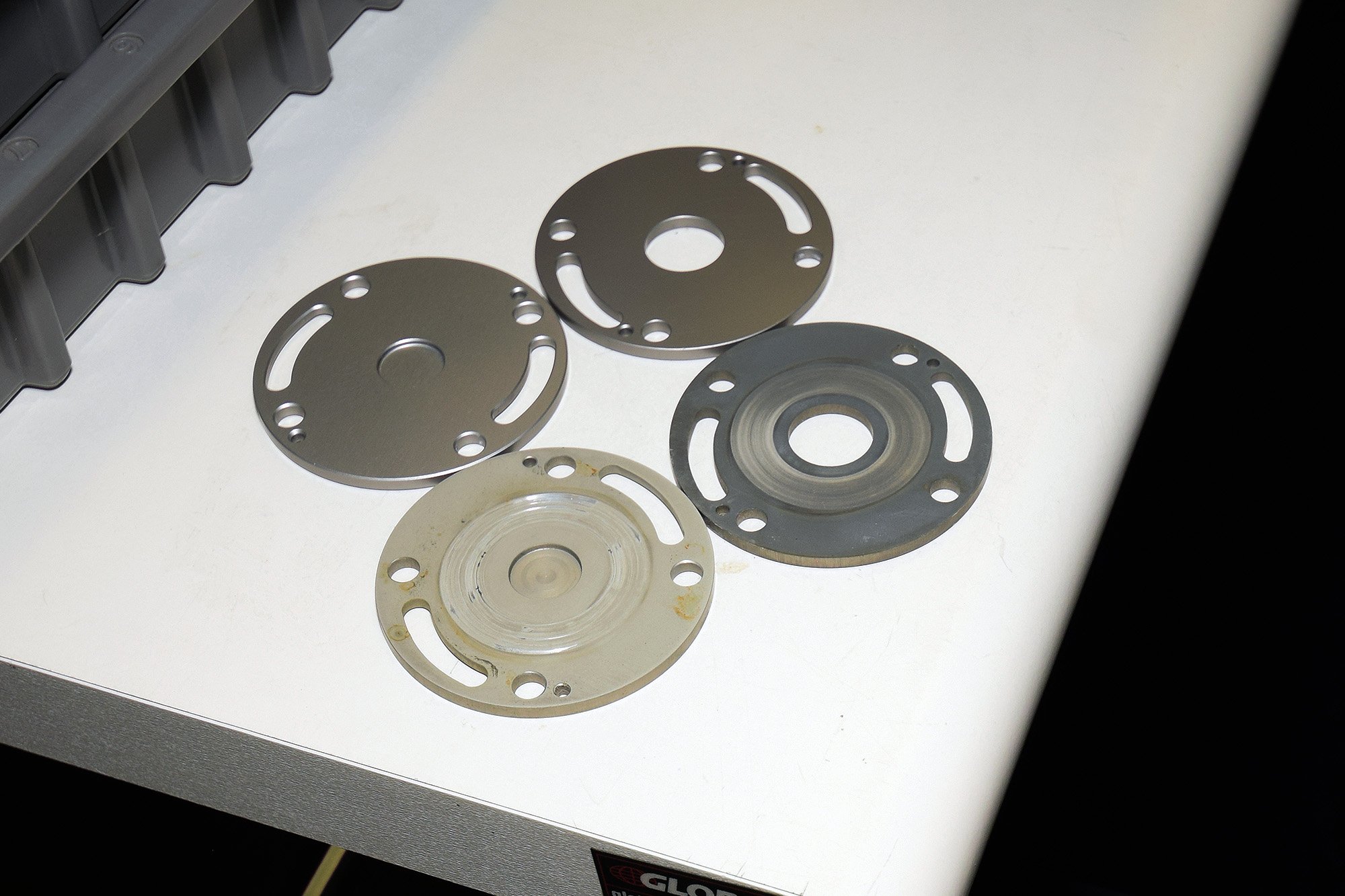
Fuelab offers a variety of filter choices in paper/cellulose, fiberglass, and stainless steel mesh filter media that best apply to your filter size and fuel type. While in their shop, they showed two scored fuel pump plates alongside originals that demonstrated the result of not using proper filters before and after your fuel pump.

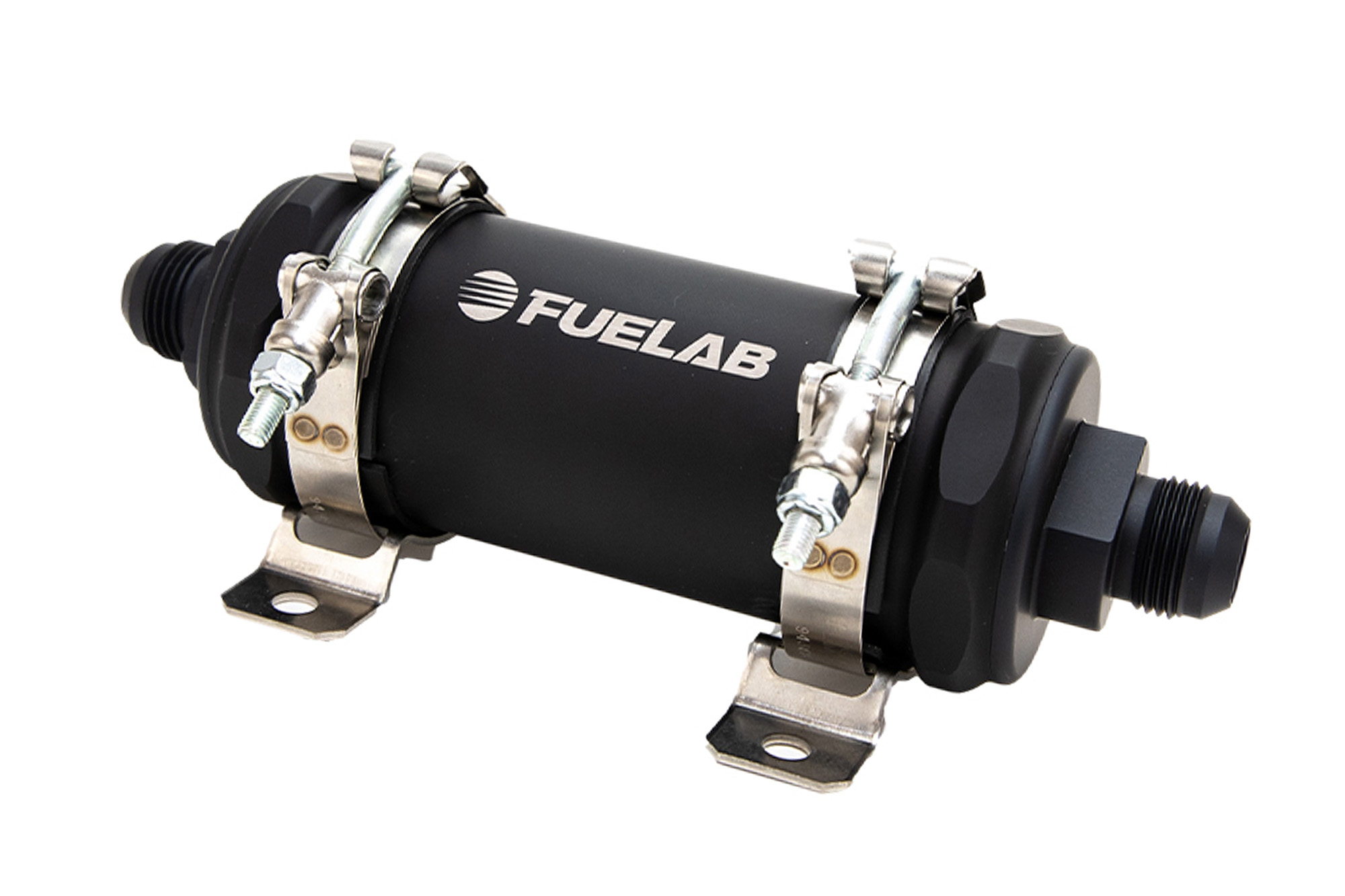
Fundamentally, we spec’d out our in-tank fuel pump at 150 gallons per hour (GPH). With that, we researched the Fuelab filter GPH offerings and chose the 818 Series in-line fuel filters, which can handle 200 gph. These feature male 37-degree flared fitting end caps on both ends, and can be ordered with various size combinations across -6AN, -8AN, -10AN, or -12AN male inlets and outlets.

Paitz explains that you must choose filter sizing to prevent pressure drops. “You want to be sure you get a pump filter that can handle the fuel capacity leaving the pump,” he says. “You want to minimize pressure drop across the filter. Blowing 10 gallons per minute through a filter that has a -6AN inlet and outlet is going to create a pressure drop across that filter, potentially losing a couple of pounds of pressure.”

Our EFI system dictated our remaining hose sizes; it calls for a -8AN inlet hose and a -6AN return line. We took advantage of Fuelab’s unlimited combination of AN fittings at the filters’ inlet and outlet ports to plumb a -10AN filter inlet from our pump to a -8AN filter outlet towards our EFI system, and a -6AN filtered return to the tank.

Outside of our selection, Fuelab also offers filters in larger sizes. The 828 Series inline filters are the same diameter as the 818 filters we’re using, but hold a 5-inch-long filtering element compared to the 818 models’ 3-inch-long filter. The 828 Series supports 350 gph of flow.

Their new 868 PRO Series Extreme Flow inline fuel filters have a 10 GPM rating for maximum flow and minimal pressure drop. Wait, GPM? Yes, this filter will flow 10 gallons per minute with -10AN male inlets and outlets and a 5-inch diameter filtering element.

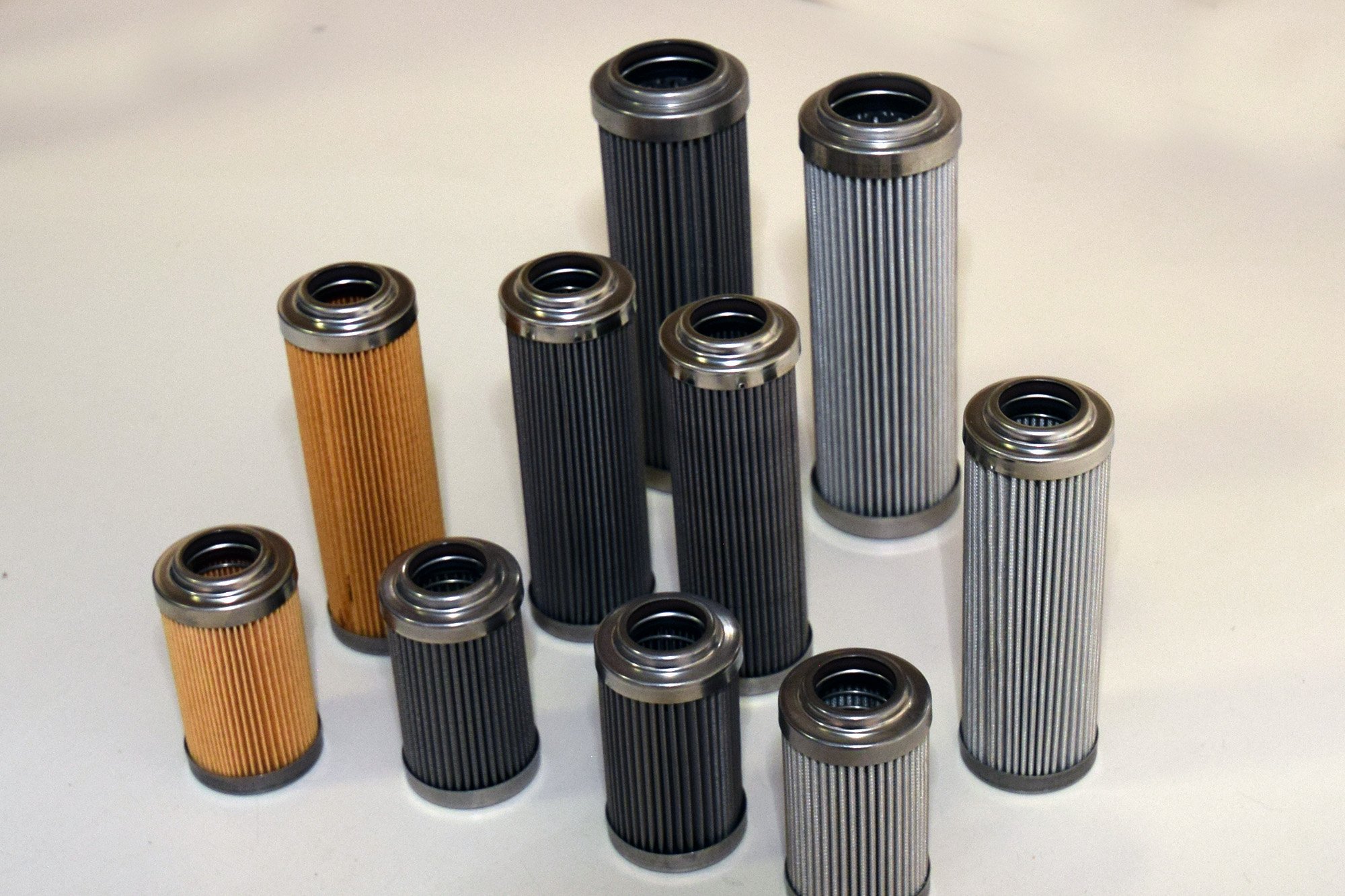
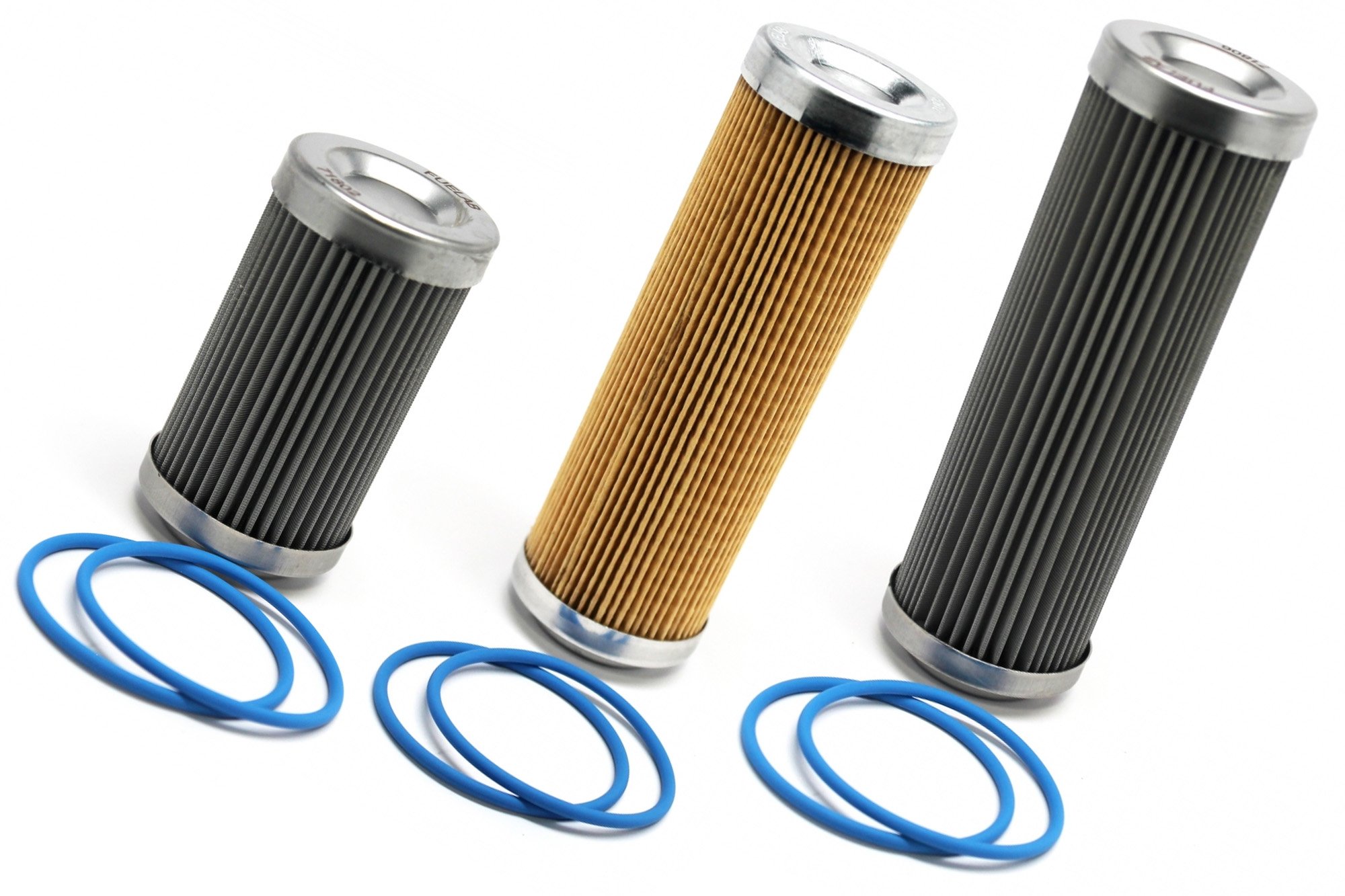
They do put the word “lab” in the company name at Fuelab for a reason: its extensive testing equipment helps to develop the highest internal flow characteristics to prevent low-pressure points within the filters. Their 3-inch fiberglass, 5-inch paper/cellulose, and 5-inch stainless steel filter media are shown.


Filtering Media and Fuel Type

Fuelab offers multiple choices of filter cartridges to insert into your filter cases. “We recommend that you use a filter with the 100-micron rating or finer before any performance type pump,” Paitz explains. “It’s super important to get the properly sized pre-filter before the fuel pump. This stainless filter element should only be used as a pre-filter for fuel pumps — it helps prevent pump cavitation with an extremely low-pressure drop.”

A finer element (lower numerical micron rating) is recommended directly following your fuel pump to protect injectors, carburetors, and other downstream components, such as fuel sensors. There is a variety of filter media choices; the deciding factor is your fuel type used.

A numerical rating describes a filter’s capabilities. For instance, a 100-micron filter will stop a particle as small as 100 microns. Our micro-fiberglass element offers extra protection by eliminating particles down to 6 microns in size. – Brian Paitz, Fuelab


Filter Media Choices

The Fuelab stainless steel filter is available in 40 and 100 micron filtration levels and is compatible with gas, diesel, ethanol, and methanol. In addition, the stainless filter is cleanable and does not necessarily require replacement for maintenance.

“Our 100-micron cellulose paper element is economical, and commonly used as a pre-pump filter element, but can only be used with gasoline and diesel fuels,” Paitz says. “Our most advanced filter is our micro-fiberglass element — it provides extra particle protection with improvements in filter efficiency. This disposable element is compatible with gas, diesel, ethanol, and methanol.”

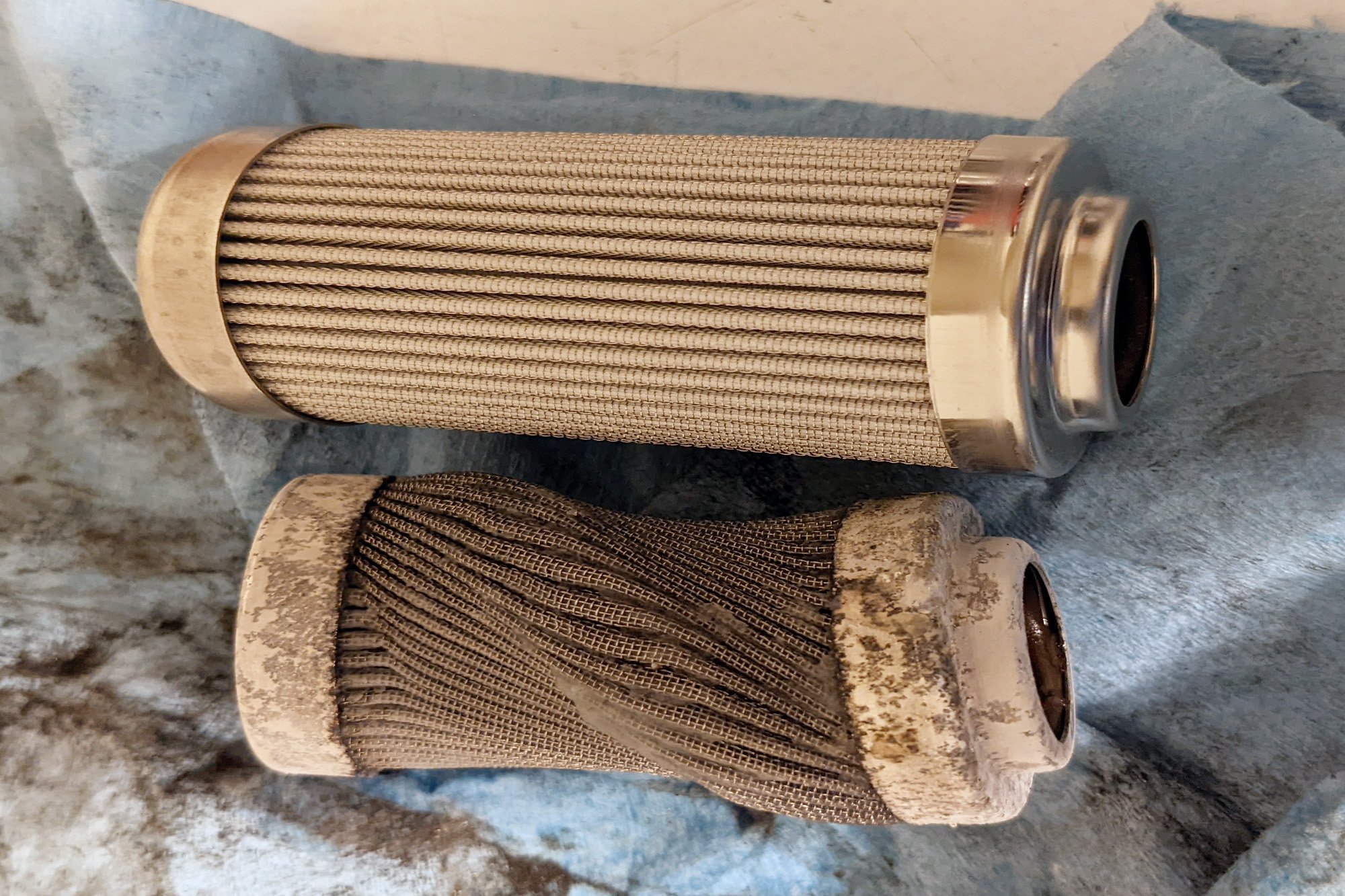
The filter housing offers a threaded cap allowing access to the filter area. Paitz shows us a fiberglass media filter that did its job to filter E85 to the point of collapsing. He told us this customer did not replace his filter for over two years.

Our E85-fueled project Camaro has a recirculating fuel system that uses a return line to the in-tank pump. We installed Fuelab’s stainless-steel 100-micron filter before the tank’s return line inlet and their inline filter with a 6-micron fiberglass element directly following the pump’s output.

One curveball that Paitz cautioned with cellulose/paper filters is the use of oxygenated fuels. Even if you’re racing with gas or diesel, if that fuel is oxygenated, definitely choose the micro-fiberglass option.

If you’re using the stainless-steel screen filters at one or more points, cleaning and reusing these filters is reasonably easy. Scrubbing with carburetor cleaner, a catch pan, and compressed air will do the trick; we go a little further and use a parts-cleaning toothbrush and a small ultrasonic cleaner in our filter maintenance.

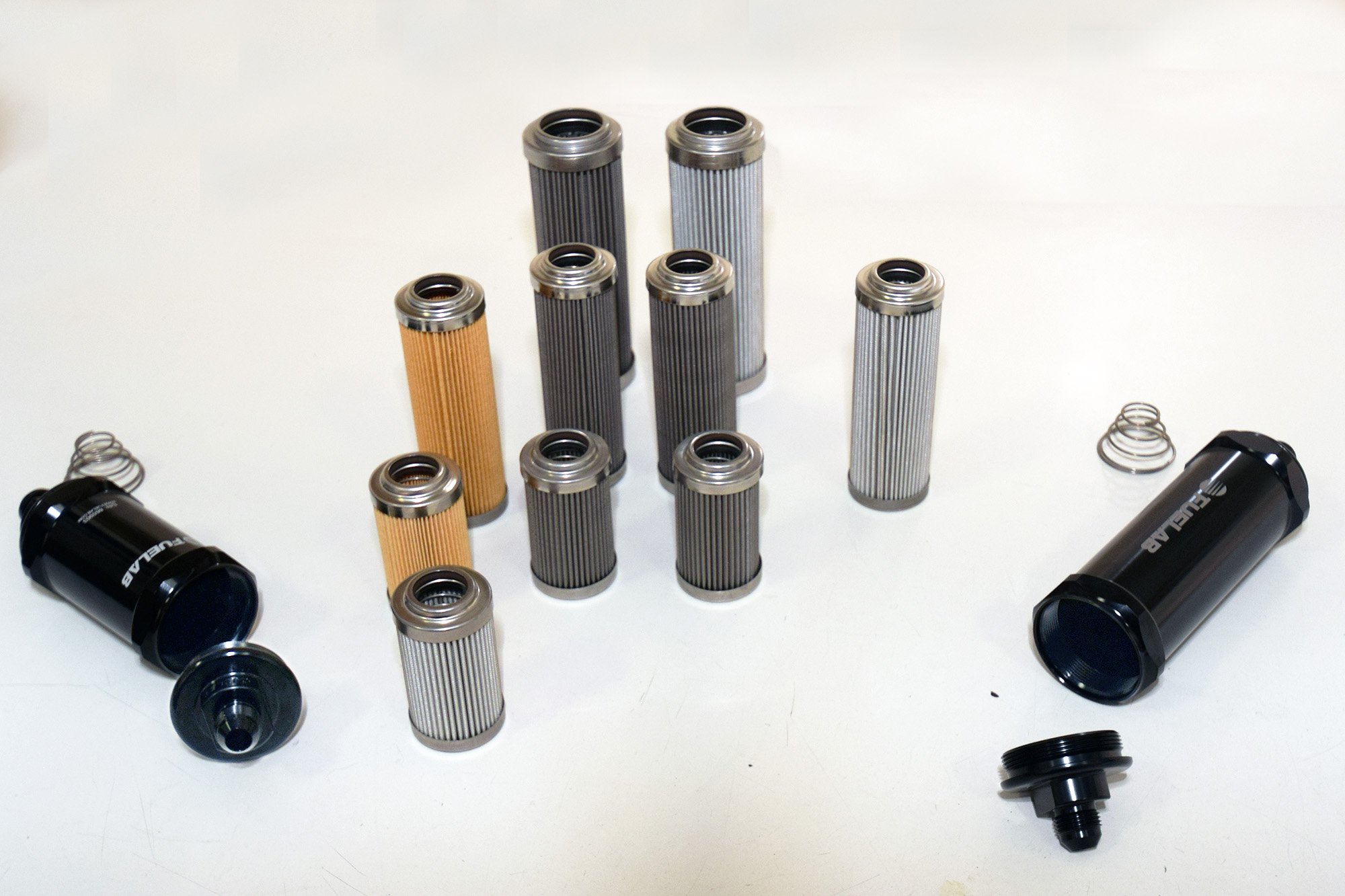
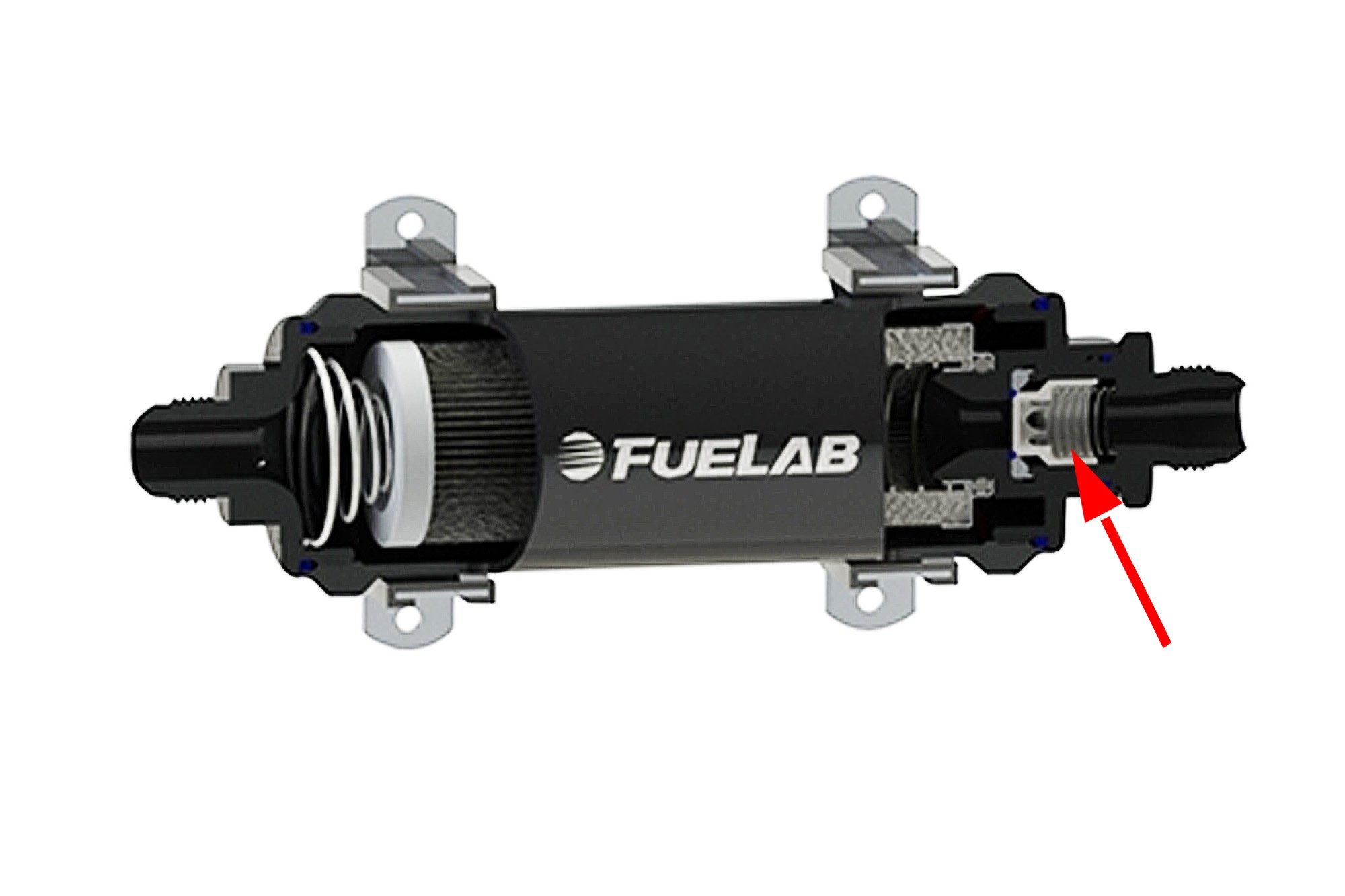
Another option is the check valve (arrow) integrated into the housing. This allows the benefits of your fuel system remaining pressurized when your fuel pump is not running. Their pumps, filters and regulators are anodized per military MIL-A-8625 with a high-tech laser etching of your product and serial number on the case.

It is wise to make sure you have spare O-rings from Fuelab in your tool box in case one is damaged during the disassembly of the filter housing. For paper/cellulose or fiberglass filters, there is no recleaning option. All replacement filters from Fuelab come with replacement fluorosilicone O-rings.

Additional Features

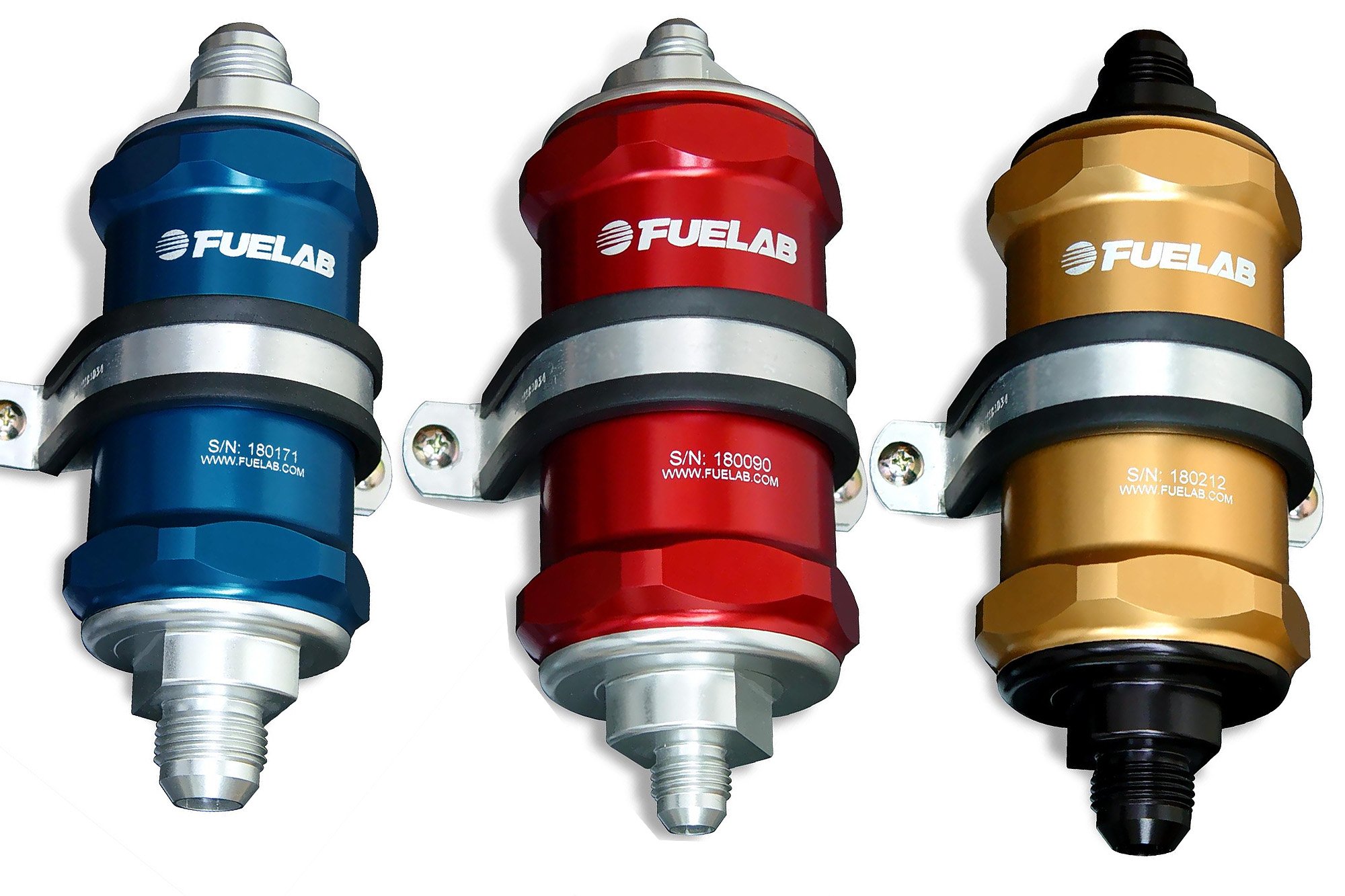
All Fuelab filters are machined from billet aluminum and finished with a fuel-durable anodizing per military specification MIL-A-8625 (Type II). They are available in a variety of anodized colors.

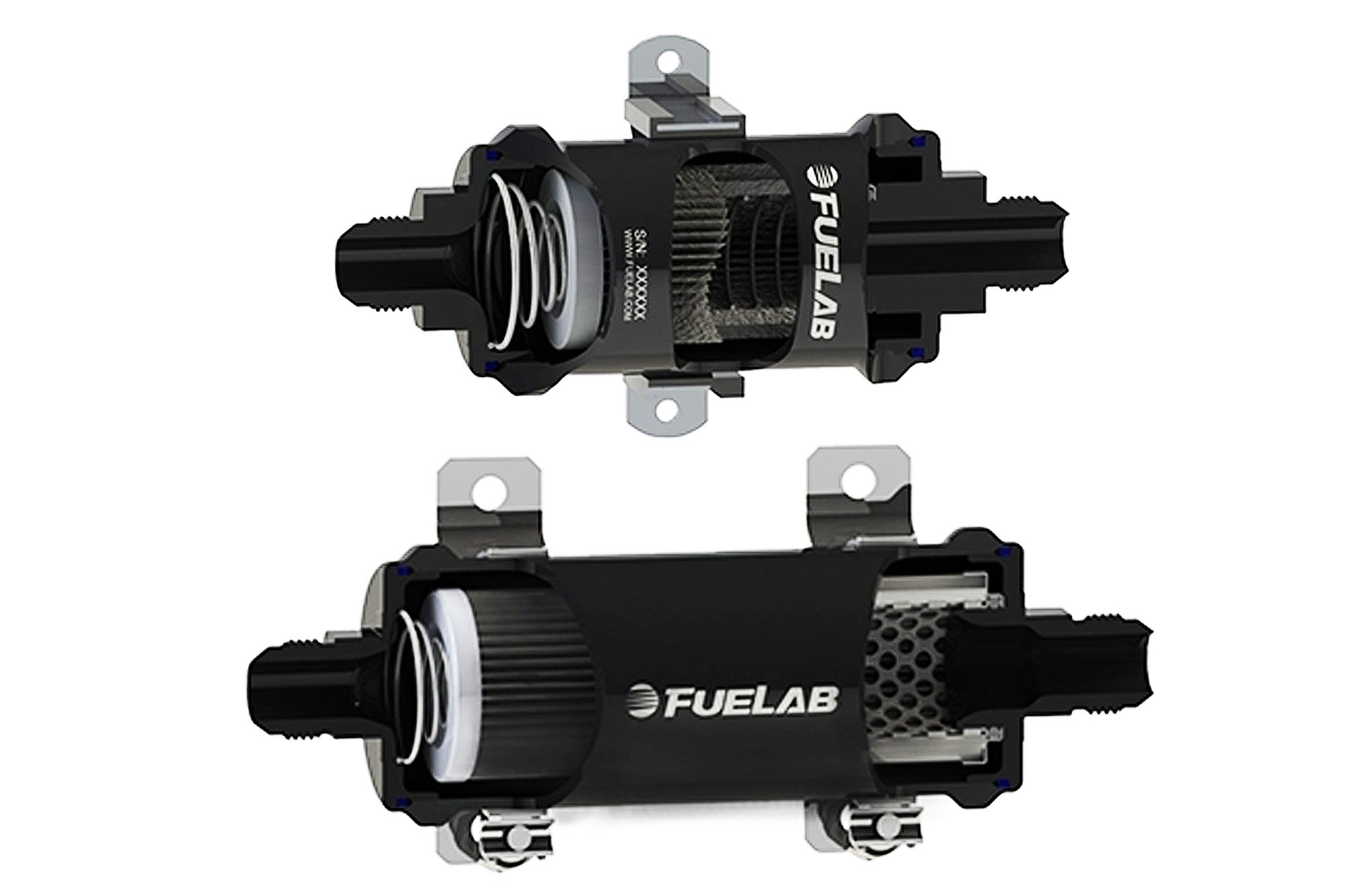
The filter housing is designed with machined internal radius points along the internal flow of the filter housing from inlet to outlet. These radiused provisions allow for minimal pressure drop in the fuel flow. An internal spring forces the filter against the downstream port of the housing to seal it; this causes the fuel to travel through the filter from the outside inward.

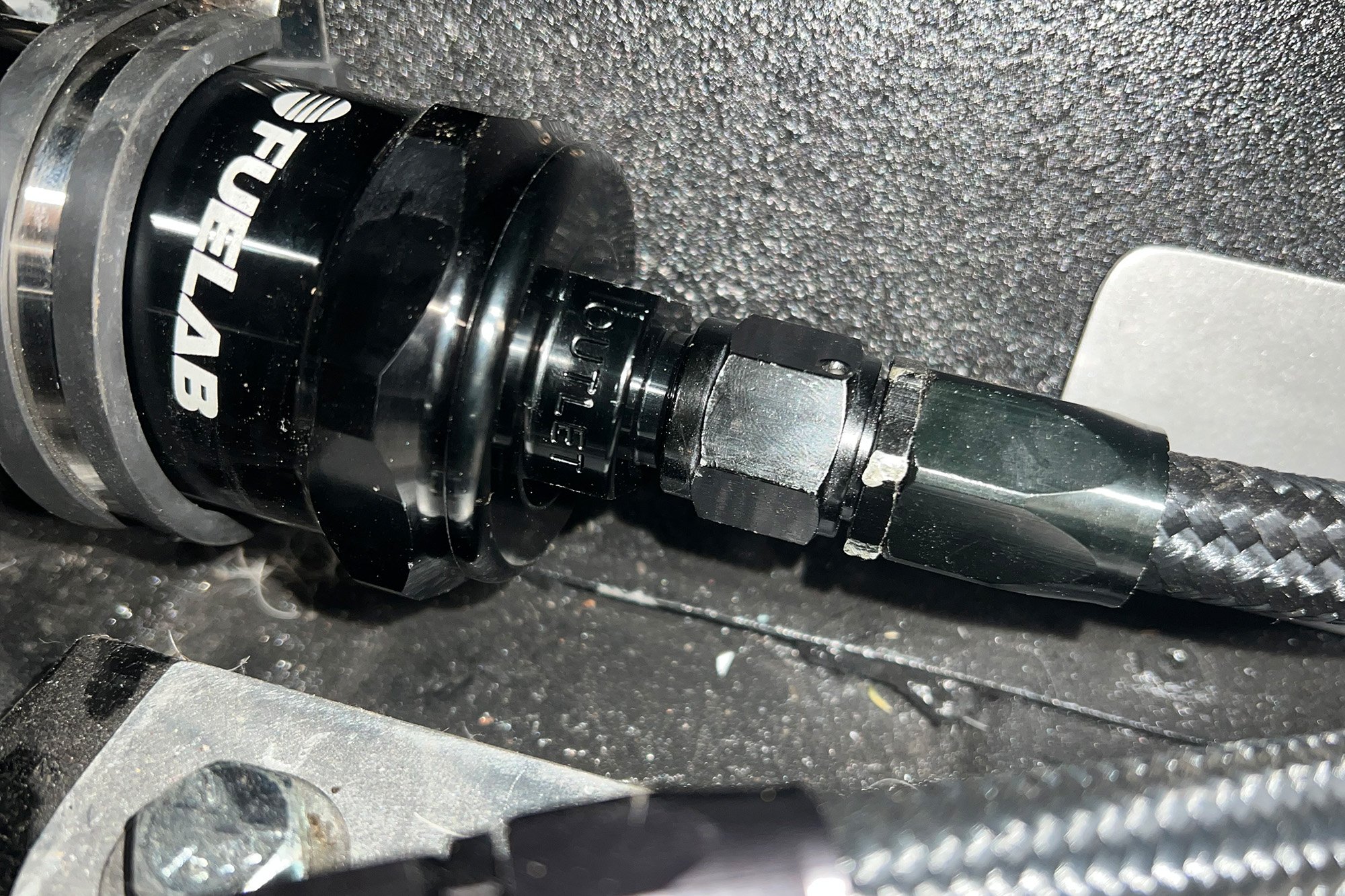
Inside, you can see the extensively developed flow radius corners that offer the best flow numbers. An internal spring forces the filter element over the exit port where all fuel travels from the outside of the media, inward for best flow. An outlet indicator is machined into the housing.

For Fuelab’s 848 and 858 series filters, there is an integrated check-valve option that allows your fuel system to maintain fuel pressure when the pump is dormant. The compact valve is located at the exit port of the filter for contaminant protection and easily alleviates the use of an outside check valve into certain systems.

We’re Protected

With a 100-micron and 6-micron filter installed on our recirculating fuel system, we are confident that no contaminants within the fuel will affect our electronic fuel injection or wreak damage to our fuel pump. Paitz finished by adding his recommended maintenance schedule.

Fuelab’s “beast” of a filter is the 868 PRO Series Extreme Flow inline filter. With a 6-inch filter length, it can flow a massive 10 gallons-per-minute with -10 AN fitting ends.

“So, people ask me how often I should change the fiberglass filter? For drag racing guys, make it a once-a-season inspection for the filter, plus a thorough cleaning of the stainless filter. But there are so many variables, such as where do you get your fuel? Is it going into a stock tank? Is it E85? Are you straining the fuel before putting it into a cell? These variables should have you considering a tighter inspection and maintenance schedule.”

If you consider the many gallons of fuel that pass through your racing fuel system, keep in mind how quickly particles or even the slightest degradation of your fuel lines can affect your fuel system. Think about these quality filters as a protective component for your fuel system and monitoring devices to inspect what tiny micron-sized “hitchhikers” are corrupting your performance carbs or injection system.


Posted on Leave a comment

Discussing Piston Rings And Cylinder Honing


When considering parts for an upcoming engine build, I’m reminded of a conversation I overheard many years ago between a teenager and an older gentleman. The young boy was looking at a car to purchase and was exclaiming all the benefits of his recently-located dream car such as the new brakes, new exhaust system, and on and on. The older gentleman listened and then asked, “Are you buying a car or a bunch of car parts?” While an assemblage of quality parts is always a plus, they won’t be much good if the rest of the package isn’t up to the task as well. The same goes for the engine in your car. Choosing the right piston rings is as important as any other part of your engine.

Piston ring technology has changed a lot since the “chrome or moly” option. Today’s rings use a variety of materials and coatings to tailor them to a specific application.

We must choose individual components for our engines in much the same way, fully understanding how they must work together to get the best results — piston rings included. Today’s rings employ much more technology than they did just a few years ago. Choosing the right path when shopping for piston rings without an understanding of why these advancements have come about can be quite daunting. We spoke with Lake Speed, Jr. from Total Seal to help us better understand today’s piston ring technology and how the machining process needs to work together to ensure any engine rebuild is a success.

Types Of Piston Rings

Many of us can remember when there were only two types of piston rings – ductile-iron moly-faced or chrome-faced. Before that, there were simple cast-iron rings, but since we’re talking LS-based engines, let’s stick with technology from this century. The latest material to come into the piston ring market is steel. This durable material has enabled cylinders to seal using the thinnest of surfaces. If you’ve been shopping for piston rings lately, you’ve no doubt noticed how thin some rings have become.

The oil acts as a gasket, as well as a lubricant. – Lake Speed Jr., Total Seal

There are also a variety of coatings available on piston rings, such as plasma moly, gas nitriding, and various PVD coatings. PVD (Physical Vapor Deposition) has become more popular as of late. It is a thin coating process that deposits hard films on the surface of the ring. The PVD process offers many options, such as CrN (Chromium Nitride) and TiN (Titanium Nitride), both feature excellent temperature and wear resistance. With so many different choices, you may wonder if anyone can really know what type of piston ring is best for their application. Yes, you can. We asked Total Seal’s Speed how to do just that.

Let Your Power Determine Your Piston Ring

As with so many areas of concern when building an engine, knowing your power expectations for the engine is the best way to determine which piston ring will work best. Even the fuel you intend to use can make a difference in the best piston ring choice for your application. Speed explains, “The key is, you have to know how the engine is going to be used. Is it going to be naturally aspirated or boosted? Is it going to see nitrous? Each of these considerations has an impact on what ring material is best used.”

Rings have also become much thinner than what you may be used to seeing. There are so many benefits to a modern, thinner ring that many OEMs have begun using them from the factory.

Running pump-gas or E85 can make a big difference, too. For a naturally aspirated engine running pump-gas, a ductile iron ring with a moly coating works perfectly. The moly face coating is porous, so it holds oil well to lubricate the cylinder wall. For that reason,  ductile moly rings don’t rely on the cylinder wall’s machining to retain oil as heavily. Conversely, if you are looking at boosting or running E85 in your engine, you’ll want to use a steel ring. Steel rings are harder than chrome or moly-coated rings, and they are not porous, so oil needs to be retained in those small valleys in the cylinder wall, which are created by the honing process.

Longevity In The Valley, Power In The Plateau

“EVERYTHING you do has an impact on the rings’ ability to seal the cylinder!” says Speed. “Even supporting the engine with an engine plate versus traditional motor mounts can make a difference.” It is widely accepted that using a torque plate during honing builds power by ensuring the cylinder is perfectly round once the head is installed. Just the same, getting the proper cylinder wall finish for your choice of rings is important for longevity and how the rings will seal to the cylinder wall. Speed explains that every ring type is going to have its own recipe for preparing the cylinder bore. That proper finish is, more often than not, a two-part equation that includes the smoothness of the highs and the depth of the lows, called plateau honing.

Plateau honing begins with a rough stone to create a deeper “valley” into the machined surface of the cylinder. Then, a finer stone creates a smoother surface by removing the peaks from the previous machining process.

The oil in a cylinder acts as a gasket, as well as a lubricant. There needs to be adequate oil within the cylinder so the rings will have the lubrication they need. Speed explains that fuel is the enemy once it gets down to the area where the piston rings and cylinder walls meet because it washes away the layer of lubricating oil. The more fuel that goes into the cylinder (as in the case of boost, nitrous, or E85), the more it will wash down the cylinder wall and remove the oil film that provides for the longevity of your rings. In these instances, it is imperative to retain enough oil to lubricate the piston rings.

  • Oil’s Four “R”s

    • The RIGHT AMOUNT
    • Of the RIGHT OIL
    • In the RIGHT PLACE
    • At the RIGHT TIME

Just as importantly, the cylinder wall needs to be smooth enough so the rings will seal completely. The answer is plateau honing, where two different grit stones are used. The first round is with a coarse stone to create a surface finish with enough “valley” for oil to reside without being washed away by the fuel. The second pass uses a finer stone to smooth out the peaks of the minuscule mountains on the surface of the cylinder wall (much like a broken-in engine would have) to ensure a good seal with the rings. “Seating the rings” was once a process that occurred over time during the running of the freshly built engine. Today, the ring set in a properly plateau-honed engine with the right ring package can be broken-in much faster. The exception is chrome-faced rings, which require a different finish, specific to the material.

Power Solutions For Stock Components

With so many junkyard LS-based engine builds going on, we asked Speed about finding the right cylinder finish and ring package solution for a low-budget, stock-based build. He reaffirmed, “Be honest with yourself and what you’re REALLY going to do with it.” He explained that on a pump gas engine, a ductile iron ring will work great with a 320-grit hone on the cylinder walls. At that point, the strength of the piston to handle the engine’s power output becomes the limiting factor.

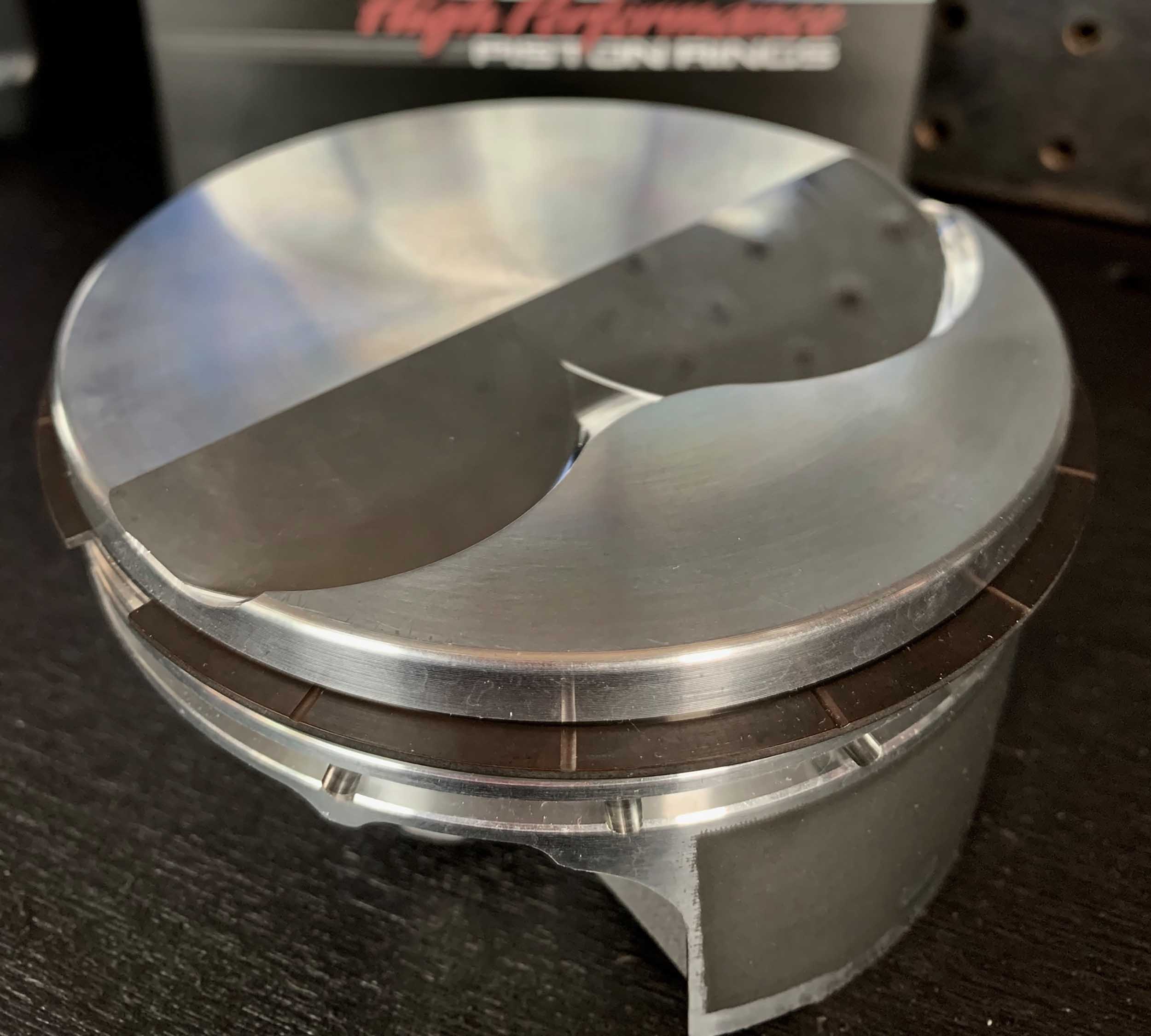
If you’re going to boost it and you want it to last, Speed recommends starting with at least a 280-grit hone and finishing off with a 400-grit stone to provide the necessary plateau. Once the cylinder surface is correct, you can also have the piston skirts coated with an abradable coating to help keep them square in the bore. When choosing the rings, you can opt for a gas-ported top ring to help improve the seal around the entire cylinder’s circumference.

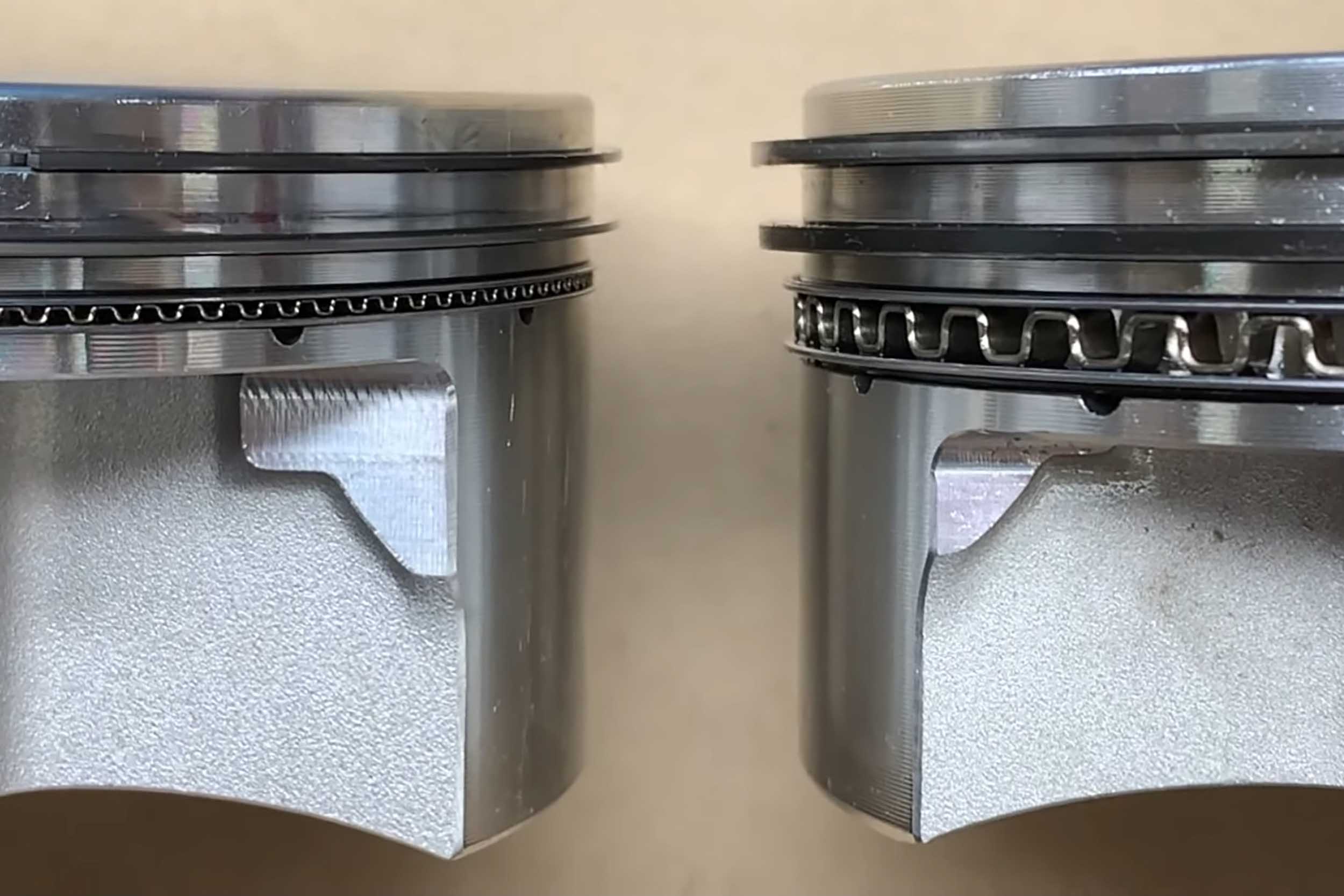
To help the ring seal to the cylinder wall, you can opt to use either a ported ring or a piston that uses porting. This allows cylinder pressure to flow behind the ring and evenly push the ring out toward the cylinder.

Speed also spoke about the importance of having the proper end gap in the rings. You want to give those rings room to expand under heavy loads without butting together and ruining your engine. He also explained too many folks worry about keeping a tight end gap to prevent leak-down. Speed says the risk of ruining your engine by having your piston ring end gaps too tight is geater than the power you might lose by giving your rings some gap. If you’re really concerned about losing that last horsepower through the end gap, you could always employ a set of gapless rings to fill in the gap, so to speak.

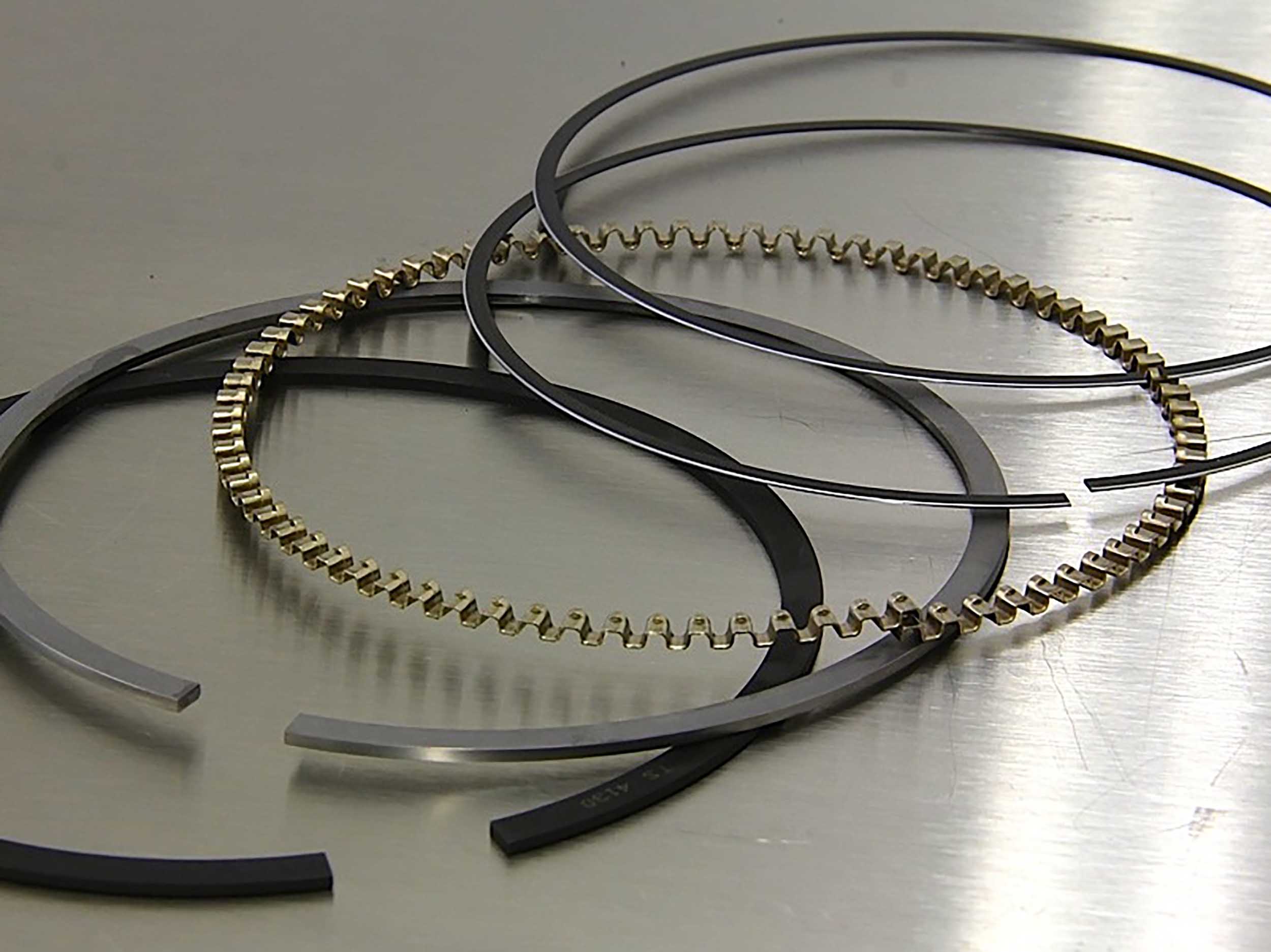
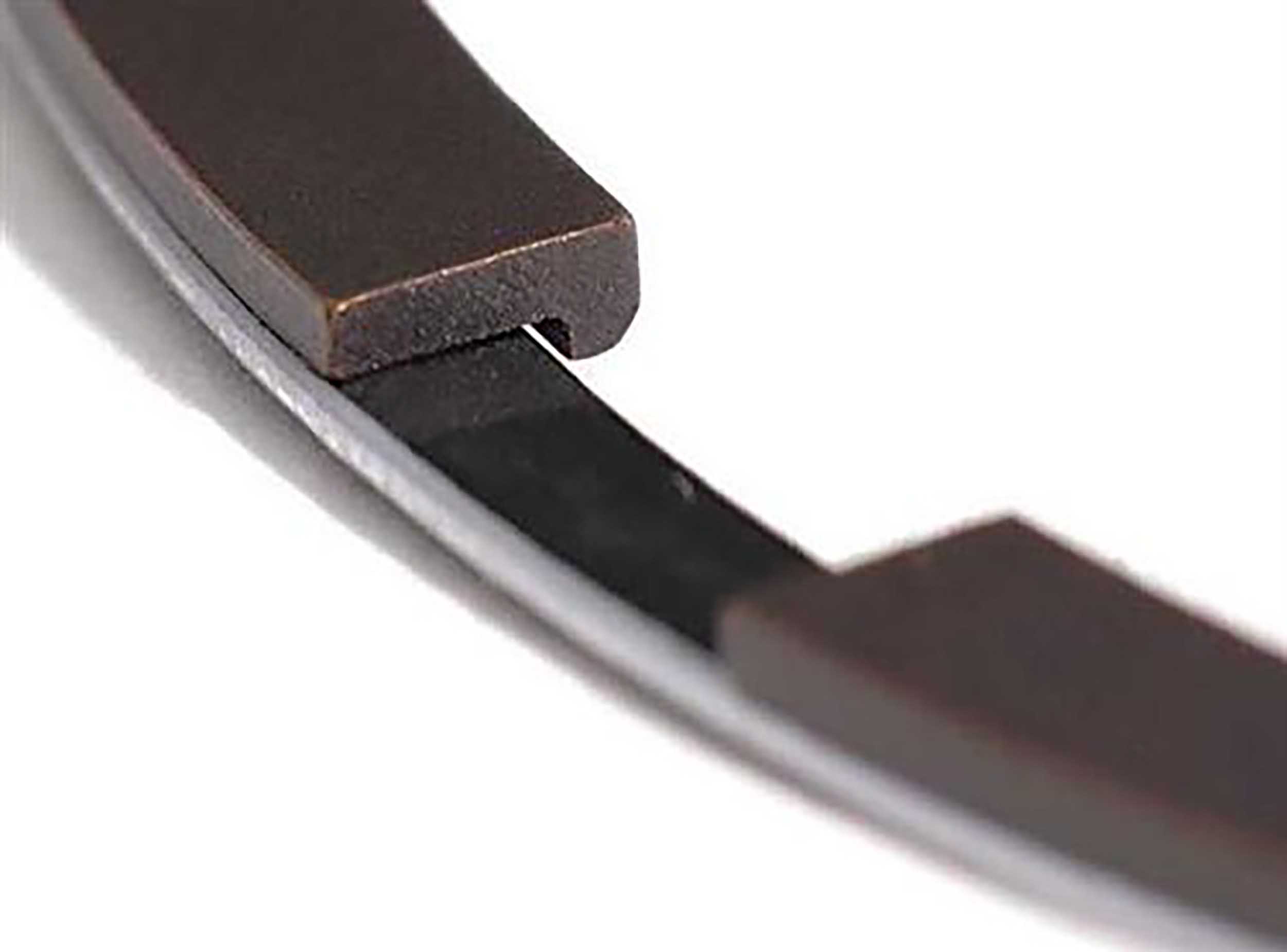
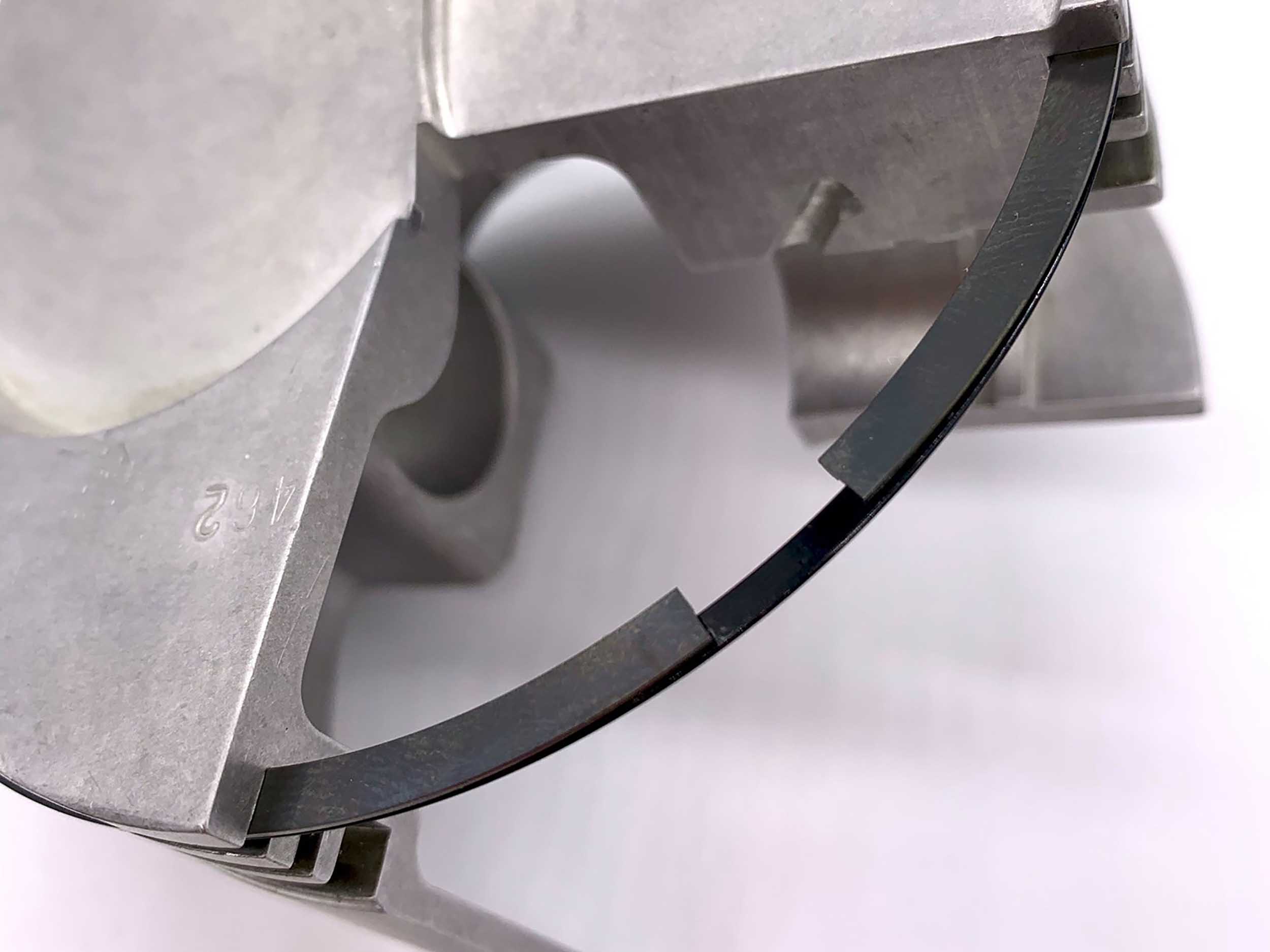
Gapless rings employ a second ring within the same ring land. The gaps are staggered between the two rings, effectively filling in the gap area while allowing each ring enough room to expand due to heat.

Without a profilometer, you’re just guessing. – Lake Speed, Jr.

Knowing the expectation for your engine will help you decide on the best components and machining process for your application. When it comes time to scratch the surface of your cylinder walls, make sure your machinist can verify the work with a profilometer.

A profilometer shows the details of your finish on the machined cylinder wall. Getting the proper plateau hone is a two-step process focusing on the depth of the oil-retaining valleys as well as the height of the peaks of the surface where the rings will contact the cylinder wall. A profilometer is a tool to ensure the proper machining.

Speed was quite adamant, “without a profilometer, you’re just guessing.” We’ve spent most of this story extolling the importance of getting the proper finish for your rings and it would be a shame to drop the ball at this point in the game. If you think about it, it’s kind of like laying the foundation for a house without a level. While you may not be the one holding the profilometer during the machining process, we hope this helps shed some light when choosing the next set of rings for your engine build. If you have any questions, the knowledgeable folks at Total Seal are just a phone call away.


Posted on Leave a comment

ARP Fasteners Explains Metallurgy Basics For Performance Enthusiasts

The Automotive Racing Products (ARP) staff are pretty darn “geeky” when it comes to the science of working  with varied metals to give them certain desired strengths or properties. Here are some key terminology nuggets from ARP that influence the design and manufacturing of their product lines.

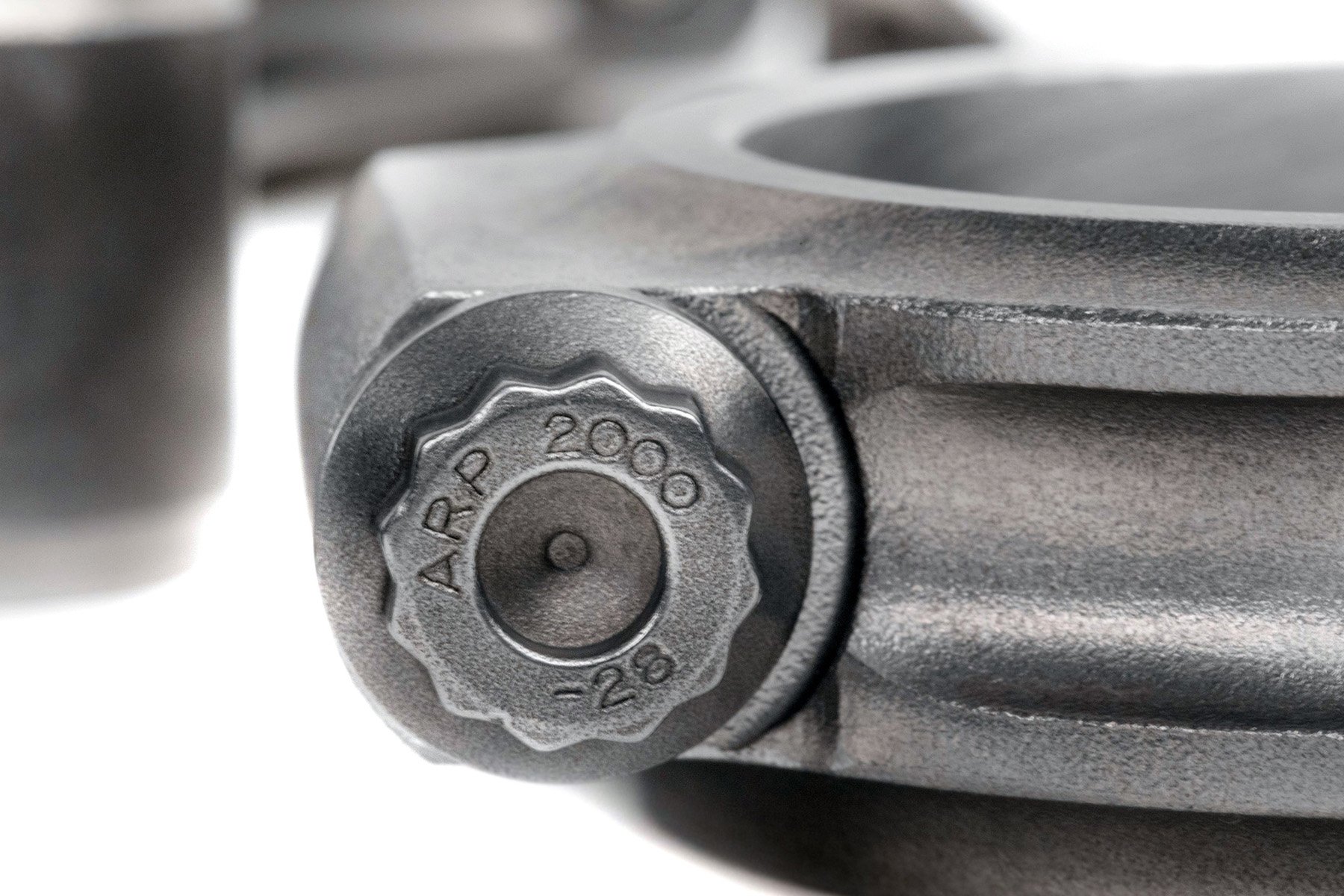
Holding everything together, from your engine’s engine rod bolts to wheel studs, each can have a specific metallurgical composition for each different load and cycling application. 

Grain Size 
The importance of a metal’s grain size comes from the ways different alloys are cooled and form a grain pattern. For example, grains in cast metals are quite large. Grains can be refined (made smaller) by first cold working and then by recrystallizing at high temperature.

Smaller grain size equals stronger metals. Alloy steels, like chrome-moly, do not need any cold work to do this – reheat treatment will refine the grain size. All ARP bolts and studs are of a fine-grain – usually eight or finer on the ASTM scale, with 10 being the finest.

Metal Toughness vs. Brittleness
Recognizing the laws of nature concerning steel, as the strength goes up, the toughness decreases. At too high a strength, the metal tends to be brittle. And threads accentuate the brittleness. Tool steel, which can be heat-treated to 350,000 psi, would be a disaster as a bolt because of the threads.

Modulus of Elasticity
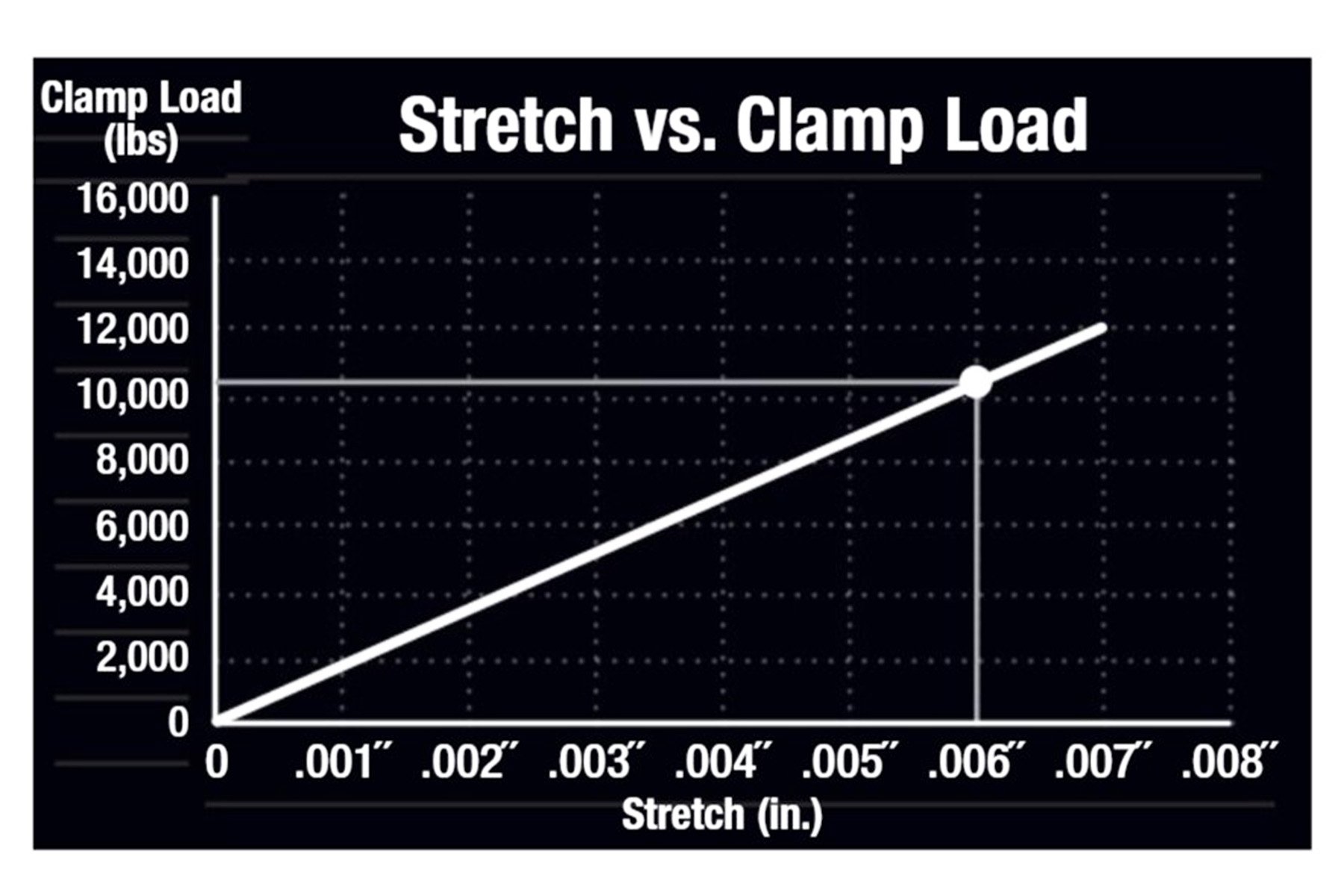
Metals are like a spring – if you double load on them, they will also stretch to a doubled factor. This metallurgy is important in connecting rod bolts because we are measuring the load by measuring the stretch.

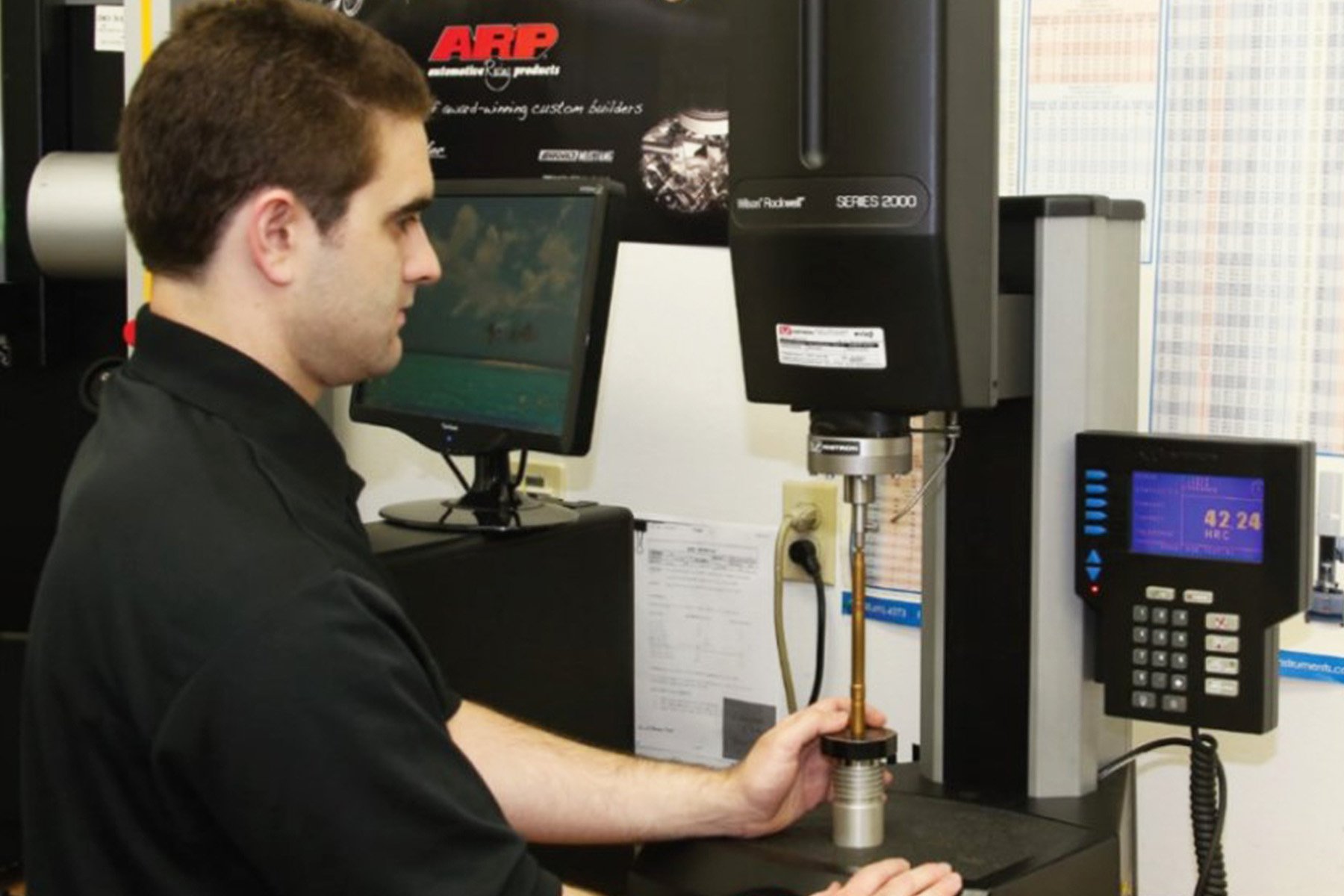
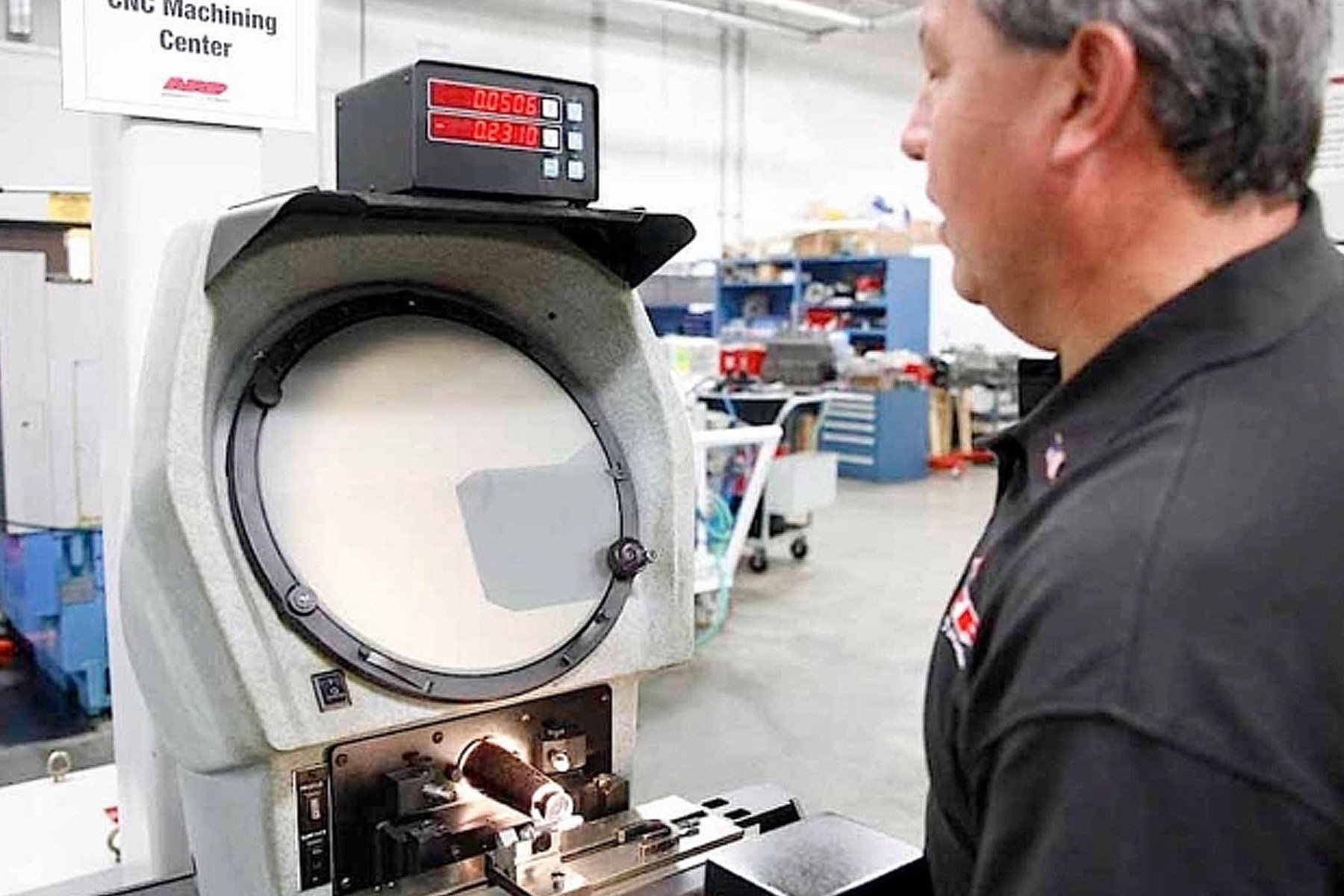
ARP Fasteners utilizes the highest tech in metallurgical equipment to develop product and monitor quality control right down to the grain structure of the metals.,

The modulus of elasticity of all alloy steels is the same – 30,000,000 psi. Whether it is heat-treated or not, this modulus is true – whether it is a 100,000 psi strength level or 300,000 psi.

What is Chrome?
Chrome is the metal chromium best known for chrome plating. It is also used as an alloy addition to iron to form stainless steel. Stainless steel must contain at least 12-percent chromium. These low-chromium steels can still show rust on the surface. Using 18-percent chromium will make stainless steel more rust-resistant. In fastener applications, stainless exposed to oxygen at temperatures above 1200 degrees Fahrenheit will cause the chromium to join the oxygen and leave the surface depleted in chromium.

Differences Between 4130 and 8740 Chrome Moly
Both metals have chrome-moly (most alloy steels have moly) and similar chemistry. A 4130 fastener has only .3-percent carbon and can’t be hardened as high as 8740, which has .4-percent carbon. Also, 8740 has about .45-percent nickel, and 4130 has none. The chromium content of 4130 is slightly higher, .95-percent instead of .55-percent. However, 8740 is generally considered to have somewhat better toughness due to the nickel.

The importance of load characteristics derived from measuring the stretch of a given size and configuration bolt will indicate how much load is stretching the bolt.

Common Fastener Failures
The most common cause of a connecting rod and wheel stud failure is too little induced load (stretch) during installation. This induced load allows the alternating load to impose a cyclic loading on the bolt. Overtightening a fastener is another cause of failure because the induced stress is too close to the yield point.

When you decide upon various fasteners for performance and racing applications, knowing the more common terms can help you make the proper decisions.

The ARP fasteners catalog is not only filled with pages of various fasteners comprised of different metals, but it can also become a classroom-style textbook for learning exactly why different metal alloys are used for varied fasteners.

Posted on Leave a comment

Race Gas Concentrate Aims To Match Race Fuel Performance From A Can


In the late ’90s, Dan Muldowney was racing at a track where he bought 110-octane fuel for his car. He thought everything was fine. The gas was purple and the pump said it was 110 octane. He went out on the track for practice, and by the third lap, he had melted a hole in three out of six pistons.

Race gas contains many chemicals that fall into three primary groups: fuel hydrocarbons, oxygenate, and organometallic compounds. Each group of compounds is found in typical gasoline at the pump. But Race Gas uses its own proprietary recipe to enhance the performance of the fuel to the same level as refined racing fuel.

“I found out the fuel had been sitting there and it collected a bunch of water, which caused some oxidation and formation of some pretty bad stuff like tars and varnishes,” says Muldowney. “It really wasn’t 110 octane.” That time it cost him $28,000 to rebuild the engine. When he did it again a few months later, it was $60,000 because it took out the crank, too. 

Muldowney owns Motorsports Fuel and Equipment, makers of Race Gas Fuel Concentrate. What is a fuel concentrate? That’s a good question, and one we wanted to know more about. Many people get confused (including this writer), thinking it is another octane booster, which it is not. Some fuel additive products are just glorified snake oil. They say it “boosts octane,” but it doesn’t give the fuel more energy as a result. 

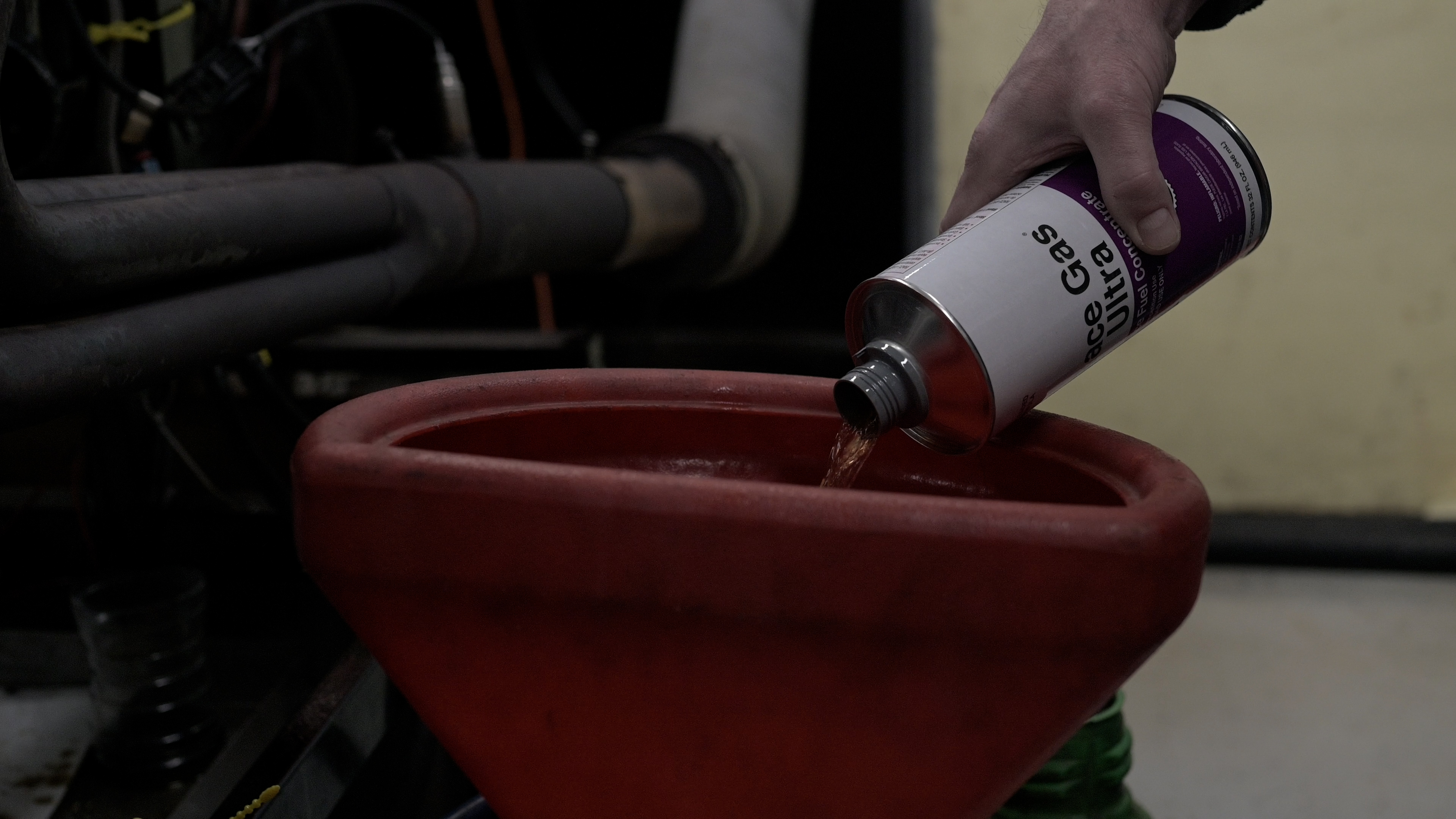
Race Gas is different because it is a concentrated fuel that, when blended with pump gas, such as 87 or 93 octane, will effectively make that gasoline into a bonafide 101- or 110-octane race fuel with all of the energy density of a high-quality and refined racing fuel. And it’s quite a bit cheaper, too. 

Muldowney says that after his experience with bad race fuel and two blown engines, he wanted to find a way to test the fuel in the field. But he found out that’s prohibitively expensive. So he went at it from another direction. 

“I spent several years researching the difference between racing fuel and regular pump fuel,” he says. “And along the way, I ran into some former petrol chemists that turned me on to different data sources. Some of them were from the US government going back to World War II, when piston-powered fighter planes required much higher octane fuels than were available at the time. They tested different constituent components of gasoline and how they function and work together.” 

Race Gas founder, Dan Muldowney, needed to find someone who would dyno test his new fuel concentrate but found it a difficult sell because most shops didn’t want to risk an expensive race engine for fuel testing. But he found someone willing to take a chance, the late Myron Cottrell at TPI Specialties, who was willing to help.

Testing Blends

Muldowney then discovered a formulary lab in Michigan to make his fuel concentrate, but he didn’t have the money for them to create a product for him. But he did have money to hire them to consult on his blend candidates. “They would tell me which ones would work and if the EPA would let me do it. And then they could tell me about any idiosyncrasies of those blend candidates,” Muldowney relates.

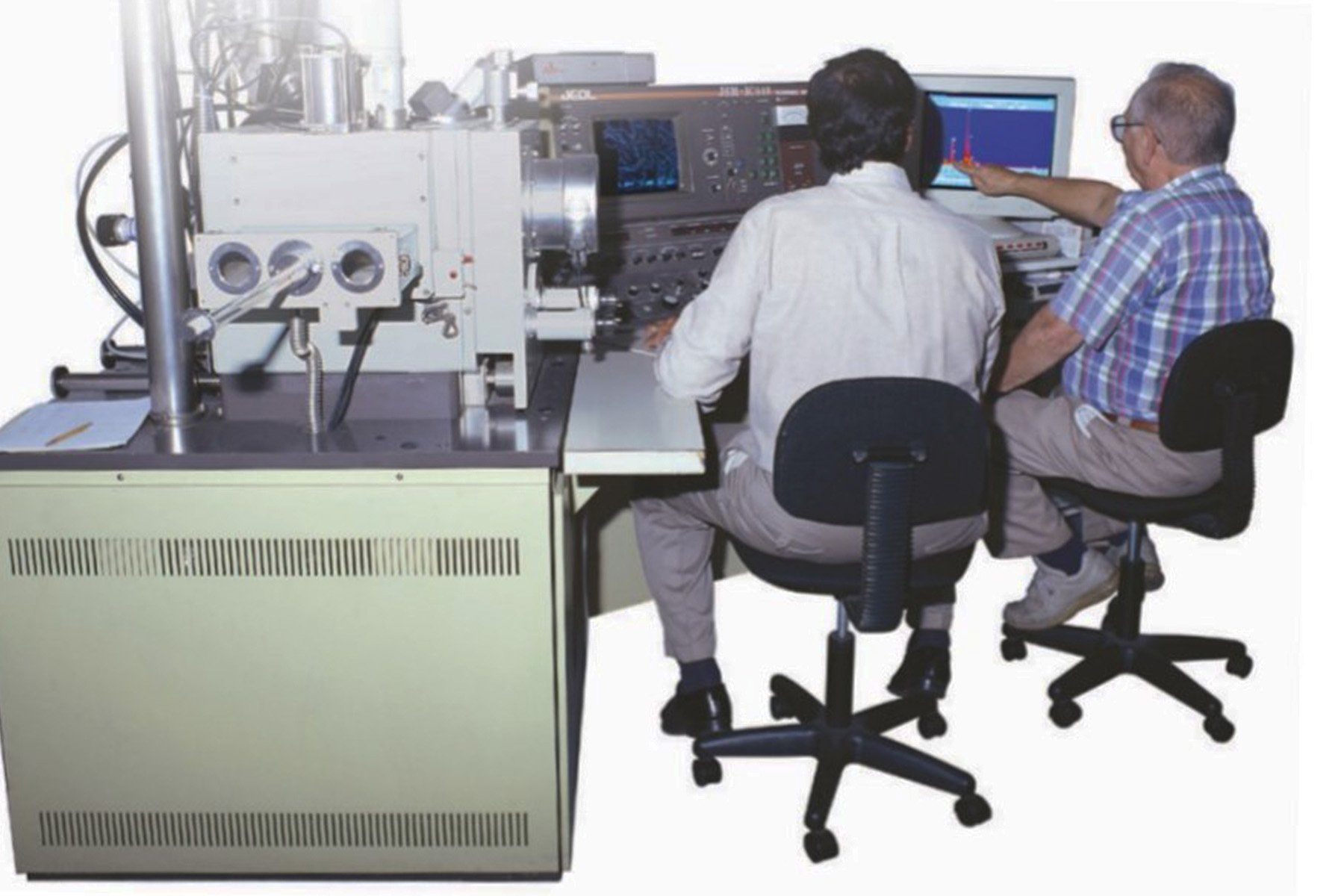
When he came down to his last three blend candidates, Muldowney says he took them to another lab in Deer Park, Texas, that does the ASTM standard testing for most fuel manufacturers in the United States. There are two standard tests: ASTM D 2699 and ASTM D 2700. Those tests give you your motor octane number (MON) and research octane number (RON), respectively. 

He took a liter of gasoline bought from a gas station and blended one liter with his blend candidate to make the octane he wanted. And then, he also sent one liter of the base fuel with nothing in it so he could verify the original octane he had. “We narrowed it down to one candidate, which became our first product. That was the easy part. The hard part was getting it tested in the real world,” he shares.

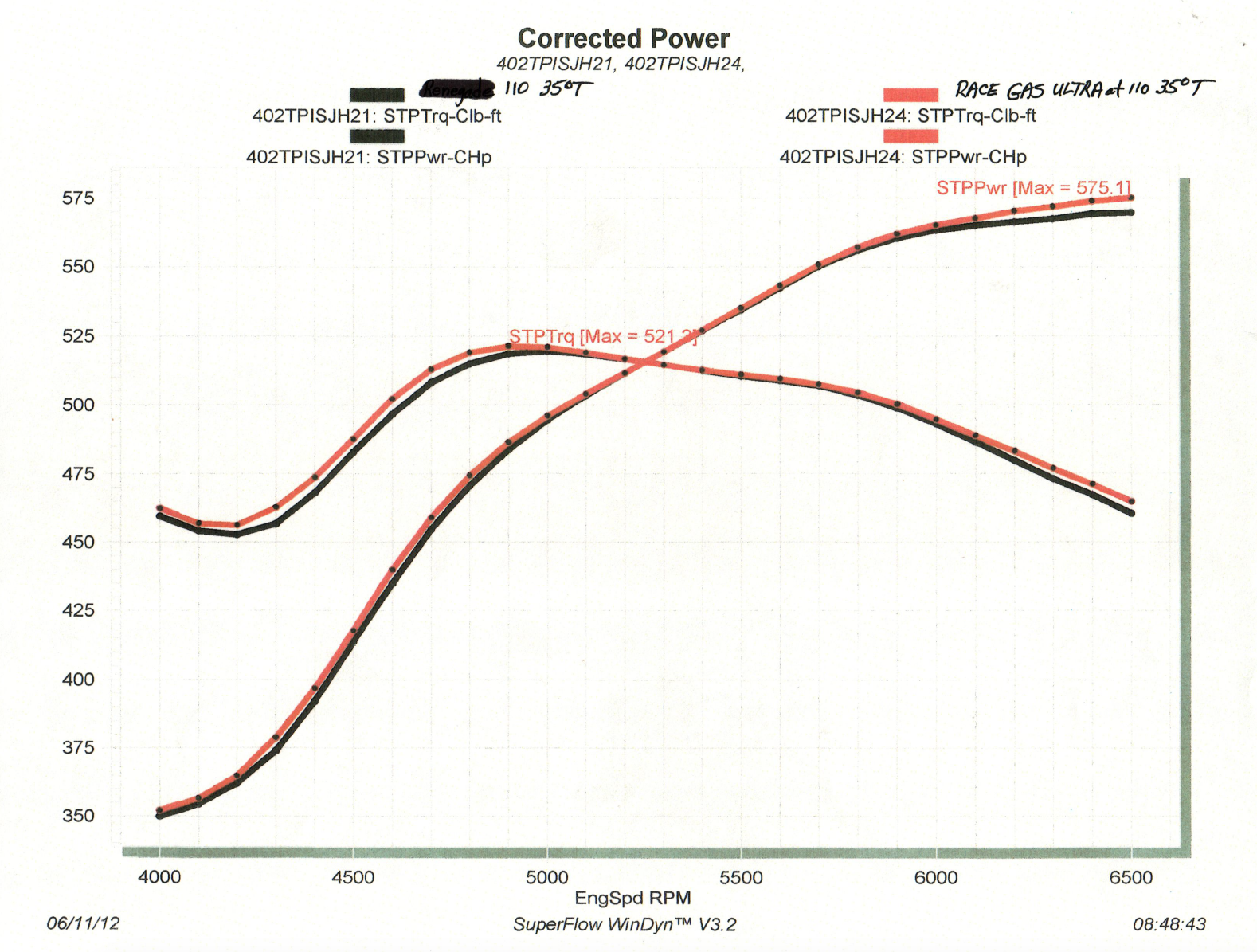
The final blend candidates went to a lab in Texas that performs ASTM standard testing for most fuel manufacturers in the United States. The two standard tests – the ASTM D 2699 and ASTM D 2700 – give you your motor octane number (MON) and research octane number (RON). After passing this test, it was on to the dyno, where results showed the performance was the same as refined racing fuel, or even slightly better.

Dyno Testing

Muldowney set out to find someone who would dyno test his new fuel concentrate but found it a difficult sell because most shops didn’t want to risk an expensive race engine for fuel testing. But he found an old friend willing to help. “I’ve known the late Myron Cottrell at TPI Specialties since I was a kid. Myron was one of the big names in the LS market and LS tuning. I knew he competed in the Engine Masters Challenge. So I called him up and asked if he would try our fuel. In short, he said he would do it. But, ‘if you break my engine, you bought it,’ he said.” 

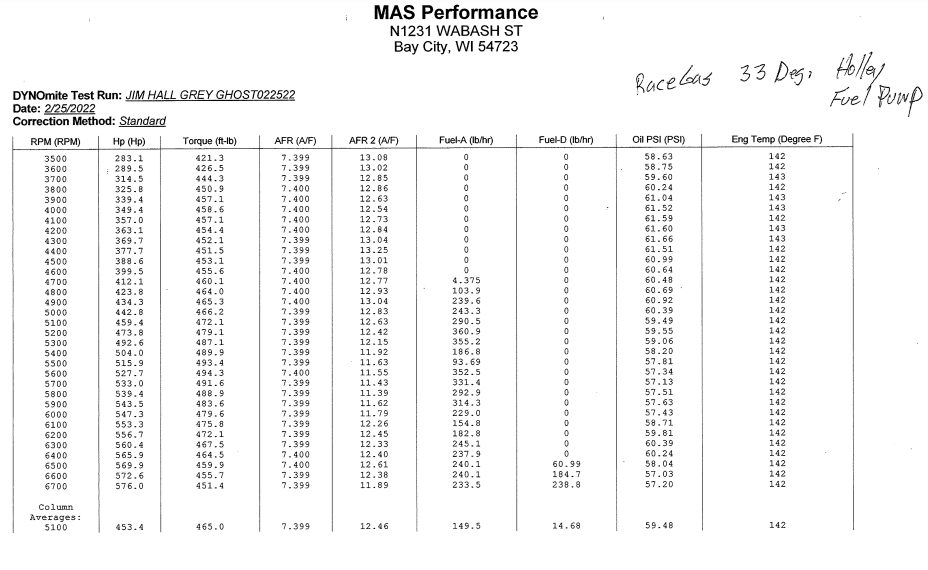
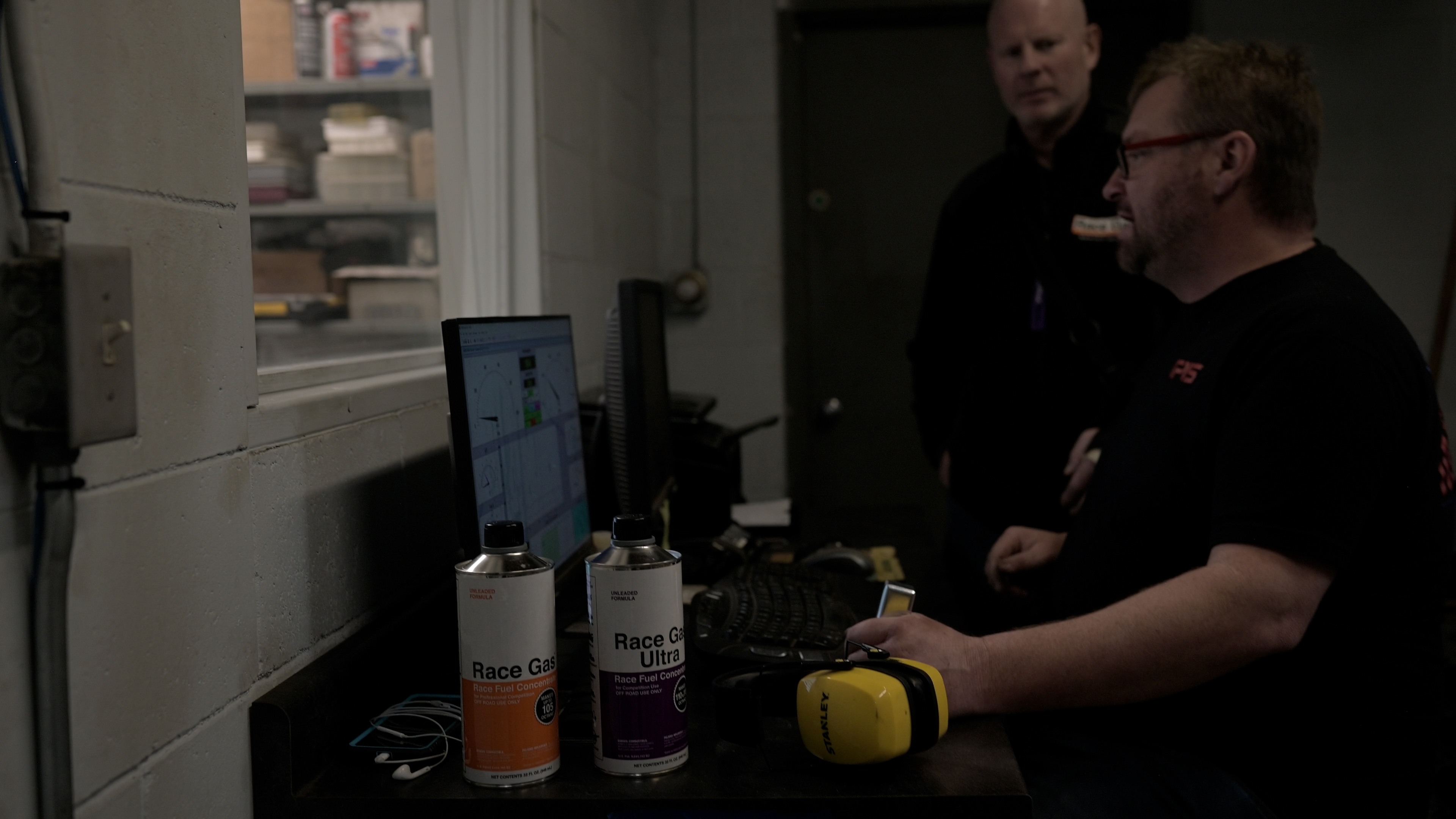
After dyno testing the 358-ci. road racing engine on Renegade 110 racing fuel, MAS Performance, drained the tank and fuel rails to put in Muldowney’s Race Gas Ultra at 110, and the results surprised everyone. The engine made 576 hp at 6,700 rpm and 493 ft-lb at 5,500 rpm.

Cottrell set up a 413-ci. race engine on the dyno and did some base pulls using regular racing fuel to tune the engine, according to Muldowney. “Then we drained the fuel rail, changed out the fuel, mixed our stuff with the gasoline we bought from the gas station down the street an hour before, and we repeated the test,” says Muldowney. “While running these tests, he’d make a couple of notes, do some stuff, change something, and do another pull. This happens about five times, and he hasn’t said anything to us. We had no idea whether we just blew this motor up or what. Suddenly, he turns around with a big grin on his face and said, ‘Boys, I would have thought you were buying me an engine, but this stuff actually works.’”

Myth Buster

When we mistakenly called Race Gas an octane booster, Muldowney was quick to correct us. We think that is a misconception that others would also make at first glance, because so many other fuel additives on the market claim to be an octane or cetane (diesel) booster. But there are differences between what an octane booster does and what its marketing department claims. With an octane booster, the additive does not increase the energy density produced by the base fuel. It may add a few octane points to prevent detonation, but the energy is the same.

The key to Race Gas is in its ability to replicate refined racing fuel properties. Racing fuel not only has a higher octane number, but more chemical energy and chemical oxygen than gasoline from the pump. By focusing on the AKI number (MON + RON /2 = anti-knock index), Muldowney had his first product which is in the orange can.

Muldowney explains the difference between an octane booster and his race fuel concentrate. “Racing fuel has higher octane, chemical energy, and chemical oxygen than gasoline from the pump. To replicate racing fuel, we had to do those three things. You’ll damage the engine if you have high octane and low chemical energy at wide-open throttle (WOT). If you have high octane and low chemical oxygen, not all the fuel burns in the power stroke, some burns in the exhaust stroke, and you’ll damage the engine.” 

Muldowney claims that Race Gas is the only product on the market that is patented, dyno-tested, and race-proven to do those three things. “That is the fundamental difference between a race fuel concentrate and an octane booster. When a commercial fuel manufacturer, Sunoco, or whoever posts information about their fuels, they post the MON and RON numbers with the Anti-Knock Index (AKI). That’s what you see on the pump; the R plus M divided by two (R+M/2). That’s the research octane number (RON) plus the motor octane number (MON) divided by two, to create the average AKI.”

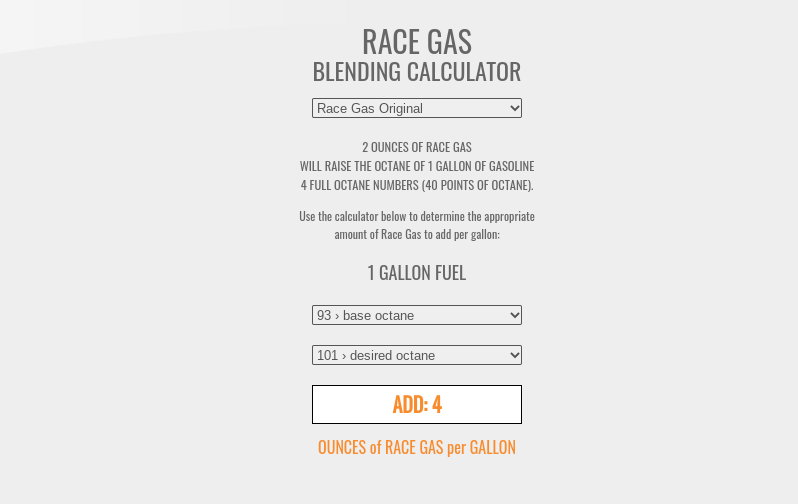
The second biggest expense besides tires on a race weekend is the fuel. Race Gas allows you to transport fuel safely and legally, and mix it to the octane level you need by following their simple chart. For 101 octane, mix 4 ounces per gallon with 93 pump gas. Not only is it more flexible for racers’ needs, but it also saves them money.

Muldowney notes that most products on the market don’t tell you to which octane number they are blended. The RON is derived from the performance of the fuel in a single-cylinder test engine at low RPM. The MON is derived from the same test rig under higher RPM. But Muldowney says you want to use the AKI or antiknock index because it gives you a good indication of the average octane between high and low RPM. 

Since most people don’t understand the intricacies of MON and RON, a manufacturer can say that its fuel additive can go up to 116 octane. “That 116 octane is the RON,” Muldowney explains. “It is the performance of the fuel at almost idle. And the problem with that is, I’ve been racing cars for my whole life, and I’ve never won a race idling. It’s really easy to get a high RON. But it’s tough to get a high MON. And it’s even harder to get a MON and RON close to each other. When we publish certified ratings on our cans, we’ve had them certified by the lab in Texas. And we tell our customers, this is the AKI number. It’s not the wrong number. It’s antiknock, and we do that for a reason. If you’re buying a product that says it’s 116 octane, but it’s 116 RON octane, you might under-octane your motor. You can damage the engine that way. So we’re very transparent about our blends.”

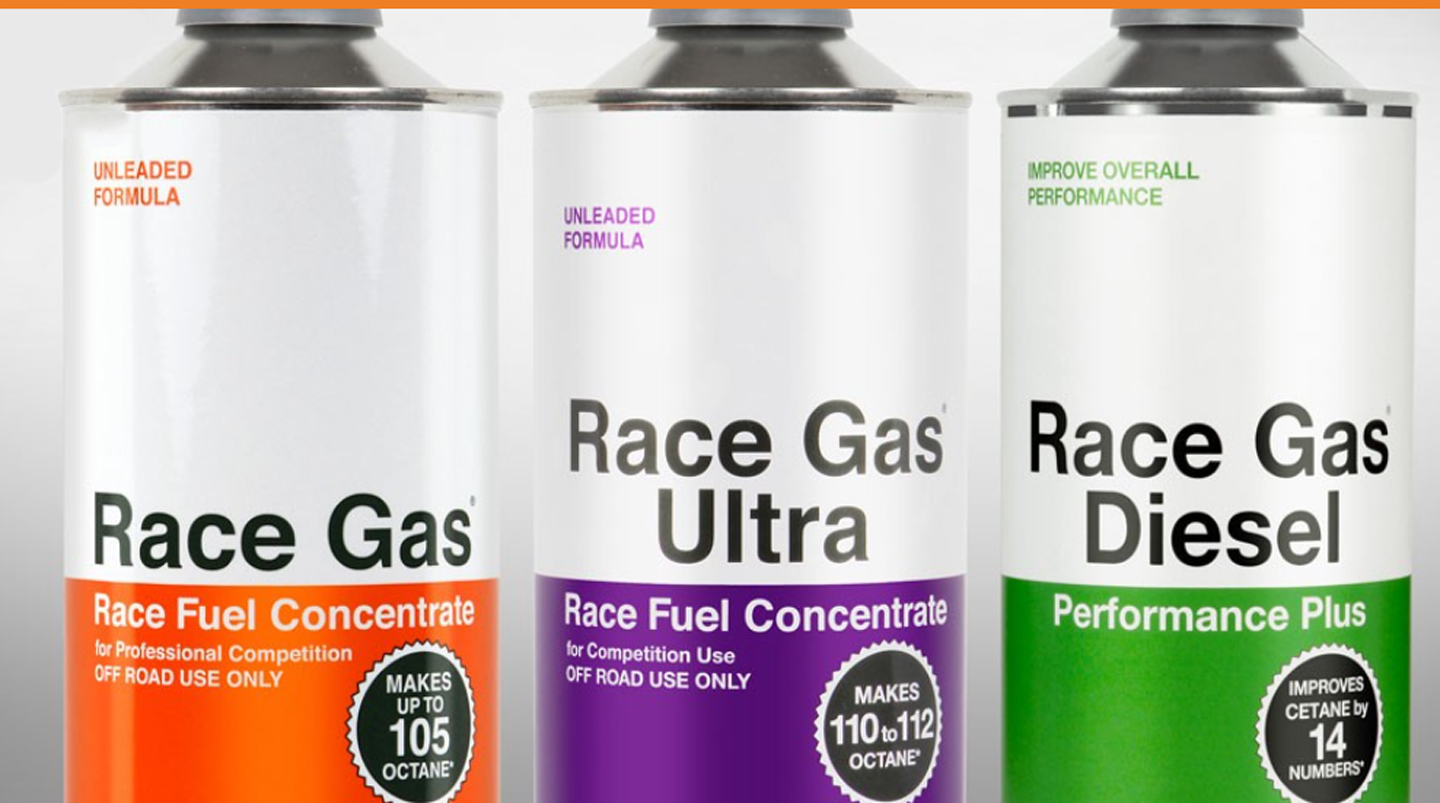
Race Gas is available in three different products today and can be purchased from major performance retailers. The orange can is the original formula that makes up to 105-octane fuel. The purple can makes up to 112-octane fuel. And a new product in the green can is designed for performance diesel engines to boost cetane by 14 numbers.

As always, education is the key to understanding what you are using. “If you’re going to use a product, make sure you understand what it blends to,” Muldowney cautions. “The other one that you see a lot is people will talk about points of octane. A point of octane is 1/10 of a number. So if you have a product that says it raises the octane by five points, and you have a gallon of 91, you now have a gallon of 91.5. You don’t have 96. And that’s another point of contention that people don’t know about, and they should.”

Like most car enthusiasts, we’ve tried our fair share of fuel additives and other products that make wild performance claims. Most of the time, you know it won’t do anything, but you hope it will help. However, if you’re using an octane booster instead of specially blended race fuel or Race Gas concentrate to raise your octane level for competition, you better make sure you know what is in the can, or you could suffer a similar fate as Muldowney did early on. 


Posted on Leave a comment

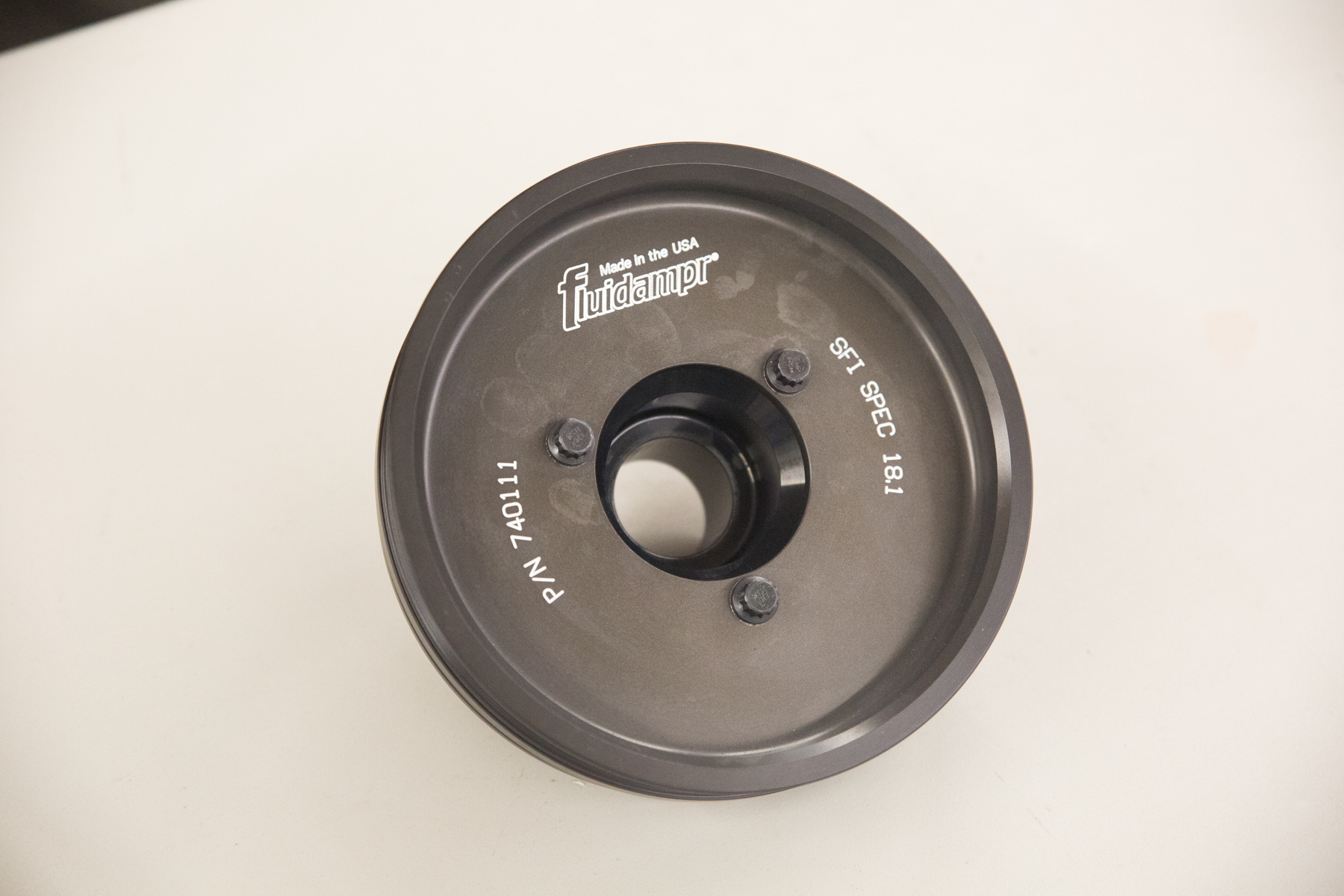
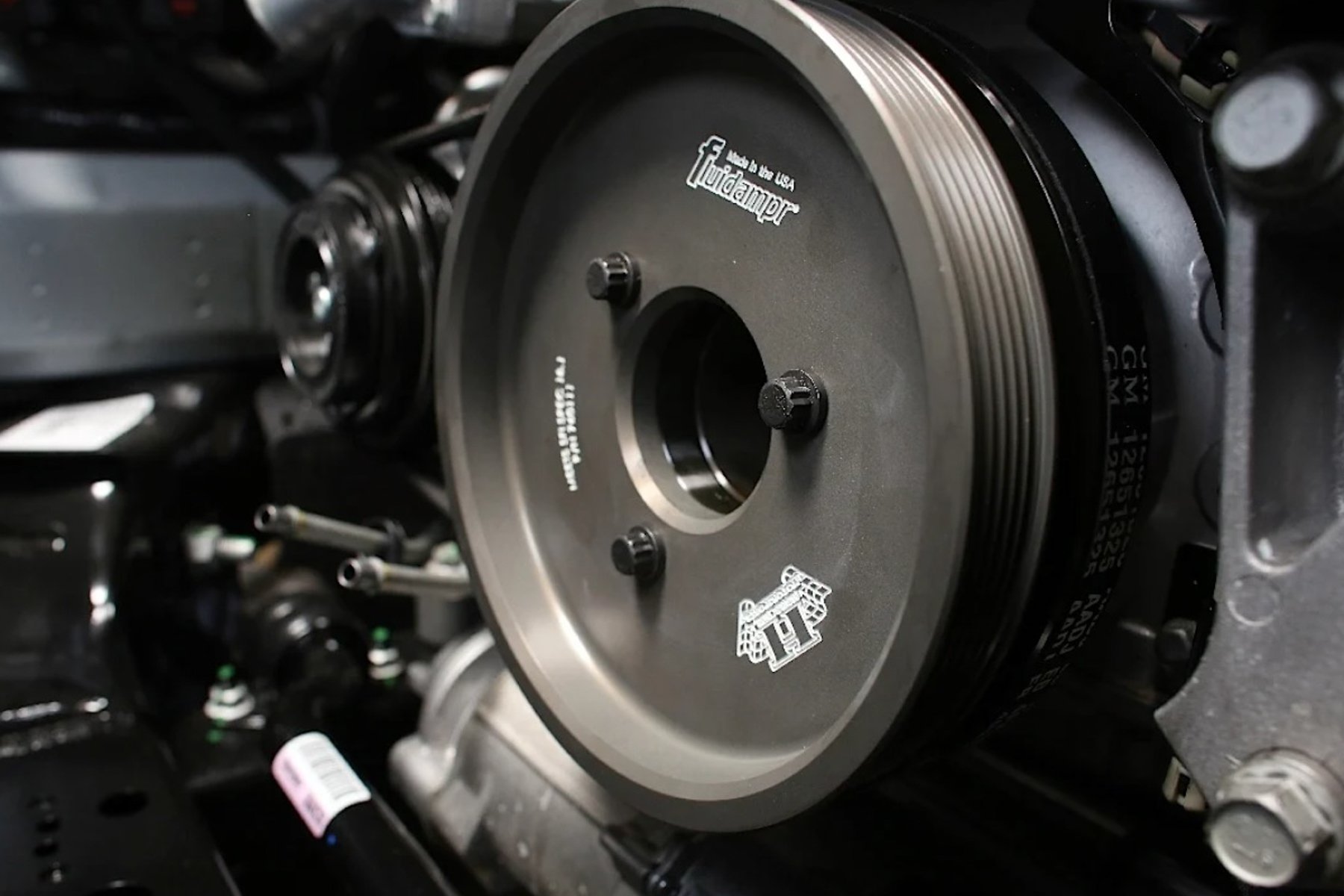
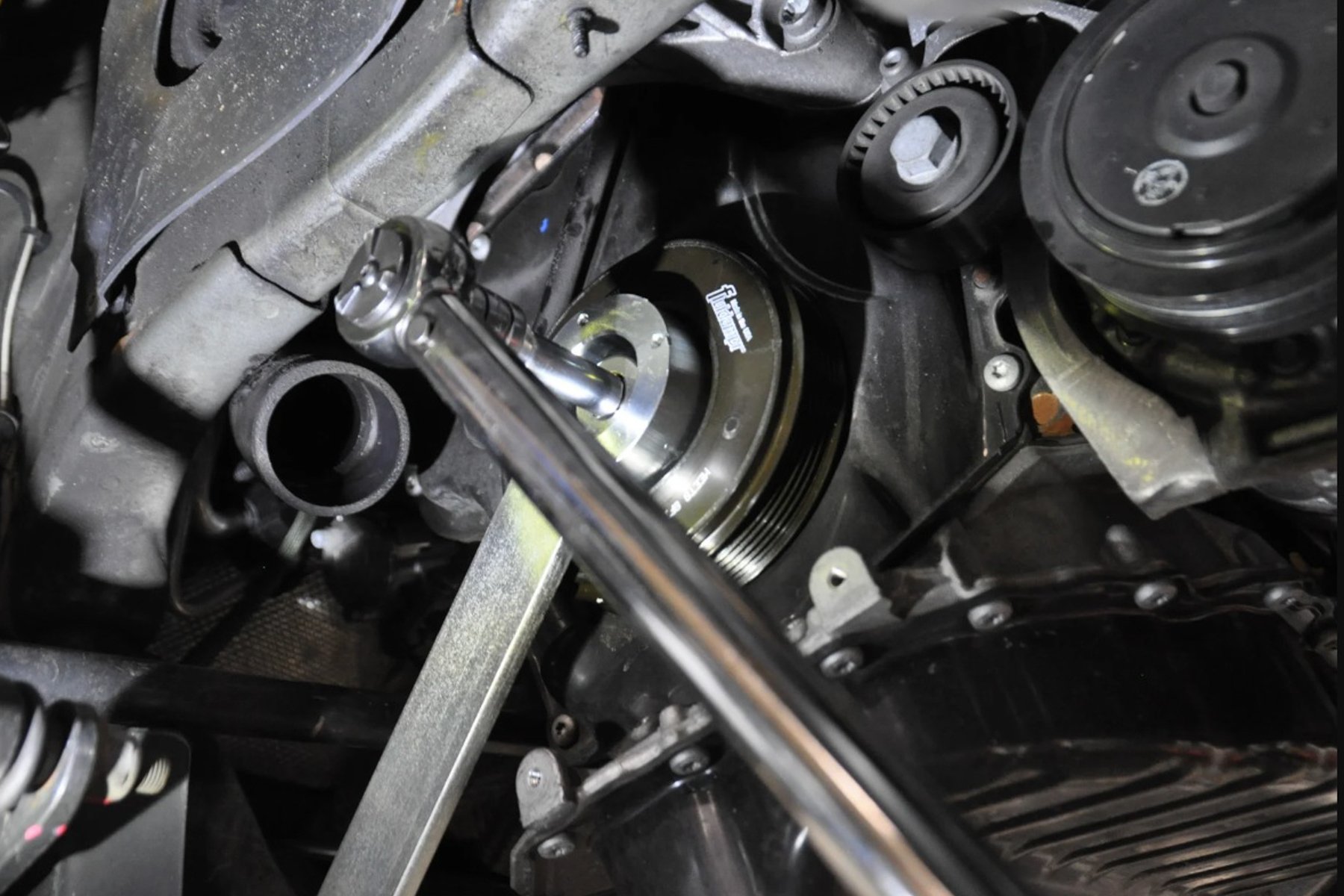
How An Aftermarket Harmonic Balancer Helps At High RPM Levels

Torsional vibration, more commonly referred to as engine harmonics, is a force that must be dealt with when you’re working with any engine. The more power your engine makes, the more destructive torsional vibrations can be if they’re not kept in check. Fluidampr harmonic balancers are designed to deal with the most extreme torsional vibrations an engine can produce as RPM increases.

When you start to push an OEM engine past its stock output levels or really add horsepower to a high-performance mill, torsional vibration is going to be an issue. As RPM levels increase, so does the strength of torsional vibration. This is something you need to account for with any high-performance engine.

Nick Orefice from Fluidampr explains how an aftermarket balancer can help fight torsional vibration at elevated RPM levels.

“Almost all stock OE balancers and many aftermarket balancers are a single rubber element elastomeric type damper. The problem with these damper types is that they are limited to a narrow frequency range of about 50 Hz. This is suitable for a stock engine, however, when performance enhancements are made — think power adders or rotating assembly changes — you are essentially shifting the frequency created by a stock engine beyond what these dampers are capable of controlling. This is where the importance of a premium aftermarket balancer shines.”

Fluidampr’s harmonic balancers use a viscous design versus a rubber element to control torsional vibrations at high RPM levels. This design creates a smoother running engine across the entire RPM band and reduces the risk of parts failure due to torsional vibration.

“Fluidampr uses a completely sealed housing with a free-floating inertia ring and a layer of silicone between the two. This viscous design allows Fluidampr’s balancers to work at all frequencies across the entire RPM range. Basically, a Fluidampr will work on any engine application for which it is designed, whether stock or high performance,” Orefice explains.

You can learn more about how the technology Fluidampr’s harmonic balancers use to fight torsional vibration right here on the company’s website.


Posted on Leave a comment

Deciding Which Electric Fan Your Ride Really Needs

Now that winter is making a departure, it’s time to place our classic rides back to the front of the priority list of things to do — or in this case, enjoy. If last year’s summer cruising saw your car’s temperature gauge reading higher than you think it should, maybe it’s time to take a look at your car’s cooling system.

While cooling issues can vary, this time, I decided we needed to discuss cooling fans. Specifically, electric fans. There are many bad choices that can be made when trying to decide what cooling fan a particular car needs, and to alleviate that situation, I decided to reach out to the folks at SPAL USA to get some solid information we can all use.

While the OE mechanical fan in your classic might be adequate for your car while cruising down the highway, sometimes, situations arise that warrant an upgrade to an electrical unit. But have you looked at what sizes and styles of electric fans are available? Talk about a confusing decision.

What’s What?

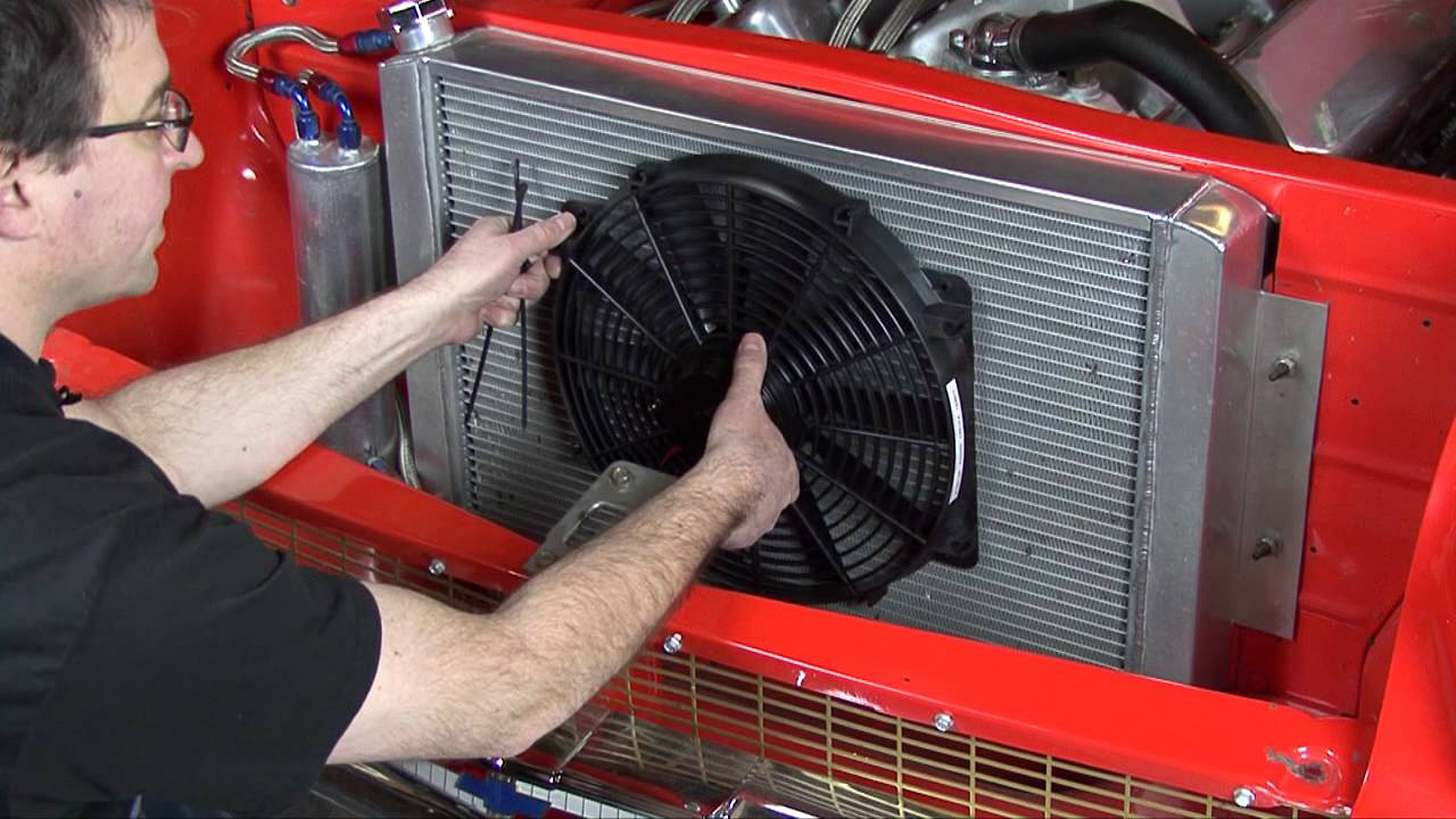
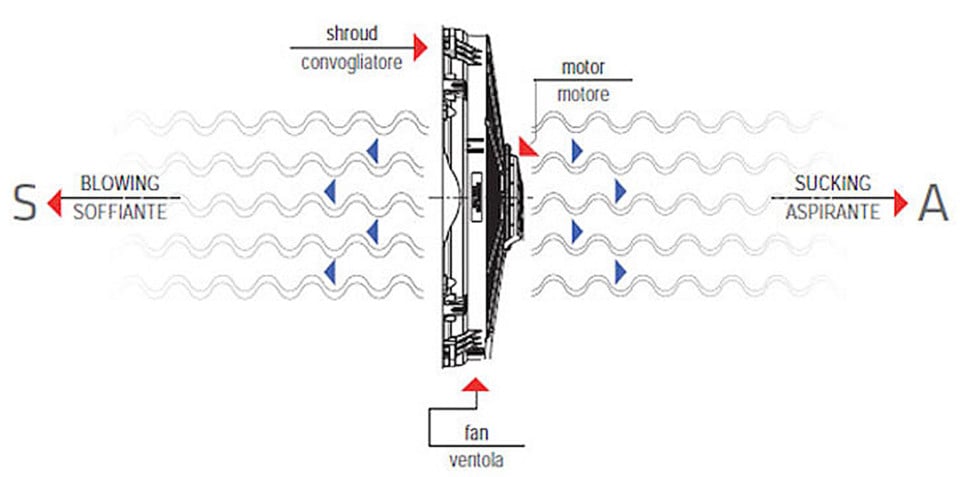
If you want to add an electric fan setup you first need to figure out which electric fan(s) will best work for your application. For instance, can a puller-style fan fit between your engine and radiator, or do you need a pusher? Fitment is a big issue for many who want to add electric fan(s).
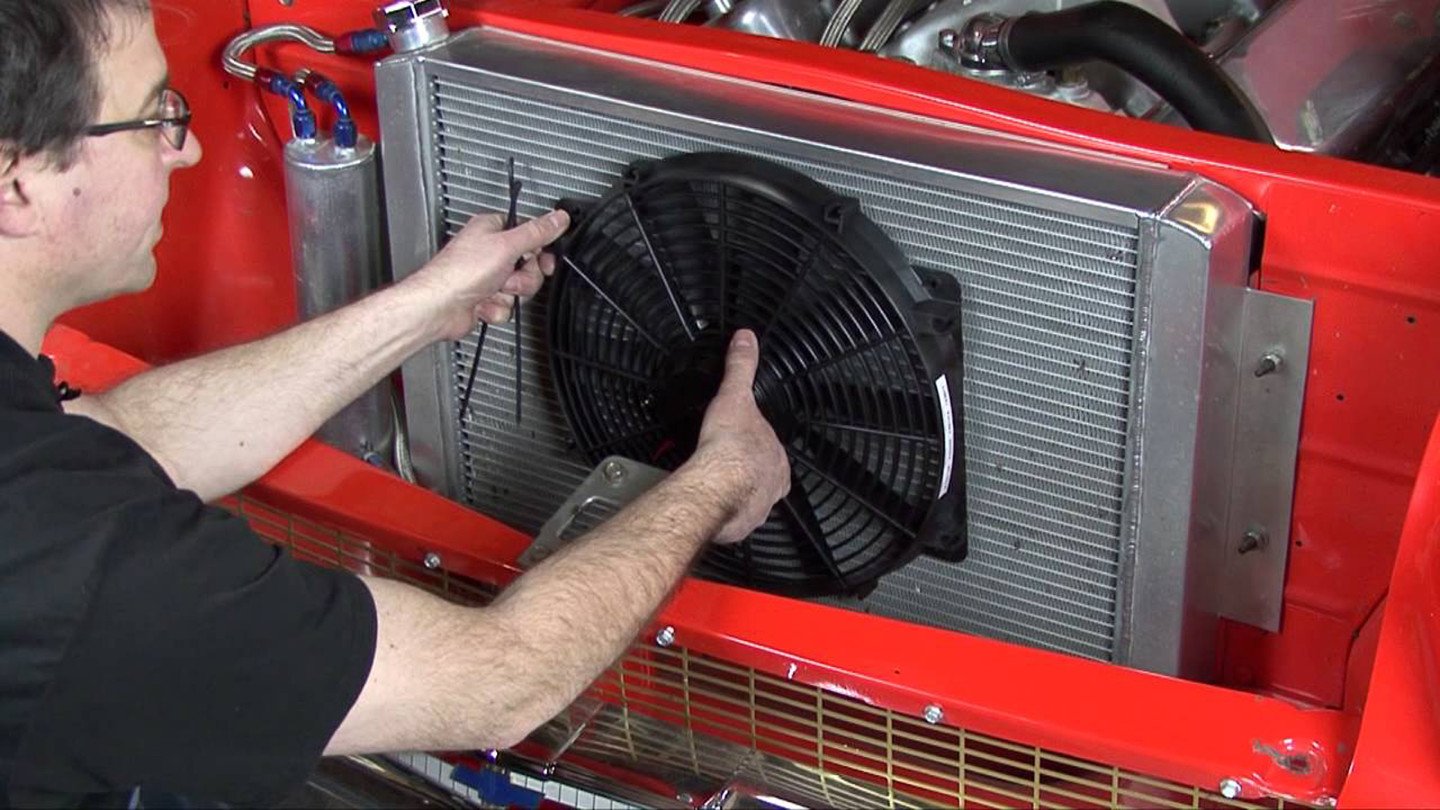
electric fan

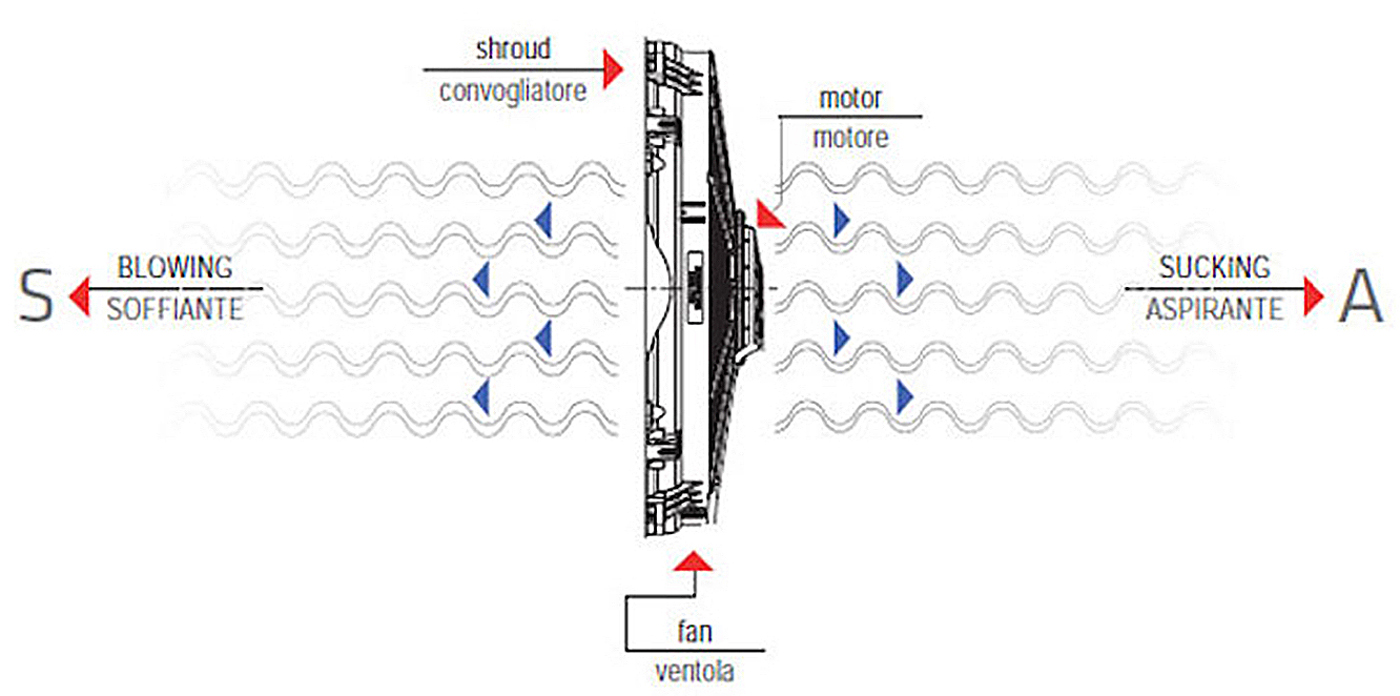
There are a couple of issues here. For starters, it’s better to mount the fan behind the radiator. As shown, the fan will only move air through a small section of the radiator, right where the fan is mounted, the rest of the radiator does not benefit from the fan’s airflow.

I checked out the SPAL website and found both pusher and puller fans as available options. The pusher-style fan mounts on the front of the radiator, and as its name indicates, pushes air through the radiator. Pusher fans are typically installed when there just isn’t enough room to mount the fan between the radiator and engine. Unfortunately, mounting a fan in front of the radiator also restricts airflow through the radiator. A puller fan is by far, the more popular choice. It’s more efficient, because it mounts on the back of the radiator, draws air through, and does not block airflow.

A puller fan is generally viewed as the best practice due to the motor/fan being a resistance after the radiator. – Brent Chuck, SPAL USA

“A puller fan is generally viewed as the best practice due to the motor/fan being a resistance after the radiator,” says Brent Chuck application engineer at SPAL USA. “Puller fans generally affect highway-speed ram-air cooling less than pusher fans. Our [fan] motors are a 5-inch diameter circle, so when you put a pusher fan in front of the radiator you can imagine a 5-inch ‘dead circle’ where the fan sits. This dead circle still occurs in the puller fan application, but it doesn’t have as much effect on the high-speed cooling of the vehicle. A pusher fan is usually acting on colder/more dense air, so you usually get a higher mass flow rate through the system with a pusher fan. The fan motor also exists in a colder environment (in a pusher configuration) which usually increases motor life as the motor runs cooler.”

Brent continues by saying, “Pushers can’t really use a shroud, so you lose the efficiencies that could be gained by a good shroud design ducting airflow from the entire face of the radiator with a puller. You get better dispersion of airflow to the radiator face with a puller fan and a good shroud design.  Pushers basically just force a circle of airflow through the radiator.”

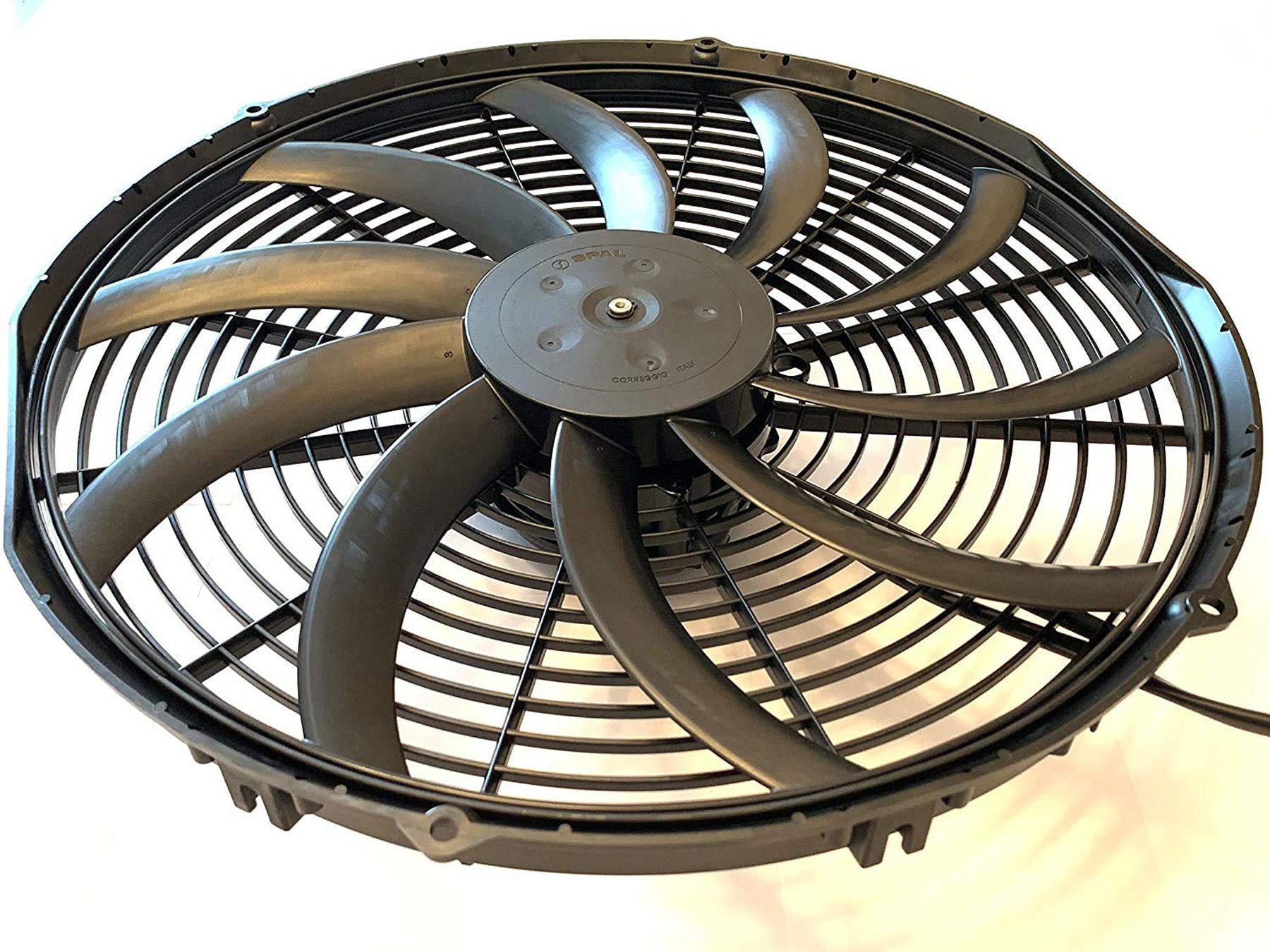
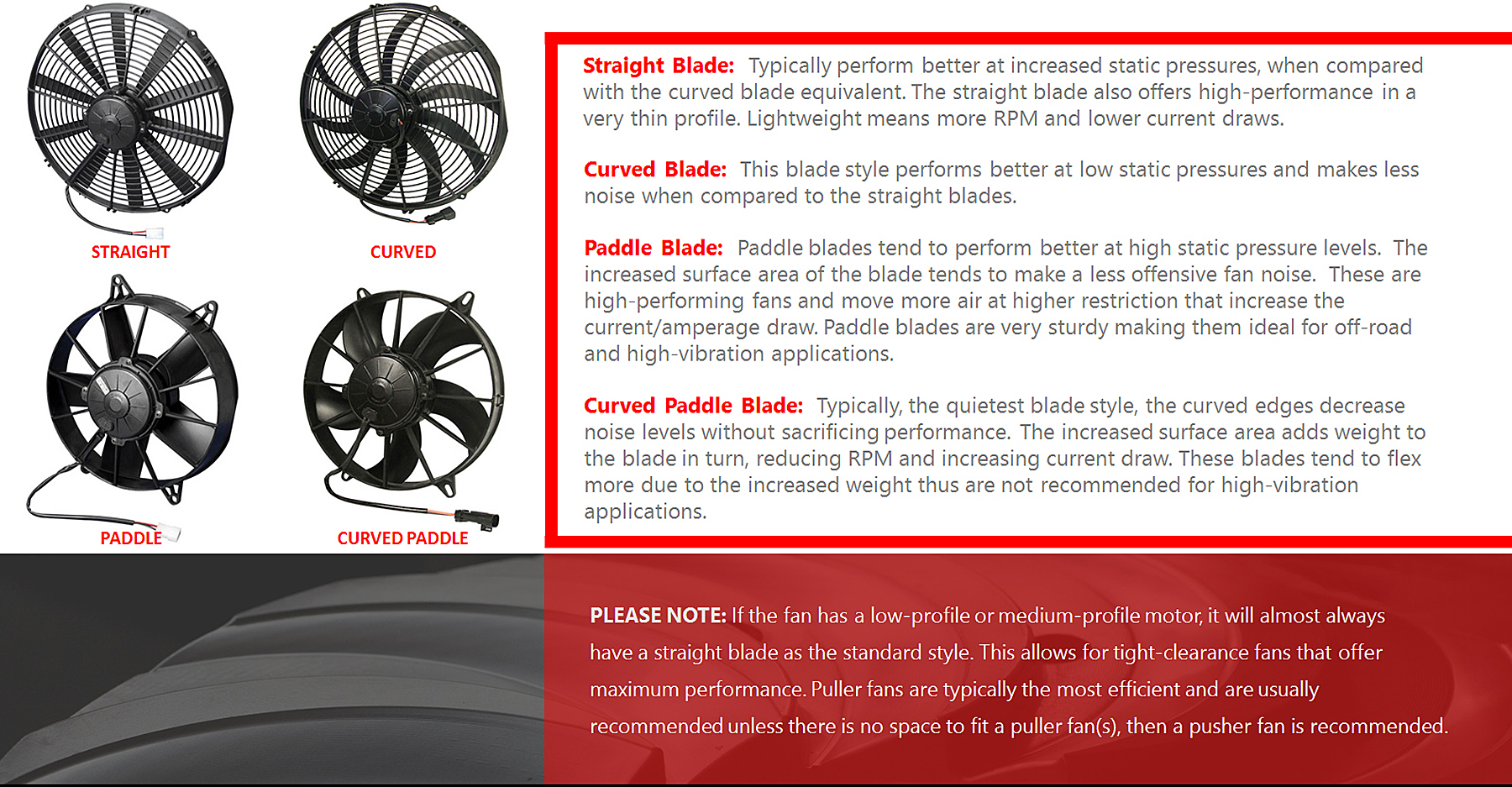
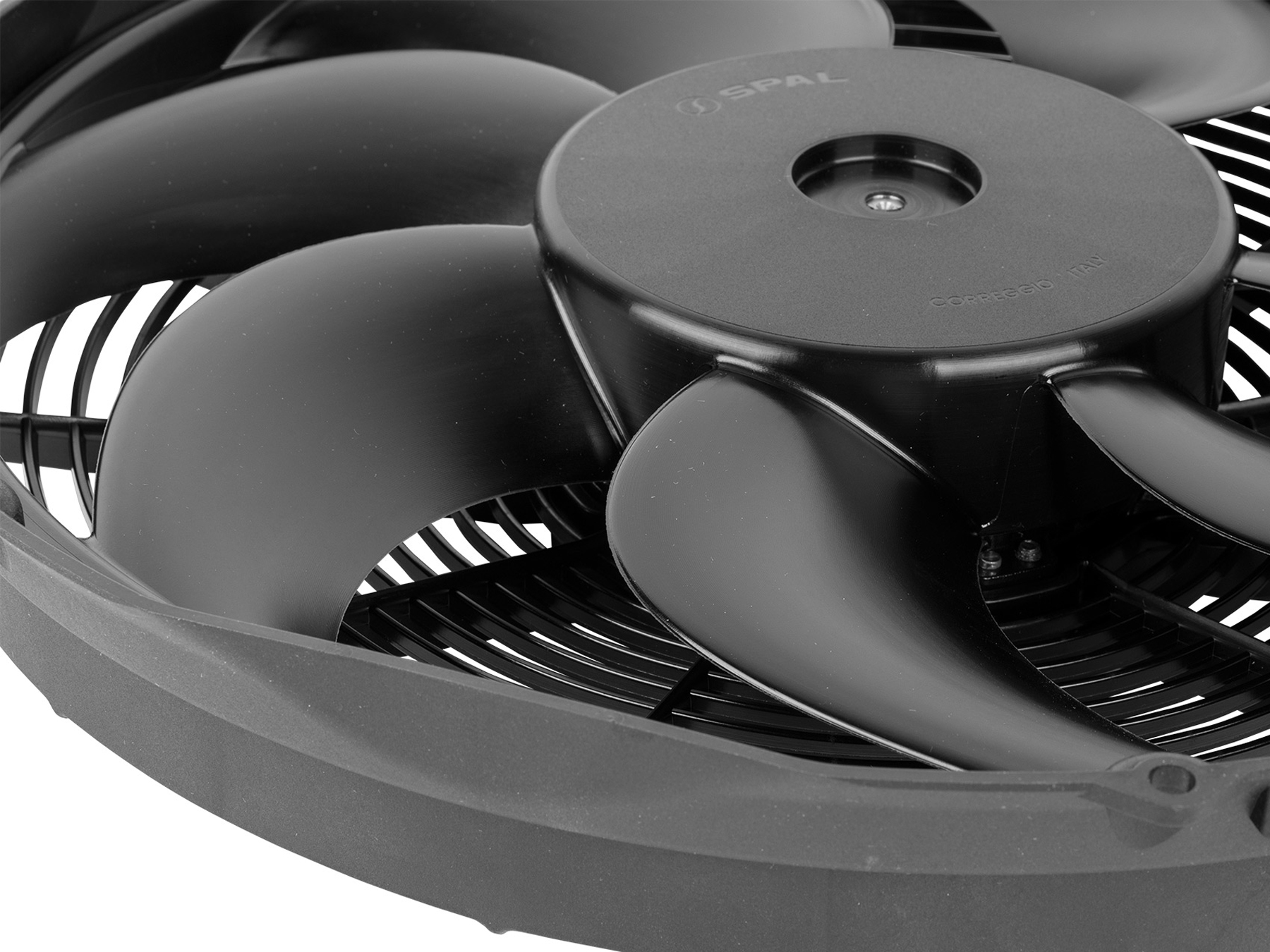
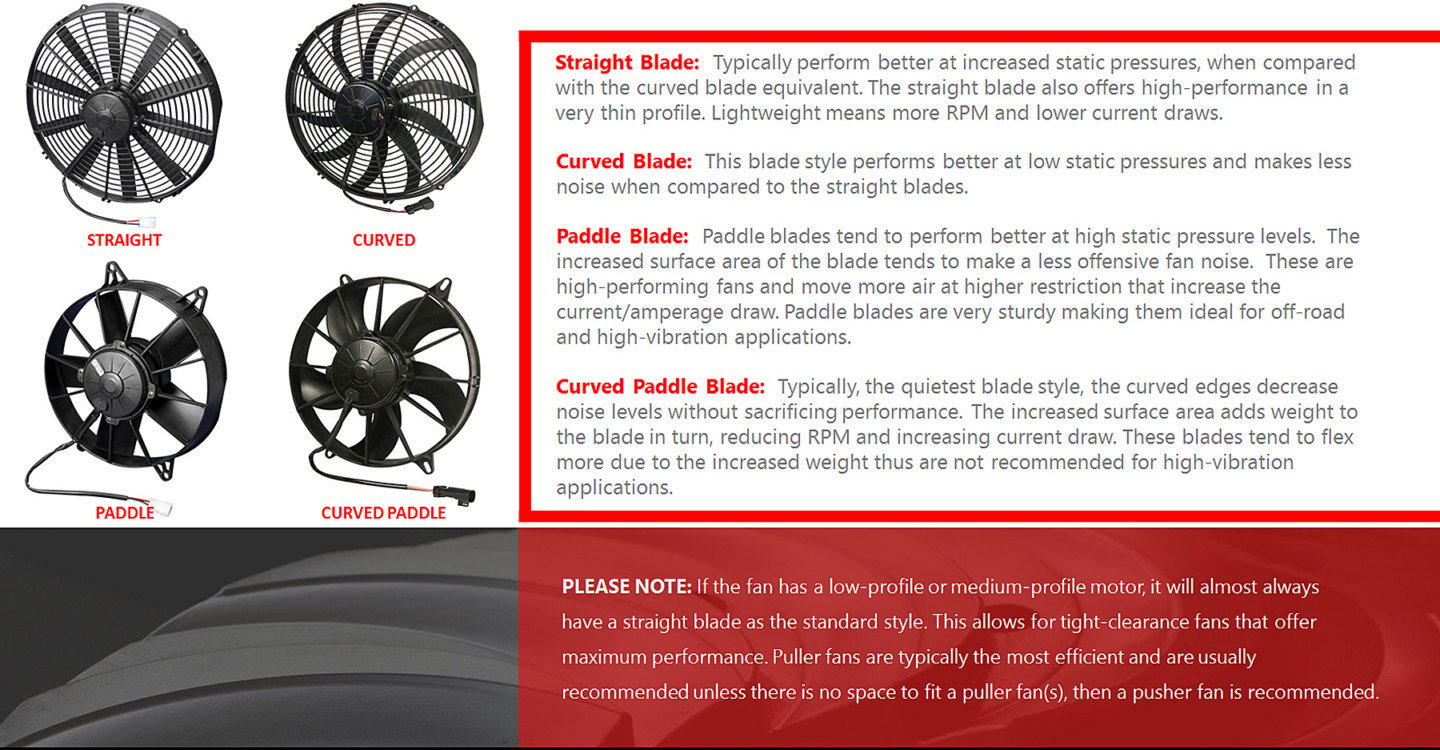
From left to right: straight blades (PN: 30102120), curved blade (PN: 30102049, and paddle blade (PN: 30102082). Which you choose depends on certain factors like noise and airflow.

Overcoming Blockages

Another difficult consideration is sealing a pusher fan system. Typically, A/C condensers and radiators have air gaps between them that make it difficult to seal the system and ensure the fan flow goes through both the radiator and the A/C condenser. The majority of the airflow will take the path of least restriction. If you have gaps where air can escape and not be forced through the core, it will likely escape and not cool very well. Some might argue that, in that case, a pusher is more efficient because the air the fan is acting on is often cooler and denser than seen by a puller in the engine bay. That might be true, but usually, the benefits of a pusher in colder air don’t outweigh the con of having the fan mounted in front of the radiator.”

It’s like seeing a car with a pusher and a puller fan on the same radiator. Can it work? Yes, but is it ideal? No, absolutely not. -Brent Chuck, SPAL USA

After hearing what Brent stated, I wondered if SPAL USA ever recommends using an electric fan in a pusher application? “Yes,” states Brent. “In some cases, where space is tight and it’s the only option. But it’s not really seen as good practice within our industry.  It’s like seeing a car with a pusher and a puller fan on the same radiator. Can it work? Yes, but is it ideal? No, absolutely not.”

Straight, Curved, Or A Paddle

Another thing to consider is blade design. There are various designs, and with a typical street use classic, which fan-blade design is the most versatile/recommended? “With hot rods, it typically comes down to packaging the fans in the vehicle,” Brent states. “Fans are often the last consideration when building a car. So usually, the limiting factors are ‘how much room’ customers have for fans.

“Our ‘thin’ electric fans are designed to maximize performance while remaining thin. Usually, these fans operate at higher RPM and have less than desirable noise characteristics.  Examples of thin blades would be straight blades (PN: 30102120) or ‘S’ curved blade fans (PN: 30102049.)  These fans often create fan noise that our customers do not appreciate, but they can provide decent airflow performance while maintaining a thin profile. A straight blade offers more noise and more performance than a curved blade on an equivalent motor. An ‘S’ blade offers lower performance and slightly less noise.”
electric fan

The next blade style we need to talk about is the paddle blade. This is typically the quietest blade available, as the curved edges decrease noise without sacrificing performance. The larger surface area does add weight to the blade, which allows a reduced RPM to deliver the needed airflow. However, this design does increase the current draw on the electrical system.

SPAL’s paddle blade electric fan (PN: 30102082) has an aggressive blade profile with a thicker blade. This blade style offers good airflow and pressure performance at lower RPM. With a paddle blade, you get a fan that performs well and provides quieter noise characteristics.

When it comes to fan blade design, there really is no “best option.” According to Brent, “it boils down to physics, and there’s no such thing as a free lunch. You’re either moving air and making some sort of noise, or you’re not really moving air.”

Check The Ratings

But how is an electric fan rated? You’ll see many companies throw cfm numbers around and expect you to understand. Electric fans are rated according to the amount of air that can be pushed or pulled through the radiator. This measurement is the CFM (cubic-feet-per-minute) rating. When selecting an electric fan that will work best for your application, you need to first determine the ideal amount of airflow required to meet your cooling capacity. As a guideline, a typical small-block uses roughly 2,800 to 3,000 cfm of airflow, while a big-block typically requires 4,500 cfm. Again, these are just rough guidelines, and not hard-and-fast rules. However, CFM ratings might not be as important as you would think.
electric fan

Most fans are rated by the amount of air they can more (CFM). When selecting an electric fan that will work best for your application, you need to first determine the ideal amount of airflow required to meet your cooling capacity.

“Don’t sweat CFM ratings,” Brent assures. “Enthusiasts think they need 2,000 or 3,000 cfm, but this might not really be the case. CFM ratings are often obtained in free air conditions, which are not the same conditions people realize with an electric fan mounted on a radiator. That means that number doesn’t mean much. It’s something that is good to know, but not something I recommend looking for when selecting a fan.”

If an electric fan claims 2,000 cfm, it won’t be 2,000 cfm as soon as you put it on the radiator. Just understand what your radiator stack (radiator, A/C condenser, oil cooler) looks like and understand that each component is adding a restriction to the system. The more restriction you add, the more [static] pressure your fan needs to generate to overcome the restriction.

If you have a restrictive cooling stack, look for a fan that generates more pressure. – Brent Chuck SPAL USA

“If you have a restrictive cooling stack, look for an electric fan that generates more pressure,” says Brent. “SPAL has tabular airflow data available for all our fans. Look at airflow data and don’t just look at the highest CFM number. Also, look at how many amps the fan draws, and how much static pressure it can generate. Compare the tabular data between other fan models, it becomes easier to compare and more apparent as to which models are better for your application if you have all the data. Even if you don’t know the static pressure requirements of your radiator stack, you can still figure out which fans generate more pressure and flow.”

Get Recommendations

My next question to Brent had to do with the actual selection of a fan(s). Basically, how does an enthusiast know what’s really required?  “We often try to package the highest performing fan system that we can fit in the space our customers have available. Usually, we ask for radiator dimensions and the dimension from the radiator face to the engine. Based on those dimensions we would typically make our recommendations.” Sounds logical, but how does someone know if they need multiple fans or if a single fan will work for them?
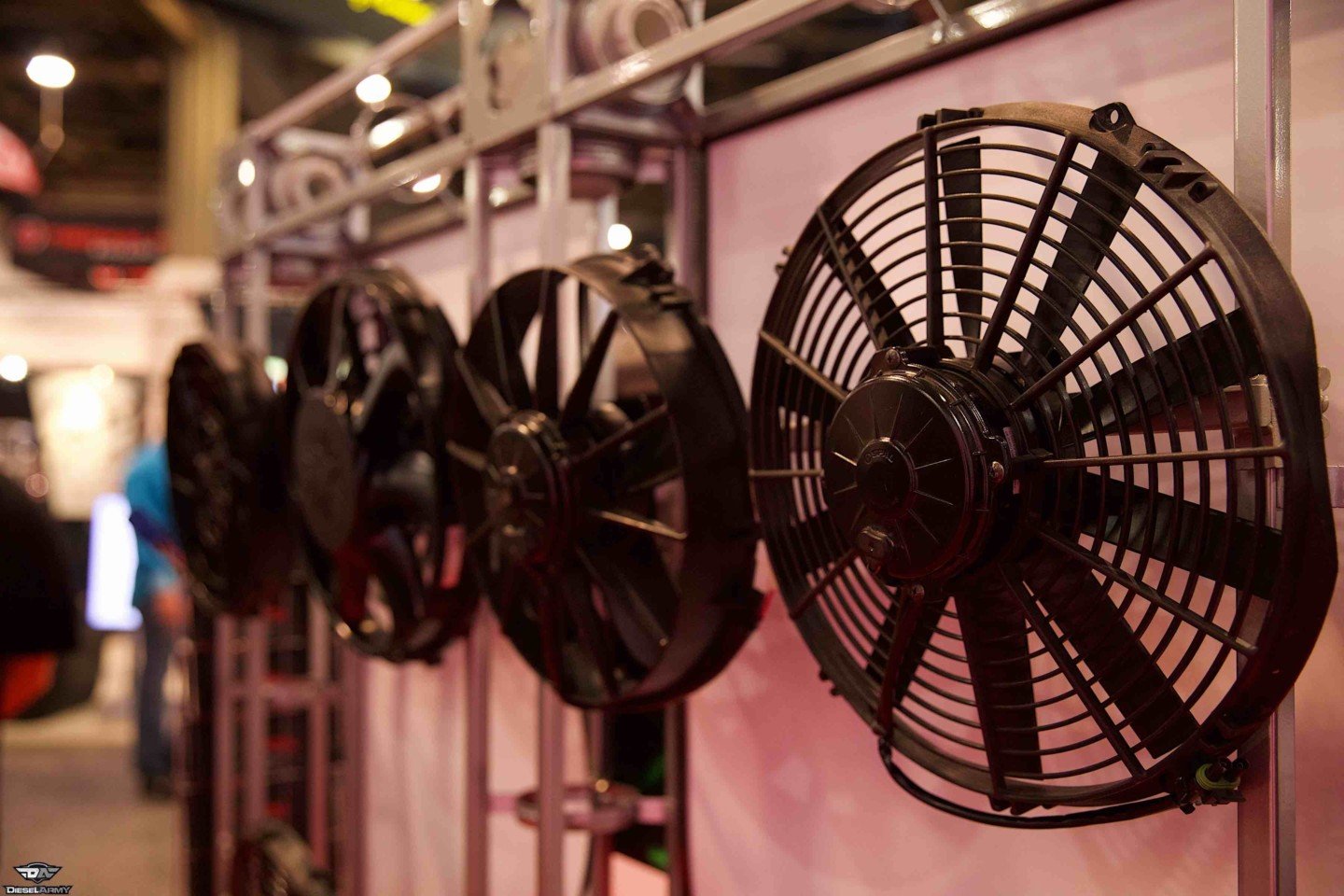
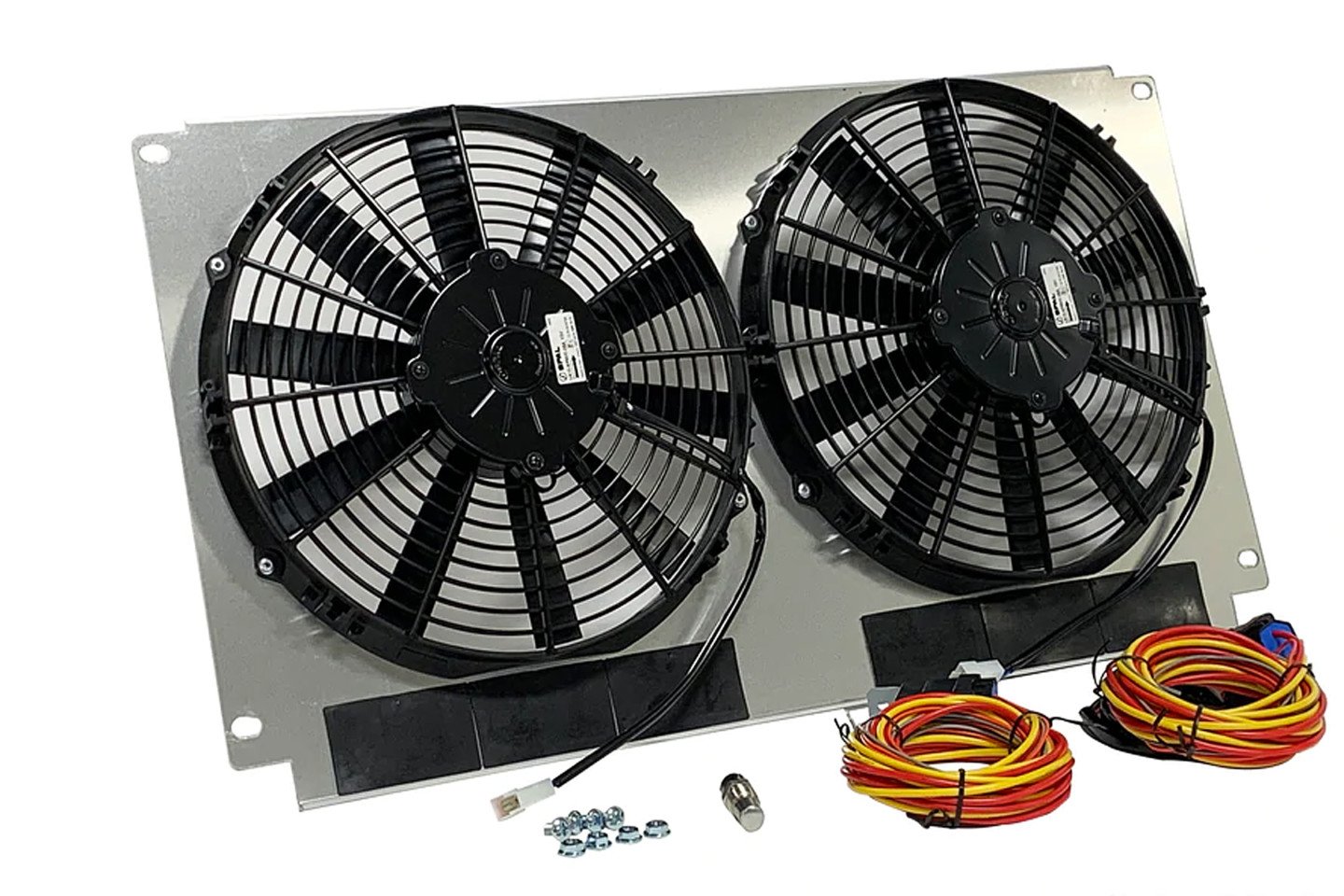
“Dual fans are usually better than one large-diameter single fan,” Brent states confidently. “To gauge which is best, look at radiator coverage and power consumption of the fans. Fan systems that cover more of the radiator, and consume more power, will usually perform better. Usually, I will discuss the radiator and the core stack in front of the fan with the customer to try to figure out how much airflow restriction is in front of the fan. If there’s a radiator, A/C condenser, transmission oil cooler, intercooler, etc., you need to account for that when selecting a fan. I will often provide customers with a static pressure estimate for their system, (a working point estimate,) to compare fans.

When you compare fan models it should be done at equal pressures to determine which fans truly perform the best for your system. You should not be comparing fans at ‘free air’ or zero static pressure. If the customer is basing their fan purchasing decision solely on CFM ratings, it creates an opportunity to teach the customer about pressure and why it should be considered as well. One of the most common statements I hear is, ‘I need the thinnest fan you have with the most CFM.’ Unfortunately, the two characteristics are inversely related in practice. Thin fans are weak and don’t generate much pressure, and thick fans consume more power and generate more pressure.”
Spal

Using a fan shroud that allows good airflow is a must. A poorly designed shroud can actually hinder cooling performance.

Shrouded Dilemma

We’ve all had a friend or two that tell us our engine will run cooler with a shroud. While this is generally true, there are some caveats. “A shroud’s success or failure will depend on the design of the shroud,” says Brent. “A good shroud design will seal the fan to the face of the radiator, funnel airflow through the fan hole/s, and create distance between the fan/radiator face. As the fan moves closer to the radiator face, the airflow concentrates into a circle. As the fan moves further away, the airflow will disperse to more surface area of the radiator.”

Brent mentions distance, but what is the optimal distance? “That’s not an easily answered question,” he quips. “OEMs spend tens of thousands of dollars doing analysis to try to figure out the optimal shroud depth. Usually, thicker shrouds perform better, as they work more like an airflow plenum, pressurizing the entire radiator face. Other considerations for ‘good shrouds’ would include features to allow high-speed or ram air to pass through the shroud. Many of our shroud designs will incorporate ‘ram air flaps’ or doors that will open at high speed and allow airflow to bypass the fan if the pressure in the shroud increases beyond the capability of the fan. As the vehicle slows, the fan creates low pressure in the shroud, and doors/flaps are pulled closed allowing the fan to function properly.”

While a good shroud can help, a poor shroud design can hurt the performance of the system. Poor shroud designs are often flat, thin, and may include features, like louvers, that constantly let air through. “We want to avoid flat shroud spots that would be perpendicular to the airflow direction and cause restriction,” states Brent.  “I typically tell people that a minimum shroud thickness should be 3/4-inch.  Usually, if you’re considering a shroud measuring less than 1/2-inch-thick, I would recommend just mounting the fans to the face of the radiator and avoid using a shroud.”
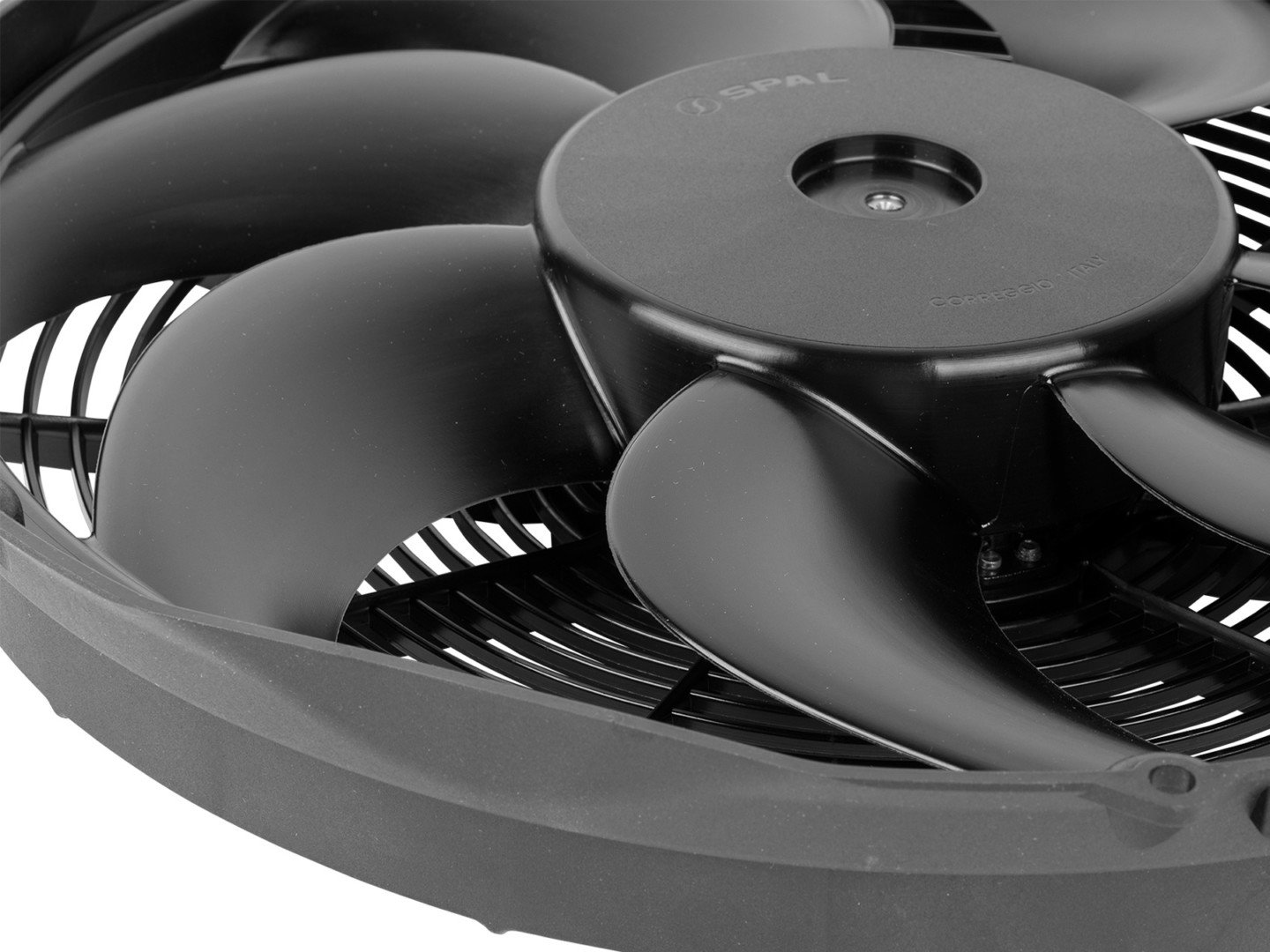
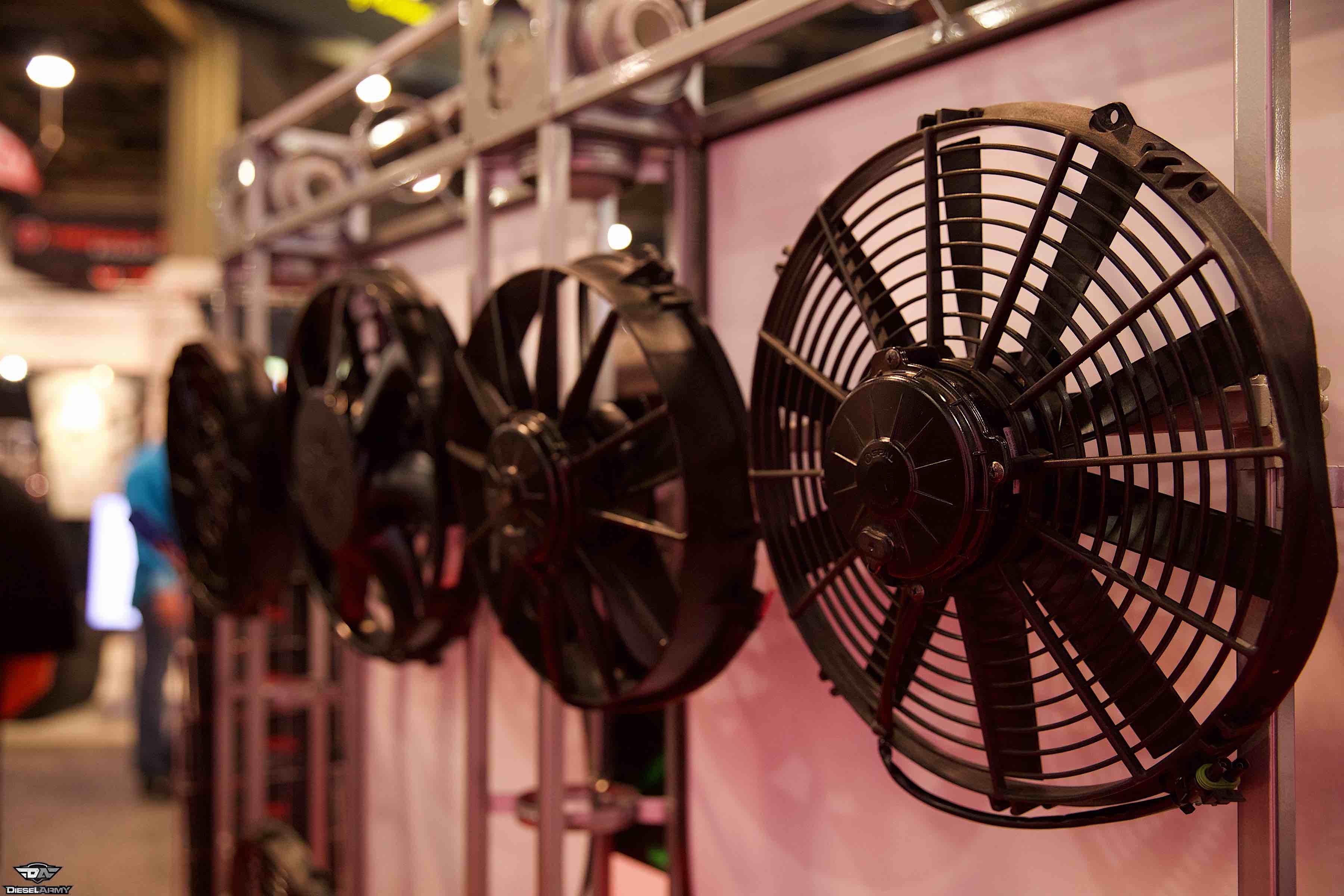
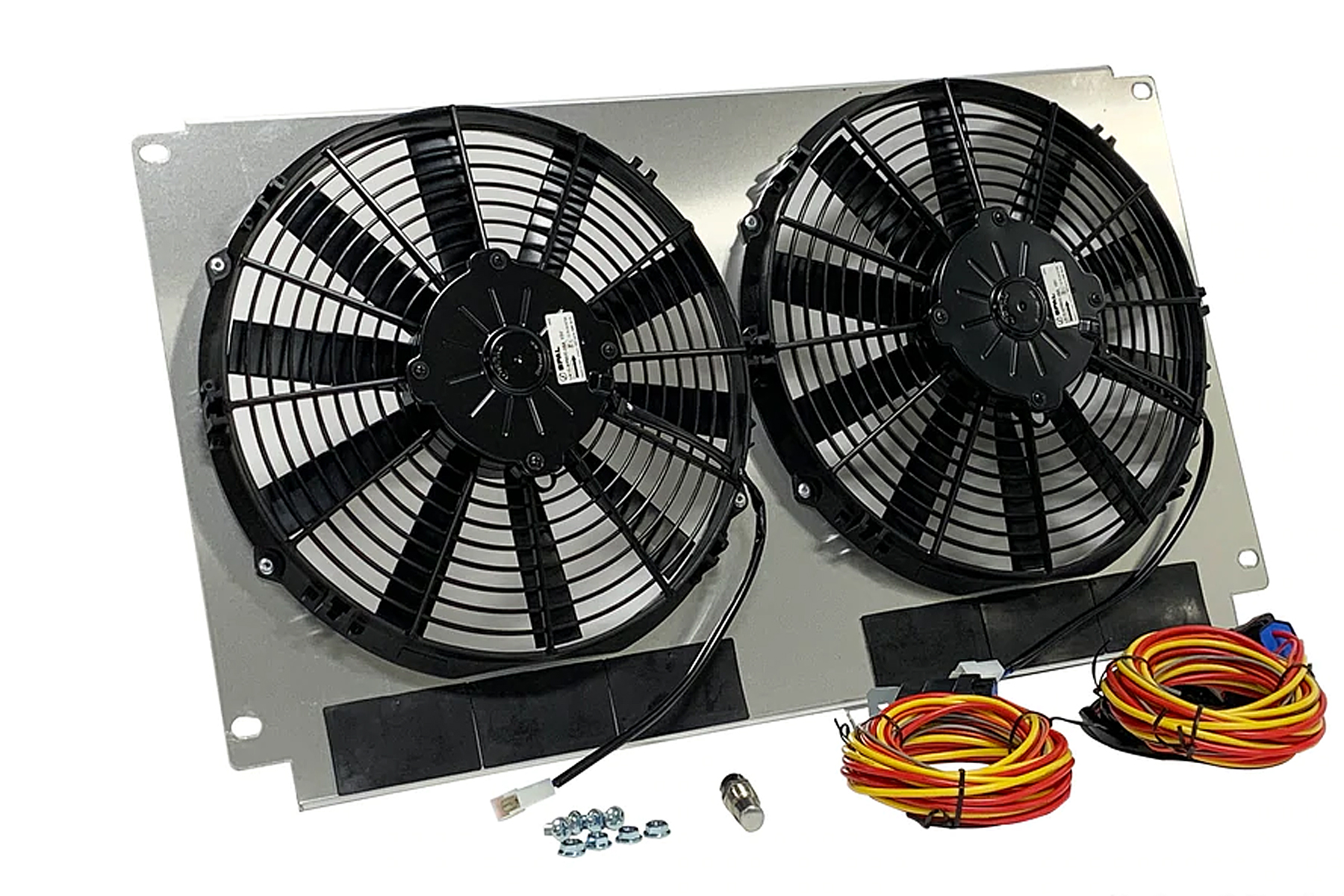
Spal electric fan

Selecting an electric fan is not a hard proposition. However, if you are uncertain of your engine’s needs, a quick call to the folks at SPAL can clear the air.

Final Thoughts

Brent concluded our conversation by saying, “don’t sweat CFM ratings. It’s a garbage way to compare fans. I wish our industry would forget that CFM ratings ever existed. Anyone who sells you a fan, based solely on a CFM rating either A.) doesn’t understand the physics behind the system, or B.) doesn’t want to take the time to properly explain the physics. I can show you several examples where a fan with a lower CFM rating will outperform a fan with a higher CFM rating once you install it on an equivalent radiator.

“No one knows how many CFM you need. The best we can do is estimate the pressure restriction and compare fans at equivalent pressures. Usually, estimating system pressures and comparing a fan’s performance at that point paints a very clear picture of which fan you should choose. Even if we estimate the pressure incorrectly and we are off a bit, you are still working with better data than a CFM rating. In short, don’t just buy a fan because it says it has a higher CFM number.”

Now that you have some useful information about electric cooling fans, you can upgrade your hot rod so this summer’s cruising doesn’t cause your engine to get a little hot during those cool rides.
Posted on Leave a comment

How To Preserve Your Stored Race Fuel All Year Long

Over the years, some magical “pixies” have been developed or improved upon within a gallon of today’s racing fuels. Some of these enhanced chemical compounds, such as oxygenates and more, are ingredients that can improve power and fend off racing engine detonation.

On the flip side, the sensitivity of the shelf life of racing fuels has changed, as well. However, it is far more extensive of a topic than leaving your lawnmower gas in the tank for too long; all fuel “sours,” and racing fuel at a far greater rate.

Racing Fuel Shelf Life

No matter what season of the year, being careful will help you better extend the quality of racing fuels for a surprisingly long time. We’re diving into this subject with Kyle Moose, Sales Manager at ETS Racing Fuels.

“The first concern for your racing fuel is always shelf life,” Moose explains. “It’s a question we get asked constantly. There is not one blanket answer; it essentially depends on each fuel’s unique chemical compositions as to what that shelf life will be like.”

Preventing Oxygenates From Escaping

In racing fuel, extra oxygen content creates more heat energy to push the piston down in the cylinder by allowing the introduction of more fuel to the engine. Oxygenated fuel also helps a cylinder completely burn more of the fuel.

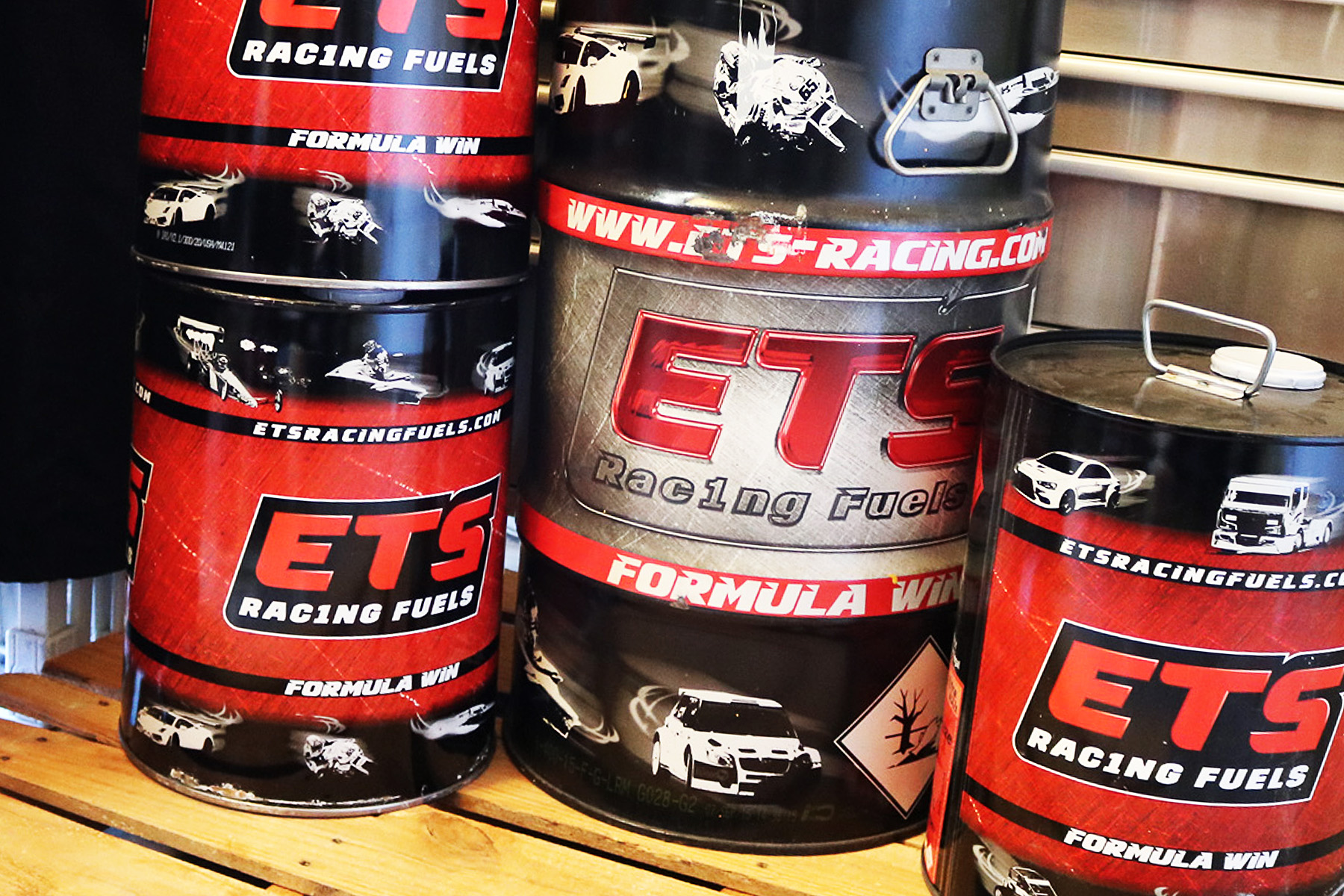
Storing fuel in lined steel containers is imperative. We insulate and allow an air gap between the floor and walls while also managing airflow in our storage area. Sunlight, temperature swings, and condensation are natural enemies to fuel with oxygenates.
“Longevity is a big issue for oxygenated additives,” Moose points out. “The minute that fuel is uncapped, the exposure drops the fuel’s necessary oxygen content, you can almost see the oxygenated vapors ‘gas out.’ It’s trying to escape and grab more oxygen molecules.”

Plastic Utility Jugs

Racing fuels, especially oxygenated versions, suffer the negative effects of long-term storage in plastic utility jugs. Moose recommends 24 hours of maximum storage within plastics. In the aforementioned chemistry lesson regarding oxygenates grabbing for oxygen molecules, those oxygenates can actually escape through plastic material.
The relative timeline of the increased oxygenates used in racing fuel and lined-steel racing fuel containers supplied today have gone hand-in-hand. Plastics are very porous, and all breathe to some degree.

Moose says, “You can lose anywhere from 2- to 5-percent of your fuel as well as 10- to 20-percent of your octane rating. You can tighten a plastic jug cap as hard as possible, but give it a week, and that fuel is not nearly as potent as it was the week prior.”

Care for Fuels With Lead Additives

“Some high-performance fuels in the 110 or less octane range will degrade comparatively slower based on their chemical compositions,” Moose says. “Their chemistry uses lead additives and far less oxygenates. The downfall of these additives is lead separation.”

The lead will separate inside of the fuel, shortening its effectiveness. Under high magnification, you can observe a lead particle dropping from the liquid and turning into a solid, resulting in sediment in the bottom of your containers.

The Unleaded Advantage For Longer Life

“Oxygen components in a racing fuel do not separate like lead,” Moose explains. “This is why I like to illustrate the theories behind ETS Racing Fuel. A majority of all our blends are all unleaded. We have both European and United States production facilities providing fuels to racers and racing organizations worldwide.”

He notes ETS is ahead of the curve in the development of racing fuel formulation that offers long fuel life for international shipping. “We have proven that our race fuels do not separate like those with higher lead content. Proper, unleaded racing fuel offers a great shelf life in well-sealed containers.

Other Environmental Factors

There are three primary influences associated with storage and the environment. First, the sun’s ultraviolet rays are a major enemy to all racing fuel. A racer’s mistake of setting a fuel jug in the direct sunlight during race day is the most rapid example of killing a fuel’s effectiveness. Storing fuel out of indirect sunlight over the long term is very beneficial.

“Another enemy is air humidity,” Moose says. “Typically, storage in your garage or shop is okay as long as it is away from big temperature swings. Steady temperature between races of 60 and 75 degrees is best. Between 60 to 90 degrees should be  your outer limits.”

Consider your fuel if it is stored in your enclosed trailer between events, This can expose it to high temperatures or big day and night temperature swings. “The more fixed the environment between sun, temperatures, and exposure to condensation, the better your fuel will serve you,” adds Moose.

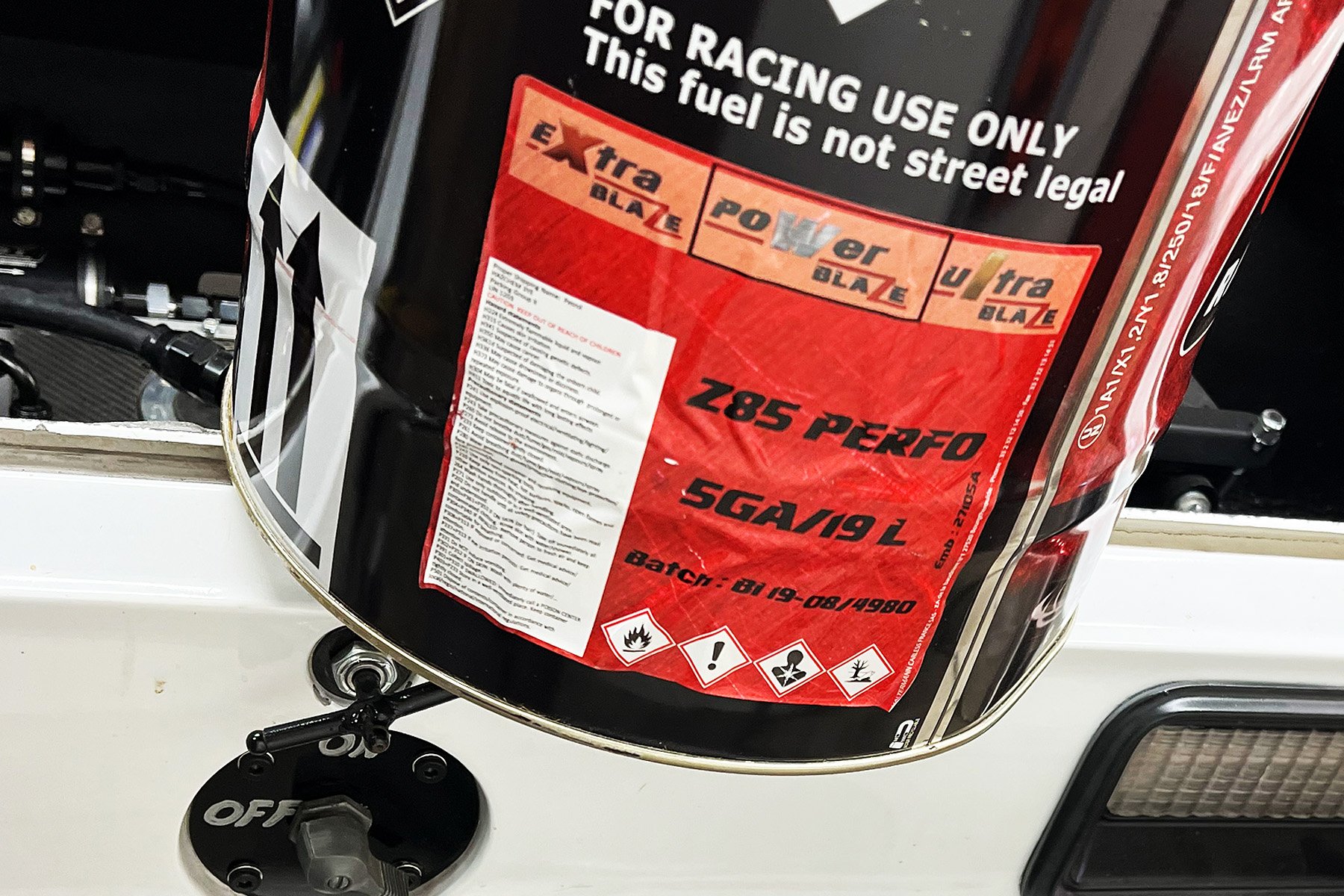
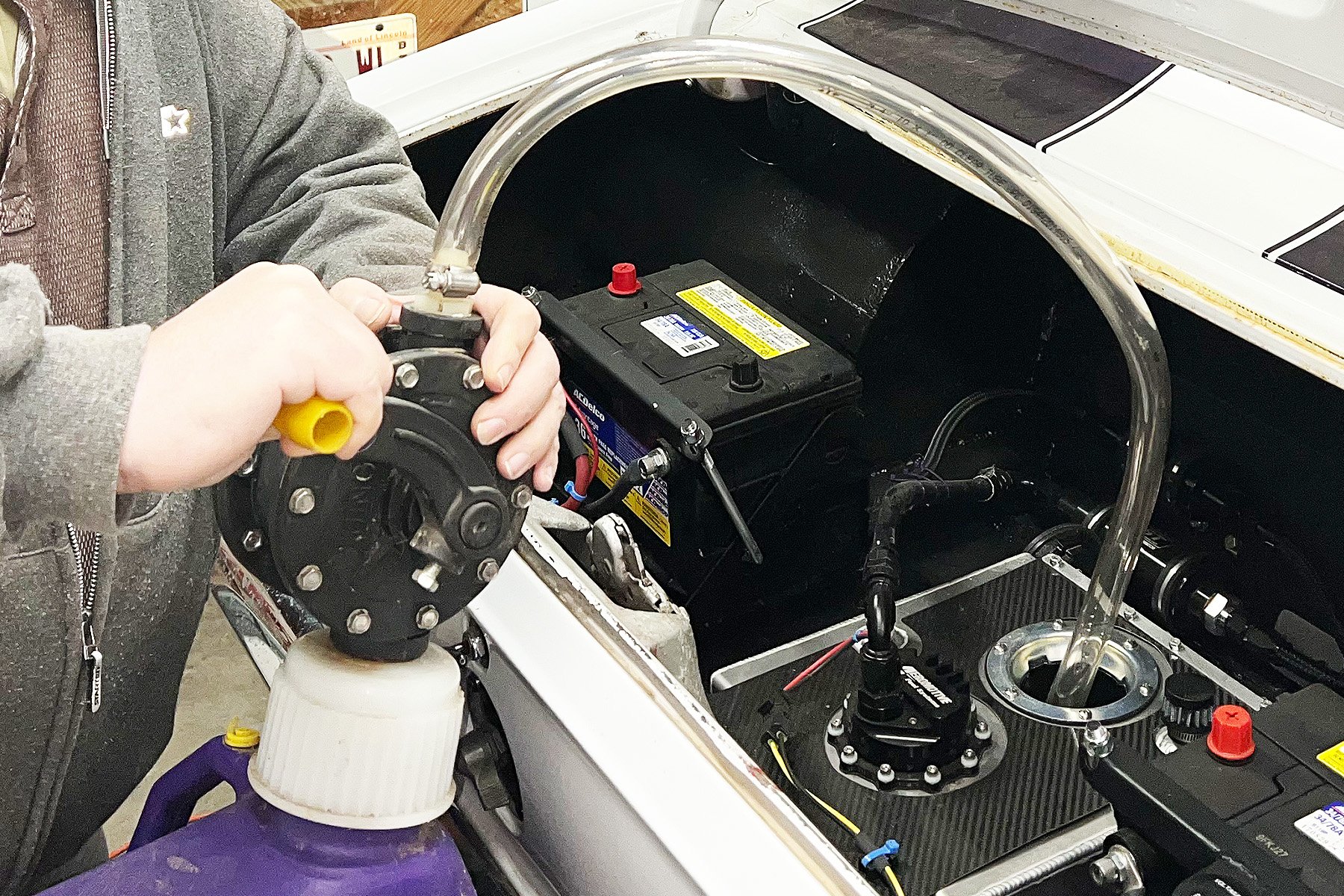
For this season, we are running the ETS Z85 PERFO in our Project Rover Camaro. Like many ETS fuels, its E85-oriented specialty race fuel utilizes oxygenates. We even draw unused fuel from our cell with our rotary pump between races and flush the system.

Concrete or dirt floors are a top enemy with indoor storage. “Concrete holds a lot of moisture,” Moose says. “If you have allowed any pail or jug to rest on a concrete floor for any time, you might have experienced what I call the ring of death. A condensation or rust ring forms on your floor as if your container got wet.”

He goes on to say, “That ring is the moisture coming through concrete and essentially wetting down the bottom of the pail. Unfortunately, believe it or not, even though the steel pail can be well sealed, water can make its way into the container.”

The Best Ways To Protect Your Fuel In Storage

Ultimately, Moose recommends elevating your storage containers for protection from a concrete floor. “Elevating them with a wood pallet is a good practice. This provides a blanket of air underneath. The same is recommended for outer walls.”

If you chose to do your fueling straight from the steel container, ETS offers these spouts that connect straight to their metal pails.

In conclusion, our “big three” in storage recommendations — an air barrier around all sides, protection from sunlight, and preventing big temperature swings — will provide the best storage options for racing fuels.

You can invest considerable time and dollars to achieve quicker e.t. slips, but simple approaches to preserving your racing fuel for the next race day can impact your performance equally. Treat your fuel as a precious commodity, and it will pay you back even more.


Posted on Leave a comment

Combat Ethanol-Based Fuel Issues

One of the more serious concerns that enthusiasts have when asking questions about their classics is about ethanol in fuel. Whether you think it’s a good idea or not, ethanol-infused gasoline is here to stay. Unfortunately, it can wreak havoc on many collector cars. One of the main issues with using ethanol is that it is hygroscopic. In other words, it absorbs water. This water leads to condensation in fuel tanks, fuel lines, and carburetor float bowls. The issue of water in ethanol fuel can also cause paper fuel filters to swell and clog the system.

Gasoline mixed with ethanol also has a shorter shelf life and goes stale quickly. Finally, ethanol is highly corrosive, and this corrosive nature and the fact it “gathers” water means it helps rust to form wherever air meets metal once submerged. Because of these “issues”, you might want to consider using a fuel cleaner/additive from Lucas Oil Products.

Immediate Protection

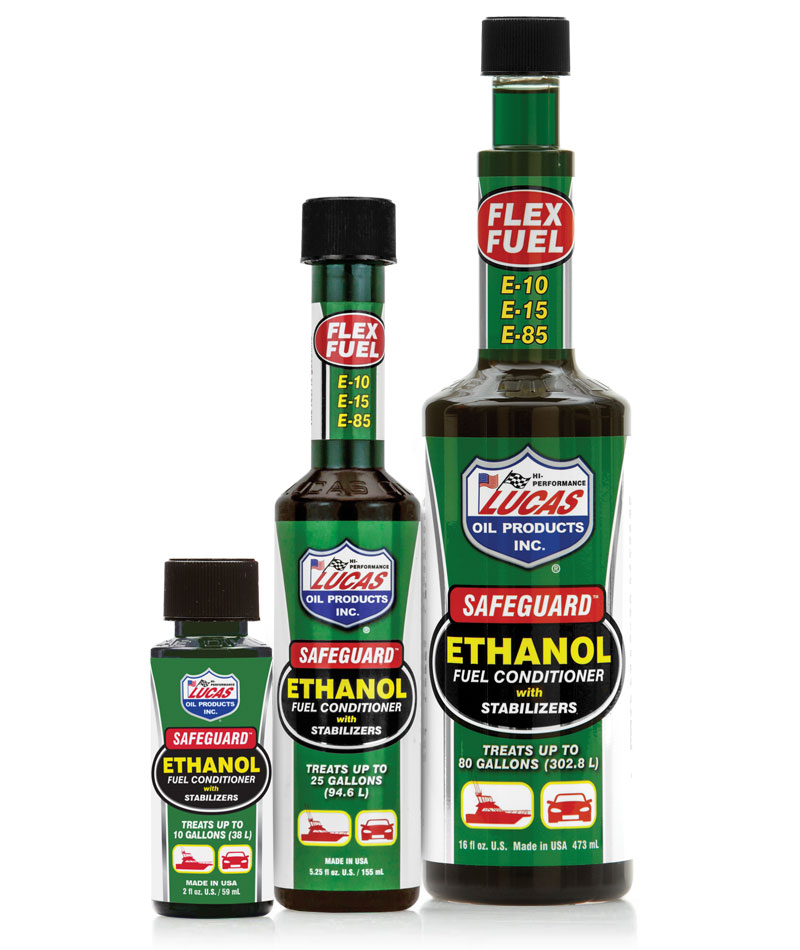
Lucas Oil Safeguard Ethanol Fuel Conditioner with Stabilizers was developed to specifically address issues associated with using ethanol-based fuels. This applies to E10, E15, E85, pure ethanol, and any mixtures in between including gasoline. This product is completely soluble in all ethanol fuels and will not harm filters. Lucas Safeguard Ethanol Fuel Conditioner with Stabilizers even contains effective additives to prevent rust and corrosion associated with the use of ethanol fuels. This is key to keeping your classic’s fuel system happy and healthy.  Simply add one ounce to every five gallons of fuel.

Lucas oil

KEY BENEFITS

  • Cleans injectors, valve seats, combustion chambers, and other critical fuel components
  • Stabilizes fuel and prevents varnish and gum formation in ethanol and gasoline
  • Combats deposits and protects your engine oil lubricants from the harmful effects of alcohol combustion

A Complete Lucas Oil Cleaning

Since corrosion is a concern and if your car gets parked for any length of time, that corrosion and even varnish build-up can keep your car parked. For a deeply cleaned fuel system, check out Lucas’ Complete Fuel System Renewal Kit. This all-in-one system is a great maintenance solution for cars that tend to sit for long periods. To clean the fuel system, simply follow the four easy steps to eliminate gum, varnish, particulate matter, and corrosion from all lines and components. The kit includes one bottle of Lucas Oil Deep Clean Fuel System Cleaner and three bottles of Lucas Upper Cylinder Lubricant and Injector Cleaner. According to Lucas, there is no more effective way to restore your vehicle’s performance. It is also compatible with all fuel types.

Lucas Oil

So, before your ride succumbs to the realities of using ethanol-blended fuels, set yourself with a maintenance program using Lucas Oil Products fuel treatments. You will be glad you did when your car is not another victim of corn-based fuels.

KEY BENEFITS

  • A great tune-up in a bottle
  • Cleans and lubricates the fuel system
  • Neutralizes low-sulfur fuel problems
  • Increases power and miles per gallon by burning excess exhaust emissions
  • Increases the life of pumps and injectors