
Posted on Leave a comment

Fwd: The Secret Life of Bearings: A Test Of Bearing And Oil Wear Rates

It can be a very tortuous existence for engine bearings. Think about it. Bearings are there to be abused and many engine builders treat them as a consumable. Most of the attention bearings receive is heaped upon design, clearances, and oil feed theory. But once the engine is broken-in and running, attention shifts to other concerns.

This story looks at how bearings, coatings, and the oil you choose can have a dramatic effect on bearing life. As you might expect, this means spending a little more money up front, but the results may make that an easy decision.

The engineers at King Bearings have recently developed a new performance rod and main bearing called the pMaxBlack. This is a bearing with major changes to the tri-metal alloy, in a quest to create a material that is still soft enough to handle a high-output engine, while simultaneously offering increased fatigue resistance and load carrying capacity. The inside story on how King developed this bearing is steeped in alloy-metal technology, so let’s just say they figured out a way to make a bearing stronger to withstand the abuse from increased power levels while still making it soft enough to properly do its job.

Bearing Theory

Race or performance oriented tri-metal bearings are built intentionally soft because, if a rod journal deflects or a crankshaft bends under high load, the journal may contact the bearing. If the bearing is soft enough, it merely wears slightly. Unfortunately, cold startups tend to take their toll on engine bearings, since the crank rotates for several revolutions before the film of oil builds up between the bearing and the journal. This is why you often see race teams pressure lube the engine each time before cold startup.
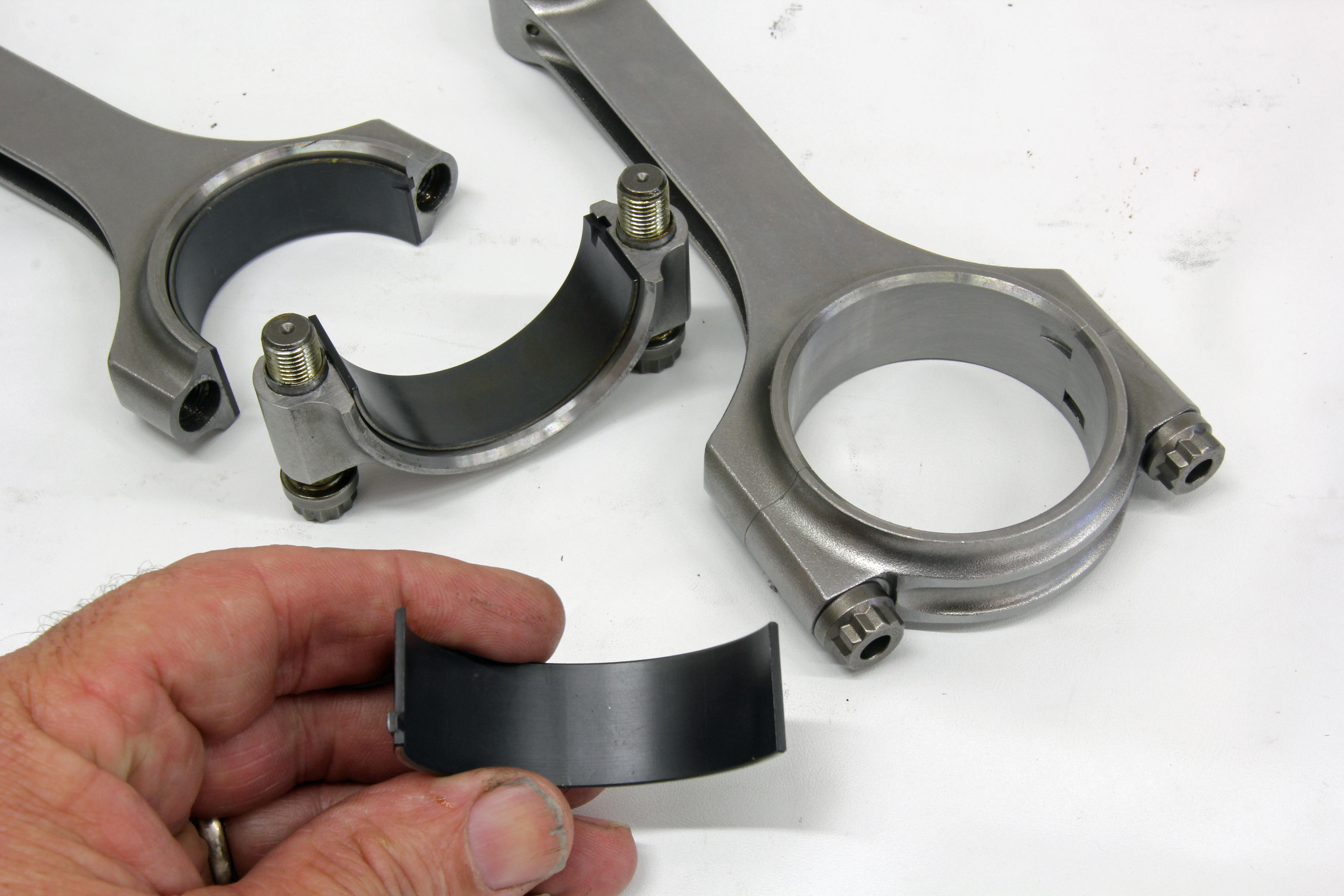
The King pMaxBlack performance bearing isn’t a coating but rather a new bearing top overlay that increases hardness by 24-percent yet with 17-percent greater fatigue resistance. Adding the pMax Kote coating makes these bearings even more wear-resistant.

King ‘s aluminum-alloy bearing material (HP prefix) is used in very high-load applications. According to Ron Sledge of King Bearings, “The duration of time of the loading is what separates which bearing to use, HP vs. XP or XPC. The HP will handle very high loading for a shorter period of time (like drag racing) whereas the XP or XPC will handle very high loading for longer time periods, like circle-track and off-road racing.”

“The advantage of the HP bearing is that it will tolerate handling debris and crankshaft deflection better than the XP or XPC because of the 0.012-inch thickness of the aluminum layer.” The babbit overlay on the XP bearing is only 0.0005-inch thick. This thinner layer does not tolerate debris and crankshaft deflection as well.

Bearing Hardness

BEARING MATERIAL HARDNESS RATING
Aluminum 40 Hv
Tri-metal 11-14 Hv
pMaxBlack 18 Hv

Keeping Up With Technology

Today’s 21st-century street engines are now making more horsepower than pure competition engines from as little as two decades ago. Builders naturally expect the bearings to keep up with these enhanced power plateaus. This is why King Bearings developed the pMax Black bearings.

Taking this idea a step further, King developed a coating for this bearing called pMaxKote. This becomes the ultimate-performance King bearing, employing what the company calls a nano-composite polymer coating. According to Sledge, the term nano-composite just means it is made up of nanosized materials in a polymer base. The coating is added on top of the pMaxBlack overlay and does not increase the thickness of the overall bearing wall.

To maintain the same dimensions, King compensates with the thickness of the intermediate copper layer to allow for the 0.0002-inch thickness of the pMaxBlack coating. This allows for maintaining the same oil clearances as uncoated counterparts. The coating protects the bearing from mild abuse and is designed to be extremely wear resistant – even when slight contact is made with the crankshaft.
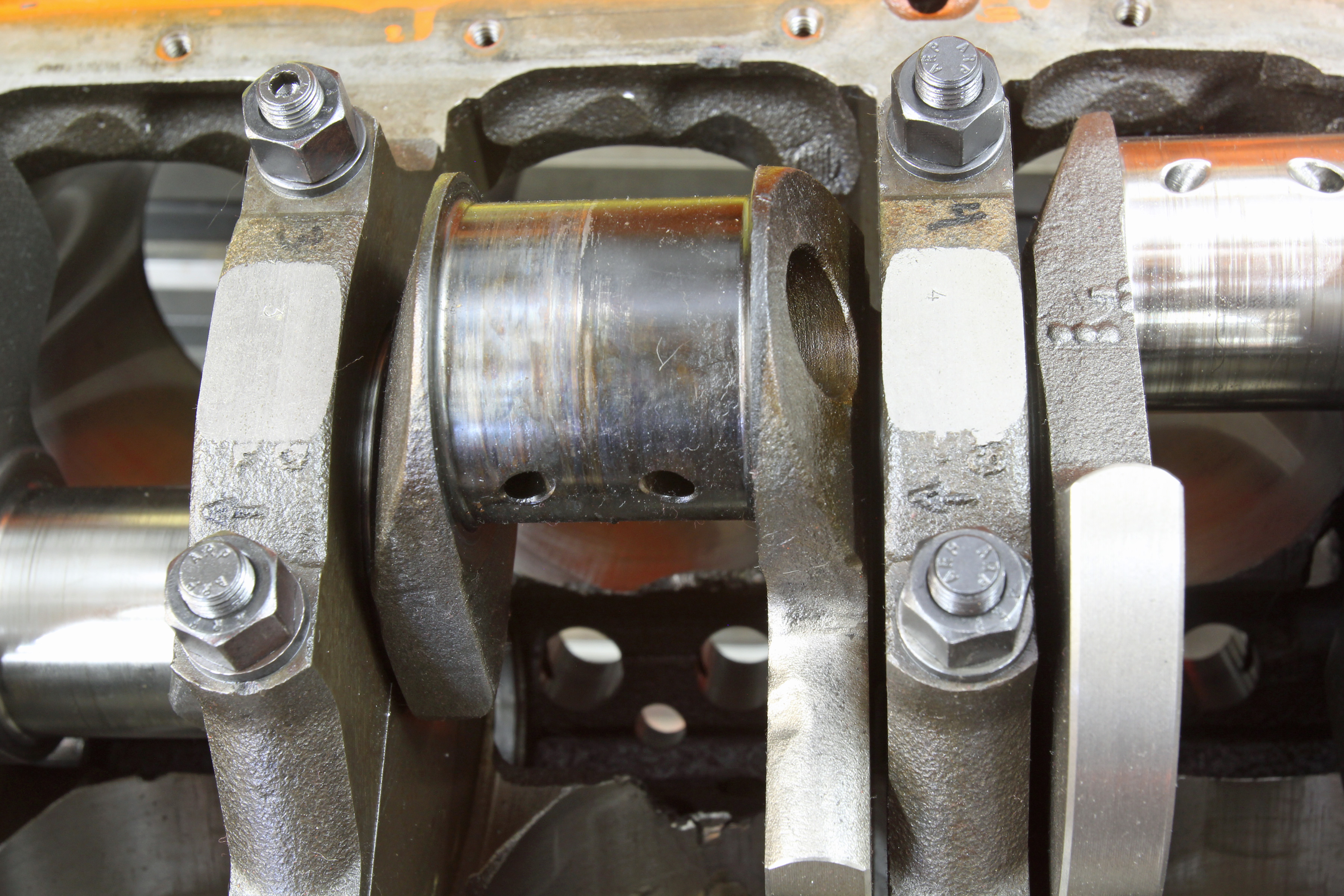
This is what happens when a connecting rod bearing runs for a short time at max load with insufficient lubrication. Connecting rod bearings often fail first because they are heavily loaded and are last in line for lubrication.

Put To The Test

All of this sounds really good, but the question becomes, how would this coating work in the real world of internal combustion engines? King thought that an independent test would be a good idea, so they collaborated with Lake Speed, Jr. at Driven Racing Oils, and the team at Shaver Specialties, where they set up an abusive test schedule. The plan took shape by placing a relatively mild 440 hp, 383ci small-block Chevy on the dyno. They used a purposely excessive cylinder test regime that would heap serious load on the connecting rod and main bearings and then evaluate the results.

This required a baseline or control combination, with a couple sets of King XP, Tri-metal bearings, and Driven supplied a mineral-based, 5W-20 as the baseline lubricant. To make this a true lubricant comparison, the engine oil additive packages had to be exactly the same. Because there were no off-the-shelf mineral-based and synthetics with the same exact additive package, Speed supplied both custom-blended oils for the test.
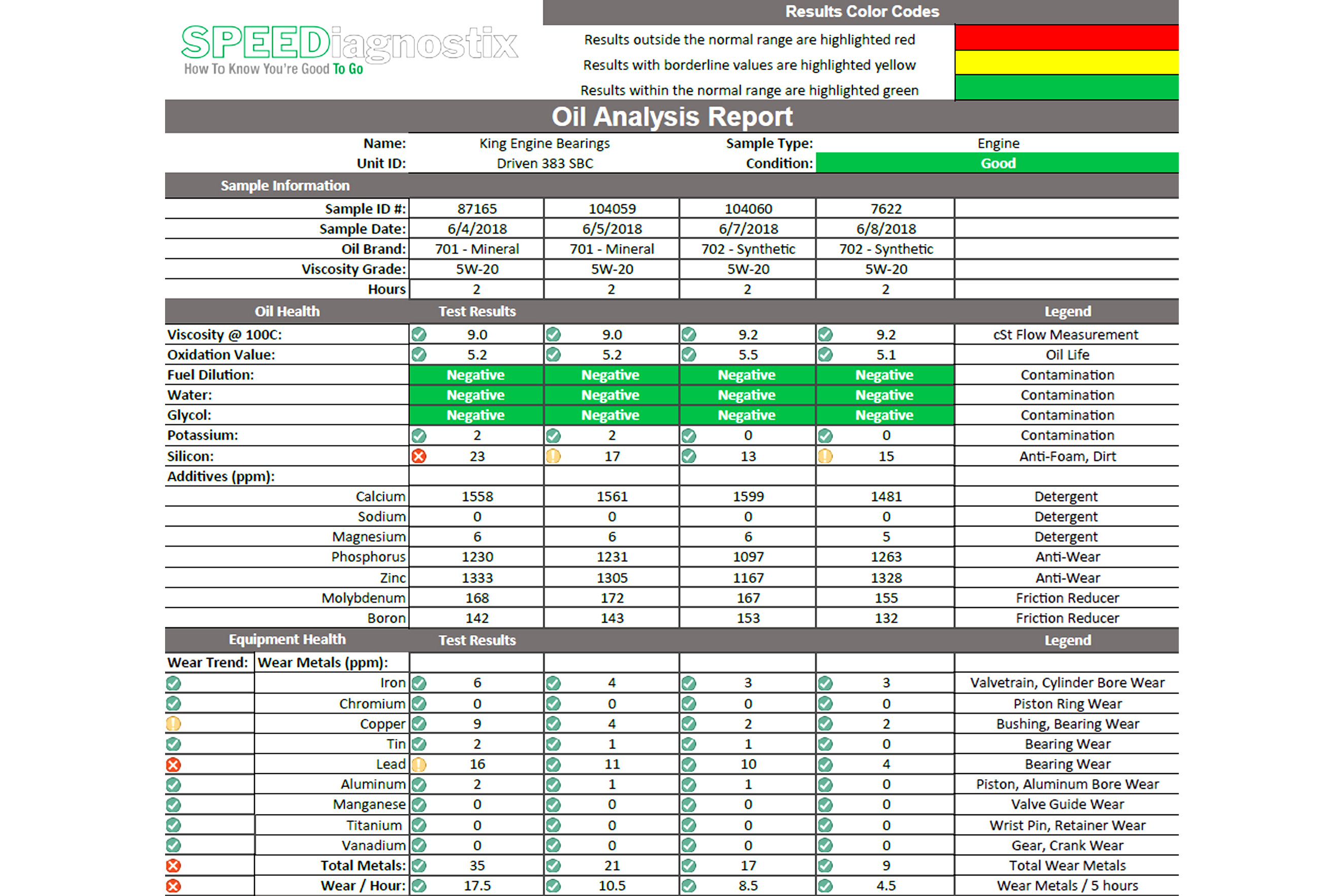
This is an example SPEEDiagnostix report sheet from this test. It shows the type of results you can expect as part of the evaluation. Any warning signs are immediately highlighted in yellow or red. If everything is good, the check marks are in green.

Neither is available as an off-the-shelf oil with this specific blend of additives, but they both are representative of high-zinc and high-phosphorus lubricants. Speed chose a lower viscosity base-oil which would intentionally decrease the oil film thickness and increase potential bearing contact and wear.

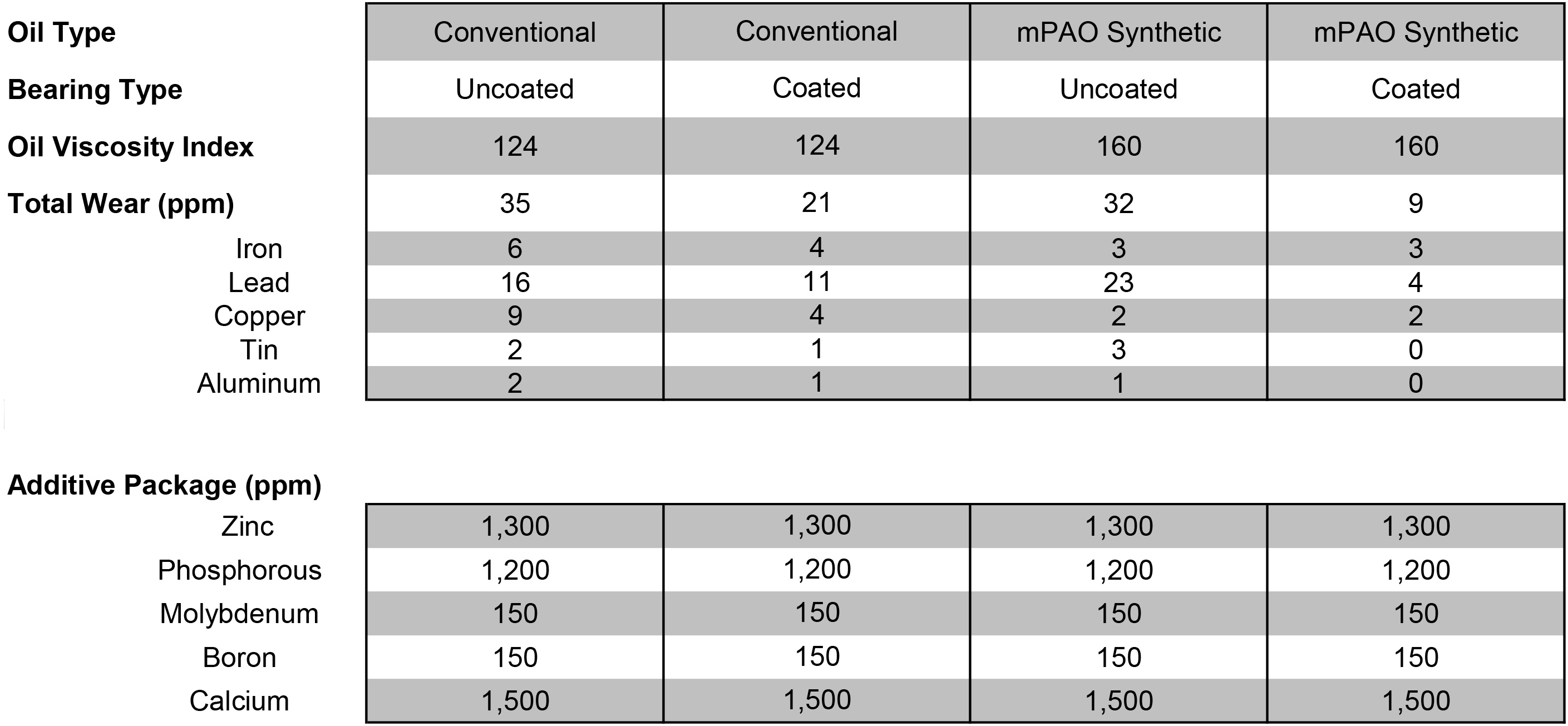
As you can see from the results chart, the differences are measured in as little as single-digit parts-per-million (ppm) numbers. In order to ensure these numbers are accurate, Speed also performed a flush procedure between each of the four tests. This involves draining the test oil, removing the Wix oil filter, and refilling with Driven’s break-in oil BR30 along with a new filter, and then running the engine for 30 minutes, including two full-power dyno runs. Then the break-in oil is drained and the filter removed and the next oil is added. This exact same procedure is repeated when the bearings are changed. This ensures that the results will be as accurate as possible.
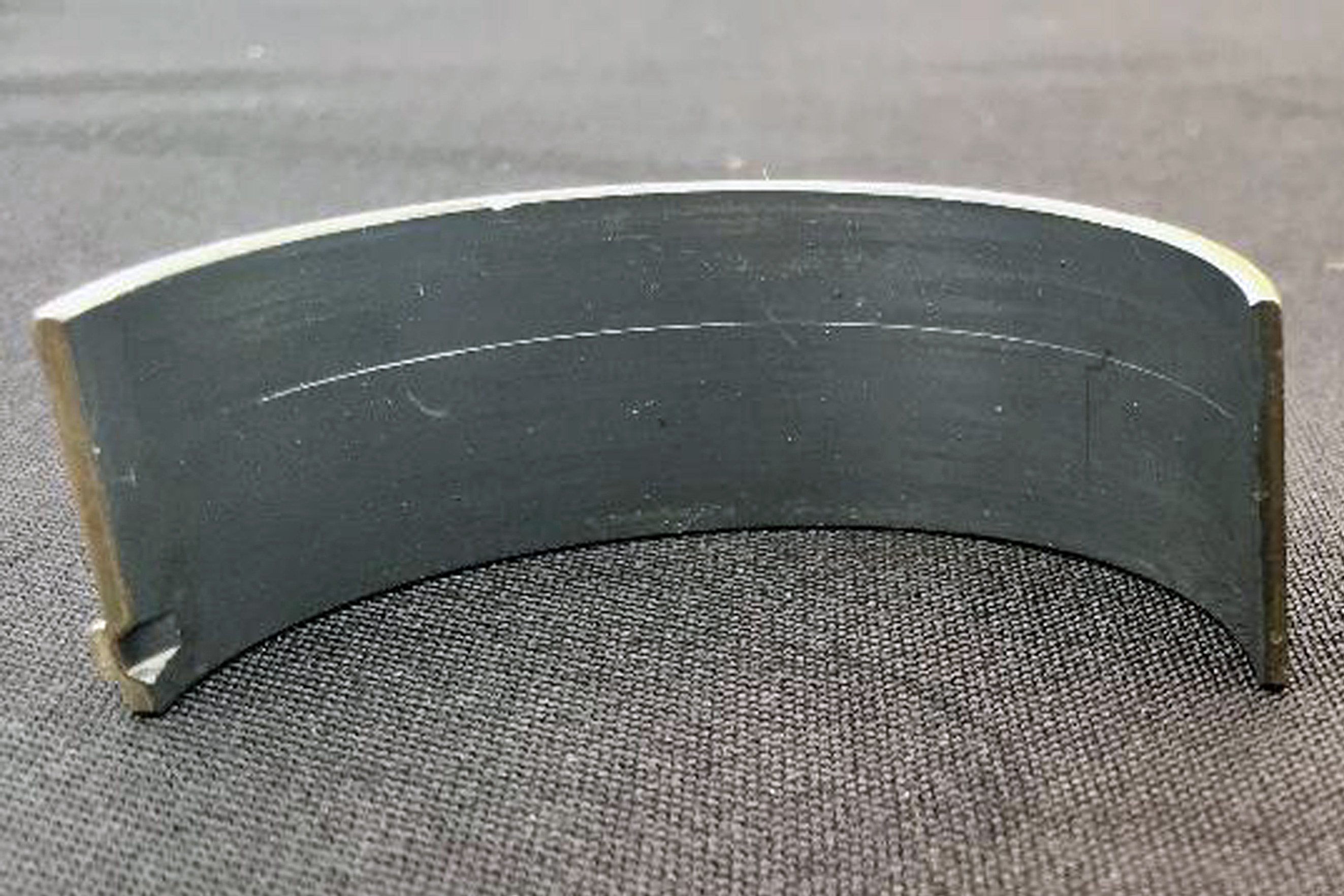
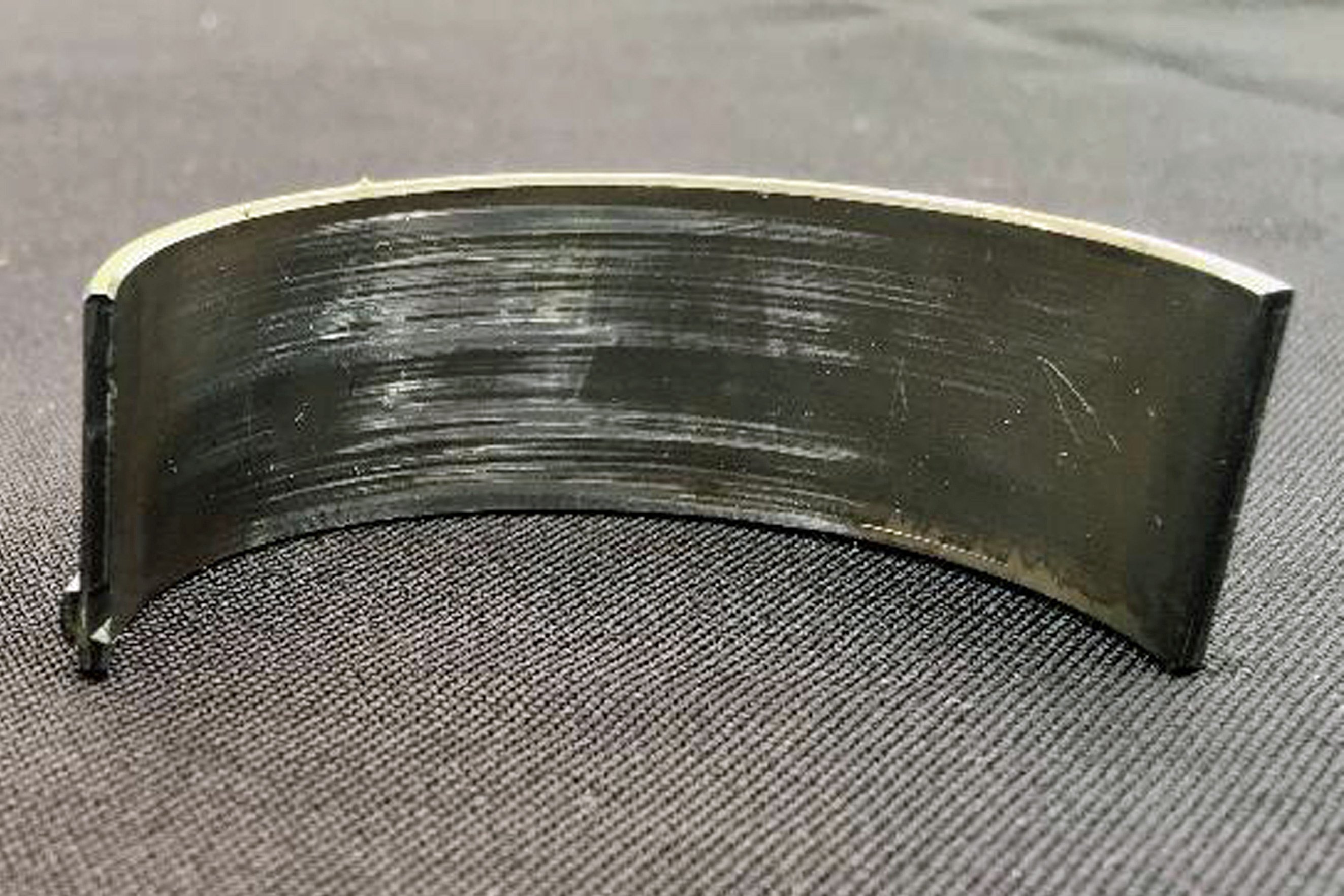
This photo shows the uncoated XP rod bearing on the right after running loaded for over three hours using a 5w20 conventional oil. The same test with the same oil was performed on the King pMaxBlack XP bearing on the left. The wear reduction is obvious.

The accompanying results chart also lists the additive package. Zinc and phosphorus (ZDDP) are anti-wear additives that most enthusiasts are familiar with. Molybdenum and boron are friction-reducing additives while calcium is employed as a detergent. These were the main additive package ingredients for both the conventional and the synthetic oils so that the only difference was the base oil.

After the first test sequence with the petroleum-based oil, Shavers’ engine builder, Keith Chrisco, removed the first set of bearings and added a second set of identical XP bearings. He then ran the engine using the mPAO-based synthetic 5w20 oil.

The third test involved switching to a new set of King’s pMaxKote rod and main bearings, but returning to the traditional mineral base 5w20 oil. The fourth and final test saw the installation of another new set of pMaxKote bearings run this time with the synthetic oil. This created a comparison of coated and non-coated bearings with traditional and synthetic engine oil.
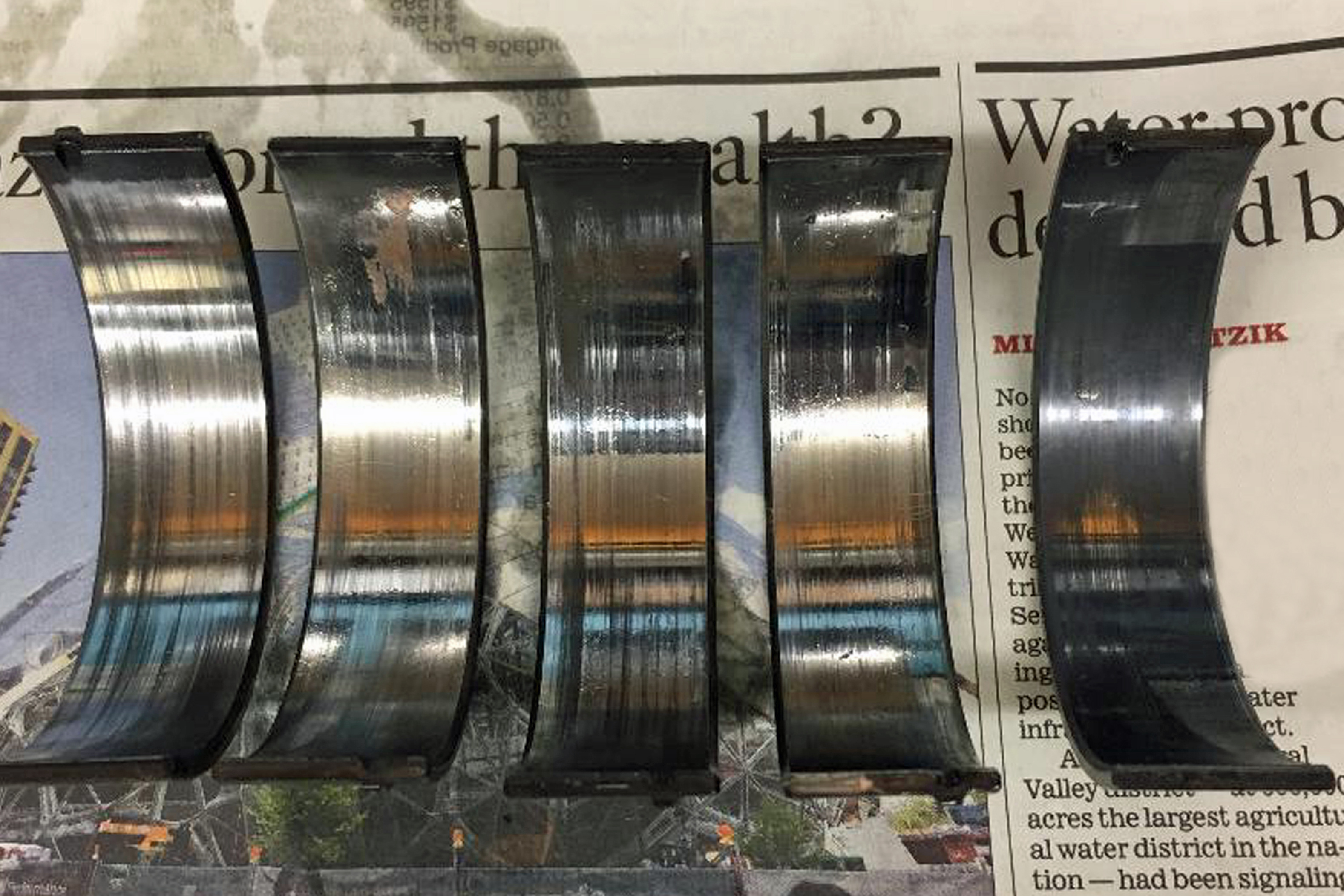
These are five of the lower, uncoated XP bearings as they were pulled directly from the engine after running the test using conventional oil. As you can see, there is considerable wear.

The evaluation criterion for each test would be a comparison of the wear count of the different metals (in ppm) by analyzing the oil drained from each test. The testing was performed by SPEEDiagnostix, a new oil evaluation company using the same metal spectrometer techniques as is used in current Formula 1 racing.

The best way to really load these bearings and ensure that the test schedule would be both consistent and survivable was to pull the aforementioned small-block Chevy down to an extremely low RPM with a high load. The SuperFlow dyno was able to pull this little Chevy down to 1,450 rpm for a total of three hours and fifteen minutes for each of the four tests. During this time, the low-RPM test was interrupted so the engine could also be subjected to a complete test up to just past peak horsepower a total of 14 times. Oil and water temperature was also closely monitored.

Instead of horsepower, this test was all about survivability. In the attached chart, we have condensed a much more expansive report down to the wear results. The important wear materials are iron, copper, lead, tin, and aluminum. Both the standard and coated King tri-metal bearings are made up mainly of copper, tin, and lead so these would be the major elements that would indicate bearing wear. Aluminum would originate mainly from the pistons while the iron would likely be sourced from the cylinder walls.

While the trace material numbers are relatively low PPM counts, it is the differences from each test that is compelling. Let’s start by explaining each category in the results sheet. The Oil Type indicates the type of oil – either conventional or synthetic. The Bearing Type indicates whether the bearings were coated or uncoated. The Oil Viscosity Index is a rating system applied to engine oil that indicates how much an oil viscosity changes over a wide temperature range. The higher the number, the more thermally stable the oil is over a wide range of temperature. This means that as the oil warms up, it loses less viscosity.
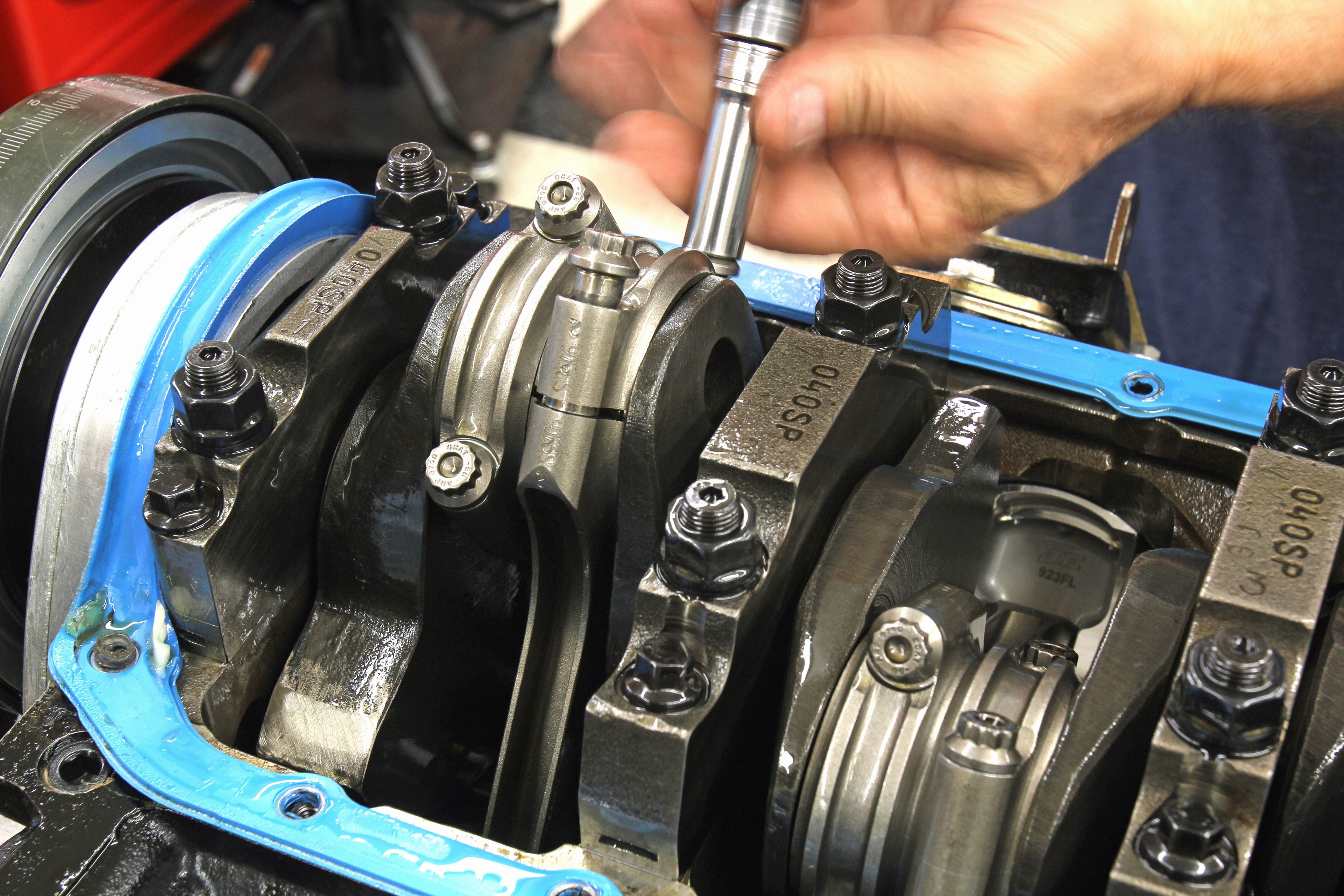
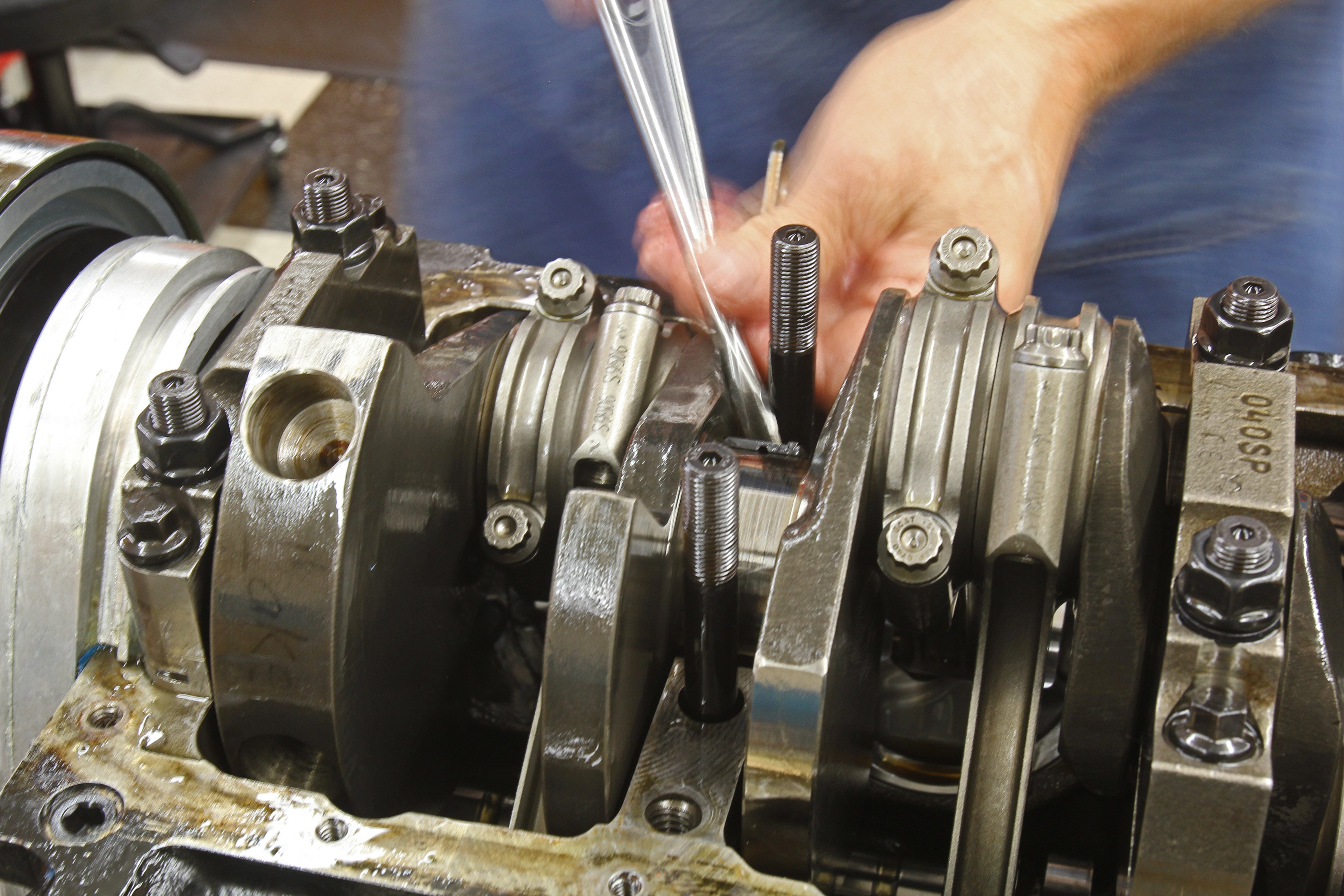
This bearing and oil test demanded the engine be subjected to multiple tear-downs to replace all the bearings but the results were well worth the effort. Shavers’ small-block has been torn down so many times it should have zippers. To save time, Chrisco changed the main bearings without pulling the crank. He loosened all the main caps and carefully removed the old bearings and installed the new ones by pushing the bearing while turning the crank.

Also note, that we’ve listed each additive component in ppm. This is important because this clearly shows that the additive packages for both the conventional and the synthetic oils were identical. So this means that any reduction in wear materials (when comparing oil) must be attributed to the quality of the base oil and not to the additive package.

Now that we’ve got that handled, the results indicate that the combination of King Bearings’ MaxKote bearing with an mPAO synthetic base oil is an excellent way to drastically reduce wear in an engine. As you can see, the baseline total wear number of 35 ppm (created simply by adding up the wear numbers of each individual element) using a conventional bearing and a mineral-based oil, was reduced 74-percent by using a high-quality mPAO synthetic like that from Driven Racing Oil, combined with the pMaxKote bearings.

Just changing to the coated bearings while retaining the conventional oil also produced a significant improvement, reducing the overall total wear count from 36 to 21 ppm, which is a 40-percent improvement in wear. This reveals the significant increase in durability from the coating itself. This is especially important when you get into a cost-performance ratio because the coated King bearings are roughly only 40-percent more expensive compared to non-coated rod bearings for a small-block Chevy.

You will note in the results a somewhat higher-than-anticipated lead wear metal reading in the third test with an uncoated bearing and the synthetic base oil. The lead is the dominant metal found in a tri-metal bearing overlay (lead babbit), so wear was slightly higher in this case compared to the conventional oil. While every attempt was made to keep the testing as standardized as possible, there are any number of variables that could account for this higher number. While the lead numbers were higher than any other test, the total wear metal count was still lower than uncoated bearings with conventional oil.

While the synthetic oil used in this test was a custom blend to standardize the additive packages, Speed said that a Driven oil that would be comparable to the mPAO synthetic used in this test would be Driven’s XP line of race oils. These are available in several different viscosities based on how the engine would be used, ranging from a 0W to a 15w-50. This oil is more expensive, but when you consider the expense involved with rebuilding an engine, the cost is easily justified, because the oil will last so much longer with lower wear metal contamination.

Engine wear isn’t something that most hot rodders stress over, but with the sizable investment that most engines demand, perhaps it is a subject that should be given its fair share of attention.

Posted on Leave a comment

MLS Head Gaskets – Engine Sealing Do’s And Dont’s

Any business owner or life-long gearhead that personally does the majority of their own wrenching, knows the value of things beyond money. Time, for one, is huge. It is rewarding to work on your own stuff, but nobody likes doing a job more than once. Using good tools is paramount to success – as is the confidence in knowing a job you completed is going to be rock solid.

Success on the track, street, and/or the show field comes down to preparation. Many people who don’t find the same success of others – but try everything they can think of – will often blame money or politics. The truth however, is different. Successful people know a few tips, tricks, and techniques, to prioritize things in a way that less successful people might regard as luck or even magic.
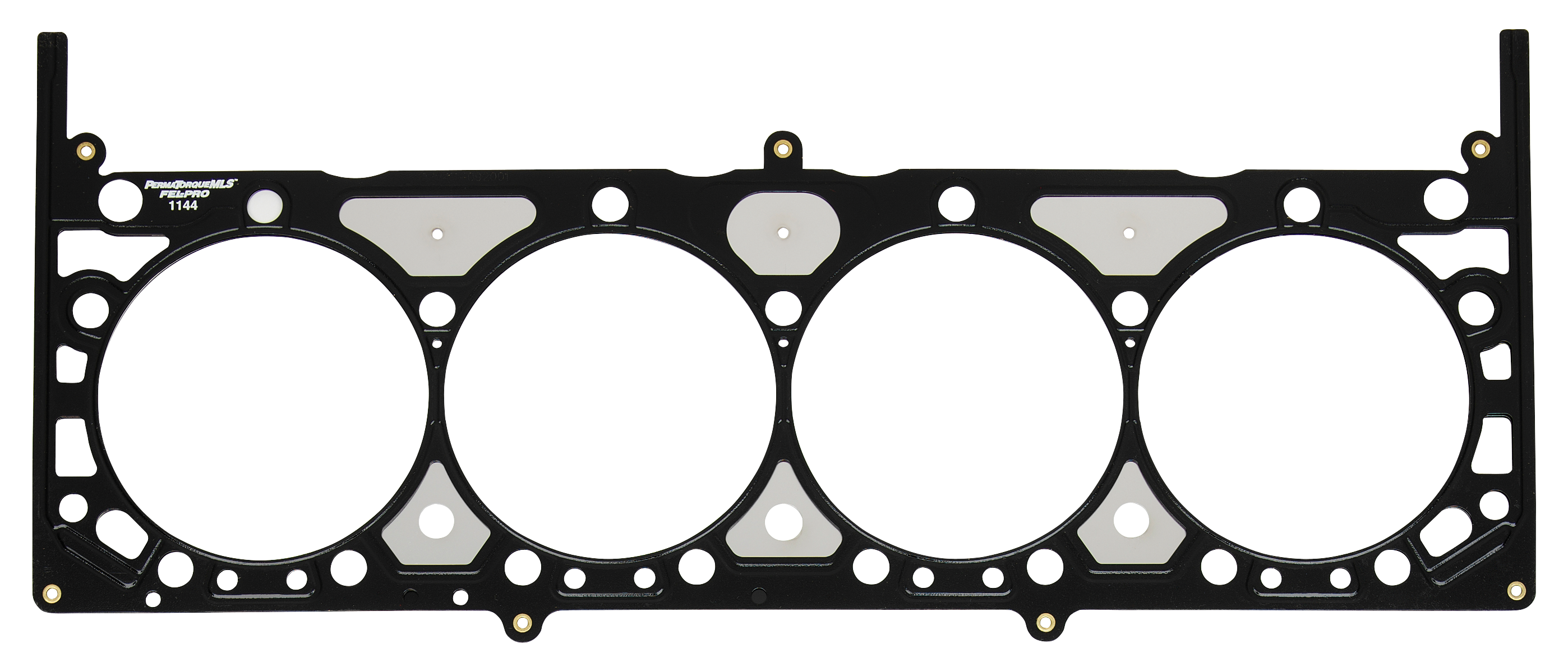
MLS head gasket

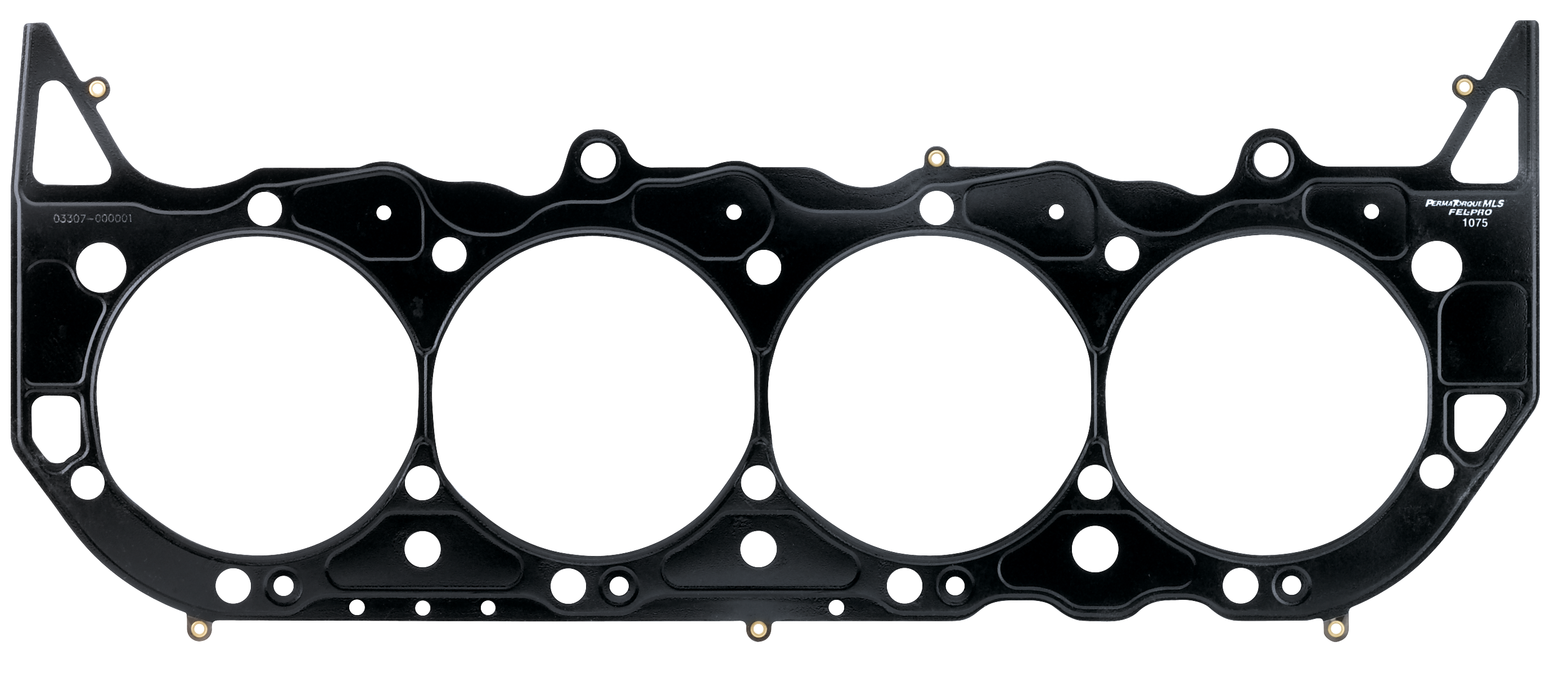
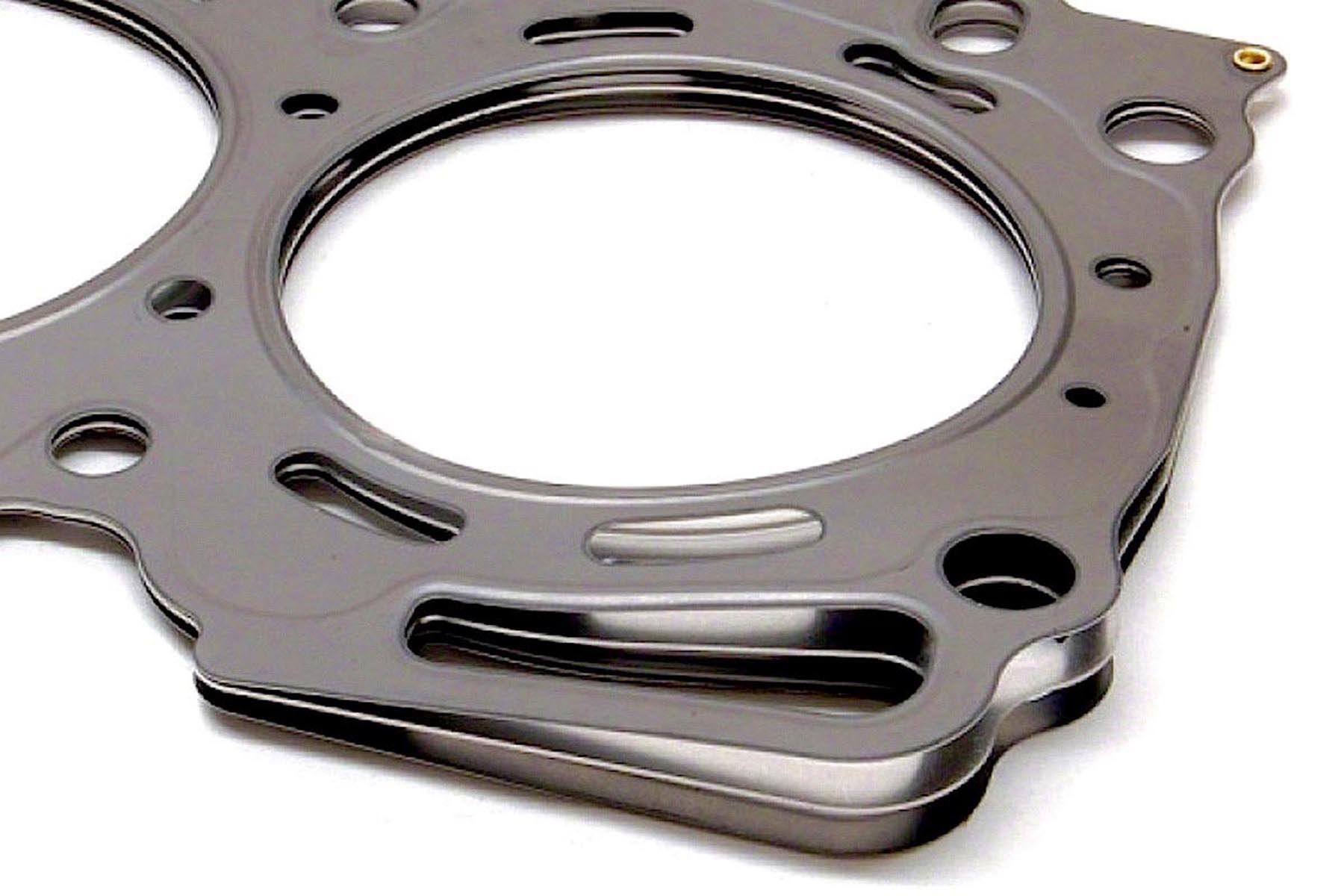
MLS gaskets are designed with two to five sheets of spring or carbon steel sandwiched between the head gasket’s sealing material. Precisely shaped beads and stoppers work with the specific steel properties to increase the clamping force around the combustion chamber.

Speaking of “magic,” if you don’t know enough about Multi-Layered Steel (MLS) head gaskets, this is going to change your automotive life. Everyone focuses on power-making big items that are generally in your face, exciting, and expensive. But all of those parts have to work together. Preferably, without ever breaking.

Head gaskets are ridiculously important, but people rarely give them much thought. Enthusiasts buy the swap meet gasket kit, and place the gasket in the necessary locations. But, head gaskets have to contain millions of explosions, deal with the expansion and contraction of dissimilar metals, and a wide range of chemicals and extreme temperatures. Basically, they are expected to perform silently and flawlessly forever.


MLS Head Gasket Science

We contacted two leading gasket companies, Cometic and Fel-Pro to get the “magic” sorted. We have used products from both of these companies in the past. It turns out, even our jaded and sometimes arrogant selves learned a lot of seriously important information. That made writing this article very rewarding.
No other coatings are necessary on MLS head gaskets. – Jim Daigle Fel-Pro

Chief Engineer Rich Larson and Senior Product Manager Jim Daigle, of Fel-Pro, walked us through all the details. Fel-Pro traces its history back 101 years, that’s when the company began making felt products and got its big break making gaskets for the Ford Model T. One century later, that start has evolved into the company becoming the market leader in automotive gaskets.

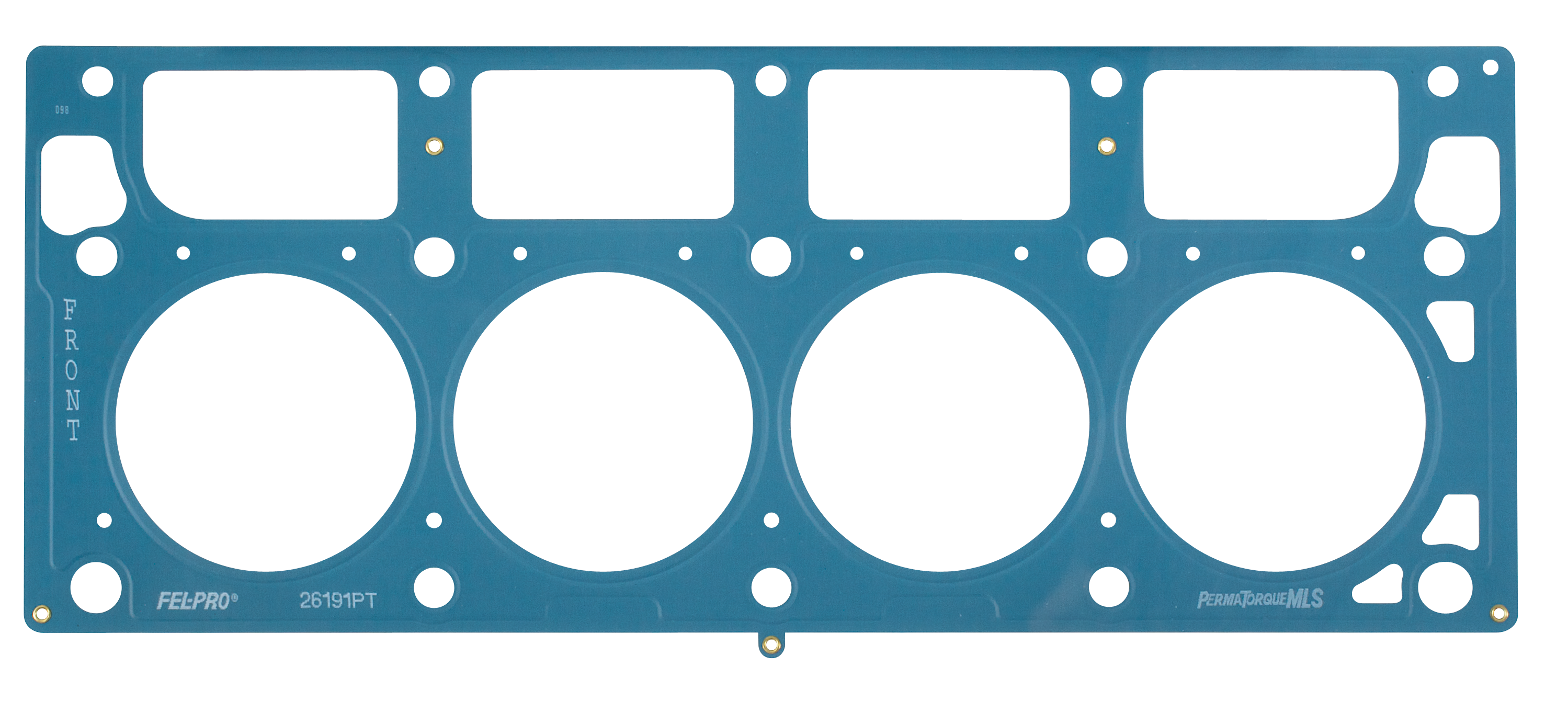
MLS head gasket

Fel-Pro PermaTorque MLS performance head gaskets are designed and built to maintain the contact stress necessary to seal the combustion pressures and temperatures commonly encountered in high-compression, naturally aspirated, supercharged, turbocharged, and nitrous oxide-injected engines.

“Cometic was started in 1989, and was dedicated to serve the powersports industry,” said Mickey Hale. “To this day, Cometic products are 100-percent American-made, utilizing state-of-the-art technology to be able to make quality, custom gaskets for any application. The company is also family owned. Cometic is a customer-driven company, and is able to offer world-class workmanship directly to race shops and even a one-off part to the little guy.”

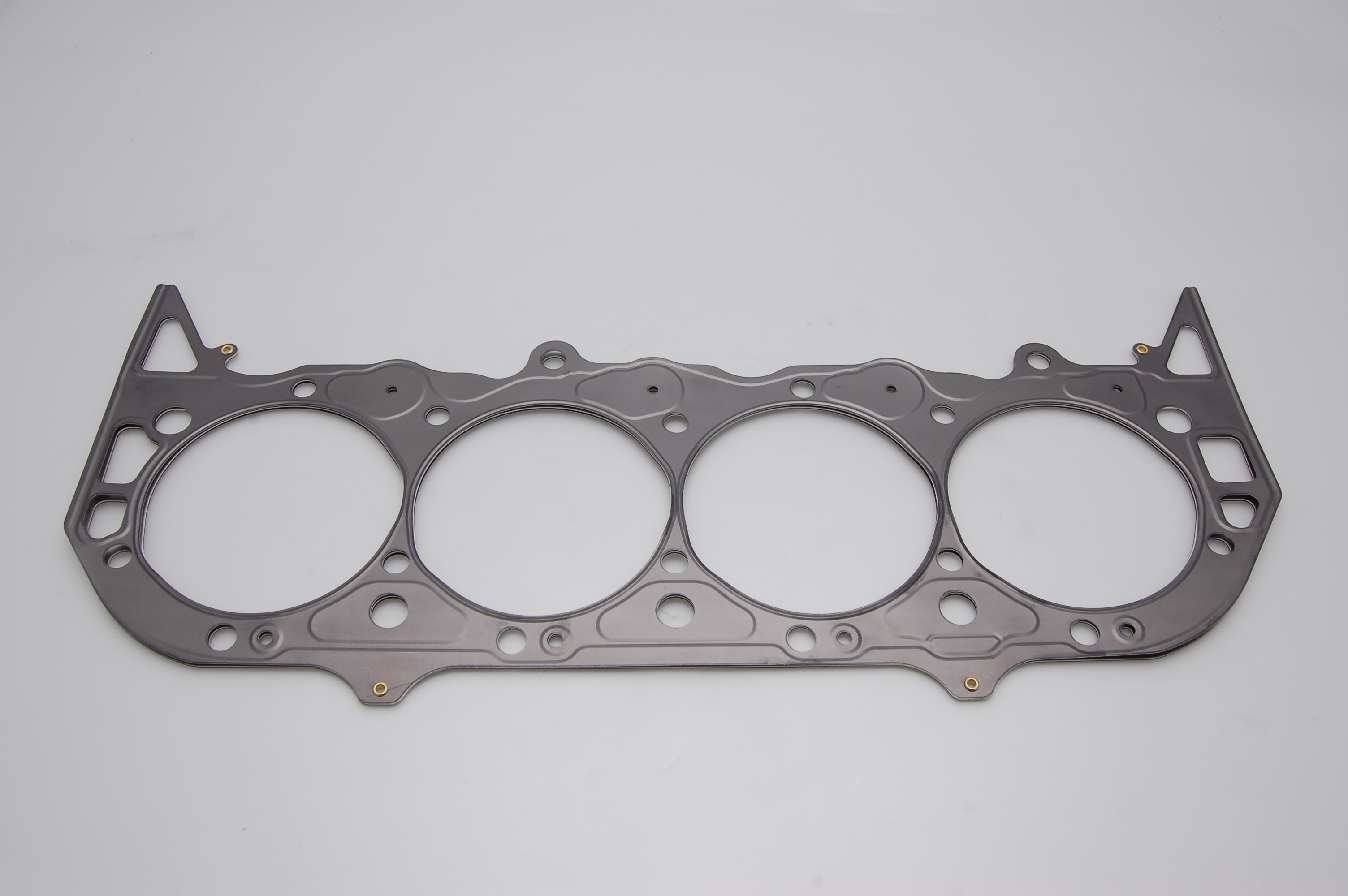
MLS head gasket

If you need to change the bore size and/or thickness of a gasket, the process starts with a phone call. After Cometic’s in-house technical sales team understands your needs, they work directly with design engineers to create exactly what you need.

MLS head gaskets are exactly as the name sounds. They are very thin sheets of stainless steel held together and coated with specialized surface coatings. They also have embossments to help seal when they are torqued into place. Generally, these gaskets utilize three layers, but there are specialized gaskets that may have up to seven layers depending on the application and needs.

MLS gaskets generally cost more than composite gaskets.

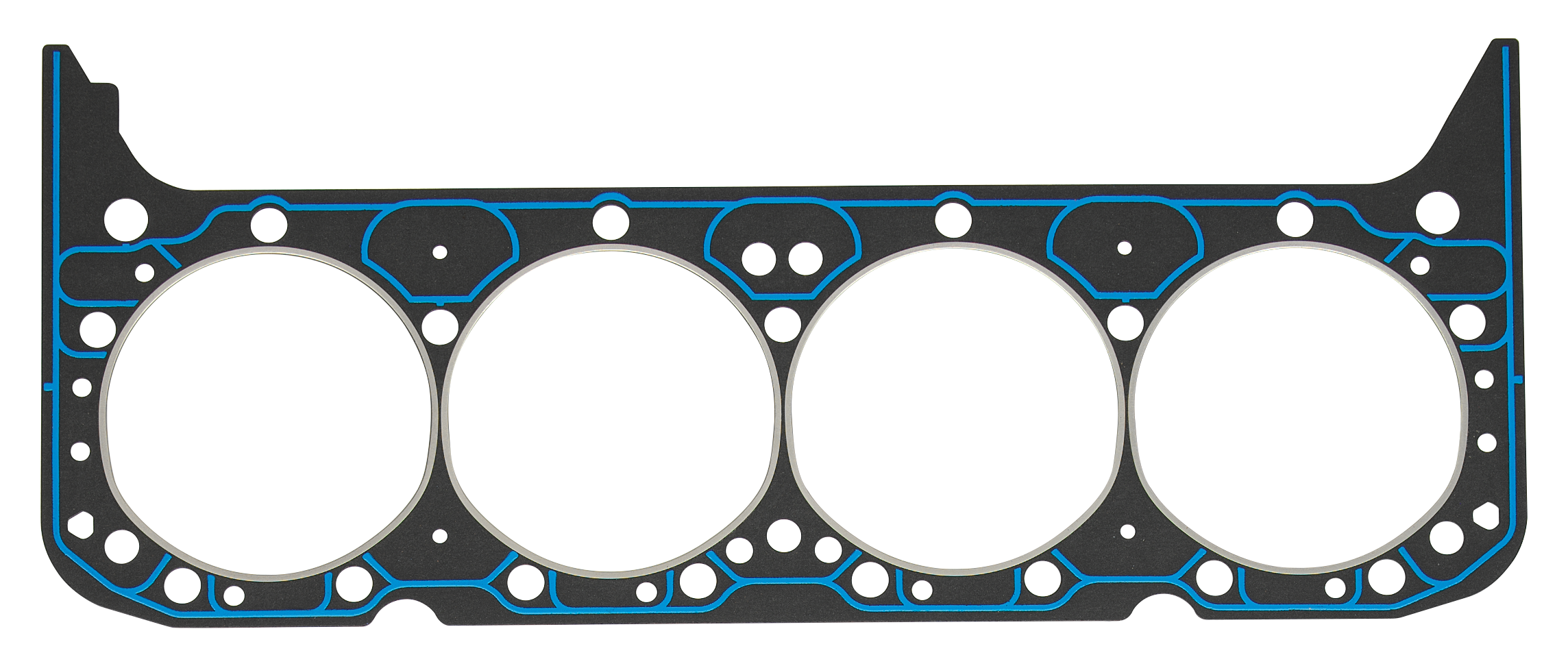
What makes MLS technology so special, is its ability to perform with a greater workload and deliver a better job sealing with much less effort. If we look at old-school composite head gaskets that utilize a fire ring, the basis of comparison becomes clear as to what makes MLS superior. Not only is MLS used across the board in modern day OE cars, it gets refined as time goes by, and is the likely choice for the future of internal combustion engines. There is virtually no reason not to use MLS head gaskets in your application.

Nerdy Details Make Big Differences!

By nature of the stopper and bore beads (embossments) and the spring-like effect of the metal, the builder now has a much simpler task of getting a solid seal at the combustion chamber. This, with less torque required from the head bolts or studs. It is also more forgiving if that torque is not applied evenly. Don’t take that as a reason to be haphazard with your installation. We’re just saying this gasket has your back like no other. This is also vastly important to OE-engineers going for every bit of performance, emissions control, and efficiency. By requiring less torque to make the same seal, there is less chance of casting distortion and cylinder wall distortion.

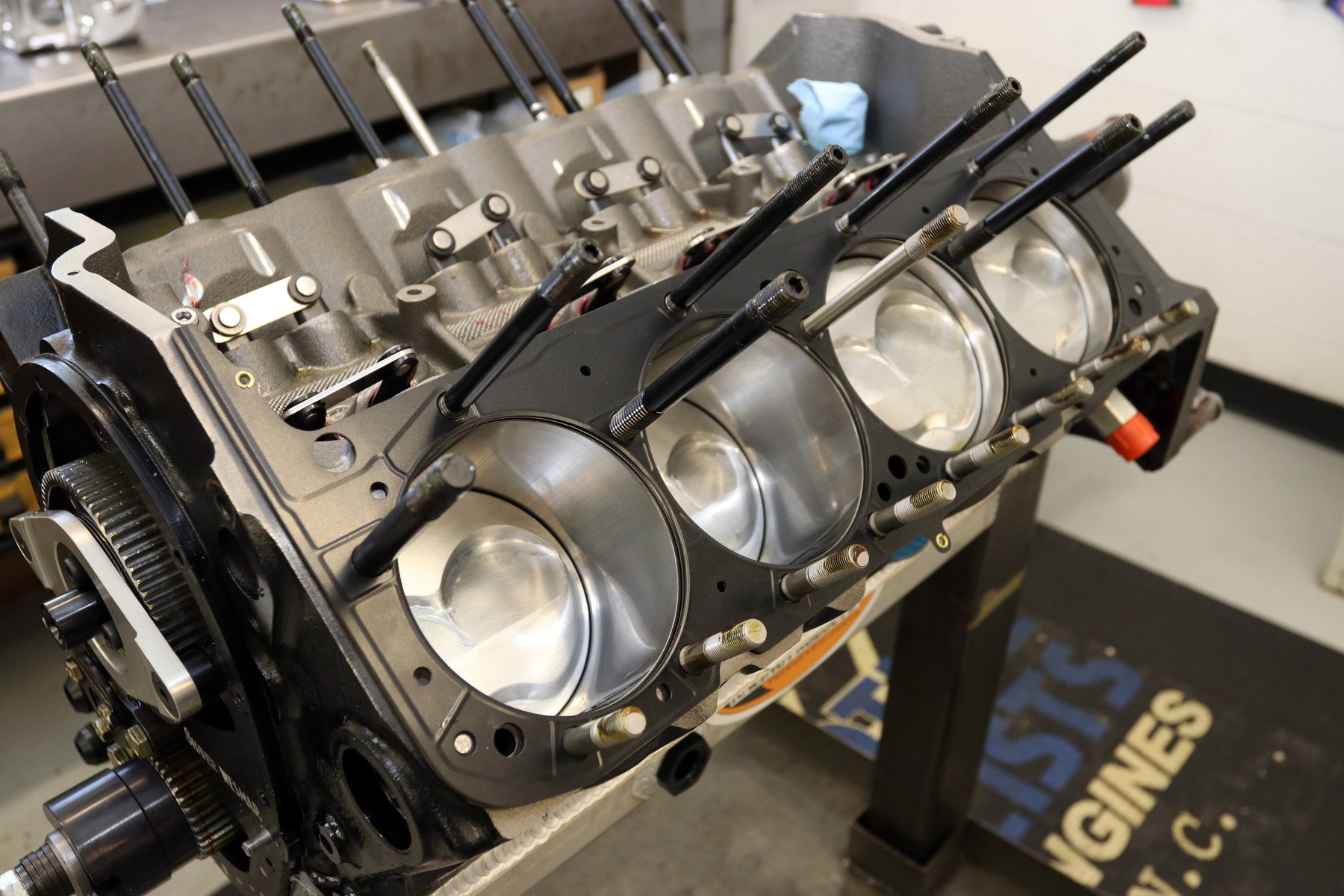
MLS head gaskets

MLS technology can benefit both old and new engines. But, if your engine was originally designed to use composite gaskets, you will want to have the surfaces checked to make sure they are smooth enough for MLS gaskets, or have them re-machined.

The specialized coatings on MLS gaskets seal the two surfaces on the microscopic level. When you first start up and heat-cycle your engine, this chemically bonds the seal to the metals. An important note: this is also the point of no return, making the gasket non-reusable. An MLS head gasket can be cold-torqued more than once before final assembly, only if the surfaces are smooth and clean.

Ready to install with no extra coating needed

Heat cycles and dissimilar metals are the scourge of a head gasket. How many people have freaked out about blowing a head gasket if their car got hot? MLS head gaskets are the best design for coping with the movement of different metals expanding and contracting during the engine’s heat cycles. Think of it this way: those multiple layers can slide at the microscopic layer rather than falling prey to the laws of physics that are trying to rip your old-school composite gasket apart.

Getting Custom

Why are there different amounts of layers? Different applications and head-and-block modifications have specific needs. For instance, you might wish to alter compression ratio a bit or dial in your quench area.

MLS head gaskets

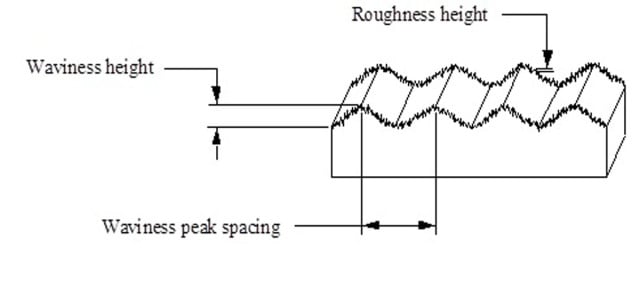
A good sealing surface not only means smooth, but also straight. Checking for waviness as well as how rough the surface is will help determine MLS gasket sustainability.

With Cometic, gasket thicknesses range from .027- to .140-inch thick. MLS gaskets have a very wide range of thicknesses that will effectively seal and be just as reliable as a thinner one. That doesn’t mean that it is a cure-all for improper engine building, or for salvaging an old head that has been milled too many times.

As an example, it is possible to go from a .040- to .080-inch-thick gasket in a big block and drop a point of compression if you are looking to get away from detonation in a forced-induction engine. Of course, the ability to change gasket thickness gives you the ability to fine-tune the quench area.

Adjusting head gasket thickness is really only for fine tuning. – Mickey Hale, Cometic

Mickey pointed out, “people get too hung up on quench. Unless your build is already dialed-in perfectly, there are more important aspects to get right – such as compression ratio. Adjusting head-gasket thickness is really only for fine tuning.”

Got Boost?

Cometic also has the MLX gasket line, which is a special tooled-gasket. While it isn’t infinitely variable in design like an MLS gasket, does have a ring around the combustion chamber that laughs at 20-plus pounds of boost.

MLS gaskets can be very forgiving, but only under strict circumstances. The surfaces of both the block and heads must be sufficient to allow them to properly seal. The tolerance for roughness of the sealing surfaces is much lower – almost half of what you can get away with if using a composite gasket. The smoother the better.

Myths And Hot Tips

We asked both Cometic and Fel-Pro two very important questions. Why should anyone buy from your company or start a relationship with you? Also, what do you wish people knew, but you can’t get through to them?

Fel-Pro was happy to point out they are the industry leader in gaskets. The company’s strength is in creating a wide range of gaskets for various needs. It is able to back them up with rigorous real-world testing and quality control.

Fel-Pro’s lower-cost composite gasket still has a place in the performance world.

Cometic pointed out that they are performance-oriented head gasket people, and not just a one-size-fits-all company. Starting a relationship with them allows the builder to grow, as they can custom-build any gasket. You can buy the products off the shelf at places like Jeg’s or Summit Racing, or you can call them directly for your needs.

MLS head gaskets

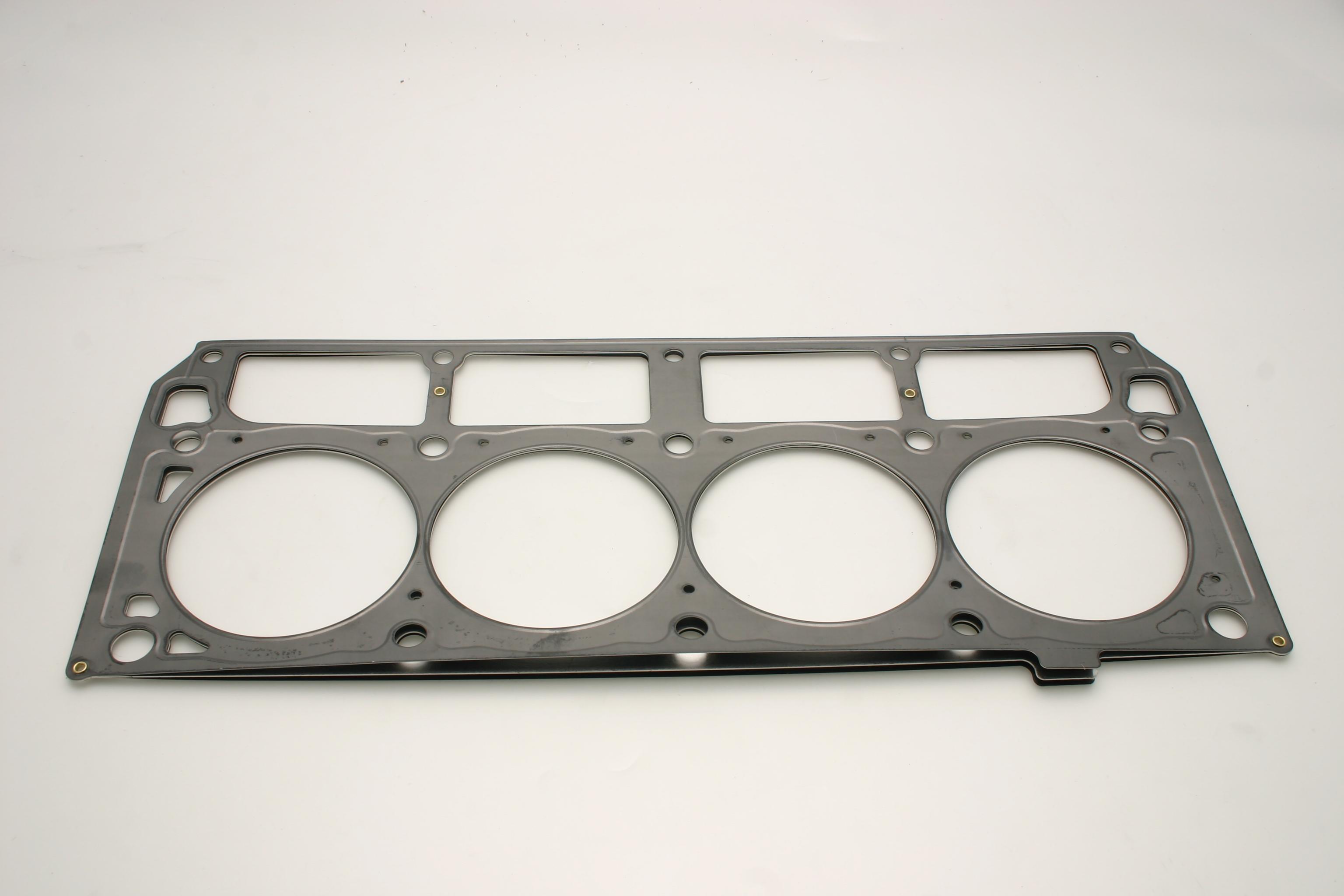
Several sheets of stainless steel are layered to give the desired thickness. An MLS gasket’s ability to protect against blow-out in high-cylinder-pressure situations is due to the embossed layers acting as a “spring” to account for increased head lift. The outer layers are embossed, but also feature a special coating to help it conform to both the head and block surfaces.

Daigle wanted people to know, “no other coatings are necessary on MLS head gaskets. As long as your surface preparation is correct, the gaskets are made to specifically work with properly prepared bare metal. That means a properly decked and on-plane surface with a surface finish of 70Ra or lower.” Ra value is a surface roughness measurement. He also wanted to caution builders that today’s hi-tech lubricants can make threads of head bolts and studs so slippery, that it is easy to yield a bolt. That means it may read the correct torque spec, but you have over-pulled the bolt or stud. Lastly, for gasket surfaces, keep it clean and dry.

MLS head gaskets

Just as important as the gasket, is the order in which you torque the head fasteners. Always start with the center-most bolt or head stud, then work your way out in a spiral pattern. That helps spread the loading over the head gasket evenly to give it the most strength possible.

Cometic wanted to add, if you are changing your head-gasket thickness, don’t forget your pushrod length and gasket thickness may have to change as well. Also, do not use copper spray coatings with its product. It is designed to be used without it. Lastly, your fasteners (head studs and bolts) are key. Make sure you are holding that head down to proper manufacturer specifications and torque procedures.

Posted on Leave a comment

SPAL Electric Fans: Keeping Things Cool With Different Blade Types

A wisely chosen electric fan supplies vital airflow to ensure top performance and maintain reliability for any vehicle. But, a muscle car with a high-performance V-8 and a mechanical fan that’s caught in heavy traffic with high temperatures, can easily overheat. This is because the fan simply cannot increase its speed and produce more airflow when the engine needs it the most. Owners need a powerful, properly-sized electric fan to meet engine cooling requirements, and fit into the available space in front of or behind the radiator.

Several factors need to be taken into consideration when you’re switching from a mechanical to electric fan or selecting a fan for an engine swap or project vehicle. Electric fans must supply a large enough volume of air-flow for a particular radiator/engine combination. Static pressure or equipment/parts that impede airflow needs to be taken into account.

A properly designed shroud should be installed to ensure cooling efficiency. The fan’s size must fit in the space available, and the vehicle’s electrical system must be able to support the increased electrical load of the fan. SPAL has been a trusted industry leader in electric fan performance for decades. The company offers a vast range of fans for almost any engine application or vehicle (street, strip, offroad, race, and more).

More Horsepower, More Heat

A high-performance aftermarket fan delivers far greater airflow than a mechanical fan. Increased airflow is crucial for modified engines, which generate much more heat than a stock engine. A built engine with larger heads, aggressive cam, high-flow intake, and headers often produces 30-to 40-percent more horsepower than stock. A race engine build can double stock horsepower output.

An old OEM brass radiator, water pump, and mechanical fan cannot provide enough cooling capacity for a modified V-8, turbo or supercharged four- or six-cylinder engines. Thus, an electric fan, high-volume water pump and three- or four-row aluminum radiator are not luxuries but necessities. The fan is only one very important link in the cooling system chain.

In most cases, engine builders have ditched clutch fans or flex fans in favor of an electric fan setup for several reasons. A mechanical fan uses a thermostat to regulates a clutch fans to either engage, or disengage, at predetermined temperatures or speed. The clutch only allows the fan to turn at a slightly higher speed than the water pump.

In addition, the clutch is never completely disengaged, so the fan is always turning at about 30 percent of the water-pump speed. Flex fans spin at a 1:1 ratio of the water pump, but that’s still too limiting. Thus, both clutch-driven and mechanical fans are suited for mildly modified engines and should not be used for extreme performance builds.

High-performance electric fans offer a definitive advantage over mechanical belt-driven fans as there is no parasitic drag on the engine. In addition, an electric fan produces far greater airflow at idle or low-rpm, and it saves wear and tear on the water pump. Electric fans also require a fraction of the space a serpentine-driven mechanical fan would. So, these fans also solve many engine packaging and fitment issues in the chassis.

Fan Type

The pusher, puller, and reversible-style fans are the available options. The pusher-style fan mounts on the front of the radiator, and as its name indicates, it pushes airflow through the radiator. However, its mounting location blocks about 20 percent of airflow. These are installed when there simply isn’t enough room to mount the fan between the radiator and engine block. The puller style is far more popular, and efficient because it mounts on the back of the radiator, draws air through, and does not block airflow. The reversible-style fan allows you to mount it either on the front or rear as desired.

Electric fans are rated according to the amount of air that can be streamed through the radiator – this is measured in CFM (cubic feet per minute). In order to find the fan that will work best for your system, you first need to determine that ideal amount of airflow required to meet your cooling capacity. As a guideline, a four-cylinder engine often needs 1300 to 1600-cfm. About 2000 cfm of airflow is suitable for a six-cylinder engine. A small-block V-8 typically uses 2800 to 3000 cfm of airflow, while a big-block V-8 typically requires 4500 cfm. Again, these are just rough guidelines, and not hard-and-fast rules.

Equipment (radiator, A/C  condenser, etc) in front of the fan raises the level of static pressure, and it can vary significantly.  When radiator thickness and other factors are taken into account, a static pressure estimate can be made. Often it is 0.6 for the thinnest, least restrictive radiator, and 1.2 for the most restrictive radiator, and A/C condenser.

SPAL Application Engineer Brent Chuck said, “We take radiator sizing and spacing into account. We make an estimate of the static pressure of the system by answering some key questions. Does it have air conditioning? How thick is the radiator? What is the distance from the radiator to the engine? What’s the highest performing fan package we could fit into the available space? And lastly, how much current draw is available?

Packaging is one of the biggest issues we run into. Thin fans are not very powerful. It’s better to know the restriction that you’re up against, and then make a good fan decision based on that.”

Keep in mind, the fan should also cover about 70 percent of the radiator core to provide enough cooling capacity to keep up with the engine. When selecting a fan, it’s a good idea to contact the fan manufacturer. When you explain what engine, vehicle, and application you have, a technician can help you determine the best fan for the package.

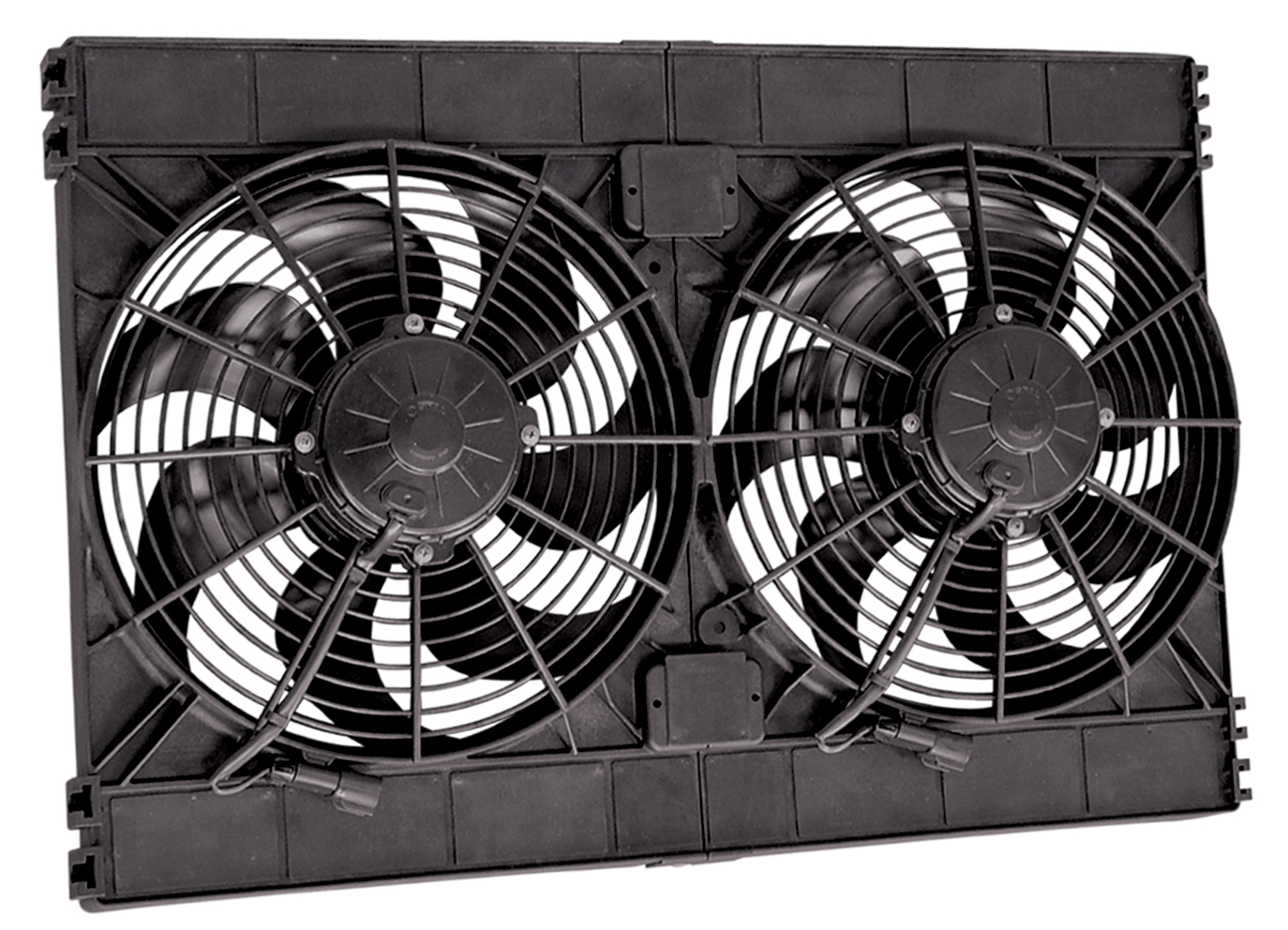
SPAL offers a complete range of single electric fans up to 16-inches in diameter as well as dual electric fans in various CFM and amp ratings. Dual-electric fans are often selected for high-horsepower vehicles, including forced-air induction applications. Like other manufacturers, SPAL offers straight, curved, and curved-paddle blade designs.

For this article, we will examine similar 16-inch fans in the various blade designs. Each blade design has certain benefits and drawbacks that you need to consider before making a purchasing decision. The amount of air flow at a particular current draw is an important factor. The blades have different widths, profiles, and weights according to design – this effects performance. The height of the blade directly translates into the height/thickness of the fan and in some cases limits which fan can be used in a vehicle.

Three Comparable Fan Models

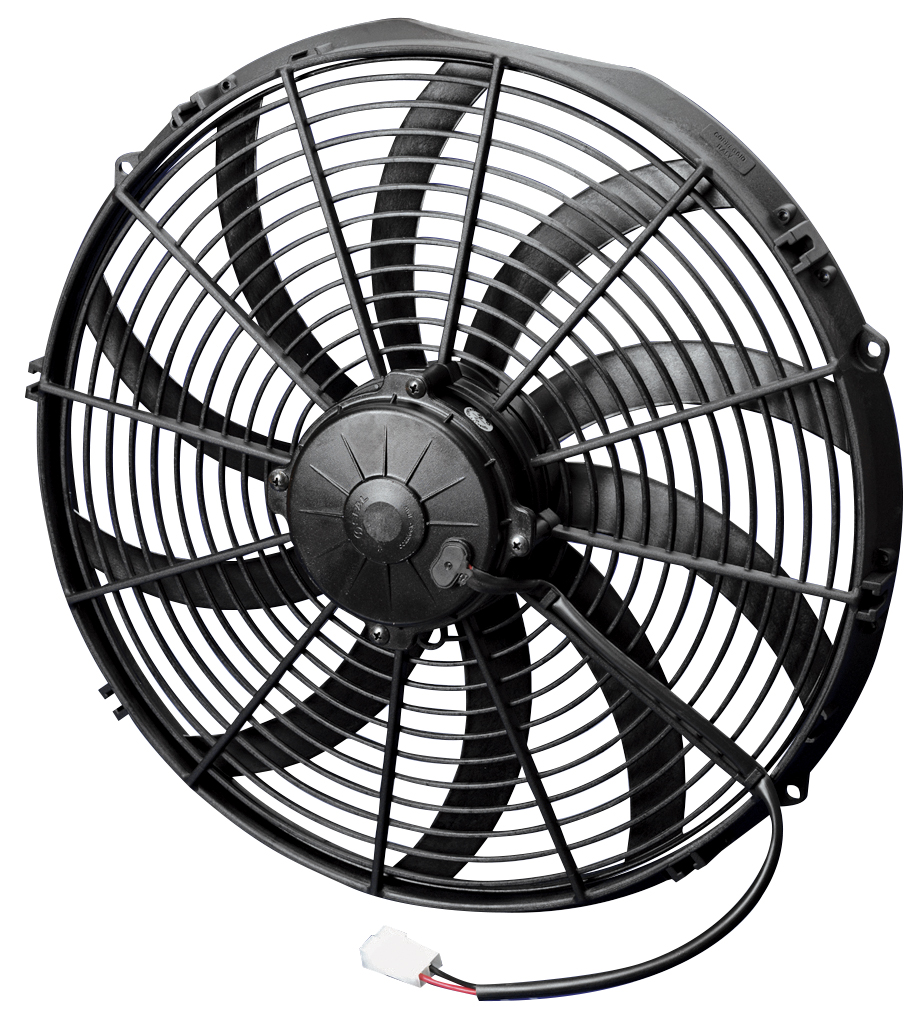
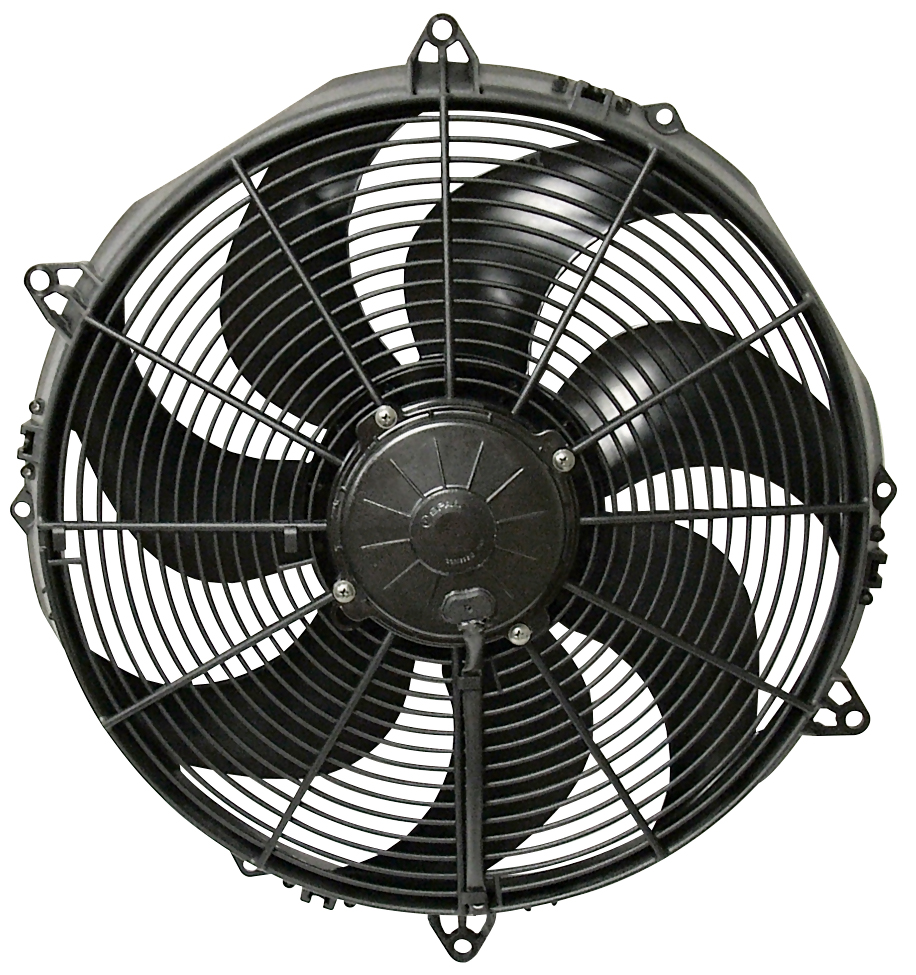
The Model VA18-AP70/LL-86A is a16-inch straight-blade fan that displaces 1918 cam of air and draws 18.5 amps at 0 static pressure. The lightweight, narrow-blade profile allows for high rpm fan performance. At 3.39-inch total depth, this fan can fit into a tight space, but the straight blade profile creates a fair amount of noise with a less than pleasant tone. Straight blade fans are recommended for applications in which noise is not a major stumbling block. Instead, the fan delivers strong air flow, mounts in a tight space and has a low current draw. While some will tolerate the noise for the volume of air it streams through the radiator, others will not be able to live with the noise.

The curved blade or S-Blade model (VA18-AP71/LL-59A) displaces 2024 cfm, has a 19.5 amp total draw at 0 static pressure. It measures 3.39 inches in total depth. This is a popular choice for many owners because it offers slightly better total airflow performance than the straight blade, but it is noticeably quieter.

The narrow-blade profile is a slightly heavier weight than the straight blade. As a result, it will slightly reduce fan rpm and will require a greater current draw. The curve extends from the center and its design provides more surface area allowing it to push a higher volume of air. However, the curved-blade design is subjected to increased air resistance because the leading edge is longer than a straight blade design.

The curved-paddle-blade model (VA33-AP71/LL-65A) streams 1918 cfm of cooling air and it’s the quietest fan in the group. But the amp-draw rises dramatically to 23.7 amps at 0 static pressure. The paddle blades are larger and heavier than the other designs, so it requires a bigger fan enclosure. It’s also somewhat wider at 3.75 inches. Many muscle car and hot rod owners opt for the paddle-blade design because it delivers a large volume of air and the quietest performance among the three.

All three fan designs will deliver exceptional cooling for most high-performance vehicles and applications. For most owners, the ideal fan offers the best efficiency while meeting static pressure load, amp draw, and fan noise requirements. Many owners will opt for the curved-blade fan that offers better efficiency than the curved, paddle-blade fan, even if the curved-blade fan isn’t as quiet as a curved-paddle-blade fan.

A high-performance engine deserves to be supported by a high-performance cooling system, and the right fan needs to be part of your build plan. For more than four decades, SPAL has a variety of electric fan solutions for your muscle car, classic car, off road vehicle, and so much more. The company has designed and built high-performance electric fans for a wide range of applications, including bus, truck, off-highway, construction, powersports, military, and marine markets. Its fans have also been tested and proven in racing and some of the harshest operating conditions.

If you’d like to find out more about what SPAL has to offer, head over to their website, here.

Posted on Leave a comment

Dispelling Engine Break-In Myths With High Performance Academy


Anyone who has been around high-performance engines knows the term “break-in”. In fact, it’s not uncommon to hear people talk about “break-in periods” for brand new cars, even. What, exactly, is being “broken-in”? What’s the proper procedure? Ask ten people and you are likely to get ten different answers. “This is an area where there is a huge amount of confusion and a huge amount of misinformation,” says Andre Simon of High Performance Academy, an online performance learning outlet.

First things first, what you’re doing when “breaking-in” a new performance engine – or any freshly rebuilt engine, for that matter – should be clearly defined. That is one of the largest pieces of misinformation in and of itself, according to Simon. “We must understand what it is we are actually trying to do. Some people think we are trying to bed in the bearings, or crankshaft, and that’s just not the case,” says Simon. “If you end up with metal-to-metal contact between the bearings and crankshaft journals [which would occur in a bedding process], you’re going to cause damage. Once that contact occurs, no amount of gentile running is going to fix that.”

What is actually being done during engine break-in is fairly simple – it’s the controlled bedding, or wearing-in, of the new piston rings on the hone of the cylinder walls. “We are trying to bed those rings so that they achieve a correct seal against the cylinder walls, and we have a relatively narrow window in which to do this,” relates Simon. “Once we achieve that seal, we end up with an engine that creates good power, has low blow-by, and has low oil consumption.”

“We’re using the rough surface of the hone pattern to abrade the rings and make them seat,” Simon explains. The crosshatch pattern of the hone in the cylinder like a file on the outer surface, creating a perfect fit within the bore. While that may sound simple – and really, the actual mechanics of it are – the process to actually achieve that is a delicate balancing act, as that crosshatch is only abrasive for a limited amount of time. “The reason there’s a narrow window is because that hone pattern will be broken down in time,” Simon continues.

The proper cross-hatch pattern not only retains oil throughout the life of the engine, but the rough finish acts as a file to properly bed the rings in during the break-in process. However the sharp edges only last a limited amount of time. Once those edges are worn down, the ring bedding process is over, whether they’ve properly bedded to the cylinder walls or not.

Where things get complicated, is the proper way to maximize the effectiveness of that period where the crosshatch is essentially file-fitting the piston rings to the bore. “My process is one which I’ve gone though and developed through my career. It works exceptionally well, and as with most engine builders, I’m a bit superstitious about it,” says Simon. “The worst thing you can do while breaking in an engine is baby the engine or allow it to idle for extended periods, particularly when it’s hot. That will place almost no load on the rings and it will allow that hone pattern to be broken down without actually performing its job.”


However, while you don’t want a light load, you also don’t want to go to the other extreme either. “What we want to use is moderate amounts of load and moderate amounts of RPM,” explains Simon. “What happens with moderate loads, is that combustion pressure gets behind those rings, and pushes them out against the fresh hone pattern. That friction against the cylinder wall helps the bedding process along. However, that friction creates a lot of heat, so we need to be careful of that. You don’t want to go straight to wide open throttle and 8,500 rpm.”

Additionally, the lubricant used in the initial break-in period can have a large impact on how well the rings seat., and results in yet another balancing act. “The goal is to use an oil which will allow enough friction for the rings to bed in correctly. Common high-performance synthetic oil is so slippery it will actually inhibit the wear required to bed the rings in. So you don’t want to use super slick full-synthetic oils to break the engine in,” reveals Simon.

He prefers to use mineral-based oil, during break-in, as it will still protect the engine, but not be so super slippery as to be detrimental to the break-in process. There are a number of break-in specific oils on the market, which usually contain other additives to protect other parts of the engine in its early stages of life, and preferences on which one is best are about as varied as the varieties of oil themselves.

One final myth that Simon aims to bust, is extended engine break-in periods. “After a couple hundred kilometers of use, your rings are as bedded in as they’re ever going to be. After that, it’s all downhill, so you might as well get out and start enjoying your engine,” he says. “Exceedingly long break in periods are absolute rubbish.”


Posted on Leave a comment

How to Estimate Your Engine’s Required Fuel Flow

Posted by Jeff Behuniak on Sep 1, 2017 12:49:51 PM

We are occasionally asked, what fuel flow do I need to support my application?  Or, will your fuel filter flow enough for my engine?  These are important questions when selecting fuel filters, lines, and pumps for a performance engine.  You want to be sure that your components can deliverer the fuel needed to supply your thirsty engine.    

Fuel makes power.  Different types of fuel make different amounts of power.  By knowing the amount of power your engine makes or is expected to make and the type of fuel you will be running you can calculate your engine’s required fuel consumption and flow.

Brake-Specific Fuel Consumption

To start the calculations for fuel consumption we use the BSFC (Brake-Specific Fuel Consumption) for the fuel being used.  BSFC measures the amount of fuel needed per horsepower per hour. Fuel is measured in pounds instead of gallons.

download.jpg

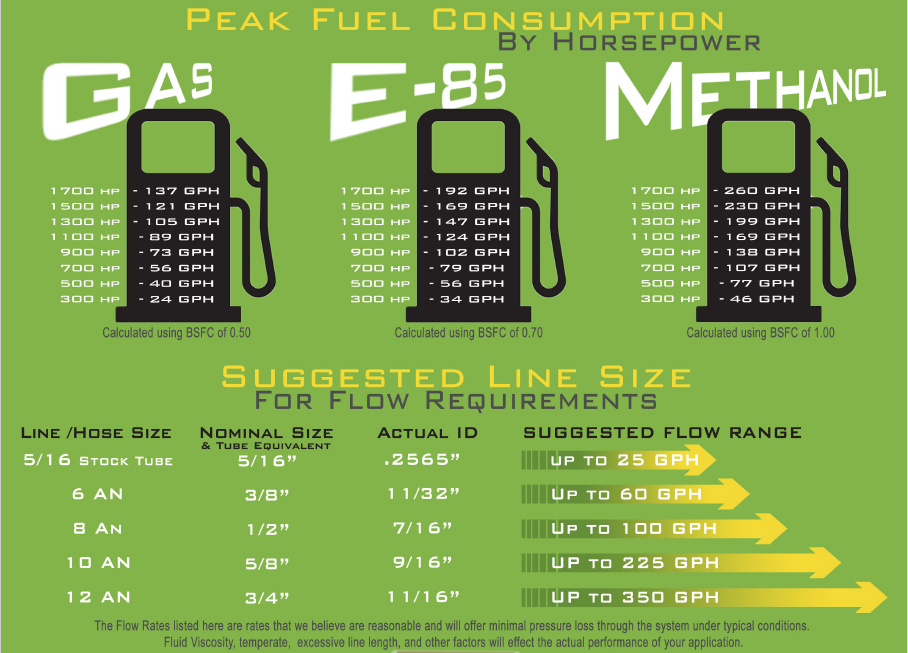
Listed below are the BSFC ranges for average efficiency Gas, E85 & Methanol engines at their peak hp output.  An engine’s BSFC can vary depending on load and RPM, these rates aim to represent the peak horsepower environment. The unit of measure here is lbs / hp / hr.

Gasoline   .45  –  .50
E85          .63  –  .70
Methanol   .90 –  1.0

You can used these BSFC values to calculate the fuel requirements for various horsepower levels.  The above BSFC number tell us that our gasoline engine requires .50 lb of fuel per horsepower per hour.  Said another way, we know for each horsepower our gas engine creates we will need .50 lbs of fuel per hour. Expressed as a formula it looks like this:

Given Horsepower  x  .50 lb fuel/hp = lbs of fuel for given horsepower

To calculate Fuel Consumption for a 400 hp Gas engine with a BSFC of .50 lbs/hp/hr:

400 hp x .50 = 200 lbs/hr    

To convert this lbs/hr to a more meaningful gallons per hour we use the conversion rate from lbs to gallons which is 6.2 lbs to 1 gallon of gas

200 lbs/hr  / 6.2 lbs/gal = 32.25 gph

And that’s it!  Now you have an approximate peak gph fuel requirement for your engine that can guide you in choosing your fuel system components.    

If you will be doing this calculation often, you can make it even easier by converting the BSFC you prefer for your fuel from the normal lbs/hp/hr unit of measure to a gal/hp/hr measure.  This way you will only need to multiply your horsepower by that figure to arrive at your GPH rate, without the need for converting from lbs to gallons after.  

BSFC .50 / 6.2  = .0806 gallons / horsepower / hour.

Again we calculate Fuel Consumption for a 400 hp Gas engine.

400 hp x .0806 = 32.24 gph 

Remember, if you are running E85 or Methanol be sure to use those BSFC values in your formula. To calculate peak fuel consumption for a 800 hp E-85 engine we can use a BSFC of .70 and the formulas below. 

800 hp x .70 = 560 lbs/hr          560 lbs/hr /  6.2 lbs/gal = 90.32 gph

OR

BSFC .70 / 6.2 = .113 gallons / horsepower / hour

800  * .113 = 90.40 gph

Note:  These gph flow rates may seem high when compared to your daily driver on the highway, but remember these are not averages, these are flow at loaded peak output.  Regarding the small differences in the numbers between the methods, that is a result in rounding differences.  


What does that GPH rate mean for my Filter?

25-902.jpg

If you are using a quality fuel filter like our CM filters your filter should be out flowing the fittings and fuel lines on your car by a considerable margin. Our filter tests showed that in stock based applications with OE fittings and fuel lines in the 3/8 range the fitting and line size was the determining factor for flow.

Using our 25-902 fuel filter as an example lets see how the filter fitting size and line size relates to flow.  This filter features OEM style Ford fuel fittings specifically found on the 4.6 modular motor Mustangs.  In our testing this filter in isolation flows close to 100 GPH with around 1/2 psi resistance. It can do this because the filtration media is designed for high flow and the point of restriction is limited to the stock style fittings in and out which are short in distance.  Compare that to the long length of stock 3/8 fuel line running to and from the filter.  The long length and twist and turns in the fuel line mean resistance to flow is much greater.  In this application the stock line would not be able to flow much more then 60 GPH without significant pressure flow restriction accumulating.  

When planning your fuel delivery system we recommend first starting with an estimate of the fuel consumption your engine will require. Then determine the line size and pump to support that flow. Next choose a quality fuel filter to match your line size that uses high flow high filtration media like our CM filters.


BSFC is a great tool to quickly examine the relationship between fuel flow and horsepower.  Even though the fuel consumption required at your engine’s peak horsepower will be effected by several variables such as throttle position, RPM, and aspiration type these calculations can get you close.


Posted on Leave a comment

Racing Helmets – Brain Bucket: What You Need To Know

The Sports Car Club of America (SCCA) runs solo events, also known as autocross events, all across the nation. The General Competition Rules (GCR) require a helmet is worn by both the driver and any passenger.

A helmet is one of those things you hope you never actually need. Many refer to this safety device as a “crash helmet” which is something you certainly never want to use it for, however that is exactly what it is designed to be utilized for. These helmets do a very important thing during a collision — protect your brain.


Even if you haven’t attended medical school, we all know enough anatomy to understand we need our brains to live. So, for obvious reasons this is no place to cut corners and try to save a few bucks. The purchase of a helmet can save your life. So, long story short, spend a couple of dollars on your own brain bucket. It is an easy insurance policy.

Not all helmets are created equal, and they are individually designed for different tasks. Automobile racers require a Snell SA certification, SA stands for Special Application.

I often forget what my helmet is really for. I use my helmet as a place to put sponsor stickers and I use it to concentrate before a race. I close my visor, which is the universal sign for “leave me alone for a minute,” and I sit and think about the task at hand. How do I want to start? How am I going to manage my tires? Which cars am I going to draft with, or who am I going to block? My helmet is my Zen place, but that is not the intention of the design. It is designed to save my life when things go sideways, or worse, upside down.

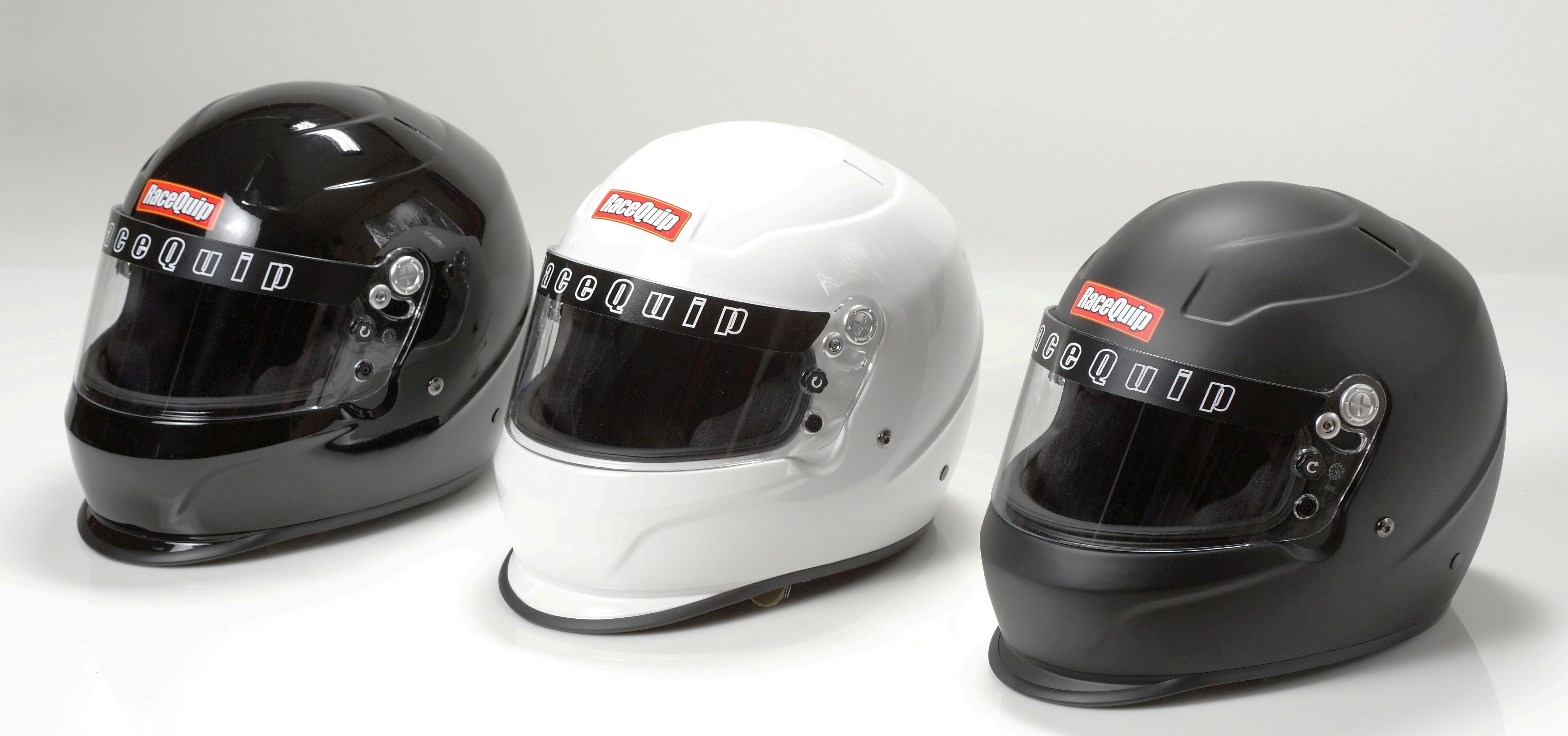
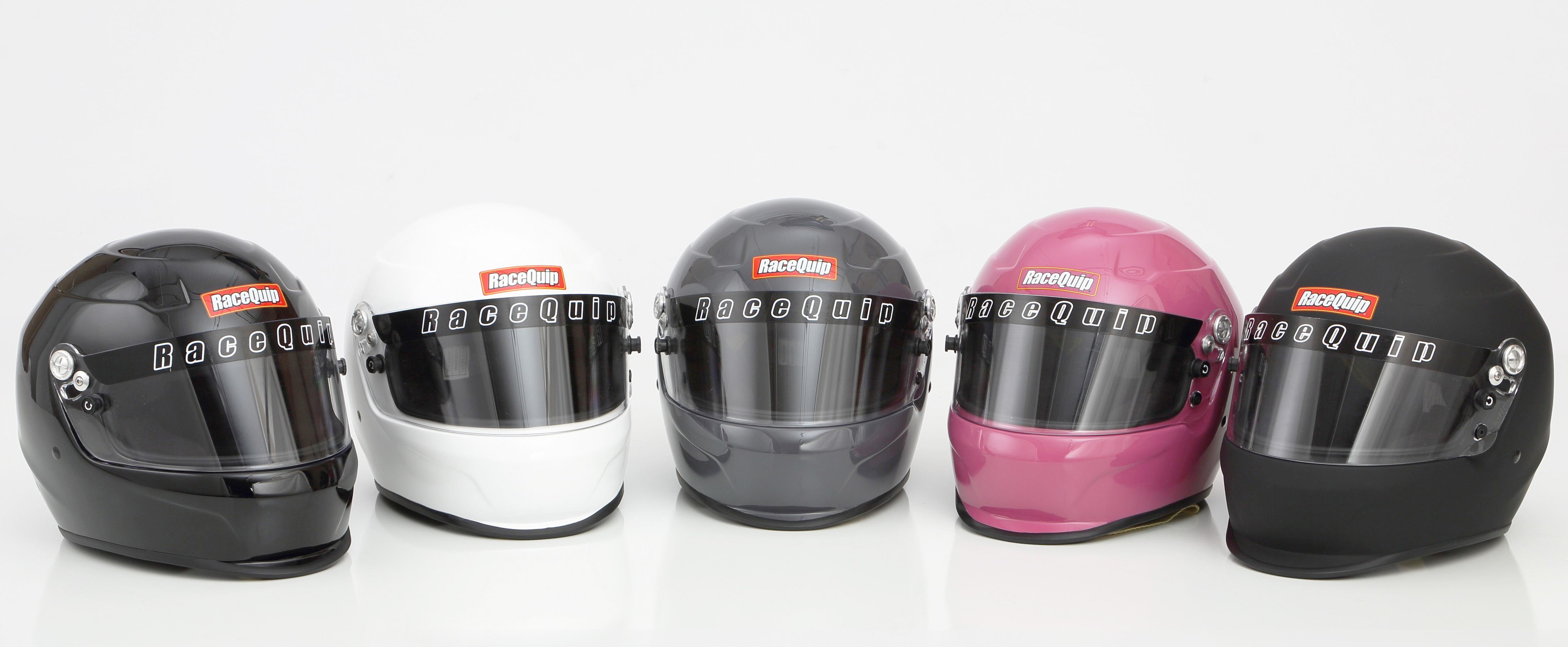
RaceQuip builds high quality yet affordable helmets for auto racing only. They don’t bother building motorcycle helmets. They are strictly in the car racing market.

Certification

When purchasing a helmet there are various options that need to be considered. The first one is the certification. For most car racing enthusiasts you are looking for a Snell SA rating. It is important to understand how helmets are rated as you will see a few different decals on helmets as you are shopping around.

You will see a D.O.T. decal which is really for motorcycle helmets on the public roads. You will see an M rating which is again for motorcycles and you will also see an SA rating. The SA rating also comes with a year associated with it. The year listed on the decal isn’t the year the helmet was manufactured, it is the Snell standards associated with that particular year. You may also run across F.I.A. ratings which come out of Formula 1 and Europe.

This helmet has a Snell SA 2000 rating, which means it is out of date. The ratings are good for approximately 11 to 12 years from the Snell date (depending on new ratings, and a particular sanctioning body’s rules). When you go through tech inspection, this is the sticker the tech inspectors are digging around inside your helmet to find.

So, how in the “snell” did this certification come about? Great question. Pete Snell died in a motor racing accident in 1956 from a rollover collision. Afterwards, a team of doctors, engineers, and scientists got together and, in Snell’s memory, dedicated their work to certifying safety standards in helmets. Since 1957, the Snell Memorial Foundation has been certifying helmets. Why do you care? Because unless your helmet has their certification sticker inside, you ain’t racin’.

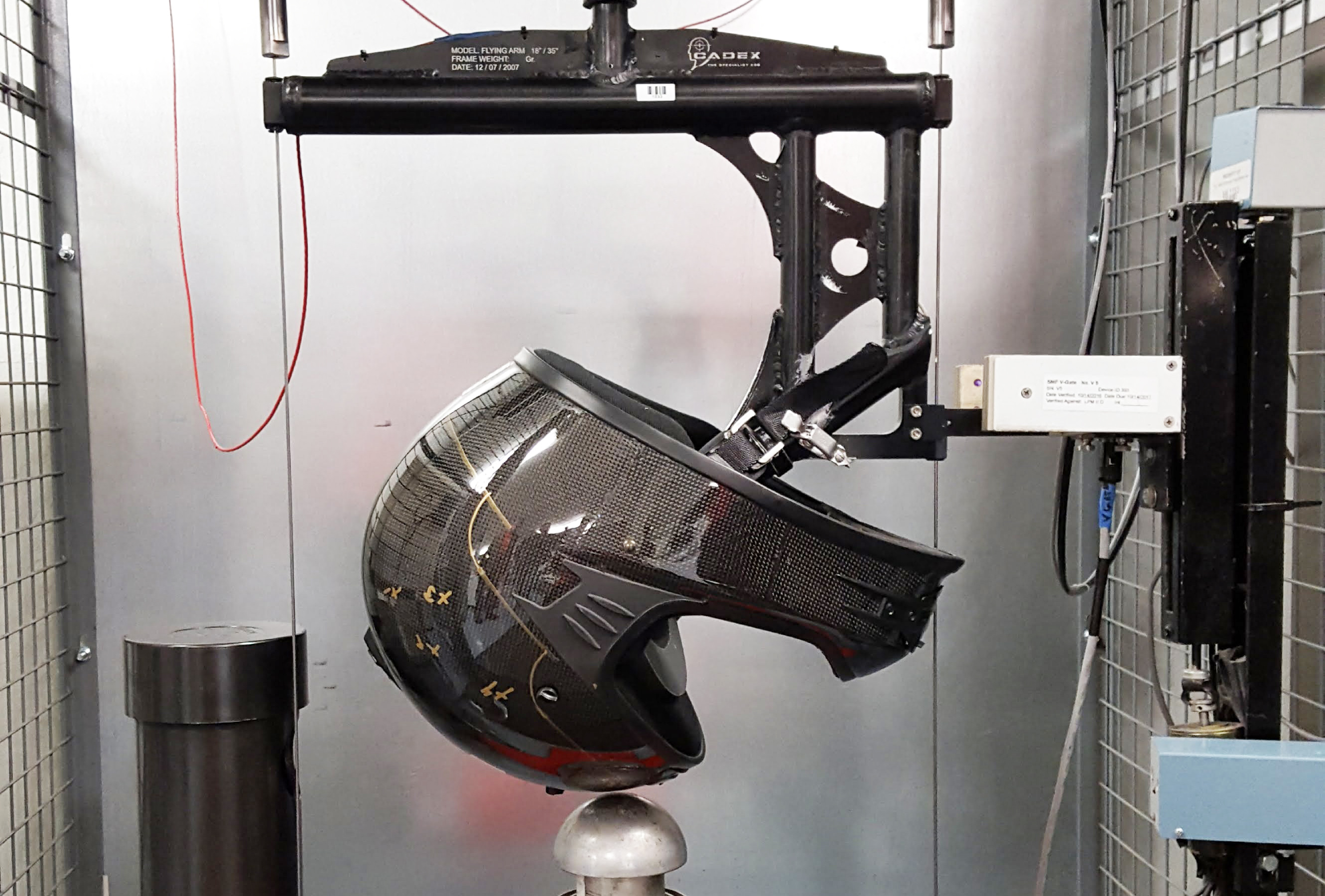
This is the drop test at the Snell Memorial Foundation, where engineers spend all day smashing stuff.

To find out how helmets can earn a Snell rating I spoke with Ed Becker, executive director and chief engineer at the Snell Memorial Foundation. The simple answer is helmets are test rated by bashing them into things. One of the tests performed is when a helmet has a 6.1 kilogram metal head placed in it (yes, kilograms because scientists use the metric system), and then the helmet is dropped from 11 feet. Sensors inside the helmet measure the G’s felt by the simulated head. No, they don’t use live humans for this test, for obvious reasons. If the G’s felt are above 243 G’s for a size large helmet, the helmet fails and does not receive a Snell certification.

Ed said helmet manufacturers have their own choice in how they build a helmet, Snell does not mandate a construction process, they only designate the tests the helmet must pass in order to be certified. The goal at Snell is “impact energy management,” which means when the outside of your helmet stops, the inside of the helmet should let your head “ride down” the impact by compressing the inner layer of the helmet, so your brain doesn’t feel the heavy hit.

For the SA 2015 standards, the SA rated helmets are being hit harder than the M rated helmets. Currently, most helmets that arrive at the foundation for testing do pass the tests as the helmet manufacturers engineer the helmets with the Snell standards in mind. However, occasionally helmets do fail, and then they are sent back to the manufacturer for a redesign. Snell rated helmets are safer, because they are tested beyond the government requirements for a basic D.O.T. rating. Those government requirements date back to standards set in 1966 which Ed considers, “Ancient technology.”

Some sanctioning bodies allow you to run an M rated (motorcycle) helmet, however, the recommendation for automobile competition is the SA rating should be used. The motorcycle rated helmets are not designed for impacts with roll cages and are not built with fire-retardant materials. The helmet in this photo, decked out in Girl Power livery, is a Pyrotech SA 2015 rated helmet for auto racing.


Construction/Fitment

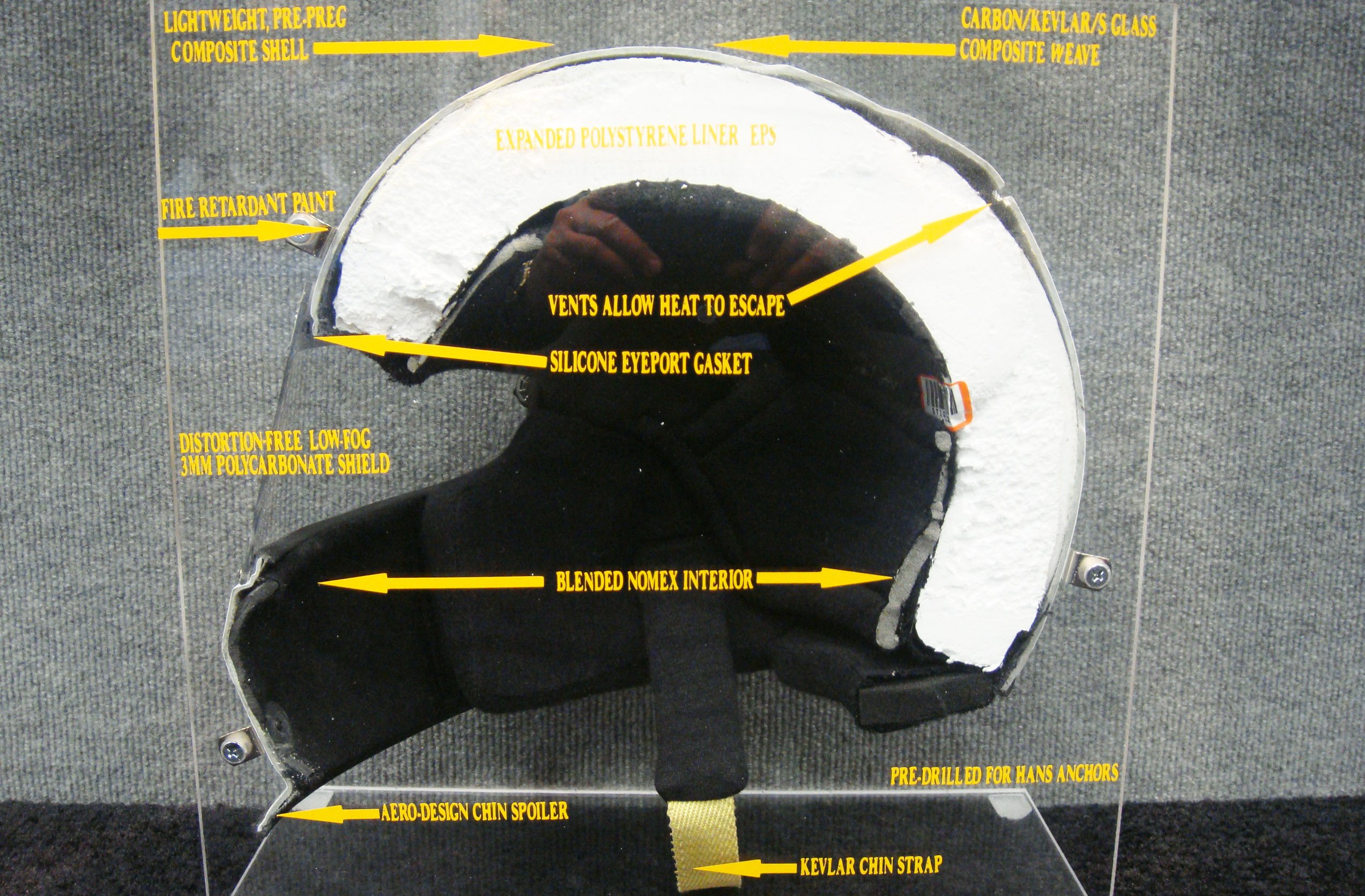
Patrick Utt, president of RaceQuip, explained how his helmets are built, “Helmet construction, from inside out, starts with a layer of fire retardant cloth covering a thin layer of soft foam against your head. This covers a 2-inch thick Expanded Polystyrene (EPS) dense foam insert. The EPS liner fits into an outer shell made from one of any various composite materials including fiberglass, Kevlar, and/or carbon fiber. The outer shell has a layer of gelcoat (or clear epoxy) that was sprayed into the mold to ensure the helmet has a good surface finish and releases from the mold more easily. Lastly, a layer of fire retardant paint covers the gelcoat layer.” RaceQuip prides itself for its affordable helmet designs and only builds SA rated helmets.

This helmet cut away shows the construction of an SA rated helmet. There is a lot of engineering in the design of these helmets to ensure you have the best chance possible in a collision.

When deciding which helmet is the right one for you, the best advice I have seen comes from Ken Myers, owner of I/O Port Racing Supplies, who races cars and sells helmets to racers all day long. “If you can go to a store and try the helmet on, you will be much better off versus buying one on the internet and hoping for the best,” he says.

Ken says fitment is the key to being comfortable in the race car. “Size large doesn’t always mean large, and a large helmet in a Pyrotech that fits you doesn’t mean a large helmet in a Bell will fit you the same,” he mentions. “Bell’s higher-end helmets are sized in hat sizes, for example 7 5/8ths. However, just because you wear a 7 5/8ths hat doesn’t mean that same helmet size will fit your head properly. You need to try the different helmets on.”

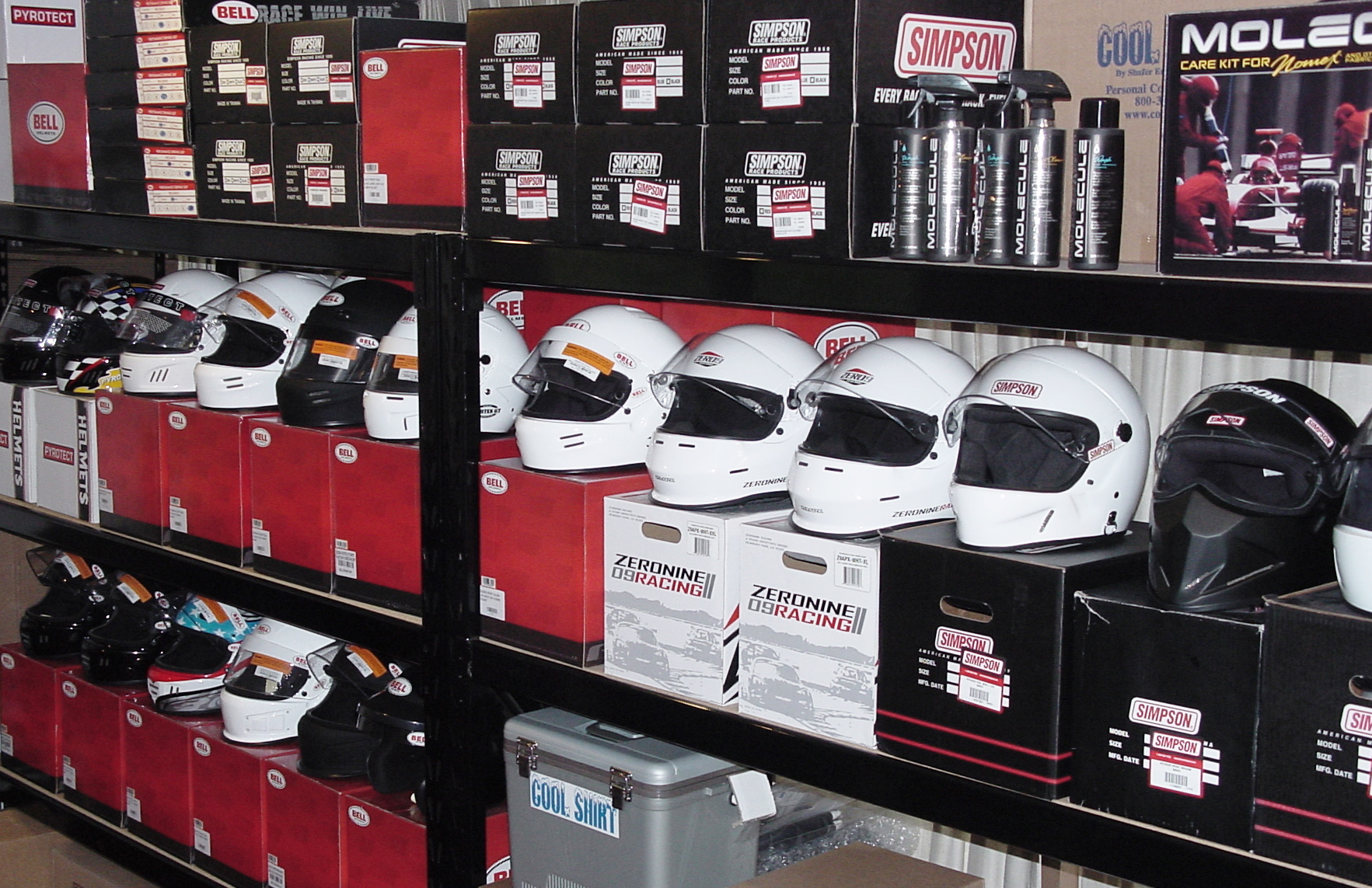
I/O Port Racing Supplies has many helmet options to choose from. According to owner Ken Myers, it is helpful to take the time to test fit different helmets before making your final decision.

One of the considerations when buying a helmet is the material the shell is made of. More expensive helmets are made of carbon fiber and are lightweight. Ken Myers says there are some advantages to a lighter helmet in a collision. “The more mass on your head in a collision, the more chance for injuries to the neck. Additionally, lighter helmets are easier on the drivers during long stints behind the wheel, like for endurance racers.”

This advice was echoed by Patrick Utt from RaceQuip, “The weight factor is mostly important to racers who spend an hour or more in the car during a race. The lighter weight is less likely to fatigue the neck muscles.”

Ken did offer this warning about lightweight carbon fiber helmets — not all carbon fiber is actual carbon fiber. “Many helmet manufacturers use a mix of fiberglass, Kevlar, and one layer of carbon fiber on the outside of the helmet to make it appear as if it is made completely with carbon fiber, which it isn’t. A $500 carbon fiber helmet, isn’t really a carbon fiber helmet.”

Ken also indicated that just because a helmet is more expensive, it doesn’t mean that it is actually a safer or better helmet, “All SA 2015 helmets have passed the same criteria to meet that Snell standard. A $250 SA 2015 helmet from Pyrotech met the same standards as a $1,300 SA 2015 Bell Carbon helmet. What matters is does the helmet meet your needs?”

There are many different helmets to choose from. The important thing to look at when deciding is comfort and rating for usage (does your helmet fit the rules of the sanctioning body you are racing with?).

Consider Options

Other things to consider when purchasing a helmet are options. Do you want forced air into your helmet? Then you need to purchase a helmet that allows you to pipe in air. Do you race on a dirt track with a lot of dust? You may want a helmet with less air vents in the front. Do you have a radio in your car? You may want to purchase a helmet that has radio speakers already in it.

Sampson Racing Communications can add a radio to any helmet you have, however, some helmets, like this Stilo have radio communications designed into the helmet from the factory.

Shawn Sampson, racer and owner of Sampson Racing Communications (SRC) outfits teams with radio equipment and sells helmets with radio gear already installed. “I love the Stilo helmet line. It’s the helmet I wear when I am racing in the 25 Hours of Thunderhill. You don’t have to worry about ear buds coming out of your ears; the speakers are built right into the helmet. It works great.”

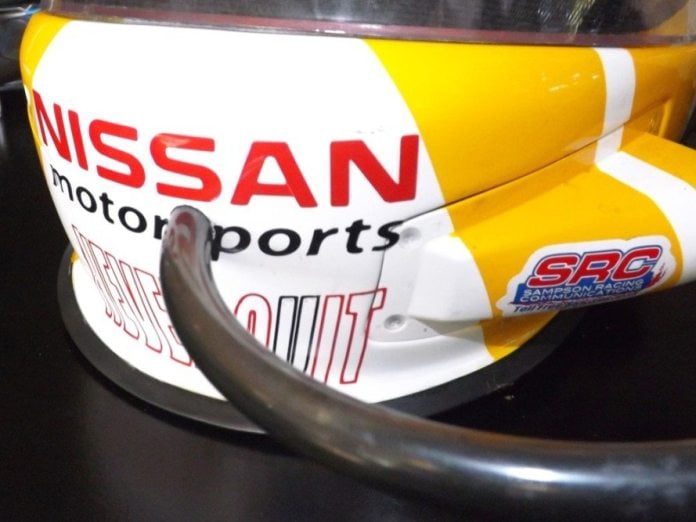
For you guys who get thirsty out on the track you can even modify your helmet to allow for drinking water.

Other things to consider:  if you race at night, you will want a clear face shield. If you race in a sunny place, you may want a dark or smoked shield. If you are an endurance racer and need to drink water during a race, you may need to add driver hydration to your helmet by routing a tube through the front to a camel pack with water.

There are a lot of things to consider when you make your helmet purchase, so it is crucial to think about all of these options before getting out your credit card. For example, if you are going to road race with the National Auto Sport Association (NASA), you are required to have a full-face helmet. Open-face helmets, which are used frequently in autocross events, are not allowed in wheel-to-wheel road racing with NASA. Knowledge is power — read your rule book!


Be fast and be safe. Take the time to ensure your helmet is right for you and what you intend to do with it.

All SA 2015 helmets are equipped with anchors for HANS-style head and neck restraint devices, which means it is no longer an issue that has to be decided by the customer, your helmet will come with those anchor positions already. New Snell standard helmets won’t be out until around October of 2020 with an SA 2020 rating which will provide even more advances in driver safety. Make sure the helmet you buy is right for what you need. When your car is rolling upside down at 100 miles an hour, that is no time to think to yourself, “Darn, I should have bought a better helmet.”

Good luck with your helmet shopping experience and keep the shiny side up!

Posted on Leave a comment

Supporting Your Cylinders – Open, Semi-Closed, Or Closed Deck?


You’ve more than likely heard the terms open deck, semi-closed deck (semi-open), and closed deck before. But, do you know how to identify which design your block uses or why an open-deck that works well for a naturally aspirated build won’t likely last very long if it’s boosted or has nitrous? Which design your engine has will play a major role in the maximum peak cylinder pressure your block can handle, which can be simply translated to maximum power.

Peak cylinder pressure is much greater at the top the of the cylinder, where the combustion event happens. This is in addition to any secondary pressure sources the cylinder might be exposed to, such as forced induction, nitrous, and detonation. Naturally, this is the location that most failures happen, the more pressure you introduce into the cylinder, the more likely the cylinder wall is to bubble, crack, or fail entirely.

The video above, posted by time attack team Jager Racing and featuring Outfront Motorsports, presents the advantages of using a closed deck block on their time attack Subaru WRX STI. The video focuses specifically on the EJ25 motor, but the advantages can be generalized.

Open Deck

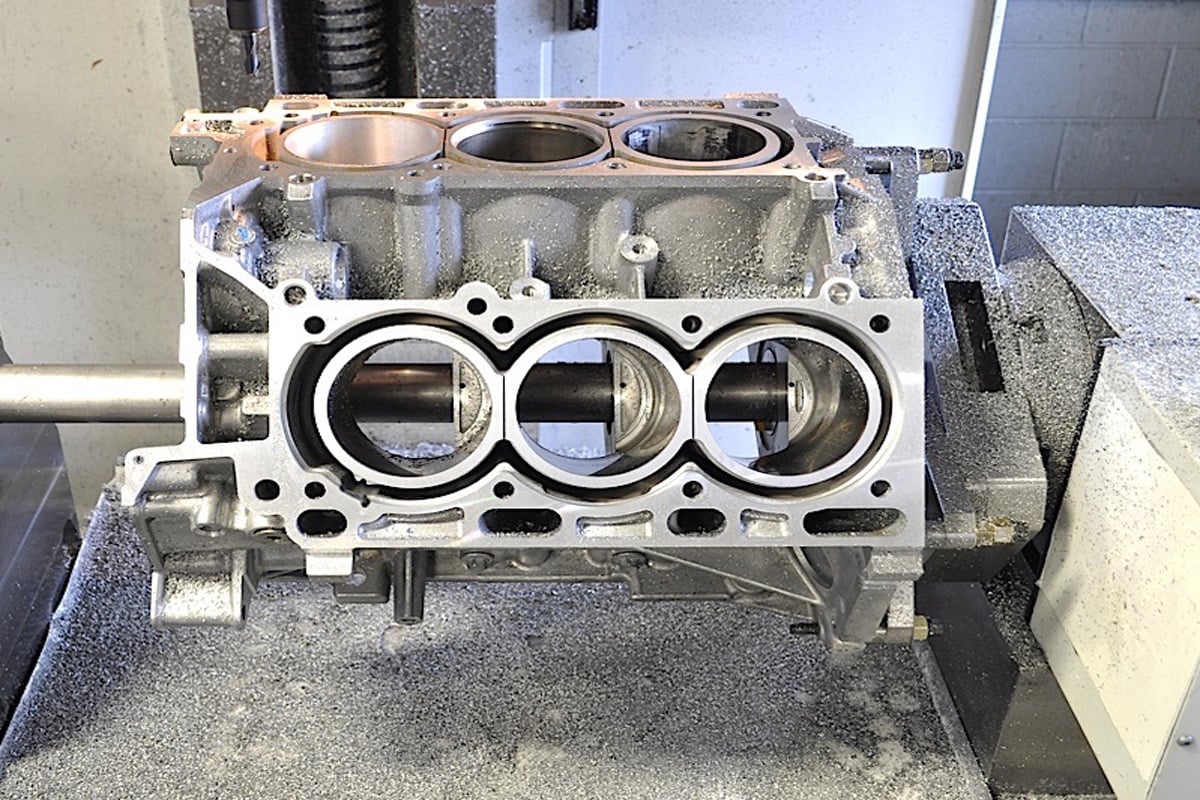
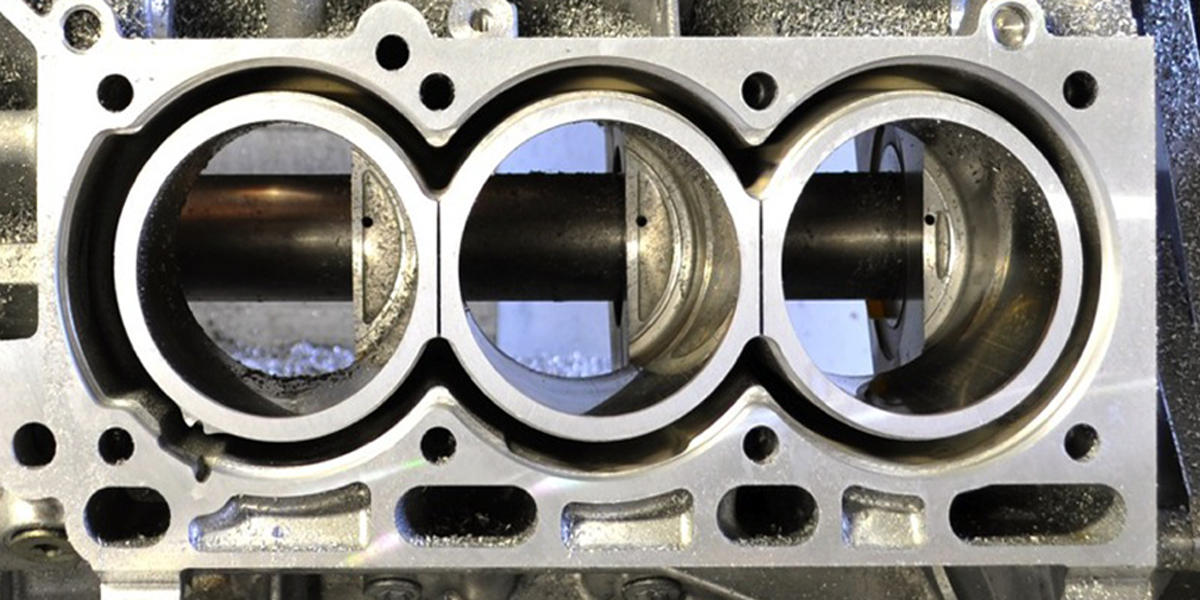
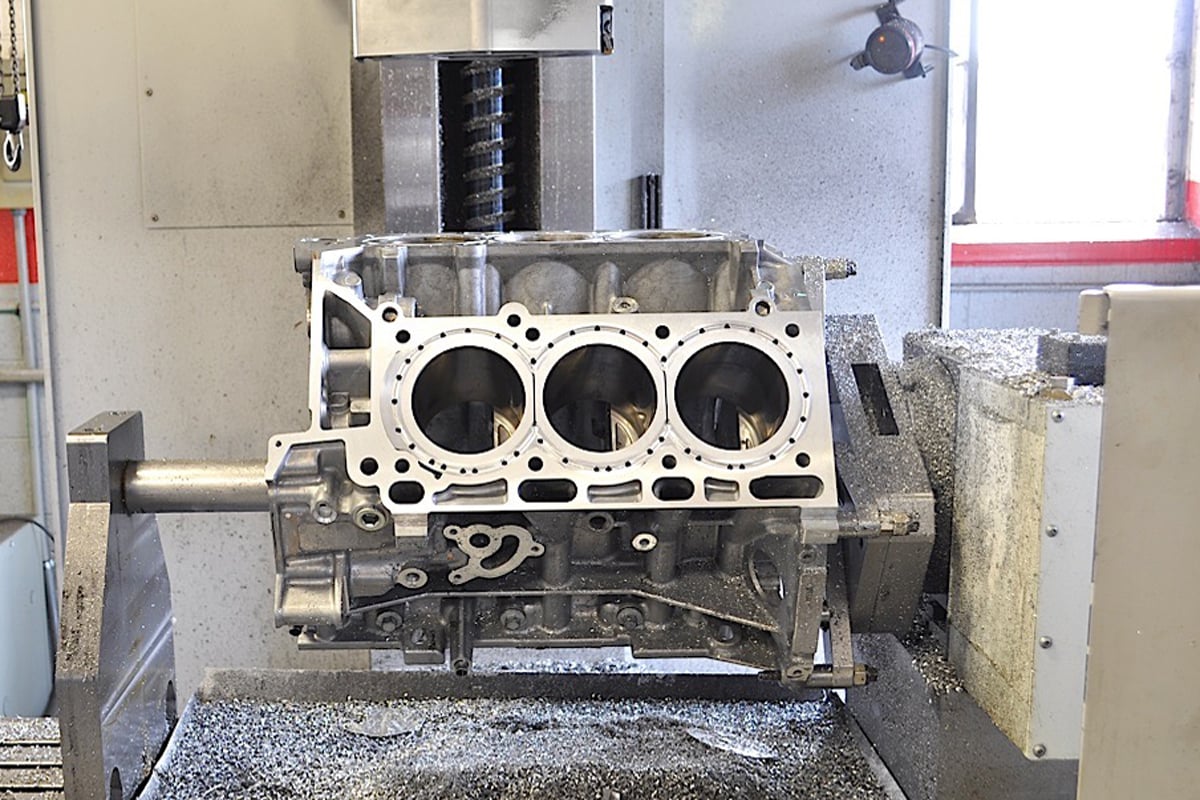
An open deck Ford EcoBoost 3.5L V6. Notice the lack of any type of structural support around the top of the cylinders (although some open deck designs utilize a support point at the end of each outside cylinder).

An open deck is one of the most common designs found in lower horsepower aluminum blocks. It is the easiest to manufacture and provides the overall best cooling efficiency, due to the coolants ability to make full contact with the surface area of the upper portion of the cylinder. Some will argue that this block has the benefit of weighing less than its two siblings because less material is used, but this weight difference is marginal for most blocks.

The downside to an open deck is that it provides the least amount of structural support at the top of the cylinder walls, where they need it most. This reason alone makes an open deck block the least reliable choice for almost any type of forced induction or nitrous application, and should be left to low compression, naturally aspirated engines and low boost platforms.

Semi-Closed Deck

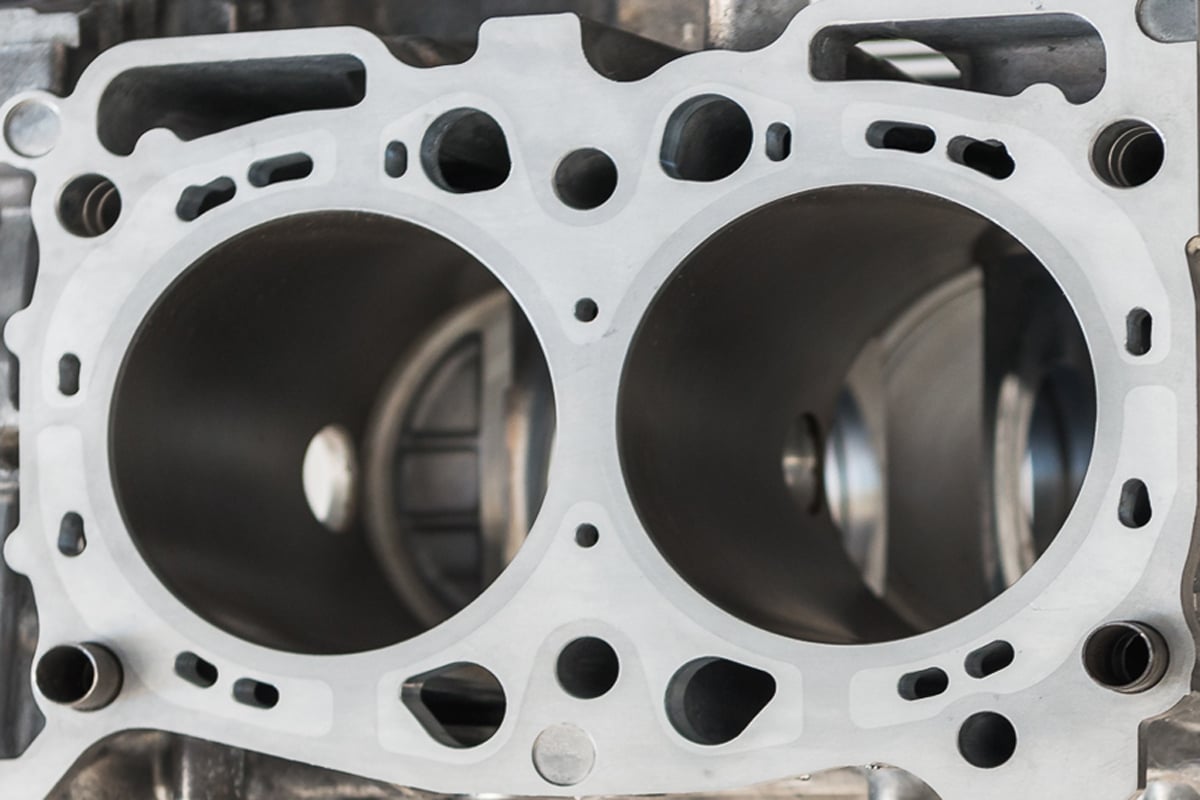
A semi-closed deck flat-four EJ25, found in the Subaru WRX STI. Notice the bridges used to help prevent any distortion around the top of the cylinders.

A semi-closed deck is the most common design found in modern factory turbocharged aluminum blocks, and is stronger than an open deck by adding structural support to the top of the cylinders at four points. Using modern casting techniques, this design can handle respectable boost levels into the mid 30 PSI range and a much higher peak cylinder pressure than an open deck (depending on the application).

Because of the added material around the cylinder walls, this style is more difficult to manufacture and requires more machine work before the cylinders can be installed. Some will argue that the added support joints of a semi-closed deck reduces cooling efficiency and is more prone to cylinder hot spots by limiting the surface area for the coolant to contact. At higher horsepower levels, a semi-closed deck is still prone to failure at the points in between the supporting joints, especially in endurance racing or road racing applications where sustained high temperatures are common.

The most common solution for semi-closed and open deck blocks is installing aftermarket sleeves that can support higher cylinder temps and pressure. This process is pretty expensive, but it is highly recommended that you find a reputable machine shop that has experience with your platform. Sleeving requires a lot of precise machine work to not damage the block, so only the best in your area should be trusted.

Left: A factory 3.5-liter EcoBoost engine prior to being machined for aftermarket sleeves. Right: A sleeved 3.5-liter EcoBoost engine.

Closed Deck

A modified closed deck flat-four EJ25, found in the Subaru WRX STI. Notice the lack of any open space around the water jackets (only coolant ports), providing full support around the top of the cylinder walls.

A closed deck design is generally left to iron blocks and aluminum racing engines. It is the perfect design for fully built, high compression, high revving race engines that require the highest level of structural support available. Common on high level drag race motors, this design is also able to withstand prolonged periods of high heat and cylinder pressure commonly seen in endurance racing and road racing.

A closed deck block is much more expensive and requires an entirely different casting procedure if done from the manufacturer, but can also be modified using pieces that are press fit into position around the water jackets. The latter process requires a custom head gasket, along with precise calculations and machine work to verify that the pieces fit properly and that the water ports are drilled properly to provide adequate flow to efficiently cool the heads.

Many will also note that a closed deck block provides the least amount of cooling capability out of the three. Although this is true to an extent, many of todays closed deck blocks have been put through extensive testing and are designed to guarantee efficient cooling.

Conclusion

Depending on the goals for your build, you may need to sleeve your block or upgrade to a closed deck design. Most modern semi-closed deck blocks can handle very respectable power levels before needing to be sleeved or upgraded, and open deck blocks can handle just about anything you throw at it in naturally aspirated form. But, if you are building a race engine and want the ultimate reliability out of your block, your best option is a closed deck design or aftermarket sleeves (depending on the application and your budget).

Posted on Leave a comment

Blueprint Series: Measuring and Setting Bearing Clearances

If we had to choose one operation that epitomizes the process of engine blueprinting – we can’t think of a better one than setting bearing clearance. This goes far beyond slapping a set of new bearings in the main saddles, torquing the main caps in place, and hoping the crank turns over. Blueprinting clearance means establishing a clearance that is your target number and working the components until this number is achieved. Anything else is just bolting an engine together.

We won’t get into establishing specific clearance goals here because that has been previously covered by EngineLabs. We can offer the standard advice that is tried and true – multiply the crank journal diameter by 0.001-inch. As an example with a small-block Chevy main journal of 2.200-inch – then an oil clearance of 0.0022-inch would be a great place to start.

This discussion will focus on main and rod bearings in a mild, street-driven performance engine that might see occasional high-RPM use, like at the drag strip. Perhaps the first bit of information worth mentioning is that this is the total clearance around the circumference of the bearing. So in the case of a 2.500-inch main bearing with a vertical clearance of 0.0025-inch, this establishes there is only 0.00125-inch clearance between the crank journal and the main bearing at the top and bottom. Under maximum load, the oil is squeezed into a very tiny area of clearance measured with five digits to the right of the decimal point–perhaps as tight as 0.00025-inch. The remainder of the clearance is found on the unloaded side–the top side of the main bearing or the bottom side of a rod bearing.

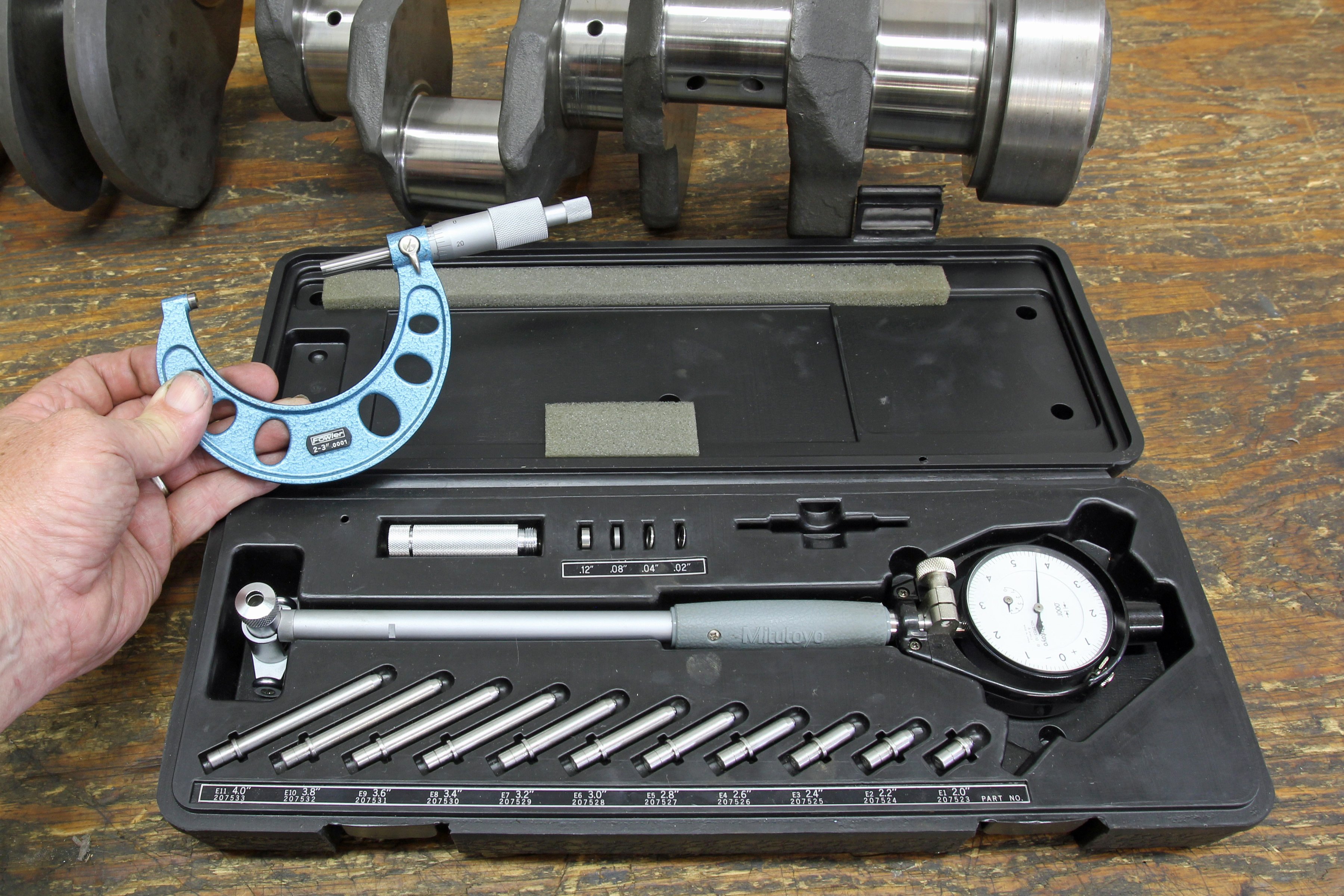
In order to do this job properly, you will need some accurate measuring tools. A minimum of a 2-to-3-inch inside micrometer and a dial bore gauge are necessary. Be sure the micrometers and dial bore gauges will measure down to 0.0001 inch. Cheaper tools often only measure down to 0.001 inch. This is not precise enough by a factor of 10. You will also need a torque wrench and sockets.

The large amount of bearing clearance on the opposite side of the load is used to feed oil between the journal and the bearing, which is why producing sufficient clearance is so important. It is this dynamic loading of the bearings that reinforces why attention to detail is so important. There are other considerations such as bearing crush, eccentricity, and bearing materials that demand close scrutiny, but we will focus on how a DIY builder can create professional results by using high-quality measuring tools and working carefully.

We will make some very important assumptions that the block and crankshaft have either been machined or carefully measured to ensure they are straight, with minimal taper, so that our measurements will pay off with a happy engine when assembled.

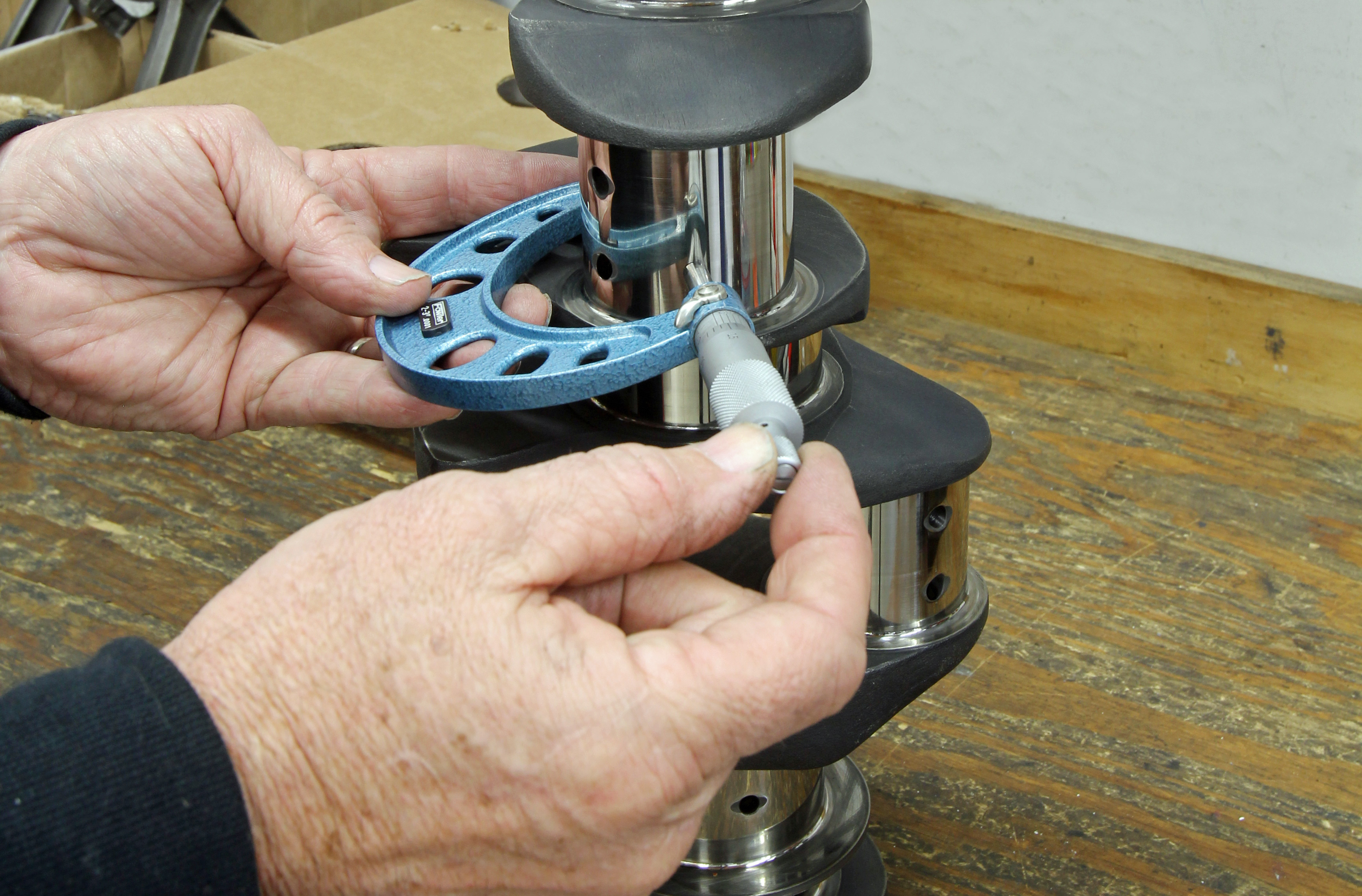
Creating the desired bearing clearance starts with accurately measuring the journal diameter. In this case, we’re measuring a big-block crank main journal. The only accurate way is to use a micrometer that measures down to 0.0001-inch.

The first order of business is to measure the crankshaft. We will need a quality outside micrometer, a notebook to record the readings, and a clear, clean work bench. The crank should be clean and ready for assembly. Assuming we’re working with a V8 engine, it’s important to measure the main journals in two locations and record both. If you are really fastidious, it’s a great idea to measure for taper across the journal as well.

Once a journal diameter is established, there are two ways to go about setting up your dial indicator to measure the inside diameter of the bearing housing.

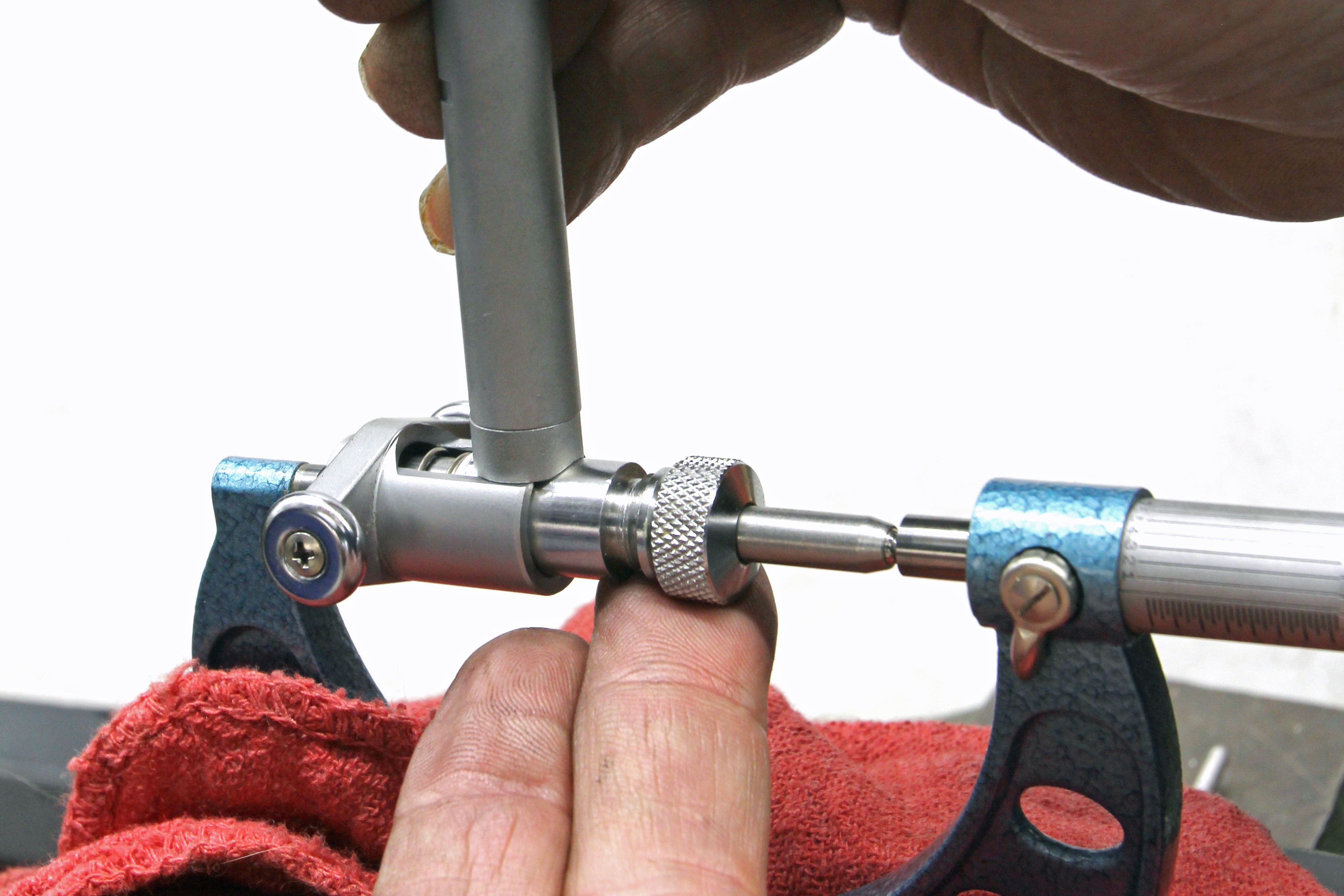
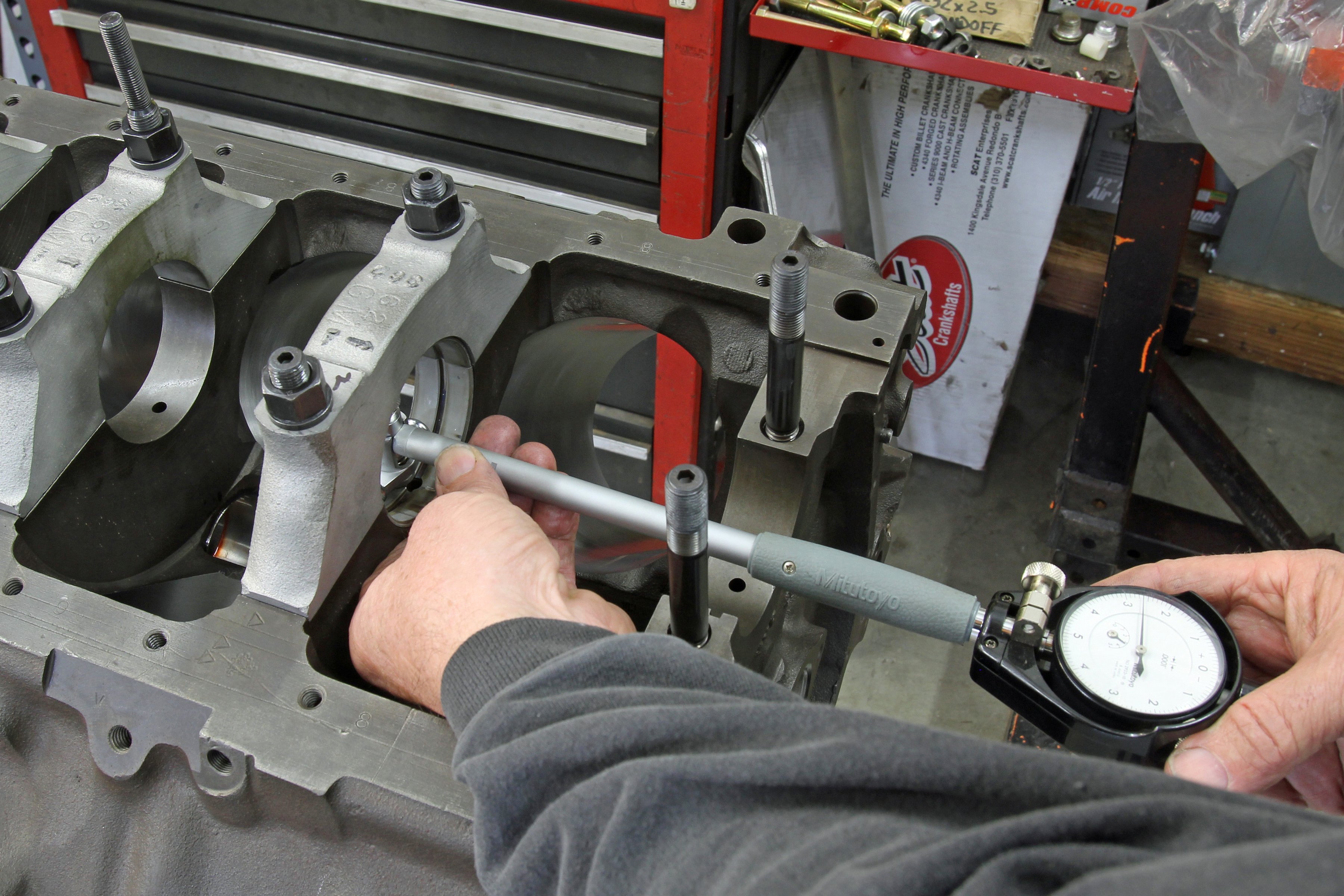
With the micrometer at a specific journal diameter, use this to zero the dial bore gauge (left). We placed our mic in a bench vise to hold it firmly, protected by a thick rag. Setting the dial bore to zero requires attention-to-detail to make sure the zero is accurate. If you induce an error at this stage, every other measurement will be in error. Next, use the dial bore gauge to measure the inside diameter of the housing bore, in this case, the number two main journal that has been torqued (right). For maximum accuracy, measure bearing clearance only in the vertical. Also check for taper in the rod. We had a poorly resized used rod that had 0.0015-inch taper. This is caused when the rods are not switched on the mandrel and only honed from one side. This creates a taper or bell-mouth in the rod big end. So always check for taper on rebuilt rods.

One way is to set the outside micrometer to a specific journal diameter. Let’s use a 454ci big-block Chevy as an example. With a 0.010-inch-under crankshaft, we measured the number three journal at 2.7387-inch. This is exactly 0.010-inch undersize. We can set the dial bore gauge to read zero at this point and then install and measure the inside diameter of the bearings in the number three main.

The second procedure saves time but could introduce a math error. This process measures all the journals. Then the builder sets the dial bore gauge to one journal size and performs the math to adjust the clearance from the dial bore gauge for the different housing bore diameters. As an example, if we set the dial bore gauge to the 2.7387-inch diameter of journal three, then we would add or subtract the difference of varying sizes of the journals to produce the actual bearing clearance. If the journal is larger than our standard by 0.0002-inch, then we would subtract 0.0002 from the dial bore gauge reading for clearance for that main bearing.

We made a simple oil pump adapter for this big-block and mounted it using the stud and nut we planned to use in the engine. We measured clearance before and after torquing this in place and discovered the clearance increased in this situation by .0008-inch!

As an example, if we installed 0.010-under bearings and measured the clearances and all was right with the world, the dial bore gauge should read +0.0025-inch (our desired clearance) for all five main journals. But this only happens on TV car shows and magazine engine articles. In a big-block that we recently assembled for a friend, the crank main journals measured as follows:

Main Journal

Journal Diameter

Actual Undersize

1

2.7393

0.0094

2

2.7390

0.0097

3

2.7387

0.0100

4

2.7384

0.0103

5

2.7383

0.0104

None of the crank main journals measured the same and only number three was the technically correct 0.010-inch undersize. Budget and time limitations prevented us from grinding this crank 0.020-under. Instead, we had to deal with this and use multiple size bearing shells to bring the clearances as close as possible.

Let’s first address the clearances for the 0.010-under number three. Measuring the actual clearance using 0.010-under Federal-Mogul bearings, we came up with 0.0027-inch. This was slightly more than our ideal 0.0025 spec but acceptable. The other four created either too much or too little clearance using just 0.010-under bearings.

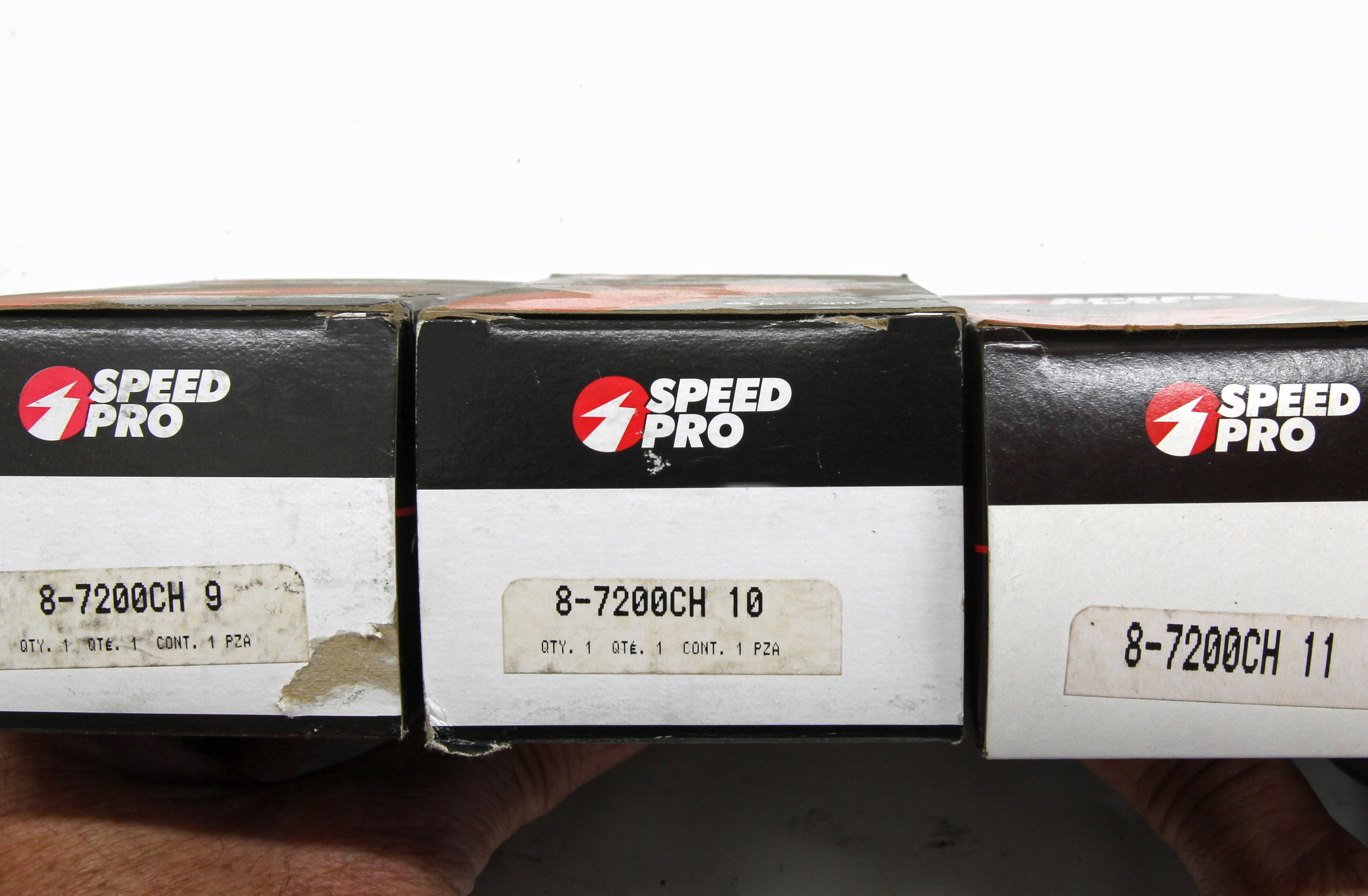
Most race bearing manufacturers will offer bearings in +/- sizes. For example, Federal Mogul offers main and rod bearings in 0.001-inch under and oversize versions within the lineup of  standard, 0.010-inch, 0.020-inch undersized bearings. That allows you to set the clearance by adjusting, even with half-shells.

Some performance bearing companies like Federal-Mogul offer optional bearing sizes such as 0.001 undersize or oversize inserts that make it much easier to set an ideal clearance. In our case, we needed 0.011-inch undersized on some of the journals and 0.009-inch-undersized bearings for the front two. Federal-Mogul offers these and saved our bacon. This allowed us to increase or decrease the clearances to get closer to our ideal. While mixing half-shells is acceptable practice, never mix shells with more than 0.001-inch spread and always stay within the same manufacturer. In other words, never mix a 0.009 bearing shell with an 0.011-inch version.

One down side to performing all these customized clearances is that we were faced with purchasing two (and in our case, three) sets of main bearings for one engine. So do all measuring before you buy the bearings. The same is true with rod bearings.

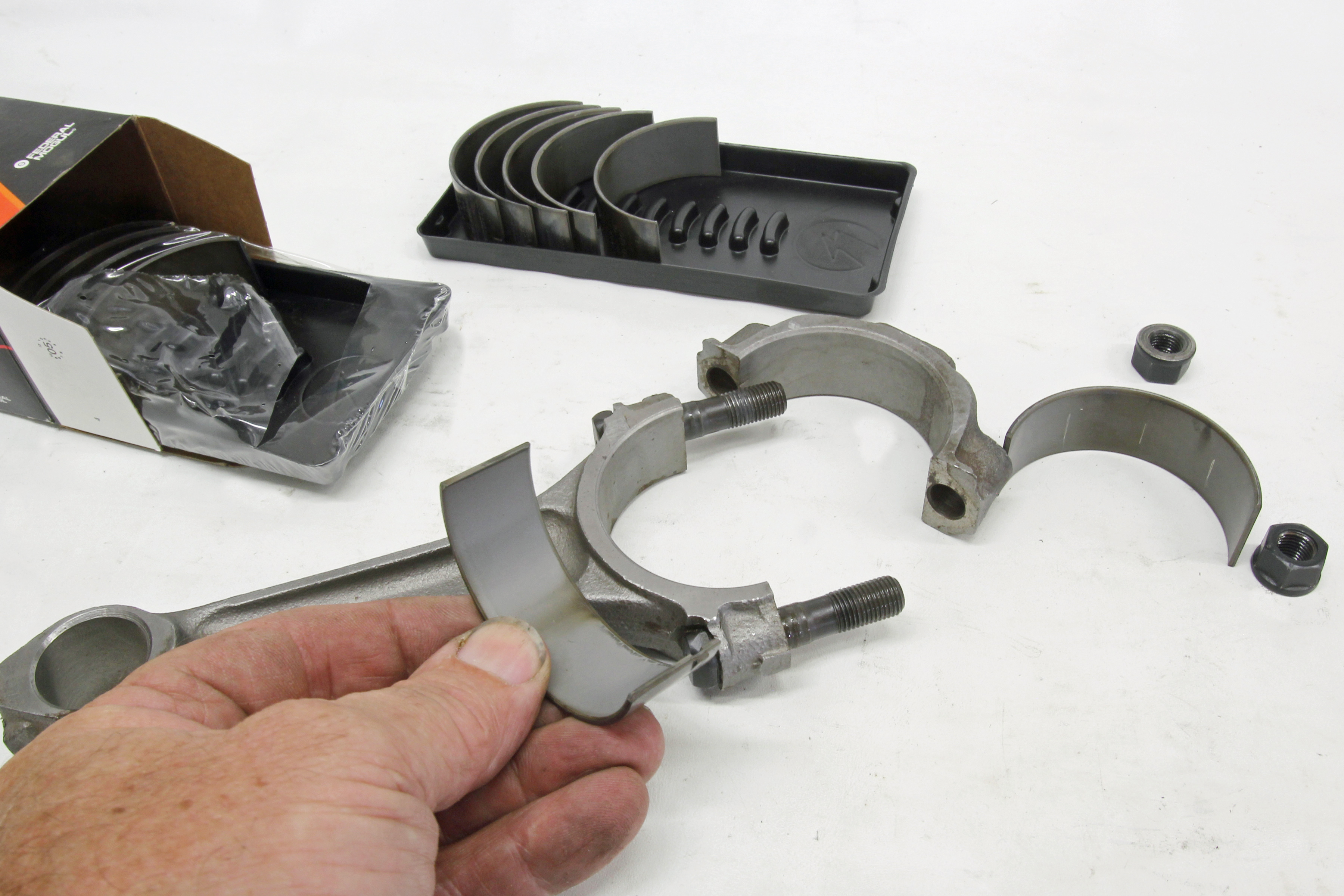
It is accepted practice, for example, to mix one 0.010-under shell with an 0.011-under bearing half on a specific rod or main journal to achieve the desired clearance. Never mix bearings of different manufacturers and never mix bearing halves that are more than 0.001-inch different in size.

The best way to fix this would have been to have the engine align honed to establish the proper housing bore diameter. In our case, the engine had to go back together due to deadlines beyond our control so we did the best we could. The final 0.0035-inch clearance is well within factory tolerances, but it is also 0.0005 inch wider than we would prefer. For a mild street motor, this was acceptable. Another reason this will work is that as the thrust bearing, this additional clearance will provide more than enough oil to properly lube the bearing’s thrust surfaces.

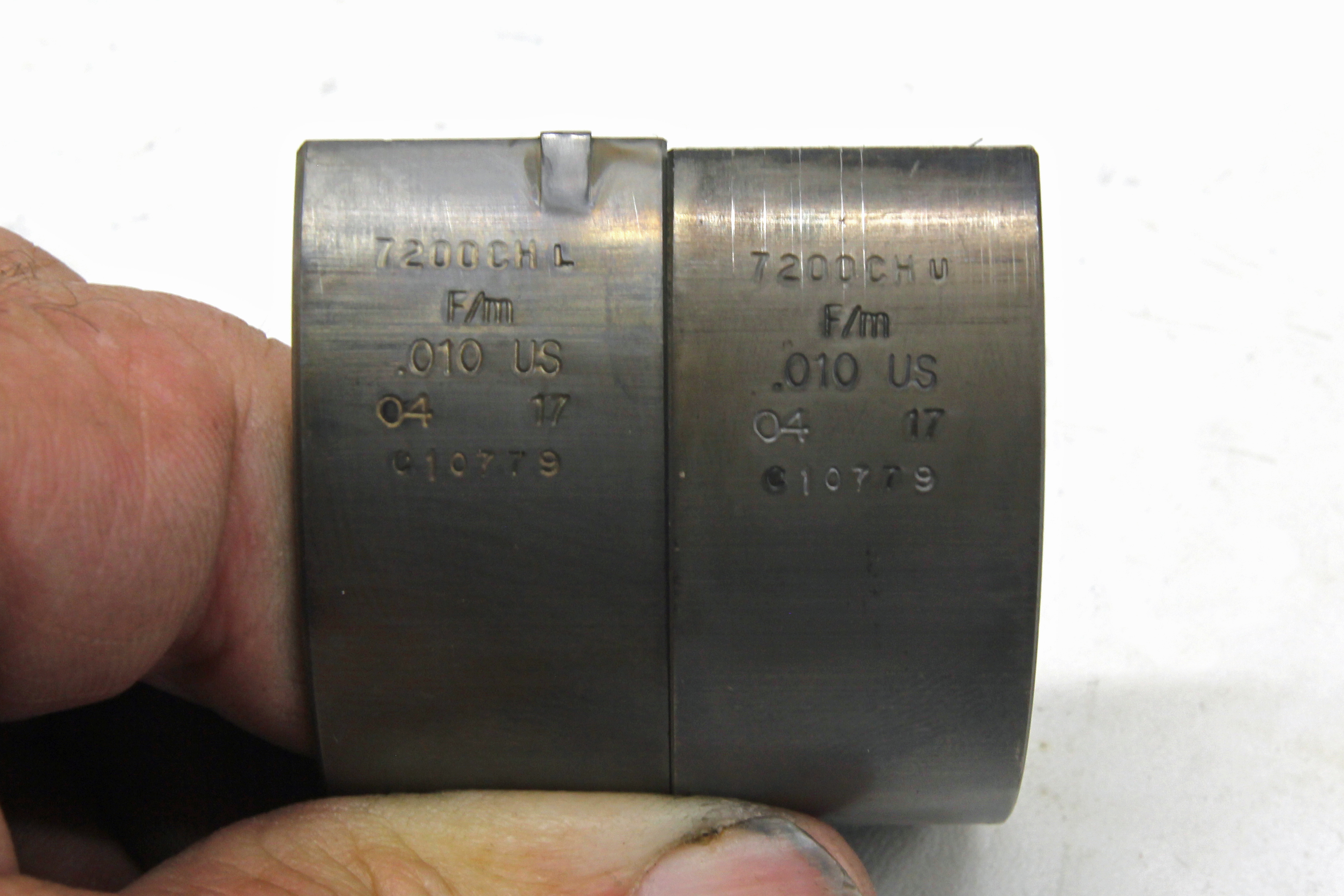
These are Federal-Mogul 0.010-under rod bearings. Note the stamp “L” or “U” on these shells along the upper stamping. The “L” means this shell must be installed in the lower half of the connecting rod so that the bearing’s chamfer will be on the same side as the crank radius. The “U” obviously is the upper insert. If the bearings are inverted, the chamfer will not be adjacent to the crank journal radius and the bearing may rub. This isn’t a major issue, but certainly something to watch carefully.

It’s also important to point out that housing bore diameter, whether it be the rods or mains, have a big effect on bearing clearance. Incorrect clearances are commonly blamed on the bearings when the reality is the housing bores are improperly sized. When combined with inconsistent crank journal diameters, this tolerance stack-up is the real culprit in nearly all clearance issues. Measuring these parts is the only way to know for sure.

At some point in the Blueprinting series, we will also look at the accuracy of the measurement tools you are using. If your measuring devices are not accurate to at least 0.0002-inch, the actual numbers may not be an accurate reflection of what is really there.

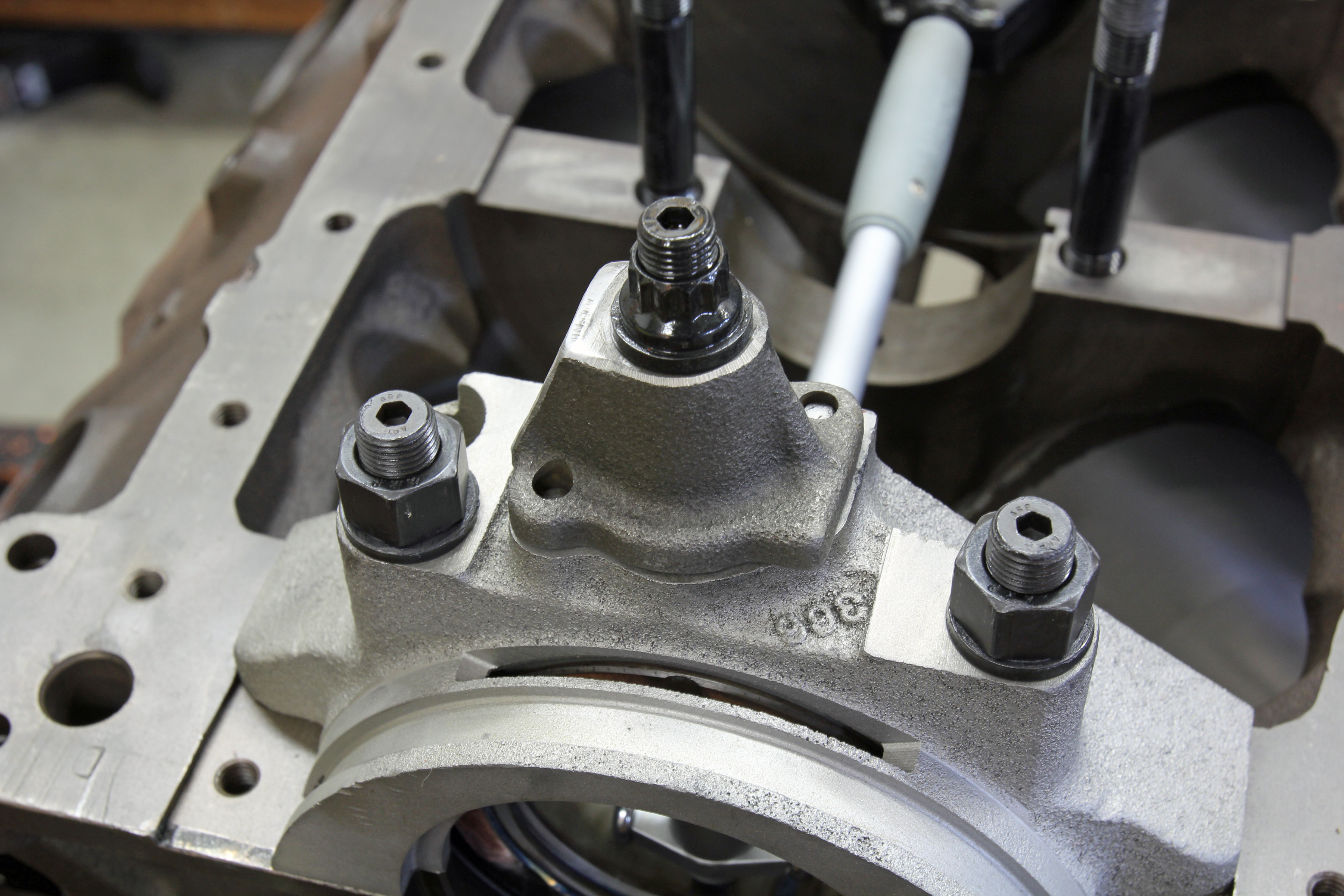
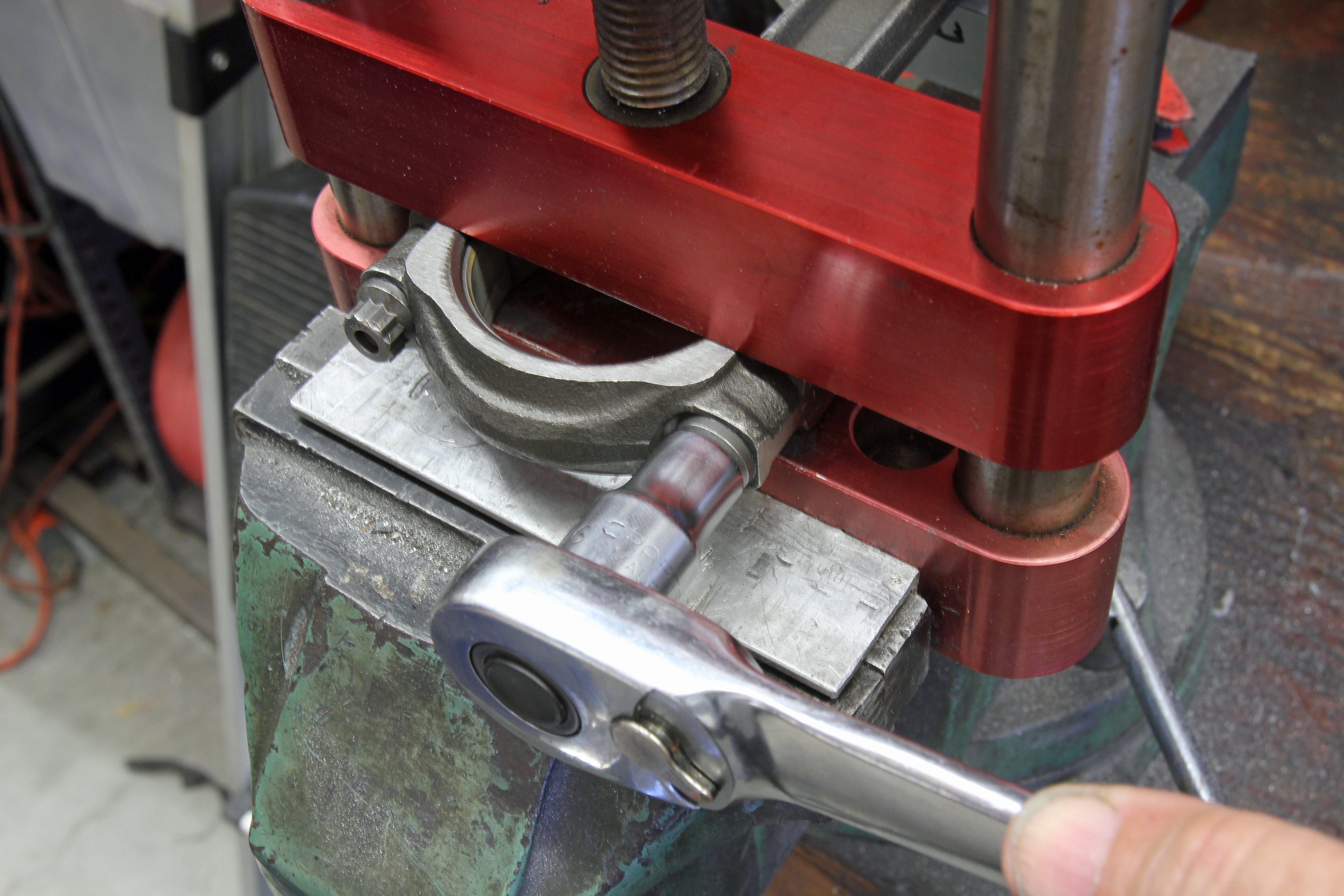
When bearings are installed in the connecting rod, always use some type of rod vise to clamp across the cap parting line. This prevents damage to the rod when the bolts are tightened. If you don’t have a rod vise, use a bench vise with aluminum inserts in the jaws to prevent damage to the connecting rod.

It’s also important to point out that bearing clearance will dictate engine oil viscosity. We will have to over-generalize here, but tighter clearances demand thinner oil while wider clearances will need a higher viscosity oil to establish the proper oil-film thickness to prevent abnormal wear.

Most of the details in this story relate to employing common sense and accurate measurement techniques. Accomplish both of those tasks and your engine will live a long and powerful life.

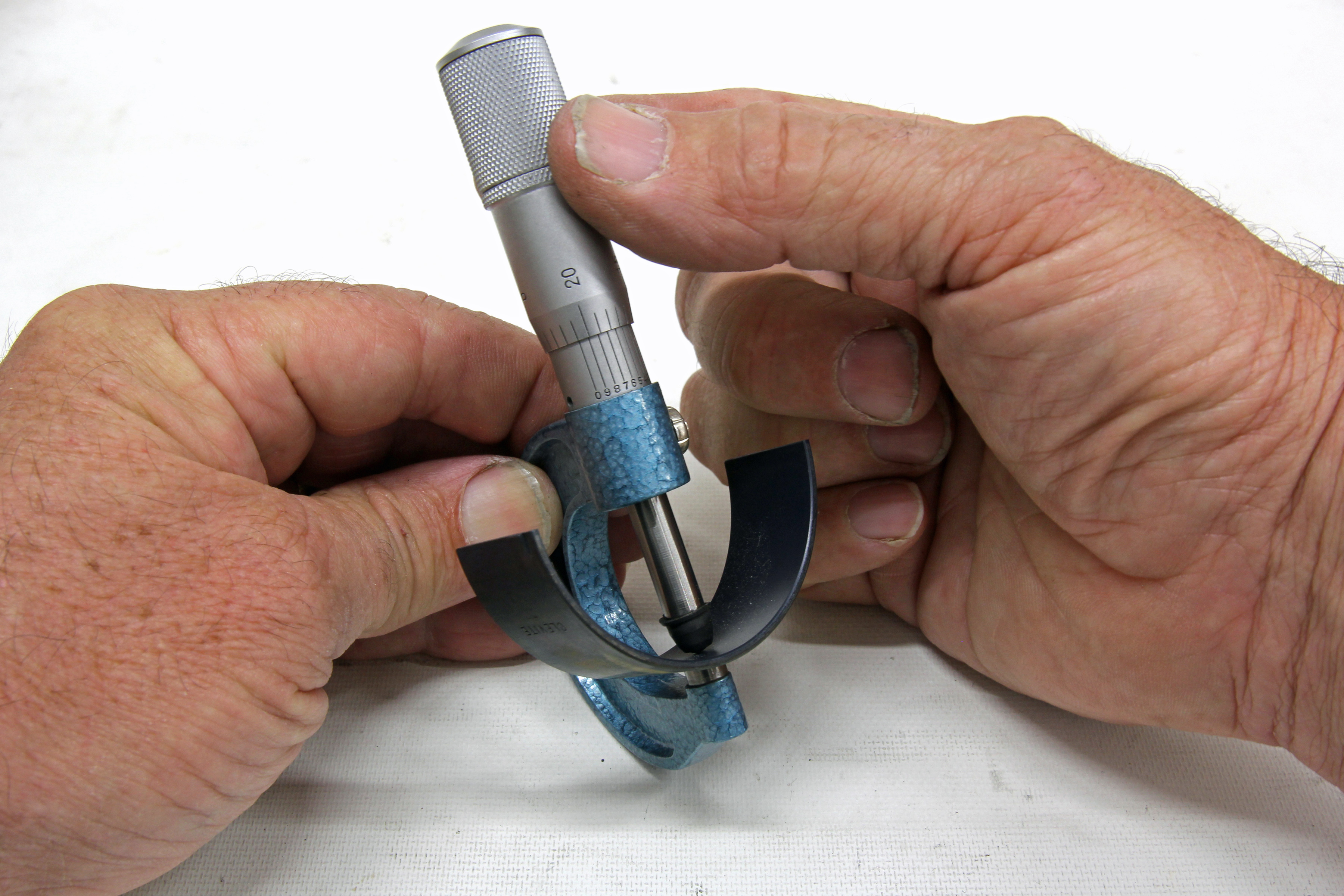
If you really want to get down into the tiniest of details, you can test bearing thickness variations. You will need a round bearing adapter for your micrometer as shown (we found ours through Grainger). However, our experience is that accuracy of measurement becomes more of an issue than variations in bearing thickness. In other words, can you accurately measure to 0.0002-inch?

Posted on Leave a comment

Harmonic Damper: A Key Source for Lost Horsepower

Harmonic Damper: A Key Source for Lost Horsepower

We are all guilty of installing a flashy part on our hot rod or engine that doesn’t add any power, but we’re convinced the system “runs better” with it installed. Now imagine installing a part that doesn’t directly build power, but its interaction with the engine’s rotating assembly can release power that may have otherwise been wasted energy in the form of vibration, or maybe the part just reduces premature wear on bearings and associated components. This part–the harmonic damper–already exists on every street-driven engine, and is often overlooked as just a mounting point for accessory pulleys or a location for attaching weights for externally balanced engines. The harmonic damper presents a crucial opportunity to optimize your rotating assembly to insure longer life or to free up wasted energy that could be better applied to the tires.

So is it a balancer, or is it a damper? The two terms are used interchangeably, but technically they have different functions. A balancer adds weight to help (externally) balance the lower rotating assembly of an engine, while a damper, quells the vibrations during crankshaft vibration which occur as a function of the combustion process. Keep in mind, while all harmonic balancers are dampers, all dampers are not balancers. Yet for purposes of bench racing, both terms are often used to mean the same part.

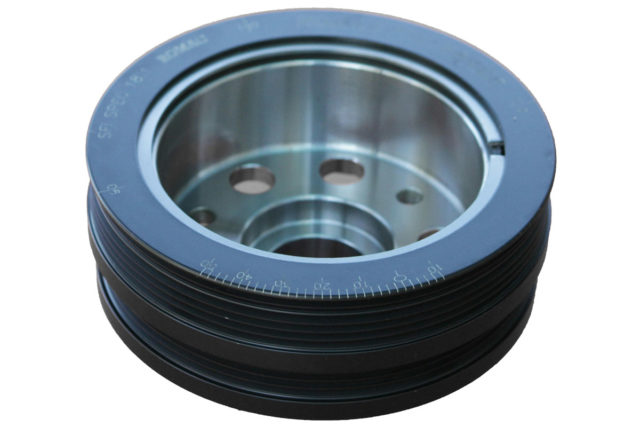
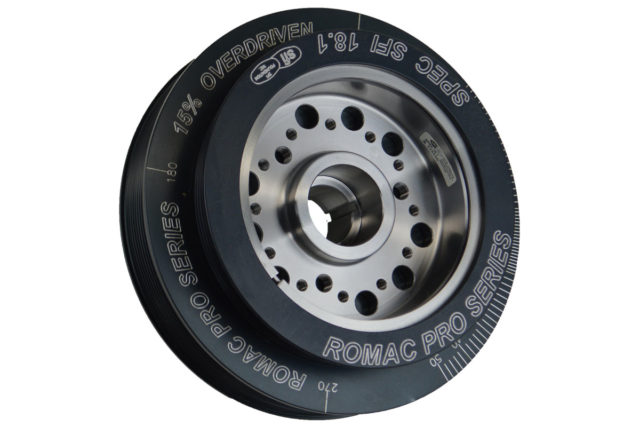
Romac elastomeric damper with laser engraved timing marks.

                                      
                                       Keeping It Basic

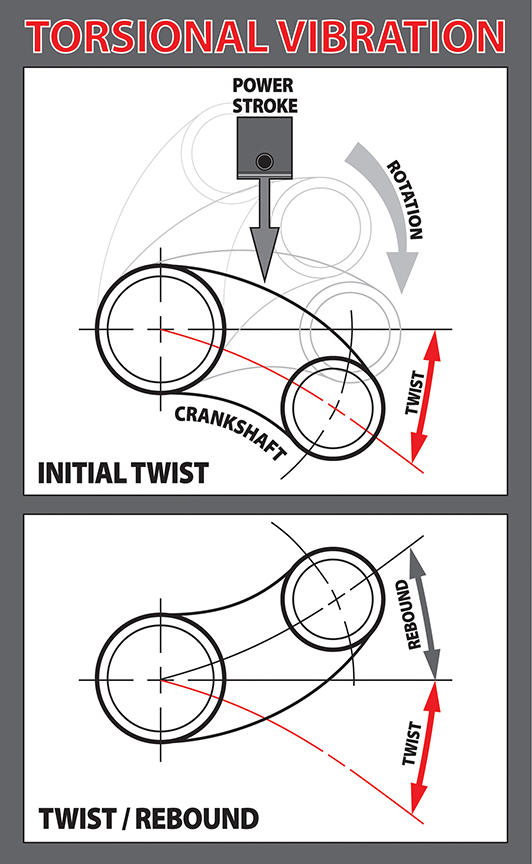
During the combustion process, each piston is forced to move down the cylinder as a result of an explosion contained within the combustion chamber. This stroke imparts a sudden rotational force to the crankshaft. Even though it is a very stout component, a crankshaft is not perfectly rigid. So during these combustion events, the crank will twist slightly in response to each explosion/impact.

This crank twist is analogous to a simple torsion bar with a lever arm at one end. Now assume you hit that lever arm with a hammer. You can imagine there will be some slight twist when you first hit the lever arm, but that would be followed by the arm springing back into place, maybe even vibrating for a short time before coming to rest.

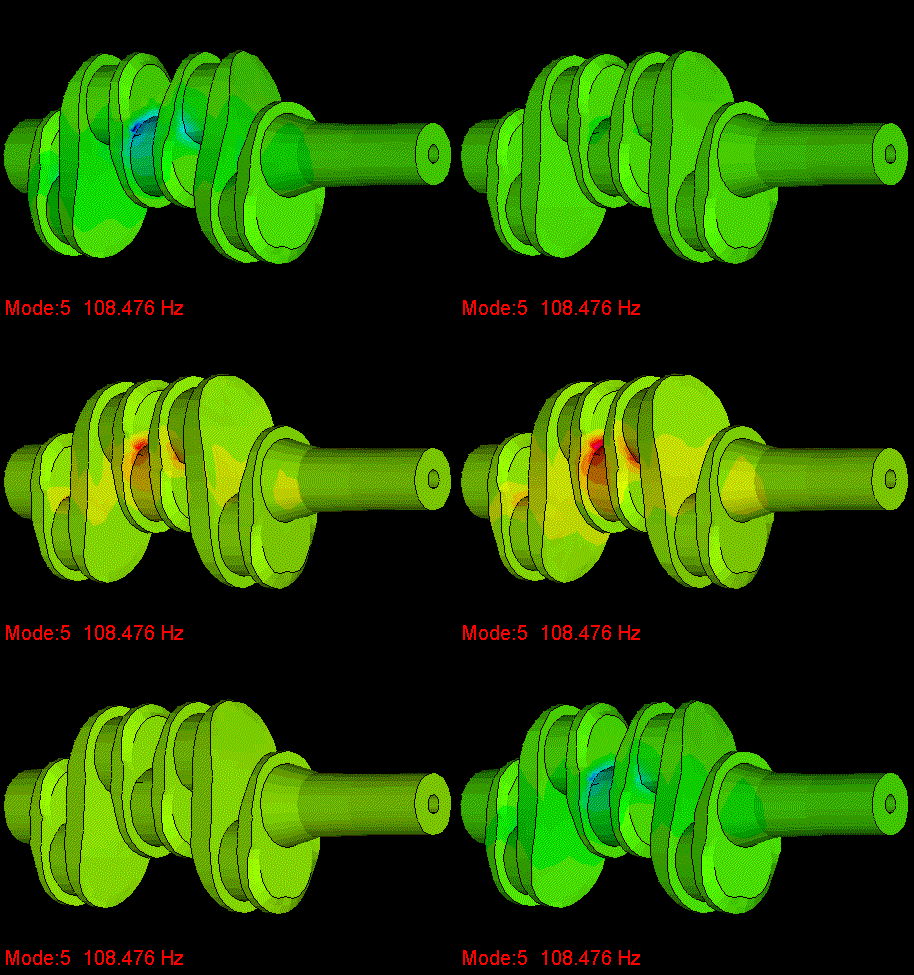
Animation of a crankshaft with 108.476 Hz of harmonic distortion.

In this example, we have torsional twist followed by torsional vibration (during the spring back event). Torsional twist is a function of part length (inline engines will have a longer crankshaft than V-configurations) and thickness, material shear modulus (think: material stiffness), and Torque (force from combustion x crank throw). Similarly, torsional vibration is a function of part length, torsional stiffness, and polar moment of inertia (think: object’s ability to resist torsion). For a detailed explanation of these phenomena, review Himmelstein’s Technical Memo #8150.

What’s the problem?

Torsional vibration has side effects that are rarely desirable. Because force is transmitted into a crankshaft at discrete points in its rotation (example: every 90 degrees of rotation in a V8 application), the output torque is not continuous, thus creating pulses and torsional vibrations. In the event that these pulses occur around the resonance frequency of a crankshaft, the effects can be multiplied. When this occurs, risk of component failure (broken crank) increases as well as the chance of premature wear of bearings. In some cases those vibrations can be transmitted to other points in the powertrain such as the valvetrain (via timing chain) or down the driveline towards the tires. Either direction isn’t desirable as it can rob power in addition to potentially killing parts.


Technology Options

While a few methods to damping have been invented, the vast majority of automotive OEM and aftermarket companies point towards two solutions for controlling detrimental torsional vibration; elastomeric and viscous damping.

The method for elastomeric harmonic damper construction tends to make them the most cost-effective as an OEM replacement or upgrade. Romac Performance Products specializes in elastomeric harmonic dampers and builds products for mild to full race applications. Construction is rather simple, and consists of four parts: a hub, elastomeric band, outer inertia ring, and snap ring. The hub is constructed to fit over the front of the crankshaft snout with a keyway. The hub will usually have a bolt pattern built into the front face which allows for attachment of accessory pulleys. The backside of the hub may have a cavity built for attaching weights to externally balance the rotating assembly. Applied around the hub is the elastomeric band which is constructed of a rubber polymer. Polymer durometer (hardness) gives Romac the ability to add or subtract damping ability, tune for engine frequency, and long term durability.

Fit to the outside diameter of the elastomer band is the outer inertia ring. This outer inertia ring functions as a small flywheel that wants to remain at constant speed despite the acceleration and deceleration pulses that the crankshaft is experiencing. The elastomeric band between the hub and outer ring allows the outer ring to move slightly independently (or at a more constant speed), while the inner hub runs slightly faster and slower in response to torque pulses. A snap ring is inserted inside of the outer inertia ring in order to keep the band and inertia ring in their respective places.

During operation, the band transmits only part of the vibrational forces from the hub to outer ring, while also converting some of that vibrational energy to heat which is dumped to atmosphere. Romac takes great pride in the fact that all of their harmonic dampers are hand assembled, giving technicians that ability to inspect each assembly for best results.

Romac elastomeric 5.8-liter Ford Mustang GT500 Damper with 15-percent supercharger overdrive pulley built-in. The elastomeric material rides between the silver center hub and the black outer ring.

A good example of viscous harmonic dampers are those offered by Fluidampr. Speaking with Brian Lebarron at Fluidampr, he describes a viscous harmonic damper as “contain[ing] a free rotating inner inertia ring that shears through a thin layer of proprietary silicone. As it shears, destructive vibration is transformed to heat. Heat then radiates through the outer housing to atmosphere.” More simply; the viscous damper includes an outer housing, an inner inertia ring (think free-rotating ring inside the housing), and the housing is filled with a THICK silicone fluid which fills in the gaps between the housing and ring.

Click to expand.

Under constant smooth torque applications, the housing and ring spin together. When torque pulses are introduced, the ring wants to continue spinning at a constant speed while the housing is in a constant state of acceleration and deceleration.

The housing and ring speed differences apply a shear force against the silicone fluid between them. The silicone absorbs that shear force in the form of heat which is dumped to atmosphere.

From an OEM perspective, an elastomeric damper covers the vast majority of engines being produced today. The primary reason for this choice is cost of manufacturing as the elastomeric option tends to be constructed of parts which have lower tolerances as well as utilizing raw materials which are more common and don’t demand a premium price. Viscous dampers are often utilized by OEMs in high performance and luxury applications.


Do I Really Need One?

For those familiar with sprint car engines, they know that most sprint competitors don’t utilize a damper at all. Similarly, a minority of drag racers have opted out of a damper with the theory that less rotating mass allows the engine to increase RPM quicker. We’ll keep this discussion at a high level and just point out that sprint and drag engines aren’t intended to see many miles. Careful component selection can help mitigate some overall vibration and ultimate component failures, but the benefits of a damper are undeniable for anybody looking for more than a few quarter-mile passes or a Saturday night main.

Here we can see how the Fluidampr viscous damper changes the large peaks and valleys of vibration the engine sees with an OEM rubber damper.

Selecting a Damper

Consider the following topics when choosing your next damper:

  • Application
    • Daily Driver to Full Race?
      • If a Daily Driver, will stock replacement suffice? Consideration should be given regarding avoiding the previous failure mode.
      • If Performance or Full Race, what type of driving or racing (sprint/endurance)? What types of RPM will the engine see?
    • Function over fashion
      • Always prioritize function. After all, what good is fashion if the chosen damper leads to engine failure? After functional needs are met, feel free to throw all the chrome plating and anodizing as is appropriate.
      • Does the engine need crank pulleys or external balance weights? Will the crank pulleys be attached to the damper body or should they be an integral part of the harmonic damper?
    • Diameter
      • This topic may fall under both Application and Function, but make sure to choose a diameter that meets both functional needs AND will actually fit within the space allotted.
    • SFI or not?
      • If any type of racing or performance is under consideration, an SFI-approved harmonic damper should be a requirement. Many sanctioning bodies will require an SFI 18.1-approved damper. If not, consider what it would be like if a 6-8 pound metal disc came off the front of the engine at high RPM…yeah, don’t skimp here. To understand more about what it takes to comply with SFI 18.1 guidelines refer to SFI -Crankshaft Hub Harmonic Dampers.
    • Budget
      • If you’re rebuilding a daily driver’s engine, that $89 damper from the parts store may be all you need. But if any added performance is your goal, expect to pay according to your intended RPM and speed ranges. That $89 harmonic damper likely will not provide much protection if you’re spinning your engine to 7,000-plus rpm, or hanging a big supercharger on it and doubling or tripling its output. The old saying of “you get what you pay for” is definitely in effect when it comes to harmonic dampers.

In Conclusion

There is a wide variety of choices on the market when it comes to harmonic dampers; from elastomeric to fluid-based, and each one has its place. The ultimate selection is up to you, and your engine will thank you for taking its health into account during the build process.

Posted on Leave a comment

How To Choose The Right Turbo

You don’t need us to tell you that turbochargers are hot. The word on the street is as enticing as it is simplistic. Just stick a turbo on it and you’ll make ridiculous horsepower. We once asked the guru of engine power, Kenny Duttweiler, “How much power can we make with a turbo on a 6.0-liter LS?” His answer was succinct: “How much do you want to make?” That meant that four digit power numbers are achievable. However, in the vein of full disclosure, this won’t be an easy, bolt-on, walk in the park process. If you are motivated, it’s well worth the effort.

We latched on to the learned souls at Garrett Honeywell, who can trace their turbocharger lineage all the way back to 1936; it’s quite obvious they know a little bit about turbochargers. Our story starts with someone who had already taken a stab at adding a turbo to a 6.0-liter LS engine for a street car. Several years ago, Justin Nall decided that a single turbo pushing air into a used, iron 6.0L truck engine seemed like a good idea.

His machine is a choice, Lemonwood yellow ’66 Chevelle with a 4L80E automatic, a decent PTC converter with 3,400 stall, and a 12-bolt rearend filled with a 3.31:1 ring-and-pinion. The car is not particularly light at 3,850 pounds. The engine sports 364 cubic-inches, with a Comp camshaft measuring  .598-inch of lift on the intake and .591-inch of lift on the exhaust, with 234 and 230 degrees of duration at 0.050-inch, respectively. Other components include: Wiseco 10.4:1 pistons, a set of CNC-ported production 243 heads, an Edelbrock Pro Flo intake, and a stock truck throttle body. Overall, the combination is fairly mild. Nall lives in Minnesota, so he puts plenty of miles on his hot rod during the summer months.

Justin Nall’s ’66 Chevelle is a regular competitor on autocross courses, as well as spending lots of time on the street. He was looking for an upgrade for his current turbo, so we plugged some numbers in to choose a little bigger turbo.

At the Summer Nationals event at the state fairgrounds in nearby St. Paul, he also has run the car on the chassis dyno. His initial turbo package was intended as a conservative choice to dip his toes in the turbo waters. Lately he’s decided to up the game with more horsepower, so we thought this would be an excellent way to blaze a trail toward a more aggressive turbocharger. The Chevelle was previously capable of over 650 rwhp, and his goal was to push this to 900 flywheel horsepower; that puts wheel power around 800 to the rear tires. His fuel of choice is E85, because it offers roughly 105 octane, and the engine really loves how the fuel cools the hot compressed air exiting the turbo.

We accessed Garrett’s website, and discovered a wealth of technical information that is divided into areas depending upon your technical level of understanding. If you are just getting into this, then the Basic area will deliver important foundation work for you to understand the concepts. The website also offers intermediate and advanced areas as well, so you can jump right into the area where you are most comfortable.

If you don’t want to run through the math, Garrett also offers its Boost Adviser, which makes the selection process a bit easier. But it’s still a good idea to read this story, because along the way we will explain what all the terms mean and how they are used to help choose a turbo. Many of the details we will discuss here are based on knowing your way around a compressor map. If you’re not familiar with what this is, it’s important to do a little homework by reading all about this on Garrett’s website. But we’ll hit the highlights for you here.

This is the engine in Nall’s Chevelle. It is a basic 6.0L iron truck block engine with a mild Comp roller, 10:1 compression, a set of ported 243 LS1 heads, and an Edelbrock Pro-Flow intake.

The Important Terminology

A compressor map is a basic X-Y coordinate graph, yet it offers a tremendous amount of important information. The horizontal (X) axis of the map is expressed in airflow in pounds per minute (lbs/min). This is the amount of mass airflow the turbocharger can move. Obviously, the larger the compressor housing of the turbo, the more air it can move. There’s a simple trick that everyone uses when reading the airflow portion of this map. The pounds per minute of air increases moving left to right. If you multiply the lbs/min number x 10, that will roughly represent the amount of horsepower that airflow can deliver. So for our goal of 900 hp, this would be represented by 90 lbs/min of air.

The vertical (Y) scale is expressed as a pressure ratio. This isn’t just that number times sea level air pressure (14.7 psia), but it’s very close. One way to explain this is the pressure ratio is derived as the pressure expressed on your boost gauge divided by the ambient air pressure. If we saw 44.1 psig on our boost gauge and this occurred at sea level with an ambient air pressure of 14.7 psia then dividing 44.1 by 14.7 would equal a pressure ratio of 3.0.

Note that we expressed the above ambient air pressure as 14.7:1 psia. The “a” in psia means absolute pressure. The “g” in psig means pressure as read on a gauge. A typical boost gauge represents ambient air pressure as 0, which is why we have to label the pressure we are talking about. In absolute terms, 44.1 psig is 58.8 psia in absolute pressure (14.7 + 44.1 = 58.8). This will become important once we start wading through the formulas. But don’t worry – it’s not that difficult.

So for Justin Nall’s Chevelle, we’re looking to size a turbo with Garrett that will deliver around 900 flywheel hp. To determine how much airflow we will need, Garrett recommends starting by calculating the actual mass airflow. This will reinforce what we just did with the short-cut but it’s worth running through the numbers.

Nall has tested his Chevelle on the chassis dyno several times. A previous combination with a smaller turbo has made 650 hp at the rear wheels, and he is looking for more power from a new turbo—so with Garrett’s help, we ran the numbers…

Air Flow Required

The initial mass airflow calculation uses several variables that we need to know. The first is our estimated horsepower, which is 900. Then it asks for the projected air-fuel ratio and the brake specific fuel consumption (BSFC) number. The BSFC number represents the pounds of fuel consumed per horsepower per hour (lbs/hp/hr). A good, late model naturally-aspirated engine on gasoline will use around 0.45 lbs/hp/hr of fuel. As the number becomes smaller, that means the engine is more efficient and uses less fuel to make the same amount of power.

Because Nall is using E85, which is 85-percent ethanol, this fuel has a lower specific heat content which means we must burn more fuel to make the same amount of power compared to gasoline. So for E85, the BSFC number we will use is a 0.60 number. This means we’re using roughly one-third more fuel to make the same horsepower. This sounds terrible—and it is, if we were in a fuel economy race. But since Nall is focused on making horsepower, this isn’t all that bad. Plus, with a turbocharger, we must add additional fuel to make sure the engine does not experience a lean air/fuel ratio that could damage parts. So add all that up and a BSFC number of 0.60 will work for this application. If we were planning on using a high-octane gasoline, a BSFC of 0.55 would be better.

This calculated number is what we will use to reference mass airflow on the compressor map. Since we’re only using one turbocharger, our goal will require a rather large compressor to move all this air. If we were going with a twin-turbo package, then this number would be divided by two.

AirFlow Requirement (Wa):

This is a typical compressor map. In this case, it is for the Garrett GTX4508. We will use this map to show the mass airflow rate across the X (or horizontal) axis of the map. These values are mass airflow expressed in pounds of air per minute (lbs/min). The Y (or vertical) axis is the pressure ratio, which is essentially the discharge boost pressure divided by ambient air pressure. As you will learn in our story, this value is P2c divided by P1c. In our case, follow 108 lbs/min to where it intersects with roughly a pressure ratio of 3:1. You will see that this falls in the 78 percent efficiency range, which is pretty good.

Manifold Pressure Required

Now that we have our lbs/min airflow requirement, we can move to Garrett’s next step, which is to calculate the Manifold Absolute Pressure requirement. This is possibly the most complex part of this entire selection process, so we’ll take it nice and easy here. The variables we will need to put into the equation include the displacement in cubic inches (364ci), the maximum engine speed in RPM (6,500), the engine’s volumetric efficiency (VE) that we’ll discuss in a moment, and the intake manifold inlet air temperature in degrees Fahrenheit (150°F).

The proposed inlet air temperature is high, since we’re going to calculate this assuming we’re not running an intercooler. Big power numbers with high boost often demand an intercooler, but to keep things simple, we’re going to assume that the E85 will help cool the incoming air, so we’re going with the 150°F number. If we lowered this inlet air temperature, this would lower the calculated boost pressure required, so in a way, we are being conservative.

Garrett also supplies useful graphs like this one that shows the turbine or hot side airflow of two different A/R ratio turbine housings. The red line shows an 84 trim turbo with a 1.01 A/R housing compared to the same 84mm trim with a 1.15 A/R. The larger 1.15 shows increased airflow capacity but would tend to spool slower than the smaller A/R housing.

Volumetric Efficiency (VE) also demands some explanation. This is a number that we will use to determine the capture ratio of the air flowing through the engine. Because of mechanical inefficiencies, a basic street engine is not going to be 100-percent efficient in using all the air that flows past the throttle body. We’re going to put the VE number at 88-percent – which means we’re not going to capture that last 12-percent of air.

As an example, if we have a cylinder that was completely filled, it could capture 10 lbs/min of air, but the reality is it will only be able to retain 8.8 lbs/min. This has a direct bearing on how much power we can make, so a smaller number will be more conservative, while a larger number decreases the amount of air we need to make the same power.

The temperature required for the calculation will use Kelvin, which is absolute temperature, so to convert from degrees Kelvin to degrees Fahrenheit, we have to add 150 to the Kelvin standard of 460. Plus we are also going to use a gas constant (which is 639.6) to make the equation work. Don’t ask why this is important – that’s another story entirely.

This is Garrett’s GTX4294 or very similar GTX4202R turbocharger. It is sized slightly smaller than in mass airflow than our calculated numbers but would be a good choice for an initial buildup of a stout 6.0L engine for the street. Options also include sizing the turbine housing which affects how quickly the turbo will spool up to make boost.

The manifold pressure required will be represented by the abbreviation MAPreq and the equation looks like this:

The result is expressed as absolute pressure (psia). Justin Nall lives in Minnesota, where we found an average atmospheric pressure number for his area of 28.92 inches of mercury which equates to 14.46 psia. Standard sea level pressure (for comparison) is 29.92 inches of mercury. So if we take our calculated 40.48 psia and subtract the ambient air pressure of 14.46, this will give us 26 psig—or the reading we will see on the boost gauge. This would be the theoretical maximum boost required to make 900 hp.

Compressor Discharge

This next step is to calculate the amount of pressure loss that the system will experience between the discharge side of the compressor and the intake manifold inlet. If we were using an intercooler, we would need to know how much pressure would be lost pushing the boosted air through the cooler. But since we are assuming no intercooler here, we can use a basic 1 psi loss of pressure between the compressor outlet and the intake manifold inlet. It’s called P2c because it’s the pressure of the outlet.

The formula looks like this:

P2C Compressor Discharge

  • P2c= MAPreq + pressure loss between turbo and intake manifold
  • Compressor Discharge Pressure Drop = MAPreq + Delta P loss

Assuming a 1 psi loss:

  • P2c = 40.48 + 1 psi
  • P2c = 41.48 psia

It might be helpful to compare this compressor map of the GTX4202 to the previous GTX4508 map. You can see how the larger 4508 version will move more air but will likely be slightly less responsive at lower engine speeds due to its size.

Compressor Inlet Pressure

Engineers who design turbochargers have to account for all pressure loses which also includes the amount of pressure loss we might experience between the inlet air filter and plumbing that is used on the inlet side of the turbocharger. For this discussion we will assume a 1 psi loss or drop between the ambient air pressure and the actual compressor inlet. Because it’s the first pressure on the inlet side, Garrett calls it “P1c.”

The formula is below:

P1c Compressor Inlet Pressure

  • P1c = Ambient Pressure minus (–) Loss Due to Inlet Restriction
  • P1c = 14.46 – 1 psi = 13.46 psia

Calculate Pressure Ratio

If you remember earlier in this story, we looked at compressor maps and how the vertical scale is expressed in Pressure Ratio. That’s what we will calculate next. This is actually fairly simple because all we’re doing is dividing the discharge pressure by the inlet air pressure. This will be the pressure ratio that we will plug into our compressor map.

The formula looks like this:

Calculate Pressure Ratio

  • P2c / P1c
  • 41.48 / 13.46 = 3.08 Pressure Ratio

We now have all the data required to plug into a typical compressor map. Unlike the classic pirate movie where X marks the spot of where to dig for the treasure, there are literally several compressor maps that would appear to work with the numbers that we’ve generated.

The main inputs again are our 108 lbs/min of air required along with a pressure ratio of 3.08. But keep in mind that these are the peak numbers. There are other factors that will have an effect on how the turbocharger operates within the system.
Justin’s experience has shown him that among the more important variables is exhaust backpressure. All turbos generate backpressure and this is especially true with turbos for the street where the exhaust housing is generally sized smaller to help the turbo spool quicker.

This relates to what is called the A/R ratio that relates to the size of the exhaust housing. Larger A/R housings reduce backpressure but also tend to spool slower. According to Garrett, A/R (Area/Radius) describes a geometric characteristic of all compressor and turbine housings. Technically, it is defined as: the inlet (or, for compressor housings, the discharge) cross-sectional area divided by the radius from the turbo centerline to the centroid of that area.

While we estimated inlet air temperature for our turbo selection without an intercooler, you can see in this photo that Nall uses an air-to-air intercooler. As a very rough estimate, you can expect a quality intercooler to experience roughly a 10-percent pressure drop, which means at a 20 psi inlet pressure at the intercooler you might see a loss of pressure to 18 psi. This is a generic estimate and is affected by a number of variables.

After we produced our numbers, we searched through quite a few turbochargers and selected a turbo that we thought would work – a GTX4508. We shared our numbers with the Garrett engineers and they matched a GTX4294R and a GTX4202R to our application. The engineers said the numbers place the turbo selection somewhere between these three turbos. Garrett’s selection is a more conservative choice than our estimate for the Chevelle and much of this could be considered a compromise between ultimate power and decent manners on the street. Garrett’s recommendation is based on much more direct experience and therefore carries significantly more weight.

The 4202R employs a 76mm inducer and a 102 mm exducer sizes while the larger GTX4508R is sized up with an 80mm inducer and 106mm exducer. The larger wheel means it will spin up slightly slower.

In comparing the GTX4202R to the GTX4508, the more aggressive 4508 moves more air, which moves the chart more to the right. This will make more peak power but likely will not come up on boost as quickly, all else being the same. We don’t have the space here to get into how altering the turbine section might be able to help that, but this also means likely changes in backpressure as well.

In Conclusion

As you can surmise, there’s more than a bit of effort involved with choosing a turbo and there are many other variables that we have not discussed. Hopefully this exercise in turbo matching has helped take some of the mystery out of homing in on the right turbocharger. You might want to run through more than one scenario just to get comfortable with the numbers. Have fun with it and see how changing the numbers has an effect on these boost devices. You can also use the Garrett Boost Adviser program to generate the calculations so you don’t have to slog through all the math. Boost Adviser will ask a few questions and then provide some turbocharger matches based on your input. You can also take the calculations and compare points on the compressor maps to find the selection that suits your application.

All this may appear intimidating at first, but as you work with it and as you learn more about how turbochargers work, more of it will make sense. All these calculations are intended to remove the black magic from choosing a turbocharger.