Posted on Leave a comment

How An Aftermarket Harmonic Balancer Helps At High RPM Levels

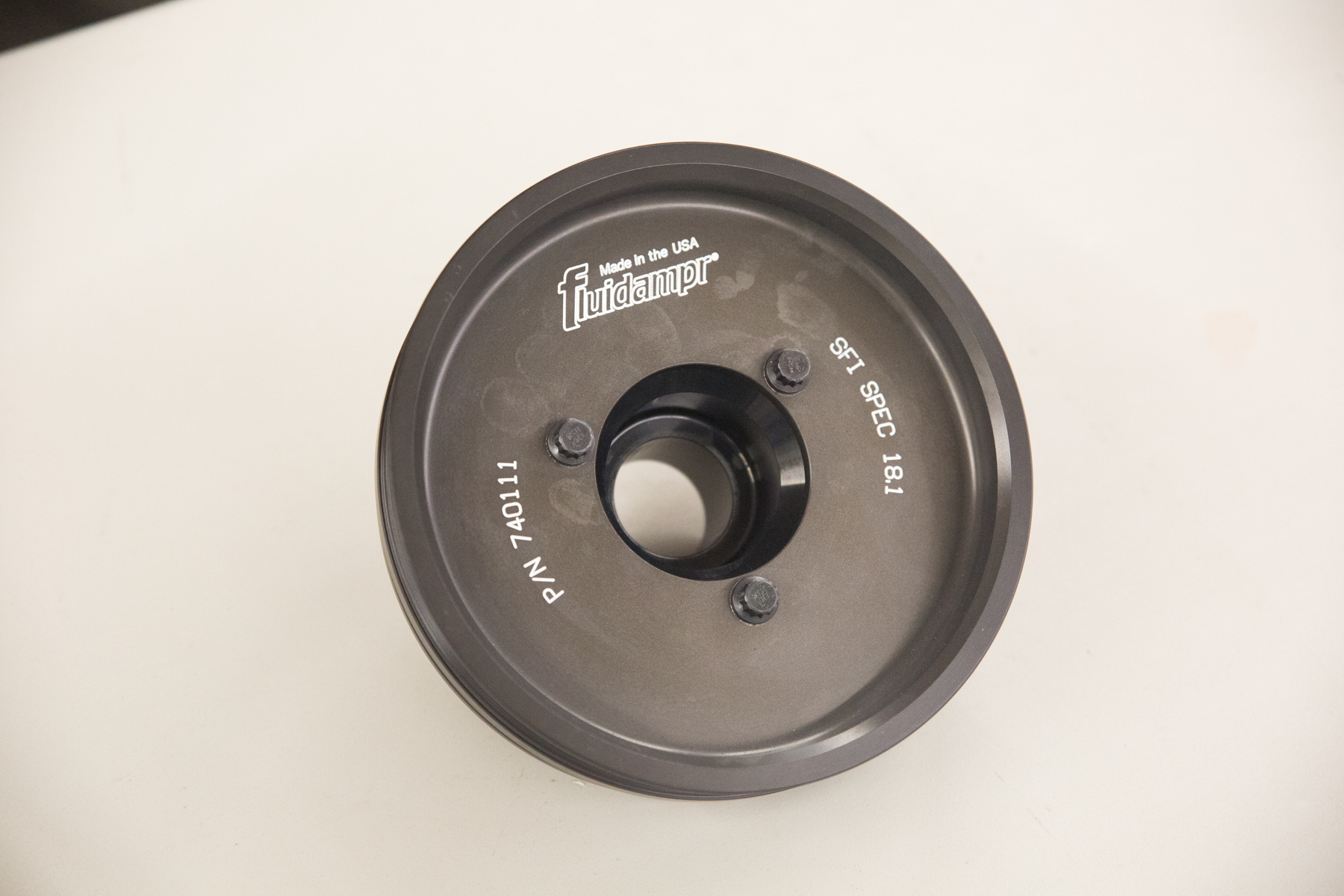
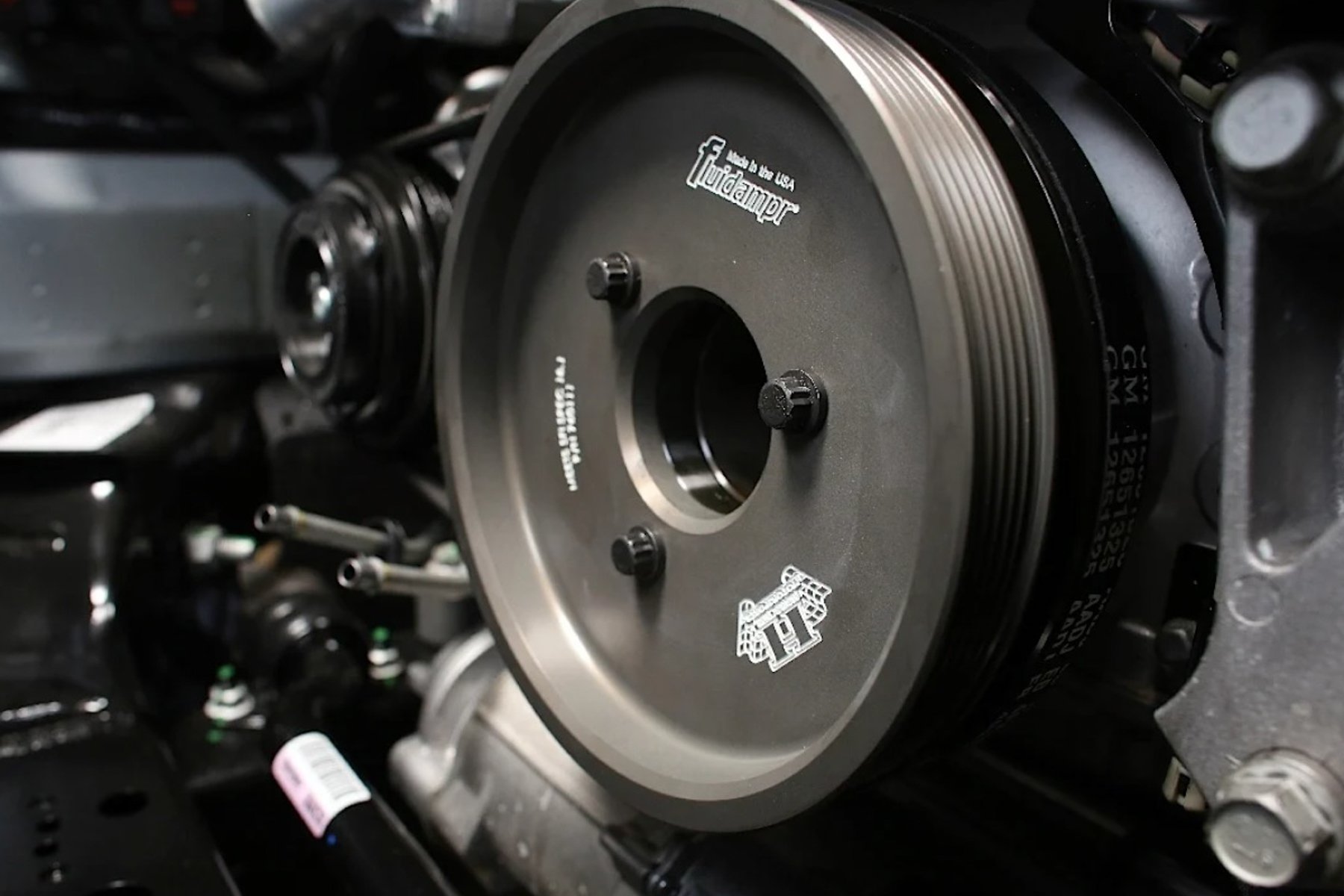
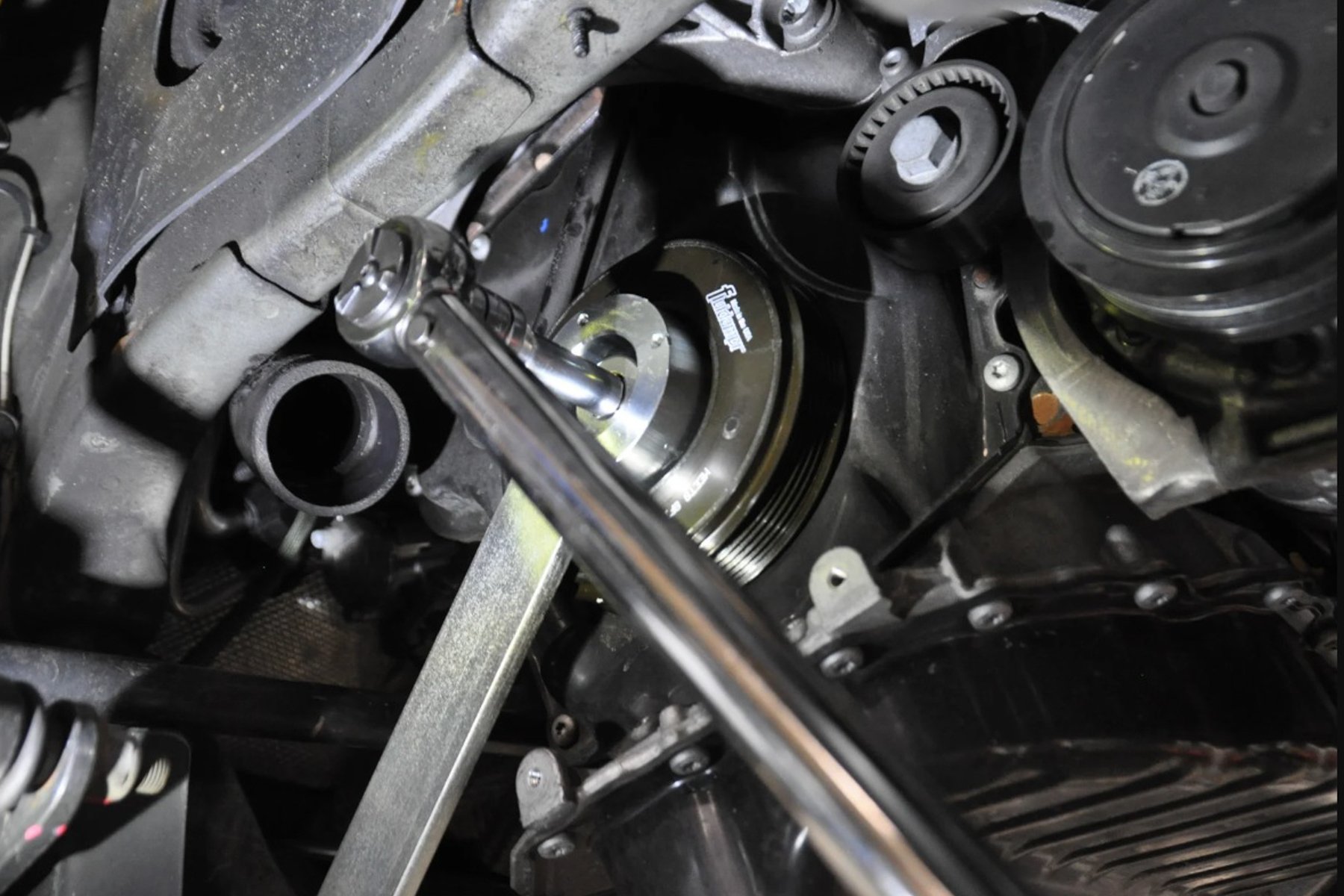
Torsional vibration, more commonly referred to as engine harmonics, is a force that must be dealt with when you’re working with any engine. The more power your engine makes, the more destructive torsional vibrations can be if they’re not kept in check. Fluidampr harmonic balancers are designed to deal with the most extreme torsional vibrations an engine can produce as RPM increases.

When you start to push an OEM engine past its stock output levels or really add horsepower to a high-performance mill, torsional vibration is going to be an issue. As RPM levels increase, so does the strength of torsional vibration. This is something you need to account for with any high-performance engine.

Nick Orefice from Fluidampr explains how an aftermarket balancer can help fight torsional vibration at elevated RPM levels.

“Almost all stock OE balancers and many aftermarket balancers are a single rubber element elastomeric type damper. The problem with these damper types is that they are limited to a narrow frequency range of about 50 Hz. This is suitable for a stock engine, however, when performance enhancements are made — think power adders or rotating assembly changes — you are essentially shifting the frequency created by a stock engine beyond what these dampers are capable of controlling. This is where the importance of a premium aftermarket balancer shines.”

Fluidampr’s harmonic balancers use a viscous design versus a rubber element to control torsional vibrations at high RPM levels. This design creates a smoother running engine across the entire RPM band and reduces the risk of parts failure due to torsional vibration.

“Fluidampr uses a completely sealed housing with a free-floating inertia ring and a layer of silicone between the two. This viscous design allows Fluidampr’s balancers to work at all frequencies across the entire RPM range. Basically, a Fluidampr will work on any engine application for which it is designed, whether stock or high performance,” Orefice explains.

You can learn more about how the technology Fluidampr’s harmonic balancers use to fight torsional vibration right here on the company’s website.


Posted on Leave a comment

Deciding Which Electric Fan Your Ride Really Needs

Now that winter is making a departure, it’s time to place our classic rides back to the front of the priority list of things to do — or in this case, enjoy. If last year’s summer cruising saw your car’s temperature gauge reading higher than you think it should, maybe it’s time to take a look at your car’s cooling system.

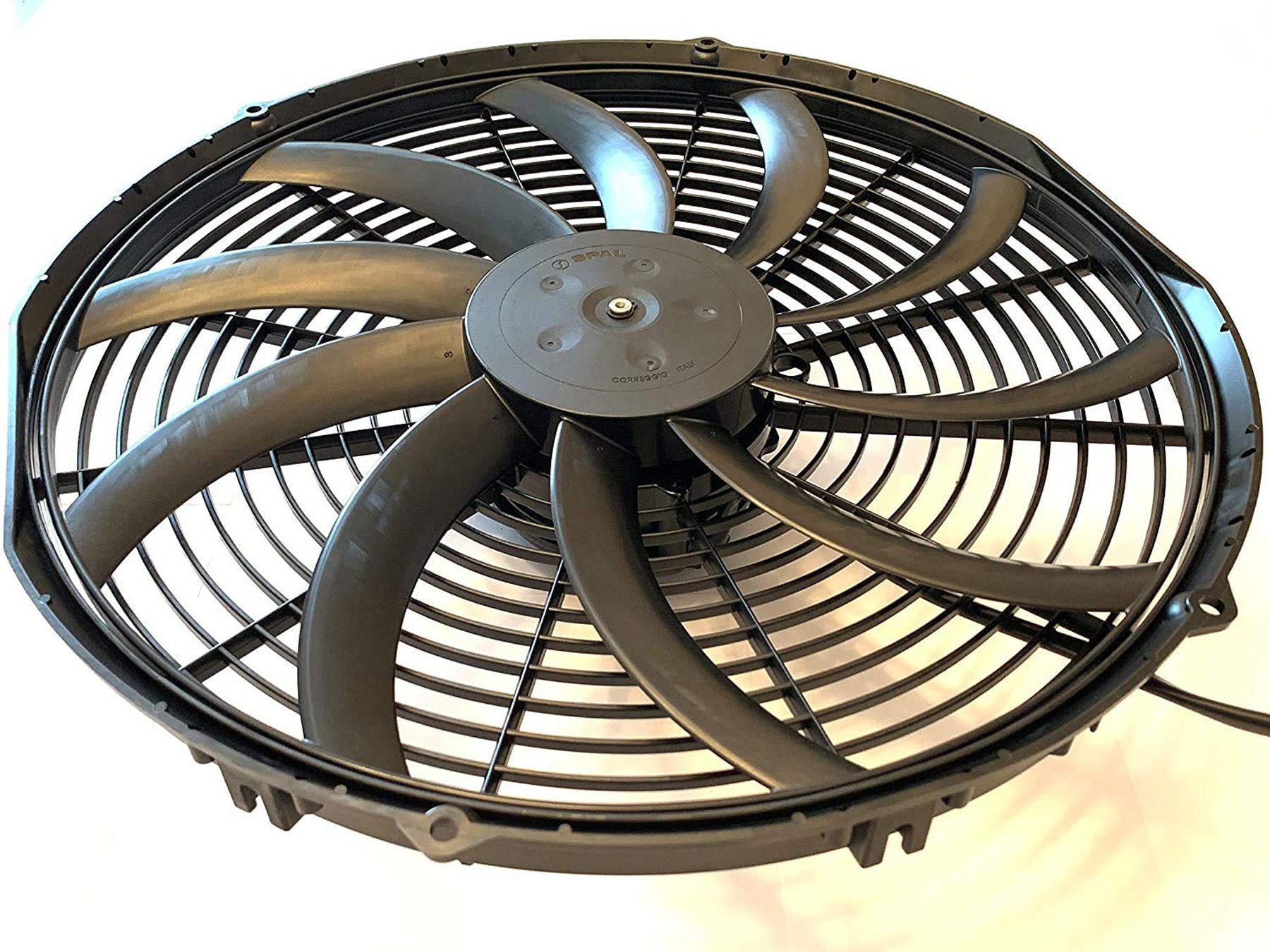
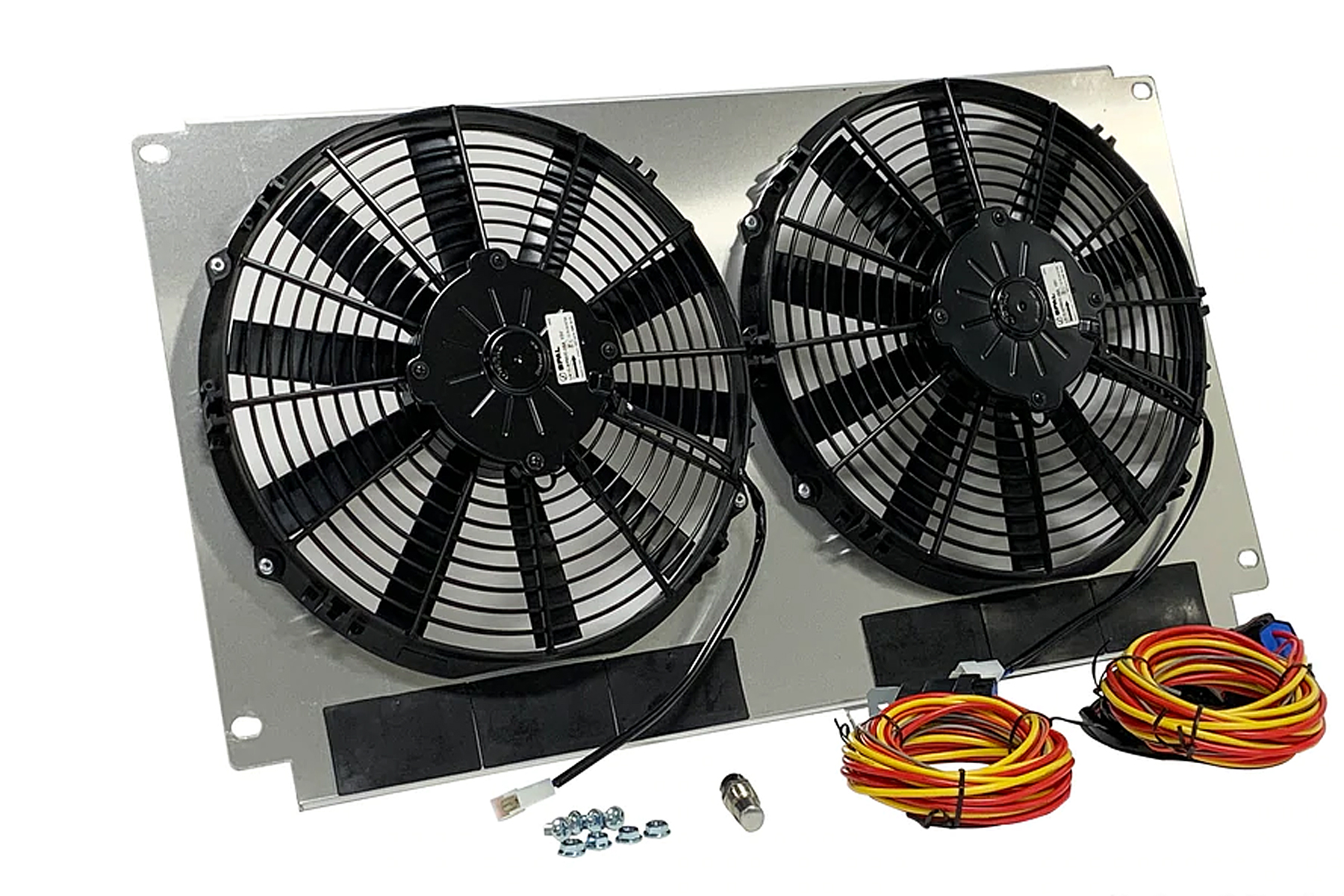
While cooling issues can vary, this time, I decided we needed to discuss cooling fans. Specifically, electric fans. There are many bad choices that can be made when trying to decide what cooling fan a particular car needs, and to alleviate that situation, I decided to reach out to the folks at SPAL USA to get some solid information we can all use.

While the OE mechanical fan in your classic might be adequate for your car while cruising down the highway, sometimes, situations arise that warrant an upgrade to an electrical unit. But have you looked at what sizes and styles of electric fans are available? Talk about a confusing decision.

What’s What?

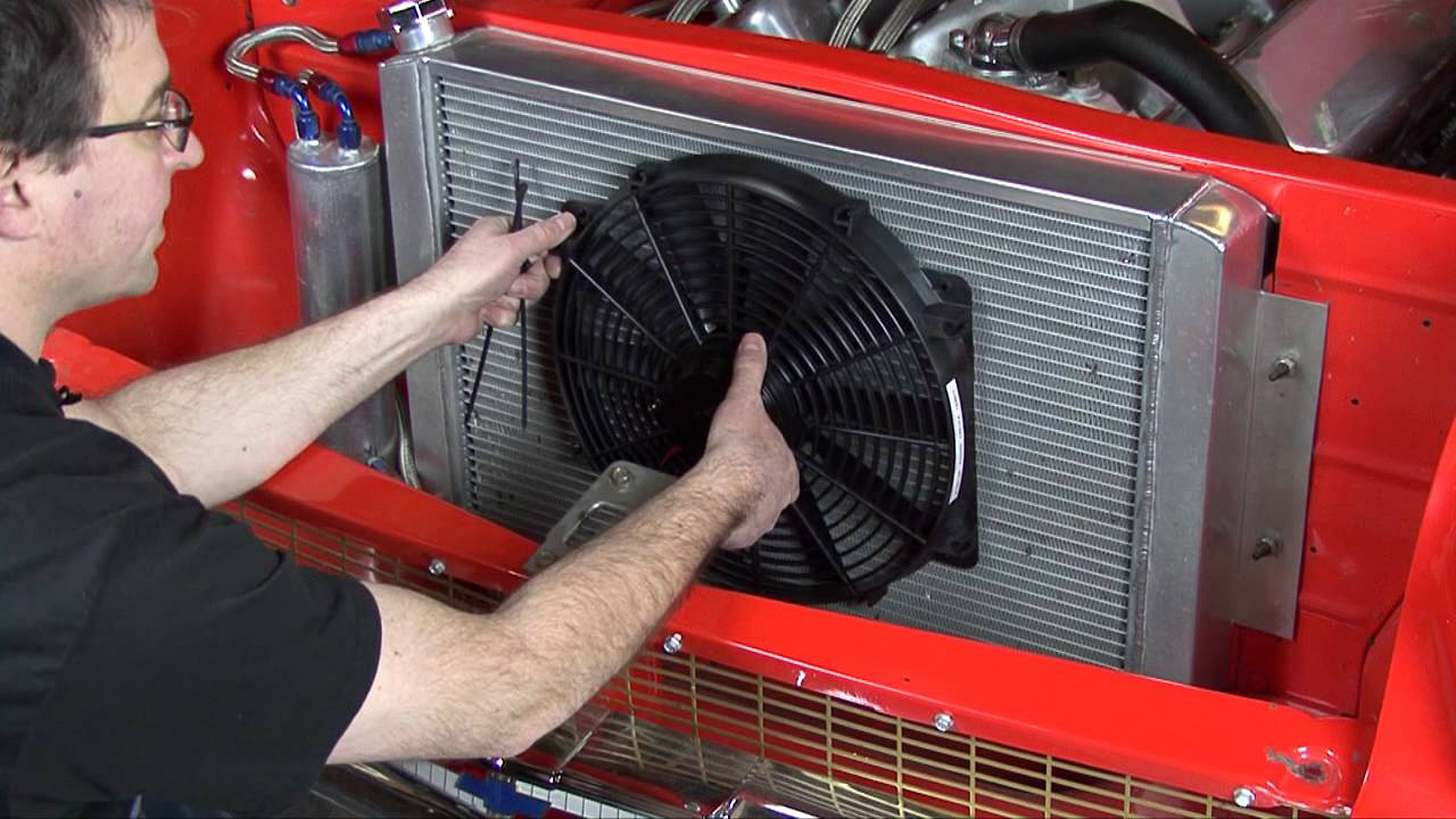
If you want to add an electric fan setup you first need to figure out which electric fan(s) will best work for your application. For instance, can a puller-style fan fit between your engine and radiator, or do you need a pusher? Fitment is a big issue for many who want to add electric fan(s).
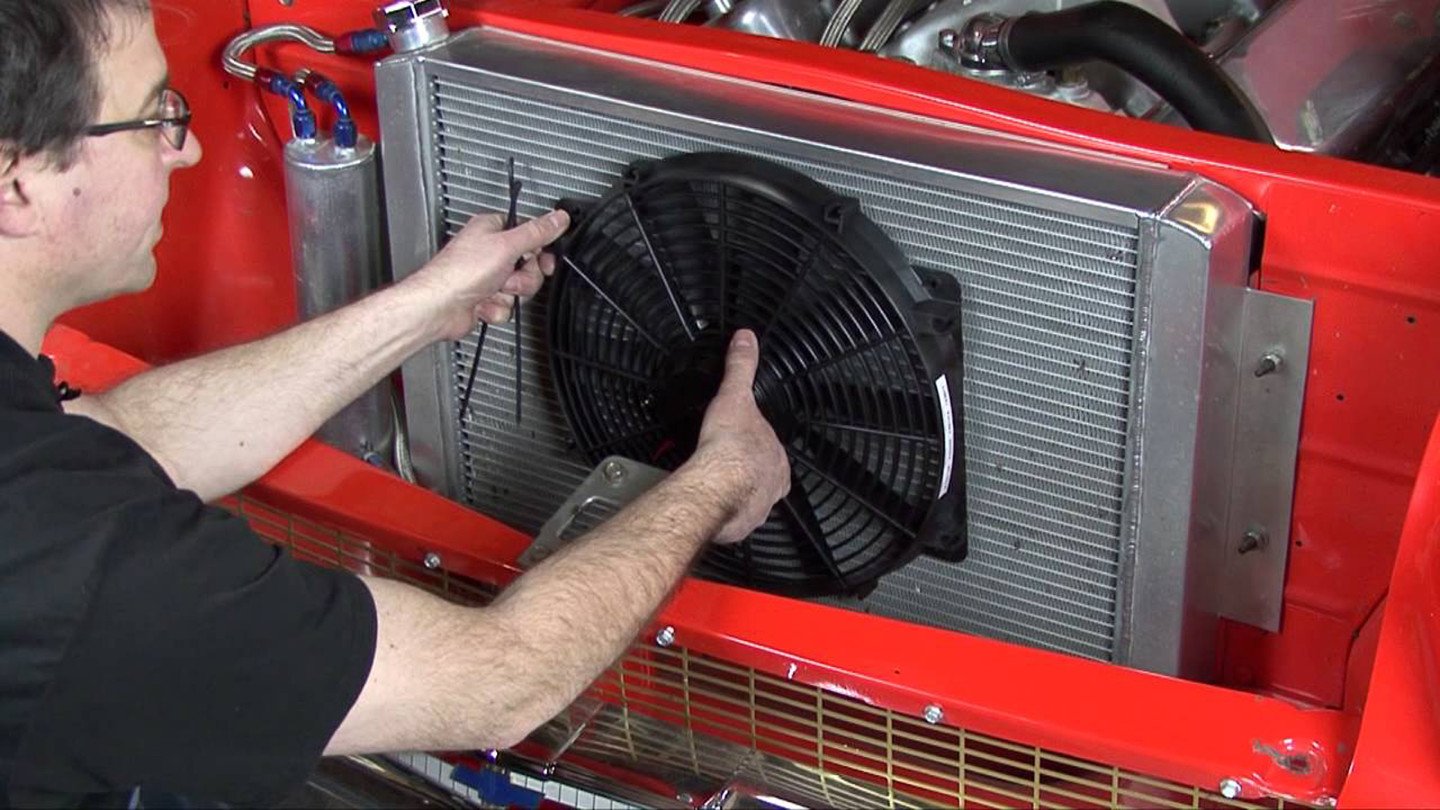
electric fan

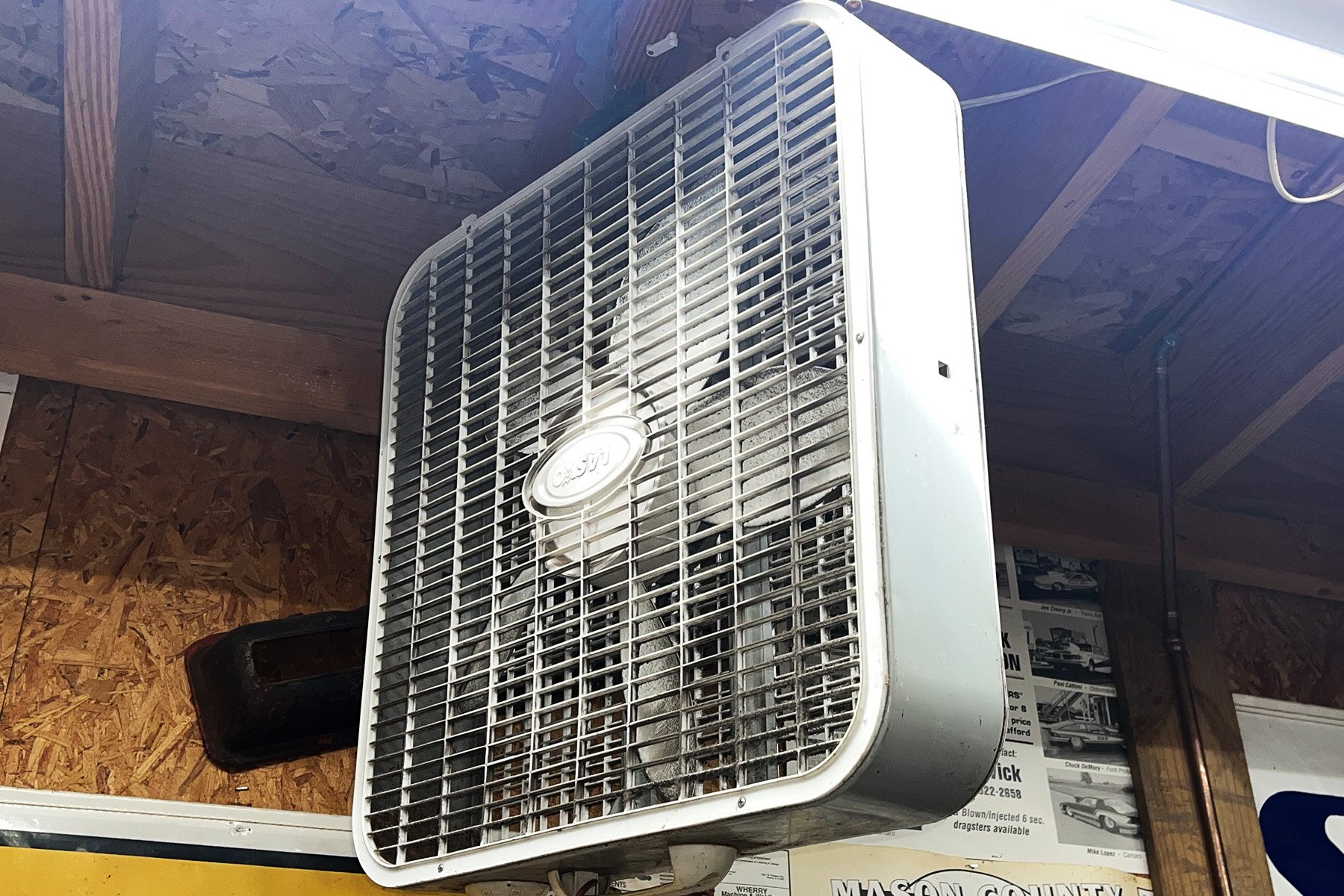
There are a couple of issues here. For starters, it’s better to mount the fan behind the radiator. As shown, the fan will only move air through a small section of the radiator, right where the fan is mounted, the rest of the radiator does not benefit from the fan’s airflow.

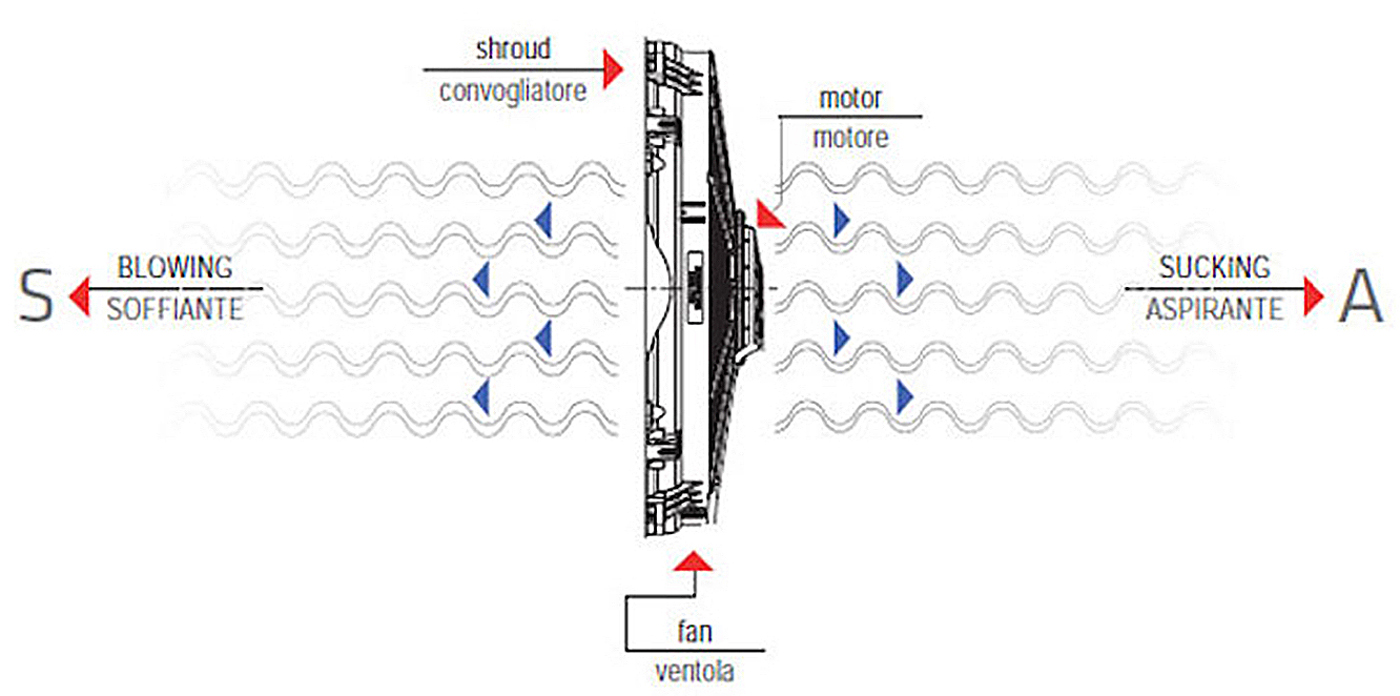
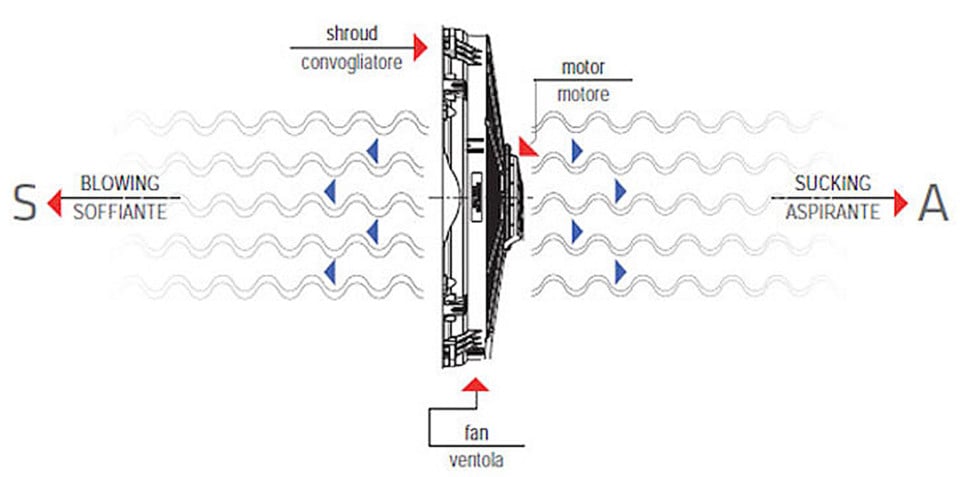
I checked out the SPAL website and found both pusher and puller fans as available options. The pusher-style fan mounts on the front of the radiator, and as its name indicates, pushes air through the radiator. Pusher fans are typically installed when there just isn’t enough room to mount the fan between the radiator and engine. Unfortunately, mounting a fan in front of the radiator also restricts airflow through the radiator. A puller fan is by far, the more popular choice. It’s more efficient, because it mounts on the back of the radiator, draws air through, and does not block airflow.

A puller fan is generally viewed as the best practice due to the motor/fan being a resistance after the radiator. – Brent Chuck, SPAL USA

“A puller fan is generally viewed as the best practice due to the motor/fan being a resistance after the radiator,” says Brent Chuck application engineer at SPAL USA. “Puller fans generally affect highway-speed ram-air cooling less than pusher fans. Our [fan] motors are a 5-inch diameter circle, so when you put a pusher fan in front of the radiator you can imagine a 5-inch ‘dead circle’ where the fan sits. This dead circle still occurs in the puller fan application, but it doesn’t have as much effect on the high-speed cooling of the vehicle. A pusher fan is usually acting on colder/more dense air, so you usually get a higher mass flow rate through the system with a pusher fan. The fan motor also exists in a colder environment (in a pusher configuration) which usually increases motor life as the motor runs cooler.”

Brent continues by saying, “Pushers can’t really use a shroud, so you lose the efficiencies that could be gained by a good shroud design ducting airflow from the entire face of the radiator with a puller. You get better dispersion of airflow to the radiator face with a puller fan and a good shroud design.  Pushers basically just force a circle of airflow through the radiator.”

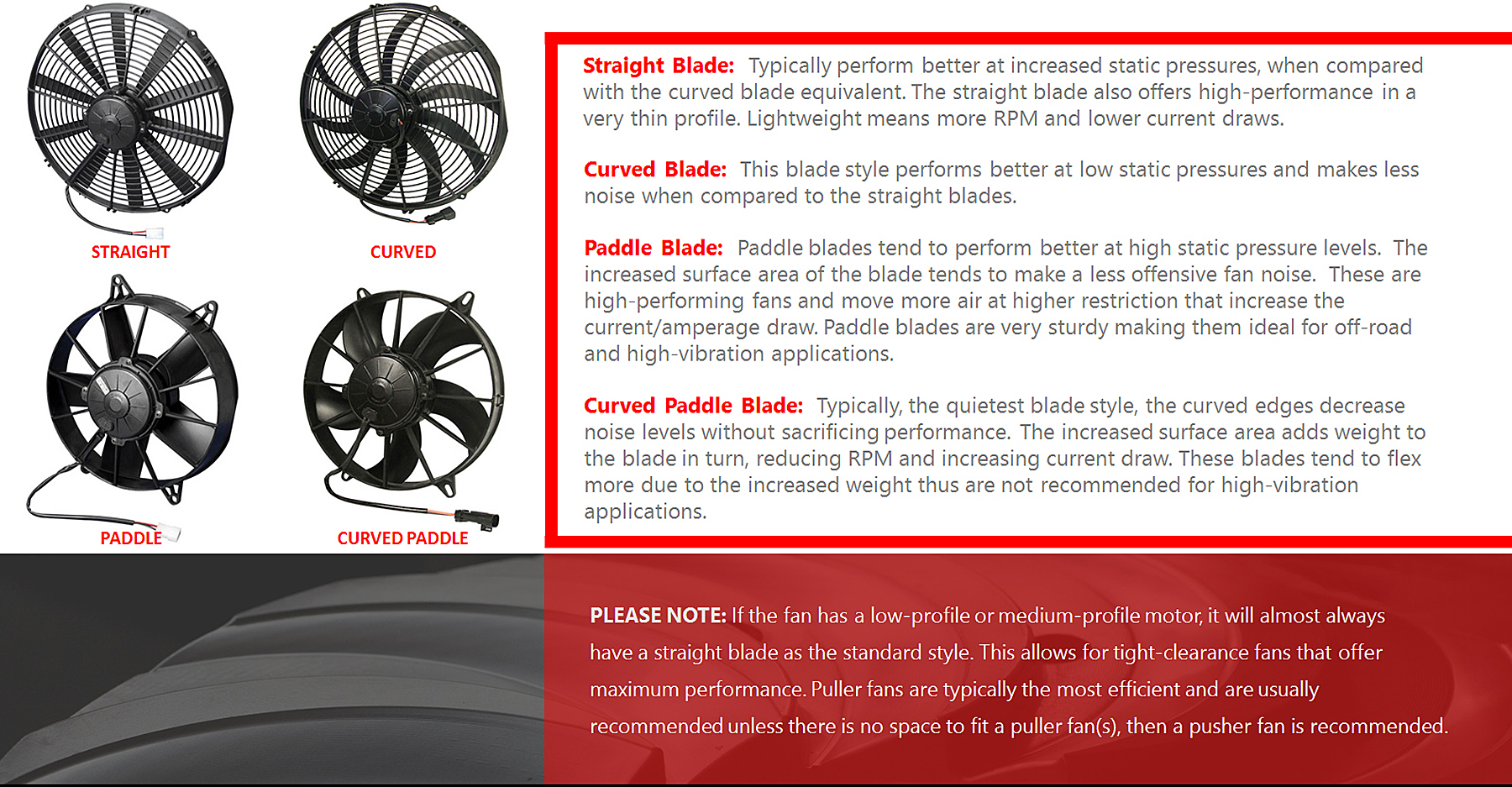
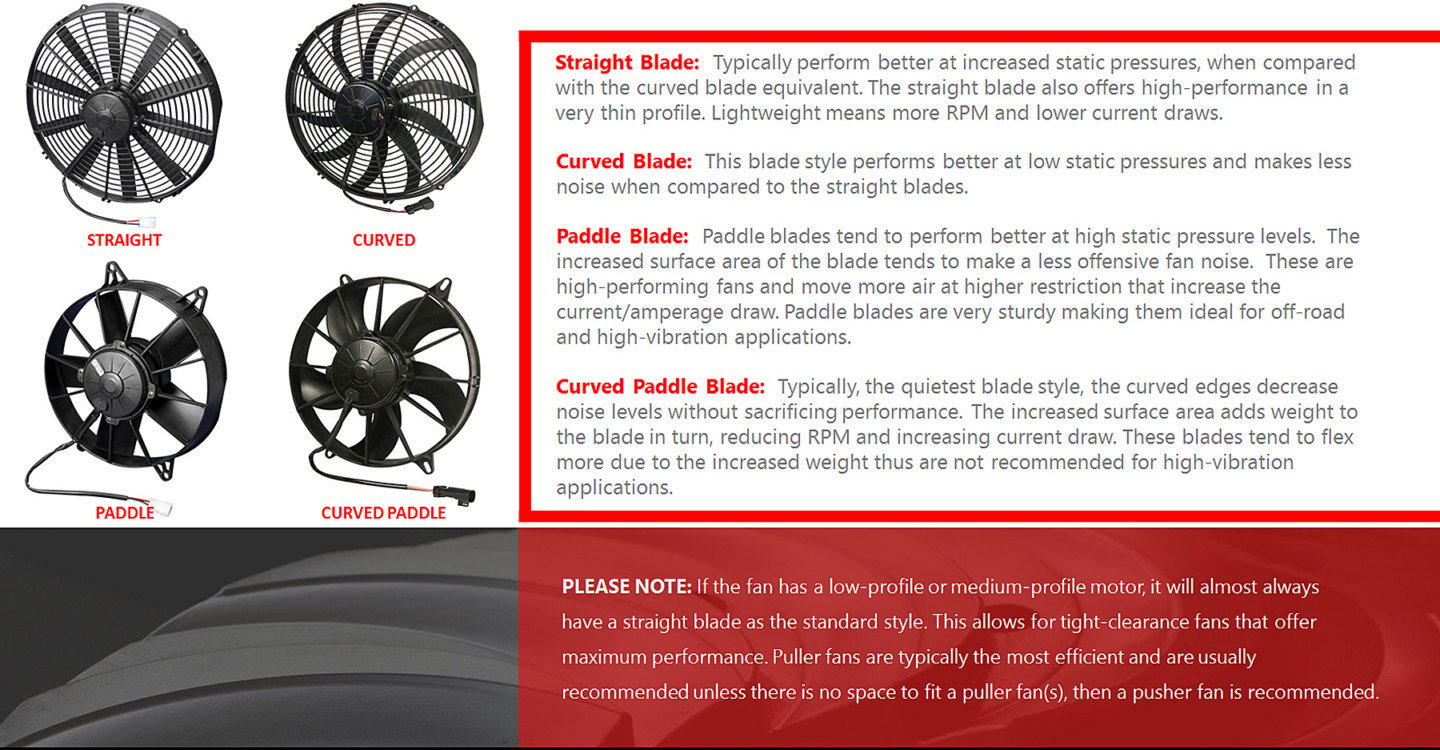
From left to right: straight blades (PN: 30102120), curved blade (PN: 30102049, and paddle blade (PN: 30102082). Which you choose depends on certain factors like noise and airflow.

Overcoming Blockages

Another difficult consideration is sealing a pusher fan system. Typically, A/C condensers and radiators have air gaps between them that make it difficult to seal the system and ensure the fan flow goes through both the radiator and the A/C condenser. The majority of the airflow will take the path of least restriction. If you have gaps where air can escape and not be forced through the core, it will likely escape and not cool very well. Some might argue that, in that case, a pusher is more efficient because the air the fan is acting on is often cooler and denser than seen by a puller in the engine bay. That might be true, but usually, the benefits of a pusher in colder air don’t outweigh the con of having the fan mounted in front of the radiator.”

It’s like seeing a car with a pusher and a puller fan on the same radiator. Can it work? Yes, but is it ideal? No, absolutely not. -Brent Chuck, SPAL USA

After hearing what Brent stated, I wondered if SPAL USA ever recommends using an electric fan in a pusher application? “Yes,” states Brent. “In some cases, where space is tight and it’s the only option. But it’s not really seen as good practice within our industry.  It’s like seeing a car with a pusher and a puller fan on the same radiator. Can it work? Yes, but is it ideal? No, absolutely not.”

Straight, Curved, Or A Paddle

Another thing to consider is blade design. There are various designs, and with a typical street use classic, which fan-blade design is the most versatile/recommended? “With hot rods, it typically comes down to packaging the fans in the vehicle,” Brent states. “Fans are often the last consideration when building a car. So usually, the limiting factors are ‘how much room’ customers have for fans.

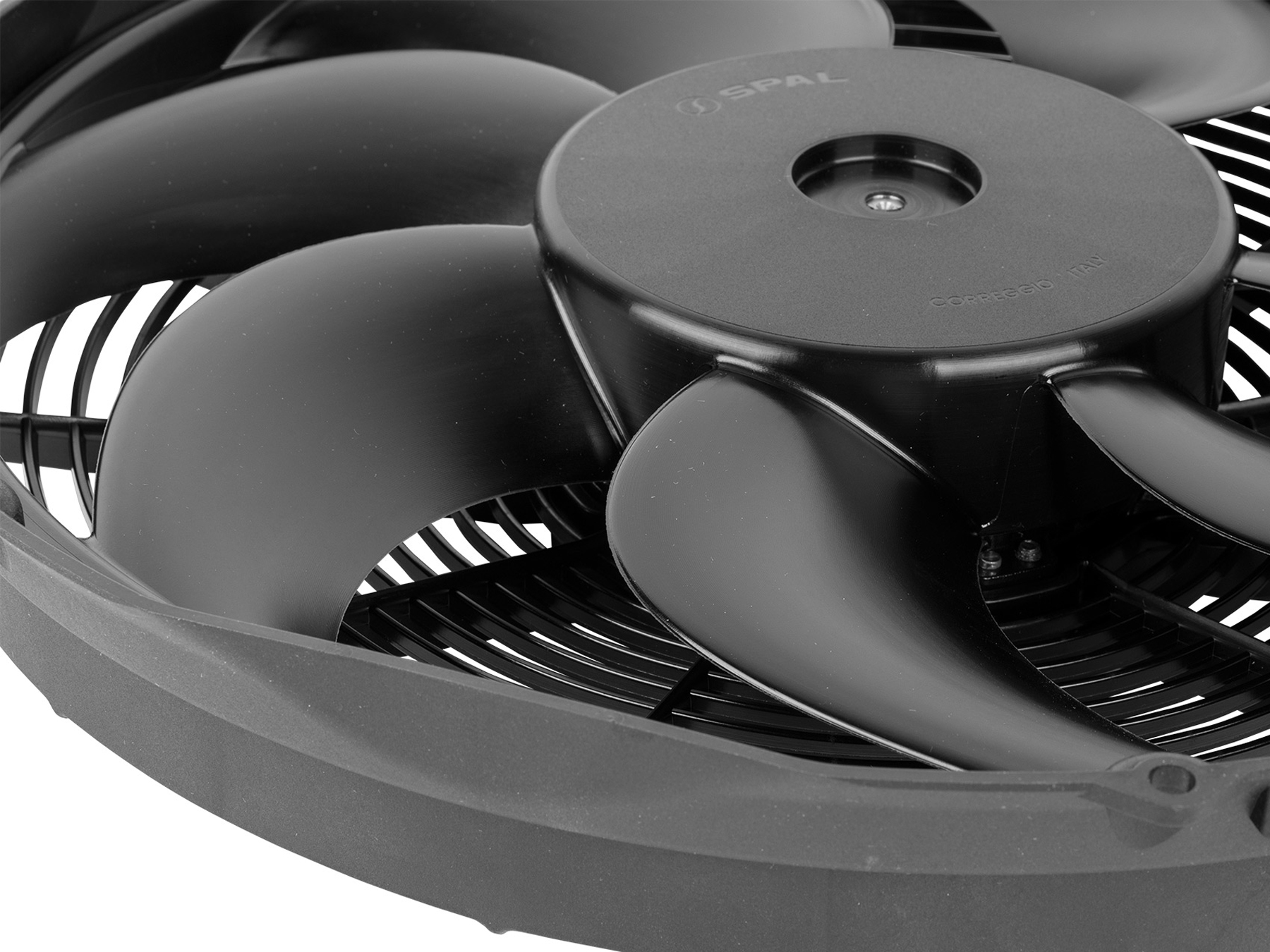
“Our ‘thin’ electric fans are designed to maximize performance while remaining thin. Usually, these fans operate at higher RPM and have less than desirable noise characteristics.  Examples of thin blades would be straight blades (PN: 30102120) or ‘S’ curved blade fans (PN: 30102049.)  These fans often create fan noise that our customers do not appreciate, but they can provide decent airflow performance while maintaining a thin profile. A straight blade offers more noise and more performance than a curved blade on an equivalent motor. An ‘S’ blade offers lower performance and slightly less noise.”
electric fan

The next blade style we need to talk about is the paddle blade. This is typically the quietest blade available, as the curved edges decrease noise without sacrificing performance. The larger surface area does add weight to the blade, which allows a reduced RPM to deliver the needed airflow. However, this design does increase the current draw on the electrical system.

SPAL’s paddle blade electric fan (PN: 30102082) has an aggressive blade profile with a thicker blade. This blade style offers good airflow and pressure performance at lower RPM. With a paddle blade, you get a fan that performs well and provides quieter noise characteristics.

When it comes to fan blade design, there really is no “best option.” According to Brent, “it boils down to physics, and there’s no such thing as a free lunch. You’re either moving air and making some sort of noise, or you’re not really moving air.”

Check The Ratings

But how is an electric fan rated? You’ll see many companies throw cfm numbers around and expect you to understand. Electric fans are rated according to the amount of air that can be pushed or pulled through the radiator. This measurement is the CFM (cubic-feet-per-minute) rating. When selecting an electric fan that will work best for your application, you need to first determine the ideal amount of airflow required to meet your cooling capacity. As a guideline, a typical small-block uses roughly 2,800 to 3,000 cfm of airflow, while a big-block typically requires 4,500 cfm. Again, these are just rough guidelines, and not hard-and-fast rules. However, CFM ratings might not be as important as you would think.
electric fan

Most fans are rated by the amount of air they can more (CFM). When selecting an electric fan that will work best for your application, you need to first determine the ideal amount of airflow required to meet your cooling capacity.

“Don’t sweat CFM ratings,” Brent assures. “Enthusiasts think they need 2,000 or 3,000 cfm, but this might not really be the case. CFM ratings are often obtained in free air conditions, which are not the same conditions people realize with an electric fan mounted on a radiator. That means that number doesn’t mean much. It’s something that is good to know, but not something I recommend looking for when selecting a fan.”

If an electric fan claims 2,000 cfm, it won’t be 2,000 cfm as soon as you put it on the radiator. Just understand what your radiator stack (radiator, A/C condenser, oil cooler) looks like and understand that each component is adding a restriction to the system. The more restriction you add, the more [static] pressure your fan needs to generate to overcome the restriction.

If you have a restrictive cooling stack, look for a fan that generates more pressure. – Brent Chuck SPAL USA

“If you have a restrictive cooling stack, look for an electric fan that generates more pressure,” says Brent. “SPAL has tabular airflow data available for all our fans. Look at airflow data and don’t just look at the highest CFM number. Also, look at how many amps the fan draws, and how much static pressure it can generate. Compare the tabular data between other fan models, it becomes easier to compare and more apparent as to which models are better for your application if you have all the data. Even if you don’t know the static pressure requirements of your radiator stack, you can still figure out which fans generate more pressure and flow.”

Get Recommendations

My next question to Brent had to do with the actual selection of a fan(s). Basically, how does an enthusiast know what’s really required?  “We often try to package the highest performing fan system that we can fit in the space our customers have available. Usually, we ask for radiator dimensions and the dimension from the radiator face to the engine. Based on those dimensions we would typically make our recommendations.” Sounds logical, but how does someone know if they need multiple fans or if a single fan will work for them?
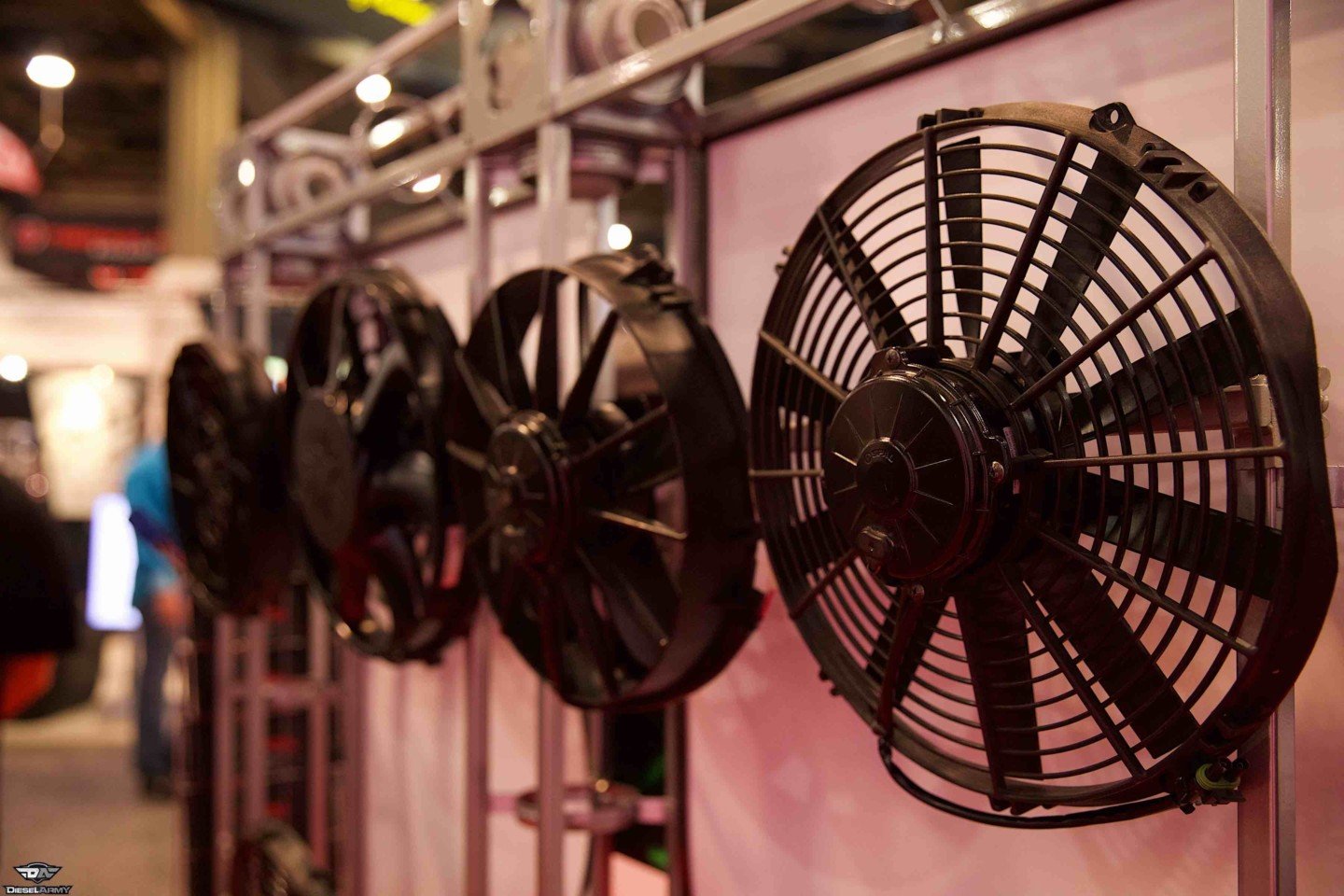
“Dual fans are usually better than one large-diameter single fan,” Brent states confidently. “To gauge which is best, look at radiator coverage and power consumption of the fans. Fan systems that cover more of the radiator, and consume more power, will usually perform better. Usually, I will discuss the radiator and the core stack in front of the fan with the customer to try to figure out how much airflow restriction is in front of the fan. If there’s a radiator, A/C condenser, transmission oil cooler, intercooler, etc., you need to account for that when selecting a fan. I will often provide customers with a static pressure estimate for their system, (a working point estimate,) to compare fans.

When you compare fan models it should be done at equal pressures to determine which fans truly perform the best for your system. You should not be comparing fans at ‘free air’ or zero static pressure. If the customer is basing their fan purchasing decision solely on CFM ratings, it creates an opportunity to teach the customer about pressure and why it should be considered as well. One of the most common statements I hear is, ‘I need the thinnest fan you have with the most CFM.’ Unfortunately, the two characteristics are inversely related in practice. Thin fans are weak and don’t generate much pressure, and thick fans consume more power and generate more pressure.”
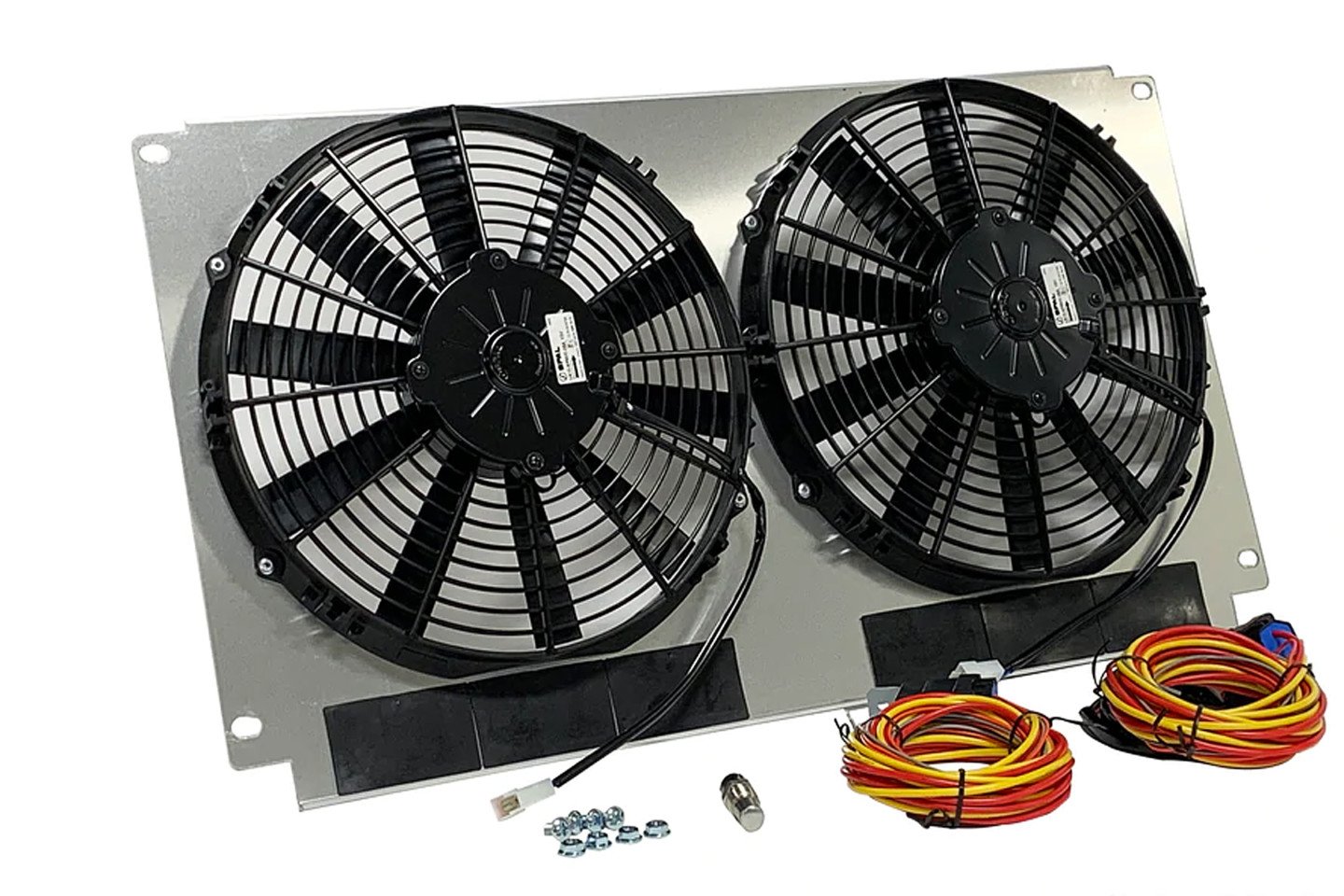
Spal

Using a fan shroud that allows good airflow is a must. A poorly designed shroud can actually hinder cooling performance.

Shrouded Dilemma

We’ve all had a friend or two that tell us our engine will run cooler with a shroud. While this is generally true, there are some caveats. “A shroud’s success or failure will depend on the design of the shroud,” says Brent. “A good shroud design will seal the fan to the face of the radiator, funnel airflow through the fan hole/s, and create distance between the fan/radiator face. As the fan moves closer to the radiator face, the airflow concentrates into a circle. As the fan moves further away, the airflow will disperse to more surface area of the radiator.”

Brent mentions distance, but what is the optimal distance? “That’s not an easily answered question,” he quips. “OEMs spend tens of thousands of dollars doing analysis to try to figure out the optimal shroud depth. Usually, thicker shrouds perform better, as they work more like an airflow plenum, pressurizing the entire radiator face. Other considerations for ‘good shrouds’ would include features to allow high-speed or ram air to pass through the shroud. Many of our shroud designs will incorporate ‘ram air flaps’ or doors that will open at high speed and allow airflow to bypass the fan if the pressure in the shroud increases beyond the capability of the fan. As the vehicle slows, the fan creates low pressure in the shroud, and doors/flaps are pulled closed allowing the fan to function properly.”

While a good shroud can help, a poor shroud design can hurt the performance of the system. Poor shroud designs are often flat, thin, and may include features, like louvers, that constantly let air through. “We want to avoid flat shroud spots that would be perpendicular to the airflow direction and cause restriction,” states Brent.  “I typically tell people that a minimum shroud thickness should be 3/4-inch.  Usually, if you’re considering a shroud measuring less than 1/2-inch-thick, I would recommend just mounting the fans to the face of the radiator and avoid using a shroud.”
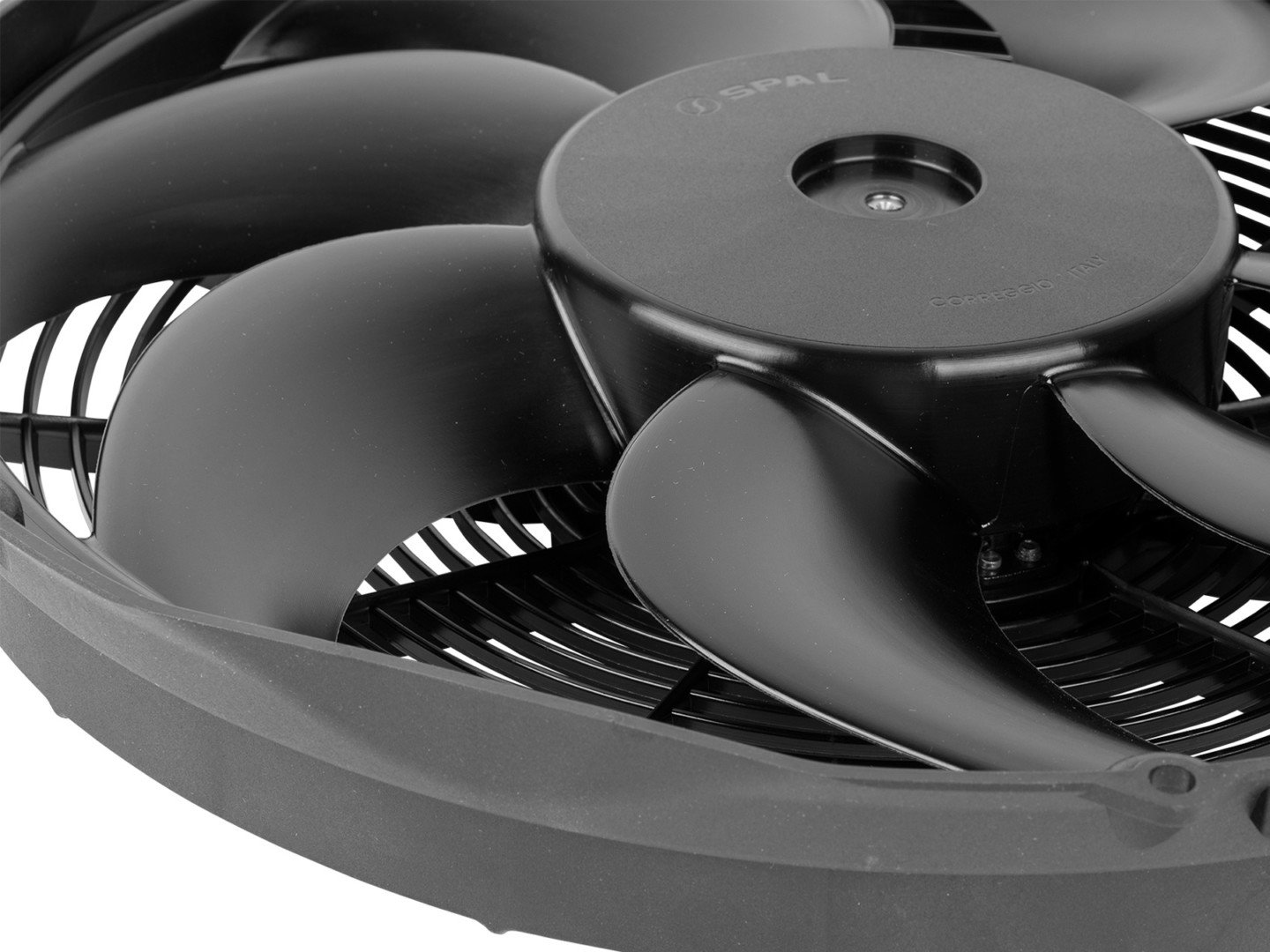
Spal electric fan

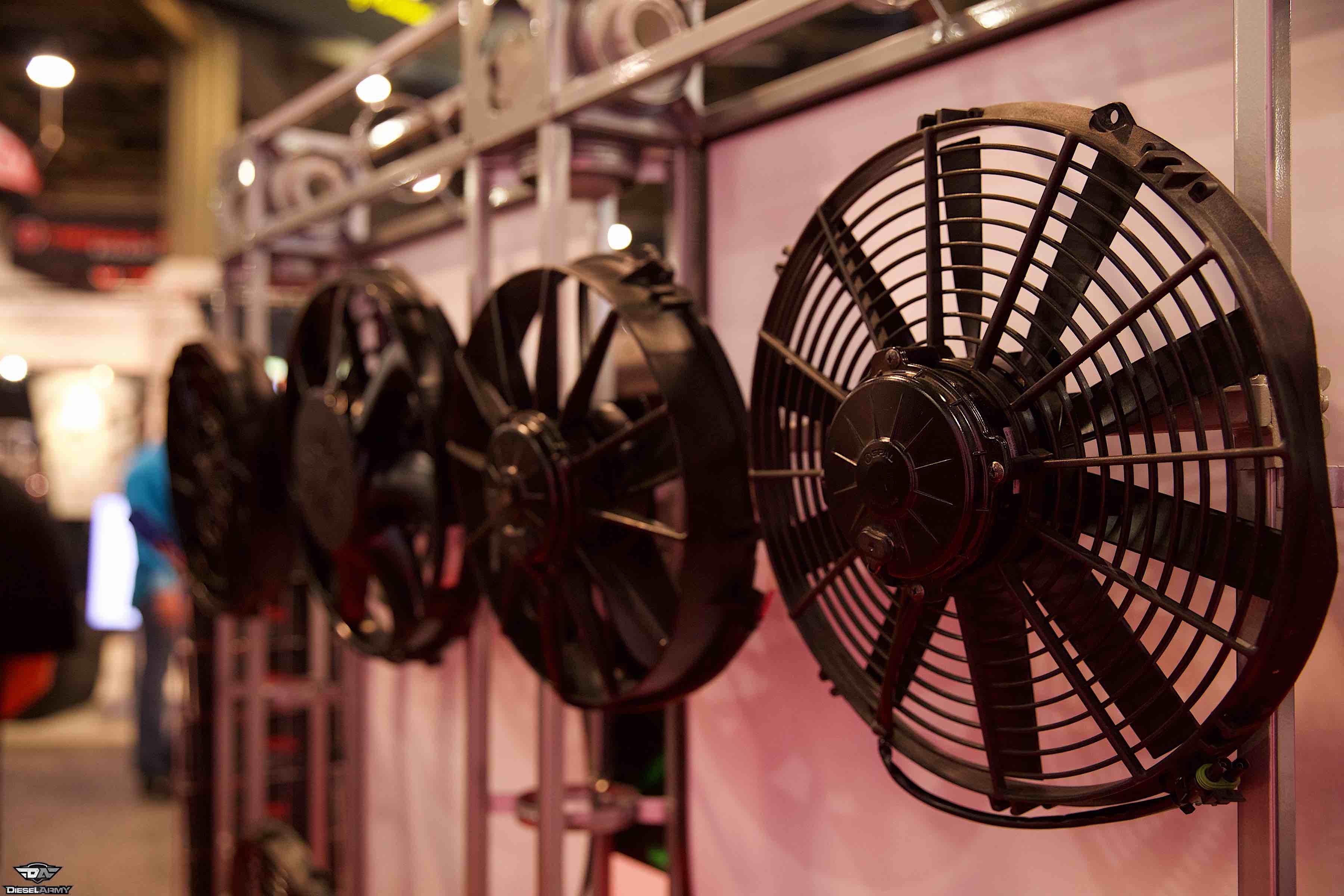
Selecting an electric fan is not a hard proposition. However, if you are uncertain of your engine’s needs, a quick call to the folks at SPAL can clear the air.

Final Thoughts

Brent concluded our conversation by saying, “don’t sweat CFM ratings. It’s a garbage way to compare fans. I wish our industry would forget that CFM ratings ever existed. Anyone who sells you a fan, based solely on a CFM rating either A.) doesn’t understand the physics behind the system, or B.) doesn’t want to take the time to properly explain the physics. I can show you several examples where a fan with a lower CFM rating will outperform a fan with a higher CFM rating once you install it on an equivalent radiator.

“No one knows how many CFM you need. The best we can do is estimate the pressure restriction and compare fans at equivalent pressures. Usually, estimating system pressures and comparing a fan’s performance at that point paints a very clear picture of which fan you should choose. Even if we estimate the pressure incorrectly and we are off a bit, you are still working with better data than a CFM rating. In short, don’t just buy a fan because it says it has a higher CFM number.”

Now that you have some useful information about electric cooling fans, you can upgrade your hot rod so this summer’s cruising doesn’t cause your engine to get a little hot during those cool rides.

Posted on Leave a comment

How To Preserve Your Stored Race Fuel All Year Long

Over the years, some magical “pixies” have been developed or improved upon within a gallon of today’s racing fuels. Some of these enhanced chemical compounds, such as oxygenates and more, are ingredients that can improve power and fend off racing engine detonation.

On the flip side, the sensitivity of the shelf life of racing fuels has changed, as well. However, it is far more extensive of a topic than leaving your lawnmower gas in the tank for too long; all fuel “sours,” and racing fuel at a far greater rate.

Racing Fuel Shelf Life

No matter what season of the year, being careful will help you better extend the quality of racing fuels for a surprisingly long time. We’re diving into this subject with Kyle Moose, Sales Manager at ETS Racing Fuels.

“The first concern for your racing fuel is always shelf life,” Moose explains. “It’s a question we get asked constantly. There is not one blanket answer; it essentially depends on each fuel’s unique chemical compositions as to what that shelf life will be like.”

Preventing Oxygenates From Escaping

In racing fuel, extra oxygen content creates more heat energy to push the piston down in the cylinder by allowing the introduction of more fuel to the engine. Oxygenated fuel also helps a cylinder completely burn more of the fuel.

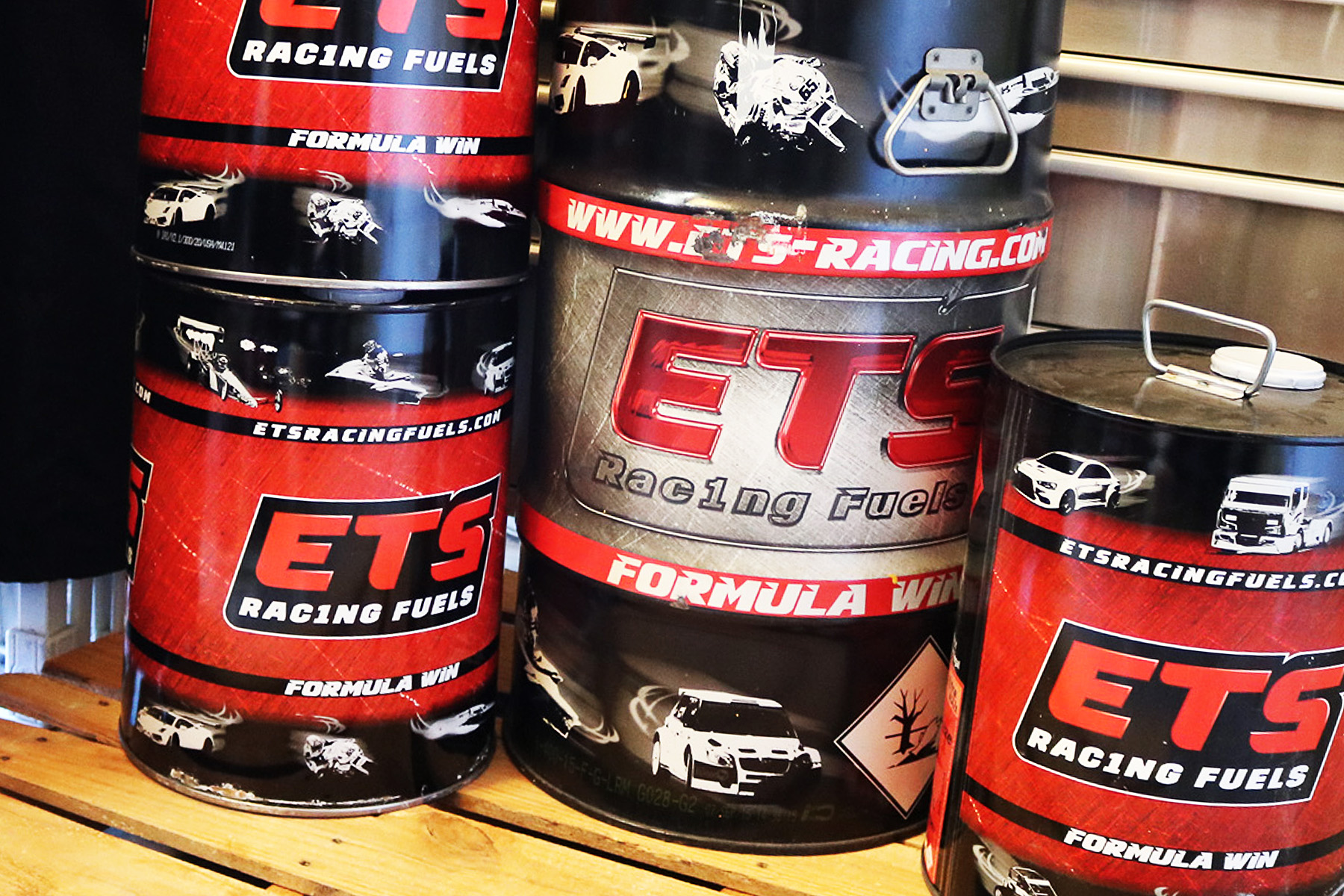
Storing fuel in lined steel containers is imperative. We insulate and allow an air gap between the floor and walls while also managing airflow in our storage area. Sunlight, temperature swings, and condensation are natural enemies to fuel with oxygenates.

“Longevity is a big issue for oxygenated additives,” Moose points out. “The minute that fuel is uncapped, the exposure drops the fuel’s necessary oxygen content, you can almost see the oxygenated vapors ‘gas out.’ It’s trying to escape and grab more oxygen molecules.”

Plastic Utility Jugs

Racing fuels, especially oxygenated versions, suffer the negative effects of long-term storage in plastic utility jugs. Moose recommends 24 hours of maximum storage within plastics. In the aforementioned chemistry lesson regarding oxygenates grabbing for oxygen molecules, those oxygenates can actually escape through plastic material.

The relative timeline of the increased oxygenates used in racing fuel and lined-steel racing fuel containers supplied today have gone hand-in-hand. Plastics are very porous, and all breathe to some degree.

Moose says, “You can lose anywhere from 2- to 5-percent of your fuel as well as 10- to 20-percent of your octane rating. You can tighten a plastic jug cap as hard as possible, but give it a week, and that fuel is not nearly as potent as it was the week prior.”

Care for Fuels With Lead Additives

“Some high-performance fuels in the 110 or less octane range will degrade comparatively slower based on their chemical compositions,” Moose says. “Their chemistry uses lead additives and far less oxygenates. The downfall of these additives is lead separation.”

The lead will separate inside of the fuel, shortening its effectiveness. Under high magnification, you can observe a lead particle dropping from the liquid and turning into a solid, resulting in sediment in the bottom of your containers.

The Unleaded Advantage For Longer Life

“Oxygen components in a racing fuel do not separate like lead,” Moose explains. “This is why I like to illustrate the theories behind ETS Racing Fuel. A majority of all our blends are all unleaded. We have both European and United States production facilities providing fuels to racers and racing organizations worldwide.”

He notes ETS is ahead of the curve in the development of racing fuel formulation that offers long fuel life for international shipping. “We have proven that our race fuels do not separate like those with higher lead content. Proper, unleaded racing fuel offers a great shelf life in well-sealed containers.

Other Environmental Factors

There are three primary influences associated with storage and the environment. First, the sun’s ultraviolet rays are a major enemy to all racing fuel. A racer’s mistake of setting a fuel jug in the direct sunlight during race day is the most rapid example of killing a fuel’s effectiveness. Storing fuel out of indirect sunlight over the long term is very beneficial.

“Another enemy is air humidity,” Moose says. “Typically, storage in your garage or shop is okay as long as it is away from big temperature swings. Steady temperature between races of 60 and 75 degrees is best. Between 60 to 90 degrees should be  your outer limits.”

Consider your fuel if it is stored in your enclosed trailer between events, This can expose it to high temperatures or big day and night temperature swings. “The more fixed the environment between sun, temperatures, and exposure to condensation, the better your fuel will serve you,” adds Moose.

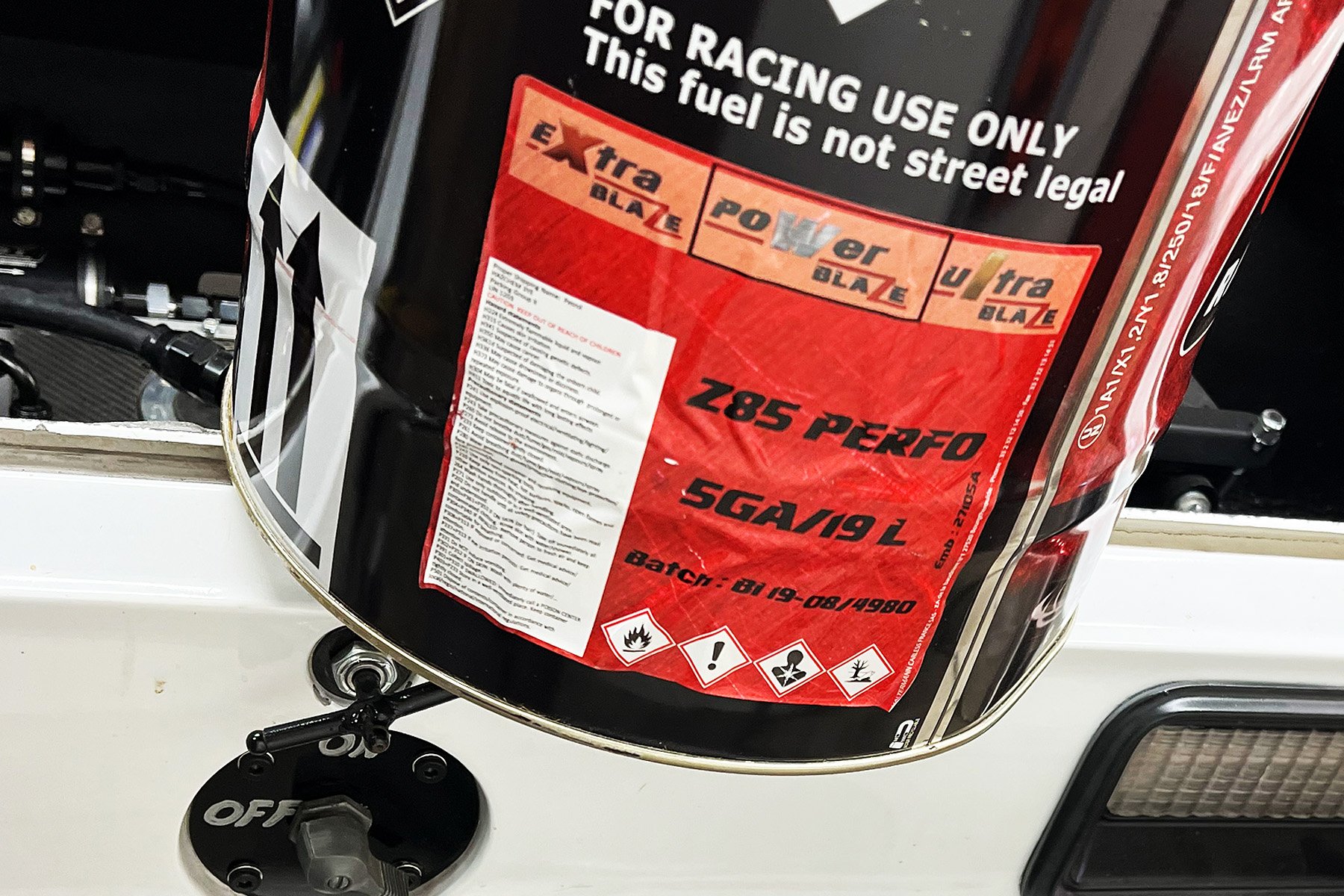
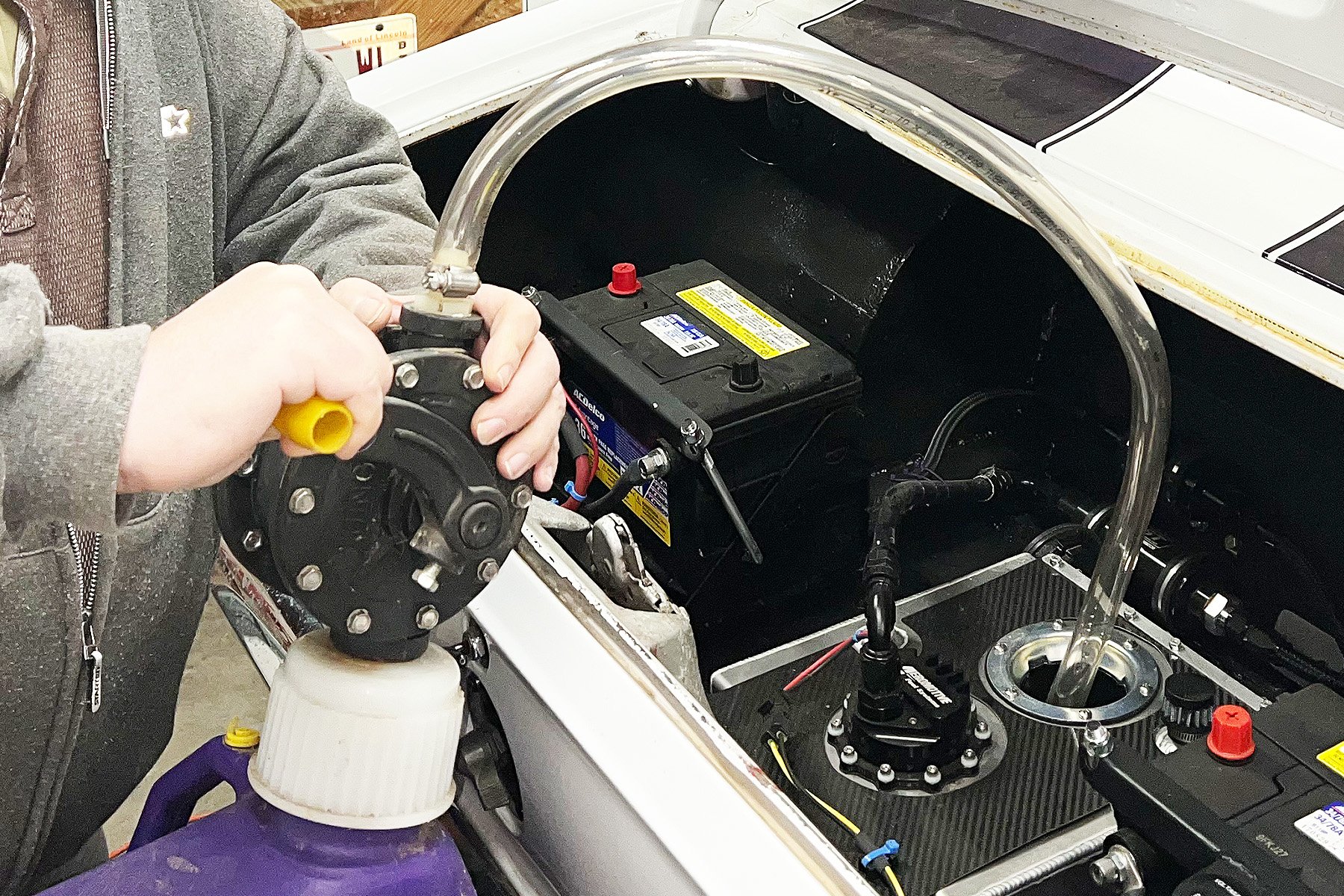
For this season, we are running the ETS Z85 PERFO in our Project Rover Camaro. Like many ETS fuels, its E85-oriented specialty race fuel utilizes oxygenates. We even draw unused fuel from our cell with our rotary pump between races and flush the system.

Concrete or dirt floors are a top enemy with indoor storage. “Concrete holds a lot of moisture,” Moose says. “If you have allowed any pail or jug to rest on a concrete floor for any time, you might have experienced what I call the ring of death. A condensation or rust ring forms on your floor as if your container got wet.”

He goes on to say, “That ring is the moisture coming through concrete and essentially wetting down the bottom of the pail. Unfortunately, believe it or not, even though the steel pail can be well sealed, water can make its way into the container.”

The Best Ways To Protect Your Fuel In Storage

Ultimately, Moose recommends elevating your storage containers for protection from a concrete floor. “Elevating them with a wood pallet is a good practice. This provides a blanket of air underneath. The same is recommended for outer walls.”

If you chose to do your fueling straight from the steel container, ETS offers these spouts that connect straight to their metal pails.

In conclusion, our “big three” in storage recommendations — an air barrier around all sides, protection from sunlight, and preventing big temperature swings — will provide the best storage options for racing fuels.

You can invest considerable time and dollars to achieve quicker e.t. slips, but simple approaches to preserving your racing fuel for the next race day can impact your performance equally. Treat your fuel as a precious commodity, and it will pay you back even more.


Posted on Leave a comment

Combat Ethanol-Based Fuel Issues

One of the more serious concerns that enthusiasts have when asking questions about their classics is about ethanol in fuel. Whether you think it’s a good idea or not, ethanol-infused gasoline is here to stay. Unfortunately, it can wreak havoc on many collector cars. One of the main issues with using ethanol is that it is hygroscopic. In other words, it absorbs water. This water leads to condensation in fuel tanks, fuel lines, and carburetor float bowls. The issue of water in ethanol fuel can also cause paper fuel filters to swell and clog the system.

Gasoline mixed with ethanol also has a shorter shelf life and goes stale quickly. Finally, ethanol is highly corrosive, and this corrosive nature and the fact it “gathers” water means it helps rust to form wherever air meets metal once submerged. Because of these “issues”, you might want to consider using a fuel cleaner/additive from Lucas Oil Products.

Immediate Protection

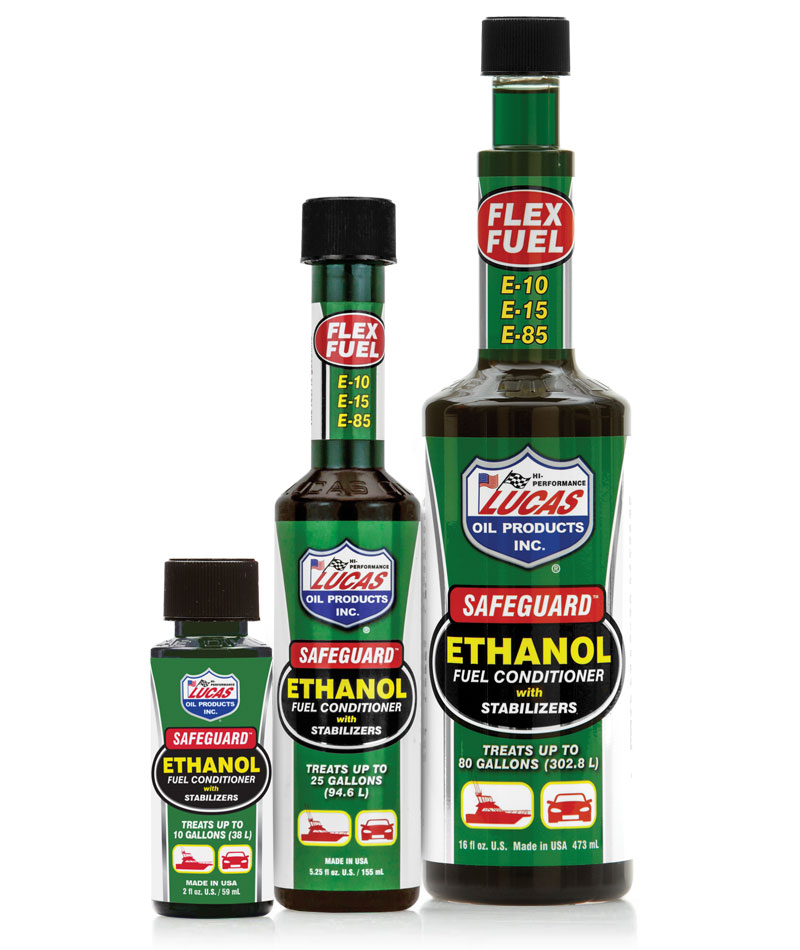
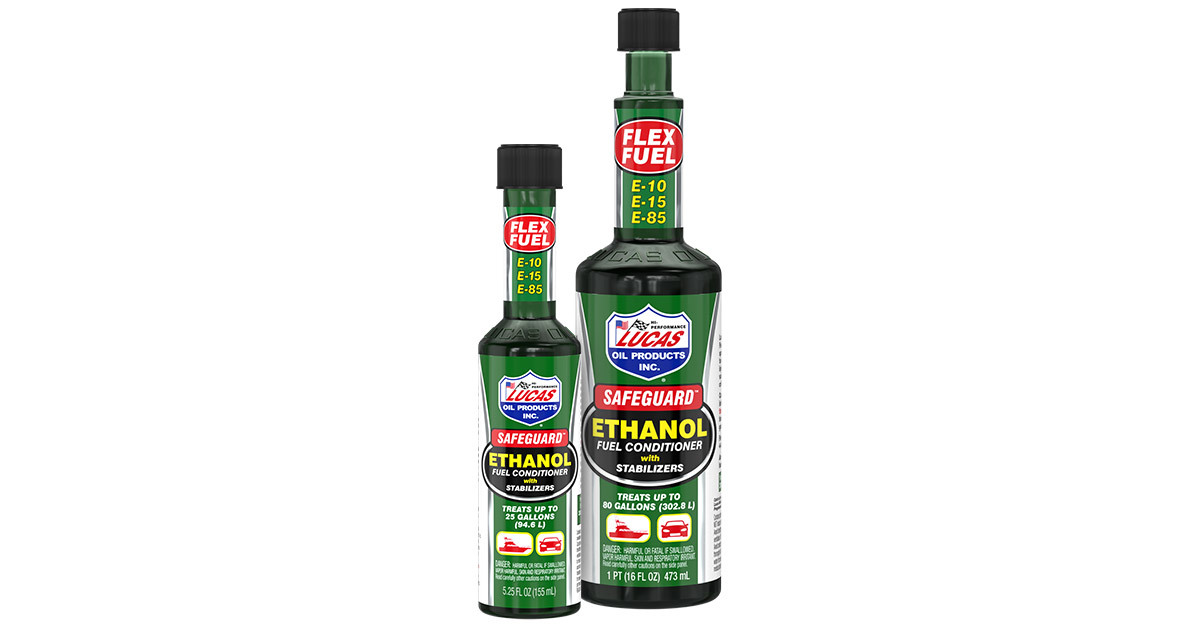
Lucas Oil Safeguard Ethanol Fuel Conditioner with Stabilizers was developed to specifically address issues associated with using ethanol-based fuels. This applies to E10, E15, E85, pure ethanol, and any mixtures in between including gasoline. This product is completely soluble in all ethanol fuels and will not harm filters. Lucas Safeguard Ethanol Fuel Conditioner with Stabilizers even contains effective additives to prevent rust and corrosion associated with the use of ethanol fuels. This is key to keeping your classic’s fuel system happy and healthy.  Simply add one ounce to every five gallons of fuel.

Lucas oil

KEY BENEFITS

  • Cleans injectors, valve seats, combustion chambers, and other critical fuel components
  • Stabilizes fuel and prevents varnish and gum formation in ethanol and gasoline
  • Combats deposits and protects your engine oil lubricants from the harmful effects of alcohol combustion

A Complete Lucas Oil Cleaning

Since corrosion is a concern and if your car gets parked for any length of time, that corrosion and even varnish build-up can keep your car parked. For a deeply cleaned fuel system, check out Lucas’ Complete Fuel System Renewal Kit. This all-in-one system is a great maintenance solution for cars that tend to sit for long periods. To clean the fuel system, simply follow the four easy steps to eliminate gum, varnish, particulate matter, and corrosion from all lines and components. The kit includes one bottle of Lucas Oil Deep Clean Fuel System Cleaner and three bottles of Lucas Upper Cylinder Lubricant and Injector Cleaner. According to Lucas, there is no more effective way to restore your vehicle’s performance. It is also compatible with all fuel types.

Lucas Oil

So, before your ride succumbs to the realities of using ethanol-blended fuels, set yourself with a maintenance program using Lucas Oil Products fuel treatments. You will be glad you did when your car is not another victim of corn-based fuels.

KEY BENEFITS

  • A great tune-up in a bottle
  • Cleans and lubricates the fuel system
  • Neutralizes low-sulfur fuel problems
  • Increases power and miles per gallon by burning excess exhaust emissions
  • Increases the life of pumps and injectors

Posted on Leave a comment

Why You Should Run Nitrous On A Boosted Engine

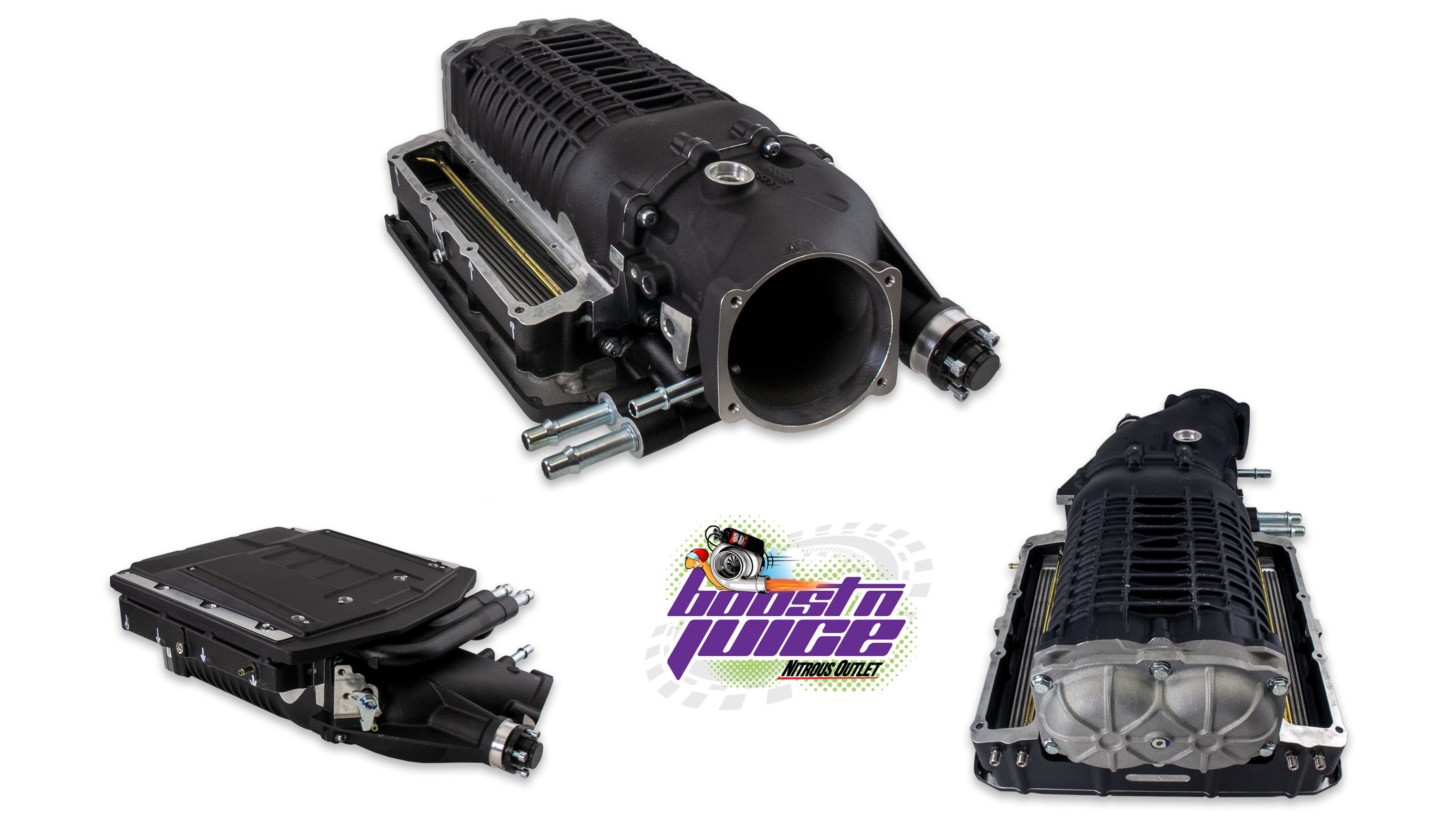
Boost-N-Juice


For years nitrous, supercharger, and turbo companies have pushed enthusiasts to use one or the other. You were either going to be a fan of boost or nitrous oxide, but not both. They were like oil and water as you would hardly ever find someone using these power adders in conjunction at the track or on the street. Today, it’s not uncommon to find boosted cars with nitrous, as well. Street Car Takeover and other events even allow for multiple power adders permitting the enthusiast to get the most out of their vehicles. One company that has pushed these boundaries in the last five years is Nitrous Outlet. But, it hasn’t always been that way. We reached out to Dave Vasser, owner of Nitrous Outlet, to see what’s changed and to get the inside scoop on injecting nitrous into a supercharged or turbocharged application.

LSX Mag: Why do you support nitrous and boosted combinations?

Dave Vasser: I owned a speed shop for many years back in the early 2000s. I wasn’t much of a boosted fan at that time, however, superchargers and turbochargers have come a long way in technology and dependability. Now, performance vehicles are coming from the factory with blowers or turbos on them. There is only one way to top the increased performance and drivability of a boosted street application, and that is adding nitrous. Now you can have the drivability with all-out performance when you’re ready to get after it. 

LSX Mag: How do nitrous and boost work in unison?

Dave Vasser: The best way to explain the benefits of using nitrous on boosted applications is to address how each power-adder increases the engine’s performance.  

Nitrous and boost both provide the ability to increase the air pressure within the combustion chamber. The higher the air pressure, the higher the air molecules are. The higher the air molecules are, the higher the oxygen content is. When the oxygen content is high, more fuel can be burned. This increases combustion and cylinder pressure, enhancing the speed at which the piston is pushed back down into the cylinder. This process creates additional “horsepower.” In simple car guy terms, Oxygen + Fuel + Cylinder Pressure = Horsepower. 

The Nitrous Outlet Interspooler is an excellent addition to both centrifugal superchargers and turbochargers alike.

Nitrous Oxide is a compressed liquid composed of two parts nitrogen and one part oxygen. Due to high combustion chamber temperatures, as the nitrous enters the combustion chamber, it breaks down, separating the nitrogen and oxygen molecules. As the bond breaks apart, the nitrogen acts as a heat absorbent, and the oxygen increases the ability to burn more fuel.

Boost is created from compressed air that is forced into the combustion chamber. The engine can receive more air due to the compressed air than it would pull in naturally, hence the term forced induction. Increasing the combustion chamber’s air pressure increases the oxygen content, which increases the ability to burn more fuel. This enhances the combustion process, which increases the cylinder pressure, returning the piston at a faster rate of speed.

LSX Mag: How does nitrous help turbo applications?

Dave Vasser: A turbo relies on exhaust gases from the engine to spin the turbine and create boost. The turbo will continue to build pressure as the power plant increases RPM, so the power increase is not instant. Engine and turbo combinations that are not perfectly matched will not be as efficient. Too small of a turbo will spin the turbo faster, creating excess heat, and too large of a turbo will have issues spooling. However, adding nitrous will instantly boost the engine’s cylinder pressure, building RPM immediately while knocking down the cylinder temperatures. 

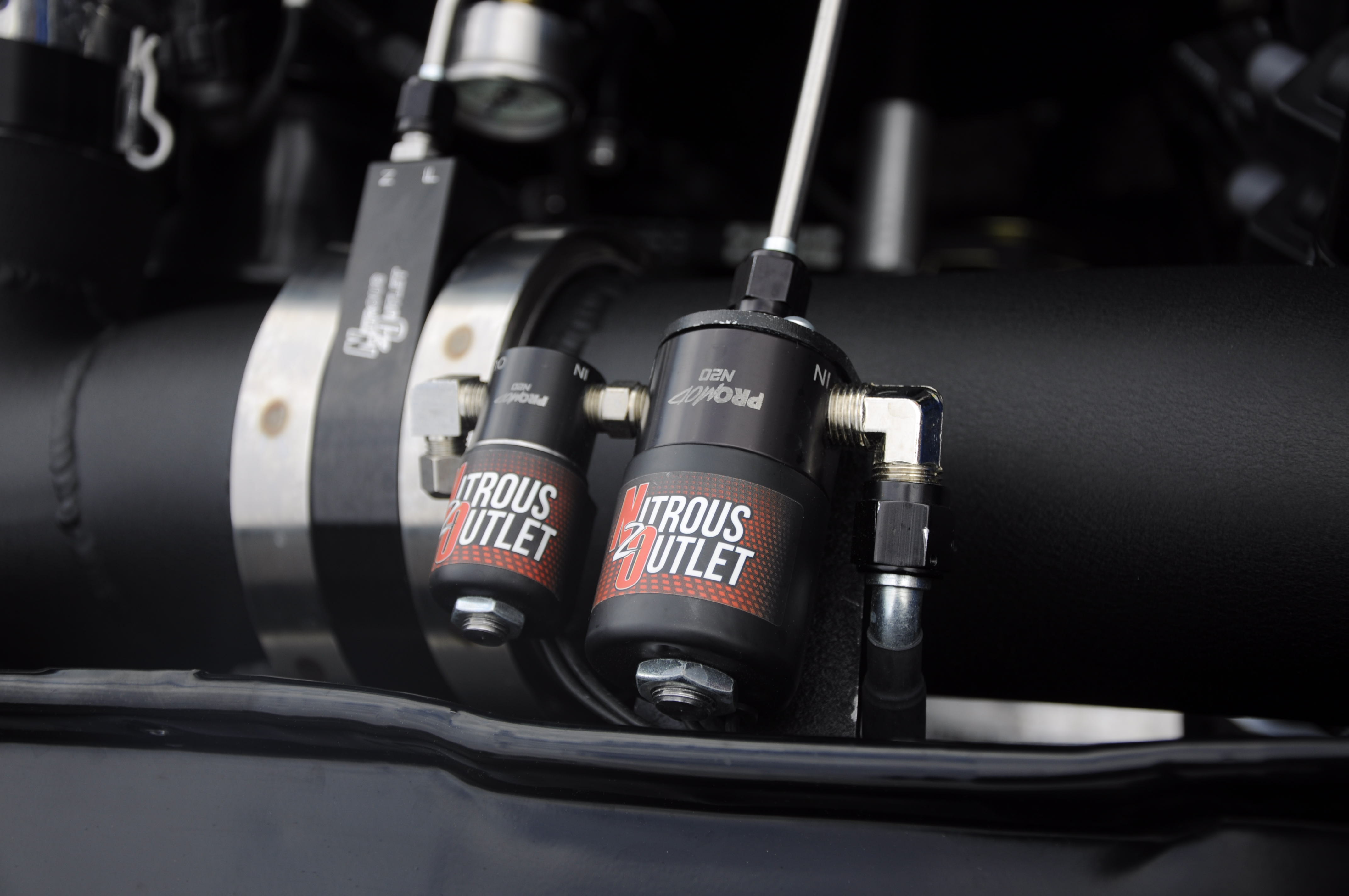
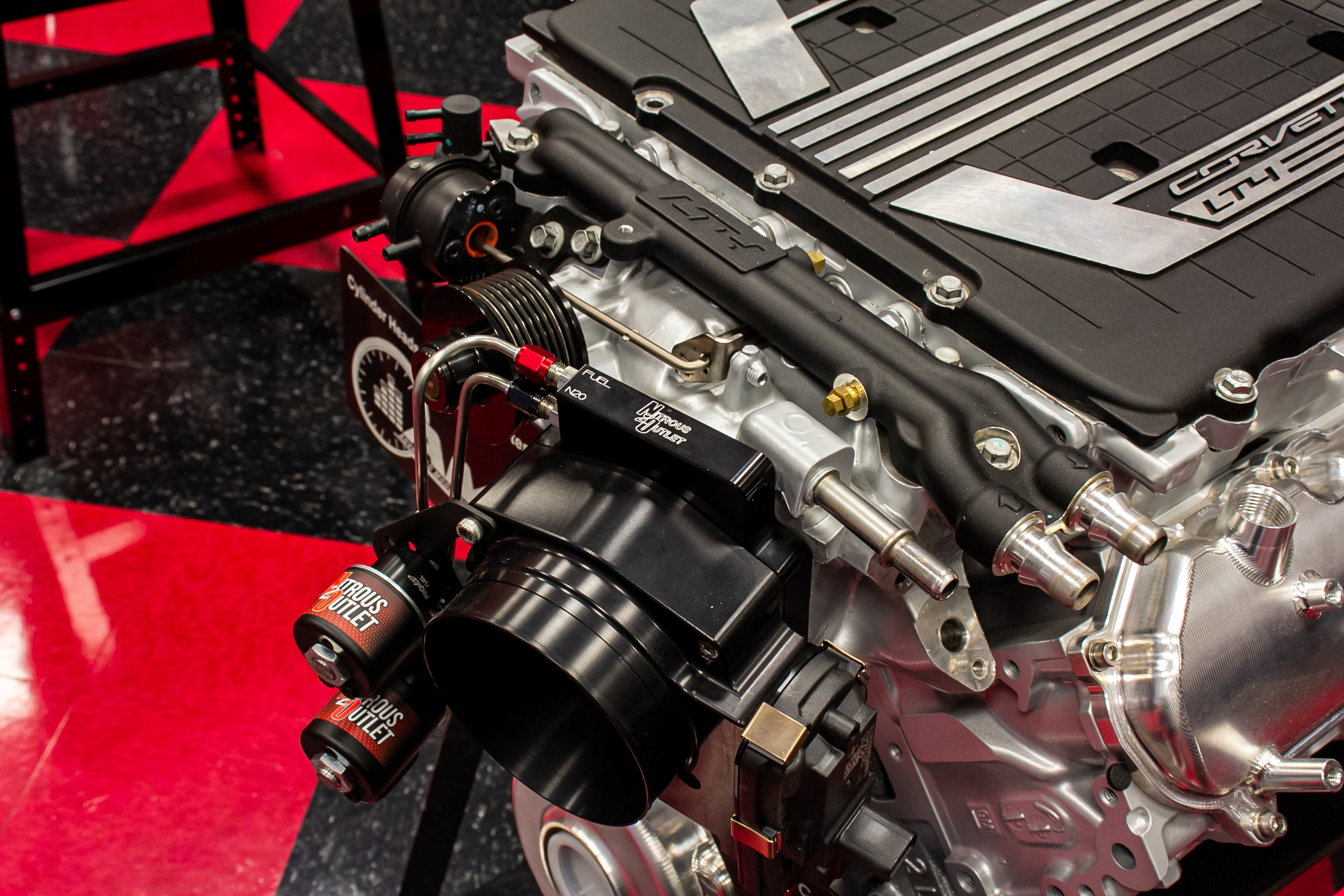
This particular engine has an Interspooler and a direct port system for the maximum with cylinder to cylinder tuning and plenty of additional horsepower on tap.

LSX Mag: How does nitrous help supercharge applications? 

Dave Vasser: Supercharger applications don’t suffer from delayed boost like turbo applications, however, they do rob some power from the engine due to how they build boost. A roots-style supercharger forces air into the engine through rotors that are driven by the engine’s crankshaft. A centrifugal-style supercharger forces air into the engine through a compressor design, similar to a turbo but the compressor is driven by the engine’s crankshaft. Both styles of superchargers will build boost as the engine gains RPM. Engine and supercharger combinations that are not perfectly matched will not be as efficient. Too small of a supercharger will spin faster, creating excess heat, and too large of a supercharger will have issues building boost. Adding nitrous will create an instant boost by providing instant cylinder pressure, making the engine build RPM instantly while knocking down the cylinder temps.

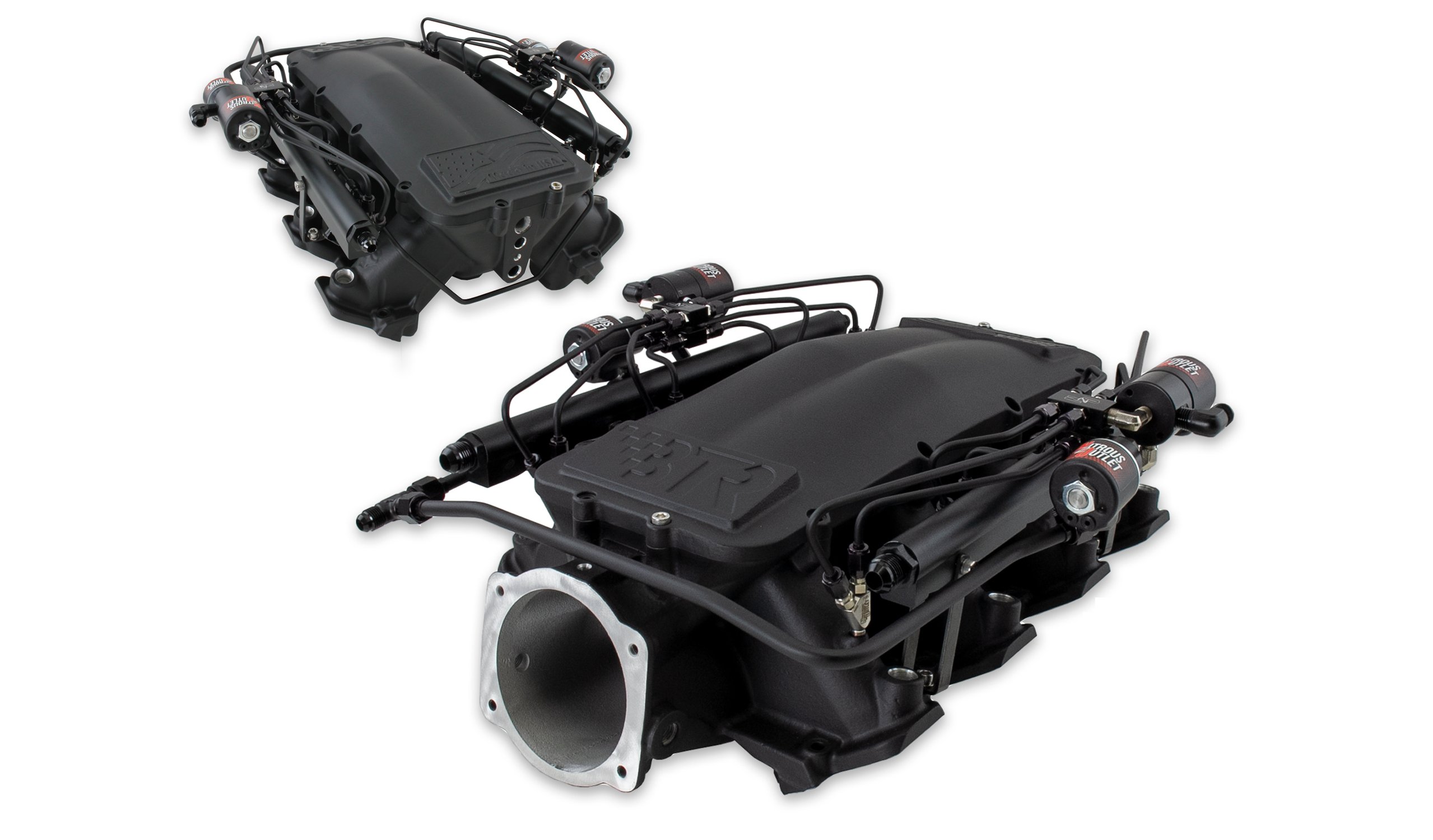
If you have a roots style supercharger, Nitrous Outlet can customize most brands by adding spray bars that discharge on the inside.

LSX Mag: Does any style of nitrous system work better than another when it comes to spraying nitrous?

Dave Vasser: It comes down to how much nitrous is being added. If you’re injecting a lot of nitrous, a direct-port system may be your best option. A direct-port system will inject the nitrous directly into each cylinder, ensuring each cylinder is getting the same amount of nitrous. If you add a small amount of nitrous, there are many options, including a single nozzle in the air tube, an Interspooler plate system installed in the air tubing, or a throttle body plate on the intake manifold. 

The key is to saturate the air intake charge. The further back in the air intake tract, the longer the nitrous has to knock down the air temperatures. The more saturation the nitrous discharge has into the airstream, the better the distribution will be with the ability to knock down air temps. You can move the discharge point further back in the airstream on dry applications that add the nitrous system’s fuel through the injectors. On a wet system, which adds fuel with the nitrous, the discharge needs to be no further than six to eight-inches from the throttle body or intake manifold entrance. 

LSX Mag: What should you look for when running nitrous on a boosted application?

Dave Vasser: As with any performance modification, knowing the limitations of the engine components, fuel system, and ignition system are just as important as having a proper tune-up. It’s also important to keep intake air temps low to help suppress detonation. 

Nitrous plates mounted behind the throttle body are also a popular option among boosted performance enthusiasts.

LSX Mag: What does nitrous do for a boosted engine in high altitude or “bad air?”

Dave Vasser: To properly answer this question, you need to understand air density. Air pressure is dependent on air density. The more dense the air, the higher the air pressure will be, meaning more air molecules. The less-dense the air, the lower the air pressure will be, indicating fewer air molecules. 

There are three main factors that affect air pressure, which will impact an engine’s performance. 

  • An increase in elevation or altitude decreases atmospheric pressure – Atmospheric pressure is the force exerted on a surface by the number of air molecules above it as gravity pulls it to the earth’s surface. As you increase elevation or altitude from the earth’s surface, it decreases the air pressure, which means fewer air molecules.  
  • Increased intake air temps and decrease the air density – The colder the air is, the denser it becomes. The warmer the air is, the less dense it is. This means there are fewer air molecules. 
  • Water content or humidity – Moist air is less dense than dry air, which means the higher the water content, the less compact the air is. As a result, there will be fewer air molecules. 

All of the above examples will all equate to less air molecules = less oxygen = less fuel burned = less power. 

In simple terms, boosted applications compress the outside air by forcing it into the engine. If the air quality is poor, the oxygen content is too. Adding nitrous provides the oxygen content needed to burn more fuel and make instant power. 

If you’re running a Whipple and want additional power and a cooler air charge, custom nitrous spray bars are the way to go.

LSX Mag: How does nitrous cool the intake air temps on boosted applications?

Dave Vasser: Forcing compressed air into an engine will build heat, which reduces the oxygen density. As nitrous leaves the discharge port and enters the airstream, it will expand, turning from a liquid to a gas with a temperature of around 129-degrees Fahrenheit below zero. This cooler temperature means the air is denser and will significantly reduce the air intake temperatures. Adding nitrous will increase horsepower, and due to its cold nature, it will act as a cooling agent. This knocks down the intake air temps and helps aid in detonation.

LSX Mag: Will you need to change your tune-up for boost and juice?

Dave Vasser: As you increase power on any application, whether it be naturally-aspirated, boosted, nitrous-assisted, or boost and juice, you will need to alter the tune. The engine will need higher octane fuel, more fuel, less timing, and a colder spark plug. 

LSX Mag: How should you address a timing map when spraying nitrous on a turbocharger or supercharger application?

Dave Vasser: You will set up the timing ramp to remove timing as the nitrous activates. The amount of timing will be dependent on how much nitrous you’re adding. The odds are that the system will increase in boost due to the improved air quality, so even if you’re adding a small amount of nitrous, adjusting the timing to compensate for the change is crucial.

LSX Mag: Do you see better results when spraying a supercharger or turbo?

Dave Vasser: Both a turbocharger and supercharger can greatly benefit from adding nitrous. The results vary with different applications. Keep in mind that keeping intake air temps down helps aid in detonation. Applications that are non-intercooled will have increased air temperatures, as well as applications that are over-spinning the blower or turbo.

Nitrous Outlet has realized the potential of boosted applications with nitrous, and they even built an S10 to test new products with. 

This S10 truck known as Stitch houses a ProCharger centrifugal supercharger along with a Nitrous Outlet Interspooler plate and a direct port system.

“We built a 1993 S10 called “Stitch” to market Nitrous Outlet’s Boost-N-Juice program. This truck is a real head-turner, and it’s a blast to drive. It currently makes around 850 horsepower on a stock LS bottom end with a set of Frankenstein LS3 heads, an F1A-94 ProCharger, and a 100 horsepower shot through the Interspooler plate,” Vasser shares. “Thompson Motorsports is currently building a 427 to replace the stock short block. Once we swap out the engine, we expect to make around 1,500 horsepower and utilize the direct-port nitrous system and a Frankenstein billet intake.”

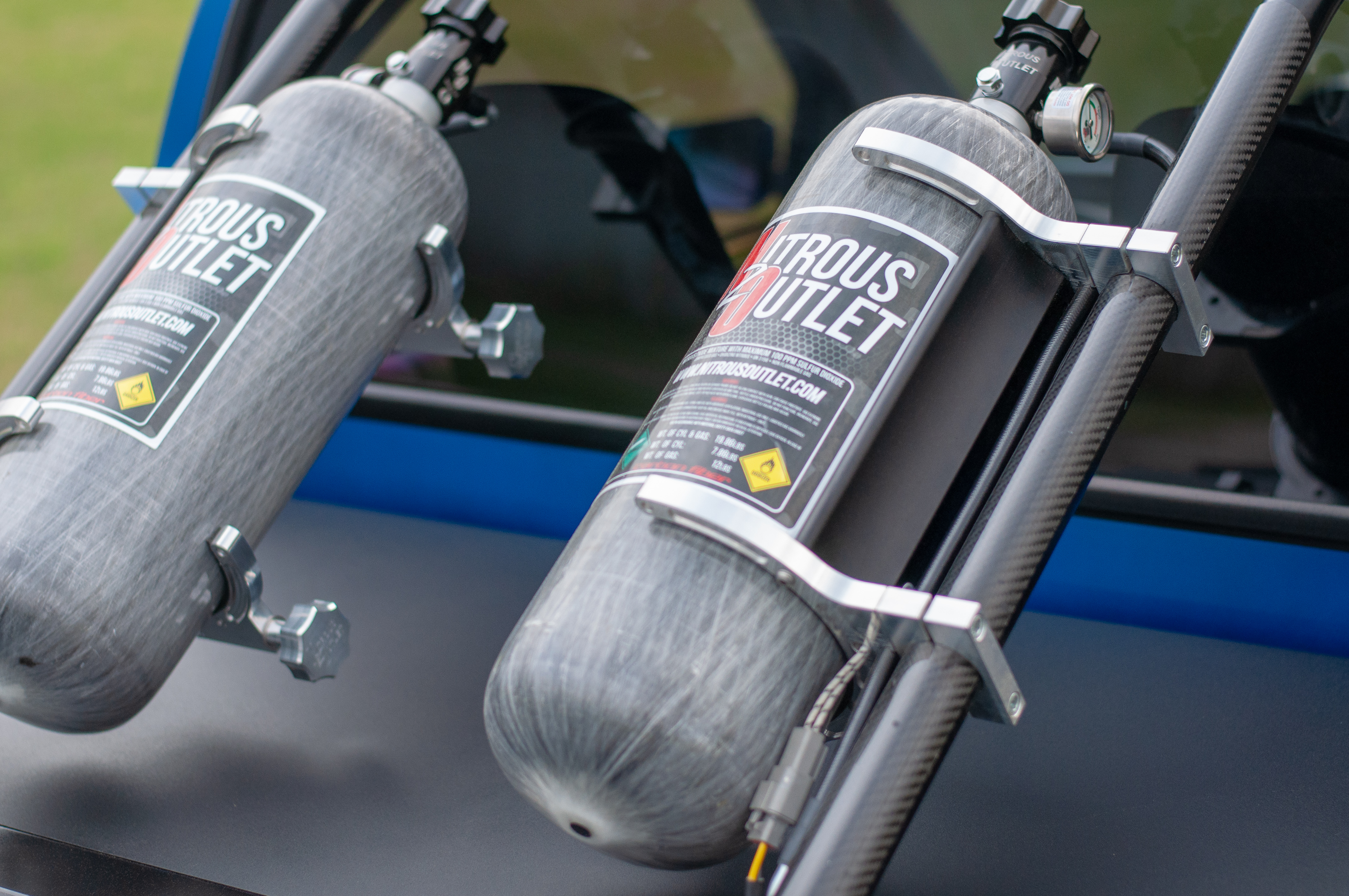
Nitrous Outlet offers a ton of nitrous systems and accessories to set your vehicle apart from the others. These 12lb composite bottles and billet bottle brackets are just tips of the iceberg.

It’s exciting to see the market change as companies like Nitrous Outlet and others encourage the use of its products with other power adders. Obviously, there’s a lot of added benefits to running nitrous on a boosted application, so it makes sense. This potent combination will give a boosted car the best of both worlds, and who wouldn’t want that? Nitrous Outlet offers a ton of innovative nitrous systems that will work with many different boosted combinations. If you have a question, give them a call or visit their website for more information. 


Article Sources

Posted on Leave a comment

Nitrous Oxide 101

Why is it that when people hear the term “Nitrous”, they automatically assume that there is going to be an explosion? Nitrous along with turbos and superchargers have been around for decades and are all a part of the “forced induction” family. You don’t ever hear things about turbos or superchargers in relation to massive explosions, but mention the word nitrous and people automatically picture their engine as the Nevada Atomic Test Range. Just for the record, there have many engine catastrophes with using all forms of forced induction.

Nitrous has always gotten a bad rap, but that’s partially due to the fact that it is the least understood power adder among the average gearhead. Nitrous is like anything else, it needs to be properly tuned. In order for it to be properly tuned, you have to get a basic understanding of what you are dealing with. If you purchase a nitrous kit today and follow the manufacturer’s installation instructions and tuning tips, there really shouldn’t be any problems.

That said, let’s go over some of the basics of a nitrous system and some tuning tips and maybe we can eliminate some of those frightening tales of “Nitrous engines gone bad”. This article will just scratch the surface, as you can dive deep into the world of nitrous oxide theory and hardware. This is just meant to help you get a basic understanding of a very misunderstood topic.

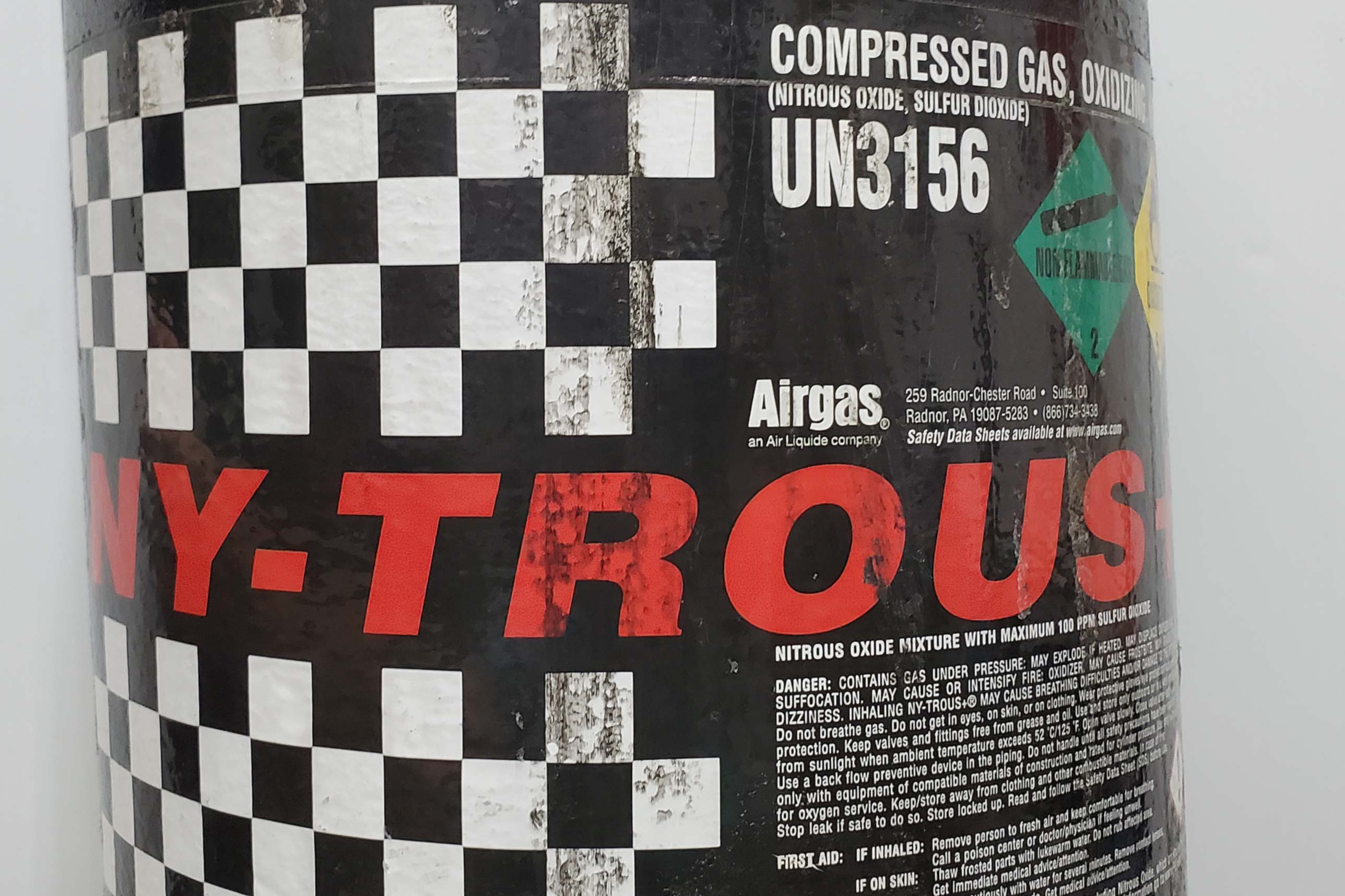
Nitrous Oxide (N2O) has both medical and industrial uses. The industrial-grade gas has 100ppm Sulphur Dioxide added to it to make it extremely unpleasant to inhale. While medical-grade Nitrous Oxide is pure, the minute amount of SO2 in industrial Nitrous doesn’t affect performance.

The Basics of N2O

First of all, let’s cover what Nitrous really is. Nitrous technically is called Nitrous Oxide. This is because the scientific abbreviation is N2O in which we are all familiar with. This means that there are two nitrogen atoms with one oxygen atom. People often associate this with the term “Laughing Gas” because it has been used as an anesthetic in the medical field.

There are generally two grades of Nitrous Oxide: medical grade and commercial grade. The medical-grade does have a higher purity rate for its intended purpose in the medical profession. The commercial-grade is what is used in our engines. The biggest difference between the two is that the commercial-grade is “tainted” with 100 parts-per-million of Sulfur Dioxide, which gives it somewhat of a foul odor. This was done intentionally to prevent improper use of the gas via inhalation.

Nitrous Oxide does not occur naturally, it has to be manufactured. It is stored in a pressurized tank in liquid form at room temperature. When it is released into the atmosphere at ambient temperature it becomes a gas in a very endothermic phase change (it gets to -127 °F as it turns into a gas). Regardless of what you might hear or see in the movies, Nitrous Oxide is not flammable and it will not burn.

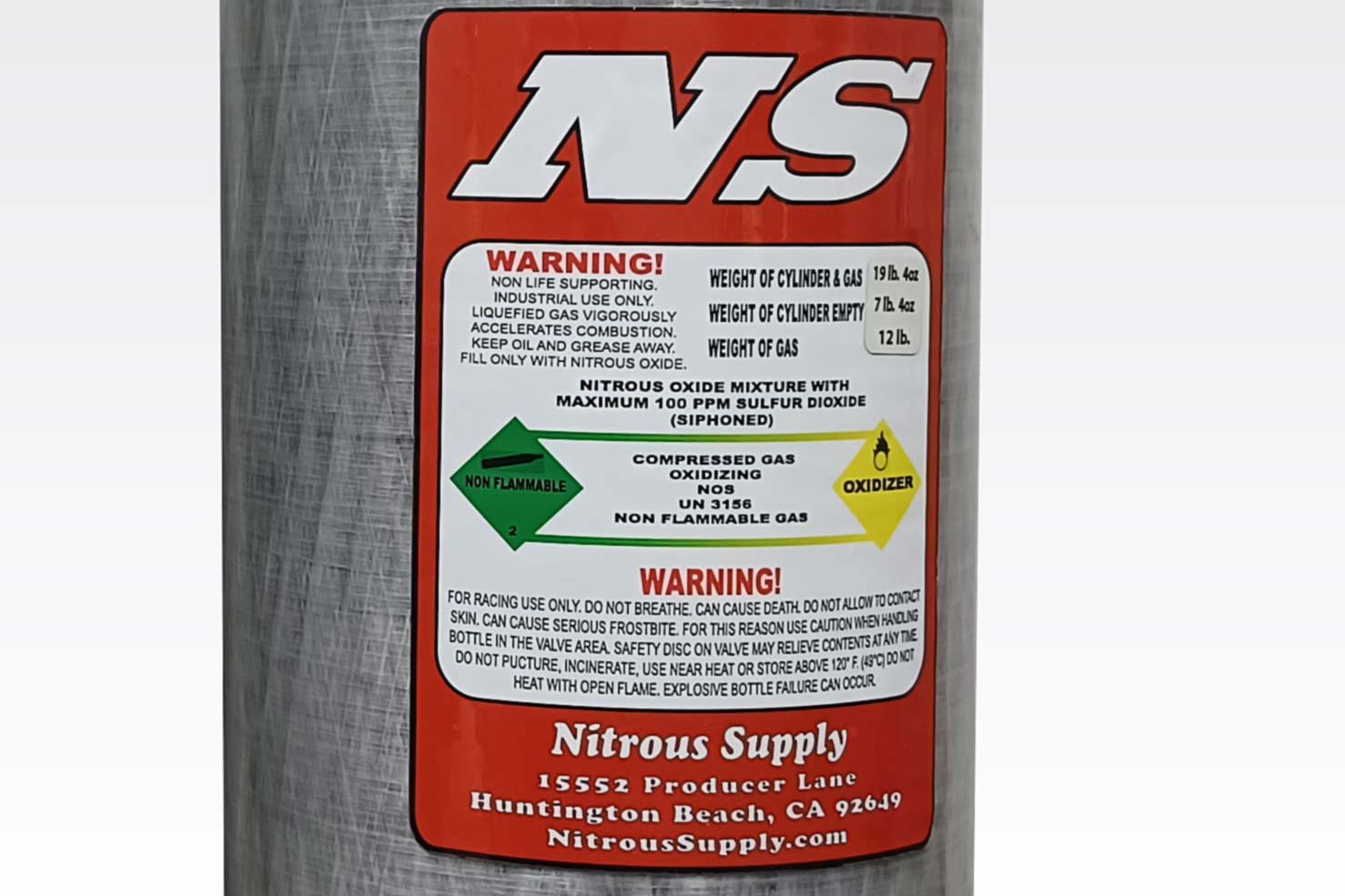
While Nitrous tanks are usually made out of aluminum, most companies offer modern lightweight tank options, like these carbon-fiber bottles from Nitrous Supply. They have to meet the same 1,800 psi minimum rating and have all the same safety features as the traditional bottles, at a lighter weight.

That being said, Nitrous tanks have to be regularly certified to be able to withstand 1,800 psi. An additional safety feature, most Nitrous bottles are outfitted with what is known as a safety release disc which is made of copper or brass. If the bottle’s pressure were to rise above the 1,800 psi mark, the safety disc is supposed to blow out and release the pressure in a more controlled manner to keep the tank from rupturing. Generally, Nitrous bottles are targeted for 850-1,000 psi working range, so the 1,800 psi rating allows for a significant safety margin.

While the safety disc is a simple and effective means of protection, it does release all of the contents of the bottle once it is “released” and can be hazardous in and of itself, which is why any sanctioning body will require the safety valve to vent to the outside of the vehicle. There are also various manufacturers of different styles of safety valves that will only vent small amounts of Nitrous without dumping the whole tank. Nitrous tank pressure for a Nitrous Oxide system is very important for proper operation.

The Chemistry of Horsepower

To be able to safely use Nitrous, we need to understand what happens when it’s injected into an engine. There are two methods of injecting Nitrous, known as wet and dry. In a wet setup, additional fuel is injected into the engine along with the Nitrous. In a dry system, it’s just the nitrous that’s injected into the system, relying on the engine’s existing fuel delivery system to enrich the mixture. Either way, nitrous requires additional fuel to make more horsepower.

So, if Nitrous isn’t flammable, how does it make that power? Nitrous is a chemical compound known as an Oxidizer that releases oxygen when reacting with another substance. With its chemical makeup, each molecule of Nitrous Oxide brings with it an oxygen atom. Additional oxygen allows more fuel to be burned. More fuel burned means more horsepower. Additionally, remember how we mentioned the cooling effect when it transitions from a liquid into a gas? That radically decreases the intake charge temperature making for a more dense intake charge. The increased charge density with the additional oxygen and fuel is what makes power.

As you can see here, Nitrous isn’t flammable. Instead, it’s an oxidizer, which means it will provide additional oxygen to another chemical reaction. By adding oxygen to the combustion process, Nitrous Oxide allows more fuel to be burned in the combustion process, and more power to be made.

The ratio of Nitrous to additional fuel is the key to making safe horsepower. You’ll often hear people referring to jet sizes in a two or three-digit number. That is the orifice size, in thousandths of an inch, of the flow-restrictor in the line. In a wet kit, there will be a similar jet on the supplemental fuel line. By altering the size of the nitrous jet, more or less horsepower can be added. You then fine-tune the air-fuel ratio with the fuel jet size.

Applying Nitrous Oxide Safely

Where things go bad when using Nitrous, is often with the ignition timing. To really understand how to make power with Nitrous, we need to understand proper ignition timing with the increased rate of fuel burn along with expansion and cylinder pressure. No matter what, the ignition timing has to be changed when using nitrous to prevent engine damage.

So far, we have discussed that additional oxygen along with additional fuel increases the burn rate during combustion. The accelerated burn rate itself does not increase horsepower. The accelerated burn rate however does create a rise in heat, which in turn creates more cylinder pressure. That additional cylinder pressure is what creates power. Controlling the peak cylinder pressure of the combustion event is the key to making maximum power. Peak combustion pressure is achieved when the air/fuel mixture is ignited right before it reaches peak cylinder pressure (from piston compression) in the chamber.

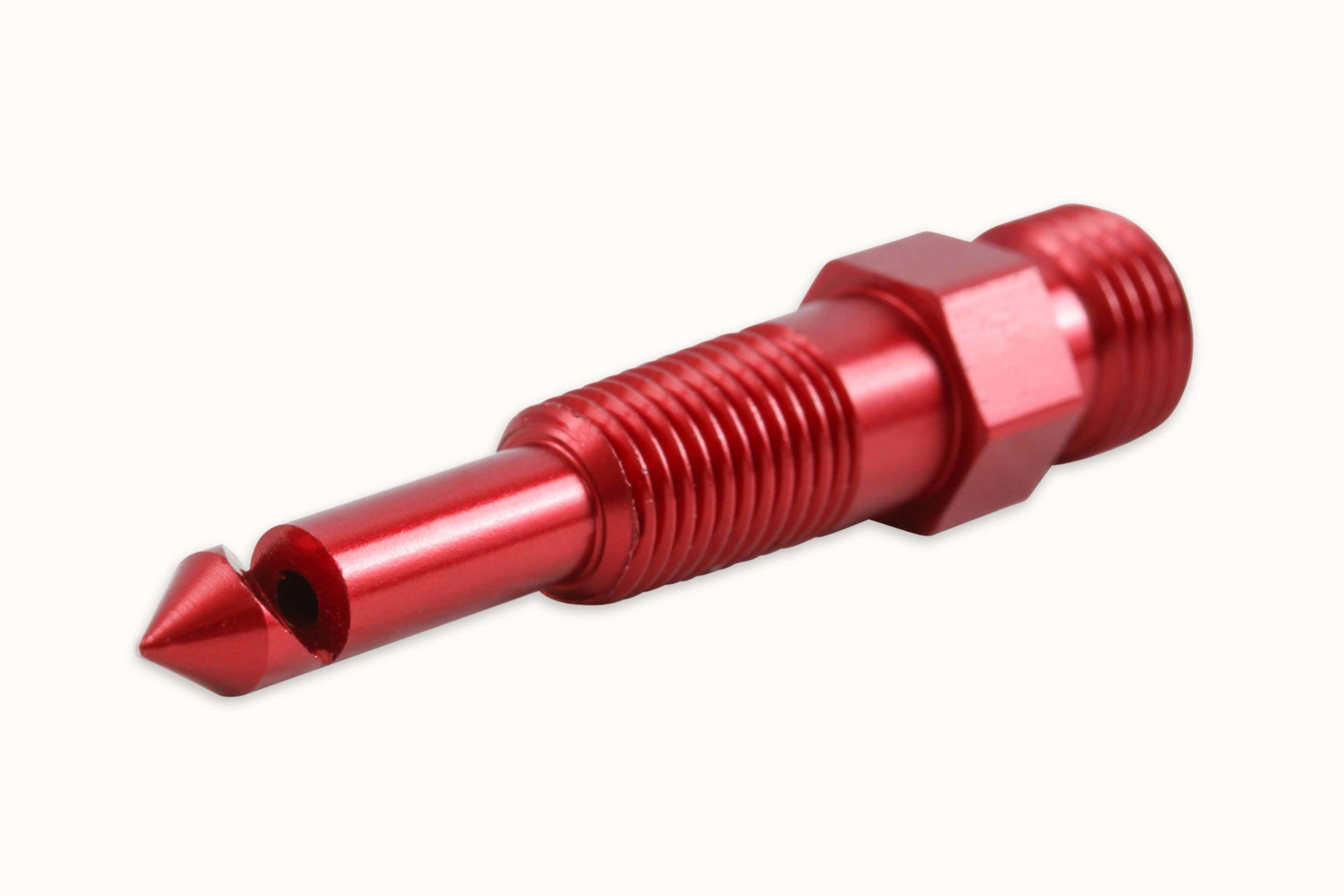
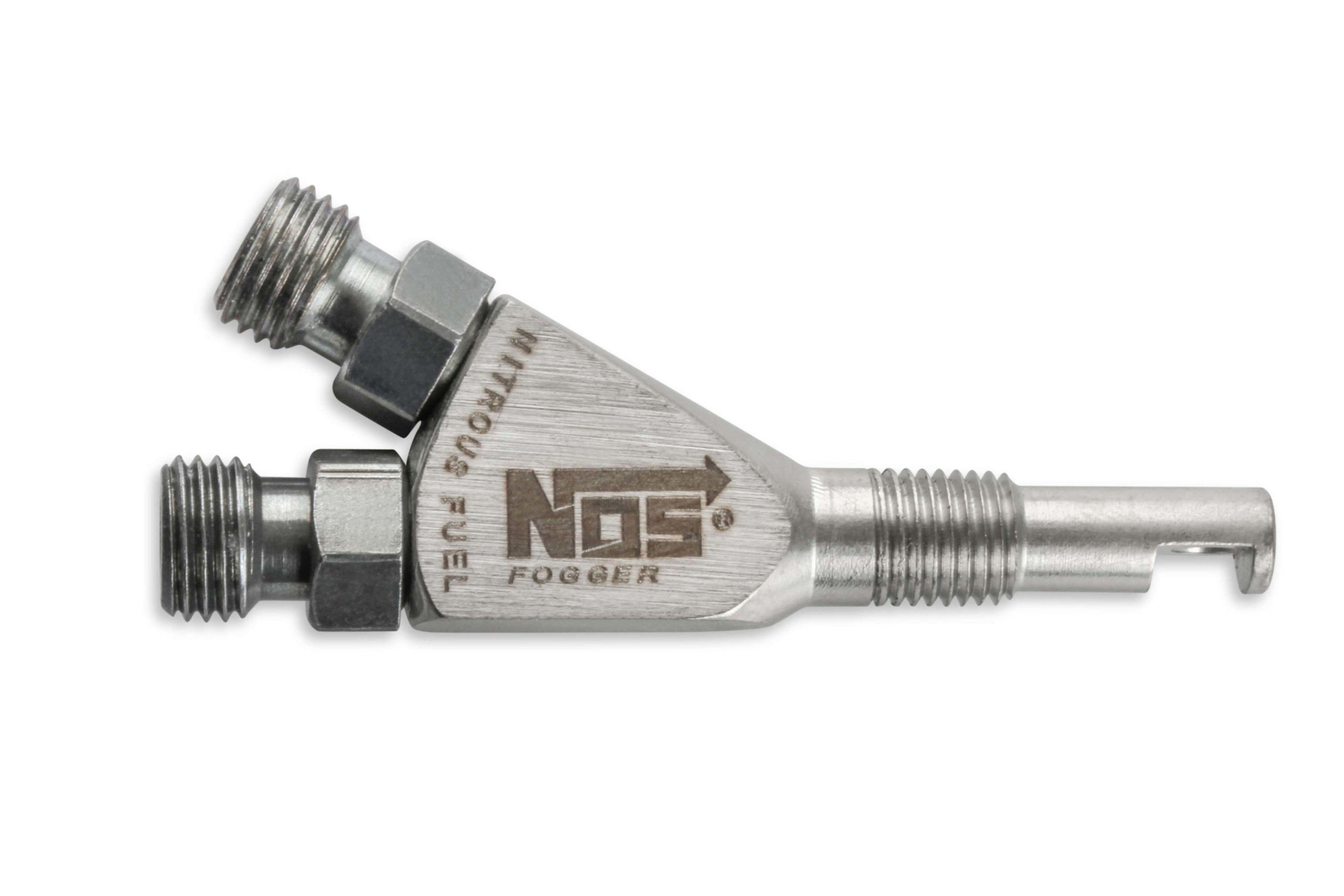
Here you can see various methods of Nitrous injection. On the far left is a dry nozzle. This nozzle only injects Nitrous Oxide (which has been metered by a jet of a specific orifice size) and relies on the engine’s fuel system to add fuel. In the middle is a wet nozzle. It injects both Nitrous and fuel (both through metered jets) at the same time. On the right is a wet plate. Designed to sit below a carburetor, this system uses spraybars to distribute both Nitrous and fuel into the intake manifold.

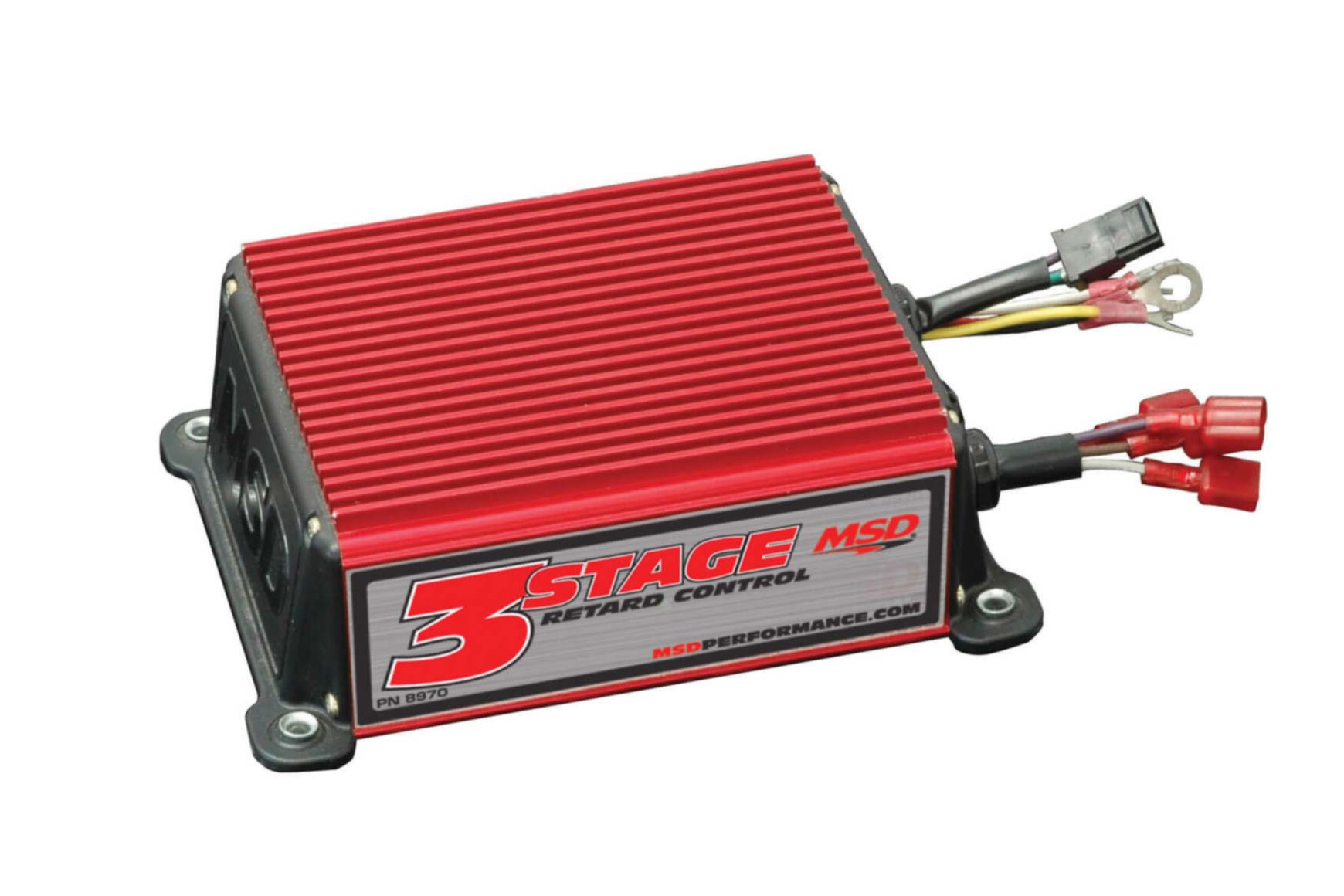
A nitrous engine creates more cylinder pressure so the need for ignition advance is reduced. The rule of thumb for retarding the ignition timing is 1 degree for every 25 horsepower of Nitrous. For example, an engine running 36-degrees of total timing naturally aspirated, would retard the timing by 6 degrees, to 30 degrees total, when using a 150-horsepower shot of Nitrous Oxide.

Regardless of whether the engine is naturally aspirated or force-fed, knowing the correct timing for peak cylinder pressure equals power. The best way to find out if your engine is timed correctly is to read the spark plug. The ignition timing is responsible for heat marks on the ground strap of the spark plug. If the flame front is initiated too soon, more temperature is created before the exhaust valve opens which creates bluing on the ground strap above the base of the plug threads. If the timing is initiated too late then the bluing occurs on the tip of the ground strap. When the timing is right, the bluing will occur about middleways up the ground strap from the center of the tip of the electrode.

The rule of thumb for ground strap discoloration is, if it appears more toward the electrode then there is not enough timing and if the ground strap is discolored toward the threads of the spark plug there is too much timing. Somewhere along the middle like in the photo is in the ballpark of what you are looking for. Also, keep an eye on the base of the porcelain for some discoloration.

There is usually a hydrocarbon ring that will form on the porcelain about .150-inch up from the base of the plug threads. If the hydrocarbon shadow is black or dark gray, then the mixture may be too rich or the plug might be too “cold”. The heat range of the spark plug refers to the temperature electrode, controlled by the size and shape of the electrode’s ceramic insulator.

Since a spark plug must maintain a certain temperature in order to keep itself clean, the heat range of the spark plug must be selected for the operating environment it is going to be running in. When using small amounts of nitrous you can generally use one step colder than your current spark plug. If you are using big amounts of nitrous you may need to drop three or four steps colder on the spark plug heat range.

One thing to keep in mind is that you’ll need to retard your timing when using Nitrous. The rule of thumb is one degree for every 25 horsepower worth of nitrous you’re injecting.

Getting Into Nitrous Oxide-Specific Modifications

For the most part (and really, what we’re discussing here) small Nitrous systems are often used on factory-based engines. They perform well and often don’t require any major engine modifications other than a reduction in timing and colder plugs. But, if you were to build a Nitrous-based engine or introduce a lot of Nitrous into your existing engine, there are a number of areas to be considered.

Most camshaft manufacturers have a lot of experience with Nitrous Oxide and often offer various “off-the-shelf” solutions for many applications. We recently discussed what goes into a Nitrous Oxide-specific camshaft design in this article here, and explain in detail how and why a “Nitrous cam” is different than a naturally aspirated camshaft.

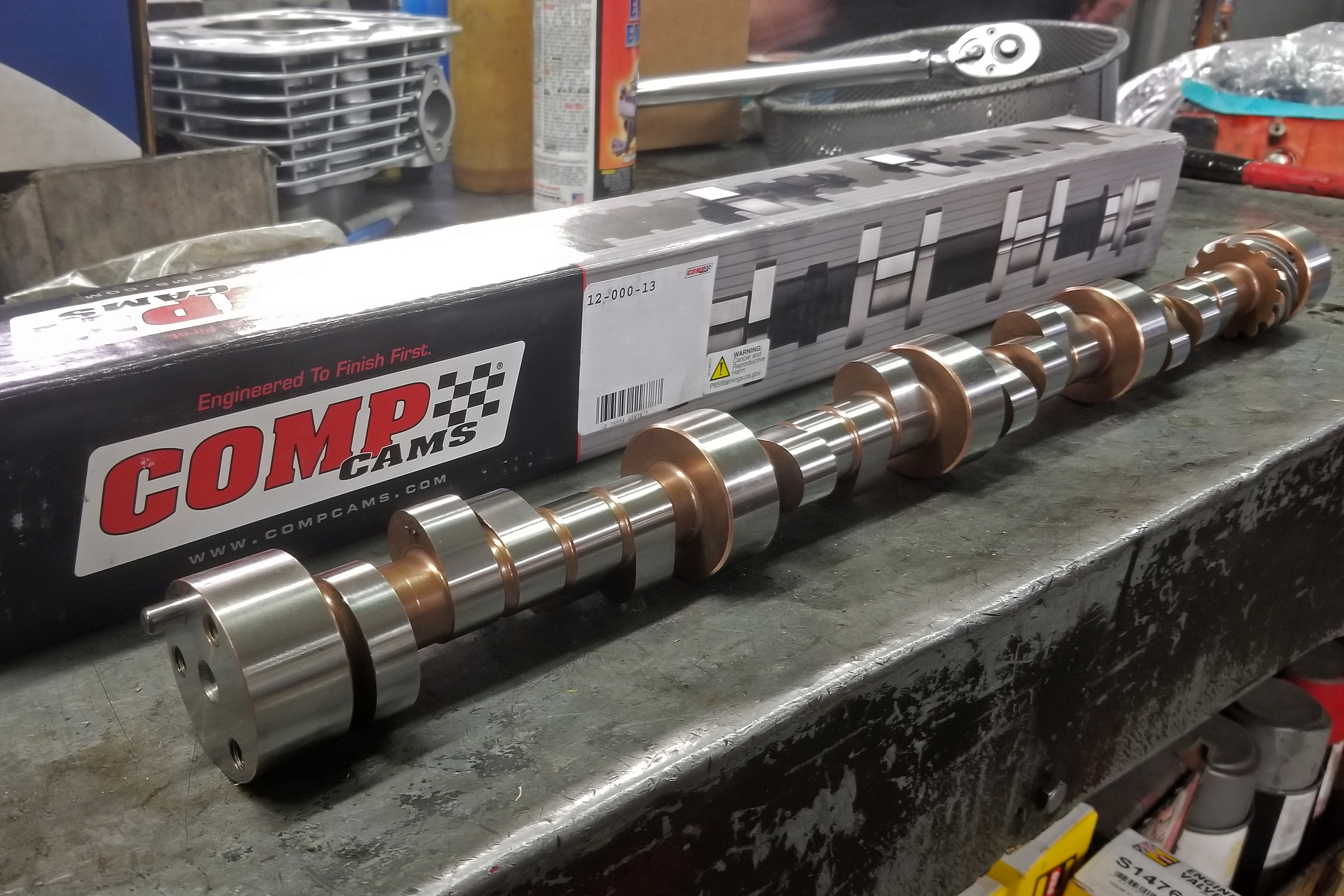
If you are building a Nitrous specific engine or wanting to add a significant amount of Nitrous, you may want to upgrade the camshaft. Several manufacturers such as Comp Cams offer camshafts for Nitrous use. These cams are ground with wider lobe separations and longer exhaust duration to help scavenge some of the spent exhaust gasses from the cylinders.

Additionally, the same modifications you’d make to an engine for copious amounts of boost would be similarly recommended for heavy Nitrous use. After all, just like the other forms of forced induction, you are greatly increasing cylinder pressure and subsequently, horsepower. So beefing up your engine’s internal components would be a wise idea for anything beyond mild use of the giggle gas.

Nitrous Oxide, when used per the manufacturer’s instructions, is an incredibly cost-effective power adder. With a minimum outlay of cash, and relatively simple installation significant power increases can be had on a relatively stock engine. Additionally, if you want to go wild with the stuff, you can do that as well. The key is to understand what’s happening and make sure you are accounting for all the variables.


Posted on Leave a comment

Piston Coatings: When You Should And Shouldn’t Use Them

Piston coatings have become so common with OEM and aftermarket manufacturers that it seems as though they often go unrecognized. Often, consumers might understand the basic functions that piston coatings offer, but do not realize the full potential of the benefits. Engine builders, on the other hand, appreciate the benefits and can often specify which coatings they prefer to have applied to the pistons based on the application of the engine.

While many coatings are available, each coating has a unique function, so the individual benefits will only serve the purpose for which the engine is being used. This is not one of those situations where you just order your pistons with all the coatings, because it could prove to do more harm than good. Also, just like anything else, there is always the cost factor. Some coatings and processes can be very expensive, so you must determine if the benefits will out way the initial cost.

If my memory serves me correctly (and that’s a big if), piston coatings — along with internal engine coatings — were introduced around the mid-1990s. What I remember most were the do-it-yourself kits that were user applied. If you had an airbrush, and a conventional oven, you could successfully coat your engine parts. Back then, we were desperate for horsepower because the availability of aftermarket parts was slim compared to today’s market. So, I will have to admit that I was one of those guys that tried it. I will say that it was very time-consuming, which is probably why the cost of professionally coated parts is more expensive.

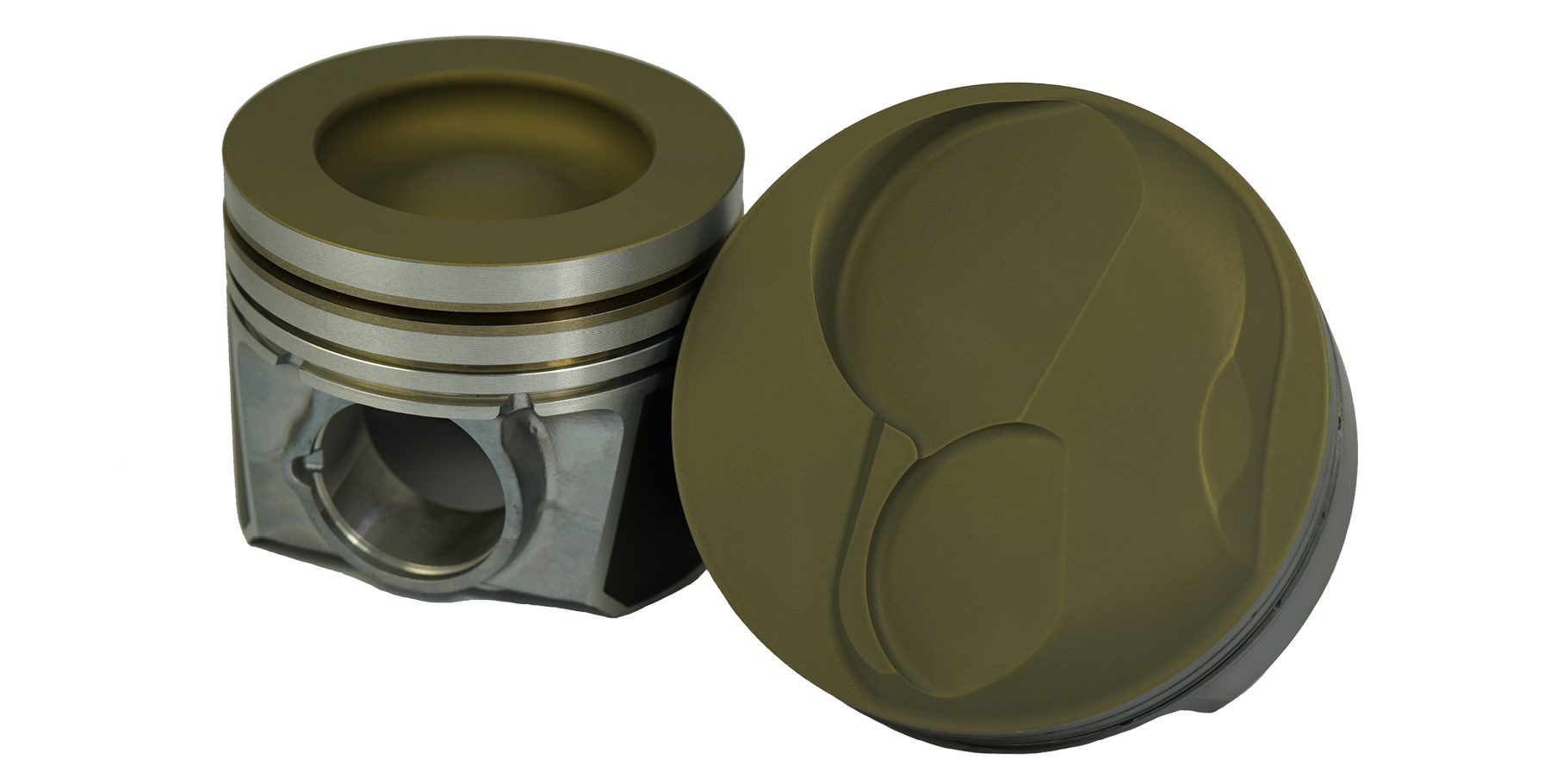
In order to get a better understanding of various piston coatings, we reached out to Mahle Motorsports to learn what coatings are offered and when each is beneficial. When coating a piston, there are target areas that need to be considered: the skirt, ring grooves, crown, and the entire piston. There are eight types of coatings that can be applied to the four target areas. Each one of the eight has a specific function and there are advantages and disadvantages associated with all of them. Hopefully, this information can clear up any misunderstandings that might cause some confusion about which coating is right for you.

 Grafal Piston Coating

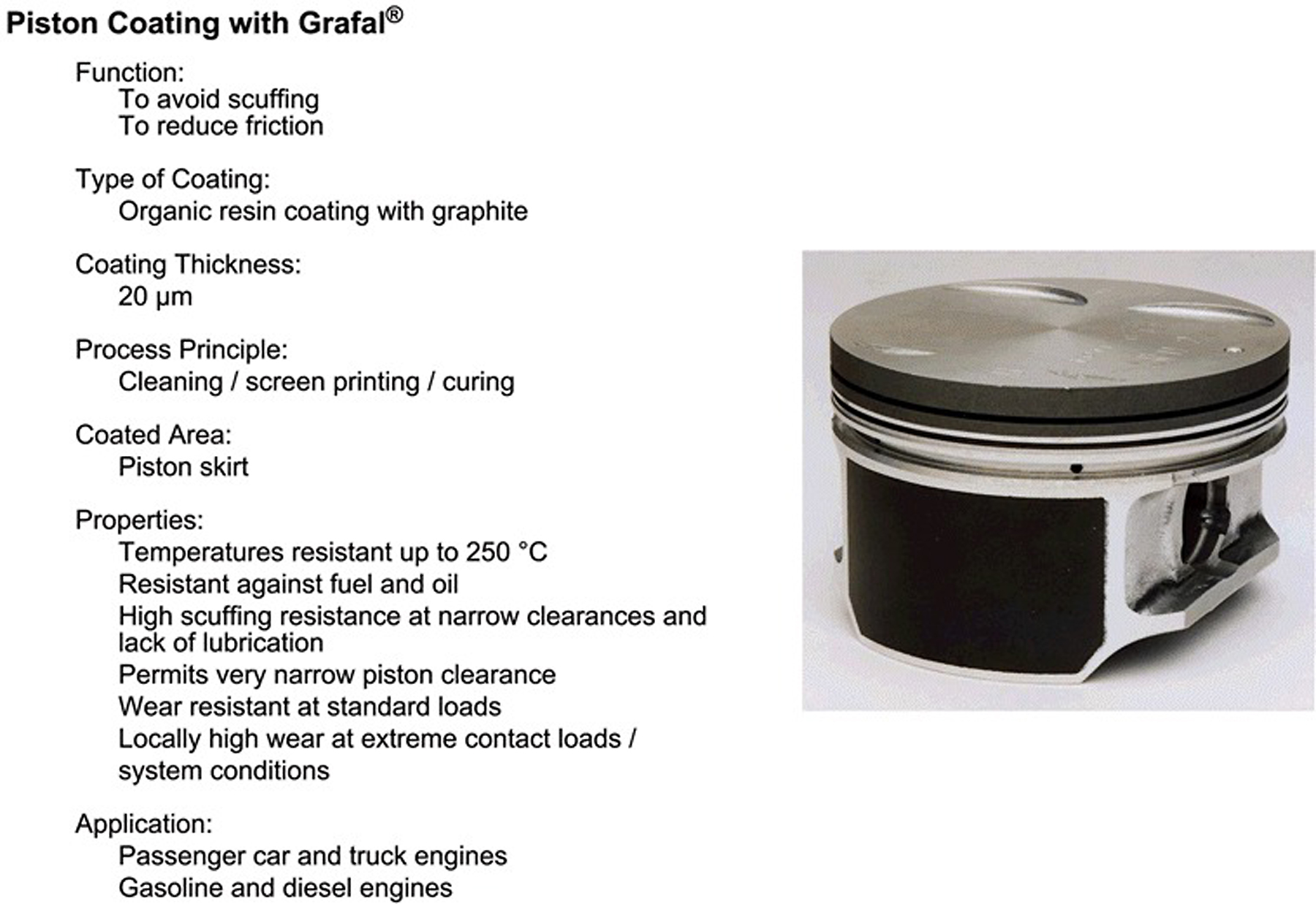
Grafal coating is proprietary to Mahle, and you will often see this coating on piston skirts. This is a dark coating that is actually a printed resin embedded with graphite. This will add approximately .001-inch to the diameter of the piston, so it must be considered when boring and honing the cylinders. Its purpose is to reduce sliding friction by adding a self-lubricating, protective layer.

Advantages:

This skirt coating acts as protection against cold start piston slap and over-fueling. It also aids with noise and friction reduction and even adds a layer of protects if there is a lack of proper lubrication.

piston              coatings

Disadvantages:

Technically there are no disadvantages if the coating is applied properly. Mahle believes in this coating so much that it is applied to every piston it manufactures. This helps lower the cost substantially by incorporating the coating process into the main production process.

Note: People often think the Grafal is a break-in coating. This coating is meant to remain for the life of the piston. This coating will also save cylinder walls from abnormal conditions such as fuel wash, overheating, etc.

Ferroprint

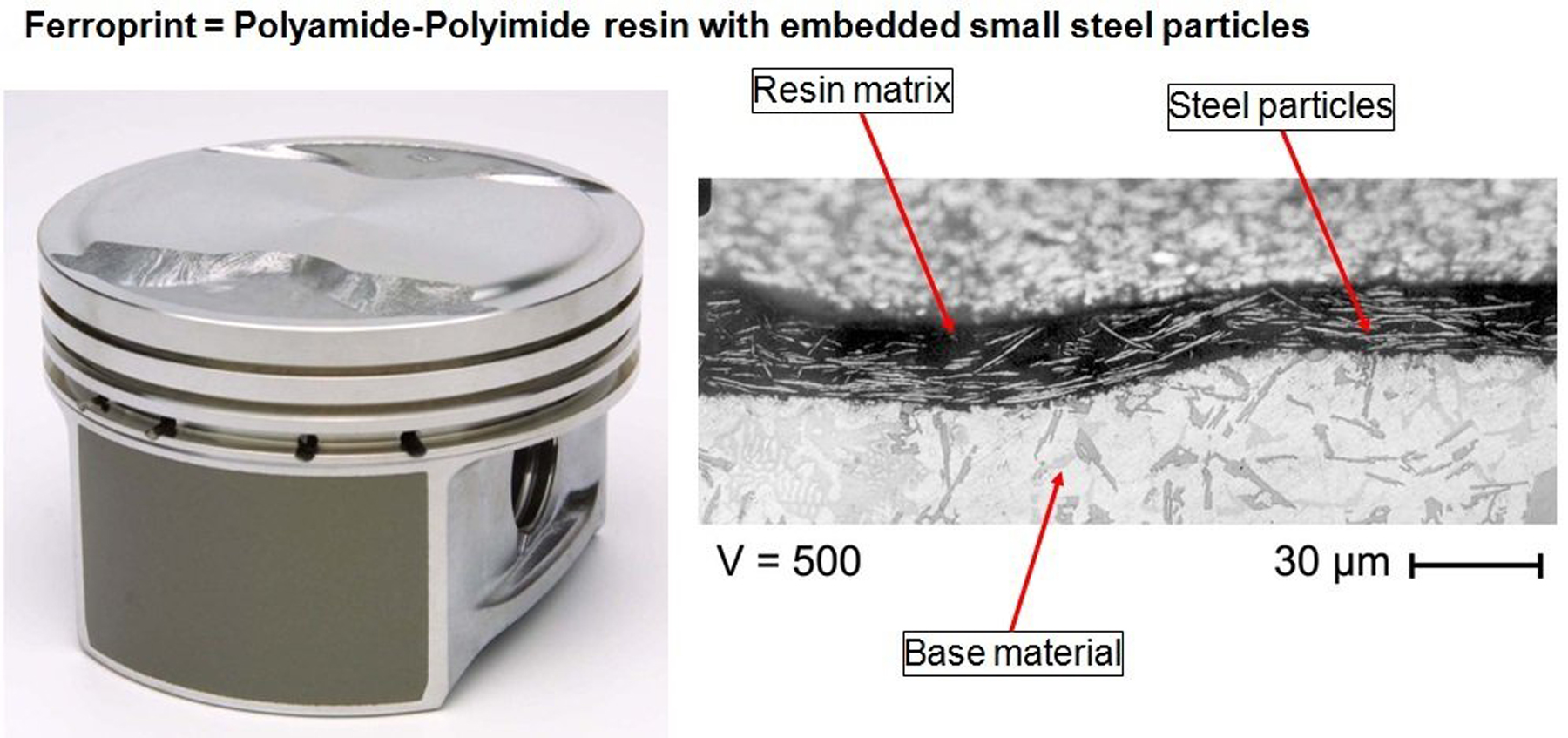
This is one we don’t often hear about because it has a small window of usage. Ferroprint is a dry-based lubricant applied to piston skirts. This is very similar to Grafal, but the resin structure is embedded with stainless steel. Its primary purpose is to provide a layer of protection for an aluminum piston to operate in an aluminum bore (i.e. small engines and motorsports).

Advantages:

Offers protection against scuffing from cold starts and lack of lubrication, and is necessary for this application.

Disadvantages:

Can be expensive to have applied. If the coating gets worn off, there will be unprotected surfaces and that may present problems. Note: Cylinders that have plating such as Nikasil will not use this type of coating. They will still use the Grafal. Again, this is for aluminum cylinder bore applications.

piston coatings

The process of Ferroprinting has a dry-based lubricant applied to the piston skirts. This coating is very similar to Grafal, but the resin structure is embedded with stainless steel.

Piston Coatings Via Phosphating

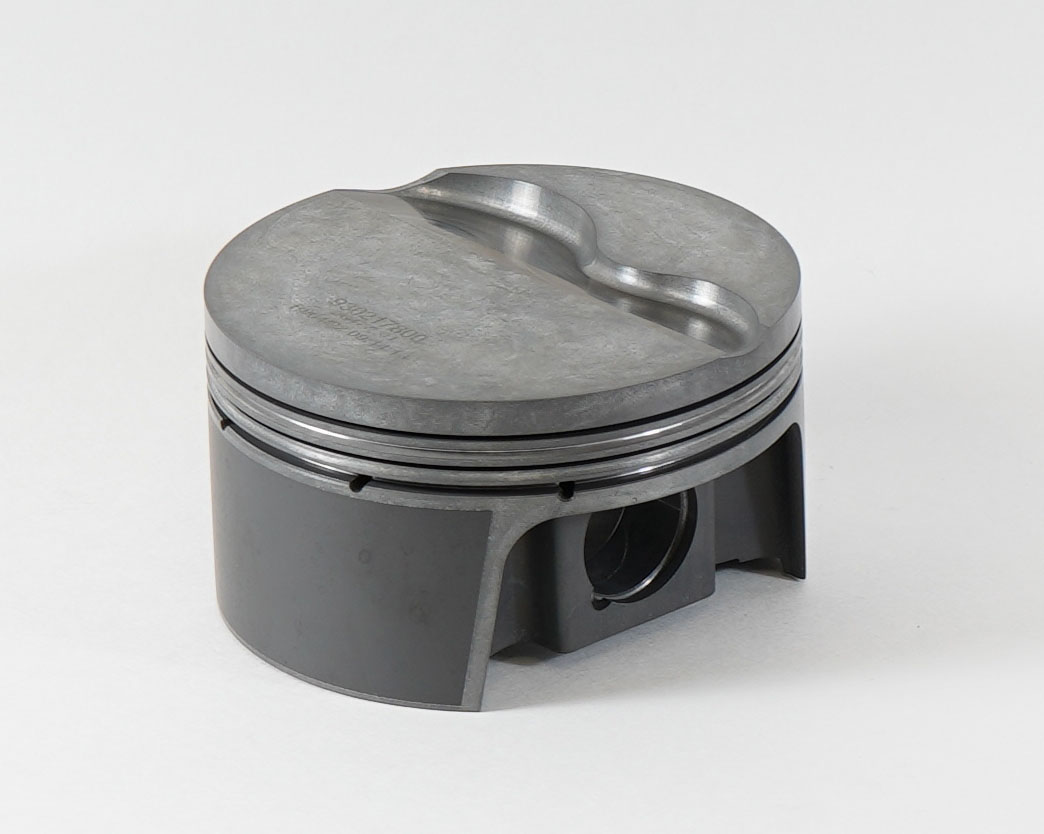
If you have ever seen a piston that was dark gray and wondered why, the Phosphating process is what creates the dark-gray appearance on the entire surface of the piston. This is an aluminum-phosphate coating that is performed via an immersion process. Its primary usage is to provide break-in protection for the piston pin bores and ring grooves. This is a dry lubricant coating that is permanently bonded to the piston surface. The phosphate coating is practically immeasurable because the layer thickness is less than 4 microns.

piston coatings

Phosphate coating is a dry lubricant that provides a film covering the entire piston. This coating covers the pin bores and ring grooves and remains until the engine reaches operating temperature.

Advantages:

The one and only function of the phosphate coating is to provide additional lubricity.

Disadvantages:

There are no disadvantages associated with the phosphate coating process.

Note: Often, there is a misconception that the phosphate piston coatings serve as some sort of thermal barrier for the piston crown. This is false. The dark-gray color serves no purpose on the crown and if the crown needs to be machined or the valve pockets recut, it will have no effect on the function of the coating since lubricity of the piston’s top surface is not an issue.

DLC

The letters DLC stand for “Diamond-Like Carbon”. It gets its name from the coating process in which an adhesion layer is applied and then followed by a layer of Hydrogenated Amorphous Carbon. The layer of carbon serves as a hard, slick surface to reduce friction. This carbon-based coating, combine the properties of diamond and graphite.

Piston Coatings

Diamond-Like Carbon coatings, combine the properties of diamond and graphite, producing a very hard and slick surface. It’s a great option for using on wrist pins.

Advantages:

Offers superior friction reduction

Disadvantages:

The primary use for DLC is to be applied on hard, stable surfaces such as piston wrist pins. The soft structure of a piston, especially under extreme heat and load conditions, does not fit these requirements. It can be applied to the piston skirts, but the gains using DLC over the conventional Grafal coating are minimal. The tolerance for scuff protection is limited, and once the scuffing begins it can quickly progress to hard scuffing and catastrophic skirt failure. The DLC coating on the skirts is not very forgiving and the cost to benefit ratio is relatively weighted toward the cost.

Hardcoat Anodizing With PTFE Sealing

Hardcoat anodizing is a very specialized coating that offers increased resistance against abrasion and wear. The PTFE sealing offers increased lubrication. The coating process is performed through an immersion process that will coat the entire piston.

Advantages:

In extreme applications, hardcoat anodizing can offer increased resistance in abrasion and wear. The coating can also provide additional corrosion resistance for marine applications.

Disadvantages:

The increased resistance to abrasion and wear can lead to a long-term detriment to cylinder wall surfaces. Because of the processes that the piston must undergo for the coating, dimensional changes that will affect the piston have to be accounted for when designing the piston.

Hard Anodizing Ring Grooves

The primary function of this coating is to offer protection of the ring groove flanks against micro-welding. The term micro-welding is used to describe a situation when aluminum particles of the ring-groove bore transfer to the piston ring. This often causes the piston ring to stick in the ring groove, causing ring-sealing issues along with excessive blow-by and loss of power. While it has been proven that moving the top ring closer to the top of the piston helps make more power, when you do, especially under high cylinder pressures, micro-welding will occur.

Advantages:

Hard anodizing of the piston ring grooves does offer abrasion and wear resistance to micro-welding which will occur when the engine is used under extreme conditions. (i.e. supercharging, Nitrous Oxide, and turbocharging).

piston              coatings

Disadvantages:

The surface of the ring groove flank becomes rough. Although this will offer protection against micro-welding, it can cause some difficulty with piston ring seating. Conditioning of the hard-anodized ring-groove flank does not occur during the break-in period. After a period of time, the anodized ring groove flank will become conditioned, but will still be rougher than an uncoated piston, therefore, possibly leading to a less-than-optimal piston ring seal.

Thermal Barrier Piston Coatings

A Thermal Barrier Coating is a spray-on coating usually applied to the top surface of the piston. Its function is to reduce heat transfer into the top of the piston. The benefit of Thermal Barrier Coating is highly dependent on the application and its use. Thermal Barrier Coatings are more effective if other components of the engine such as the combustion chambers, valves, and exhaust system are also coated.

Advantages:

Thermal barrier coatings will reduce heat transfer from the combustion chamber to the piston crown.

Disadvantages:

There is some additional cost added to the price of the piston for adding a Thermal Barrier Coating. While the cost may be somewhat insignificant, there will be additional expenses in coating the other combustion components in order to yield the full benefits of Thermal Barrier Coating. Once the piston is coated, there cannot be any machining or modifications done to the piston crown. If any modifications are needed, the piston will need to be recoated.

Mahle offers its Powerpak piston kits which come with the Grafal coated piston skirts and a phosphate coating. These two coatings are mostly utilized for street and racing applications and have been proven reliable for many years. They are applied during the production process, so it is very inexpensive and well worth the benefits when the cost equates to pennies on the dollar. The other coatings are beneficial but are structured mainly for more specialized applications where engines are under severe and extreme conditions.

The benefits of piston coatings have been debated for many years, but if properly utilized in the right situations, they can be a great way to extend the internal part’s life expectancy and even the performance it delivers. If you think a particular coating might be better for your application or you are not sure which would yield the best results for your engine, give the folks at Mahle Motorsports a call and get the best recommendation from professionals.


Posted on Leave a comment

ARP Bolt Talk: What Is Torque Spec And Why Fastener Torque Matters

For years ARP has explained bolts as being like little springs. Sounds a little weird, but for a bolt to properly hold, it needs to stretch a little. Once the fastener is tightened to a predetermined torque spec, that stretch holds pressure against the components that make up the joint being fastened. This spring-like stretch holds everything securely together.

What Is Torque Spec?

Most fasteners that are used to hold together important joints like cylinder heads to the engine block have specified tension values and procedures to ensure the joint stays tightly connected. If you don’t have the proper stretch on a fastener, it could loosen with vibration or heating cycles. If a bolt is stretched too much, it could break or weaken due to metal fatigue.

torque spec

Measuring bolt stretch with a bolt stretch gauge is one of the best methods of checking preload.

The tension applied to a fastener is measured by the amount of torque (twisting force) that is utilized to fasten it. Using a specified torque on components that must be held secure without warping, like the cylinder heads we mentioned above, is critical to evenly secure the components.

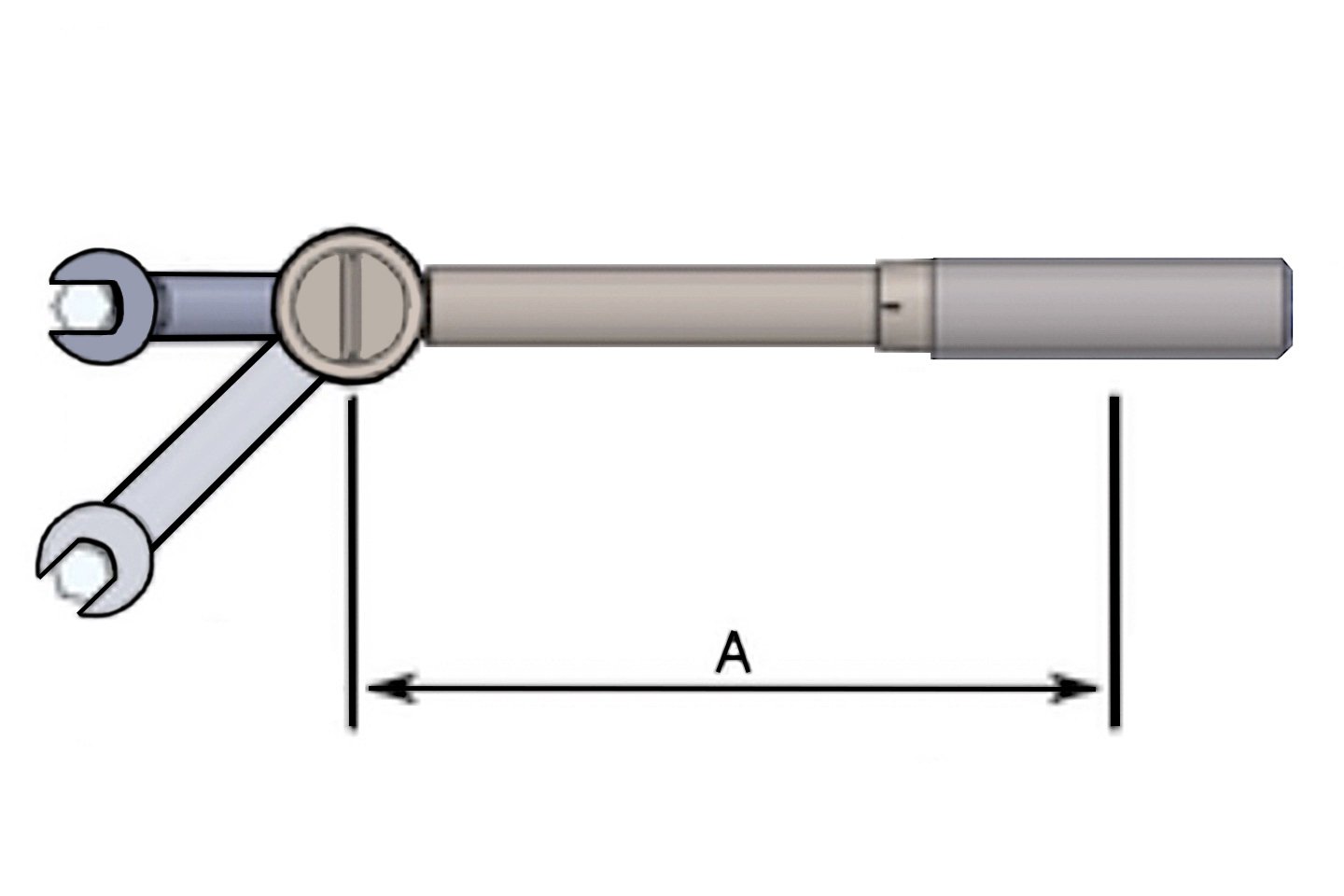
Torque is determined by multiplying the force applied by the distance from the point of the application of that force. This is an important point to understand because torque wrenches are calibrated by length.

torque spec

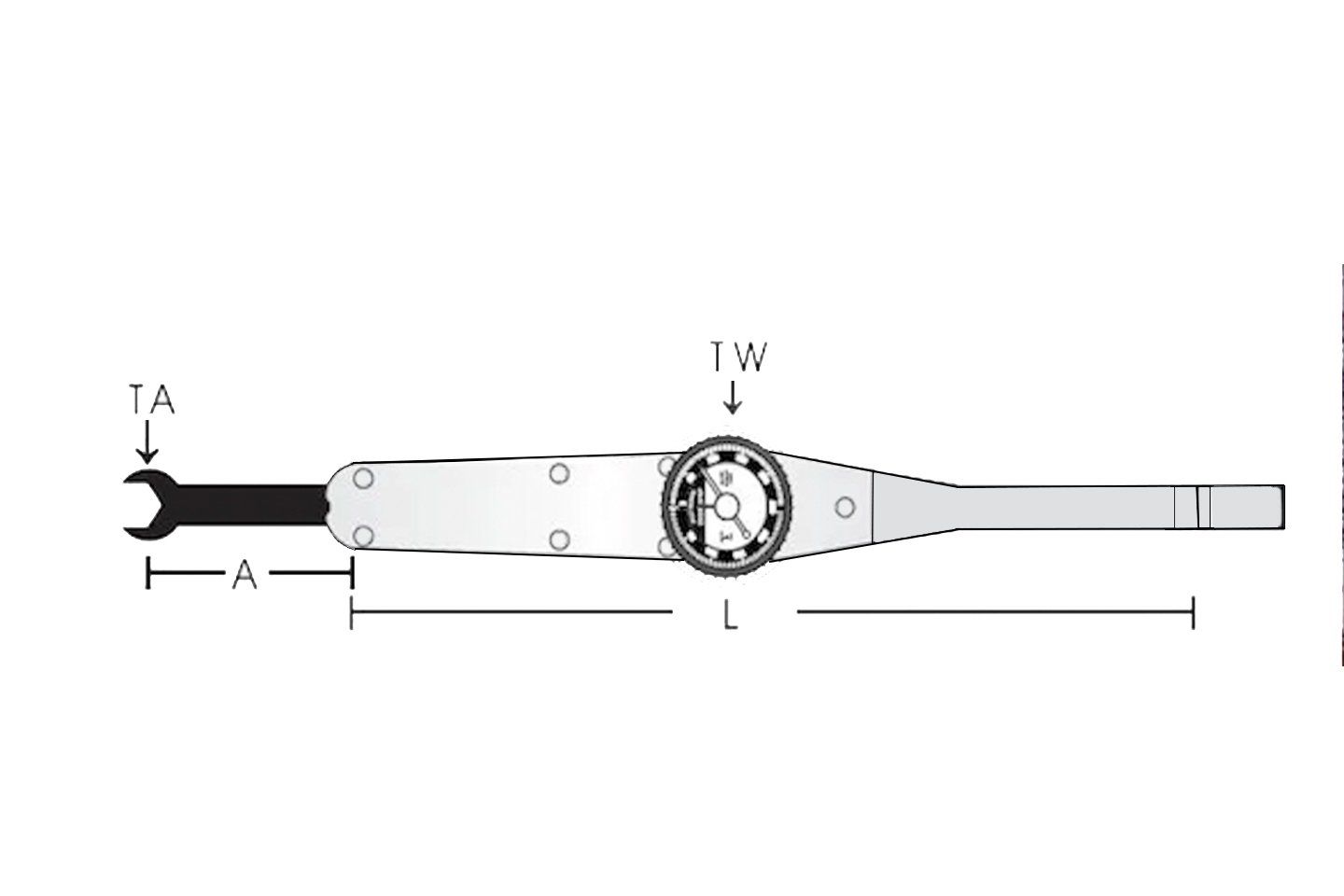
The measured length in the space defined as “A” is the effective length of the torque wrench. Adding an extension or crow’s foot that changes the length, changes the torque value at the fastener.

This becomes an issue when a crowfoot wrench or socket extension is added to the torque wrench and the distance from the fastener and the spot where the force is applied on the handle of the torque wrench has changed. In practical application, the torque applied to a fastener could actually vary if the user’s hand on the torque wrench is placed higher or lower on the handle.

Why Does Fastener Torque Matter?

Tightening fasteners to torque spec creates tension as the two or more components are fastened to resist pulling apart or separating. Once the fastener is holding the joint tight enough to prevent the components from sliding or moving, additional torque is used to stretch the fastener so it acts as a solid spring. As we’ve already determined, this stretch provides the clamp that holds the joint together.

Not all fasteners are made the same (i.e. with the same material). This is where fastener grades come from. To prevent material failure, the clamp load should never exceed the tensile load. Selecting the right fastener for the job is critical in creating a joint that will last.

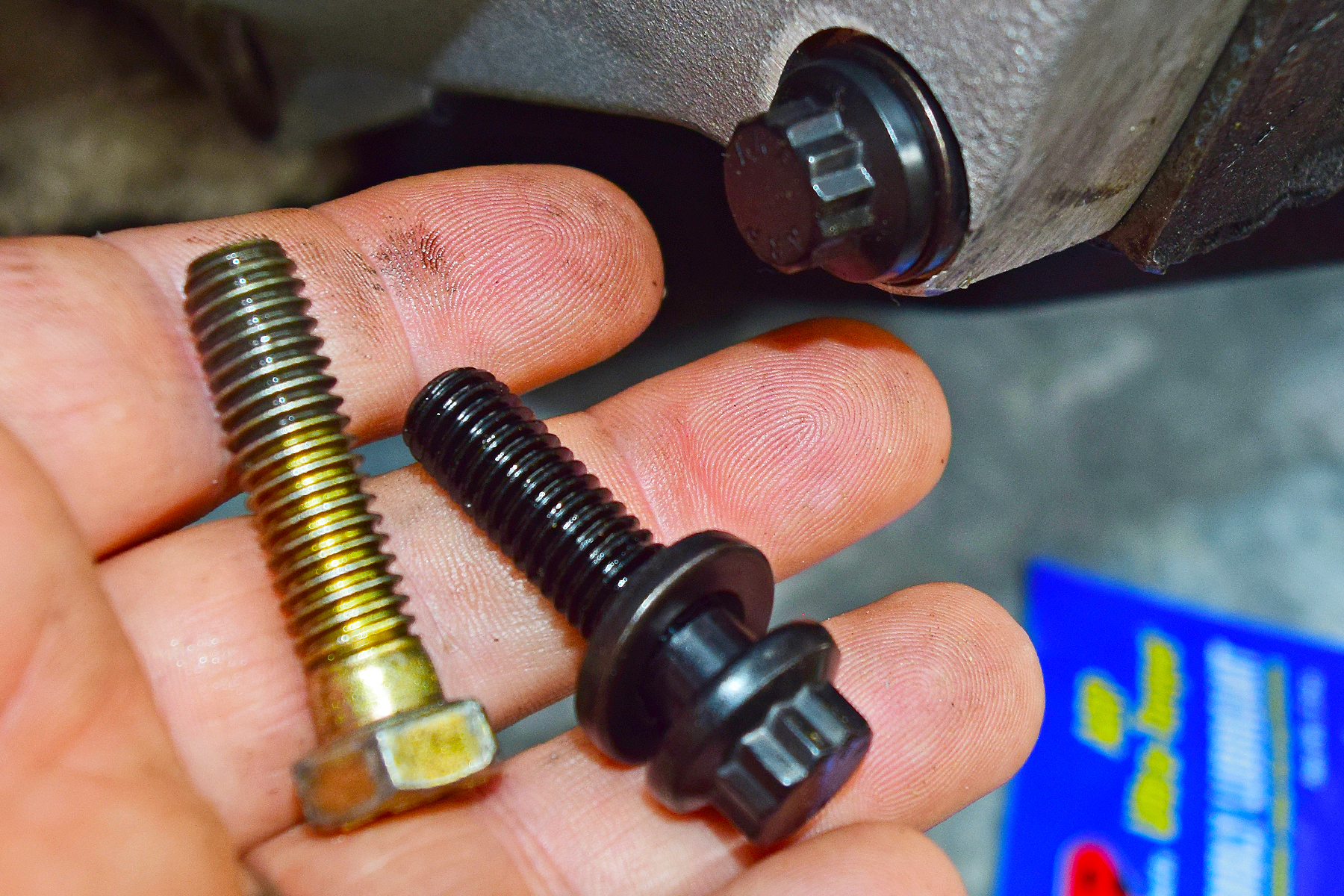
A common example is when an enthusiast adds a power adder like NOS or supercharger. Looking to save a few pennies, the stock OEM head bolts are employed. This creates a situation where the fasteners may experience material failure when the tensile load is greater than the clamp load capability of the bolt. The fastener could stretch to the point of failure.

When this happens, the bolt is often blamed for the failure when it was simply not the proper strength range for the upgrade. When components are upgraded to create more power, upgrading the fasteners to these components should also be considered. This applies to engine and suspension components alike.

torque spec

With “L” representing the effective length of the torque wrench, “A” represents the measured length of the adapter. Using the formula (TA x L) divided by (L + A) the new setting (TW) is the accurate fastener torque with the adapter. Because of the added length and leverage, this new setting will be displayed as a lower number on the indicator.

How To Determine Proper Torque Spec

It is easy to understand how proper torque spec is vital to the function of the bolt. Proper torque can be determined by several factors. We’ve mentioned bolt stretch several times already and alluded to material failure when a bolt is stretched beyond its elastic limit. Fastener material is probably the most significant factor in determining proper torque.

There are many applications where fasteners are there to make sure the bolt is snug. For applications like valve covers, water pumps, and other accessories, tight enough is just good enough. Some mechanics refer to this as “German Torque (Guttenuff)” or use the calibrated elbow torque on the “uggadugga” scale. These are typically fasteners that get reused many times without experiencing a problem.

Many critical bolts are made of steel, which resists stretching more than some other materials. Another factor that is often overlooked by many enthusiasts is the substrate material being held in place by the fastener.

Ideally, the fastener material and substrate material will be similar enough to share the joint preload. A steel bolt should be used with components that resist compression at the same rate to balance the clamping pressure.

Another major factor in determining proper torque spec is bolt diameter and class. Combined, the size and material define a fastener’s tensile strength. Many bolts are graded by industry standards like SAE J429 which covers the mechanical and material requirements for inch-series fasteners used in the automotive industry. ISO 898 governs the standards for metric-size bolts.

torque spec

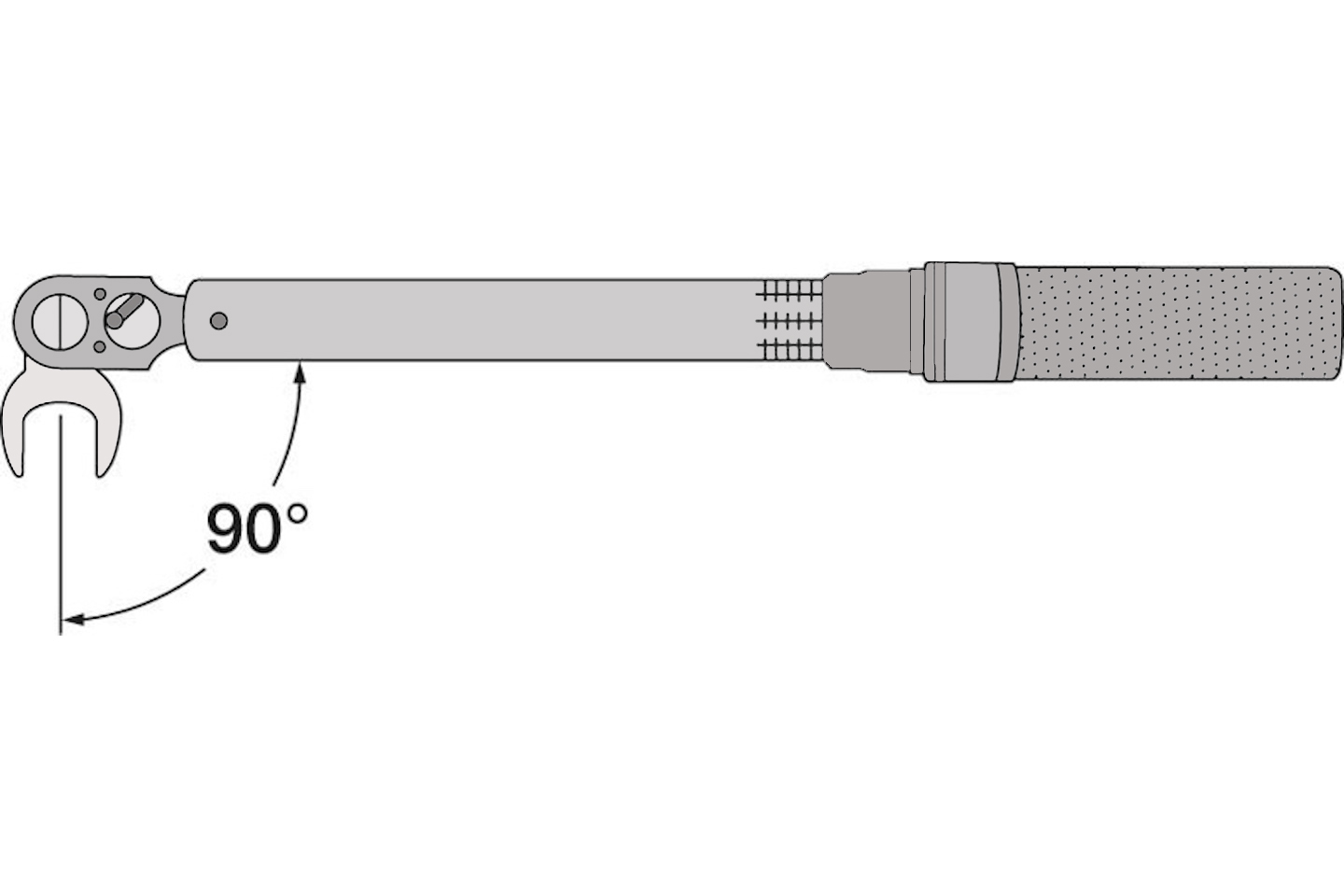
If you must use an adapter or extension and do not trust your math skills, you can simply line the adapter at 90 degrees and take out all the arithmetic work.

Hitting The Right Torque Spec

Correct torque involves a lot more than just slapping a socket on a torque wrench and cranking away till you hear a click. With the friction and resistance created by different fasteners, materials used in the fastener and the receptacle, cleanliness of the threads, lubrication used, and other factors, the torque between two identical fasteners can differ by as much as 30-40 percent. Even more in some cases. With all these variables, getting the correct torque spec applied sounds like a coin flip.

torque spec

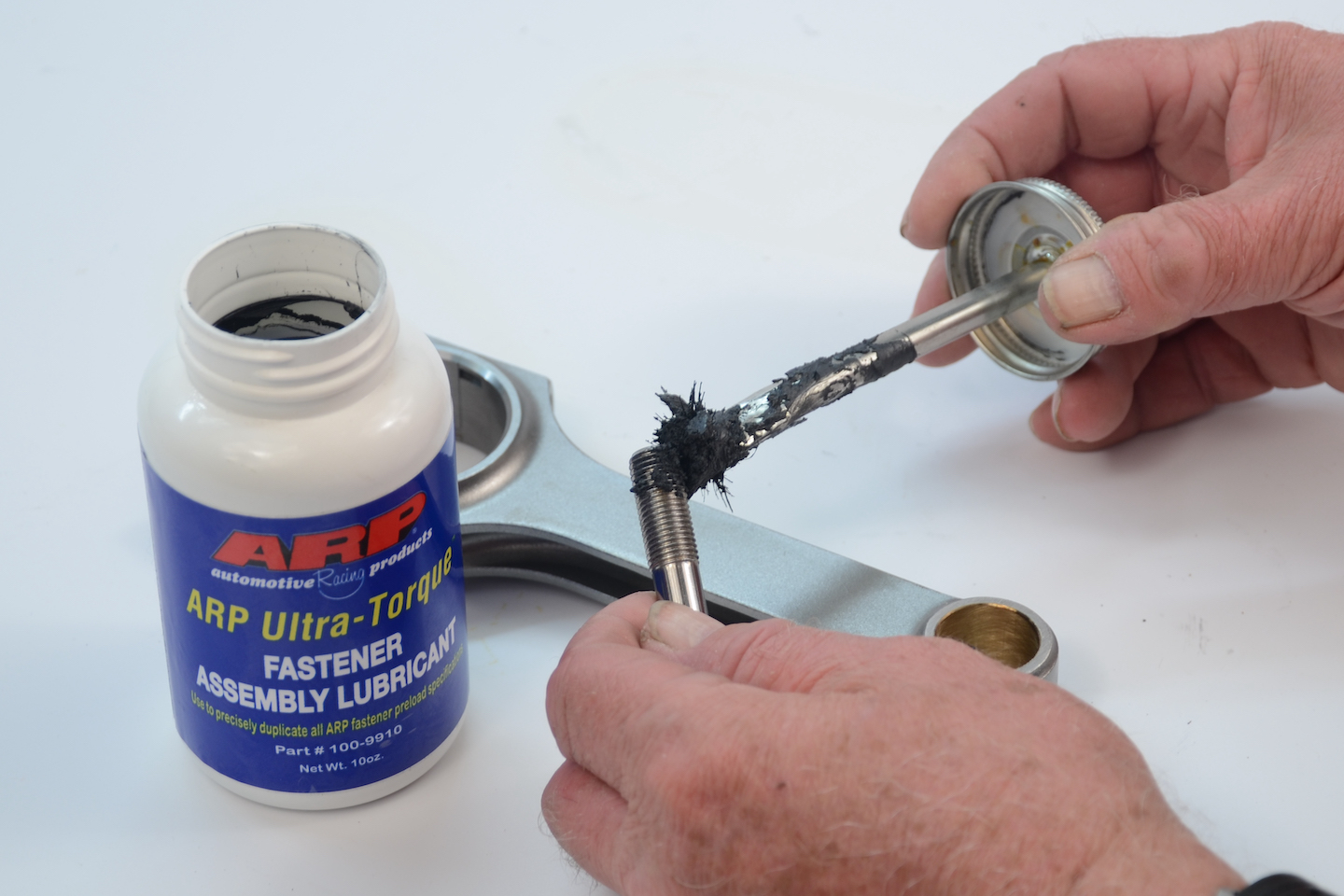
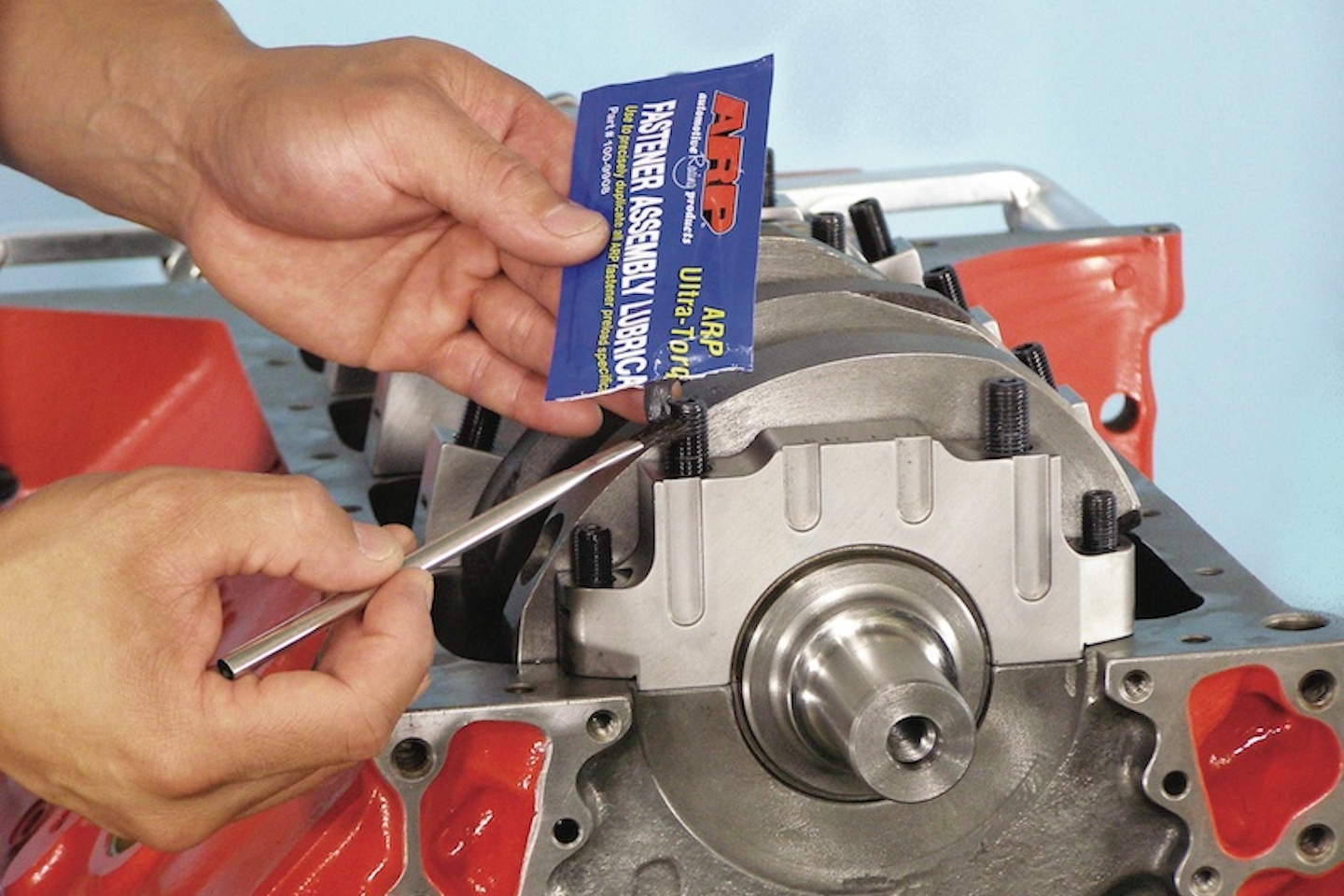
Before we are ready to call it a hit or miss function, there are some things that can be done to make torquing fasteners a more precise action. Companies like ARP understand installation pre-loads (fastener stretch) are much higher in engine installations and drivetrains these days. They spent a lot of time and money to develop their own assembly lubricant, ARP Ultra-Torque, to help with consistent, repeatable, and accurate target preloads. The best feature of the Ultra-Torque lube is an accurate preload can be achieved on the first torque cycle! The days of cycling through the torque procedure three times to achieve proper preload are over with Ultra-Torque assembly lube.

According to ARP’s published technical documentation: “The [standard] torque method is sometimes inaccurate because of the uncertainty in the coefficient of friction at the interface between the bolt and the rod. This inaccuracy can be minimized by using the lubricant manufactured by ARP.”

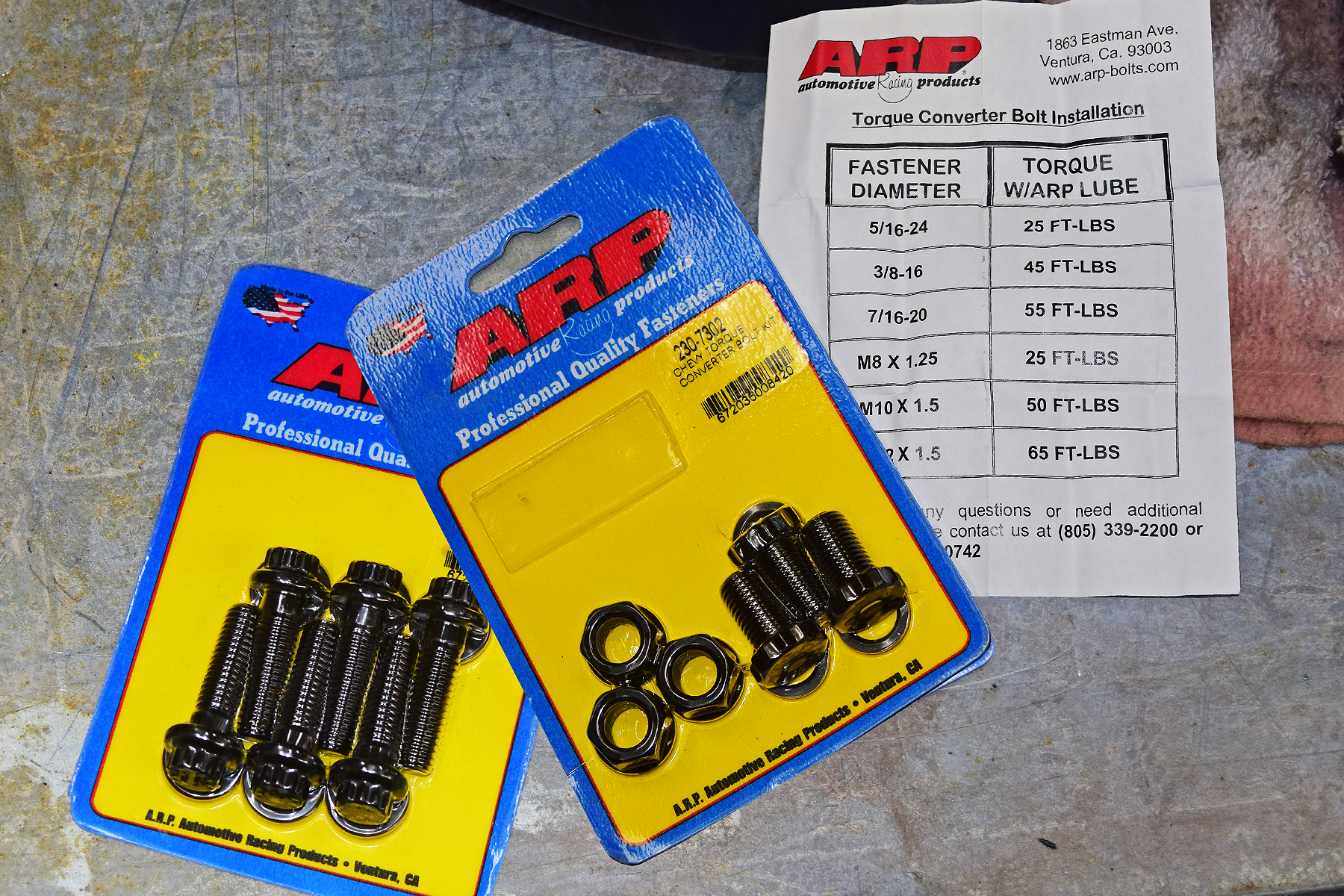
ARP constantly reminds everyone to read and follow the specifications provided with each package of fasteners.

Almost every expert agrees, engine and drivetrain bolts should never be installed with dry threads. In the past, thread locker, silicone sealant, engine oil, or assembly lube have all been used as recommended for specific installations. Some of these are still called for in certain installations. ARP is very adamant about reading the instructions that come with each particular fastener. Even if you have done the procedure a thousand times, ARP recommends reading the instructions each time as specifications sometimes change due to improvements.


Torque Wrenches And The Torque Process

For many enthusiasts, the torquing process seems simple. You grab a torque wrench with the appropriate socket and torque a bolt to the pre-determined torque spec. If that is you and all you are looking for is getting somewhere in the same galaxy as the specified torque, then by all means … roll with that procedure, but understand there is so much more involved in the process.

Now that you understand the importance of getting the proper preload on a fastener, the next step is understanding the different types of torque wrenches available and how to use them. Torque wrenches are precise measuring tools and should be treated as professional measuring instruments. Ensure it is stored in a protective box and protected from shock.

Don’t be fooled by the length of a torque wrench. Most of them are longer for leverage but they are not a breaker bar. A torque wrench is a tightening instrument and should never be used to loosen bolts or fasteners.

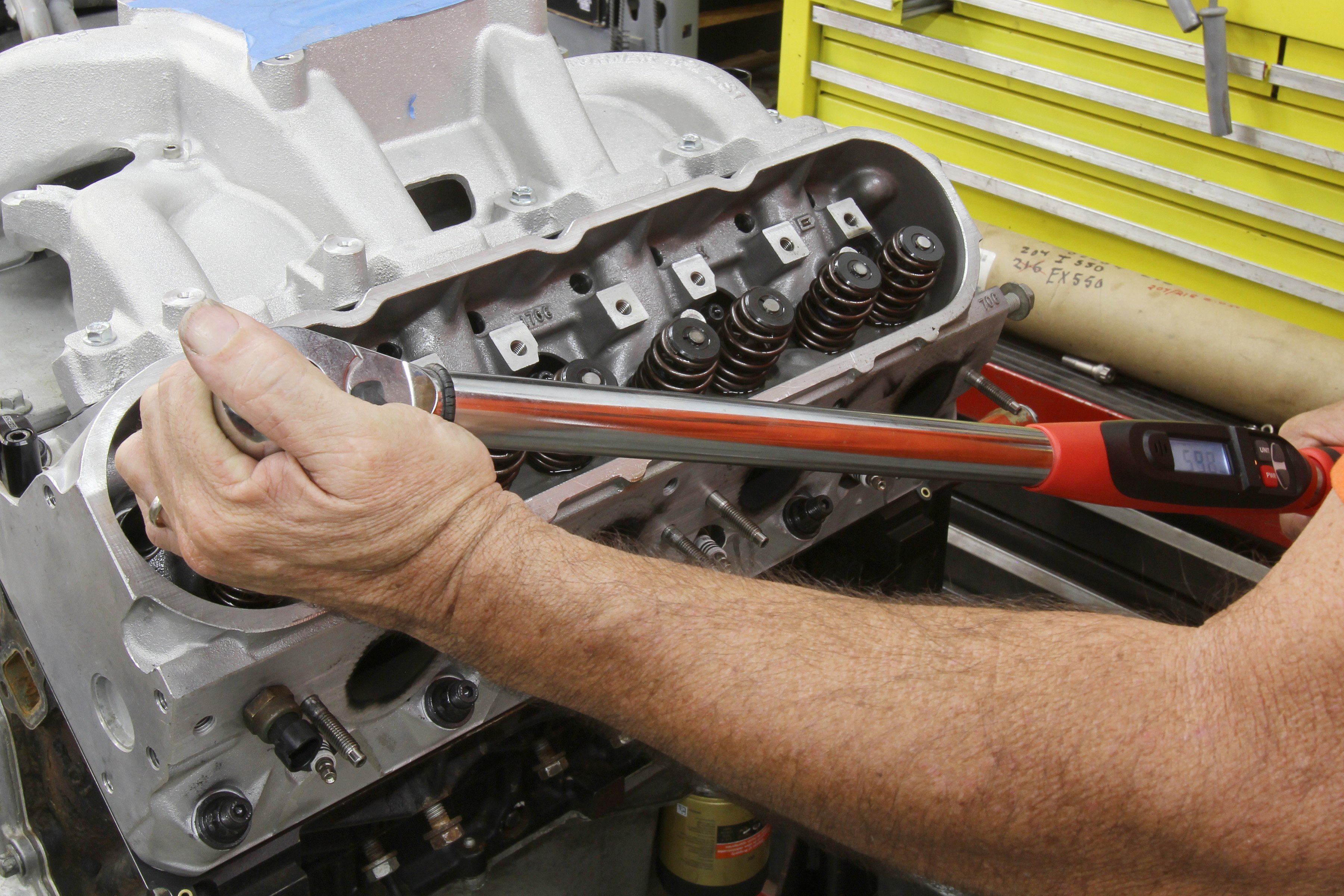
Because some torque wrenches are longer and have more leverage, it is easy to apply pressure with one hand in a smooth, continuous motion. Most torque wrenches have an indicator mark showing where to grip the wrench for the best results. Do not use an extension or cheater bar on the handle of a torque wrench as this impairs the correct torque signal.

torque spec

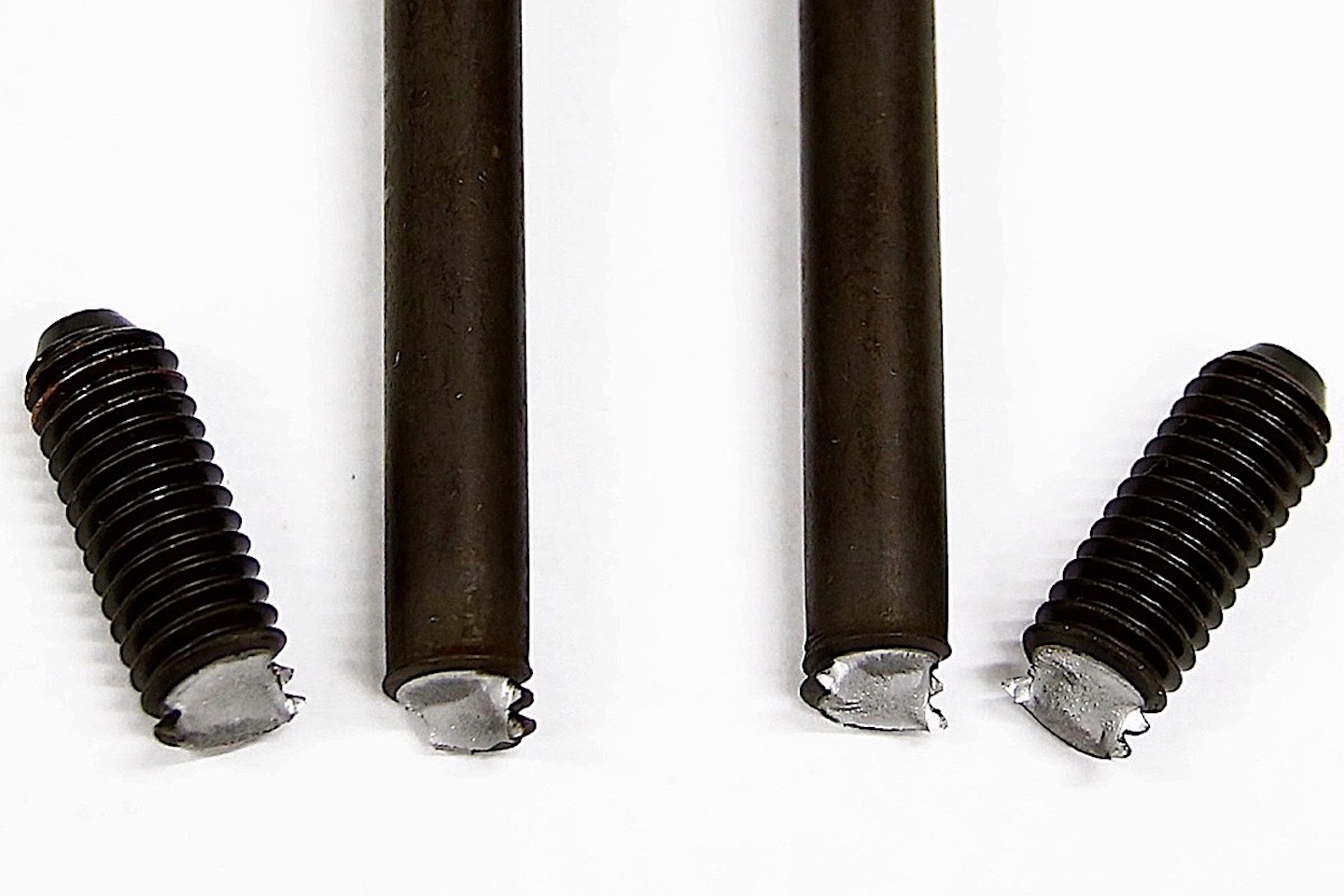
Over-tightening a bolt can have disastrous results.

It is easy to over-tighten a fastener, even with a torque wrench. Use caution to avoid over-tightening a bolt when the set torque spec is reached. Even a “click-type” torque wrench, which is designed to prevent over-torquing, can accidentally over tighten a fastener. If this happens, loosen the bolt with a ratchet or wrench, then reapply the proper torque spec to the fastener.

Torque Wrench Care

We have already mentioned that torque wrenches are precision measuring instruments that should be respected and treated with care. In addition to storing the device properly, there are a couple of things to keep in mind. If you are using an adjustable “click-type” torque wrench, reset the torque wrench to the lowest value before putting it away. This releases the spring pressure and prevents fatigue. Never set a “click-type” torque wrench to zero as the internal mechanism requires a small amount of tension in order to prevent components from shifting and reducing their accuracy.

Most companies involved in automotive maintenance along with quality fastener companies like ARP advocate regular frequency calibration for torque wrenches. This helps with torque accuracy. In fact, ARP has offered free torque wrench testing at NHRA events and has for many years. According to ARP’s PR agency, “it’s not uncommon to see an error of 35 percent or higher.”

ISO standard 6789 covers the construction and calibration of hand-operated torque tools. This standard sets the re-calibration for torque wrenches at 5,000 cycles of torquing or 12 months, whichever is the soonest. The American Society of Mechanical Engineers (ASME) standard echoes the ISO standard for re-calibration. These standards are repeated by tool manufacturers and distributors like Chicago Pneumatic. Not to mention, if the tool has been dropped or damaged, it must be sent to service immediately.

Where To Go For More Information

If you would like more information on bolt torque or ARP products, visit them online at www.arp-bolts.com. They have a full tech section published at technical.php. ISO 6789 can be previewed here. Details on ARP’s Ultra-Torque assembly lube can be found here.

Posted on Leave a comment

The Dilemma Of Ethanol Fuels

E85 is a wonder drug for people looking to optimize the performance of their vehicle without liquidating assets to afford race fuels. Ethanols’s cooling properties help prevent knock while still maintaining an octane rating of 105. It’s no wonder enthusiasts flock to the yellow-handled pump. While the perks of ethanol are high, there are some downsides. Thankfully, Lucas Oil has products to help combat the negative side effects of ethanol fuels.
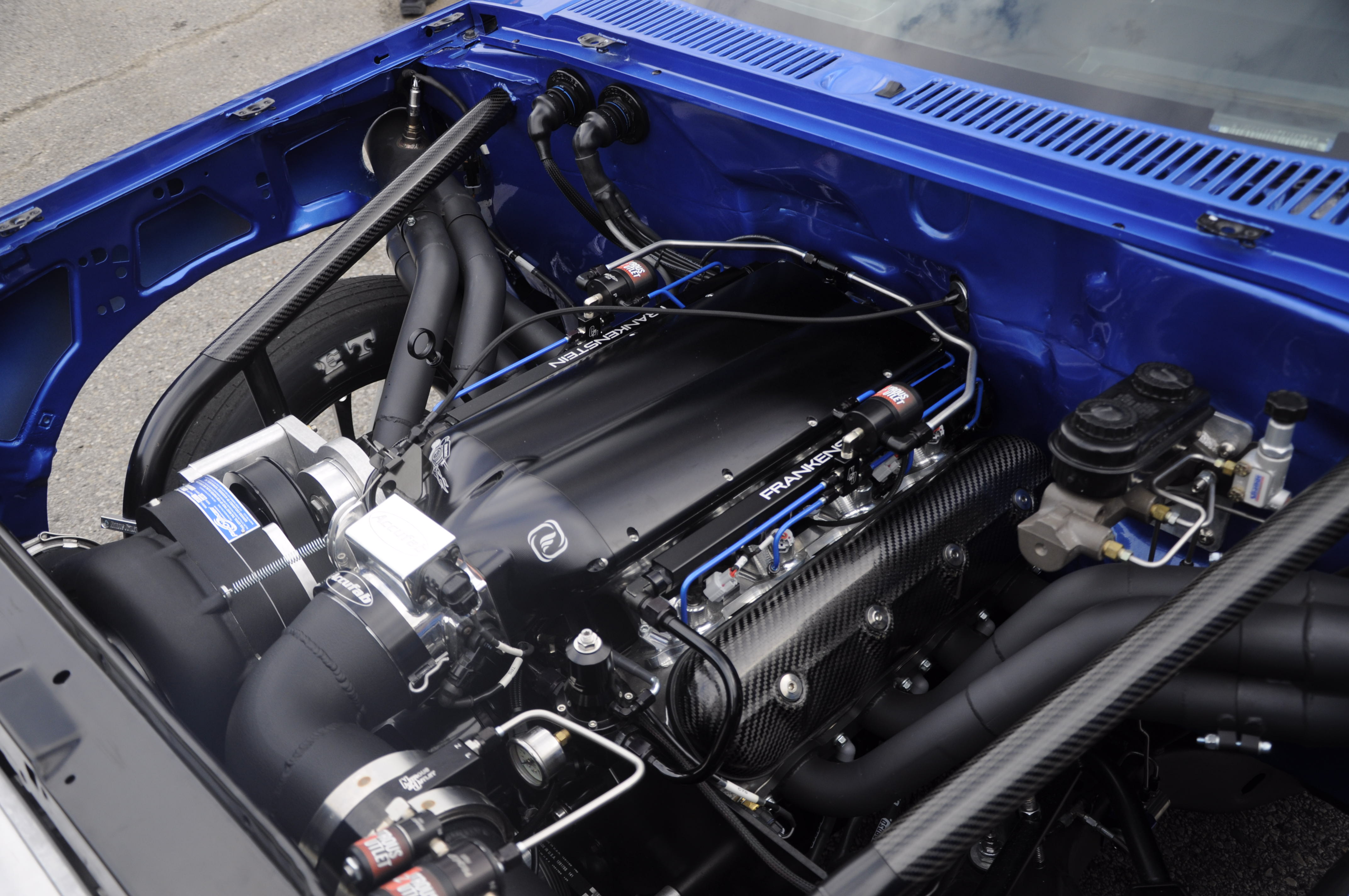
Idle Fuel Is The Devil’s Workshop

We all know the phrase, “Nothing good lasts forever,” and ethanol is no different. The ability of our corn blended friend to absorb water quickly, denotes it as a “do not store” fuel. It can also wreak havoc on our fuel lines and engine causing rust and corrosion. If stored untreated, it turns into a varnish and begins to gel, clogging up injectors or fuel filter. Even worse, ethanol can soften rubber components in the engine creating a blockage.

The downsides to ethanol-based fuel are pretty strong. While the ethanol-based fuel can make big power, you need to make sure you maintain it. If you’re between races, broken down, or need to winterize your vehicle, you only have a few options to keep your fuel system safe: you can dump the tank or add a fuel conditioner.

Minimizing The Negatives

Lucas Oil sought out to make sure the negatives of Ethanol fuel are only a bottle away from being dissolved. Its Ethanol Fuel Conditioner with Stabilizer has been created to defeat the harmful downsides of ethanol-based fuels. This product is not only meant for E-85, but can also be used with any fuel product with ethanol. This would include the E-10 and E-15 found in our pump gasoline. The fuel conditioner offers oxidation inhibitors and combats combustion chamber deposits. It also saves your injectors from needing to be sent out to be cleaned. The best part is your expensive fuel filters are completely safe as the product is completely soluble.

“We created the Fuel Conditioner with Stabilizer to help prevent rust and corrosion, while cleaning injectors, valve seats and combustion chamber.” – Tom Bogner, Director of Research and Development at Lucas Oil

Easy Fix

We all love the potency of ethanol, but need to take steps to ensure the negatives remain at a minimum. Instead of spending your Saturday dumping fuel and finding ethical locations to dump them, pick up a bottle of Lucas Ethanol Fuel Conditioner with Stabilizer instead. I’m sure that time can be better spent preparing for next year’s race season.

Posted on Leave a comment

Connecting Rod Shapes…And Some New Designs


Editors Note: The following editorial was supplied by Race Winning Brands and its family of connecting rod manufacturers and re-printed here on our digital pages for educational posterity.

We know that connecting rods take a tremendous pounding with each engine revolution —and in today’s high-boost world the stresses are elevated to new heights. Similarly, engine builders strive to minimize weight without sacrificing strength in order to improve efficiency and increase RPM potential, while being mindful of clearances.

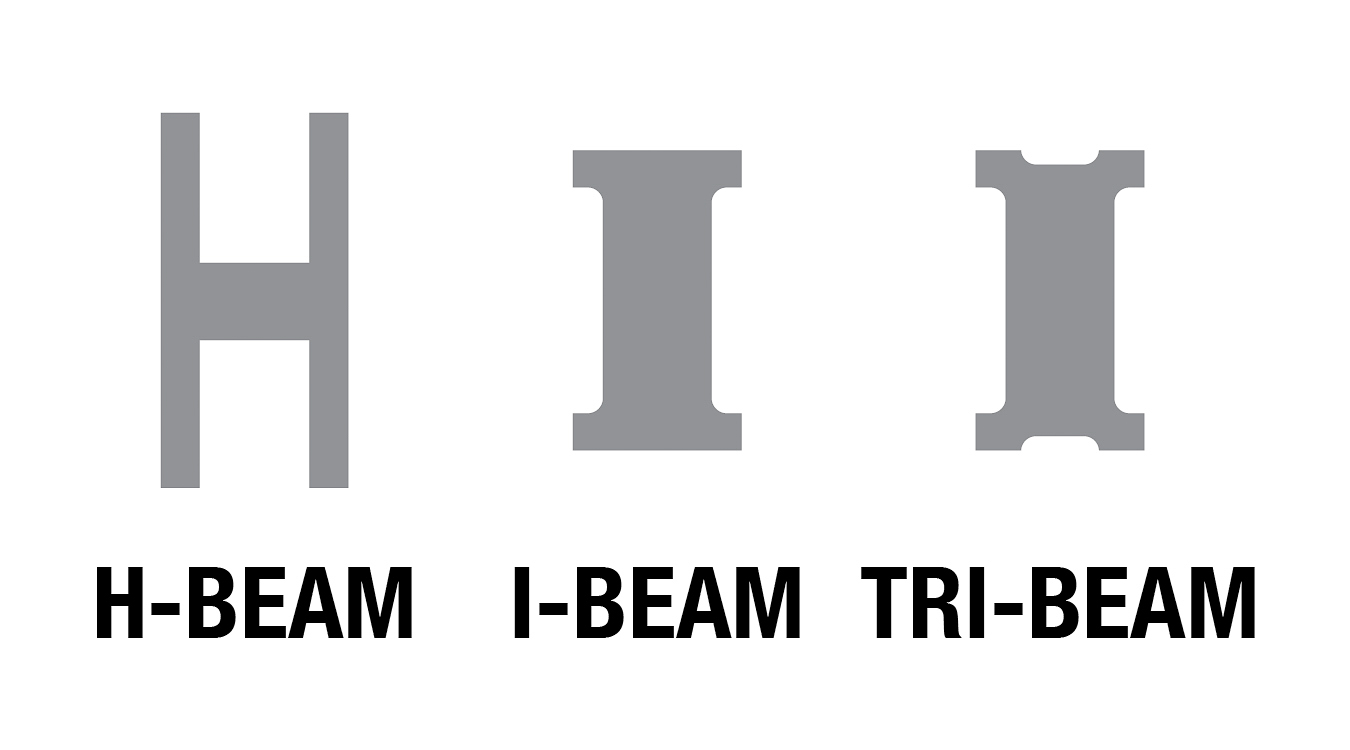
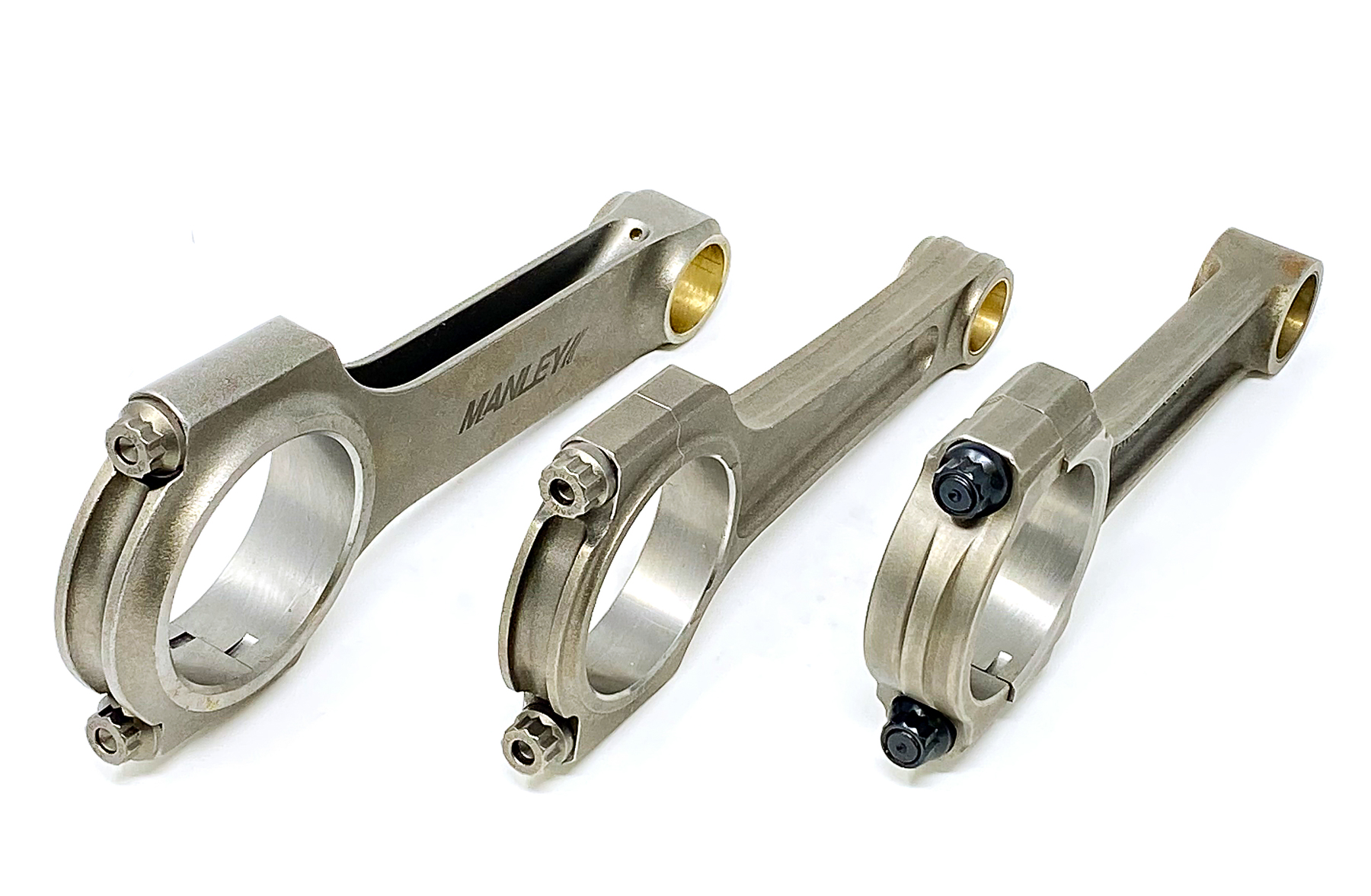
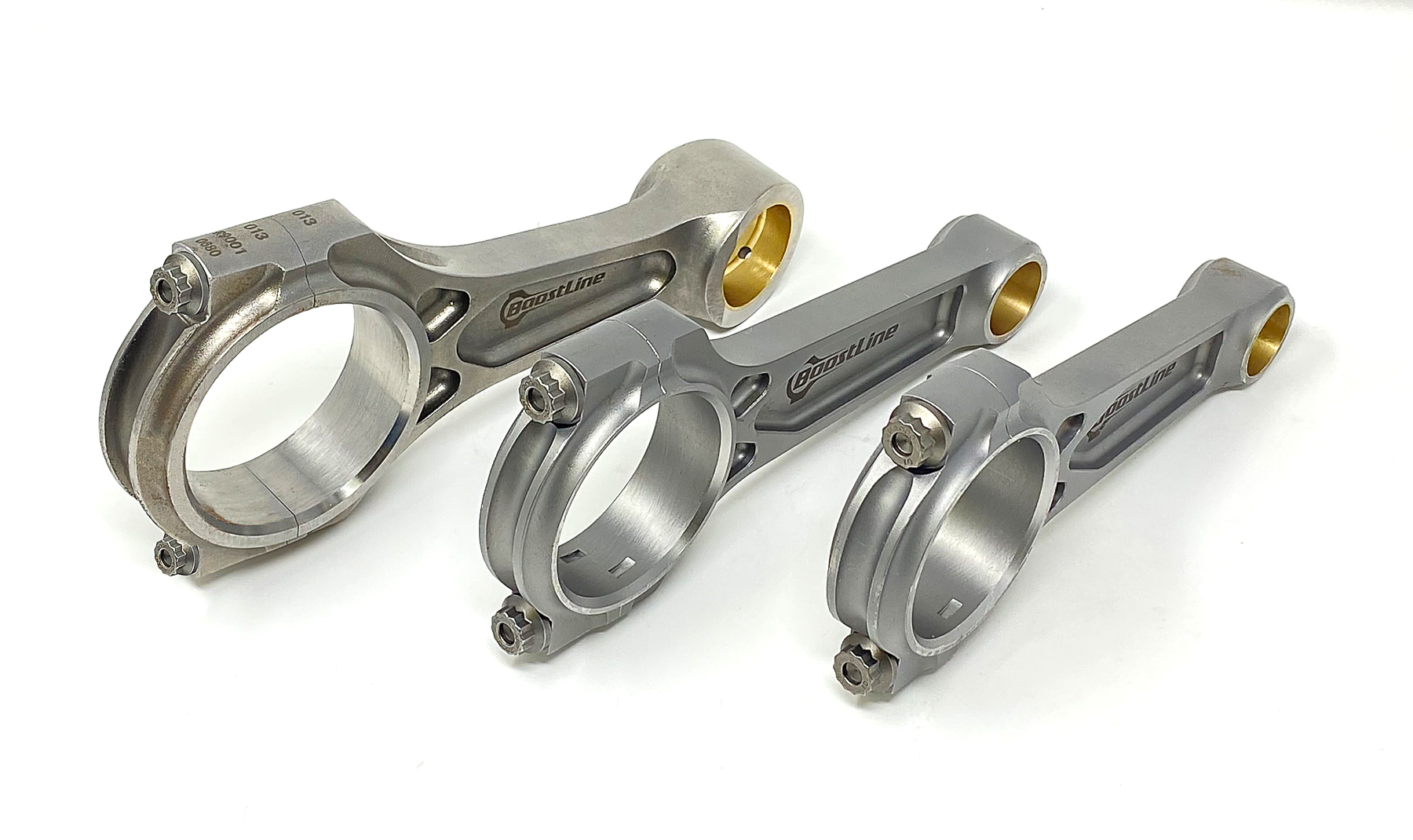
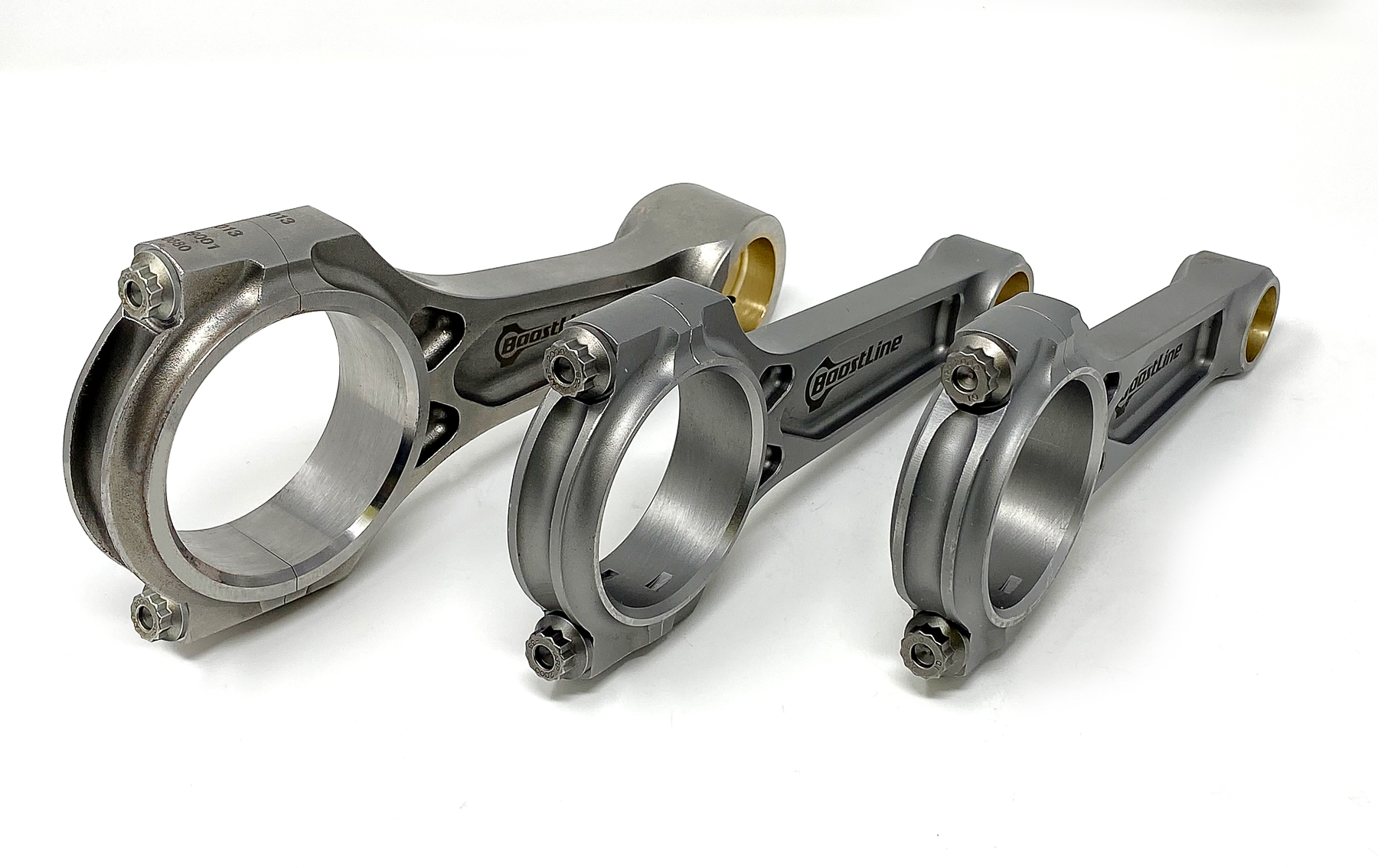
Today’s connecting rod choices range from popular priced forged steel H-beam models, to unique I-beam designs and sophisticated billet aluminum rods.
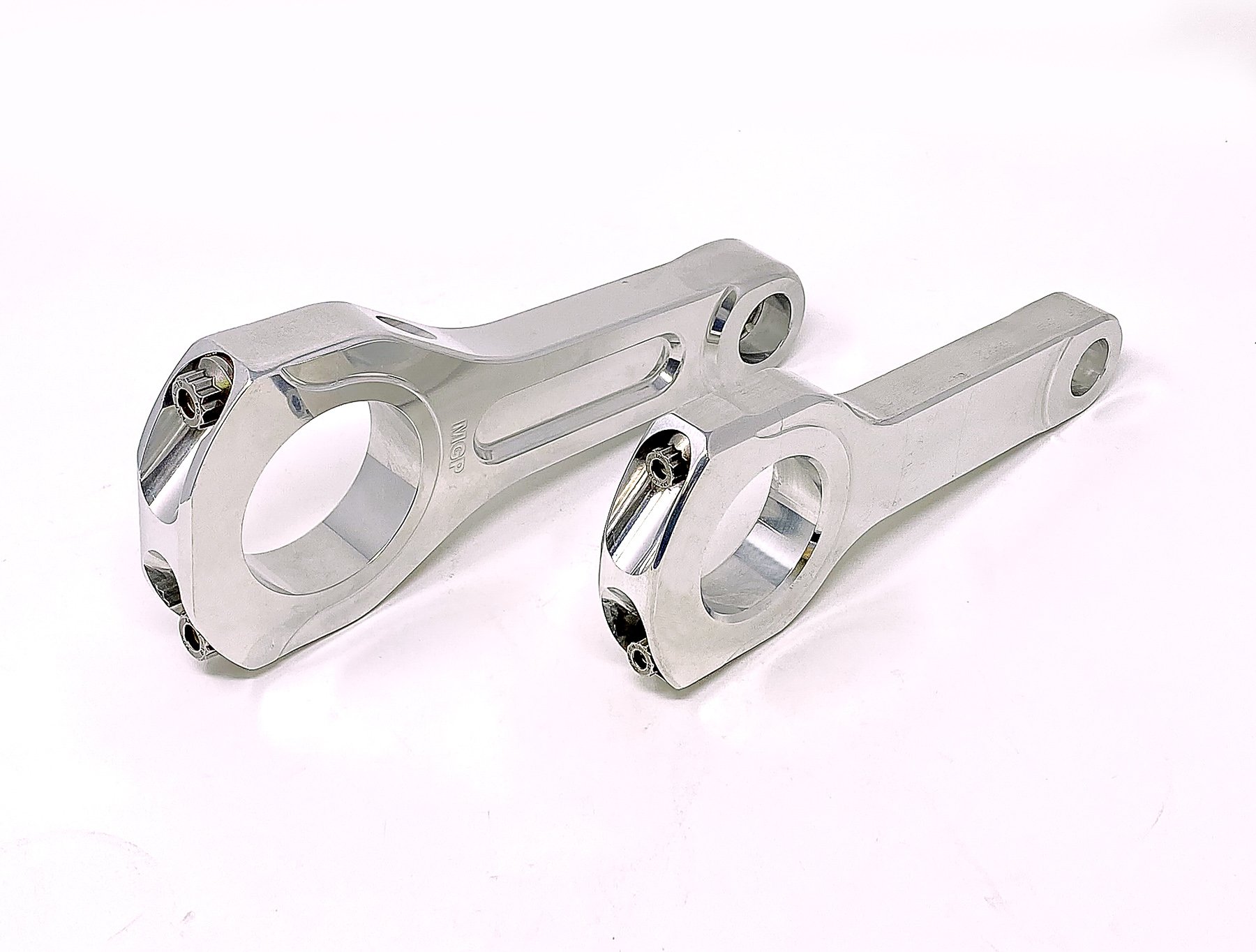
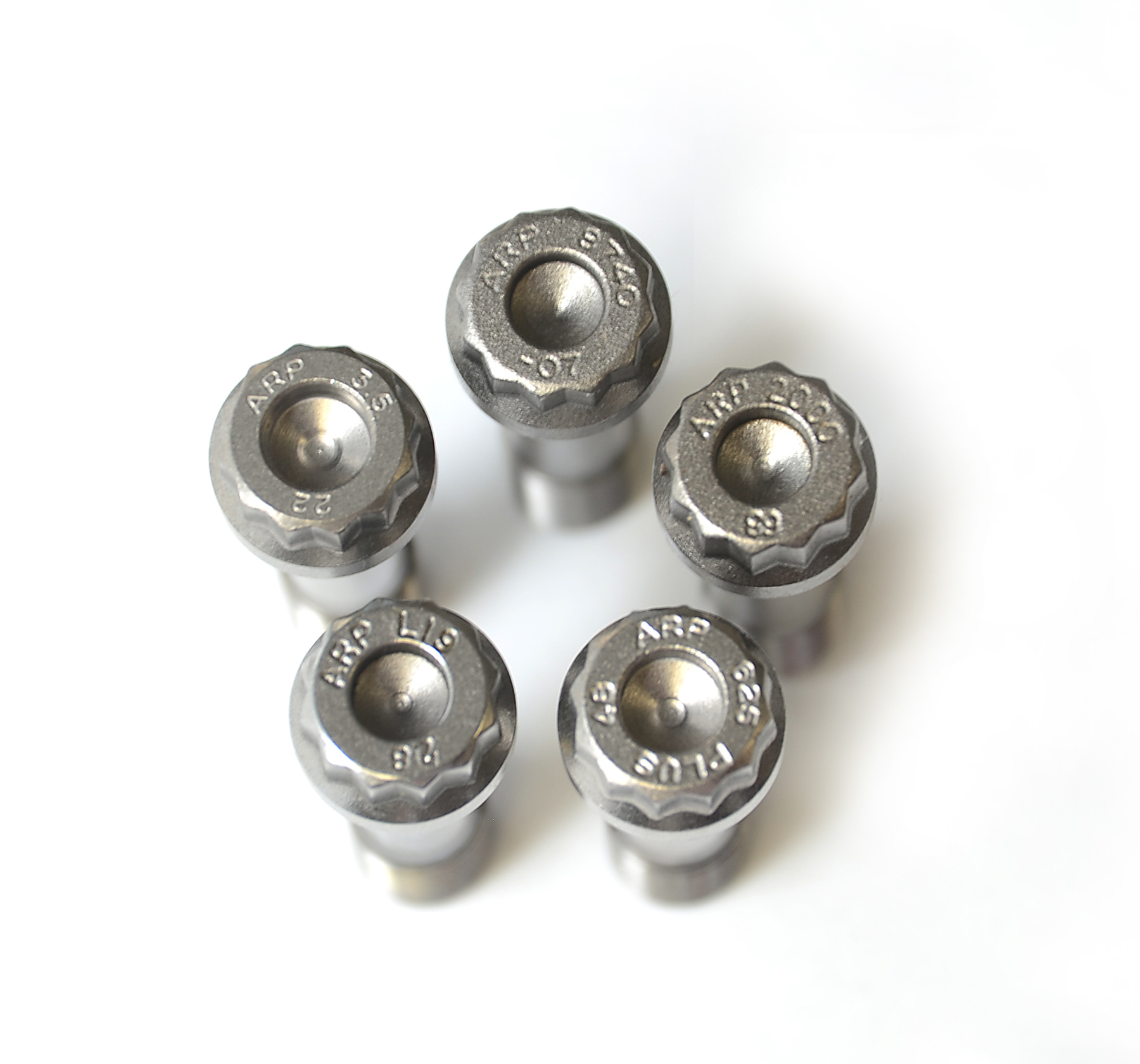
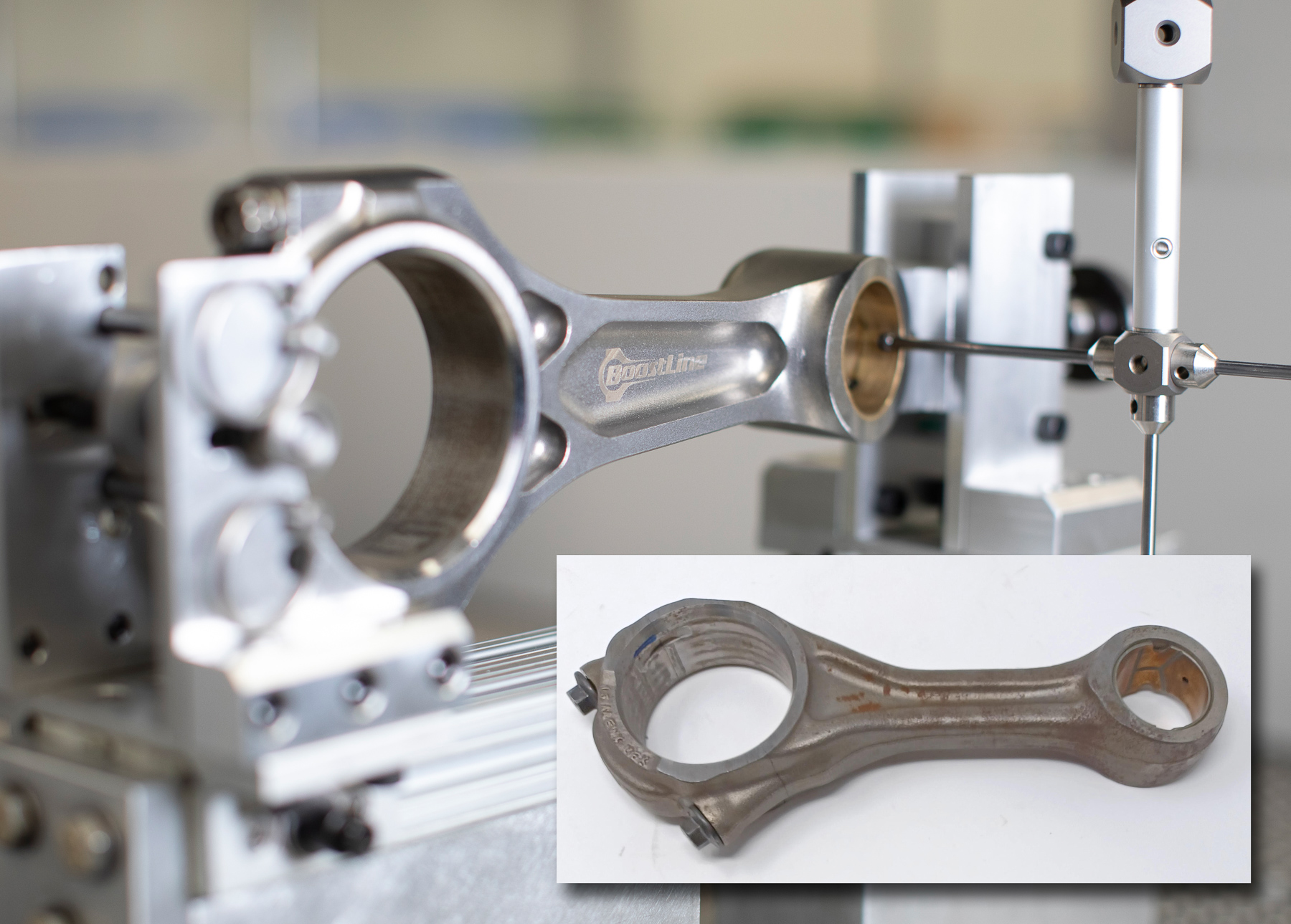
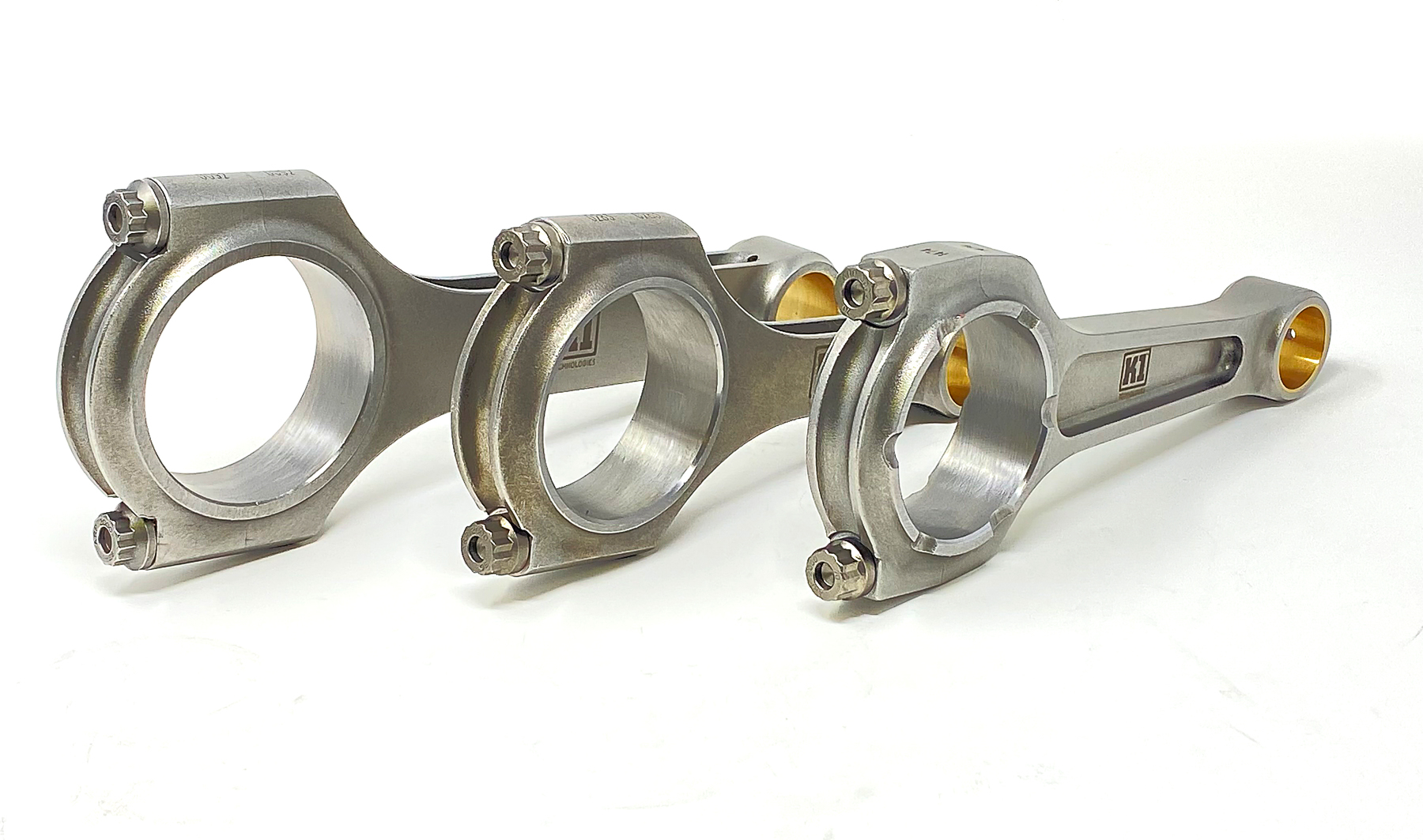
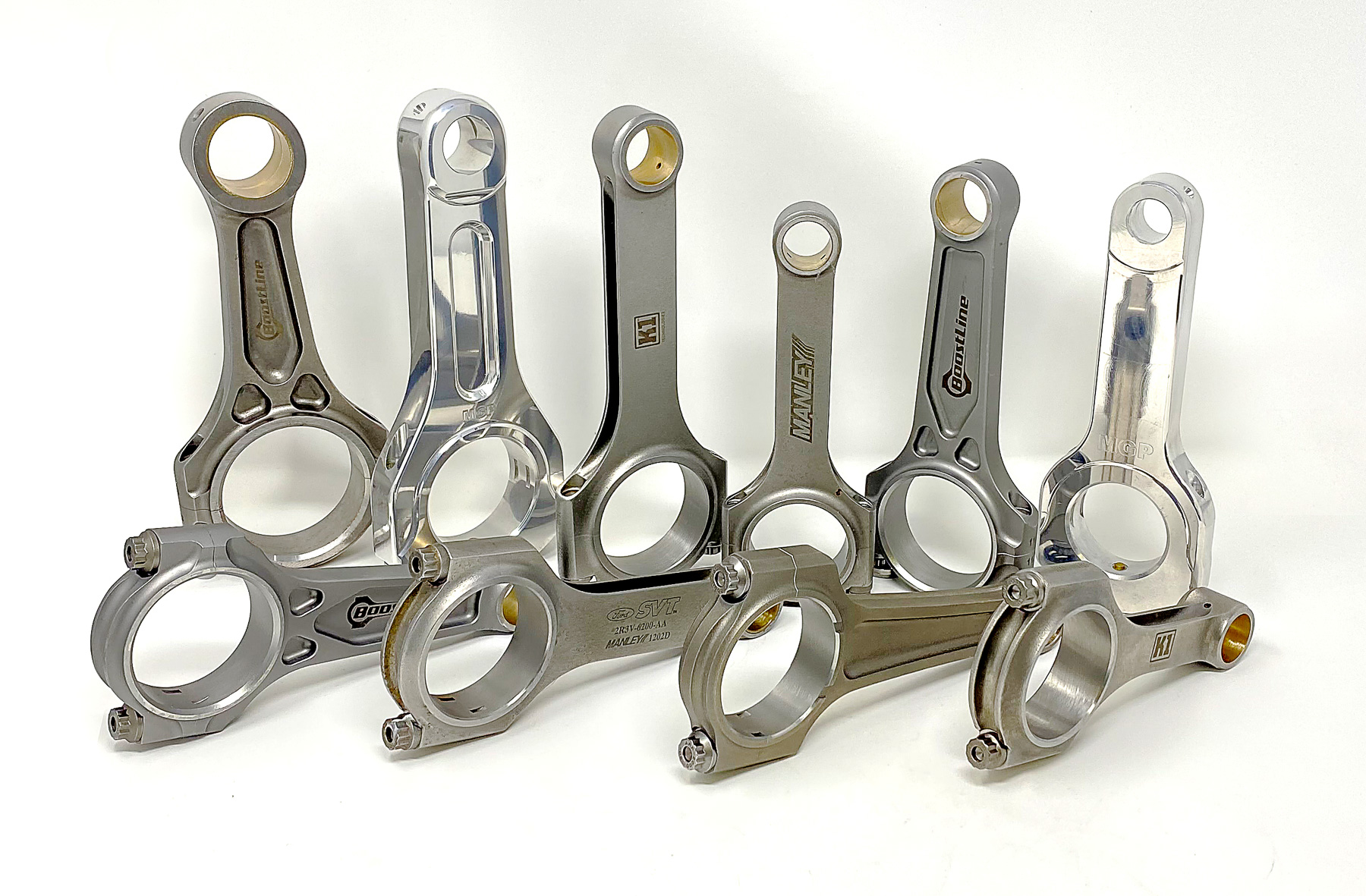
The industry has responded to these varied challenges by way of design, metallurgical and manufacturing improvements, and for input we turned to the experts at Race Winning Brands, the corporate entity that consists of 10 leading automotive aftermarket manufacturers (along with Powersports-focused firms), with four of them producing connecting rods that range from popular-priced H-beam steel rods for street and E.T. bracket applications to highly sophisticated billet aluminum rods for drag racing’s extreme classes. RWB’s brands include rod-makers BoostLine, K1 Technologies, Manley Performance, and MGP.

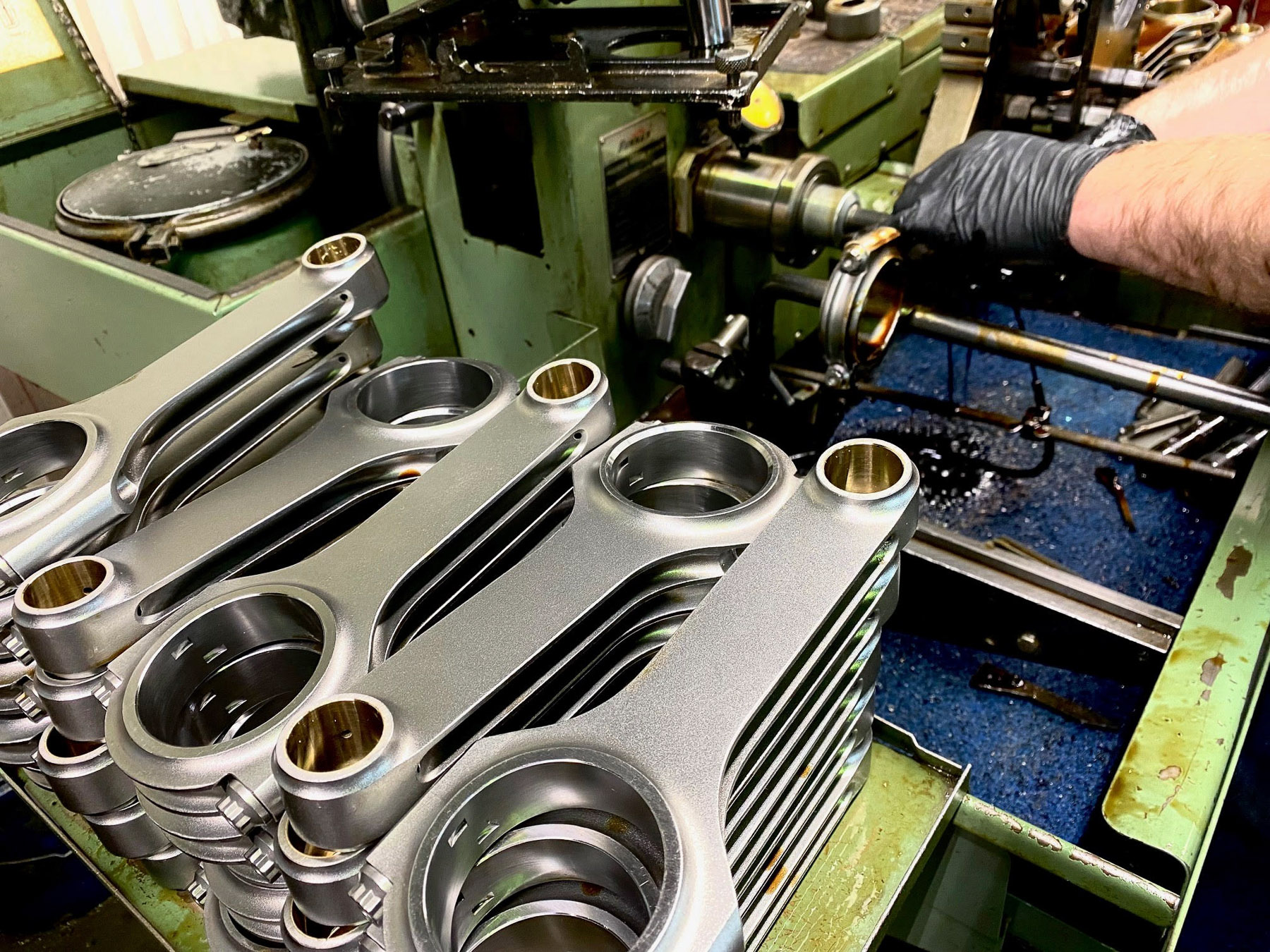
Manley’s unique Tri-Beam rod being machined for pin end oiling holes at 10 and 2 o’clock for better lubrication.

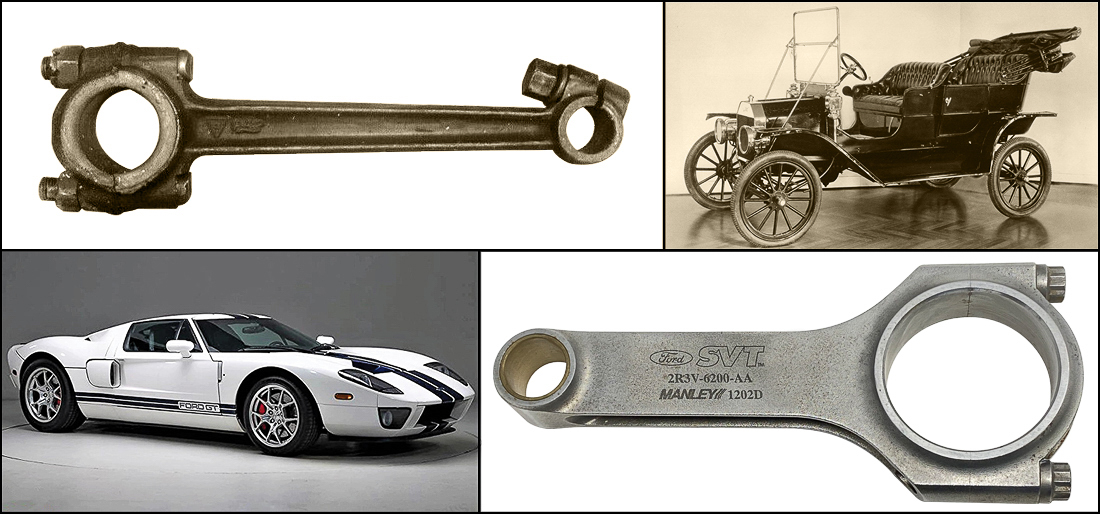
Since 90-plus percent of racing engines are built with steel connecting rods, let’s start there. Industry offerings range from proven H-Beam rods to highly sophisticated variations of the original I-beam design that has been employed in production engines for over a century.

In fact, let’s look at a Ford Model T rod; It’s an I-beam design with a center-to-center length just shy of 7-inches.  The babbit material was poured into the big end and shaped (no separate bearings) and the pin end clamped onto the wrist pin —these were the days before “floating” wrist pins became popular. Weight? Not really a factor as the Model’s T’s pistons were cast iron. Compression ratio? Try 4:1. We’ve come a long way, baby!

We’ve come a long way from the spindly I-beam rods used in Model Ts to special H-beam rods like those from Manley used as OEM by Ford.

Fast-forward to the 21st century, where Ford’s LeMans-styled GT, with a supercharged 5.4L engine, came from the factory with 4340 H-Beam connecting rods from Manley Performance, as did the later SVT Mustang Cobra.

It’s been said that the H-beam rod design came out of WWII, when aircraft engines infused with nitrous oxide in high-altitude combat experienced failures with I-beam rods. This technology migrated into the automotive aftermarket in the 1960s, with Fred Carrillo a primary mover.

Today’s H-beam rods enjoy advances in metallurgy, manufacturing technology and contemporary rod bolts. All four manufacturers contributing to this article, as well as others, rely on ARP for these critical fasteners. The most popular are entry level 8740 chrome moly (190,000 psi nominal tensile strength), the popular ARP2000 alloy (220,000 psi) and for extreme duty applications the Custom Age 625+ (280,000 psi), as well as L19 (260,000 psi) and 3.5 (280,000 psi).

One thing these rods all have in common are ARP rod bolts, which range from 190,000 psi 8740 steel to more sophisticated alloys like L19 that are nominally rated to 280,000 psi tensile strength.

K1 Technologies GM Trey McFarland, a 25-year industry veteran said, “The basic shape of the H-beam rod has not changed in decades, but it’s important to note the features that make them vastly superior to OEM rods. Like others, K1 rods are forged from 4340 steel alloy. But our entry level rod comes with ARP 2000 bolts, which provides the necessary clamping force for the large majority of sportsman-level racers.”

McFarland added, “We have recently developed a rod for the Ford 7.3L Godzilla engine, that makes Ford’s new affordable big-block engine more durable and race-ready.”  K-1 Technologies also manufactures I-beam rods for select sport compact applications.

Manley Performance offers a wide spectrum of forged steel connecting rods that include H-Beam, I-beam and a proprietary “Tri-Beam” design that combines attributes of both H-Beam and I-Beam designs.

Here’s a cross-sectional drawing of connecting rod beams showing the differences between Manley’s I-Beam, H-Beam and Tri-Beam rods.

One area that Manley has focused on is a series of rods that have been accepted by NHRA and are legal for use in Stock and Super Stock applications. They have “approved” rods for a huge variety of engines that include AMC 390-401, Chevy V-6, small-block, big-block and LS, Olds, Pontiac, Ford and Chrysler applications. Manley is also an NHRA major sponsor and posts contingency awards for rods.

Weight is a key factor and as a rule of thumb I-Beam rods are lighter than H-Beams of a similar size. But for advocates of both designs, Manley offers an “H-Lite” series that’s some 50 grams lighter than a standard H-Beam and “Tour Lite” I-Beams originally developed for oval track competition are lighter yet —getting down to 520 grams for a 5.7-inch small-block Chevy rod.

Manley Performance offers both H-Beam and I-Beam rods, as well as its innovative Tri-Beam design for highly-boosted applications.

The Tri-Beam, which is part of Manley’s Turbo Tuff series, was designed specifically for highly boosted sport compact applications. According to Manley GM Michael Tokarchik, “We took our I-Beam rod and added ribs to the pin end, beam and cap which has added strength and helps maintain bore roundness on both ends. We incorporated pin oil holes at 10 and 2 o’clock to improve wrist pin lubrication and undercut the beam to optimize strength-to-weight.”

A batch of H-beam rods being honed on the pin end.

While most of Manley’s connecting rods are manufactured from 4340 steel alloy, they do offer a premium I-Beam rod made from the highly desirable 300M alloy. This, of course, improves the strength of the rod and allows unnecessary weight to be pared via FEA (Finite Element Analysis). These “Pro Series” rods are available for late Chrysler Hemi, Chevy LS/LT and Modular Ford (including Coyote) engines.

A relative newcomer in the grand scheme of things is BoostLine. While the RWB engineering team behind this unique rod has decades of experience, the design was patented in 2018 and the new brand subsequently launched.

BoostLine’s patented design rods are available for a variety of applications that include diesels —which have been dyno tested to handle over 2,000 HP.

According to BoostLine’s Director of Product Development, Nick DiBlasi, “The unique part of the BoostLine rod is the triangulated wide-beam design along with three machined weight pockets. This provides absolute strength, and allows us to remove unnecessary weight that does not compromise the integrity of the rod.”

Designed specifically to withstand the rigors of highly-boosted engines, the latest iteration of the BoostLine rod is for Cummins and GM DuraMax diesel applications. As part of the rigorous R&D that went into qualifying the product —which included FEA— they were installed in engines and subjected to 2,000-plus pound feet of torque pulls on the dyno.

Are turbos mandatory? BoostLine’s DiBlasi says, “While the rods were designed for heavy-duty forced induction applications they are happily at home with nitrous engines and virtually any marine application. We have customers using them in normally aspirated engines where they just want the longest possible life.”

Sticklers for quality control, Nick added, “All BoostLine connecting rods undergo a rigid 25-point inspection that includes CMM, multiple visual and manual inspections along the way. We pride ourselves in having a product that’s ready for installation.”

Aluminum rods are ideally suited for many drag racing applications as they function as a “shock absorber” of sorts and mitigate the tremendous shock loads that highly boosted (and fuel-burning) engines transmit to the crankshaft. The rods are also relatively light in the grand scheme of things and facilitate high RPM performance.

Precision machined from proprietary aluminum extrusions, MGP rods are available for applications from high-winding small blocks to big-inch Hemis.

MGP, a company known for its jewel-like billet aluminum rods, was also a fairly recent addition to the RWB family. Boasting a design that has been refined over the years (and featuring a special serrated cap), the process begins with proprietary alloy aluminum extrusion that benefits from superior grain alignment and compaction as compared to a plate, and is essentially custom CNC-machined to the customer’s requested specifications and finished to a tolerance of .0002-inches. A close look at the rod confirms the extraordinary level of machining excellence.

Both ARP Custom Age 625+ and L19 fasteners are employed on these rods. Depending on the application, they are offered in three different head sizes (3/8-, 7/16-, and 1/2-inch) and require different torque values to achieve the desired clamping load.

Of course, achieving the proper fastener preload is of paramount importance.

Popular applications for MGP aluminum rods include Pro Mod, Alcohol Funny Car and Dragster, nostalgia fuel, Comp, Pro Stock plus a variety of “Extreme” classes using small- and big-block Chevy engines, as well as 426-type Chryslers.

A common question asked of rod manufacturers and engine builders is at what point should racers consider aluminum. The quick answer is high RPM, normally aspirated drag racing engines and those that are boosted or run nitrous.

After the raw BoostLine forging (inset) is machined it is subjected to
extensive quality control measures, including CMM inspection of each rod


According to MGP’s Bill Vinton, “Elevated cylinder pressures make the aluminum rod a better candidate versus steel, as the aluminum rod can dampen loads and is much more forgiving on the bearings.”

What’s the typical service life of an aluminum rod? According to Vinton, “It’s very difficult to put a number to this, as there are so many variables and engine combinations that yield different results, but a typical Comp Eliminator racer probably changes out rods in a normally aspirated small-block Chevy between 60-80 passes. A Pro Mod guy is likely in the 30-50 pass range, while bracket racers can easily rack up 150 passes before changing rods. It all boils down to RPM, piston weight, stroke and combustion pressures. How much stress does the rod experience?”

K1 Technologies offers a wide range of connecting rods for popular domestic and Sport Compact applications. They all feature upgraded ARP2000 rod bolts that are rated at 220,000 psi.

This, of course, brings up the matter of what to look for during regular maintenance. Vinton says, “It’s important to monitor the rod bolts for stretching. We consider that a bolt has yielded if the free length has increased by .0005-inches over the installed length. It’s also important to monitor the housing bore, pin bore, and center-to-center length. This movement of material will provide a good indicator of how much the rods have been stressed during service. Keeping good notes is imperative.”

So there you have it…an overview of aftermarket connecting rods that range from proven value H-Beam and I-Beam models for a wide variety of applications to some new designs rods for drag racing’s elite classes. Comprehensive technical assistance is available from these manufacturers. Take advantage of it!