

MARCH 21, 2023
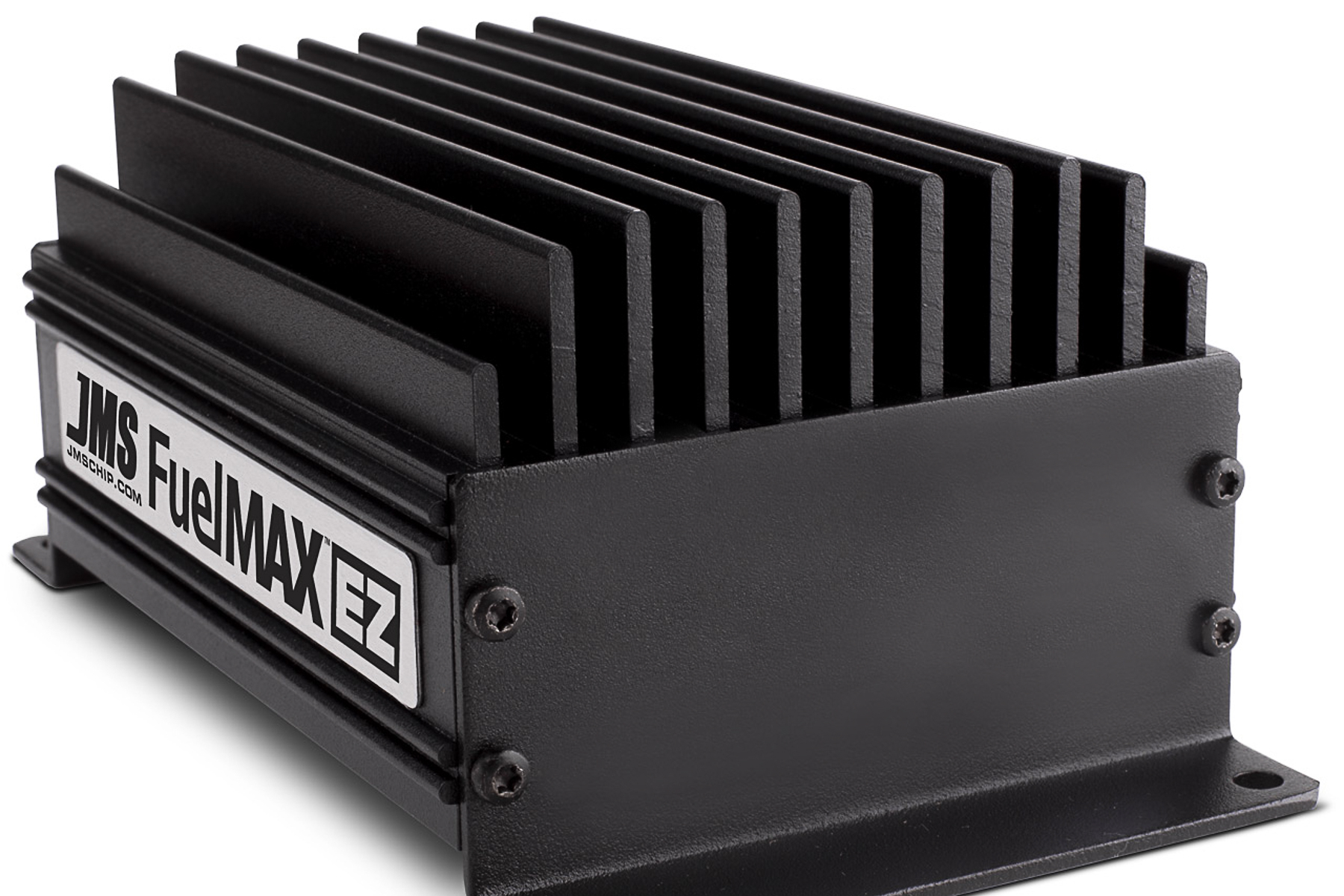
You can buy a car off the showroom floor from General Motors, Ford, and Dodge that make a ton of horsepower via forced induction, but what if you want more? Well, one of the first things you’ll need to do is address the fuel system, and there’s a simple way to do that with a fuel pump voltage booster. We talk with Chris Johnson from JMS to learn more about fuel pump voltage boosters.
It’s almost criminal how easy it is to crank up the horsepower on a boosted modern muscle car with a pully change and a few other modifications. The problem is the OEM fuel system isn’t designed to handle the additional horsepower as it sits, but that’s where the fuel pump voltage booster comes in. A fuel pump voltage booster increases the amount of voltage provided to the fuel pump, therefore, allowing it to spin faster, and keep up with the increased demands of the fuel system.
Chris Johnson from JMS explains how one of these fuel pump voltage boosters works.
“These boosters, like our FuelMax unit, can increase the voltage from 14.4 volts up to 22 volts. The normal single or dual pump setup can increase fuel volume by over 50 percent with that voltage booster alone, without having to buy an entire fuel system. The majority of the uses are with the stock fuel pumps, so the owner doesn’t need to put a bigger pump in the car to achieve their horsepower goals.”
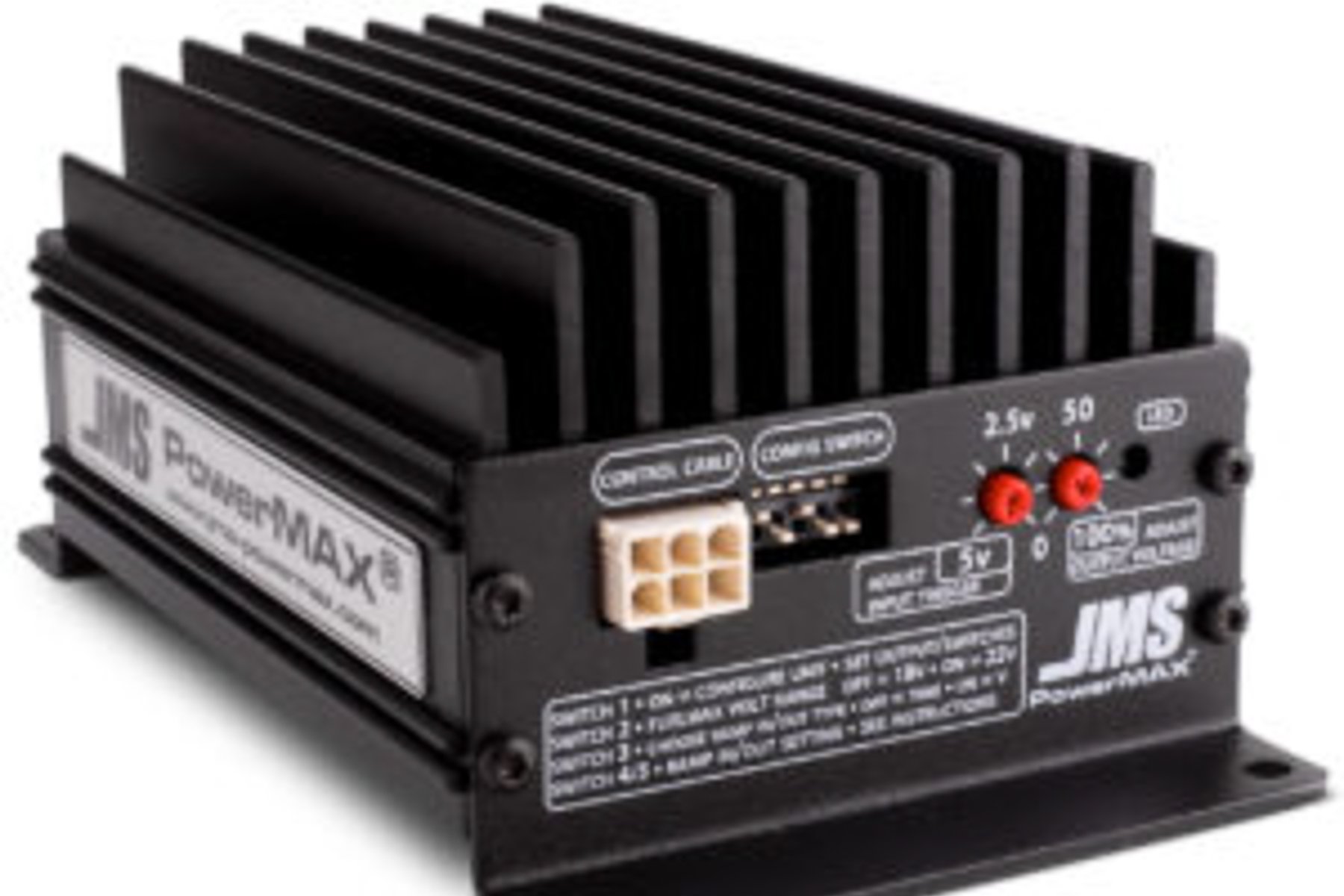

A fuel pump voltage booster is actually a pretty simple modification to install on a boosted vehicle. You don’t have to cut the vehicle up or make any big changes to its structure. The fuel pump voltage booster system just needs to be wired into the OEM system and it’s triggered by a Hobbs switch when it sees boost.
“Spinning the pump harder isn’t an issue because it isn’t happening all the time. If you’re not in boost, the voltage booster isn’t going to be activated to spin the pump harder than it normally would. It only turns on when you program it to. The pump is also in fuel in the stock location inside the tank, so it’s being cooled by that fuel. It’s an on-demand system. It’s pedal activated and is regulated, so it activates almost like a secondary fuel pump,” Johnson explains.
JMS has worked hard to make the FuelMax a user-friendly unit.
“The FuelMax uses OE style connectors because nobody wants to take an expensive car and start cutting wires. The simplicity of taking it out of the box and plugging it in is a big advantage. The normal person at home could install this at home, they just need some basic skills. The FuelMax can also be mounted just about anywhere in the vehicle, so that adds a lot of convenience. These units are available for the Hellcat, Challenger, TRX truck, Mustang, and Camaro,” Johnson states.
You can pick up a plug-and-play FuelMax EZ for the GT350 and GT500 Mustangs. These units will support up to 1,000 horsepower with a single fuel pump, and up to 1,300 horsepower on a dual fuel pump system. These will work with either a 12-volt or 16-volt system too.
If you want to learn more about fuel pump voltage boosters and see what JMS has to offer you can visit the company’s website right here.

 WhatsApp us