In the late ’90s, Dan Muldowney was racing at a track where he bought 110-octane fuel for his car. He thought everything was fine. The gas was purple and the pump said it was 110 octane. He went out on the track for practice, and by the third lap, he had melted a hole in three out of six pistons.
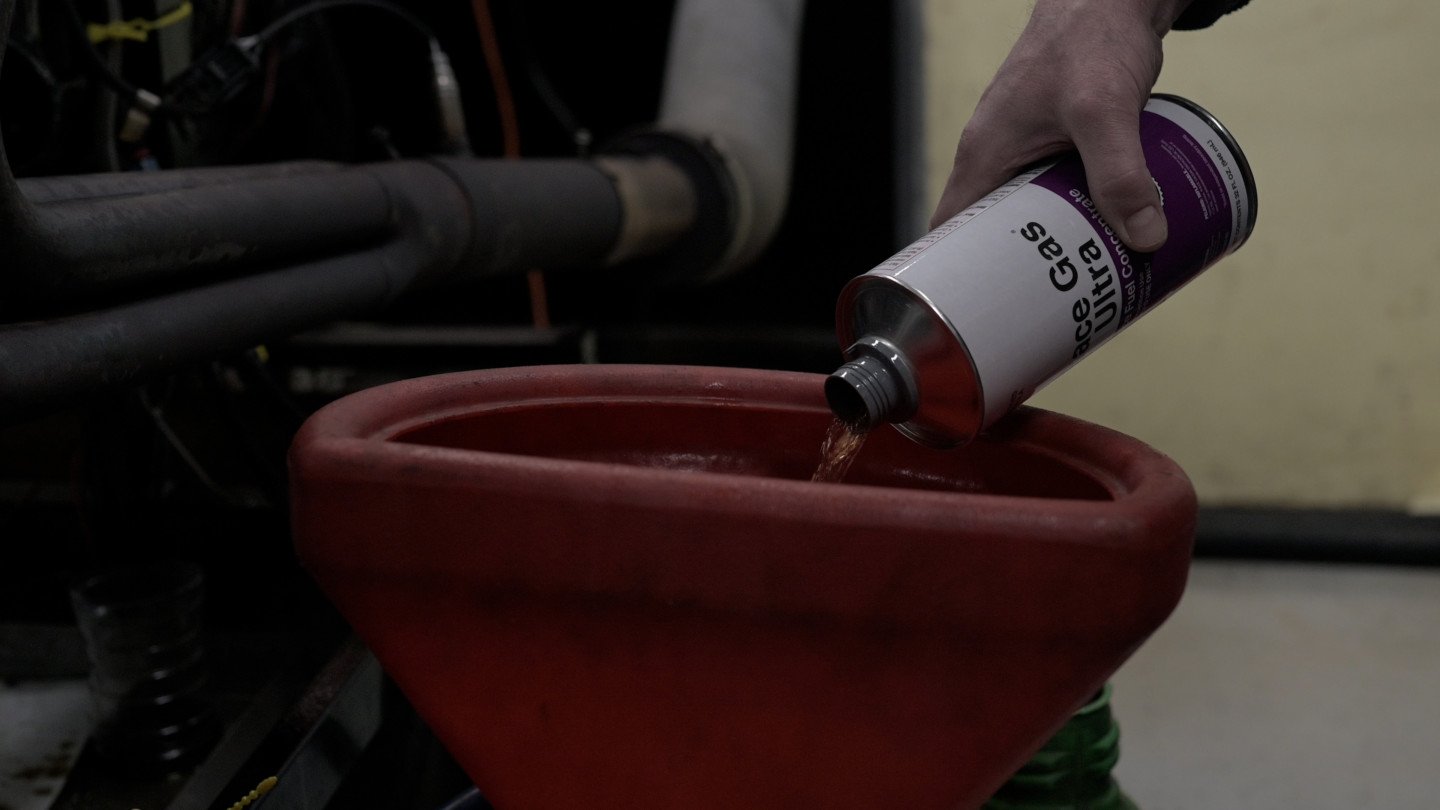
Race gas contains many chemicals that fall into three primary groups: fuel hydrocarbons, oxygenate, and organometallic compounds. Each group of compounds is found in typical gasoline at the pump. But Race Gas uses its own proprietary recipe to enhance the performance of the fuel to the same level as refined racing fuel.
“I found out the fuel had been sitting there and it collected a bunch of water, which caused some oxidation and formation of some pretty bad stuff like tars and varnishes,” says Muldowney. “It really wasn’t 110 octane.” That time it cost him $28,000 to rebuild the engine. When he did it again a few months later, it was $60,000 because it took out the crank, too.
Muldowney owns Motorsports Fuel and Equipment, makers of Race Gas Fuel Concentrate. What is a fuel concentrate? That’s a good question, and one we wanted to know more about. Many people get confused (including this writer), thinking it is another octane booster, which it is not. Some fuel additive products are just glorified snake oil. They say it “boosts octane,” but it doesn’t give the fuel more energy as a result.
Race Gas is different because it is a concentrated fuel that, when blended with pump gas, such as 87 or 93 octane, will effectively make that gasoline into a bonafide 101- or 110-octane race fuel with all of the energy density of a high-quality and refined racing fuel. And it’s quite a bit cheaper, too.
Muldowney says that after his experience with bad race fuel and two blown engines, he wanted to find a way to test the fuel in the field. But he found out that’s prohibitively expensive. So he went at it from another direction.
“I spent several years researching the difference between racing fuel and regular pump fuel,” he says. “And along the way, I ran into some former petrol chemists that turned me on to different data sources. Some of them were from the US government going back to World War II, when piston-powered fighter planes required much higher octane fuels than were available at the time. They tested different constituent components of gasoline and how they function and work together.”
Race Gas founder, Dan Muldowney, needed to find someone who would dyno test his new fuel concentrate but found it a difficult sell because most shops didn’t want to risk an expensive race engine for fuel testing. But he found someone willing to take a chance, the late Myron Cottrell at TPI Specialties, who was willing to help.
Testing Blends
Muldowney then discovered a formulary lab in Michigan to make his fuel concentrate, but he didn’t have the money for them to create a product for him. But he did have money to hire them to consult on his blend candidates. “They would tell me which ones would work and if the EPA would let me do it. And then they could tell me about any idiosyncrasies of those blend candidates,” Muldowney relates.
When he came down to his last three blend candidates, Muldowney says he took them to another lab in Deer Park, Texas, that does the ASTM standard testing for most fuel manufacturers in the United States. There are two standard tests: ASTM D 2699 and ASTM D 2700. Those tests give you your motor octane number (MON) and research octane number (RON), respectively.
He took a liter of gasoline bought from a gas station and blended one liter with his blend candidate to make the octane he wanted. And then, he also sent one liter of the base fuel with nothing in it so he could verify the original octane he had. “We narrowed it down to one candidate, which became our first product. That was the easy part. The hard part was getting it tested in the real world,” he shares.
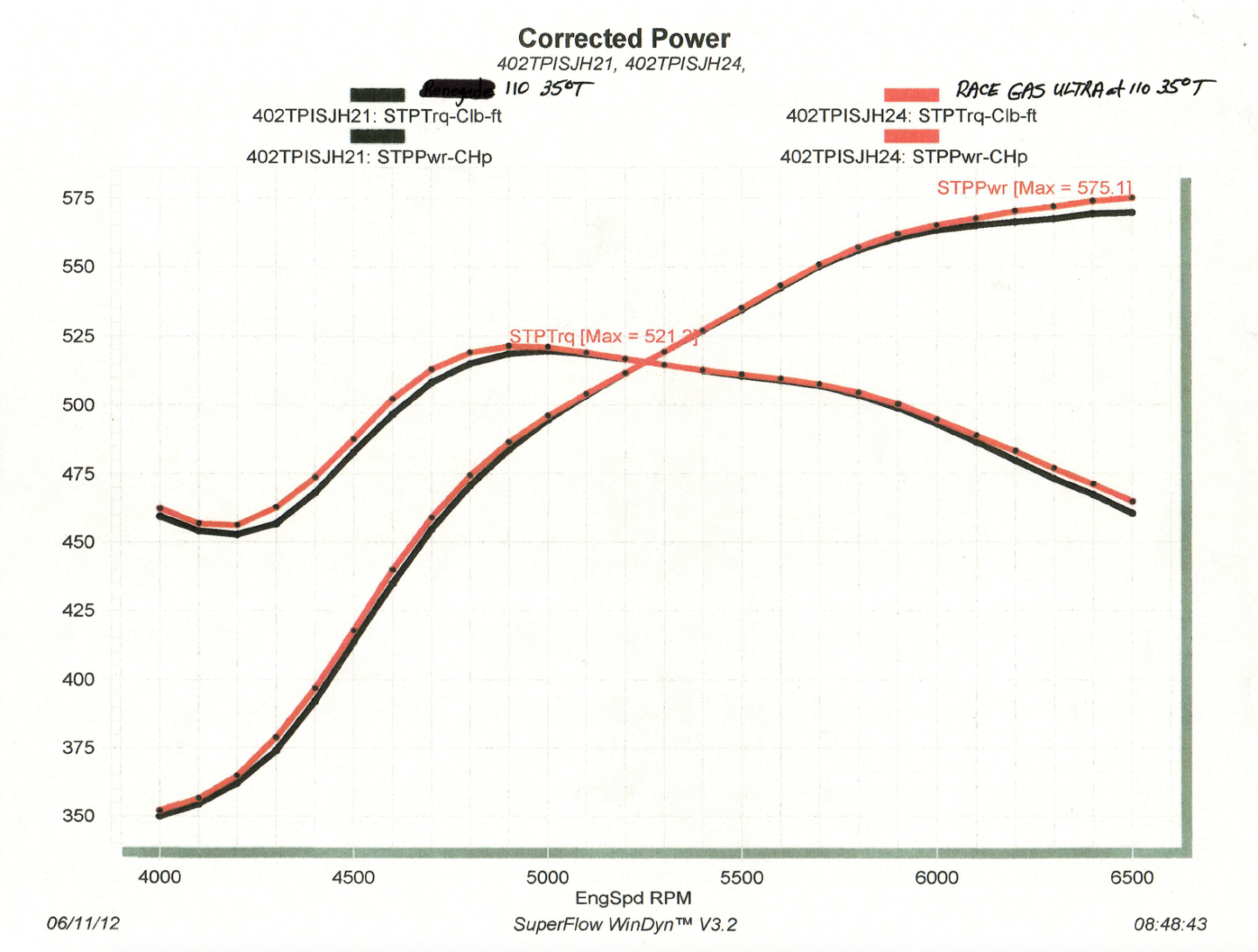
The final blend candidates went to a lab in Texas that performs ASTM standard testing for most fuel manufacturers in the United States. The two standard tests – the ASTM D 2699 and ASTM D 2700 – give you your motor octane number (MON) and research octane number (RON). After passing this test, it was on to the dyno, where results showed the performance was the same as refined racing fuel, or even slightly better.
Dyno Testing
Muldowney set out to find someone who would dyno test his new fuel concentrate but found it a difficult sell because most shops didn’t want to risk an expensive race engine for fuel testing. But he found an old friend willing to help. “I’ve known the late Myron Cottrell at TPI Specialties since I was a kid. Myron was one of the big names in the LS market and LS tuning. I knew he competed in the Engine Masters Challenge. So I called him up and asked if he would try our fuel. In short, he said he would do it. But, ‘if you break my engine, you bought it,’ he said.”
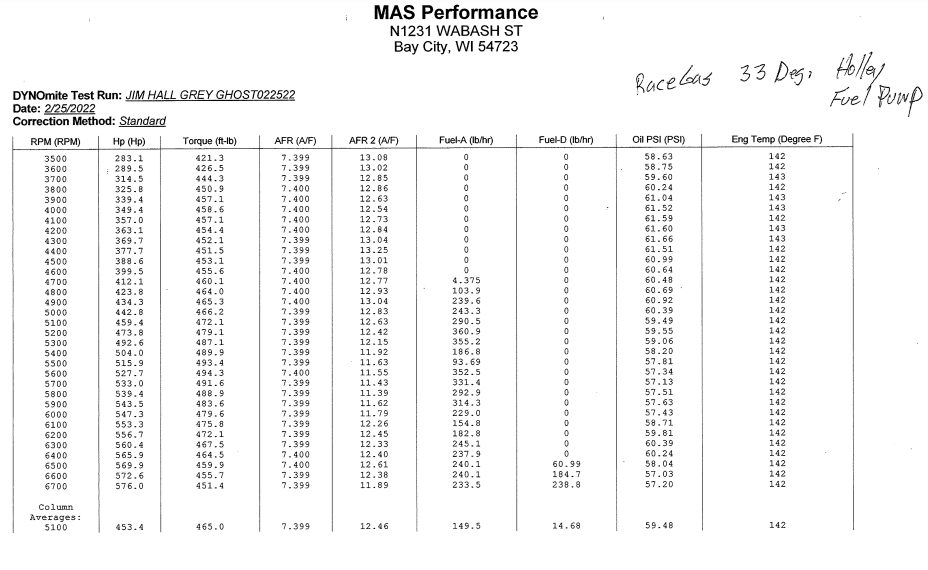
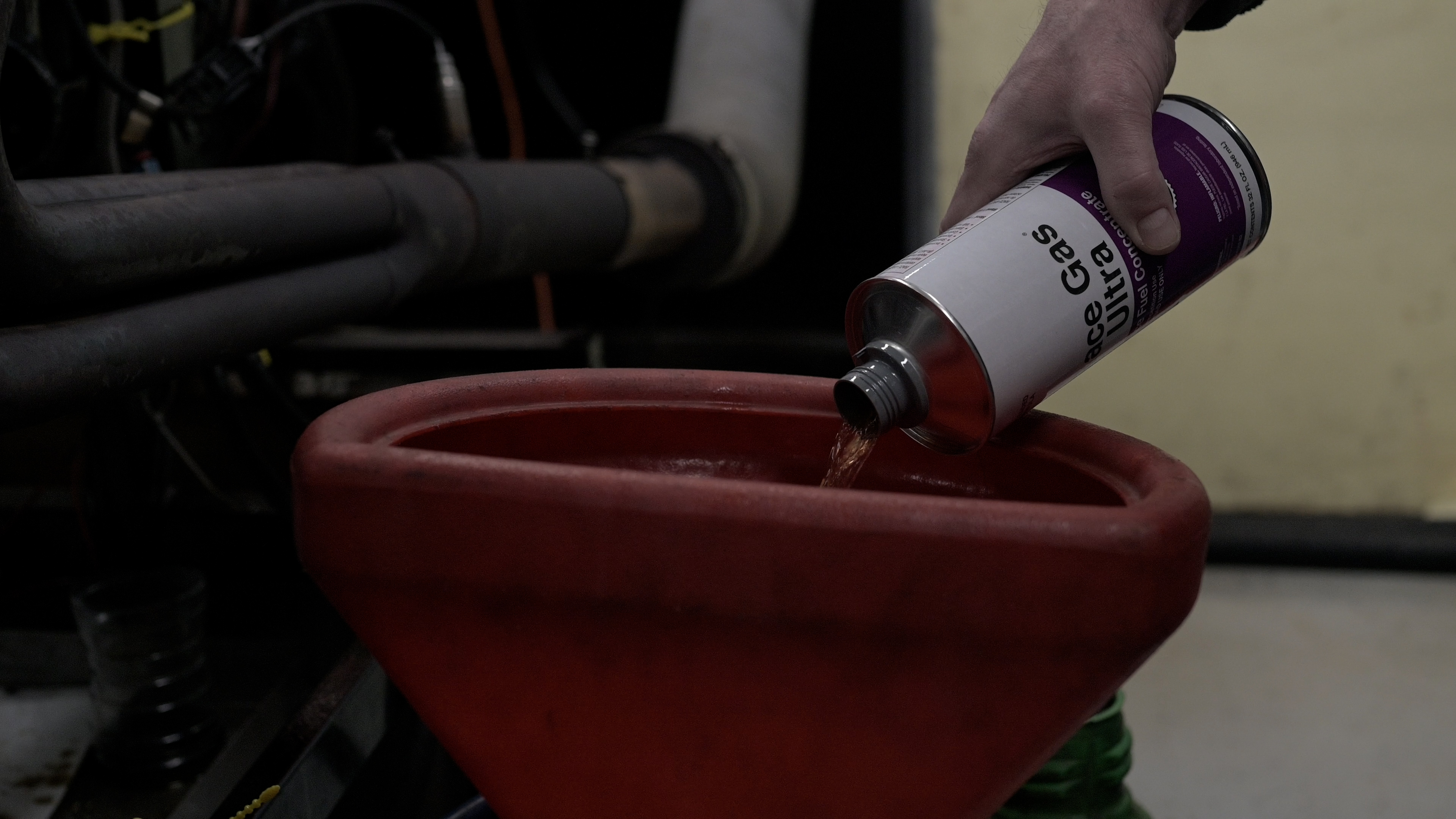
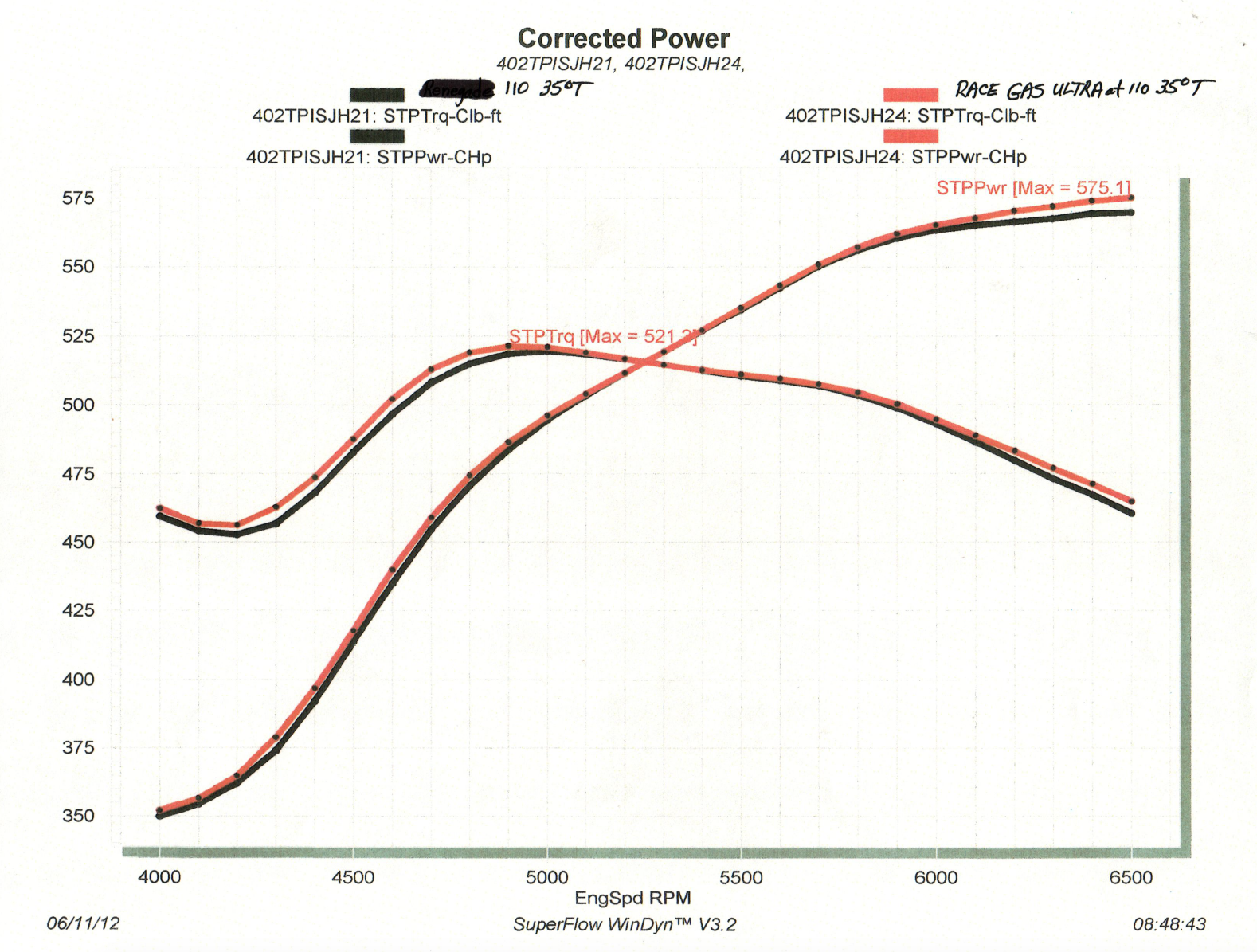
After dyno testing the 358-ci. road racing engine on Renegade 110 racing fuel, MAS Performance, drained the tank and fuel rails to put in Muldowney’s Race Gas Ultra at 110, and the results surprised everyone. The engine made 576 hp at 6,700 rpm and 493 ft-lb at 5,500 rpm.
Cottrell set up a 413-ci. race engine on the dyno and did some base pulls using regular racing fuel to tune the engine, according to Muldowney. “Then we drained the fuel rail, changed out the fuel, mixed our stuff with the gasoline we bought from the gas station down the street an hour before, and we repeated the test,” says Muldowney. “While running these tests, he’d make a couple of notes, do some stuff, change something, and do another pull. This happens about five times, and he hasn’t said anything to us. We had no idea whether we just blew this motor up or what. Suddenly, he turns around with a big grin on his face and said, ‘Boys, I would have thought you were buying me an engine, but this stuff actually works.’”
Myth Buster
When we mistakenly called Race Gas an octane booster, Muldowney was quick to correct us. We think that is a misconception that others would also make at first glance, because so many other fuel additives on the market claim to be an octane or cetane (diesel) booster. But there are differences between what an octane booster does and what its marketing department claims. With an octane booster, the additive does not increase the energy density produced by the base fuel. It may add a few octane points to prevent detonation, but the energy is the same.

The key to Race Gas is in its ability to replicate refined racing fuel properties. Racing fuel not only has a higher octane number, but more chemical energy and chemical oxygen than gasoline from the pump. By focusing on the AKI number (MON + RON /2 = anti-knock index), Muldowney had his first product which is in the orange can.
Muldowney explains the difference between an octane booster and his race fuel concentrate. “Racing fuel has higher octane, chemical energy, and chemical oxygen than gasoline from the pump. To replicate racing fuel, we had to do those three things. You’ll damage the engine if you have high octane and low chemical energy at wide-open throttle (WOT). If you have high octane and low chemical oxygen, not all the fuel burns in the power stroke, some burns in the exhaust stroke, and you’ll damage the engine.”
Muldowney claims that Race Gas is the only product on the market that is patented, dyno-tested, and race-proven to do those three things. “That is the fundamental difference between a race fuel concentrate and an octane booster. When a commercial fuel manufacturer, Sunoco, or whoever posts information about their fuels, they post the MON and RON numbers with the Anti-Knock Index (AKI). That’s what you see on the pump; the R plus M divided by two (R+M/2). That’s the research octane number (RON) plus the motor octane number (MON) divided by two, to create the average AKI.”
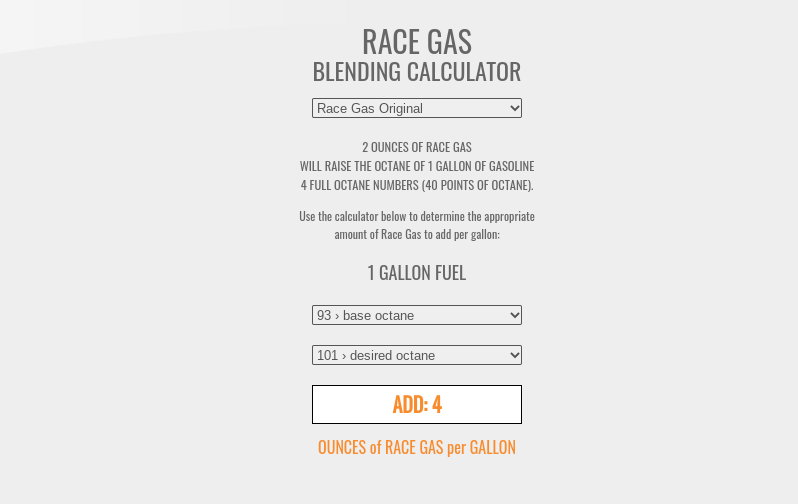
The second biggest expense besides tires on a race weekend is the fuel. Race Gas allows you to transport fuel safely and legally, and mix it to the octane level you need by following their simple chart. For 101 octane, mix 4 ounces per gallon with 93 pump gas. Not only is it more flexible for racers’ needs, but it also saves them money.
Muldowney notes that most products on the market don’t tell you to which octane number they are blended. The RON is derived from the performance of the fuel in a single-cylinder test engine at low RPM. The MON is derived from the same test rig under higher RPM. But Muldowney says you want to use the AKI or antiknock index because it gives you a good indication of the average octane between high and low RPM.
Since most people don’t understand the intricacies of MON and RON, a manufacturer can say that its fuel additive can go up to 116 octane. “That 116 octane is the RON,” Muldowney explains. “It is the performance of the fuel at almost idle. And the problem with that is, I’ve been racing cars for my whole life, and I’ve never won a race idling. It’s really easy to get a high RON. But it’s tough to get a high MON. And it’s even harder to get a MON and RON close to each other. When we publish certified ratings on our cans, we’ve had them certified by the lab in Texas. And we tell our customers, this is the AKI number. It’s not the wrong number. It’s antiknock, and we do that for a reason. If you’re buying a product that says it’s 116 octane, but it’s 116 RON octane, you might under-octane your motor. You can damage the engine that way. So we’re very transparent about our blends.”
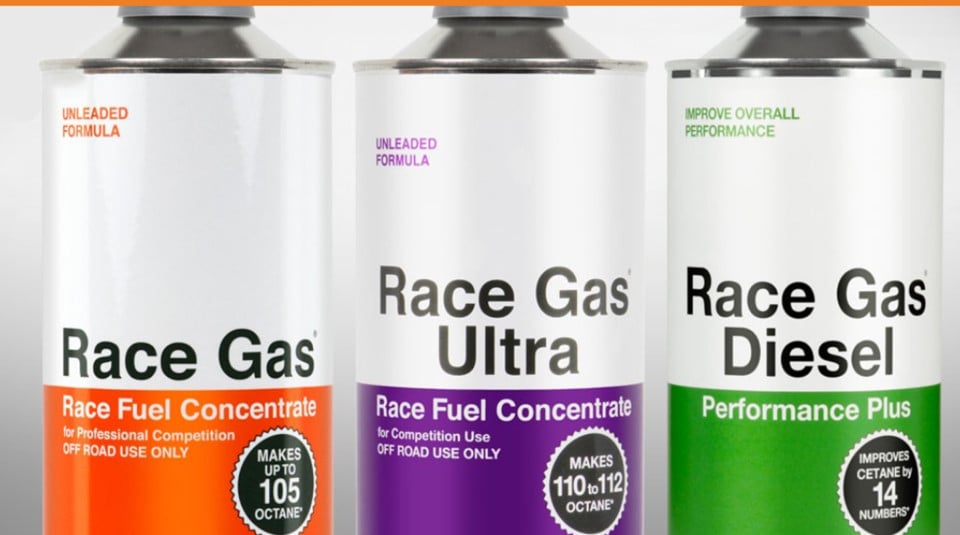
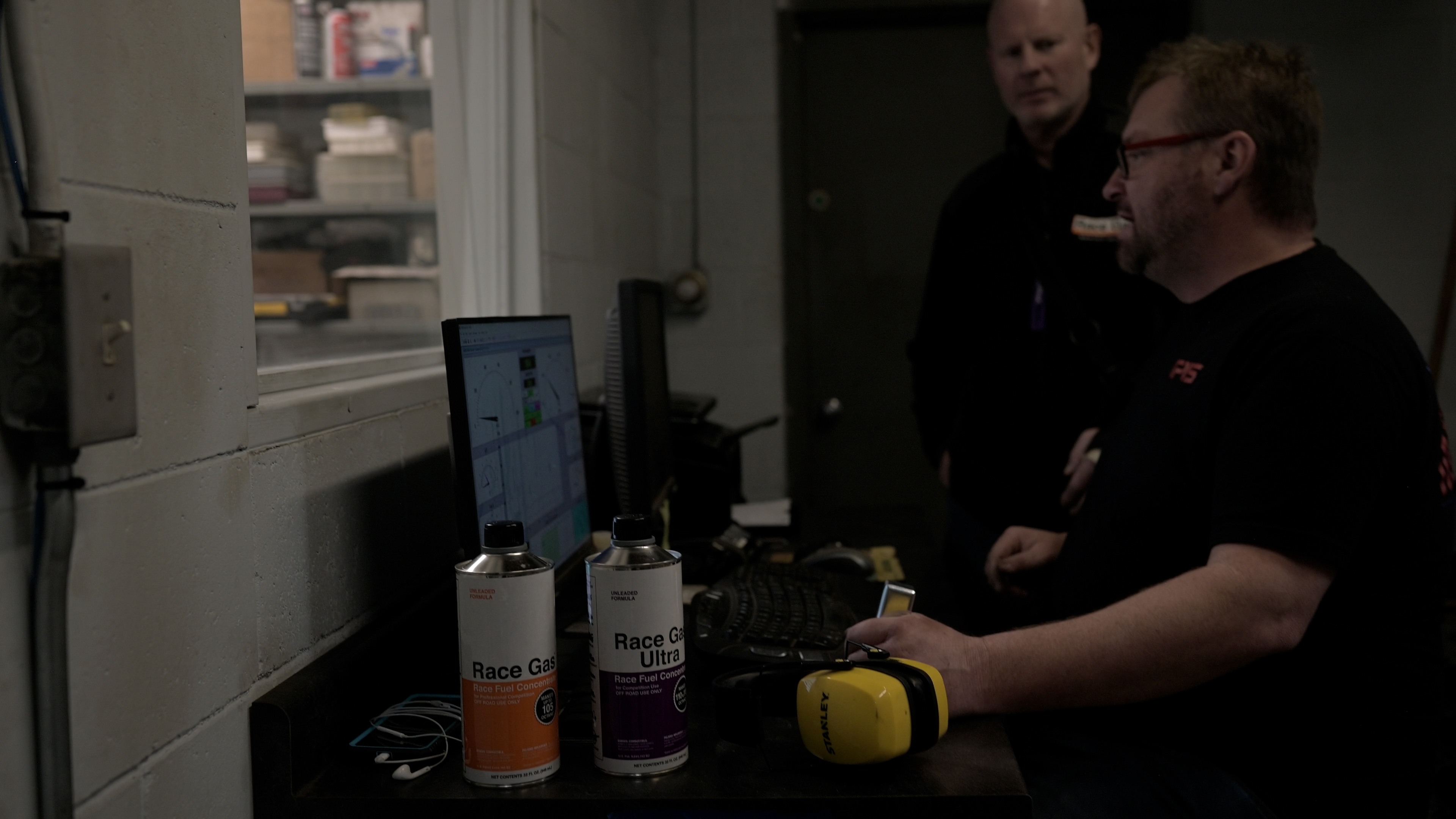
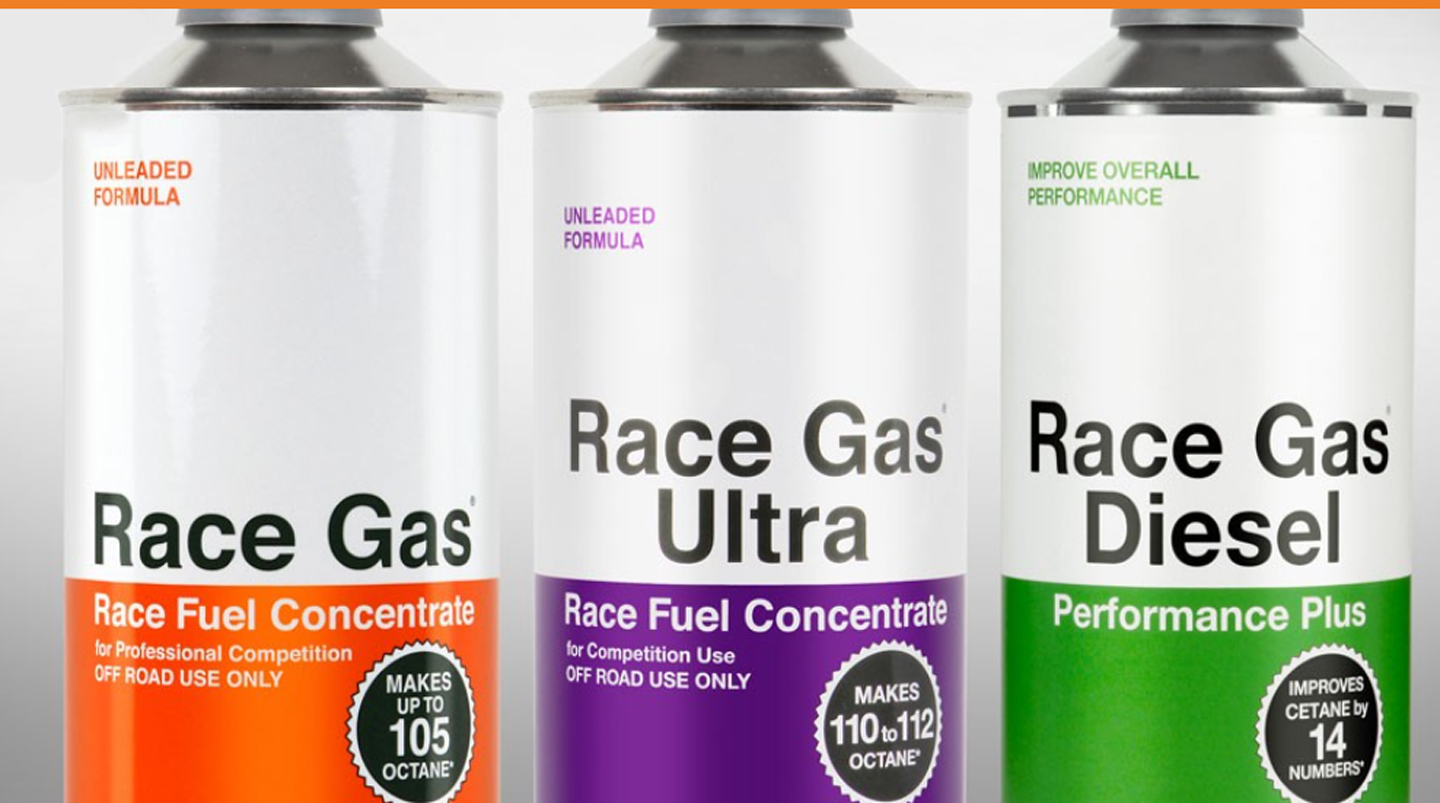
Race Gas is available in three different products today and can be purchased from major performance retailers. The orange can is the original formula that makes up to 105-octane fuel. The purple can makes up to 112-octane fuel. And a new product in the green can is designed for performance diesel engines to boost cetane by 14 numbers.
As always, education is the key to understanding what you are using. “If you’re going to use a product, make sure you understand what it blends to,” Muldowney cautions. “The other one that you see a lot is people will talk about points of octane. A point of octane is 1/10 of a number. So if you have a product that says it raises the octane by five points, and you have a gallon of 91, you now have a gallon of 91.5. You don’t have 96. And that’s another point of contention that people don’t know about, and they should.”
Like most car enthusiasts, we’ve tried our fair share of fuel additives and other products that make wild performance claims. Most of the time, you know it won’t do anything, but you hope it will help. However, if you’re using an octane booster instead of specially blended race fuel or Race Gas concentrate to raise your octane level for competition, you better make sure you know what is in the can, or you could suffer a similar fate as Muldowney did early on.




 WhatsApp us