

APRIL 19, 2022
Now that winter is making a departure, it’s time to place our classic rides back to the front of the priority list of things to do — or in this case, enjoy. If last year’s summer cruising saw your car’s temperature gauge reading higher than you think it should, maybe it’s time to take a look at your car’s cooling system.
While cooling issues can vary, this time, I decided we needed to discuss cooling fans. Specifically, electric fans. There are many bad choices that can be made when trying to decide what cooling fan a particular car needs, and to alleviate that situation, I decided to reach out to the folks at SPAL USA to get some solid information we can all use.
While the OE mechanical fan in your classic might be adequate for your car while cruising down the highway, sometimes, situations arise that warrant an upgrade to an electrical unit. But have you looked at what sizes and styles of electric fans are available? Talk about a confusing decision.
What’s What?
If you want to add an electric fan setup you first need to figure out which electric fan(s) will best work for your application. For instance, can a puller-style fan fit between your engine and radiator, or do you need a pusher? Fitment is a big issue for many who want to add electric fan(s).
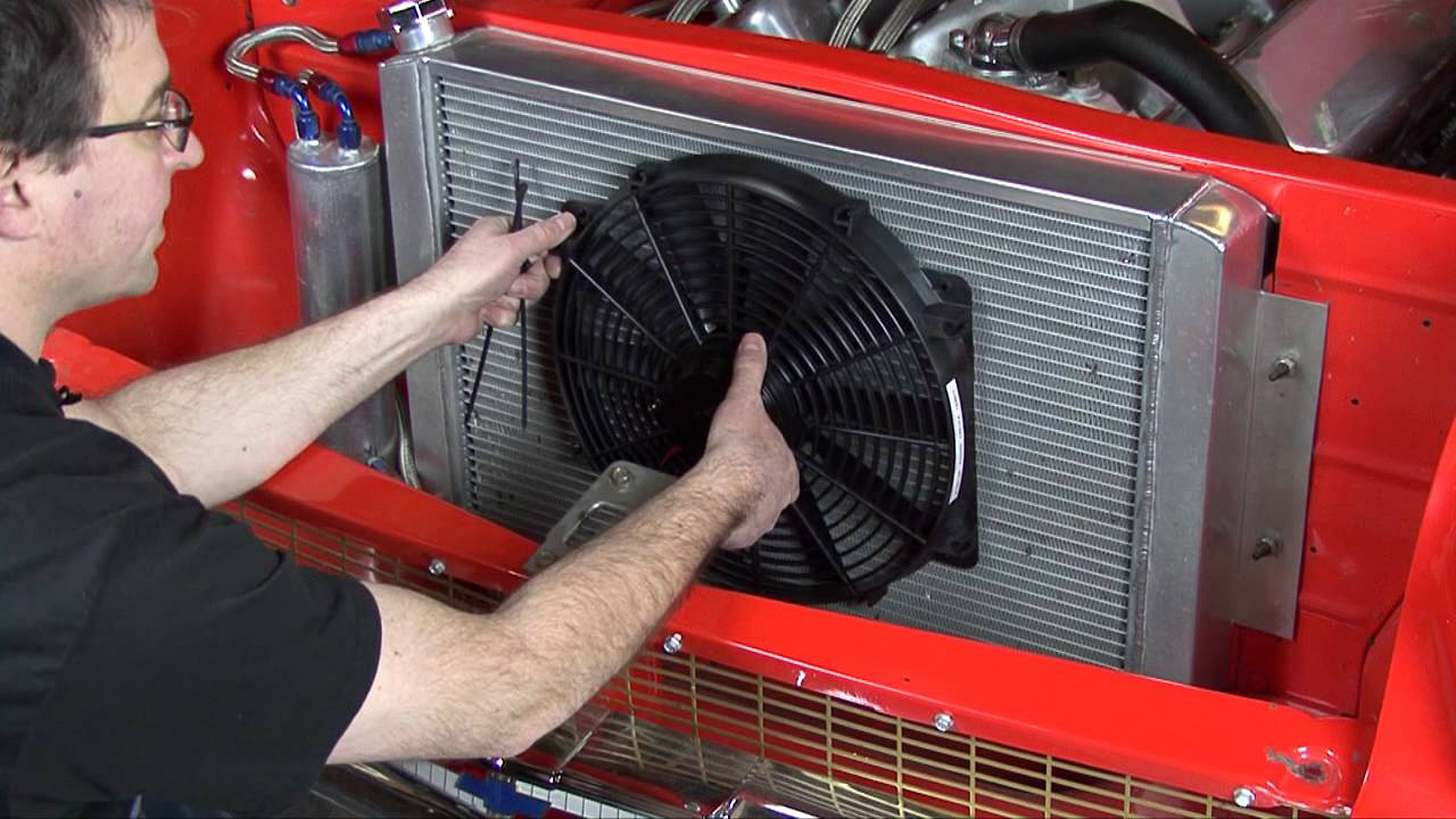
There are a couple of issues here. For starters, it’s better to mount the fan behind the radiator. As shown, the fan will only move air through a small section of the radiator, right where the fan is mounted, the rest of the radiator does not benefit from the fan’s airflow.
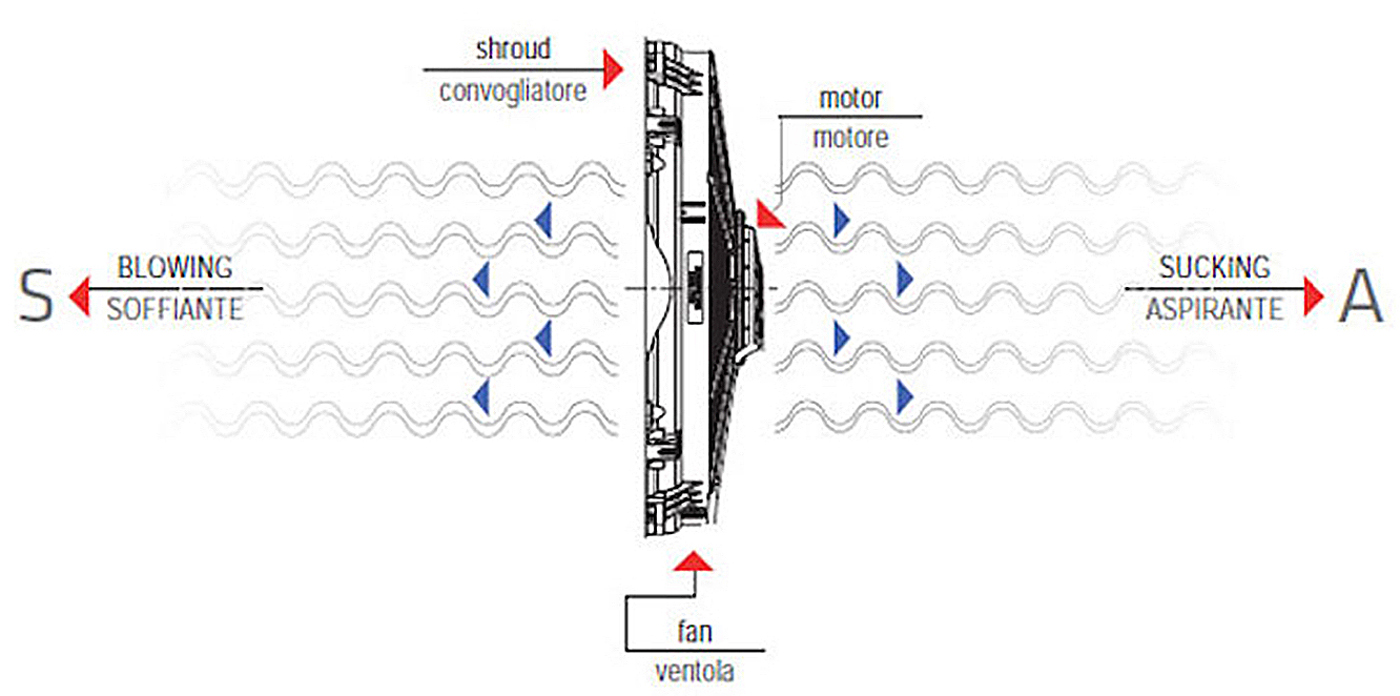
I checked out the SPAL website and found both pusher and puller fans as available options. The pusher-style fan mounts on the front of the radiator, and as its name indicates, pushes air through the radiator. Pusher fans are typically installed when there just isn’t enough room to mount the fan between the radiator and engine. Unfortunately, mounting a fan in front of the radiator also restricts airflow through the radiator. A puller fan is by far, the more popular choice. It’s more efficient, because it mounts on the back of the radiator, draws air through, and does not block airflow.
A puller fan is generally viewed as the best practice due to the motor/fan being a resistance after the radiator. – Brent Chuck, SPAL USA
“A puller fan is generally viewed as the best practice due to the motor/fan being a resistance after the radiator,” says Brent Chuck application engineer at SPAL USA. “Puller fans generally affect highway-speed ram-air cooling less than pusher fans. Our [fan] motors are a 5-inch diameter circle, so when you put a pusher fan in front of the radiator you can imagine a 5-inch ‘dead circle’ where the fan sits. This dead circle still occurs in the puller fan application, but it doesn’t have as much effect on the high-speed cooling of the vehicle. A pusher fan is usually acting on colder/more dense air, so you usually get a higher mass flow rate through the system with a pusher fan. The fan motor also exists in a colder environment (in a pusher configuration) which usually increases motor life as the motor runs cooler.”
Brent continues by saying, “Pushers can’t really use a shroud, so you lose the efficiencies that could be gained by a good shroud design ducting airflow from the entire face of the radiator with a puller. You get better dispersion of airflow to the radiator face with a puller fan and a good shroud design. Pushers basically just force a circle of airflow through the radiator.”

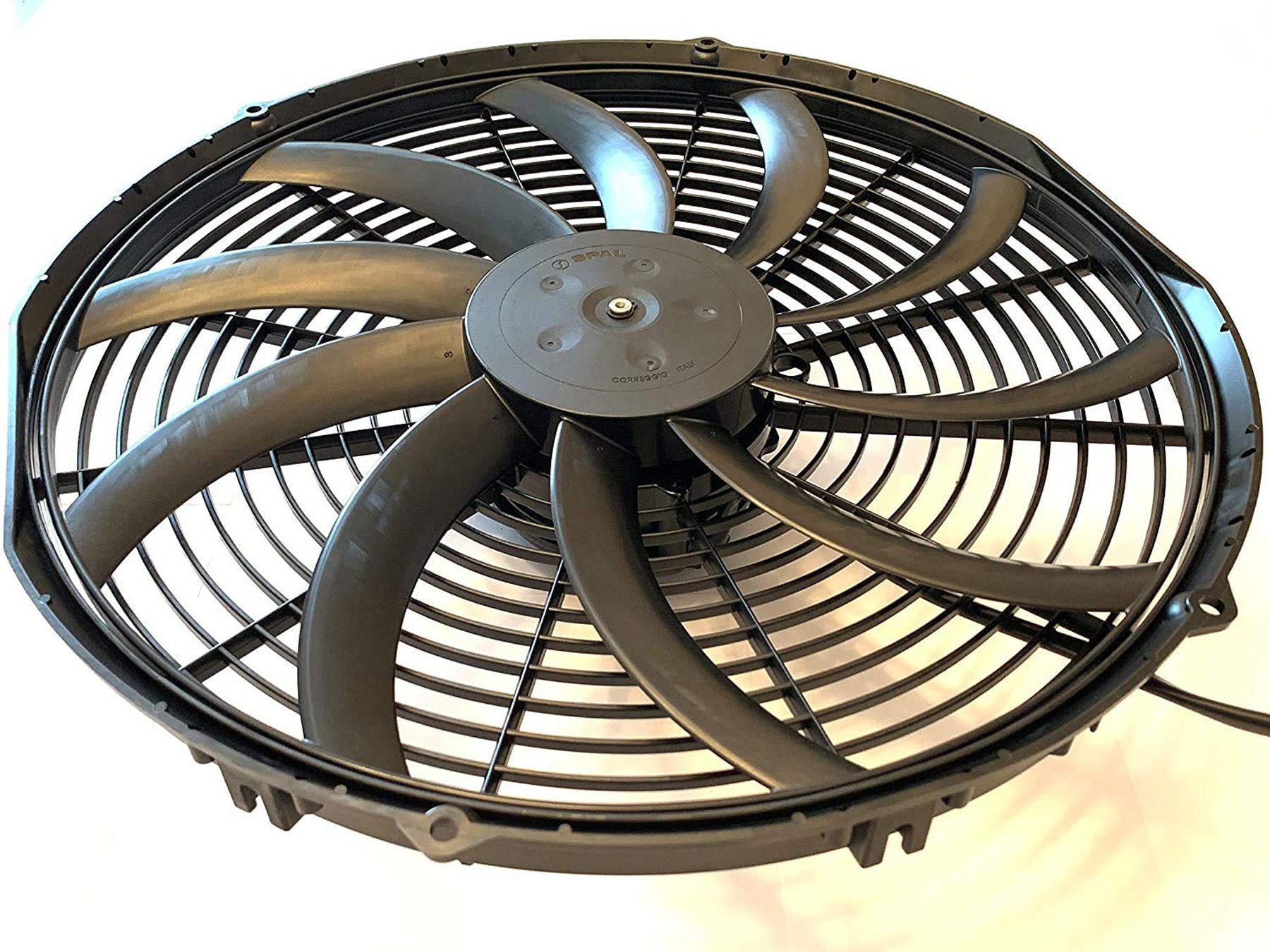

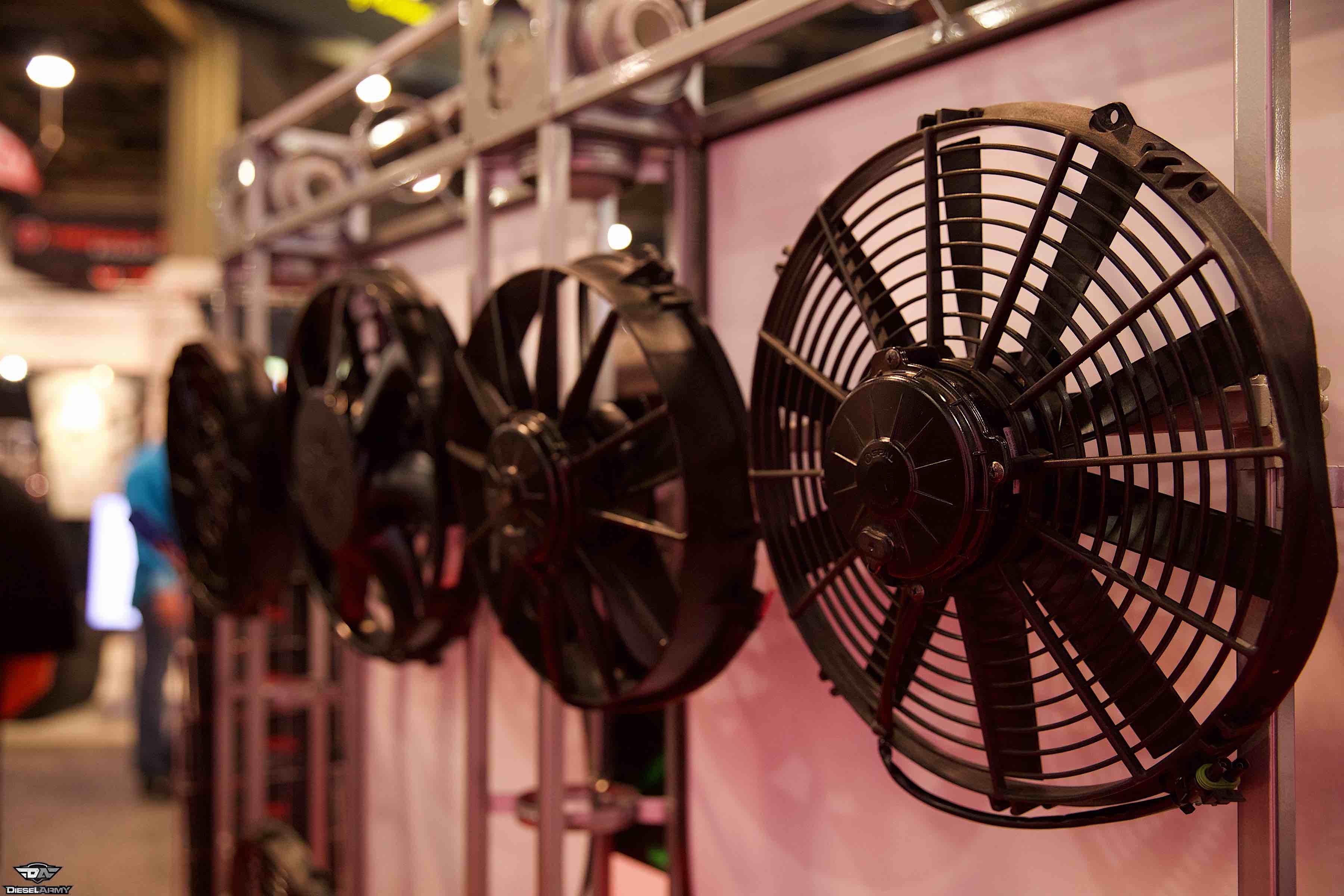
From left to right: straight blades (PN: 30102120), curved blade (PN: 30102049, and paddle blade (PN: 30102082). Which you choose depends on certain factors like noise and airflow.
Overcoming Blockages
Another difficult consideration is sealing a pusher fan system. Typically, A/C condensers and radiators have air gaps between them that make it difficult to seal the system and ensure the fan flow goes through both the radiator and the A/C condenser. The majority of the airflow will take the path of least restriction. If you have gaps where air can escape and not be forced through the core, it will likely escape and not cool very well. Some might argue that, in that case, a pusher is more efficient because the air the fan is acting on is often cooler and denser than seen by a puller in the engine bay. That might be true, but usually, the benefits of a pusher in colder air don’t outweigh the con of having the fan mounted in front of the radiator.”
It’s like seeing a car with a pusher and a puller fan on the same radiator. Can it work? Yes, but is it ideal? No, absolutely not. -Brent Chuck, SPAL USA
After hearing what Brent stated, I wondered if SPAL USA ever recommends using an electric fan in a pusher application? “Yes,” states Brent. “In some cases, where space is tight and it’s the only option. But it’s not really seen as good practice within our industry. It’s like seeing a car with a pusher and a puller fan on the same radiator. Can it work? Yes, but is it ideal? No, absolutely not.”
Straight, Curved, Or A Paddle
Another thing to consider is blade design. There are various designs, and with a typical street use classic, which fan-blade design is the most versatile/recommended? “With hot rods, it typically comes down to packaging the fans in the vehicle,” Brent states. “Fans are often the last consideration when building a car. So usually, the limiting factors are ‘how much room’ customers have for fans.
“Our ‘thin’ electric fans are designed to maximize performance while remaining thin. Usually, these fans operate at higher RPM and have less than desirable noise characteristics. Examples of thin blades would be straight blades (PN: 30102120) or ‘S’ curved blade fans (PN: 30102049.) These fans often create fan noise that our customers do not appreciate, but they can provide decent airflow performance while maintaining a thin profile. A straight blade offers more noise and more performance than a curved blade on an equivalent motor. An ‘S’ blade offers lower performance and slightly less noise.”
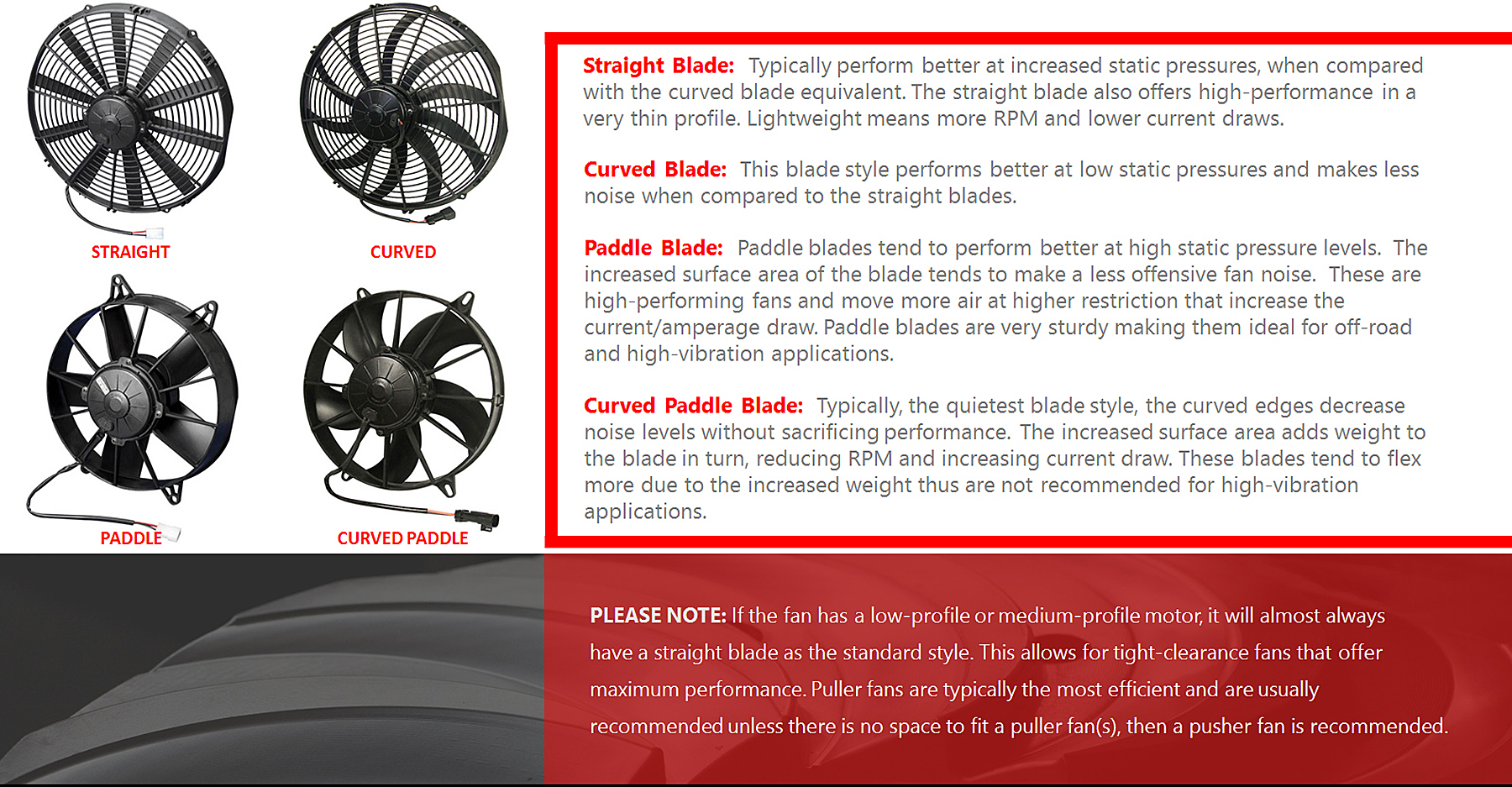
The next blade style we need to talk about is the paddle blade. This is typically the quietest blade available, as the curved edges decrease noise without sacrificing performance. The larger surface area does add weight to the blade, which allows a reduced RPM to deliver the needed airflow. However, this design does increase the current draw on the electrical system.
SPAL’s paddle blade electric fan (PN: 30102082) has an aggressive blade profile with a thicker blade. This blade style offers good airflow and pressure performance at lower RPM. With a paddle blade, you get a fan that performs well and provides quieter noise characteristics.
When it comes to fan blade design, there really is no “best option.” According to Brent, “it boils down to physics, and there’s no such thing as a free lunch. You’re either moving air and making some sort of noise, or you’re not really moving air.”
Check The Ratings
But how is an electric fan rated? You’ll see many companies throw cfm numbers around and expect you to understand. Electric fans are rated according to the amount of air that can be pushed or pulled through the radiator. This measurement is the CFM (cubic-feet-per-minute) rating. When selecting an electric fan that will work best for your application, you need to first determine the ideal amount of airflow required to meet your cooling capacity. As a guideline, a typical small-block uses roughly 2,800 to 3,000 cfm of airflow, while a big-block typically requires 4,500 cfm. Again, these are just rough guidelines, and not hard-and-fast rules. However, CFM ratings might not be as important as you would think.
Most fans are rated by the amount of air they can more (CFM). When selecting an electric fan that will work best for your application, you need to first determine the ideal amount of airflow required to meet your cooling capacity.
“Don’t sweat CFM ratings,” Brent assures. “Enthusiasts think they need 2,000 or 3,000 cfm, but this might not really be the case. CFM ratings are often obtained in free air conditions, which are not the same conditions people realize with an electric fan mounted on a radiator. That means that number doesn’t mean much. It’s something that is good to know, but not something I recommend looking for when selecting a fan.”
If an electric fan claims 2,000 cfm, it won’t be 2,000 cfm as soon as you put it on the radiator. Just understand what your radiator stack (radiator, A/C condenser, oil cooler) looks like and understand that each component is adding a restriction to the system. The more restriction you add, the more [static] pressure your fan needs to generate to overcome the restriction.
If you have a restrictive cooling stack, look for a fan that generates more pressure. – Brent Chuck SPAL USA
“If you have a restrictive cooling stack, look for an electric fan that generates more pressure,” says Brent. “SPAL has tabular airflow data available for all our fans. Look at airflow data and don’t just look at the highest CFM number. Also, look at how many amps the fan draws, and how much static pressure it can generate. Compare the tabular data between other fan models, it becomes easier to compare and more apparent as to which models are better for your application if you have all the data. Even if you don’t know the static pressure requirements of your radiator stack, you can still figure out which fans generate more pressure and flow.”
Get Recommendations
My next question to Brent had to do with the actual selection of a fan(s). Basically, how does an enthusiast know what’s really required? “We often try to package the highest performing fan system that we can fit in the space our customers have available. Usually, we ask for radiator dimensions and the dimension from the radiator face to the engine. Based on those dimensions we would typically make our recommendations.” Sounds logical, but how does someone know if they need multiple fans or if a single fan will work for them?
“Dual fans are usually better than one large-diameter single fan,” Brent states confidently. “To gauge which is best, look at radiator coverage and power consumption of the fans. Fan systems that cover more of the radiator, and consume more power, will usually perform better. Usually, I will discuss the radiator and the core stack in front of the fan with the customer to try to figure out how much airflow restriction is in front of the fan. If there’s a radiator, A/C condenser, transmission oil cooler, intercooler, etc., you need to account for that when selecting a fan. I will often provide customers with a static pressure estimate for their system, (a working point estimate,) to compare fans.
When you compare fan models it should be done at equal pressures to determine which fans truly perform the best for your system. You should not be comparing fans at ‘free air’ or zero static pressure. If the customer is basing their fan purchasing decision solely on CFM ratings, it creates an opportunity to teach the customer about pressure and why it should be considered as well. One of the most common statements I hear is, ‘I need the thinnest fan you have with the most CFM.’ Unfortunately, the two characteristics are inversely related in practice. Thin fans are weak and don’t generate much pressure, and thick fans consume more power and generate more pressure.”
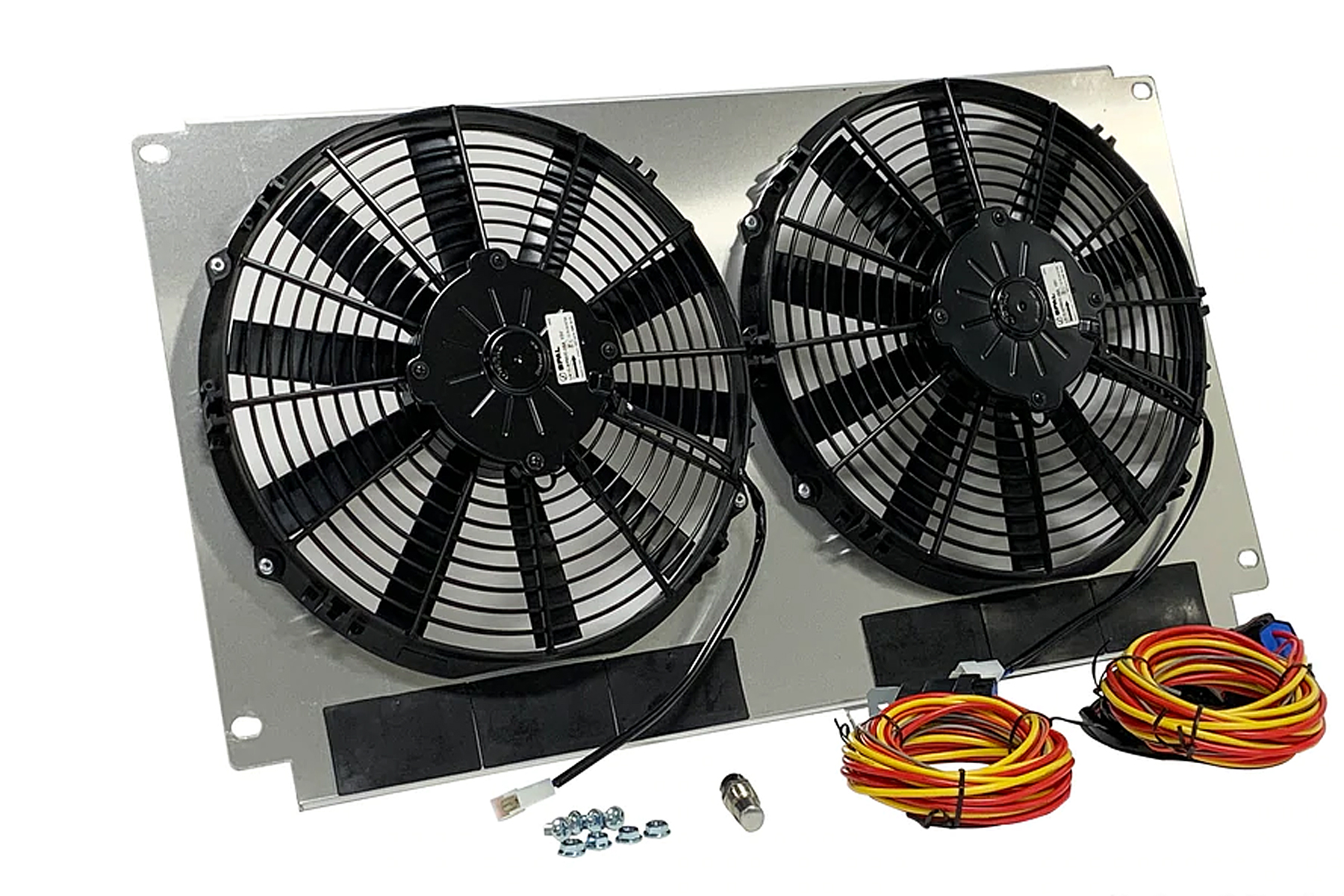
Using a fan shroud that allows good airflow is a must. A poorly designed shroud can actually hinder cooling performance.
Shrouded Dilemma
We’ve all had a friend or two that tell us our engine will run cooler with a shroud. While this is generally true, there are some caveats. “A shroud’s success or failure will depend on the design of the shroud,” says Brent. “A good shroud design will seal the fan to the face of the radiator, funnel airflow through the fan hole/s, and create distance between the fan/radiator face. As the fan moves closer to the radiator face, the airflow concentrates into a circle. As the fan moves further away, the airflow will disperse to more surface area of the radiator.”
Brent mentions distance, but what is the optimal distance? “That’s not an easily answered question,” he quips. “OEMs spend tens of thousands of dollars doing analysis to try to figure out the optimal shroud depth. Usually, thicker shrouds perform better, as they work more like an airflow plenum, pressurizing the entire radiator face. Other considerations for ‘good shrouds’ would include features to allow high-speed or ram air to pass through the shroud. Many of our shroud designs will incorporate ‘ram air flaps’ or doors that will open at high speed and allow airflow to bypass the fan if the pressure in the shroud increases beyond the capability of the fan. As the vehicle slows, the fan creates low pressure in the shroud, and doors/flaps are pulled closed allowing the fan to function properly.”
While a good shroud can help, a poor shroud design can hurt the performance of the system. Poor shroud designs are often flat, thin, and may include features, like louvers, that constantly let air through. “We want to avoid flat shroud spots that would be perpendicular to the airflow direction and cause restriction,” states Brent. “I typically tell people that a minimum shroud thickness should be 3/4-inch. Usually, if you’re considering a shroud measuring less than 1/2-inch-thick, I would recommend just mounting the fans to the face of the radiator and avoid using a shroud.”
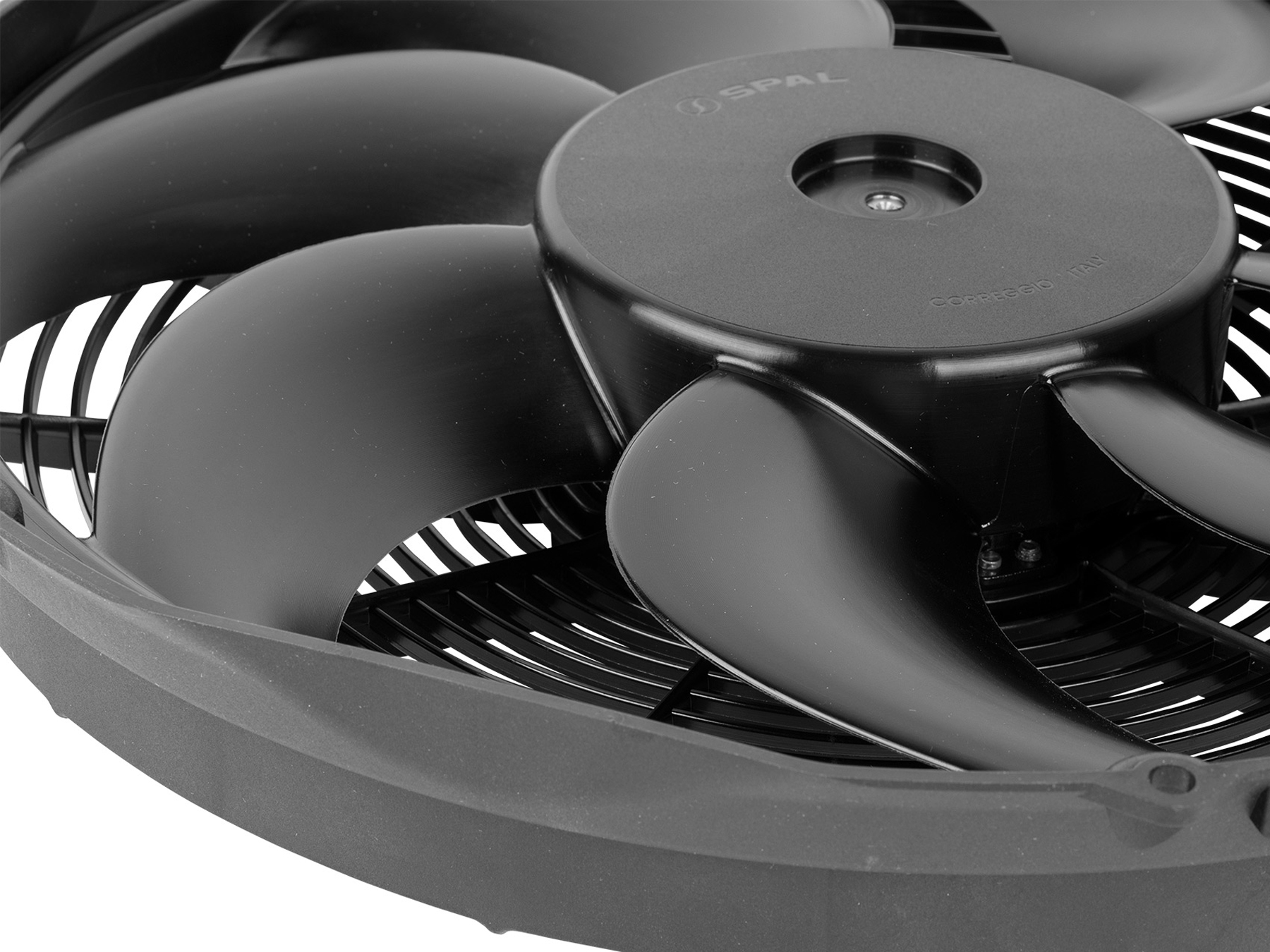
Selecting an electric fan is not a hard proposition. However, if you are uncertain of your engine’s needs, a quick call to the folks at SPAL can clear the air.
Final Thoughts
Brent concluded our conversation by saying, “don’t sweat CFM ratings. It’s a garbage way to compare fans. I wish our industry would forget that CFM ratings ever existed. Anyone who sells you a fan, based solely on a CFM rating either A.) doesn’t understand the physics behind the system, or B.) doesn’t want to take the time to properly explain the physics. I can show you several examples where a fan with a lower CFM rating will outperform a fan with a higher CFM rating once you install it on an equivalent radiator.
“No one knows how many CFM you need. The best we can do is estimate the pressure restriction and compare fans at equivalent pressures. Usually, estimating system pressures and comparing a fan’s performance at that point paints a very clear picture of which fan you should choose. Even if we estimate the pressure incorrectly and we are off a bit, you are still working with better data than a CFM rating. In short, don’t just buy a fan because it says it has a higher CFM number.”
Now that you have some useful information about electric cooling fans, you can upgrade your hot rod so this summer’s cruising doesn’t cause your engine to get a little hot during those cool rides.





 WhatsApp us