
Posted on Leave a comment

Why You Should Run Nitrous On A Boosted Engine

Boost-N-Juice


For years nitrous, supercharger, and turbo companies have pushed enthusiasts to use one or the other. You were either going to be a fan of boost or nitrous oxide, but not both. They were like oil and water as you would hardly ever find someone using these power adders in conjunction at the track or on the street. Today, it’s not uncommon to find boosted cars with nitrous, as well. Street Car Takeover and other events even allow for multiple power adders permitting the enthusiast to get the most out of their vehicles. One company that has pushed these boundaries in the last five years is Nitrous Outlet. But, it hasn’t always been that way. We reached out to Dave Vasser, owner of Nitrous Outlet, to see what’s changed and to get the inside scoop on injecting nitrous into a supercharged or turbocharged application.

LSX Mag: Why do you support nitrous and boosted combinations?

Dave Vasser: I owned a speed shop for many years back in the early 2000s. I wasn’t much of a boosted fan at that time, however, superchargers and turbochargers have come a long way in technology and dependability. Now, performance vehicles are coming from the factory with blowers or turbos on them. There is only one way to top the increased performance and drivability of a boosted street application, and that is adding nitrous. Now you can have the drivability with all-out performance when you’re ready to get after it. 

LSX Mag: How do nitrous and boost work in unison?

Dave Vasser: The best way to explain the benefits of using nitrous on boosted applications is to address how each power-adder increases the engine’s performance.  

Nitrous and boost both provide the ability to increase the air pressure within the combustion chamber. The higher the air pressure, the higher the air molecules are. The higher the air molecules are, the higher the oxygen content is. When the oxygen content is high, more fuel can be burned. This increases combustion and cylinder pressure, enhancing the speed at which the piston is pushed back down into the cylinder. This process creates additional “horsepower.” In simple car guy terms, Oxygen + Fuel + Cylinder Pressure = Horsepower. 
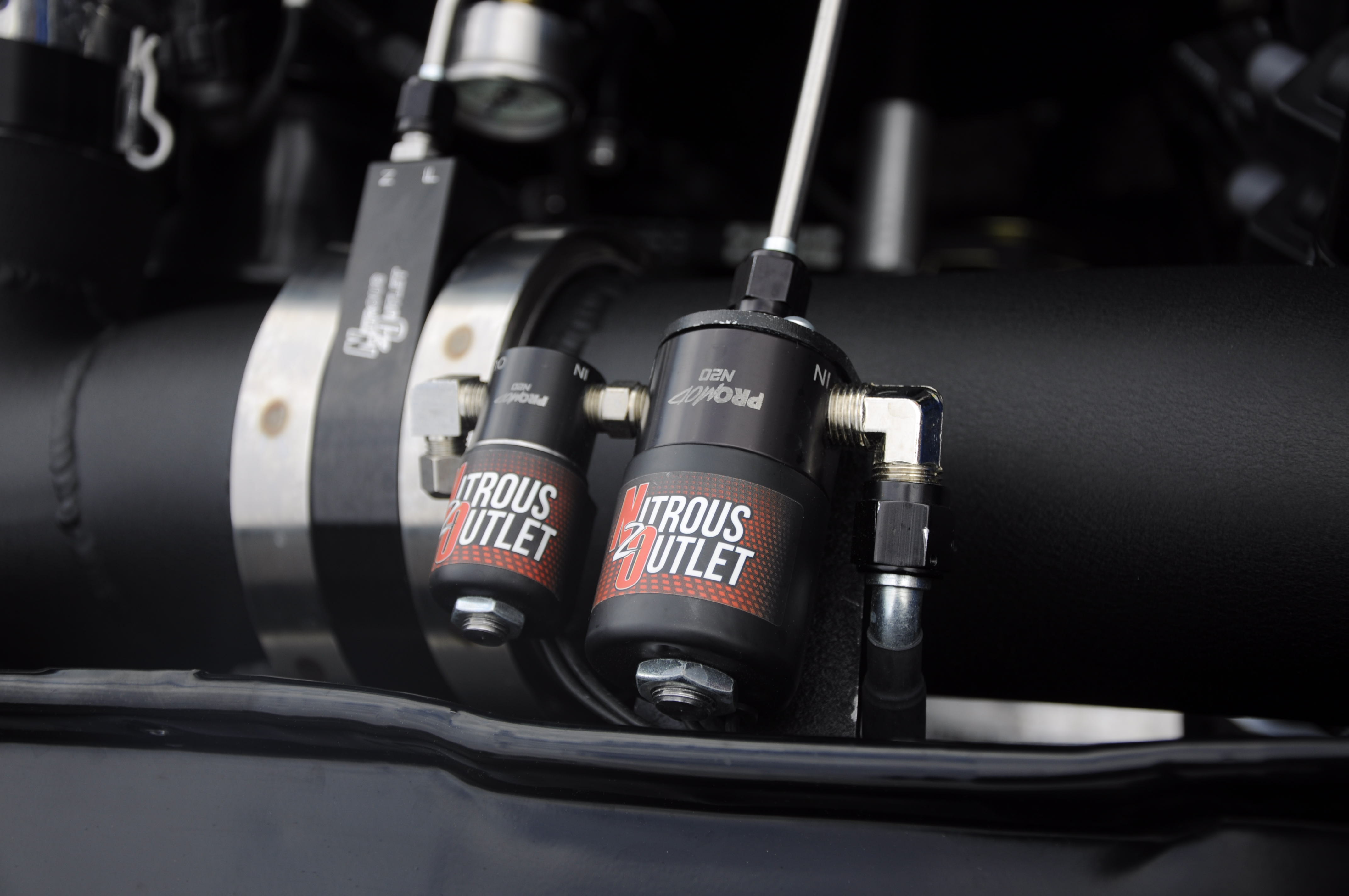
The Nitrous Outlet Interspooler is an excellent addition to both centrifugal superchargers and turbochargers alike.

Nitrous Oxide is a compressed liquid composed of two parts nitrogen and one part oxygen. Due to high combustion chamber temperatures, as the nitrous enters the combustion chamber, it breaks down, separating the nitrogen and oxygen molecules. As the bond breaks apart, the nitrogen acts as a heat absorbent, and the oxygen increases the ability to burn more fuel.

Boost is created from compressed air that is forced into the combustion chamber. The engine can receive more air due to the compressed air than it would pull in naturally, hence the term forced induction. Increasing the combustion chamber’s air pressure increases the oxygen content, which increases the ability to burn more fuel. This enhances the combustion process, which increases the cylinder pressure, returning the piston at a faster rate of speed.

LSX Mag: How does nitrous help turbo applications?

Dave Vasser: A turbo relies on exhaust gases from the engine to spin the turbine and create boost. The turbo will continue to build pressure as the power plant increases RPM, so the power increase is not instant. Engine and turbo combinations that are not perfectly matched will not be as efficient. Too small of a turbo will spin the turbo faster, creating excess heat, and too large of a turbo will have issues spooling. However, adding nitrous will instantly boost the engine’s cylinder pressure, building RPM immediately while knocking down the cylinder temperatures. 

This particular engine has an Interspooler and a direct port system for the maximum with cylinder to cylinder tuning and plenty of additional horsepower on tap.

LSX Mag: How does nitrous help supercharge applications? 

Dave Vasser: Supercharger applications don’t suffer from delayed boost like turbo applications, however, they do rob some power from the engine due to how they build boost. A roots-style supercharger forces air into the engine through rotors that are driven by the engine’s crankshaft. A centrifugal-style supercharger forces air into the engine through a compressor design, similar to a turbo but the compressor is driven by the engine’s crankshaft. Both styles of superchargers will build boost as the engine gains RPM. Engine and supercharger combinations that are not perfectly matched will not be as efficient. Too small of a supercharger will spin faster, creating excess heat, and too large of a supercharger will have issues building boost. Adding nitrous will create an instant boost by providing instant cylinder pressure, making the engine build RPM instantly while knocking down the cylinder temps.
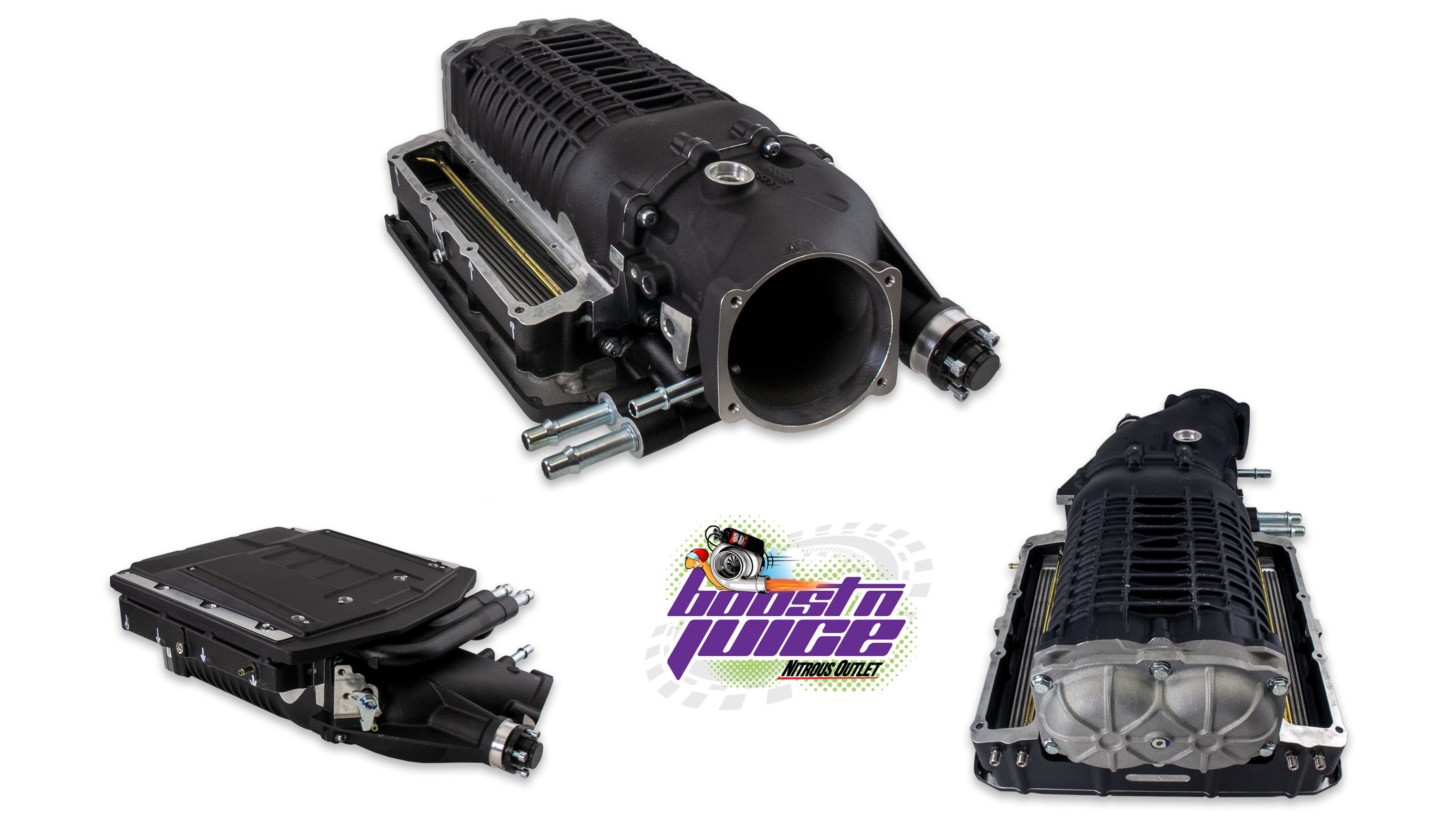
If you have a roots style supercharger, Nitrous Outlet can customize most brands by adding spray bars that discharge on the inside.

LSX Mag: Does any style of nitrous system work better than another when it comes to spraying nitrous?

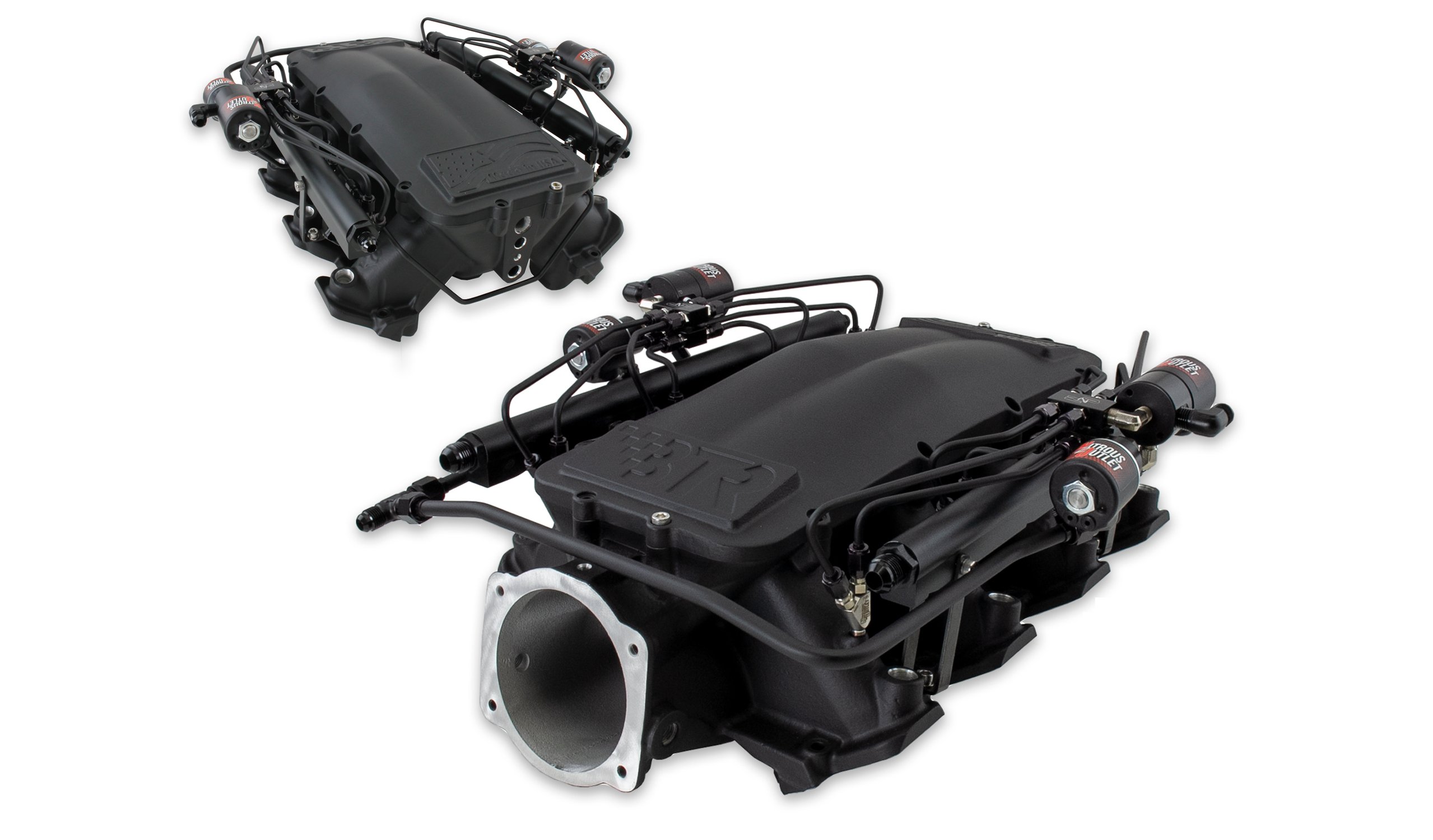
Dave Vasser: It comes down to how much nitrous is being added. If you’re injecting a lot of nitrous, a direct-port system may be your best option. A direct-port system will inject the nitrous directly into each cylinder, ensuring each cylinder is getting the same amount of nitrous. If you add a small amount of nitrous, there are many options, including a single nozzle in the air tube, an Interspooler plate system installed in the air tubing, or a throttle body plate on the intake manifold. 

The key is to saturate the air intake charge. The further back in the air intake tract, the longer the nitrous has to knock down the air temperatures. The more saturation the nitrous discharge has into the airstream, the better the distribution will be with the ability to knock down air temps. You can move the discharge point further back in the airstream on dry applications that add the nitrous system’s fuel through the injectors. On a wet system, which adds fuel with the nitrous, the discharge needs to be no further than six to eight-inches from the throttle body or intake manifold entrance. 

LSX Mag: What should you look for when running nitrous on a boosted application?

Dave Vasser: As with any performance modification, knowing the limitations of the engine components, fuel system, and ignition system are just as important as having a proper tune-up. It’s also important to keep intake air temps low to help suppress detonation. 
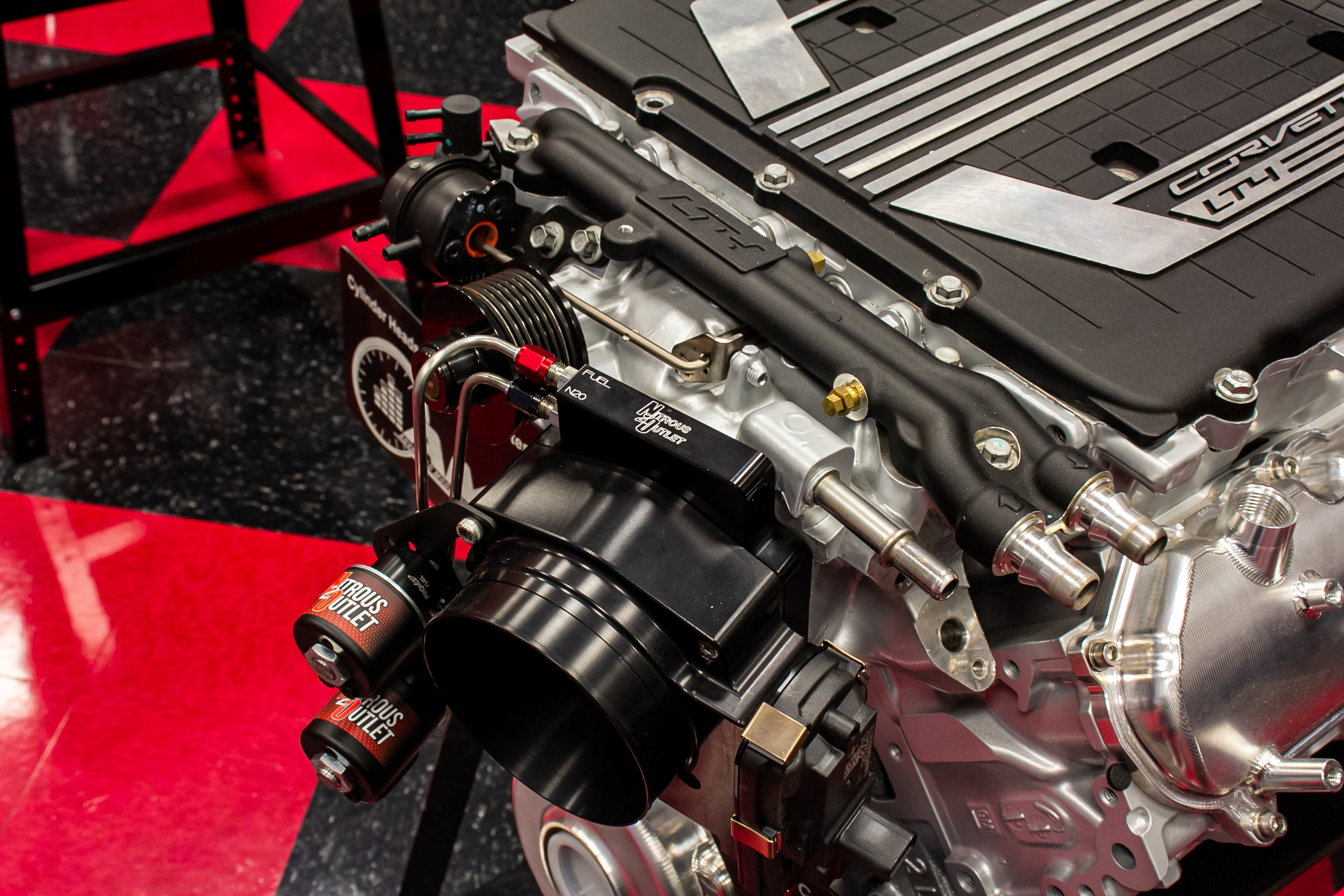
Nitrous plates mounted behind the throttle body are also a popular option among boosted performance enthusiasts.

LSX Mag: What does nitrous do for a boosted engine in high altitude or “bad air?”

Dave Vasser: To properly answer this question, you need to understand air density. Air pressure is dependent on air density. The more dense the air, the higher the air pressure will be, meaning more air molecules. The less-dense the air, the lower the air pressure will be, indicating fewer air molecules. 

There are three main factors that affect air pressure, which will impact an engine’s performance. 

  • An increase in elevation or altitude decreases atmospheric pressure – Atmospheric pressure is the force exerted on a surface by the number of air molecules above it as gravity pulls it to the earth’s surface. As you increase elevation or altitude from the earth’s surface, it decreases the air pressure, which means fewer air molecules.  
  • Increased intake air temps and decrease the air density – The colder the air is, the denser it becomes. The warmer the air is, the less dense it is. This means there are fewer air molecules. 
  • Water content or humidity – Moist air is less dense than dry air, which means the higher the water content, the less compact the air is. As a result, there will be fewer air molecules. 

All of the above examples will all equate to less air molecules = less oxygen = less fuel burned = less power. 

In simple terms, boosted applications compress the outside air by forcing it into the engine. If the air quality is poor, the oxygen content is too. Adding nitrous provides the oxygen content needed to burn more fuel and make instant power. 

If you’re running a Whipple and want additional power and a cooler air charge, custom nitrous spray bars are the way to go.

LSX Mag: How does nitrous cool the intake air temps on boosted applications?

Dave Vasser: Forcing compressed air into an engine will build heat, which reduces the oxygen density. As nitrous leaves the discharge port and enters the airstream, it will expand, turning from a liquid to a gas with a temperature of around 129-degrees Fahrenheit below zero. This cooler temperature means the air is denser and will significantly reduce the air intake temperatures. Adding nitrous will increase horsepower, and due to its cold nature, it will act as a cooling agent. This knocks down the intake air temps and helps aid in detonation.

LSX Mag: Will you need to change your tune-up for boost and juice?

Dave Vasser: As you increase power on any application, whether it be naturally-aspirated, boosted, nitrous-assisted, or boost and juice, you will need to alter the tune. The engine will need higher octane fuel, more fuel, less timing, and a colder spark plug. 

LSX Mag: How should you address a timing map when spraying nitrous on a turbocharger or supercharger application?

Dave Vasser: You will set up the timing ramp to remove timing as the nitrous activates. The amount of timing will be dependent on how much nitrous you’re adding. The odds are that the system will increase in boost due to the improved air quality, so even if you’re adding a small amount of nitrous, adjusting the timing to compensate for the change is crucial.
LSX Mag: Do you see better results when spraying a supercharger or turbo?

Dave Vasser: Both a turbocharger and supercharger can greatly benefit from adding nitrous. The results vary with different applications. Keep in mind that keeping intake air temps down helps aid in detonation. Applications that are non-intercooled will have increased air temperatures, as well as applications that are over-spinning the blower or turbo.

Nitrous Outlet has realized the potential of boosted applications with nitrous, and they even built an S10 to test new products with. 
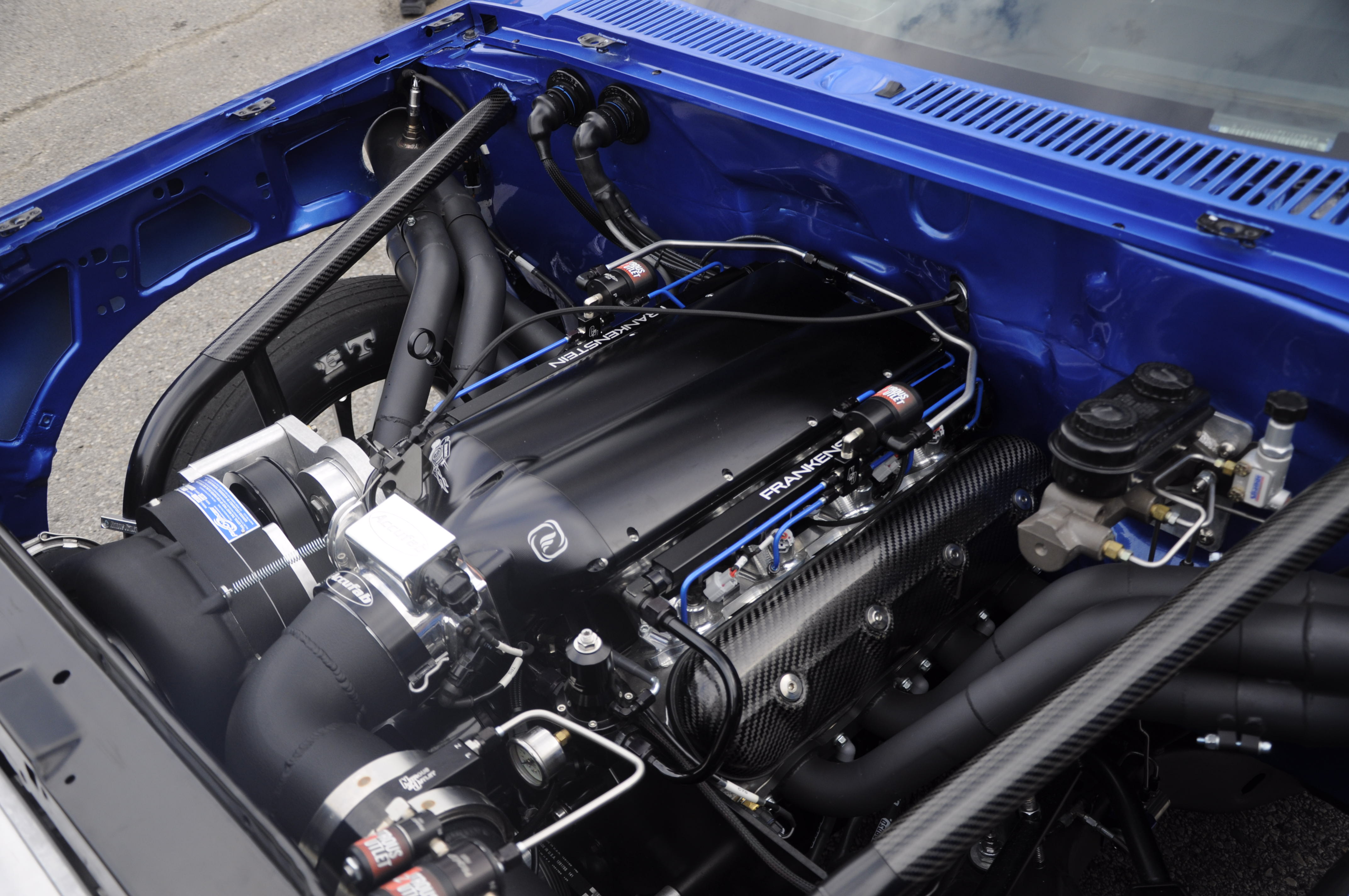
This S10 truck known as Stitch houses a ProCharger centrifugal supercharger along with a Nitrous Outlet Interspooler plate and a direct port system.

“We built a 1993 S10 called “Stitch” to market Nitrous Outlet’s Boost-N-Juice program. This truck is a real head-turner, and it’s a blast to drive. It currently makes around 850 horsepower on a stock LS bottom end with a set of Frankenstein LS3 heads, an F1A-94 ProCharger, and a 100 horsepower shot through the Interspooler plate,” Vasser shares. “Thompson Motorsports is currently building a 427 to replace the stock short block. Once we swap out the engine, we expect to make around 1,500 horsepower and utilize the direct-port nitrous system and a Frankenstein billet intake.”
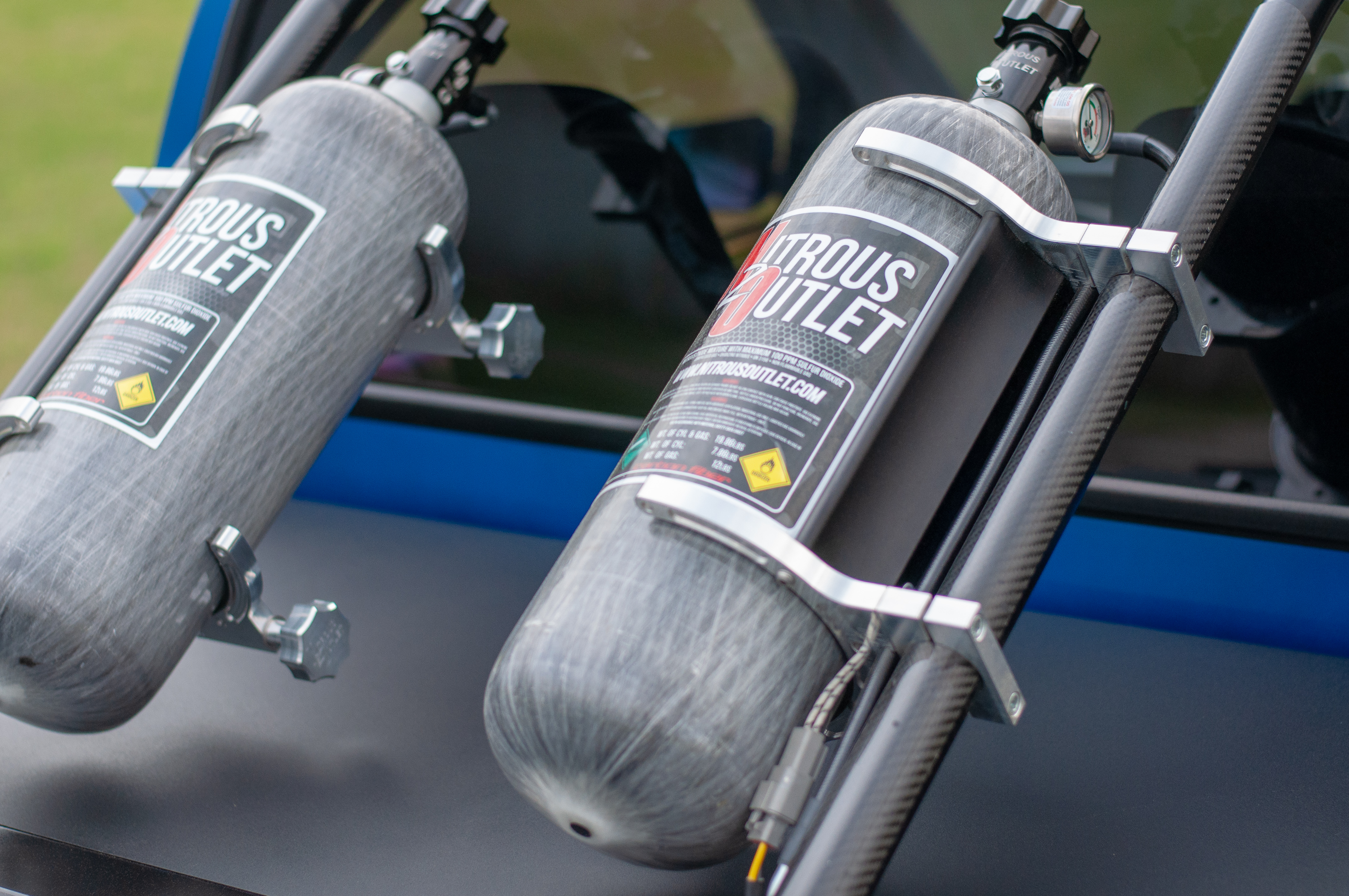
Nitrous Outlet offers a ton of nitrous systems and accessories to set your vehicle apart from the others. These 12lb composite bottles and billet bottle brackets are just tips of the iceberg.

It’s exciting to see the market change as companies like Nitrous Outlet and others encourage the use of its products with other power adders. Obviously, there’s a lot of added benefits to running nitrous on a boosted application, so it makes sense. This potent combination will give a boosted car the best of both worlds, and who wouldn’t want that? Nitrous Outlet offers a ton of innovative nitrous systems that will work with many different boosted combinations. If you have a question, give them a call or visit their website for more information. 

 

Article Sources

Posted on Leave a comment

Nitrous Oxide 101

Why is it that when people hear the term “Nitrous”, they automatically assume that there is going to be an explosion? Nitrous along with turbos and superchargers have been around for decades and are all a part of the “forced induction” family. You don’t ever hear things about turbos or superchargers in relation to massive explosions, but mention the word nitrous and people automatically picture their engine as the Nevada Atomic Test Range. Just for the record, there have many engine catastrophes with using all forms of forced induction.

Nitrous has always gotten a bad rap, but that’s partially due to the fact that it is the least understood power adder among the average gearhead. Nitrous is like anything else, it needs to be properly tuned. In order for it to be properly tuned, you have to get a basic understanding of what you are dealing with. If you purchase a nitrous kit today and follow the manufacturer’s installation instructions and tuning tips, there really shouldn’t be any problems.

That said, let’s go over some of the basics of a nitrous system and some tuning tips and maybe we can eliminate some of those frightening tales of “Nitrous engines gone bad”. This article will just scratch the surface, as you can dive deep into the world of nitrous oxide theory and hardware. This is just meant to help you get a basic understanding of a very misunderstood topic.

Nitrous Oxide (N2O) has both medical and industrial uses. The industrial-grade gas has 100ppm Sulphur Dioxide added to it to make it extremely unpleasant to inhale. While medical-grade Nitrous Oxide is pure, the minute amount of SO2 in industrial Nitrous doesn’t affect performance.

The Basics of N2O

First of all, let’s cover what Nitrous really is. Nitrous technically is called Nitrous Oxide. This is because the scientific abbreviation is N2O in which we are all familiar with. This means that there are two nitrogen atoms with one oxygen atom. People often associate this with the term “Laughing Gas” because it has been used as an anesthetic in the medical field.

There are generally two grades of Nitrous Oxide: medical grade and commercial grade. The medical-grade does have a higher purity rate for its intended purpose in the medical profession. The commercial-grade is what is used in our engines. The biggest difference between the two is that the commercial-grade is “tainted” with 100 parts-per-million of Sulfur Dioxide, which gives it somewhat of a foul odor. This was done intentionally to prevent improper use of the gas via inhalation.

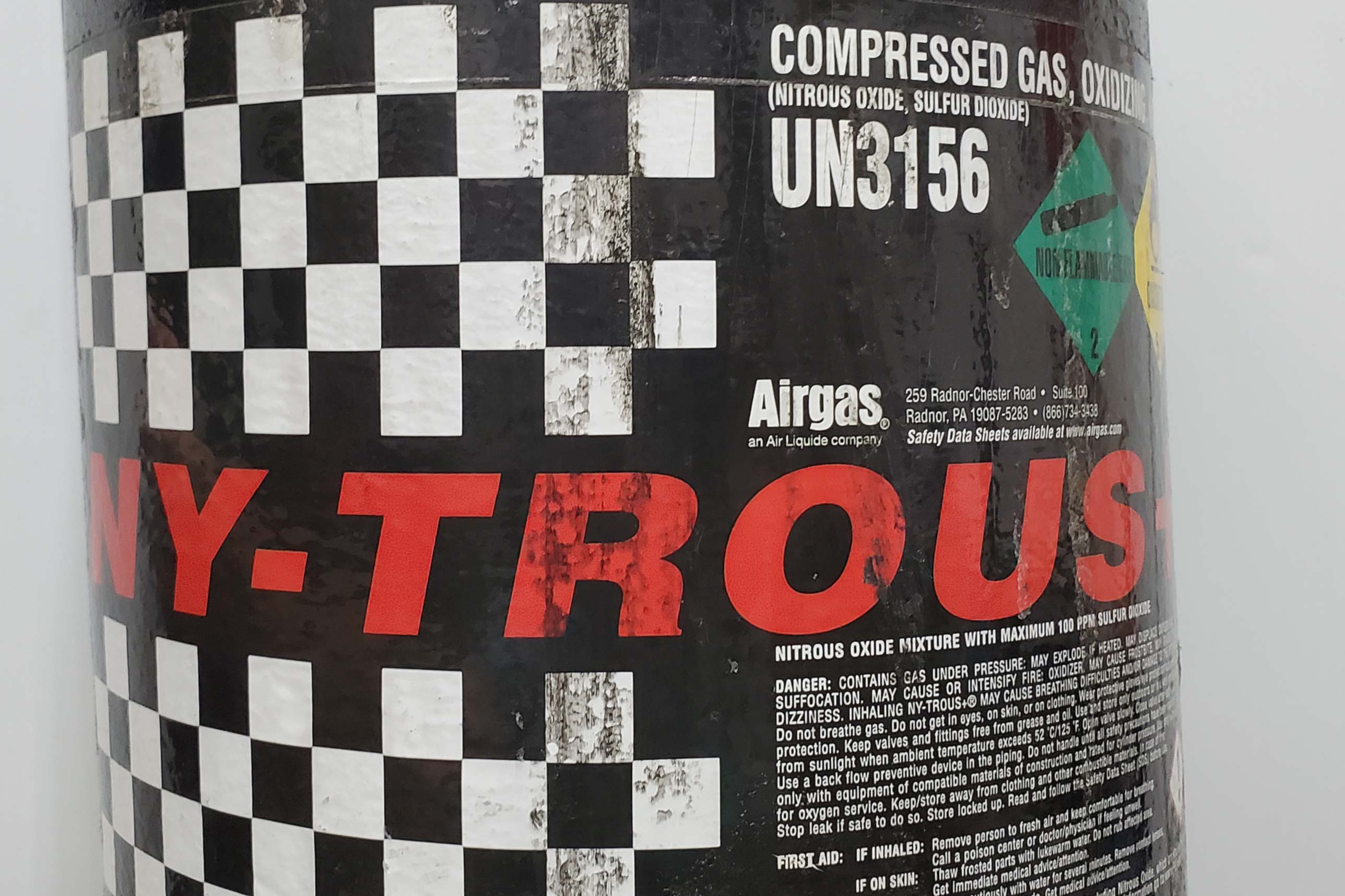
Nitrous Oxide does not occur naturally, it has to be manufactured. It is stored in a pressurized tank in liquid form at room temperature. When it is released into the atmosphere at ambient temperature it becomes a gas in a very endothermic phase change (it gets to -127 °F as it turns into a gas). Regardless of what you might hear or see in the movies, Nitrous Oxide is not flammable and it will not burn.

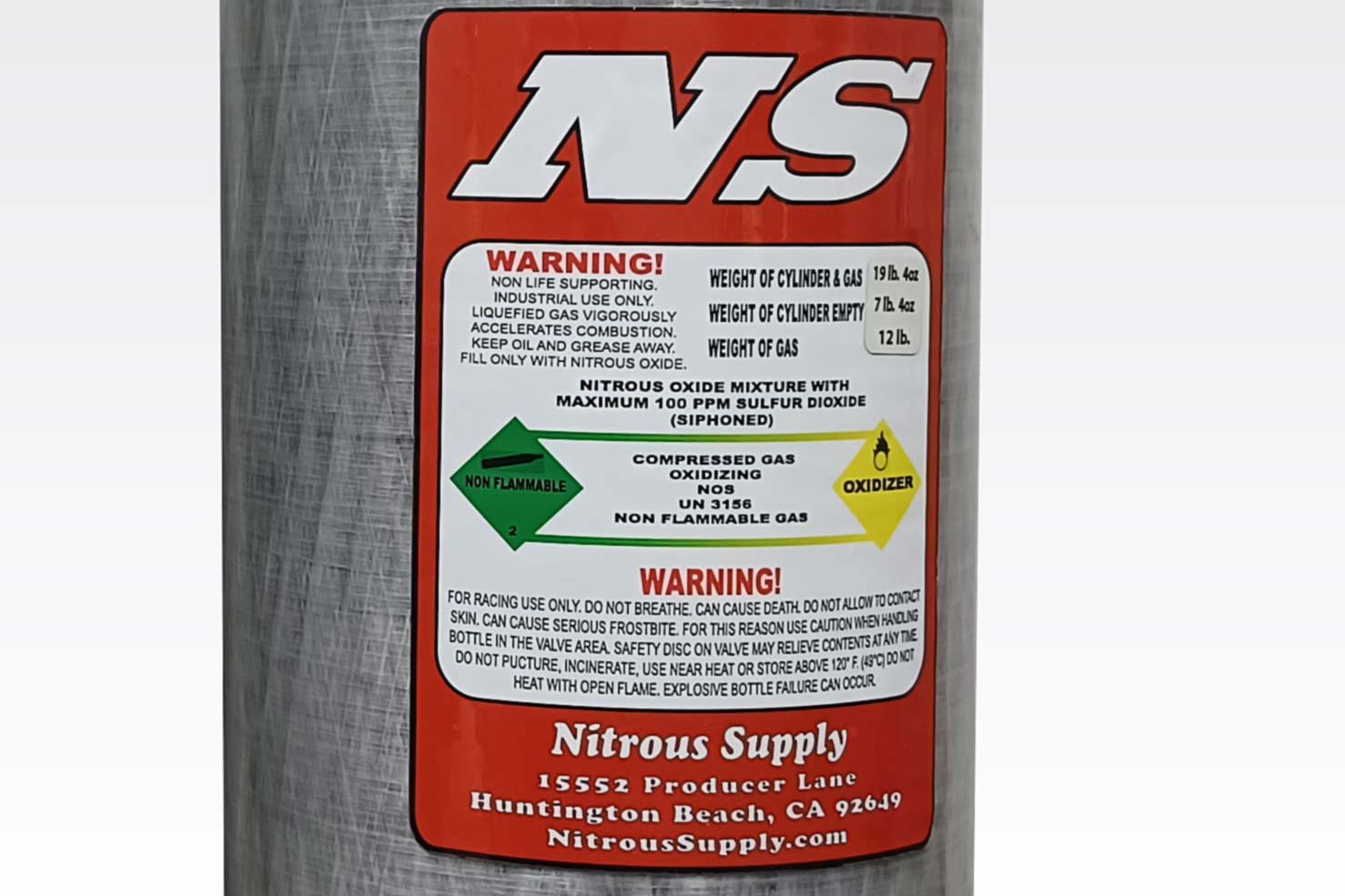
While Nitrous tanks are usually made out of aluminum, most companies offer modern lightweight tank options, like these carbon-fiber bottles from Nitrous Supply. They have to meet the same 1,800 psi minimum rating and have all the same safety features as the traditional bottles, at a lighter weight.

That being said, Nitrous tanks have to be regularly certified to be able to withstand 1,800 psi. An additional safety feature, most Nitrous bottles are outfitted with what is known as a safety release disc which is made of copper or brass. If the bottle’s pressure were to rise above the 1,800 psi mark, the safety disc is supposed to blow out and release the pressure in a more controlled manner to keep the tank from rupturing. Generally, Nitrous bottles are targeted for 850-1,000 psi working range, so the 1,800 psi rating allows for a significant safety margin.

While the safety disc is a simple and effective means of protection, it does release all of the contents of the bottle once it is “released” and can be hazardous in and of itself, which is why any sanctioning body will require the safety valve to vent to the outside of the vehicle. There are also various manufacturers of different styles of safety valves that will only vent small amounts of Nitrous without dumping the whole tank. Nitrous tank pressure for a Nitrous Oxide system is very important for proper operation.

The Chemistry of Horsepower

To be able to safely use Nitrous, we need to understand what happens when it’s injected into an engine. There are two methods of injecting Nitrous, known as wet and dry. In a wet setup, additional fuel is injected into the engine along with the Nitrous. In a dry system, it’s just the nitrous that’s injected into the system, relying on the engine’s existing fuel delivery system to enrich the mixture. Either way, nitrous requires additional fuel to make more horsepower.

So, if Nitrous isn’t flammable, how does it make that power? Nitrous is a chemical compound known as an Oxidizer that releases oxygen when reacting with another substance. With its chemical makeup, each molecule of Nitrous Oxide brings with it an oxygen atom. Additional oxygen allows more fuel to be burned. More fuel burned means more horsepower. Additionally, remember how we mentioned the cooling effect when it transitions from a liquid into a gas? That radically decreases the intake charge temperature making for a more dense intake charge. The increased charge density with the additional oxygen and fuel is what makes power.

As you can see here, Nitrous isn’t flammable. Instead, it’s an oxidizer, which means it will provide additional oxygen to another chemical reaction. By adding oxygen to the combustion process, Nitrous Oxide allows more fuel to be burned in the combustion process, and more power to be made.

The ratio of Nitrous to additional fuel is the key to making safe horsepower. You’ll often hear people referring to jet sizes in a two or three-digit number. That is the orifice size, in thousandths of an inch, of the flow-restrictor in the line. In a wet kit, there will be a similar jet on the supplemental fuel line. By altering the size of the nitrous jet, more or less horsepower can be added. You then fine-tune the air-fuel ratio with the fuel jet size.

Applying Nitrous Oxide Safely

Where things go bad when using Nitrous, is often with the ignition timing. To really understand how to make power with Nitrous, we need to understand proper ignition timing with the increased rate of fuel burn along with expansion and cylinder pressure. No matter what, the ignition timing has to be changed when using nitrous to prevent engine damage.

So far, we have discussed that additional oxygen along with additional fuel increases the burn rate during combustion. The accelerated burn rate itself does not increase horsepower. The accelerated burn rate however does create a rise in heat, which in turn creates more cylinder pressure. That additional cylinder pressure is what creates power. Controlling the peak cylinder pressure of the combustion event is the key to making maximum power. Peak combustion pressure is achieved when the air/fuel mixture is ignited right before it reaches peak cylinder pressure (from piston compression) in the chamber.

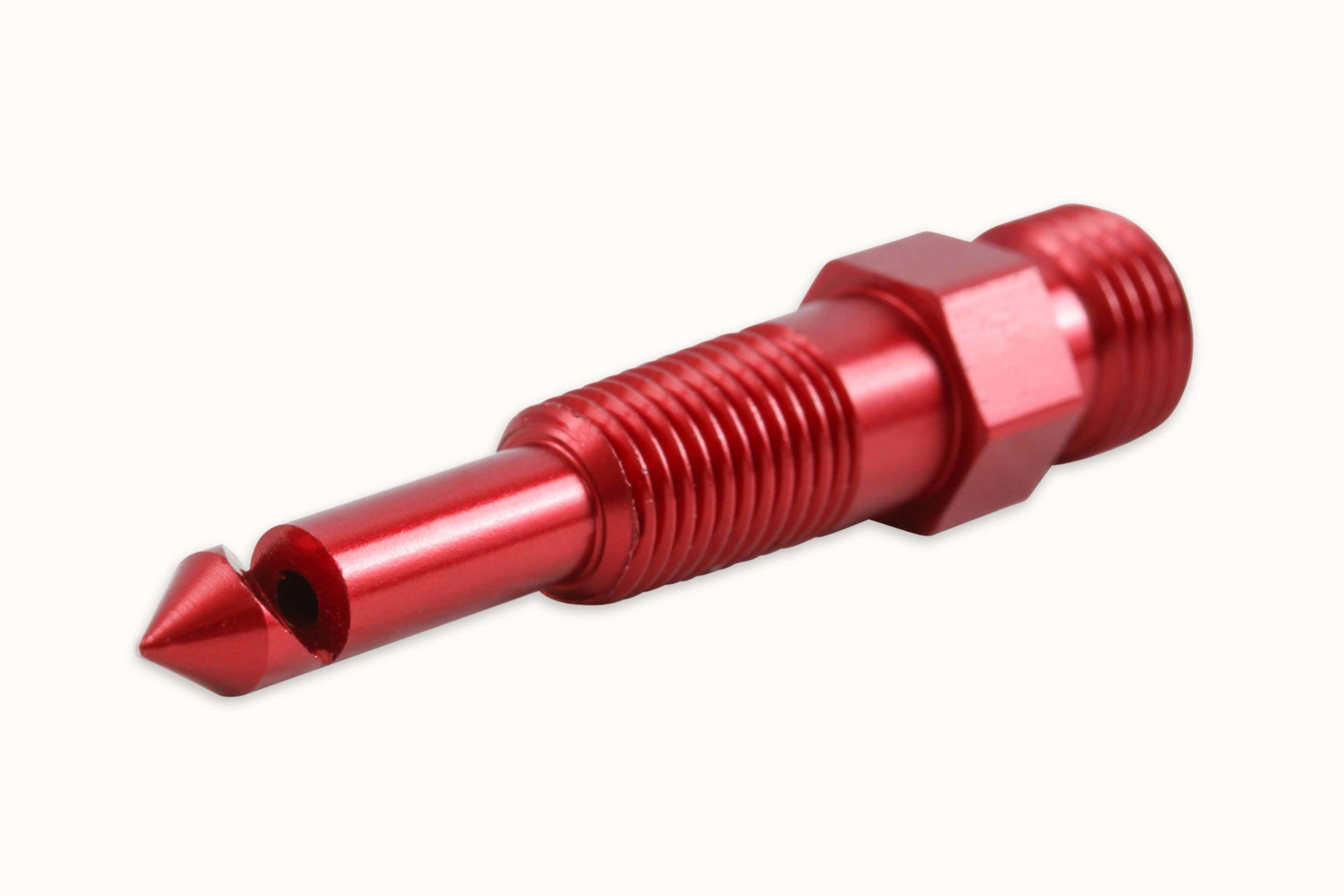
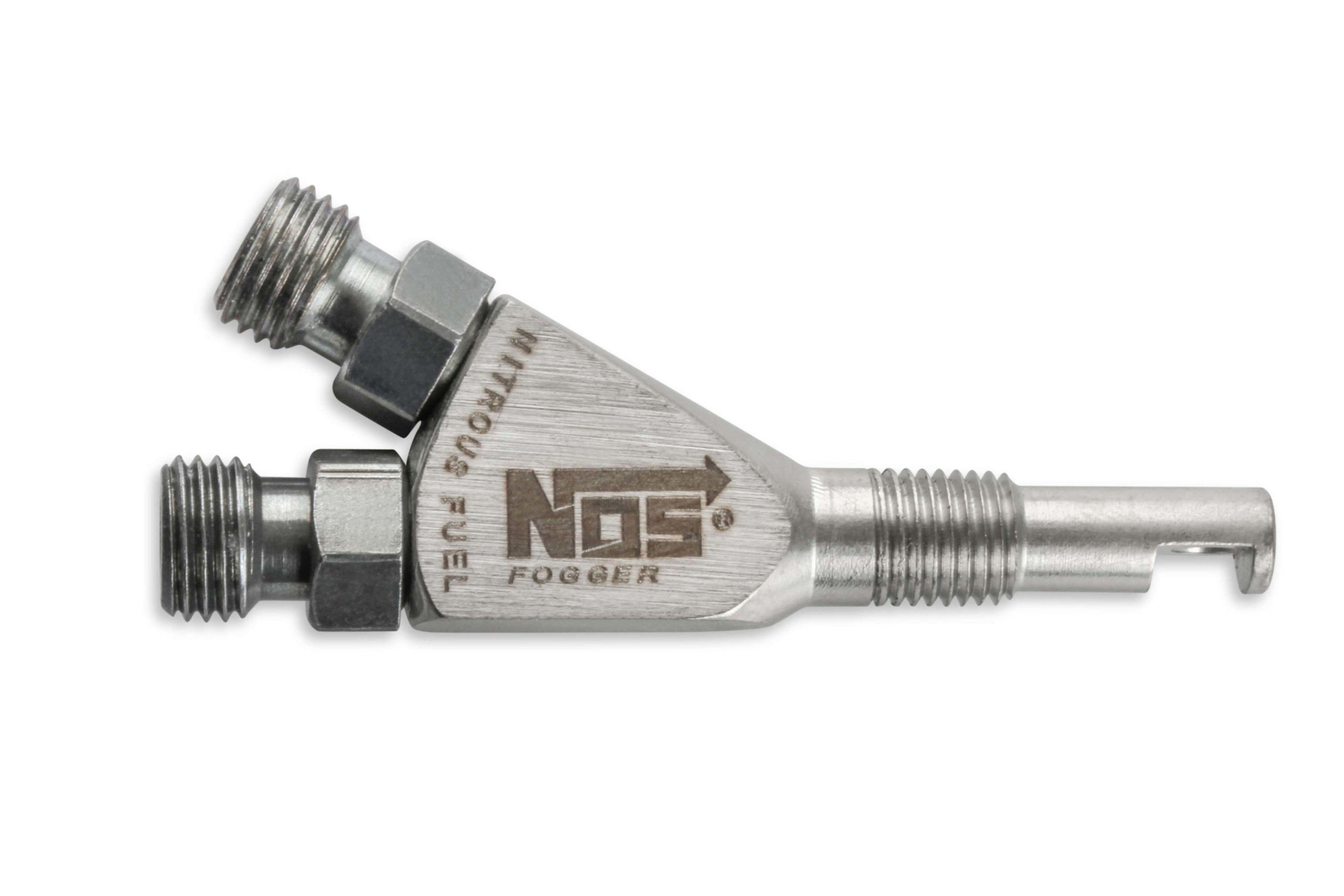
Here you can see various methods of Nitrous injection. On the far left is a dry nozzle. This nozzle only injects Nitrous Oxide (which has been metered by a jet of a specific orifice size) and relies on the engine’s fuel system to add fuel. In the middle is a wet nozzle. It injects both Nitrous and fuel (both through metered jets) at the same time. On the right is a wet plate. Designed to sit below a carburetor, this system uses spraybars to distribute both Nitrous and fuel into the intake manifold.

A nitrous engine creates more cylinder pressure so the need for ignition advance is reduced. The rule of thumb for retarding the ignition timing is 1 degree for every 25 horsepower of Nitrous. For example, an engine running 36-degrees of total timing naturally aspirated, would retard the timing by 6 degrees, to 30 degrees total, when using a 150-horsepower shot of Nitrous Oxide.

Regardless of whether the engine is naturally aspirated or force-fed, knowing the correct timing for peak cylinder pressure equals power. The best way to find out if your engine is timed correctly is to read the spark plug. The ignition timing is responsible for heat marks on the ground strap of the spark plug. If the flame front is initiated too soon, more temperature is created before the exhaust valve opens which creates bluing on the ground strap above the base of the plug threads. If the timing is initiated too late then the bluing occurs on the tip of the ground strap. When the timing is right, the bluing will occur about middleways up the ground strap from the center of the tip of the electrode.

The rule of thumb for ground strap discoloration is, if it appears more toward the electrode then there is not enough timing and if the ground strap is discolored toward the threads of the spark plug there is too much timing. Somewhere along the middle like in the photo is in the ballpark of what you are looking for. Also, keep an eye on the base of the porcelain for some discoloration.

There is usually a hydrocarbon ring that will form on the porcelain about .150-inch up from the base of the plug threads. If the hydrocarbon shadow is black or dark gray, then the mixture may be too rich or the plug might be too “cold”. The heat range of the spark plug refers to the temperature electrode, controlled by the size and shape of the electrode’s ceramic insulator.

Since a spark plug must maintain a certain temperature in order to keep itself clean, the heat range of the spark plug must be selected for the operating environment it is going to be running in. When using small amounts of nitrous you can generally use one step colder than your current spark plug. If you are using big amounts of nitrous you may need to drop three or four steps colder on the spark plug heat range.

One thing to keep in mind is that you’ll need to retard your timing when using Nitrous. The rule of thumb is one degree for every 25 horsepower worth of nitrous you’re injecting.

Getting Into Nitrous Oxide-Specific Modifications

For the most part (and really, what we’re discussing here) small Nitrous systems are often used on factory-based engines. They perform well and often don’t require any major engine modifications other than a reduction in timing and colder plugs. But, if you were to build a Nitrous-based engine or introduce a lot of Nitrous into your existing engine, there are a number of areas to be considered.

Most camshaft manufacturers have a lot of experience with Nitrous Oxide and often offer various “off-the-shelf” solutions for many applications. We recently discussed what goes into a Nitrous Oxide-specific camshaft design in this article here, and explain in detail how and why a “Nitrous cam” is different than a naturally aspirated camshaft.

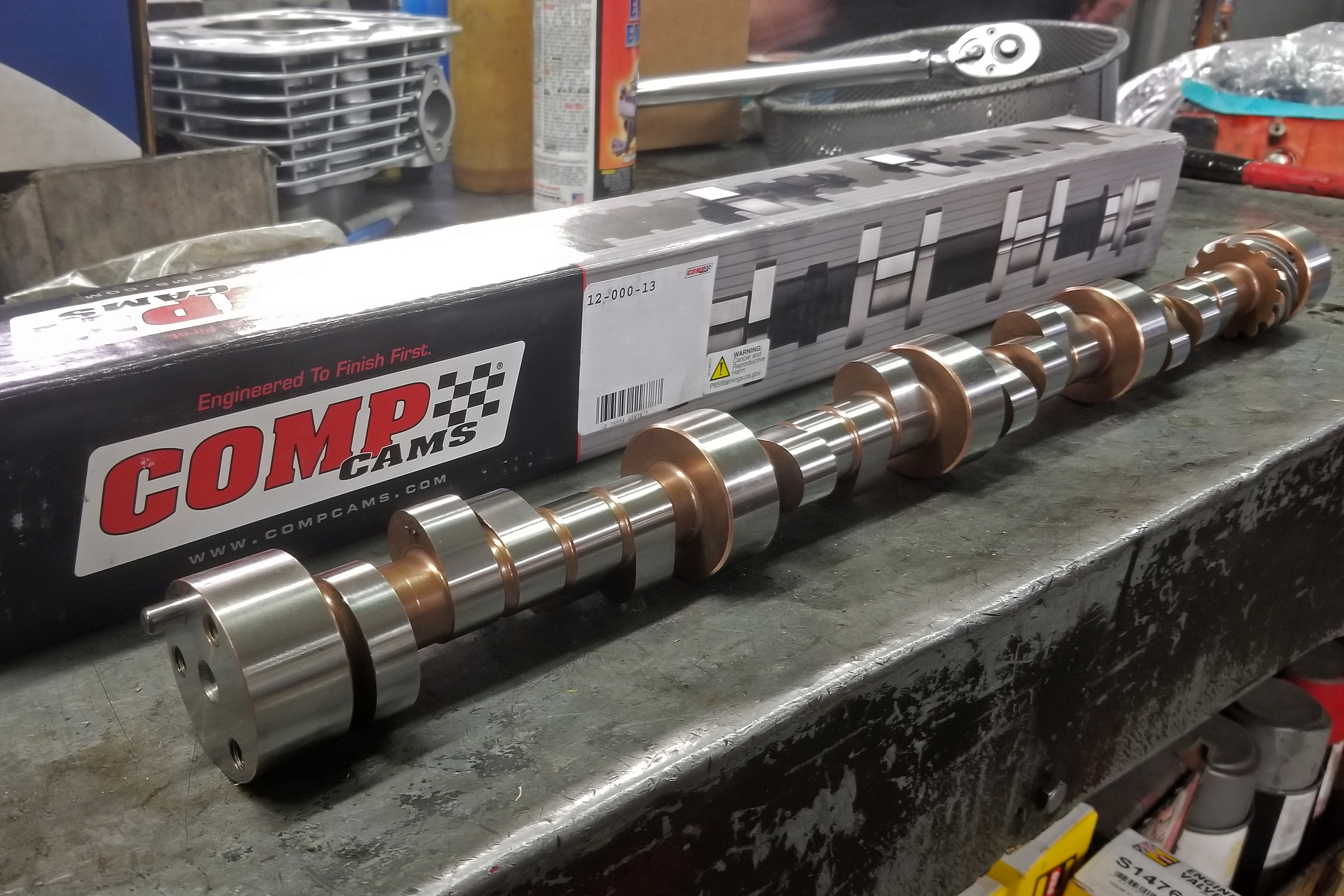
If you are building a Nitrous specific engine or wanting to add a significant amount of Nitrous, you may want to upgrade the camshaft. Several manufacturers such as Comp Cams offer camshafts for Nitrous use. These cams are ground with wider lobe separations and longer exhaust duration to help scavenge some of the spent exhaust gasses from the cylinders.

Additionally, the same modifications you’d make to an engine for copious amounts of boost would be similarly recommended for heavy Nitrous use. After all, just like the other forms of forced induction, you are greatly increasing cylinder pressure and subsequently, horsepower. So beefing up your engine’s internal components would be a wise idea for anything beyond mild use of the giggle gas.

Nitrous Oxide, when used per the manufacturer’s instructions, is an incredibly cost-effective power adder. With a minimum outlay of cash, and relatively simple installation significant power increases can be had on a relatively stock engine. Additionally, if you want to go wild with the stuff, you can do that as well. The key is to understand what’s happening and make sure you are accounting for all the variables.


Posted on Leave a comment

Piston Coatings: When You Should And Shouldn’t Use Them

Piston coatings have become so common with OEM and aftermarket manufacturers that it seems as though they often go unrecognized. Often, consumers might understand the basic functions that piston coatings offer, but do not realize the full potential of the benefits. Engine builders, on the other hand, appreciate the benefits and can often specify which coatings they prefer to have applied to the pistons based on the application of the engine.

While many coatings are available, each coating has a unique function, so the individual benefits will only serve the purpose for which the engine is being used. This is not one of those situations where you just order your pistons with all the coatings, because it could prove to do more harm than good. Also, just like anything else, there is always the cost factor. Some coatings and processes can be very expensive, so you must determine if the benefits will out way the initial cost.

If my memory serves me correctly (and that’s a big if), piston coatings — along with internal engine coatings — were introduced around the mid-1990s. What I remember most were the do-it-yourself kits that were user applied. If you had an airbrush, and a conventional oven, you could successfully coat your engine parts. Back then, we were desperate for horsepower because the availability of aftermarket parts was slim compared to today’s market. So, I will have to admit that I was one of those guys that tried it. I will say that it was very time-consuming, which is probably why the cost of professionally coated parts is more expensive.

In order to get a better understanding of various piston coatings, we reached out to Mahle Motorsports to learn what coatings are offered and when each is beneficial. When coating a piston, there are target areas that need to be considered: the skirt, ring grooves, crown, and the entire piston. There are eight types of coatings that can be applied to the four target areas. Each one of the eight has a specific function and there are advantages and disadvantages associated with all of them. Hopefully, this information can clear up any misunderstandings that might cause some confusion about which coating is right for you.

 Grafal Piston Coating

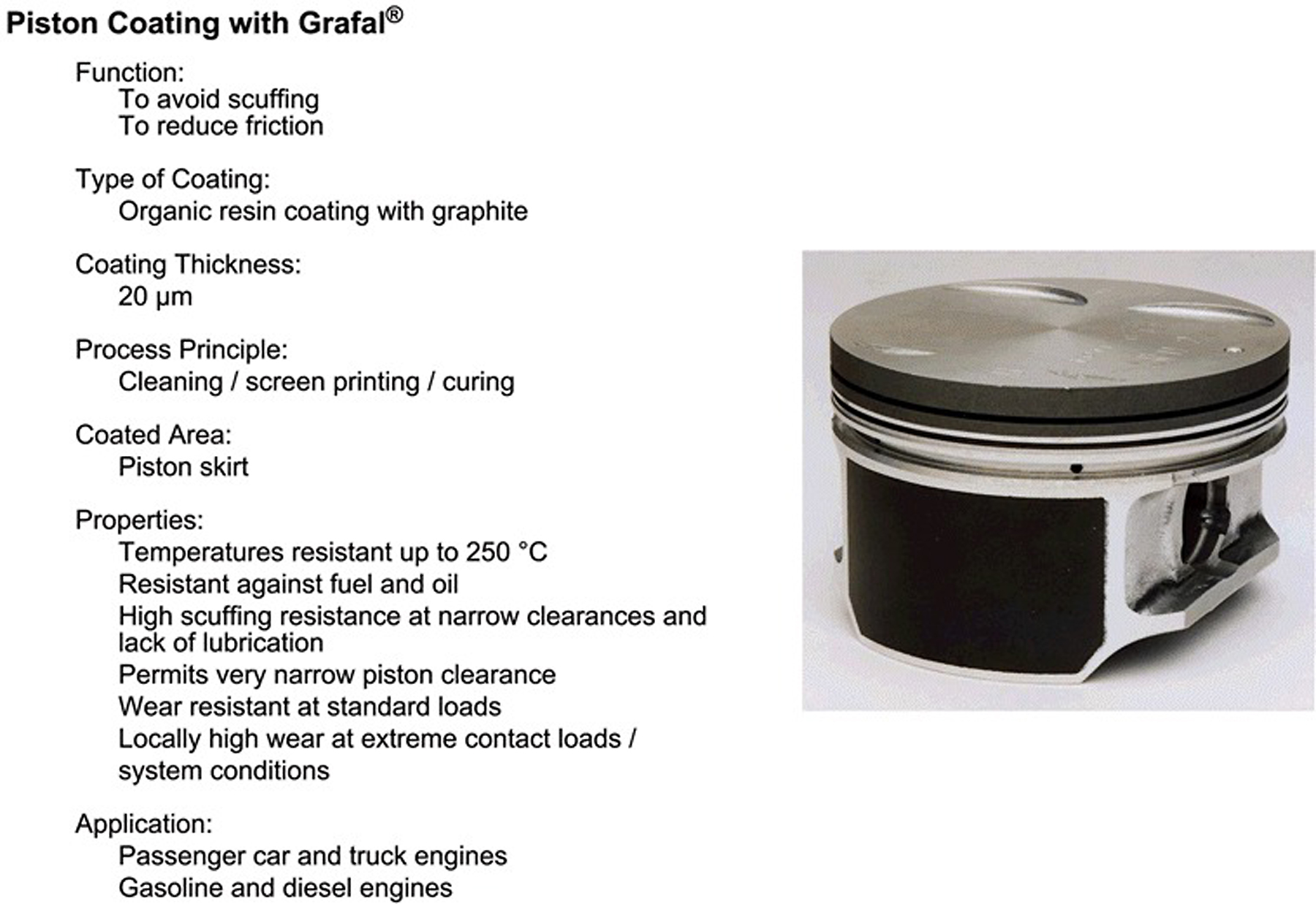
Grafal coating is proprietary to Mahle, and you will often see this coating on piston skirts. This is a dark coating that is actually a printed resin embedded with graphite. This will add approximately .001-inch to the diameter of the piston, so it must be considered when boring and honing the cylinders. Its purpose is to reduce sliding friction by adding a self-lubricating, protective layer.

Advantages:

This skirt coating acts as protection against cold start piston slap and over-fueling. It also aids with noise and friction reduction and even adds a layer of protects if there is a lack of proper lubrication.

piston              coatings

Disadvantages:

Technically there are no disadvantages if the coating is applied properly. Mahle believes in this coating so much that it is applied to every piston it manufactures. This helps lower the cost substantially by incorporating the coating process into the main production process.

Note: People often think the Grafal is a break-in coating. This coating is meant to remain for the life of the piston. This coating will also save cylinder walls from abnormal conditions such as fuel wash, overheating, etc.

Ferroprint

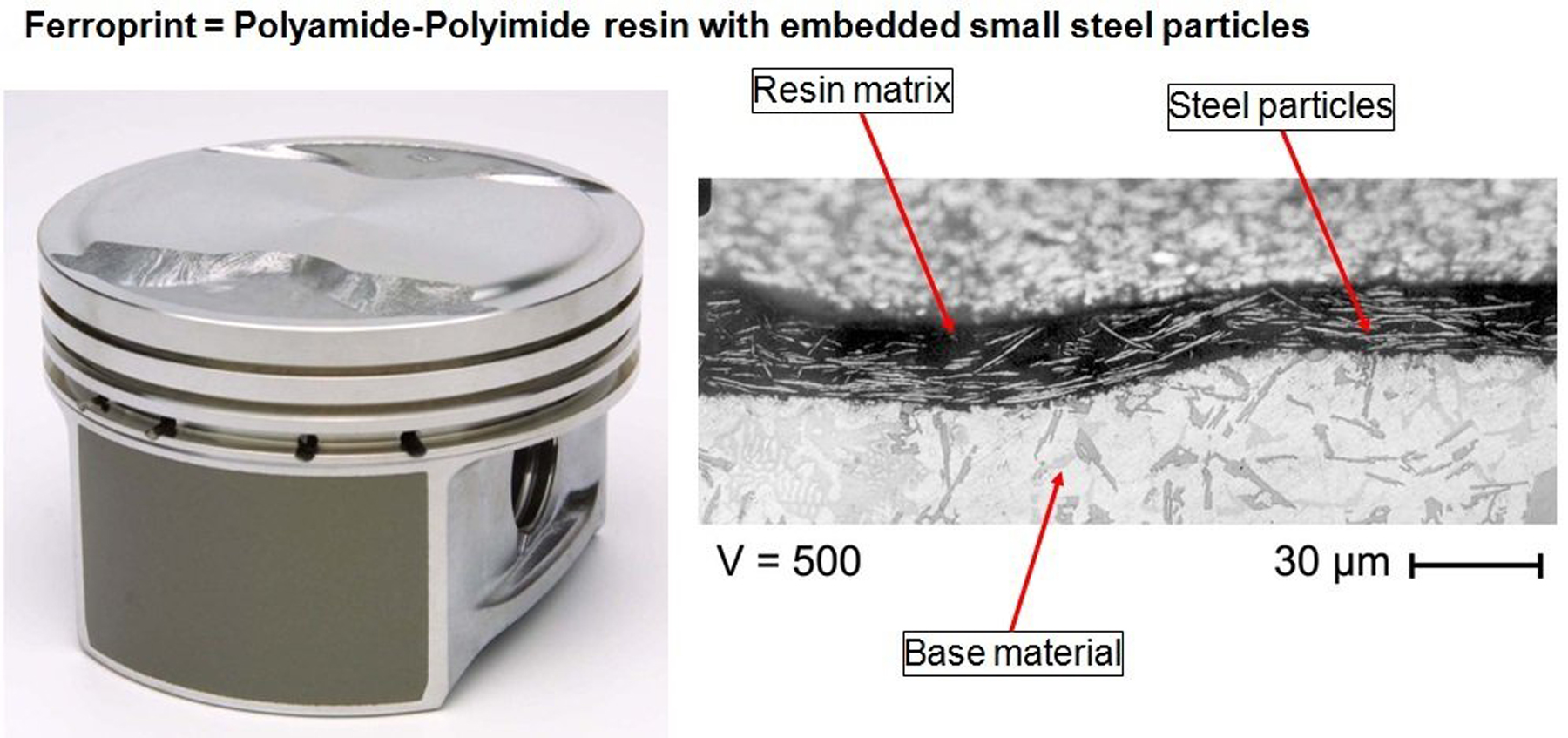
This is one we don’t often hear about because it has a small window of usage. Ferroprint is a dry-based lubricant applied to piston skirts. This is very similar to Grafal, but the resin structure is embedded with stainless steel. Its primary purpose is to provide a layer of protection for an aluminum piston to operate in an aluminum bore (i.e. small engines and motorsports).

Advantages:

Offers protection against scuffing from cold starts and lack of lubrication, and is necessary for this application.

Disadvantages:

Can be expensive to have applied. If the coating gets worn off, there will be unprotected surfaces and that may present problems. Note: Cylinders that have plating such as Nikasil will not use this type of coating. They will still use the Grafal. Again, this is for aluminum cylinder bore applications.

piston coatings

The process of Ferroprinting has a dry-based lubricant applied to the piston skirts. This coating is very similar to Grafal, but the resin structure is embedded with stainless steel.

Piston Coatings Via Phosphating

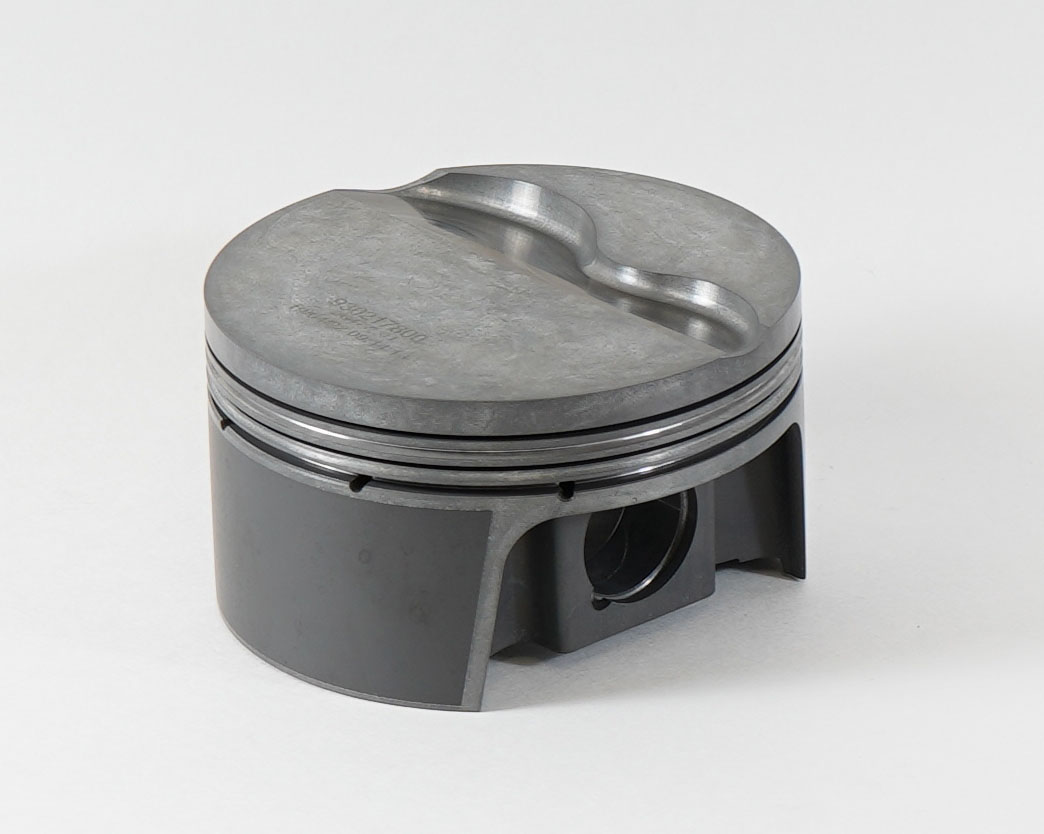
If you have ever seen a piston that was dark gray and wondered why, the Phosphating process is what creates the dark-gray appearance on the entire surface of the piston. This is an aluminum-phosphate coating that is performed via an immersion process. Its primary usage is to provide break-in protection for the piston pin bores and ring grooves. This is a dry lubricant coating that is permanently bonded to the piston surface. The phosphate coating is practically immeasurable because the layer thickness is less than 4 microns.

piston coatings

Phosphate coating is a dry lubricant that provides a film covering the entire piston. This coating covers the pin bores and ring grooves and remains until the engine reaches operating temperature.

Advantages:

The one and only function of the phosphate coating is to provide additional lubricity.

Disadvantages:

There are no disadvantages associated with the phosphate coating process.

Note: Often, there is a misconception that the phosphate piston coatings serve as some sort of thermal barrier for the piston crown. This is false. The dark-gray color serves no purpose on the crown and if the crown needs to be machined or the valve pockets recut, it will have no effect on the function of the coating since lubricity of the piston’s top surface is not an issue.

DLC

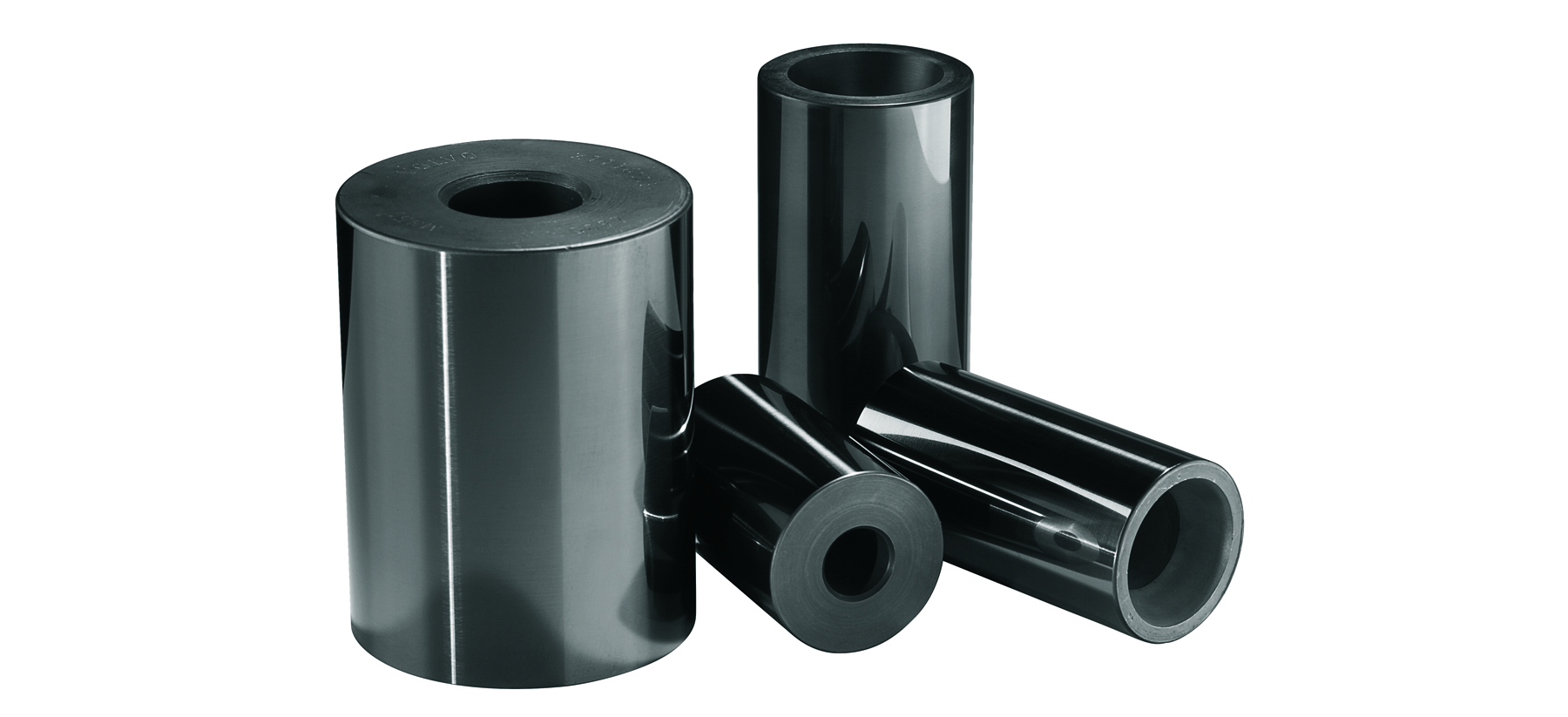
The letters DLC stand for “Diamond-Like Carbon”. It gets its name from the coating process in which an adhesion layer is applied and then followed by a layer of Hydrogenated Amorphous Carbon. The layer of carbon serves as a hard, slick surface to reduce friction. This carbon-based coating, combine the properties of diamond and graphite.

Piston Coatings

Diamond-Like Carbon coatings, combine the properties of diamond and graphite, producing a very hard and slick surface. It’s a great option for using on wrist pins.

Advantages:

Offers superior friction reduction

Disadvantages:

The primary use for DLC is to be applied on hard, stable surfaces such as piston wrist pins. The soft structure of a piston, especially under extreme heat and load conditions, does not fit these requirements. It can be applied to the piston skirts, but the gains using DLC over the conventional Grafal coating are minimal. The tolerance for scuff protection is limited, and once the scuffing begins it can quickly progress to hard scuffing and catastrophic skirt failure. The DLC coating on the skirts is not very forgiving and the cost to benefit ratio is relatively weighted toward the cost.

Hardcoat Anodizing With PTFE Sealing

Hardcoat anodizing is a very specialized coating that offers increased resistance against abrasion and wear. The PTFE sealing offers increased lubrication. The coating process is performed through an immersion process that will coat the entire piston.

Advantages:

In extreme applications, hardcoat anodizing can offer increased resistance in abrasion and wear. The coating can also provide additional corrosion resistance for marine applications.

Disadvantages:

The increased resistance to abrasion and wear can lead to a long-term detriment to cylinder wall surfaces. Because of the processes that the piston must undergo for the coating, dimensional changes that will affect the piston have to be accounted for when designing the piston.

Hard Anodizing Ring Grooves

The primary function of this coating is to offer protection of the ring groove flanks against micro-welding. The term micro-welding is used to describe a situation when aluminum particles of the ring-groove bore transfer to the piston ring. This often causes the piston ring to stick in the ring groove, causing ring-sealing issues along with excessive blow-by and loss of power. While it has been proven that moving the top ring closer to the top of the piston helps make more power, when you do, especially under high cylinder pressures, micro-welding will occur.

Advantages:

Hard anodizing of the piston ring grooves does offer abrasion and wear resistance to micro-welding which will occur when the engine is used under extreme conditions. (i.e. supercharging, Nitrous Oxide, and turbocharging).

piston              coatings

Disadvantages:

The surface of the ring groove flank becomes rough. Although this will offer protection against micro-welding, it can cause some difficulty with piston ring seating. Conditioning of the hard-anodized ring-groove flank does not occur during the break-in period. After a period of time, the anodized ring groove flank will become conditioned, but will still be rougher than an uncoated piston, therefore, possibly leading to a less-than-optimal piston ring seal.

Thermal Barrier Piston Coatings

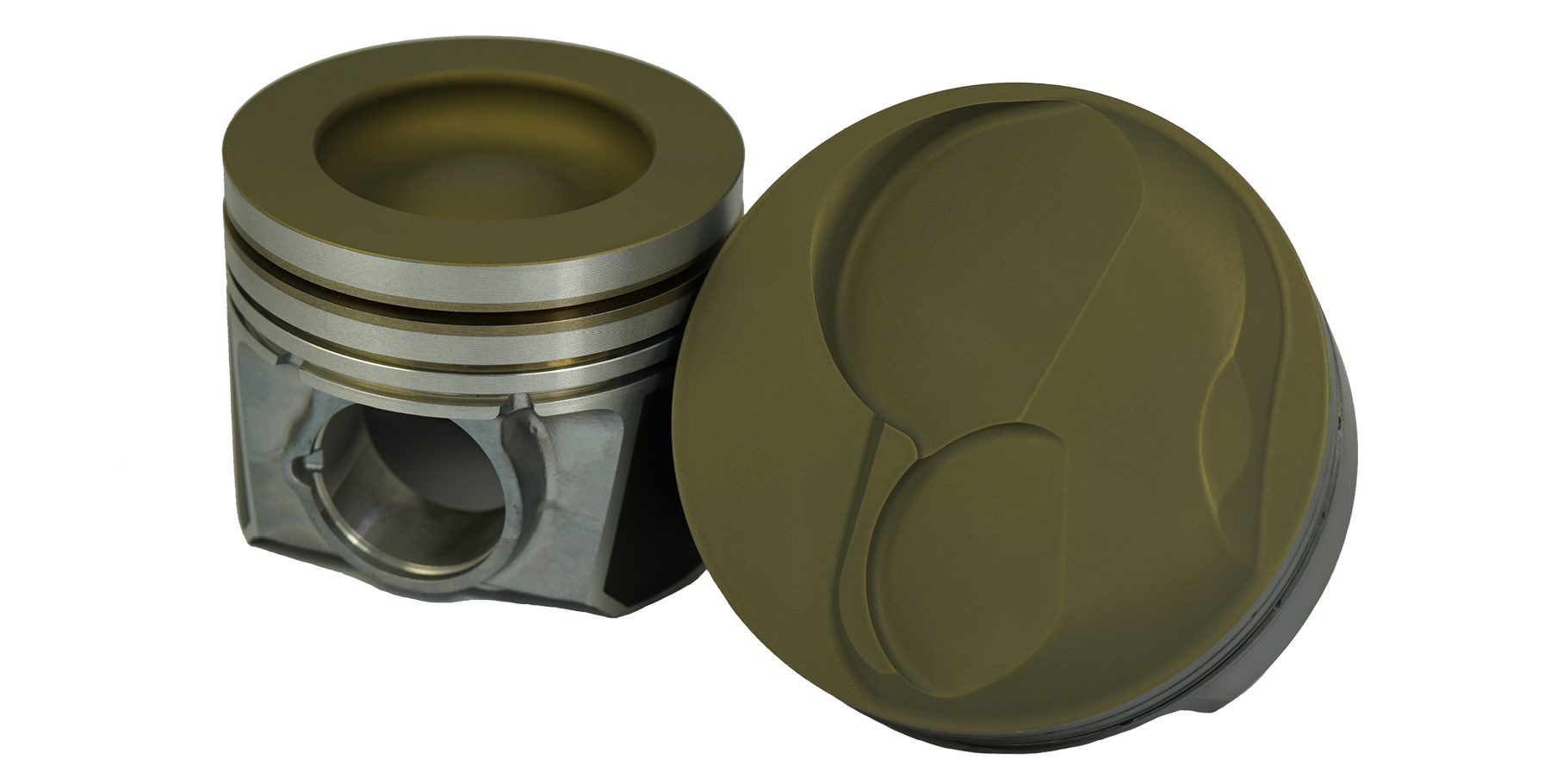
A Thermal Barrier Coating is a spray-on coating usually applied to the top surface of the piston. Its function is to reduce heat transfer into the top of the piston. The benefit of Thermal Barrier Coating is highly dependent on the application and its use. Thermal Barrier Coatings are more effective if other components of the engine such as the combustion chambers, valves, and exhaust system are also coated.

Advantages:

Thermal barrier coatings will reduce heat transfer from the combustion chamber to the piston crown.

Disadvantages:

There is some additional cost added to the price of the piston for adding a Thermal Barrier Coating. While the cost may be somewhat insignificant, there will be additional expenses in coating the other combustion components in order to yield the full benefits of Thermal Barrier Coating. Once the piston is coated, there cannot be any machining or modifications done to the piston crown. If any modifications are needed, the piston will need to be recoated.

Mahle offers its Powerpak piston kits which come with the Grafal coated piston skirts and a phosphate coating. These two coatings are mostly utilized for street and racing applications and have been proven reliable for many years. They are applied during the production process, so it is very inexpensive and well worth the benefits when the cost equates to pennies on the dollar. The other coatings are beneficial but are structured mainly for more specialized applications where engines are under severe and extreme conditions.

The benefits of piston coatings have been debated for many years, but if properly utilized in the right situations, they can be a great way to extend the internal part’s life expectancy and even the performance it delivers. If you think a particular coating might be better for your application or you are not sure which would yield the best results for your engine, give the folks at Mahle Motorsports a call and get the best recommendation from professionals.