Posted on Leave a comment

Coated Pistons: Measuring Advice From JE Pistons

Coated Pistons: Measuring Advice From JE Pistons

Coating technology for engine internals is becoming more commonplace today as a proof-positive way to increase wear characteristics and overall life of performance and racing engine components. JE Pistons has provided some informative advice for measuring a coated piston for overall piston diameter. These measurements contribute to the formula between the piston skirts and the cylinder bore, better described as piston-to-wall clearance.

Measuring piston-to-wall clearance is essential when building your new engine. In extremely critical motorsport engine build applications, the thermal expansion of the piston requires exact tolerances. Most commonly used in racing are forged pistons which expand more than cast pistons, necessitating this attention to detail.

Essentially, there are correct tools and measuring procedures and, unfortunately, common incorrect ways to measure coated piston diameters. For example, the engineers at JE highly recommend never using a dial caliper when measuring piston diameter.

Using more simplistic devices such as a caliper can result in incorrect readings up to .003-inch. Different piston manufacturers may vary with piston-to-wall clearance, depending on their piston materials used. Whatever your specific tolerances may be, they are typically measured down to .0001-inch of accuracy.

Exact Cylinder Bore and Piston Diameter Measurements

Measuring your engine block cylinder bores requires a precision dial-bore gauge. Pretty much, that is the end of the discussion there. High-end dial bore gauges are the tool of choice. Similar to using incorrect dial calipers when measuring pistons, a snap gauge is another tool that will not provide the needed accuracy.
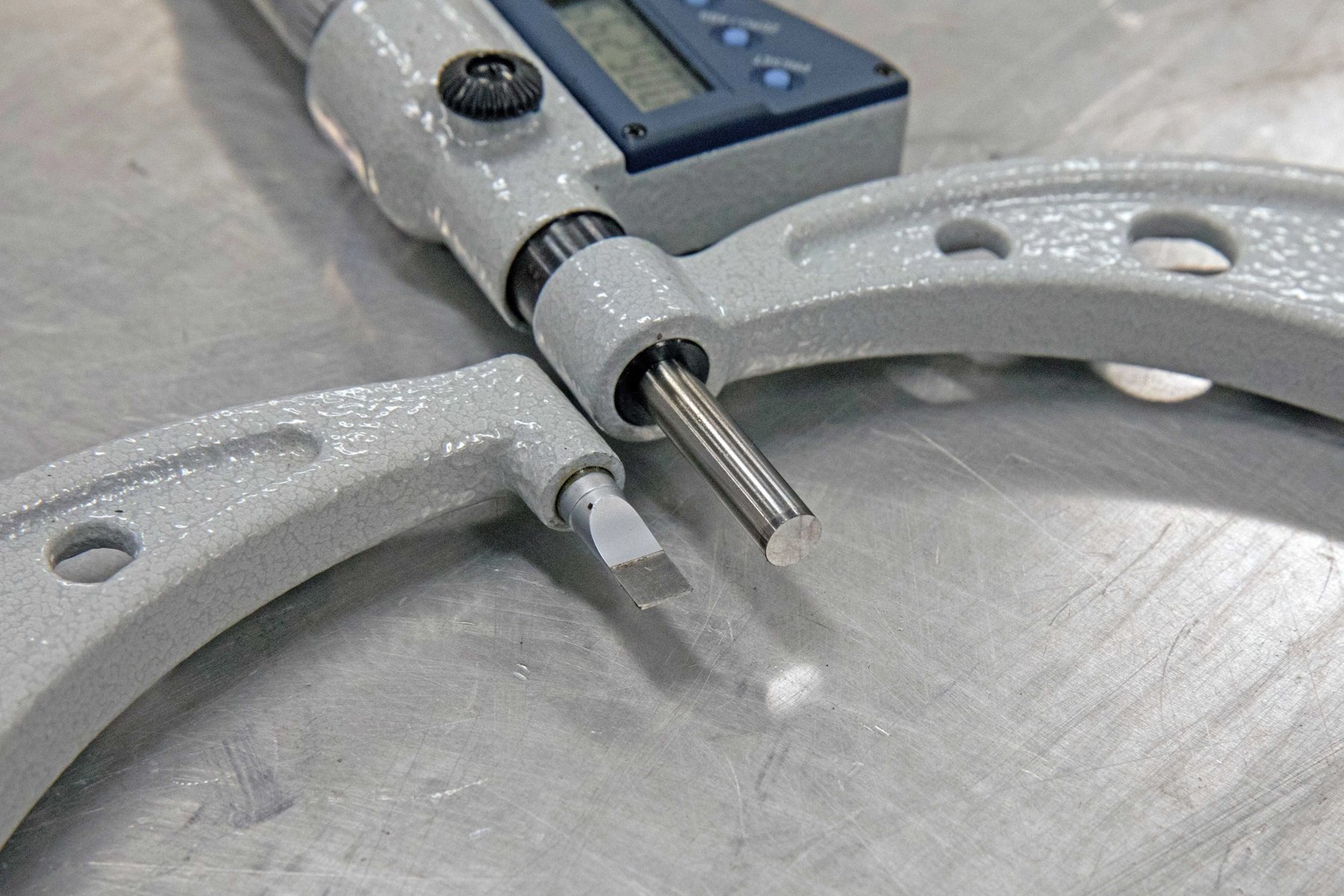
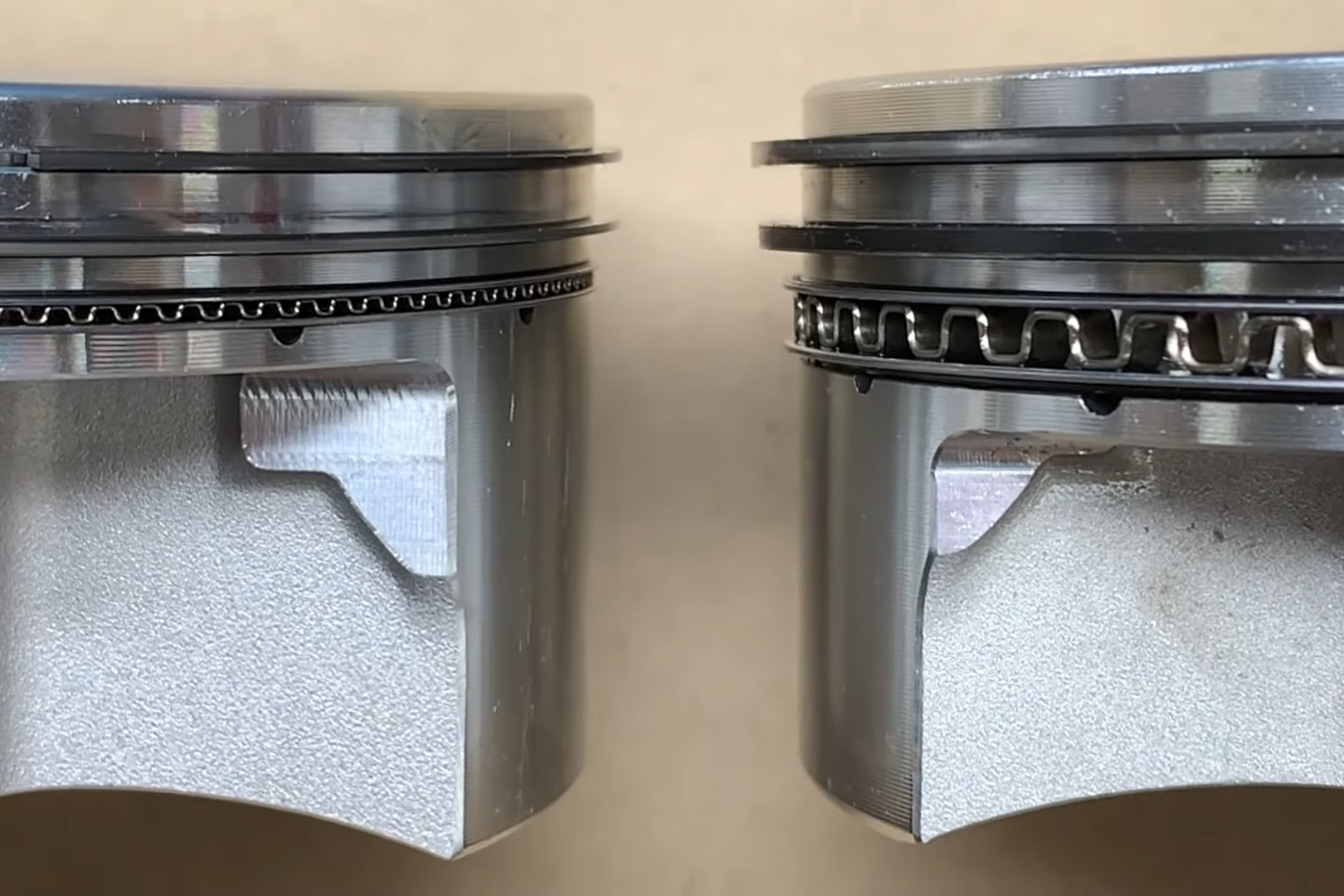
Measuring piston diameter with the popular JE Perfect Skirt–coated pistons requires measurements using a blade micrometer. Shown beside a traditional cylindrical-ended unit, the blade micrometer will accurately measure the piston’s skirt within the provided piston coating window. Measurements made when contacting the coating surface will cause inaccurate readings.

All pistons are not perfectly round; in fact, they are described as the diameter being a “cam” shape. By following the specific “gauge point” locations that JE Pistons carefully points out in its illustrated instructions, you will achieve the proper measurements to match your cylinder bore and derive appropriate piston-to-wall clearances.
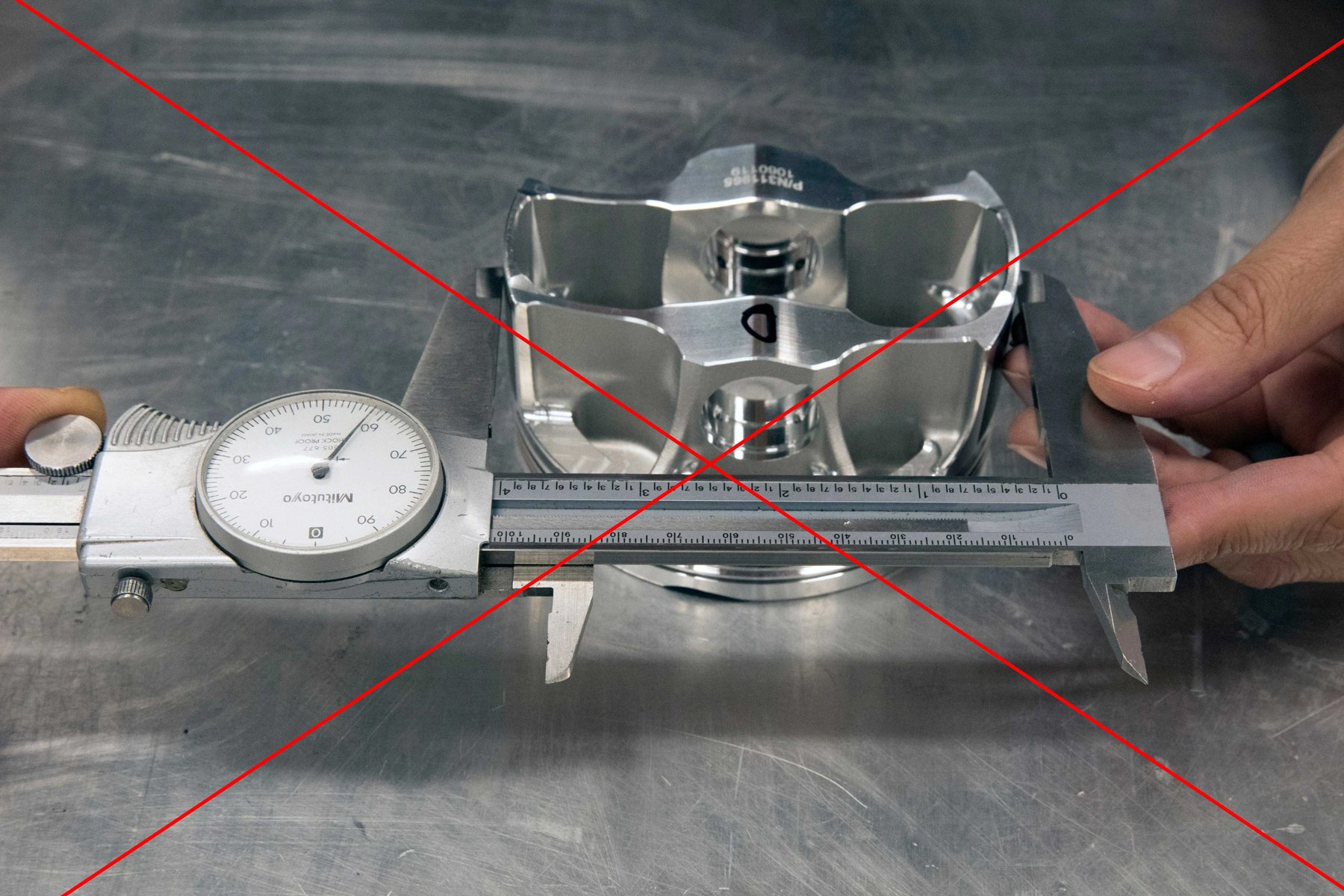
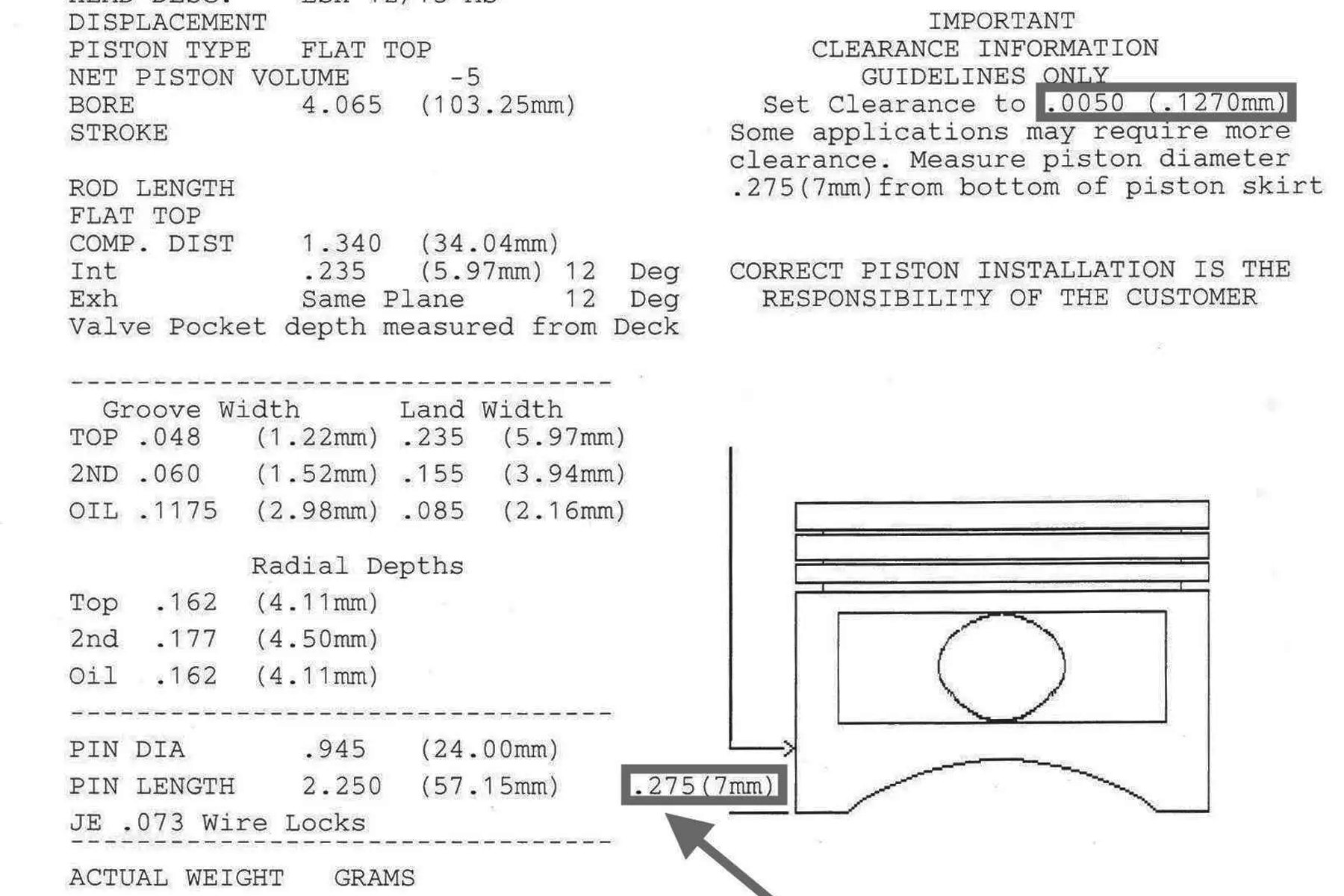
A dial caliper does not have the accuracy to reliably measure a piston’s precision skirt, and should not be used for any piston measurement. The JE specification sheet included with all piston sets illustrates all proper measuring points for your coated pistons.

With careful attention to detail and proper tool usage, your Perfect Skirt–coated piston will help eliminate piston slap as well as prevent premature skirt wear. It only takes a few simple points of detail in engine assembly to incorporate coated pistons into your engine building regimen.
Posted on Leave a comment

Explaining How Piston Rings Can Affect Engine Temperature


When it comes to diving into dyno testing headfirst, one of the first people to come to mind is Total Seal’s Lake Speed, Jr. Between his days as the Director of R&D at Driven Racing Oil and now as Total Seal’s Vice President of sales and marketing, he spends a lot of time in a dyno cell, testing the company’s products. So when he finds something that he thinks is worth talking about, we tend to listen.

Recently, while doing some testing at Shaver Specialties, he noticed an apparent correlation between thickness in the piston rings, and both water and oil temps of the engine. With his curiosity piqued, Speed set up a dyno session to specifically test the theory and see if the thickness of the piston rings actually affected the engine’s temperature.


Setting Up the Test

In order to conduct any test worth its salt, you need a reliable, repeatable baseline. For the tests, Speed used a small-block Chevy dyno mule at Shavers, which has over 1,000 pulls on it with a 0.7mm/0.7mm/2.0mm ring package on it over the course of the past several years. So to say it is a known quantity would be an understatement. “We know what this engine does,” says Speed. “This engine has a very good baseline of what the engine temperatures should be with a given viscosity and type of oil, at a specific RPM, with a specific load.”


The 1/16th inch rings are over twice as thick (1.58mm) as the 0.7mm rings, which means more than double the surface area of the ring face rubbing against the cylinder wall. That alone makes it easy to understand the difference in friction between the two.


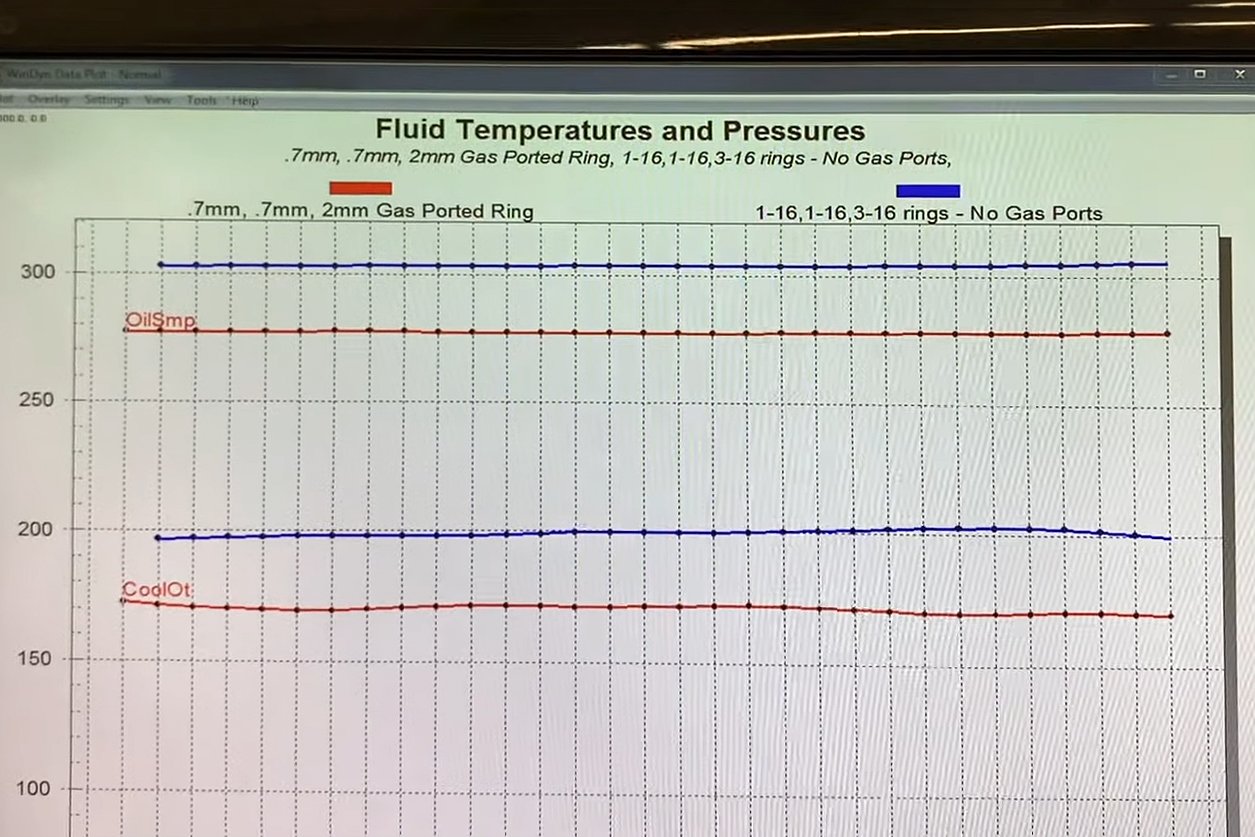
For example, Speed says that with the 0.7mm/0.7mm/2.0mm ring package at 3,000 rpm, with a 75 lb-ft load on the engine, after running for 30 minutes, the engine will have the exact same oil and water temps, time after time. “We know that [under the previously stated parameters] with a mineral-based 10W-40 oil, the water temperature will be 170 degrees and the oil temperature will be 280 degrees,” says Speed. “It does it over and over again.”

For the test, Total Seal reached out to JE Pistons and asked them to make a set of identical pistons, but with the more common 1/16-, 1/16-, 3/16-inch ring groves. The Total Seal team then put a standard tension, traditional 1/16-inch top and second ring on the pistons, along with a traditional 3/16-inch oil ring, and ran the new rings and pistons in on the dyno.


Starting The Test

“We noticed that the oil and water temperatures were coming up faster than usual,” says Speed of the initial run-in session with the thicker rings. “I thought, ‘Hmm. That’s different. It’s never done that before.’ So we actually checked to make sure everything was good with the oil and water systems. The next cycle, sure enough, it happened again. So now the question is, ‘why?’”

To Speed, the answer is simple; friction. “The rings moving against the cylinder wall is the number one source of friction in any internal combustion engine,” states Speed, matter of factly. “By going to a thicker ring package, 0.7mm vs 1/16-inch (1/16 = 1.59mm), the bigger, thicker, higher-tension rings means more friction.”

Speed then explains that the extra heat generated by the additional friction enters the cooling and oil systems, resulting in higher temperatures in those systems under otherwise identical operating parameters.


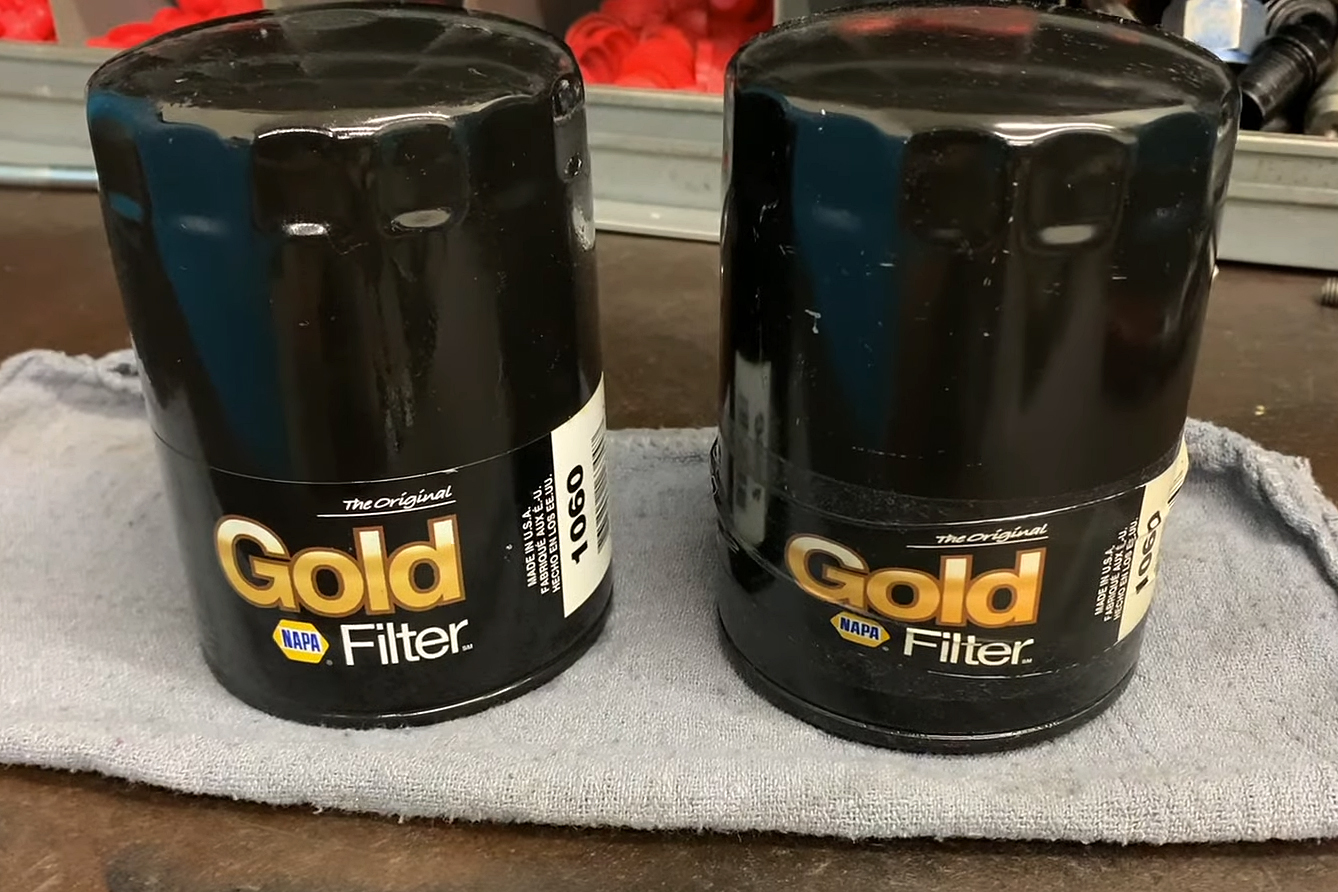
The oil temps got so hot in the 1/16th inch ring tests, that it started to cause the oil filter label to peel off. Not exactly a scientific measurement, but interesting evidence, nonetheless.


Interpreting the Data

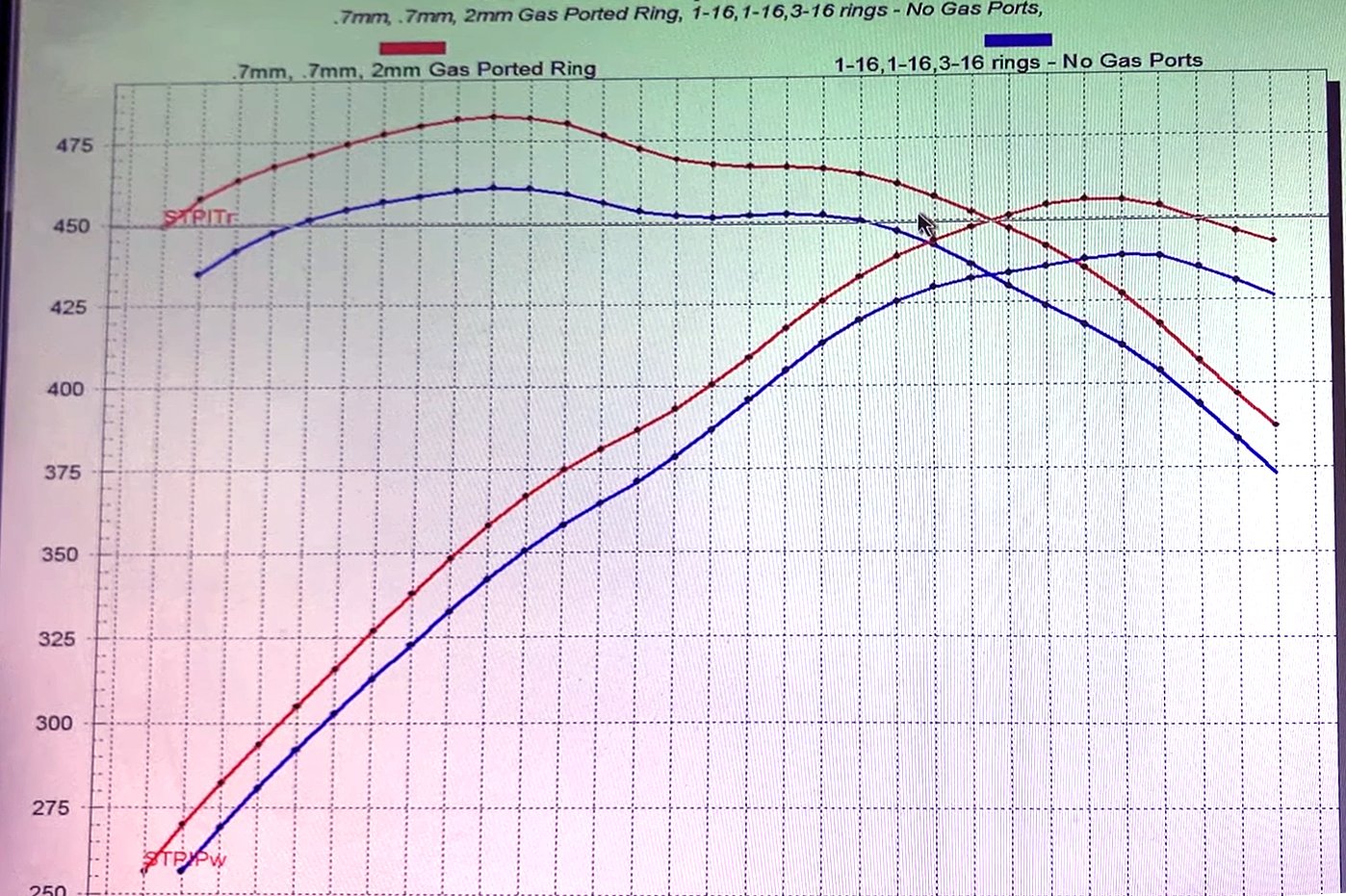
By now, I’m sure most of you are starting to correlate additional friction with less horsepower, and you’re 100-percent right. With a 3,000rpm to 6,000rpm sweep of the engine, there was an average difference of 20 horsepower between the 0.7mm rings and the 1/16th rings. With a peak power of 455 horsepower and 482 lb-ft of torque, that’s a solid 4.5-percent difference.

“You’ve got to remember that over 40-percent of the engine’s friction comes from the ring package,” says Speed. “However, the horsepower difference isn’t really the interesting thing. What’s really interesting is that with all the same variables the 1/16-inch ring package ran considerably hotter.” In fact, the engine oil got so hot, it peeled the label off of the oil filter.

As you can see, there is an extremely noticeable difference in coolant temperature, oil temperature, horsepower, and torque between the 0.7mm, 0.7mm, 2.0mm ring package (red lines) and the 1/16-, 1/16-, 3/16-inch ring package (blue lines).

To further prove that it’s not the temperature alone accounting for the horsepower difference, Speed then controlled the oil and water temps of the 1/16-inch package to bring them in line with those of the 0.7mm package’s tests and found that there was still a difference in power. It wasn’t as large of a split as it was without the temperatures matched, but as Speed points out, your vehicle is a closed system, so introducing more heat will increase the overall system temperature.

“The fact is, the 1/16-inch ring generates more friction which robs power and generates excess heat,” Speed says, definitively. He also adds that with over 1,000 pulls on the 0.7mm ring package, you aren’t giving up any durability with the thinner rings. “The 0.7mm steel ring with the PVD coating are so much more durable, it can outperform a cast-iron, ductile, moly-coated ring over time.”