Posted on Leave a comment

Performance Engine Break-In the Right Way


High oil consumption, excessive smoke through the exhaust, high blow-by, lower than expected power output and increased oil contamination are just some of the possible results of an improper engine break-in or run-in. While production engines in new vehicles are already “broken-in” at the factory, any high-performance “built” engine requires a proper break-in procedure to ensure peak performance, minimal oil consumption and a long life. Even if the best parts are used and the proper machining and assembly was executed, an improper break-in can result in some or all of the negative consequences. While there is no universally agreed upon method for engine break-in, DSPORT and Club DSPORT have effectively used its methods for exceptional results for more than 15 years. Before sharing our process, we will outline the goals, history and challenges associated with performance engine break-in.

By Michael Ferrara // Photos by Joe Singleton


185 QuickTech EngineBreakIn 018 R33GTR 1024x561 - Quick Tech: Performance Engine Break-In the Right Way

The Goal

185 QuickTech EngineBreakIn 011 Hone 350x263 - Quick Tech: Performance Engine Break-In the Right WayWhether you spent $1,500 on your do-it-yourself budget engine build or $50,000 on a record-setting-capable engine, the performance of either is dependent on the engine’s first minutes of life. An improper break-in procedure will affect performance, reliability and longevity. The primary goal of the break-in process is to establish an ideal wear profile between the piston rings and the cylinder wall. When a proper break-in is executed, the ring will be riding on a film of oil on the bearing loading surface of the cylinder wall while the valleys in the cross-hatched surface provide proper oil retention. Neither the ring, nor the cylinder wall can experience too little or too much wear for a proper break-in. The process of trying to establish this proper wear profile is sometimes referred to as setting or seating the rings. An ideal setting or seating between the rings and the cylinder results in minimal leakage past the rings, minimal oil consumption, reduced cylinder wear, reduced ring wear and exceptional heat transfer between the rings and the cylinder wall.

185 QuickTech EngineBreakIn 009 Graph 1024x768 - Quick Tech: Performance Engine Break-In the Right WayYears ago, the common practice was to hone a cylinder with a single grade of abrasive stone based on the type of ring to be used. This left a surface with sharp peaks that provided limited surface contact with the ring creating a challenging “break-in”. Today, high-performance machine shops employ a plateau honing procedure where stages of finer stones or abrasive brush knock down these peaks, establishing a better load-bearing surface during break-in.

The benefits of proper engine break-in affects all four cycles. During the intake stroke, vacuum present in the cylinder pulls a minimal amount of oil into the cylinder past the well-sealed rings. During the compression stroke, a superior ring seal limits the amount of fresh air-fuel charge that makes its way past the rings and into the crankcase. During the power stroke, a properly broken-in engine will not only minimize the amount of combustion pressure forced past the rings, it will also maximize the amount of heat transfer from the rings to the cylinder walls due to a greater contact patch. During the exhaust stroke, proper break-in ensures that little if any of the exhaust products find a way past the rings and into the crankcase.      

185 QuickTech EngineBreakIn 010 Graph 1024x768 - Quick Tech: Performance Engine Break-In the Right Way

The top drawing illustrates some of the peaks and valleys present after a single-stage conventional honing process. The second illustration from top shows a plateau honed surface and the valleys that will hold the lubricating oil in place. When improper break-in occurs, a cylinder wall can become glazed (shiny appearance) with burnt oil and wear particles forced into the valley originally holding oil. Over time, the lack of lubrication wears the cylinder and rings even more as shown in the bottom image.

185 QuickTech EngineBreakIn 012 Hone 1024x768 - Quick Tech: Performance Engine Break-In the Right Way

An ideal surface for a cylinder wall would be perfecly flat to maximum contact area while providing a properly-sized resovoir for the oil retention. A plateau honing gets close to this ideal with the Rpk value representing the height of the peaks that will likely be removed during break-in. The Rk value represents the amount of surface that is available to wear away while the RvK value is the measure of the depths of the oil retention valleys

Then and Now

185 QuickTech EngineBreakIn 007 Piston 350x263 - Quick Tech: Performance Engine Break-In the Right WayWhile “high-performance” and racing engines have been built for over 100 years, many of the opinions surrounding engine break-in techniques have not changed with the times. Today, piston ring technology incorporates superior materials and high-tech hard coatings in many instances. As a result, a 1.0mm-thick PVD-coated steel top ring may be selected today over a plain 2.0mm (5/64”) cast-iron top ring that was popular 20 years ago. Different materials, different face profiles and different coatings all influence how the ring will wear. At the same time, the ability to hone cylinders to a superior profile (rounder and with less taper than ever before) and a surface that’s matched across all cylinders in the engine is possible today while it wasn’t achievable years ago. Hence, the full-proof technique used by your uncle or dad’s friend to break in record-setting V8 race engines even built 10 years ago may not be an ideal technique for a state-of-the-art Reference-series engine built at Club DSPORT today.

185 QuickTech EngineBreakIn 008 PistonRings 1024x561 - Quick Tech: Performance Engine Break-In the Right Way

Improved materials and specialized coatings (or treatments) create a hard surface on the face of the rings that accelerate break-in and reduce wear.

Nippon Piston Ring (NPR), Mahle, Riken and Total Seal are the likely manufacturers of the piston rings found on whichever brand of high-performance piston that you’ll find in an engine that uses “mm” instead of “inches” to measure the bore size. All four of these companies are constantly pushing development on higher-strength materials and the application of high-tech coatings or processes useful for piston rings when it comes to the compression and second rings. In addition, these manufacturers are also looking for ways to develop oil rings that provide minimal oil consumption with minimal ring tension (to reduce friction and improve fuel economy). Unfortunately, the ideal surface finish is rarely, if ever, provided to the customer of the new set of pistons and rings. Why? Because less than 1.0-percent of the machine shops in the country have the means to measure or achieve a specific cylinder finish. As a result, they may be delivering engines to customers where some or all of the cylinders are “too rough” or “too smooth” in the most basic terms. In these circumstances, some or all cylinders may fail to properly seat the rings (regardless of the break-in process used). If the machine shop or engine builder that you select doesn’t own a profilometer, doesn’t have the ability to match the surface finish of all of the cylinders and doesn’t have a direct line of communication with the ring manufacturer, you will be rolling the dice as to having an engine that is capable of establishing a proper ring seal.    

JOIN THE CLUB

185 QuickTech EngineBreakIn 013 LeakdownTest 1024x490 - Quick Tech: Performance Engine Break-In the Right Way

At Club DSPORT as soon as the cylinder head is final torqued to the block, a measurement of cylinder leakdown is recorded for each cylinder. This is the baseline starting “cold” value for leakdown. At this time, it is also noted when the leakage is most likely occurring by listening to the intake port, exhaust port and crankcase. As mentioned before, these cylinder leakdown numbers are substantially better when the valve job for the cylinder head is done with a cylinder head torque plate (a.k.a. “hot” plate) in place. When a Club DSPORT hot plate is used, all of the leakage in each cylinder is only audible at the crankcase.   

Evaluating the Quality of Break-In

Just as there are no universally agreed upon methods for engine break-in, there also isn’t any universally agreed upon benchmarks to evaluate the effectiveness or success of a break-in process. Fortunately, we’ve identified some indicators that all properly broken-in engines will share.

First, cylinder leakdown tests of the engine before, during and after the break-in process in both a cold and normal operating temperature state will directly indicate the quality of the seal from the top and second rings. Each and every cylinder should improve during the break-in process until a point where the leakdown stabilized to a final number. If the number goes down initially, but then begins to increase, some part of the break-in procedure being used may not be ideal for the engine undergoing the process.

185 QuickTech EngineBreakIn 014 LeakdownTest 1024x490 - Quick Tech: Performance Engine Break-In the Right Way

If your engine builder didn’t supply the cylinder leakdown figures on your new engine, be sure to record the values before the break-in process.  You will also need to take readings during the break-in process.

Second, the chassis dyno being used for engine break-in can also be used as an indicator. The break-in process should be done with the electronic boost solenoid control bypassed to limit boost pressure to the wastegate spring. This should deliver very consistent boost pressures during the break-in. Without changing any fuel or ignition calibrations to the engine, the engine should show a consistent improvement in power output as the ring seal improves during the break in process. When a point is reached when the power no longer continues to increase, the top and second rings are likely to be nearly or fully seated. A few more passes following the break-in procedure are recommended to ensure a fully seated condition.

Third, when a PCV system is in place, measuring the crankcase pressure may also serve as an indicator to the quality of the break-in and resulting ring seal. If crankcase pressure can be logged during a dyno run, there should be a reduction in pressure as ring seal is improved during the break-in process. Unfortunately, many competition engines have been modified to reduce or eliminate crankcase pressure even under cases of extreme blowby. Hence, this may only be viable for engines with non-modified crankcase ventilation systems.

Fourth, keeping a log of oil consumption may be a great indication of the quality of the break-in procedure, but it will likely be too late to improve the situation at this point in the process. Still, an inspection of the oil at every fill up looking for changes in color and smell can indicate the quality of the ring seal. If the oil in the new engine smells of fuel and turns black quickly, chances are that the break-in process was limited in its success.

185 QuickTech EngineBreakIn 016 CylinderBore 1024x768 - Quick Tech: Performance Engine Break-In the Right Way

The angle of the crosshatch pattern will determine the speed at which the rings rotate on the piston. This pattern must remain constant from the top to bottom of the cylinder. The cylinder wall of this Club DSPORT big-bore FA20 has the cross-hatch angle, RpK, Rk and RvK values optimized while maintaining a roundness better than 0.0003”.

Finally, inspection of the cylinder bores can often indicate the quality of the break-in procedure. Depending on the engine, a bore scope can sometimes be used to take a look at the cylinder walls. When properly broken-in, the cylinder walls should still show the cross-hatched pattern with an absence of vertical lines or shiny spots n the bore. If the crosshatch pattern is gone and the cylinder bore appears shiny, excessive wear has occurred on the bore and the cylinders should be re-honed and a new set of rings should be installed.

185 QuickTech EngineBreakIn 015 CylinderBore 1024x490 - Quick Tech: Performance Engine Break-In the Right Way

Break-In Pitfalls

So what causes an engine to have an unsuccessful break-in? Two of the most common mistakes involve fuel wash and improper loading of the engine. Fuel wash occurs when an engine is flooded with fuel on initial start-up or before a proper ring seating has occurred. The excess fuel strips the cylinder of the oil film normally present between the pistons rings and cylinder wall. With no oil in place, metal-to-metal contact results in scuffing. Scuffing can also occur if there is an absence of an oil film during the assembly process and the engine is dry started. How can fuel wash be avoided? Since engines running E85 are harder to start and more likely to be flooded, brand-new engines should be started on gasoline whenever possible (OEM actually use a dry fuel like natural gas or propane when new engines are started to avoid any chance of fuel wash). In addition, the fuel injectors should be new or have been serviced to ensure that they are not leaking additional fuel into the cylinders. On engines using lambda feedback, a set of fresh O2 sensors is also advisable.   

185 QuickTech EngineBreakIn 017 MotulOil 1024x561 - Quick Tech: Performance Engine Break-In the Right Way

A quality synthetic oil is definitely the right choice AFTER the engine is broken-in. Use it too early and you may never seat the rings.

Even when fuel wash is avoided, an improper loading of the engine during its first minutes of life can also lead to a failed break-in and seating of the piston rings. If the engine spends too much time getting to normal operating temperature and then is not loaded enough, the rings may not see the temperatures and pressures required to exert the proper amount of force on the cylinder wall. An absence of the proper force will lead to an establishment of small contact patches instead of a complete band of contact across each entire ring and cylinder. The improperly set ring allows combustion pressure to escape past the areas where contact was never established. As a result, many advocate a fast and hard procedure for the loading of a freshly built engine.   

Pre-Start Ritual

The purpose of the pre-start ritual for proper engine break-in is to do everything possible to get the engine fired up as quickly as possible while running a proper air-fuel ratio and reaching normal operating temps in short order. One way to ensure this is to never attempt to break-in an engine at the same time you are trying to calibrate a new engine management system and fuel system setup. Trying to accomplish both at the same time is a recipe for disaster. Instead, it’s best to get the fuel and spark calibration as dialed as possible on the original engine, before the new engine is installed. Alternately, using a complete factory fuel and engine management system on a fresh engine may also have significantly better results than rolling the dice on being able to get a decent calibration completed during the short window of opportunity.

It is also advisable to check the condition of the ignition system and the quality of the spark that is delivered. With the electrical connection to the injectors removed, the ECU can be tricked into firing the coils when the cam angle sensor is rotated. This doesn’t work on all vehicles, but it will on some. Checking that all coils fire and a strong blue spark is delivered when the threaded portion of the spark plug is grounded to the engine means that the ignition system should be capable of lighting off the air-fuel mixture required to get the engine running.

185 QuickTech EngineBreakIn 001 Chart - Quick Tech: Performance Engine Break-In the Right Way

Performing the cold engine cylinder leakdown test will not only establish the baseline condition of the “before” break-in engine, it may also shed the light on a problem that can be addressed before the engine is fired.

Oil selection is critical to proper break-in. A number of manufacturers offer specific blends of mineral oils and additives specifically for “engine break-in.” These oils are highly recommended as both the base oil and the additive package is designed specifically for this purpose. If you do not have access to an engine break-in oil, the next best choice is to select a high-quality non-synthetic oil and combine it with an engine break-in concentrate. Engine break-in concentrates include special anti-wear additives that help to protect parts upon initial break-in. Using an API-graded non-synthetic oil alone may not provide enough anti-wear protection as API graded oils have had most of the anti-wear additives removed over the past years for emissions purposes. Finally, avoid semi-synthetic and full-synthetic oils entirely as break-in oils. These oils will not allow for the required amount of wear and will deliver an improper break-in that is similar to an engine that didn’t see enough load during break-in. Ideally, an engine pre-oiler is used to prime the oiling system so that running oil pressure was reached even before the engine is started. This ensures that there are no components in the engine’s lubrication system that will be run dry at startup. Additionally, priming of the fuel system to establish the running fuel pressure in the fuel rail is also recommended for quick start-up.

185 QuickTech EngineBreakIn 006 Moroso 1024x561 - Quick Tech: Performance Engine Break-In the Right Way

Using an engine pre-oiler or a Moroso Accumulator to feed the engine pressurized oil before being fired up for the first time ensures that the oiling system is primed and ready to go.

While it is often difficult to accomplish, getting the engine’s coolant temperature closer to its running temp will also improve the chances of a quick start-up. When this cannot be accomplished, simply choosing to start the engine at the warmest part of the day will also be advantageous.

Break-In Procedure: Fire Up to Flush

With just some basic conventional motor oil filling the crankcase, the first priority with a fresh engine is to get it fired up and to its normal operating temperature as quickly as possible. Once the engine fires up, it’s best to keep the engine speed varying between 1,500 and 3,500 RPM until the normal engine coolant temperature is reached. Varying of the engine speed will help ensure that a set wear pattern isn’t established before the engine is at normal operating temps. Once the engine reaches normal operating temps, shut the engine off and perform an oil and oil filter change. This flushing procedure removes the bulk of any assembly lubes used on the engine along with contaminants that may have been missed in the cleaning process before assembly of the engine. Fill the engine with break-in oil or conventional oil with a break-in additive at this point.  

185 QuickTech EngineBreakIn 002 Chart - Quick Tech: Performance Engine Break-In the Right Way     

Engine Break In R33 Engine Bay

Break-In Procedure: Dyno Time

Set the rev-limiter between 50-to-60-percent of redline and verify that boost will not exceed the wastegate setting. With its fresh break-in oil and new oil filter in place, the engine is ready to see some load on the dyno as soon as normal operating temperatures are reached again. On the chassis dyno, get the car up to speed and into the gear where it is typically dyno tested. With an inertia-based dyno, start at about 50-percent throttle and let the engine work its way through the RPMs up to just before the rev limiter. Once near the rev limiter, come off the throttle and let the engine coast down remaining in gear back down to your starting RPM for the pull (usually about 2,000-2,500RPM). Repeat this for a total of three-to-five passes at 50-percent throttle. The number of passes will be indicative of the engine’s ability to stay within its normal operating temps. Each pass should take no longer than 2.0-seconds per 1,000RPM covered. If it takes longer, move to a lower gear and repeat the test. Do not engage the clutch or put the transmission in neutral during the run-in time. For brake-type chassis dynos, set the load so that the engine RPM sweep speed is between 1.0- and 2.0-seconds per 1,000 RPM. Once these three passes are completed, coast the vehicle down to idle, apply the dyno brake and shut off the engine. Take a cylinder leakdown reading of the easiest cylinder to access and record the value.

185 QuickTech EngineBreakIn 003 Chart - Quick Tech: Performance Engine Break-In the Right Way

At this point the engine should be allowed to cool down for 15-20 minutes. This cooling down period allows the valves to conform to the valve seats while also providing adequate time for heat to transfer from the piston rings that may only be partially seated to the cylinder walls. Repeat the process and record leakdown. Next, raise the rev limiter to 70-to-80 percent of redline. Again, the engine should be started and brought up to operating temp for the next series of pulls. This time the process is repeated to the higher engine speed at 75-percent throttle. After three to five passes are completed, coast the vehicle down to idle, apply the dyno brake and shut off the engine. Take a cylinder leakdown reading of the easiest cylinder to access and record the value during the 15-20 minute rest period before the next set of pulls.

Now the rev limiter can be set to its actual redline. For the final series of passes, throttle will be at 100-percent too. Set the dyno up to record the horsepower from each of the passes. Make the first full pull to redline and then coast the vehicle down to idle, apply the dyno brake and shut off the engine. Take a cylinder leakdown reading of the easiest cylinder to access and record the value during the 15-to-20 minute rest period before the next pull. At this point, it’s essential to keep the time between pulls as similar as possible. Also, try to get the engine coolant, oil temp and intake air temps as similar as possible. This may require a shorter or longer cool down period between runs. During this process, you will hopefully witness two consistencies. First, the power and torque output of the engine should increase with each pull as the ring seal improves with the proper seating of the piston rings against the cylinder wall. Second, the measured cylinder leakdown should decrease with each successive pull for the same reason. At some point in the process, the engine will stop producing additional power and it will no longer show decreases in the amount of leakage from the cylinders. At this point, the rings and cylinders have made a nearly complete or a fully complete setting. An additional two or three pulls should be made to verify this condition.

185 QuickTech EngineBreakIn 004 DynoChart 1024x609 - Quick Tech: Performance Engine Break-In the Right Way

At this point, the engine oil and oil filter can be changed to the oil that is recommended for normal operation. Since the break-in has been verified as successful and complete, it is OK to switch to a synthetic oil at this point for its superior protection.       

Break-In Procedure: Road Warrior

Ideally, you will be able to break-in your engine on a chassis dyno as described above. However, it’s not realistic to address the many that will choose to break-in a new engine on the street. The most important aspect here is to make sure that you have a vehicle that is roadworthy and safe and to choose a location that will not put you or other drivers in harm’s way. The process for breaking in the engine on the road follows a similar pattern to the chassis dyno loading. However, it may require lower gears as to not exceed safe speeds. In this case, a higher number of passes should be made at each stage. Letting the vehicle cool down for 15-20 minutes between road sessions, is key. While it may not be as easy or practical as in the case of the dyno method, taking cylinder leakdown tests to record the effectiveness of the process is essential. These readings will be the only indicator of the likelihood of success in the break-in process.        

185 QuickTech EngineBreakIn 019 R33GTR 1024x561 - Quick Tech: Performance Engine Break-In the Right Way

Winning Results

More power, more torque, improved engine durability, extended engine life, zero blowby and minimal oil contamination are some of the benefits of a proper break-in session for a new engine. While poor machine work and inferior quality components may dictate a different course of action to achieve a proper break-in, the process, procedures and methods outlined here will have excellent results for most good-to-excellent quality engine builds. By employing dyno results and cylinder leakdown results, the progress and success of the break-in process can be tracked. Using these tools as indicators prevents the process from ending too soon (not achieving the desired result) or being pushed too long (creating more wear than necessary). Since any procedure is open for improvement, we’d love to hear about your experience using the Club DSPORT procedure and the results that you obtain.   


Posted on Leave a comment

Bearing Clearances

Is it better to build an engine with tighter bearing clearances and run it on low viscosity synthetic motor oil, or is it better to build an engine with more traditional or even looser bearing clearances and use heavier viscosity oil?

 
Tight bearing clearances and relatively thin synthetic multi-viscosity motor oils work well in many performance applications from NASCAR and circle track racing to drag racing.

 
Keep in mind, however, that most of these engines are purpose-built engines that are machined with exacting tolerances. Crankshaft journals are precision ground to be as round, flat and true as possible, the journals are micropolished to a mirror-like finish of a couple microinches Ra or less, the bearings are precision fit to exact tolerances using a bore gauge and micrometer (not deformable plastic gauge), and the engines are run on high quality synthetic racing oil, not ordinary motor oil.

 
The oil clearance is the gap between the inside diameter of an installed bearing and the outside diameter of the crankshaft or camshaft journal. The clearance is measured 90 degrees to the bearing parting line, which is the thickest part of the bearing (bearing thickness tapers slightly toward the parting line).

 
Reducing the oil clearance between the rod and main bearings and the crankshaft has a number of advantages. A smaller gap spreads the load over a wider area of the bearing surface and distributes pressure more uniformly across the bearing. That’s good, provided the bearing is strong enough to handle it. A smaller gap also decreases the volume of oil that has to flow into the bearing to maintain the oil film between the bearing and shaft.

 
That’s also good, provided the oil is thin enough (low viscosity) to flow well into the bearing. This also reduces the amount of oil pressure the engine needs, so some extra horsepower is gained by reducing the load on the oil pump.

 
In a NASCAR engine, rules limit the minimum diameters of the rod and main journals on the crankshaft. The rods are 1.850? in diameter while the mains are 1.999?. Most of these engines are running rod and main bearing clearances of .001? or less, and they are doing it with low viscosity racing oils such as 0W5, 0W30 and 0W50. These racing oils are as thin as water and are highly friction modified.

 
They also contain extra anti-wear additives such as ZDDP (phosphorus levels up to 1,850 ppm or higher) to protect the cam lobes and flat tappet lifters. These are race-only oils and are not recommended for street use because they do not contain the same detergents, dispersants and corrosion inhibitors as ordinary motor oils. Ordinary motors have to handle extended oil drain intervals while racing oils do not. Also, the level of ZDDP is too high for late model vehicles equipped with catalytic converters.

With fuel injection, many NASCAR engines are now making close to 900 horsepower without a restrictor plate, and are turning 9,500 rpms for 500 miles. The bearings take quite a pounding but hold up extremely well (when was the last time you heard of a NASCAR engine blowing because of a bearing failure?). But what works great for NASCAR may not work in other forms or racing or on the street.

 
One of the disadvantages of closer bearing clearances is that it can increase both bearing and oil temperatures. That’s no problem as long as the bearings and oil can handle the heat, but if they can’t it increases the risk of lubrication breakdown and bearing failure. That’s why high quality synthetic motor oil is absolutely essential if you are building an engine with tighter than normal clearances.

 
The old rule of thumb is to provide .0007? to .001? of bearing clearance for every inch of shaft diameter in a stock engine. Consequently, if the crankshaft has two-inch diameter journals, the rod and main bearings should be assembled with about .0015? to .002? of clearance.


For performance applications, some bearing manufacturers recommend adding an extra half a thousandth of clearance. Why? Because the rod bores don’t stay round in a performance engine at high rpm. When the piston reaches top dead center on the exhaust stroke, inertia stretches the rod and elongates the bore on the big end of the rod. This, in turn, deforms the bearings and reduces bearing clearances on the lower rod bearing while increasing it on the upper rod bearing.

 
For high revving performance engines, some bearing manufacturers recommend rod bearing clearances of .002? to .003?, with an absolute minimum clearance of no less than .0015?. The tighter the clearances, the tighter the geometry requirements are for the crank journals (as round, straight and smooth as possible with little or no taper).

 
Street engines can benefit from tighter tolerances and thinner oils for everyday driving. But when power adders such as nitrous oxide, turbocharging or supercharging are used, or the engine’s power output gets up in the 450 to 500 plus horsepower range, looser bearing clearances are probably safer to accommodate crankshaft flexing, main bore and rod bore distortion.

 
The same reasoning applies to drag motors, truck pull engines and other performance engines that produce serious horsepower. Many of these engines are built with rod and main bearing clearances in the .0025? to .003? range.

 
For the Saturday night dirt track racer, clearance is your friend because of the contaminants that often get into the crankcase. Looser is usually safer.

 
Rod and main bores should be as round as possible with no more than plus or minus .0005? of variation for a performance engine (.001? is close enough for stock). You also have to take into account the fact that the bearings themselves may not be perfect. Manufacturing tolerances of up to plus or minus .00025? are not unusual in some bearings, while others may vary only .00015? or less.

 
Main bore alignment is also critical. Some bearing manufacturers say adjacent main bores should have no more than .0005 inch of misalignment (.001? overall) if you are using tri-metal bearings, and no more than .002? of misalignment between adjacent bores (.002? overall) with aluminum bi-metal bearings.

 
One of the advantages of looser bearing clearances is that it allows more room for “slop,” which is important if the crankshaft isn’t machined to near perfection or there is some misalignment in the main bores. Wider bearing clearances do require a heavier viscosity oil (such as a 20W50 multi-viscosity oil or a straight 30, 40 or 50 oil). The heavier viscosity oil is absolutely necessary with wider clearances to maintain the oil film between the bearing and shaft so the bearing isn’t starved for lubrication. This also requires more oil pressure from the oil pump and/or more oil volume.

 
The amount of oil that is actually between the bearing and shaft surface at the point of highest load isn’t much. Though the installed gap between the bearing and shaft may be .001? to .0015? or more, the oil is displaced when the bearing is loaded. At its thinnest point, the oil film may only be .00002? thick (1/100th the diameter of a human hair!). That’s not much oil between the metal surfaces, but it doesn’t take much to maintain hydrostatic lubrication. When the shaft starts to turn, an oil wedge forms between the shaft and bearing that lifts the shaft up and away from the bearing surface. The shaft then glides on the oil with minimal friction.

 
If a crankshaft grinder wobbles while a crankshaft is being ground, it can leave lobes around the circumference of the journal. These may be invisible to the naked eye and very difficult to detect with a micrometer. But if there’s any distortion on the surface, it may interfere with the formation of the oil wedge under the shaft if the bearing clearances in the engine are too tight. Polishing the crank can reduce surface roughness on the journal but it won’t get rid of the lobes or ribbing.

 
Another factor to consider is that the upper Babbitt layer on a tri-metal bearing is very thin, typically .0005? to .0008? thick. The top layer of Babbitt acts as a dry film lubricant when there is no oil between the shaft and bearing. That’s fine for a dry start that may only last a couple revolutions of the crankshaft, but it is quickly wiped away if the engine starves for oil when it is running under heavy load or at high rpm.

 
And once the protective upper layer of Babbitt has been destroyed, the intermediate layer of copper/lead alloy will quickly seize if there’s no oil film to keep it separated from the shaft.

 
One of the reasons why many performance engine builders use tri-metal bearings is because they want bearings that have good seizure resistance in high rpm applications. Tri-metal bearings also handle high engine loads well and have good fatigue resistance. The Babbitt surface layer also provides embedability if dirt or debris gets past the oil filter. Tri-metal bearings are typically recommended for use with forged steel crankshafts.

 
Aluminum bi-metal bearings, by comparison, have high wear and corrosion resistance. With harder aluminum/silicon alloys, they can also handle higher loads while providing good anti-seize properties. Aluminum bearings are often recommended for cast iron cranks because they have a polishing effect on the journal surface. What’s more, according to some bearing manufacturers, a high silicon alloy aluminum bi-metal bearing will actually resist seizure longer than a tri-metal bearing if the protective oil film goes away.

 
That brings us back to the oil and bearing clearances. The oil doesn’t care what kind of bearing and shaft it is lubricating. It only needs to maintain enough oil film between the two surfaces to provide hydrodynamic lubrication and prevent metal-to-metal contact. There has to be enough oil pressure and flow to keep the bearings lubricated and cooled, and the oil itself has to have enough shear strength so it isn’t pushed out of the gap between the bearing and shaft at the point where the load is greatest.

 
Multi-viscosity synthetic motor oils flow more easily than conventional straight weight oils at both low and high temperatures. So they can handle cold starts as well as elevated operating temperatures (which is really important with turbochargers). To reduce friction and improve fuel economy, most late model stock engines are factory-filled with 5W20 or even 0W20 oil. Combined with tighter engine assembly tolerances, these oil and bearing combinations work relatively well for everyday driving and even mild performance use. For racing applications, though, the oil needs to be formulated specifically for racing – especially if the engine has a flat tappet cam that requires plenty of ZDDP in the additive package.

 
You can get oil viscosities ranging from 0W5 to 120W60, with 15W40 being a popular viscosity for stock car racing, road racing and spring cars. For wider bearing clearances, some prefer to use a heavier 15W50 or 20W50 oil. In drag racing Top Alcohol and Pro Mod classes, AHDRA Nitro Bikes and blown alcohol tractor pulling, 20W60 may be the lubricant of choice. For NHRA Top Fuel dragsters and Funny Cars, a 70WT oil might be used. So the type of oil that’s used will depend on the application and the bearing clearances inside the motor.

 
An additional layer of protection can be achieved by installing coated bearings. Various types of proprietary coatings are available that provide scuff resistance where there is no oil between the bearing and shaft. Such coatings cost extra, but are good insurance against dry starts and may save a crank if the engine loses oil pressure in a race.

 
Finally, regardless of what type of bearings you put in an engine or how close you set the bearing clearances, always use plenty of assembly lube to coat the bearings. Also, use the proper break-in oil when the engine is run for the first time. Break-in oils are typically a straight 30W oil without friction modifiers for fast ring seating. But they also contain extra ZDDP anti-wear additives to protect the cam and lifters. The break-in oil can then be drained and replaced with the type of oil (conventional or synthetic) that will be used from that point on. Be sure to tell your engine customer how important it is to use a high quality oil and that it has the correct viscosity to match the bearing clearances and lubrication requirements of the engine and application.


reducing the oil     clearance between the rod and main bearings and the     crankshaft has a number of advantages. a smaller gap     spreads the load over a wider area of the bearing     surface and distributes pressure more uniformly across     the bearing.tri-metal bearings     handle high engine loads well and have good fatigue     resistance. aluminum bi-metal bearings, by comparison,     have high wear and corrosion resistance. some engine     builders use coatings for extra protection in case of     contact with the journal, but others say it is not     necessary."if

Posted on Leave a comment

Oil Filter Shootout With Results


EvoM Super Moderator
Thread Starter
iTrader: (132)
 
golgo13's Avatar


Join Date: May 2007
Location: @ a track near you
Posts: 3,599
Thanked 16 Times in 12 Posts
 
Thumbs up The OFFICIAL Oil Filter Testing and Results Thread (4G63T/4B11T)


TLDR: AMSOIL filters are a top tier filter if you don’t mind the cost. Royal Purple seems to be on par with the AMSOIL filters and if you can get them for cheaper, you may want to consider swapping out your AMSOIL filter for a Royal Purple. Purolator is a very strong second, if you don’t mind the shoddy construction. Stay away from Mitsubishi/DENSO if you can help it and WIX is a great middle of the road filter if you want reasonable price, very good filtration, respectable surface area and quality construction.


Introduction:

So, this epic thread came out of an initial discussion I had with kyoo and apagan01 regarding the recent AMSOIL change in their filter for the 4G63/4B11 motors. (Before you ask, yes they both use the exact same filter). I have to give credit where credit is due, so thanks to Robert J Tracy (river_rat on BITOG) for his wisdom and guidance during this test. Also, thanks to my wife for putting up with my insane ideas for the benefit of a bunch of gearheads she’s never met.

I pamper the hell out of my car with one hand and flog it hard on the track with the other. Not knowing if I’m running the best oil filter bothers me, especially since everyone in the oil filtration business wants to tell you that their product is the best.

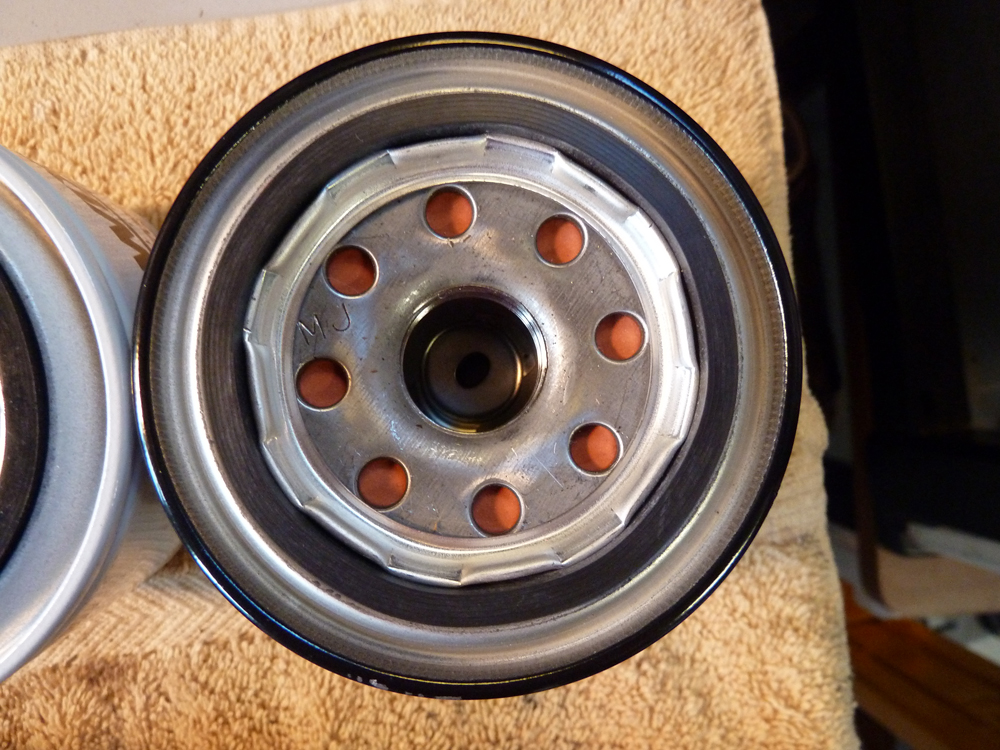
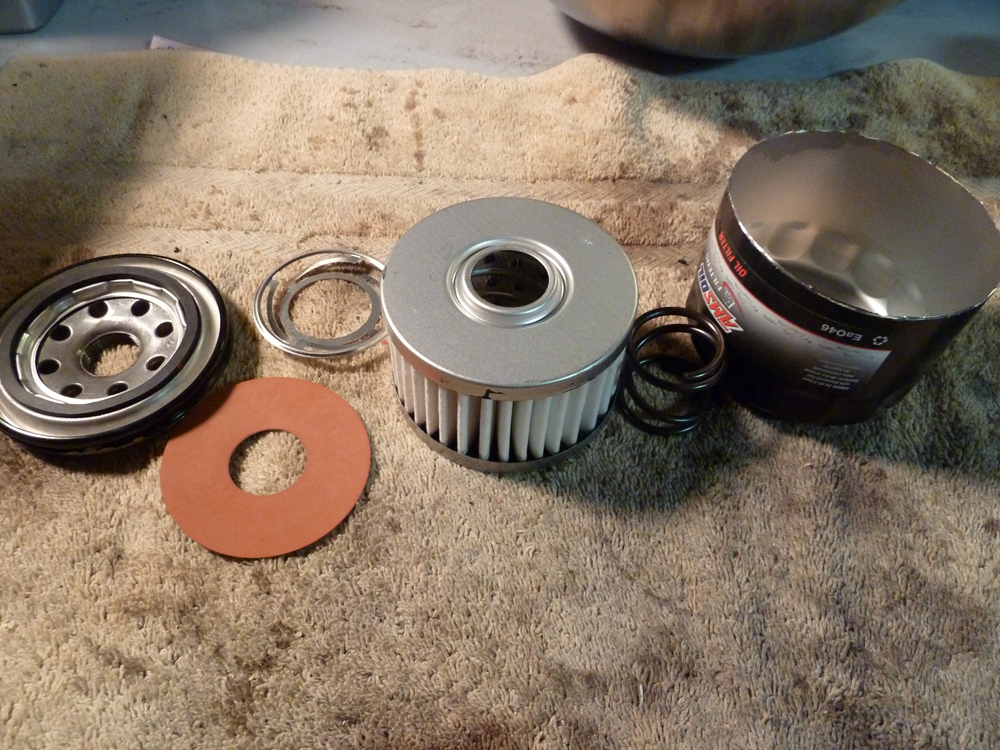
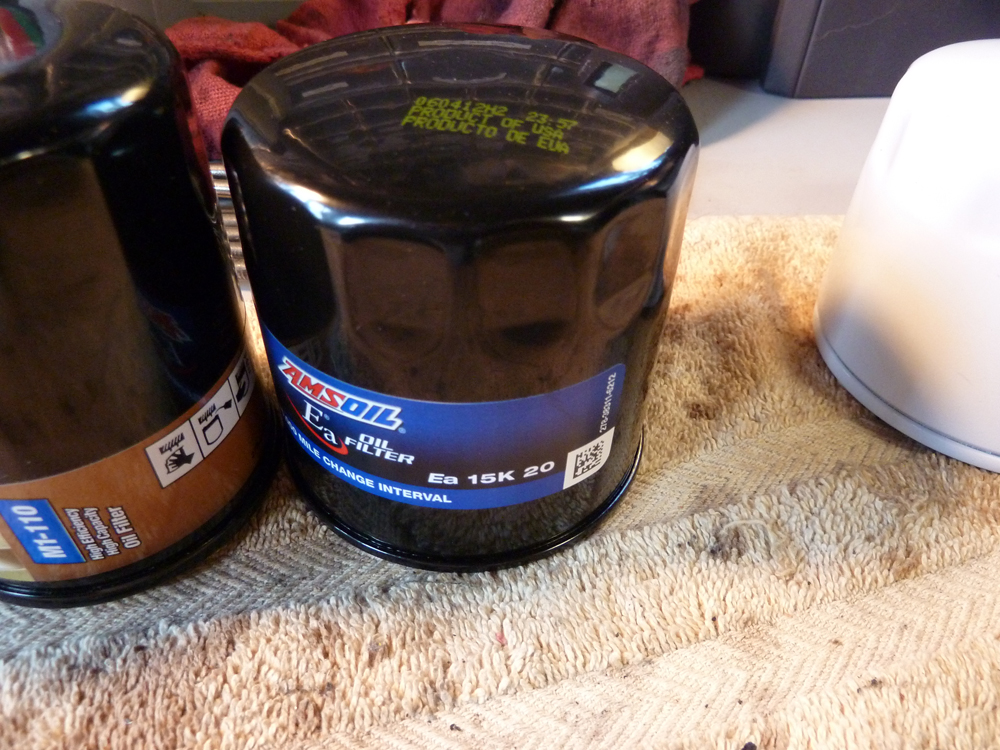
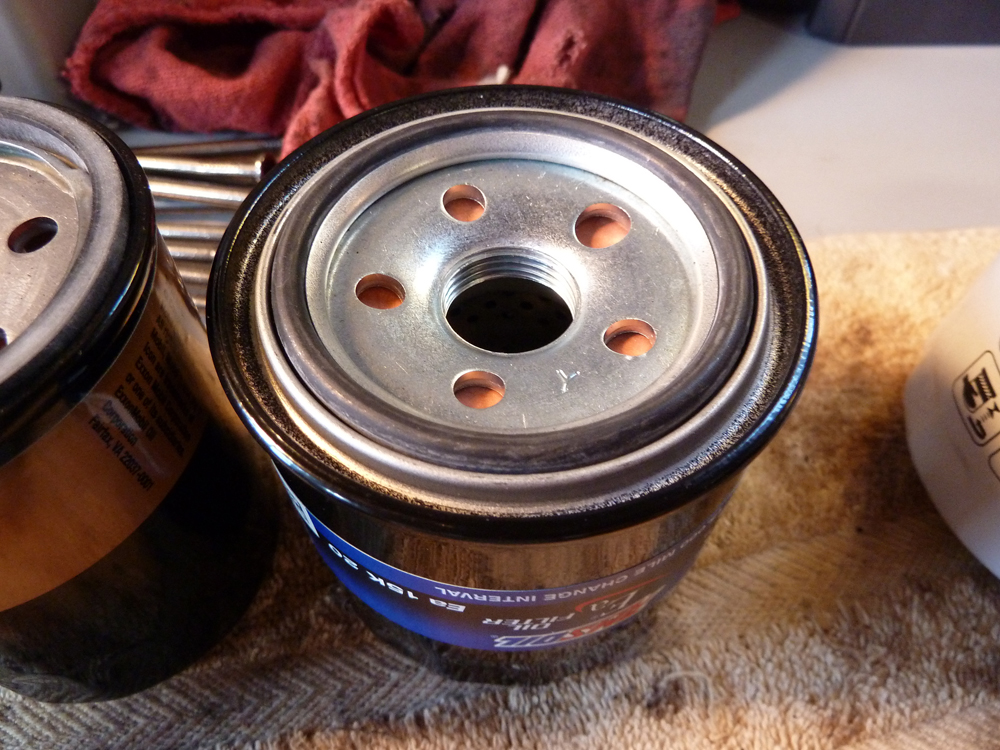
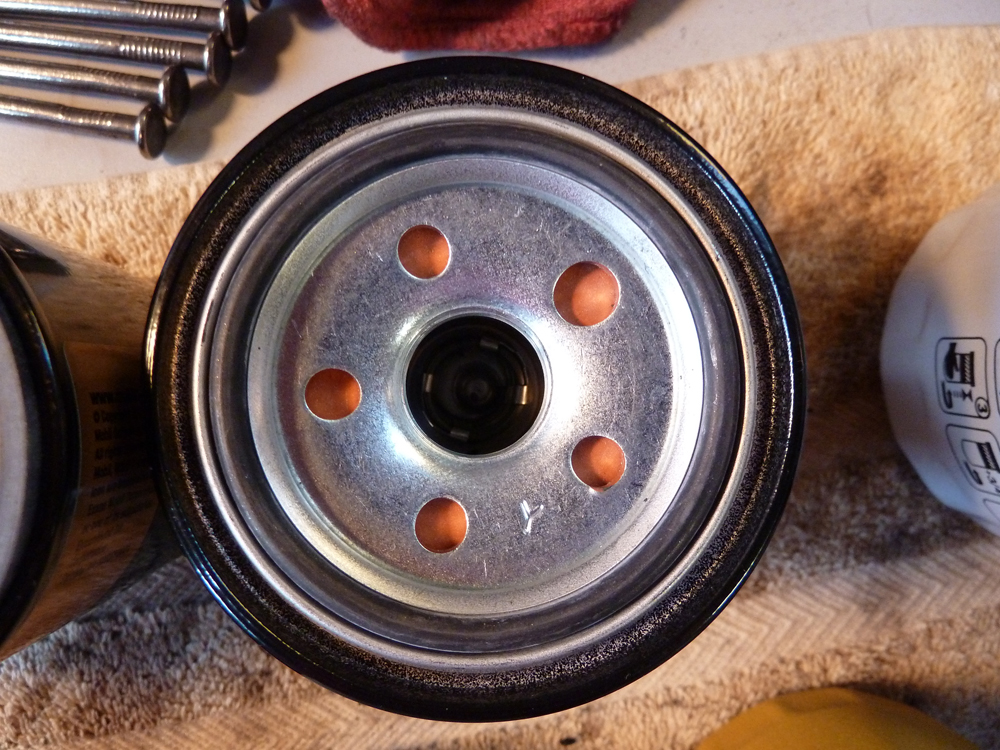
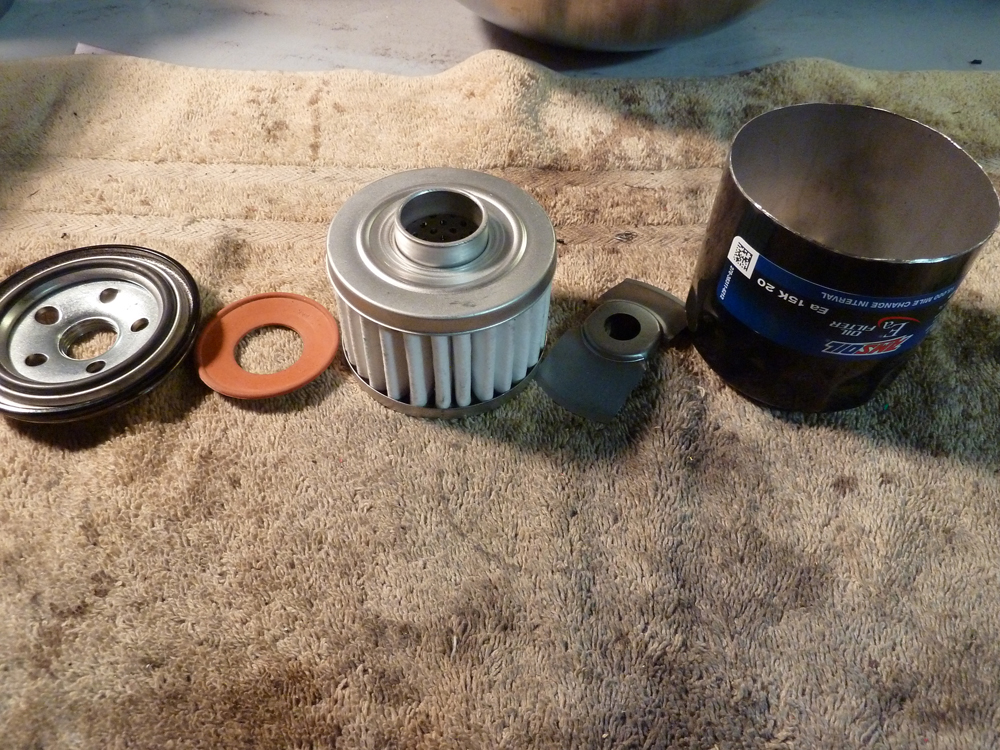
I sent AMSOIL an email asking what had changed between these two filters and why. The answer was generally vague, but I was assured that the performance of the filter was the same. Sick of AMSOIL giving me the run around or directing me to the same old marketing literature each time I went to them with a technical question, I decided to take an existing Ea046 filter and compare it to the new Ea15k20 filter to see what I could find out with my naive eyes. To this day I still theorize that AMSOIL basically runs with the same filter until they can find another manufacturer to build them a filter to their spec for cheaper. All AMSOIL had to say about it was that they have three different manufacturers that they use and they are not allowed to divulge who that is, exactly.

After poking around on the intertubes, I really couldn’t find too much information about what would make one particular filter superior over another. After reading a whole lot of threads on BITOG (Bobistheoilguy.com), generally speaking, simply having a filter on your motor (even a crappy cellulose FRAM filter so long as the media is sealed properly inside the housing) extends motor life considerably.

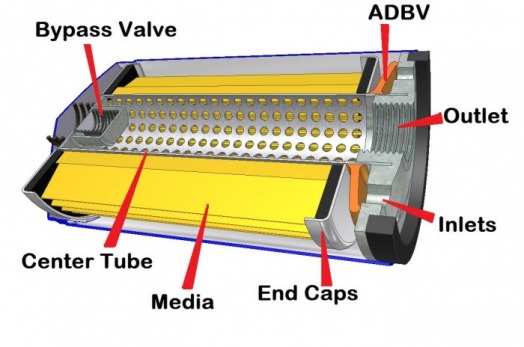
There are some key factors at work here that need to be considered such as media type, contaminant capacity, filtration efficiency, surface area, filter construction and by-pass valve spring rating however.

I reached out to every manufacturer via email and telephone to get all of the specs I could for this thread. After explaining what my goals were for this test and information gathering, just about every manufacturer (with the exception of DENSO) was willing to work with me to get the data I needed for this.

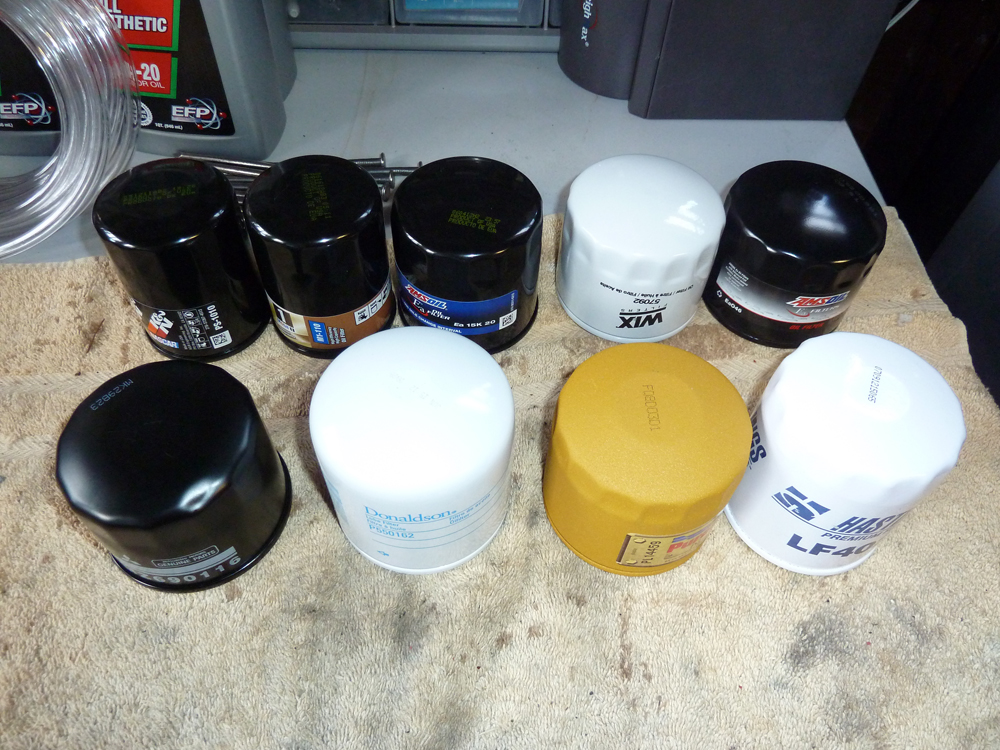
The filters chosen here are based off of the most popular filters people have mentioned in the countless filter debate threads on EvoM. I went through them all and picked the top five filters and then added in a couple of my own.

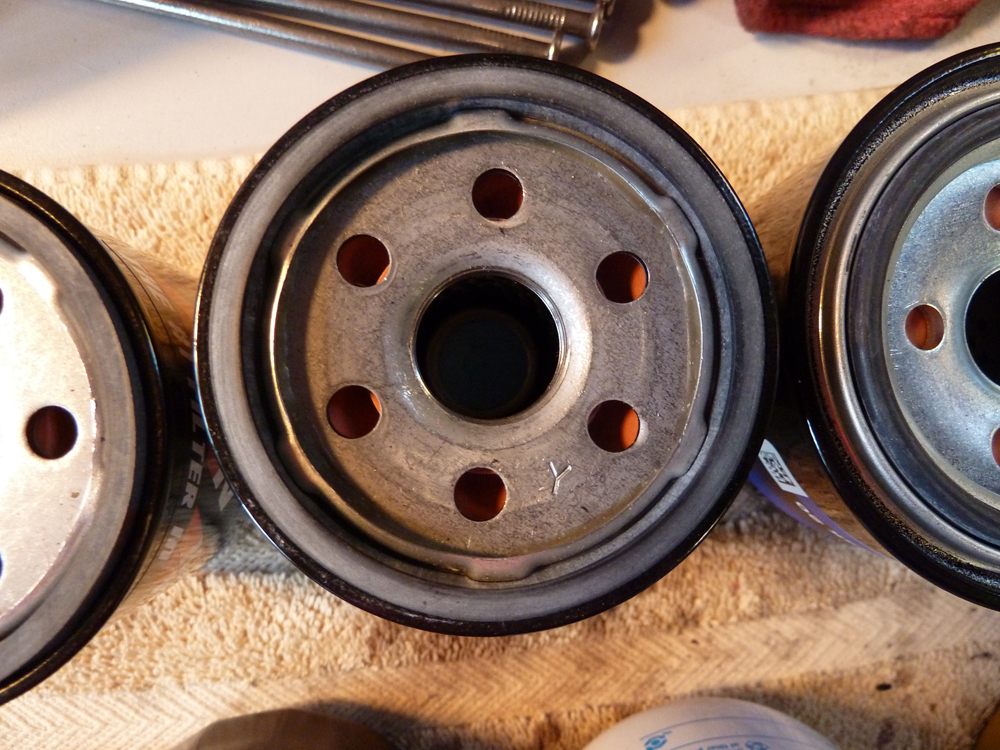
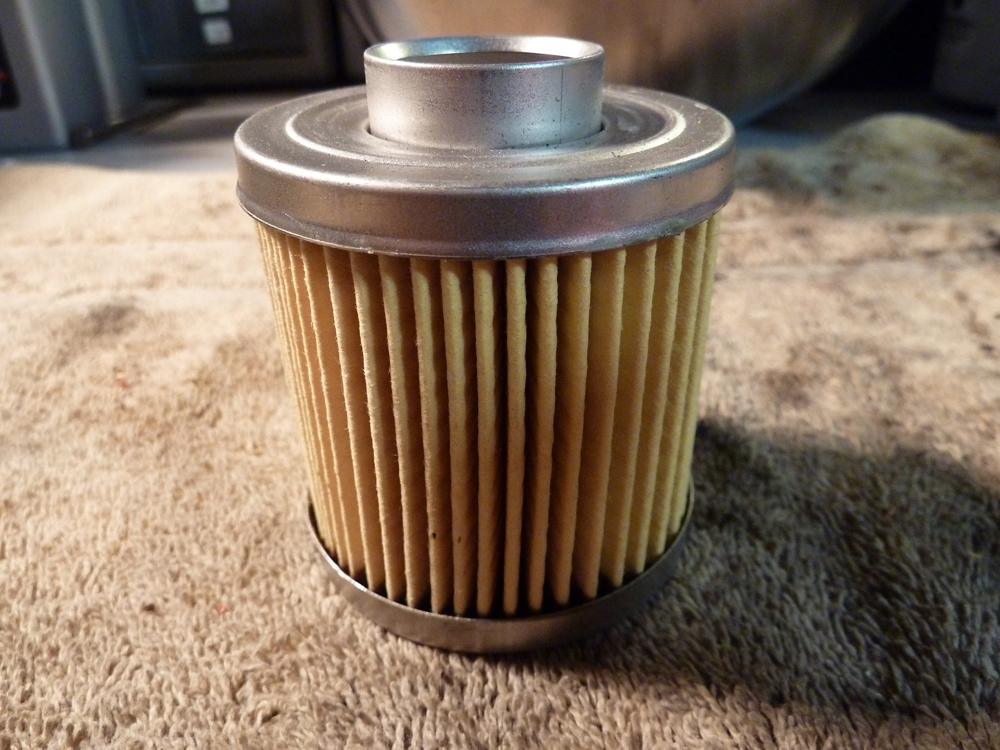
I had been reading that AMSOIL filters were simply ‘rebranded’ Hastings or WIX filters, so in an effort to save money I decided I was going to run Hastings filters (and unfortunately spreading misinformation in the process by repeating this) and cut out the middle man. I assume to make their filters distinct in the market and to their spec, AMSOIL went into an agreement with Donaldson to purchase their Synteq media and rebrand it as AMSOIL ‘Nano-Fiber.’ Since Donaldson doesn’t sell extended life filters with Synteq media for passenger vehicles (I checked their site and they confirmed it via email) this prevents them from competing directly with AMSOIL in the extended oil change interval (OCI) oil filtration market space. I purchased the only Donaldson filter available for our cars, hoping it would be synthetic or at the very least a synthetic blend. This would have allowed me to save some money and just run a Donaldson filter. As you will see, this filter was not synthetic media.

Realistically, just about any one of the filters tested here should work just fine for your car so long as you follow a proper OCI based on car use/abuse. <- (See what I did there?) It is quite safe to extend your OCI out to 15,000 miles so long as you are running a high quality extended life filter that has sufficient surface area and can trap particulates of at least 10μm.


I’ve included some basic oil filter facts for reader clarity:

Name: be1e00d1.jpg Views: 0 Size: 46.9 KB
Image courtesy of Robert J Tracy and used with permission


The Common ISO Test Types:

ISO 16889

A multi-pass filtration performance test with continuous contaminant injection for hydraulic fluid power filter elements; a procedure for determining the contaminant capacity, particulate removal and differential pressure characteristics; a test currently applicable to hydraulic fluid power filter elements that exhibit an average filtration ratio greater than or equal to 75 for particle sizes less than or equal to 25 µm(c), and a final reservoir gravimetric level of less than 200 mg/L; and a test using ISO medium test dust contaminant and a test fluid.

ISO 4548-12

is derived from the ISO standard for multi-pass filter testing (ISO 16889) which is based upon testing of hydraulic filters. This test requires filter manufacturers to determine the average particle sizes which yield Beta ratios equal to 2, 10, 75, 100, 200, and 1000, using the multi-pass test stand approach. The multi-pass test bench must contain On-Line Liquid Automatic Optical Particle Counters and calibrated using certified calibration fluid with a known particle size distribution. Particle counts are taken upstream and down-stream every minute of the test. The new standard gives a better interpretation of a filter’s overall performance.

What does the word micron (μm) mean?

The word micron is another term for micrometer (1 millionth of a meter). A micrometer is a unit of linear measure in the metric system used to measure distance from one point to another. It is used like the inch, foot, centimeter and millimeter to measure length, width or diameter of objects. Its scientific notation is μ. Some linear equivalents are 1 inch is 25,400 microns and 1 micron is .000039 inches.

Nominal vs. Absolute Filtration:

A filter is considered nominally efficient at a certain micron level if it can remove 50 percent of particles that size. In other words, a filter that will consistently remove 50% of particles 20μm or larger is nominally efficient at 20μm.

A filter is considered to achieve absolute filtration efficiency at a certain micron level if it can remove 98.7% of particles that size. So, if a filter can remove 98.7% of particles 20μm or larger, it achieves absolute efficiency at that micron level.

Current consensus on Bob is the Oil Guy.com is that 10-20μm particles cause the most wear.

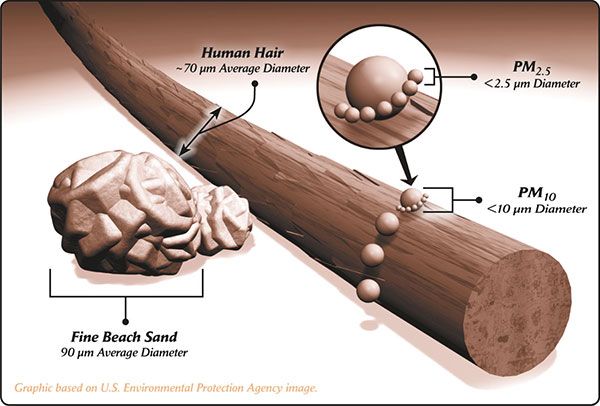
Diameter of average human hair 70μm
Lower limit of visibility (naked eye) 40μm
White blood cells 25μm
Talcum powder 10μm
Red blood cells 8μm
Bacteria 2μm
Carbon black 0.6μm
Tobacco smoke 0.5μm


So, most filters you can source that are not considered high efficiency filters will probably not achieve absolute efficiency until the particulates hit around 30μm. Typically, high efficiency filters will achieve absolute efficiency to about 10μm and are nominally efficient to 5μm. The human eye can see to approximately 40μm, so we are talking some pretty small particles here. A FRAM will have a nominal micron rating around 33-40μm depending on the filter, with a WIX for the Evo having a micron Rating of 20μm. These are nominal ratings (50% efficiency). In comparison, the AMSOIL EA series is rated at 20μm absolute.

Some general rules of thumb regarding oil filters:

Filters with low capacity and high efficiency will tend to accumulate contaminants quickly and trip the by-pass value which means it’s no longer doing you any good. These filters should generally be changed every 5,000 miles for sure.
Filters with high capacity and low efficiency can hold a lot of contaminants, but will definitely not protect your motor to the same degree, as more particulates will be circulating through the motor.
Filters that are both low in capacity and efficiency will cause increased wear and shorter motor longevity if used for a prolonged period.


Last edited by golgo13; Mar 11, 2014 at 05:03 PM.

golgo13 is offline  
Reply With Quote
 
 
Old Nov 22, 2012, 10:57 PM
  #2  
EvoM Super Moderator
Thread Starter
iTrader: (132)
 
golgo13's Avatar


Join Date: May 2007
Location: @ a track near you
Posts: 3,599
Thanked 16 Times in 12 Posts
 

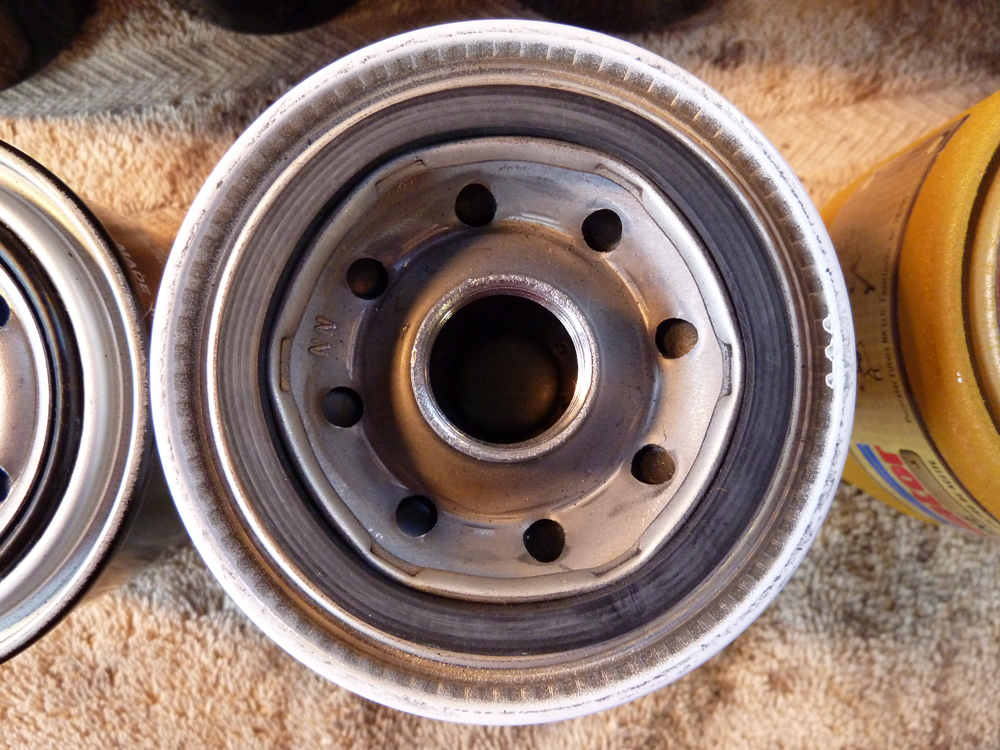
Filter specs:

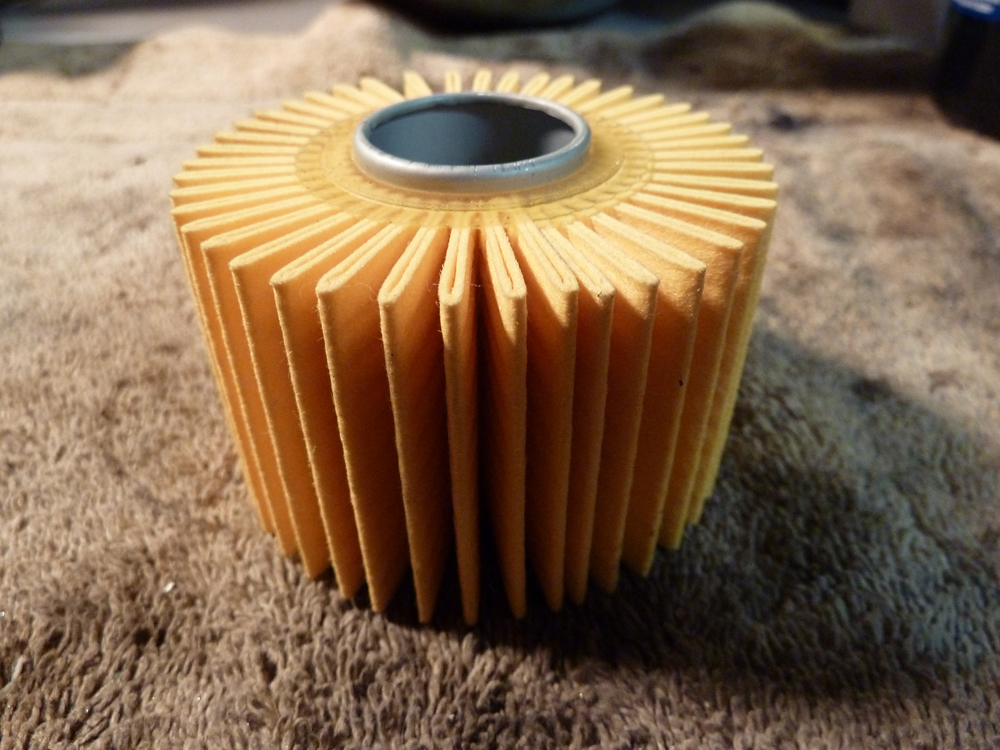
Cellulose Media
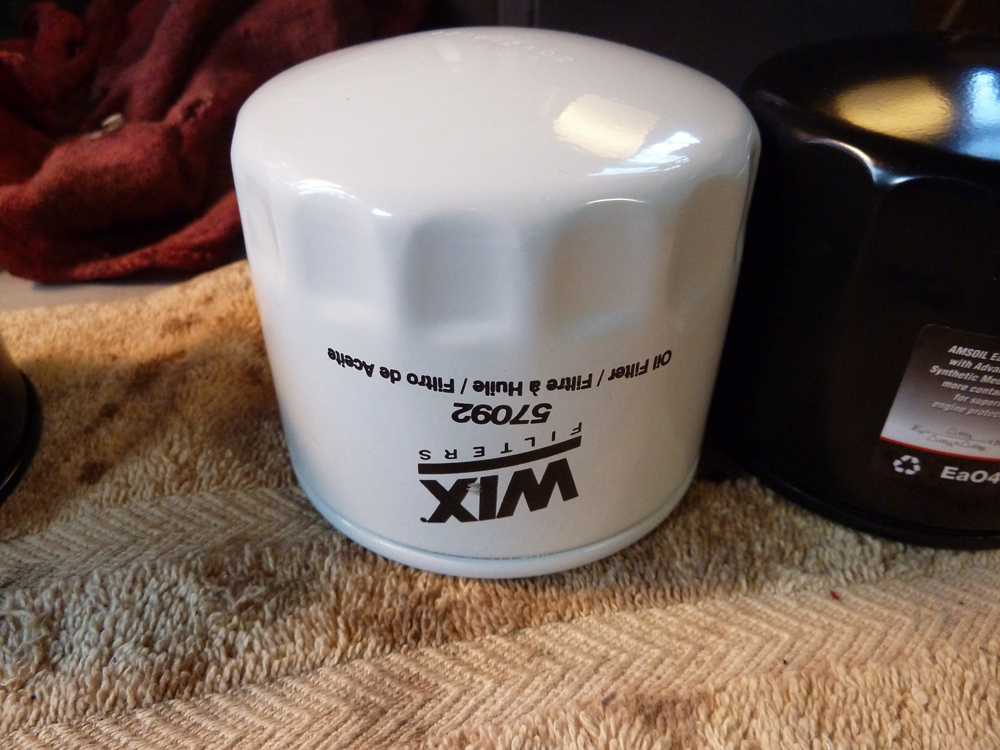
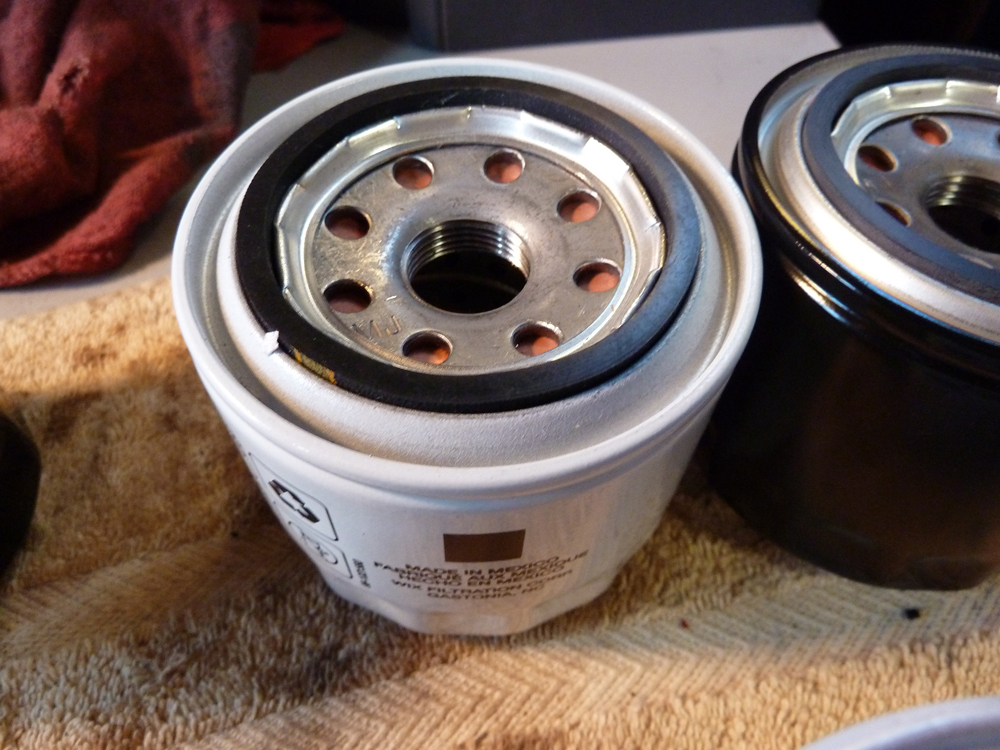
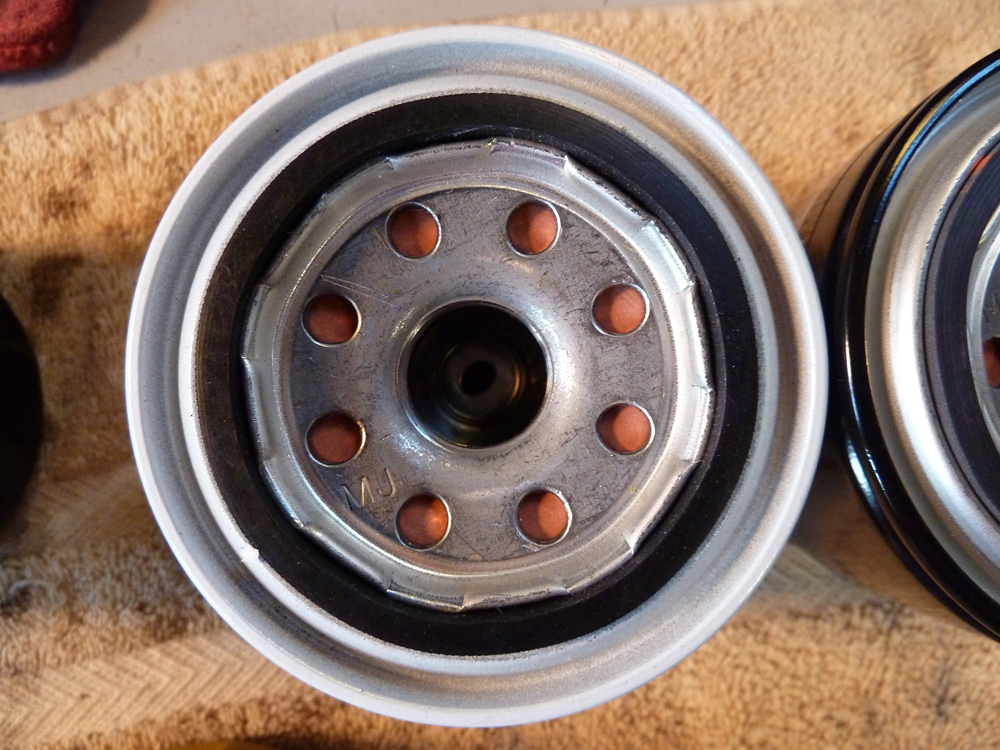
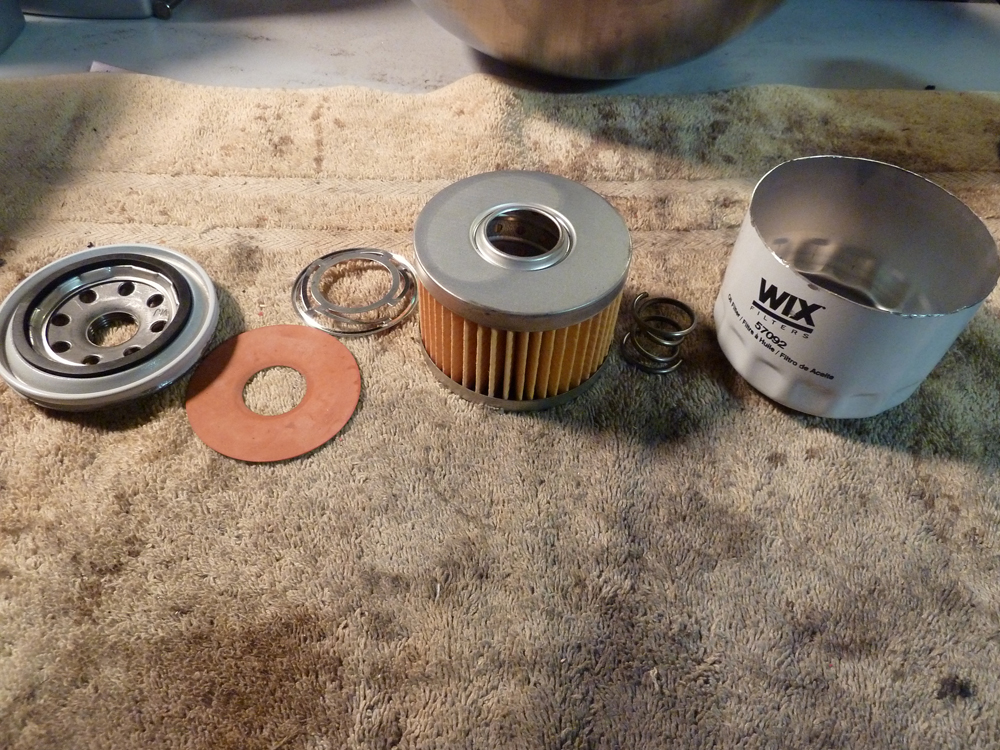
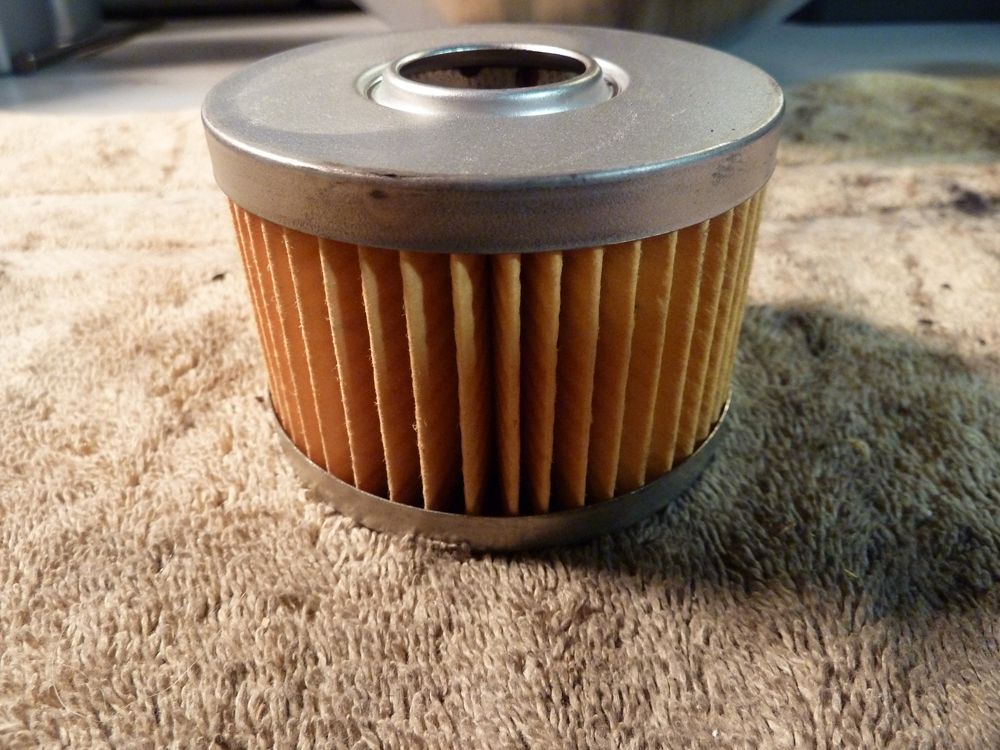
WIX  
Manufacturer: WIX
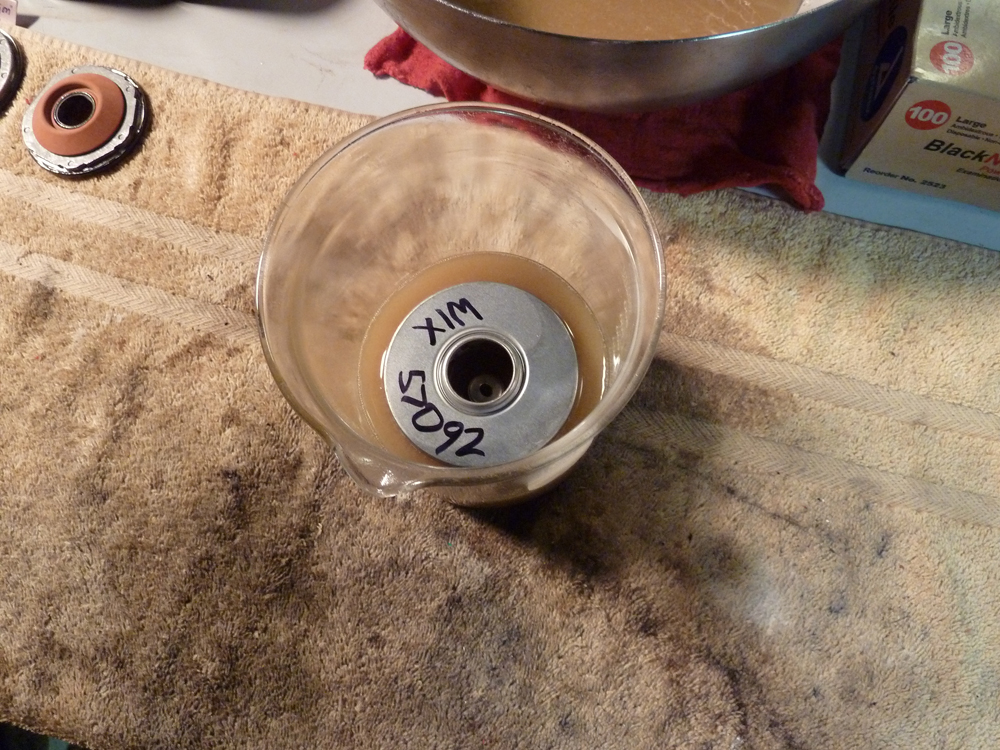
Part Number: 57092
Media Type: Cellulose
Micron Rating: 20μm Nominal
By-pass Valve Rating: 14psi
Flow Rate: 9-11gpm
Burst Pressure: 330psi
Media Surface Area: 120 sq in
Pleat Count: 46
Drain Back Value Material: Nitrile
Country of Manufacture: Mexico

Name: d435a4b3.jpg Views: 0 Size: 477.8 KB
Name: e33483f1.jpg Views: 0 Size: 494.0 KB
Name: 52bde56d.jpg Views: 0 Size: 548.5 KB
Name: P1020532.jpg Views: 0 Size: 649.3 KB

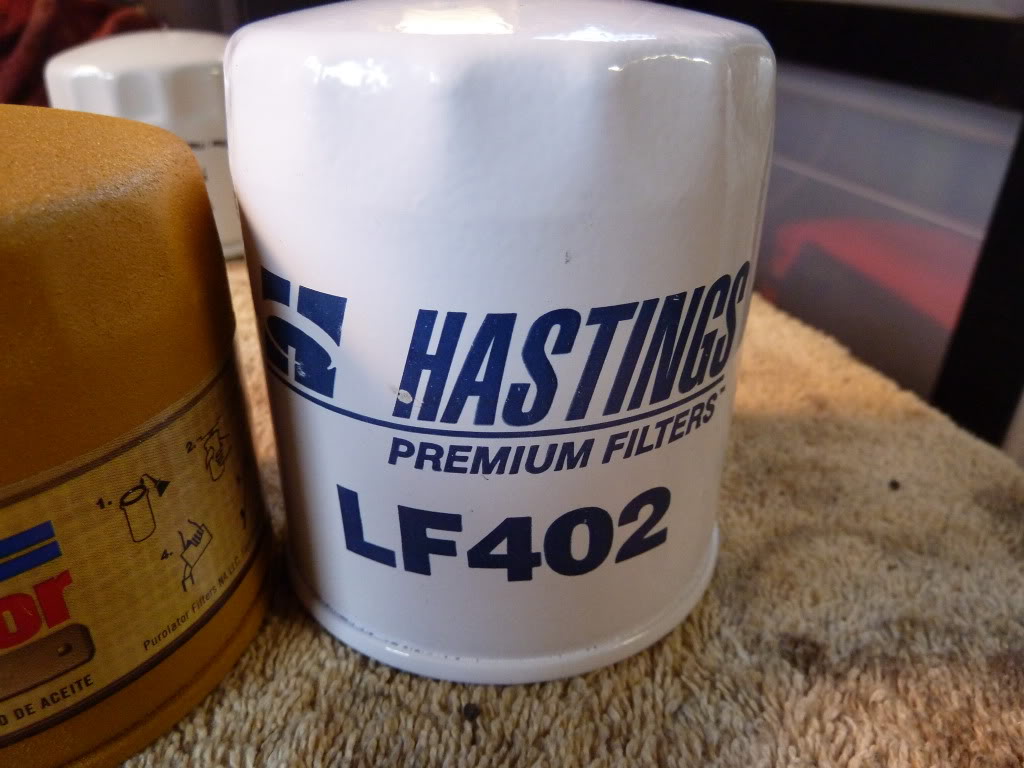
Hastings  
Manufacturer: Hastings
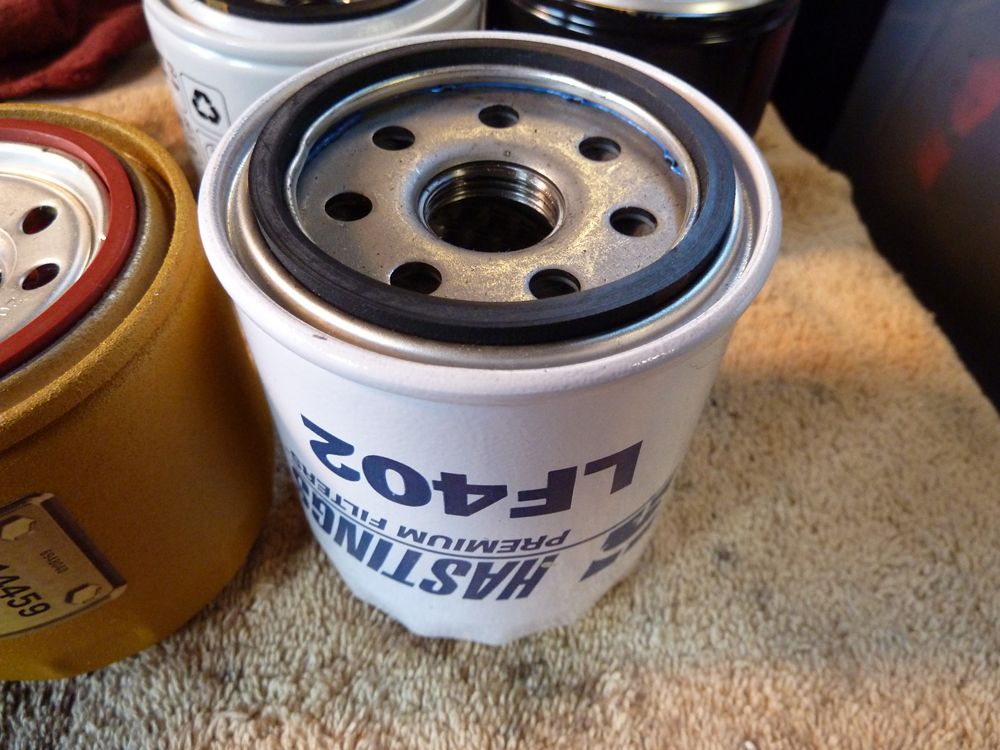
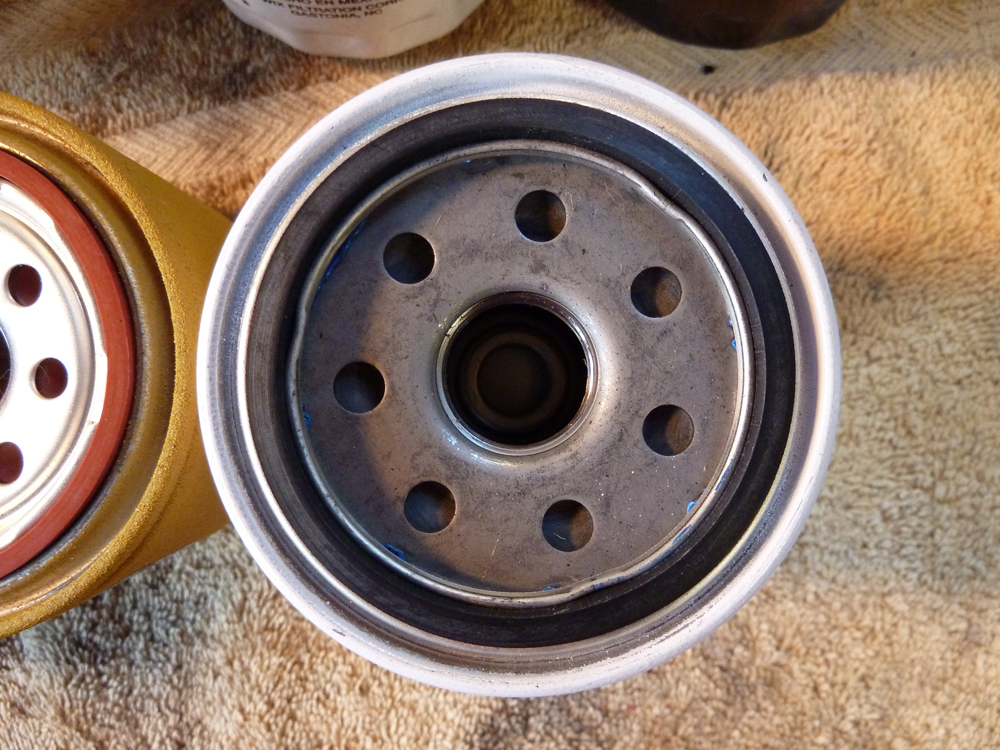
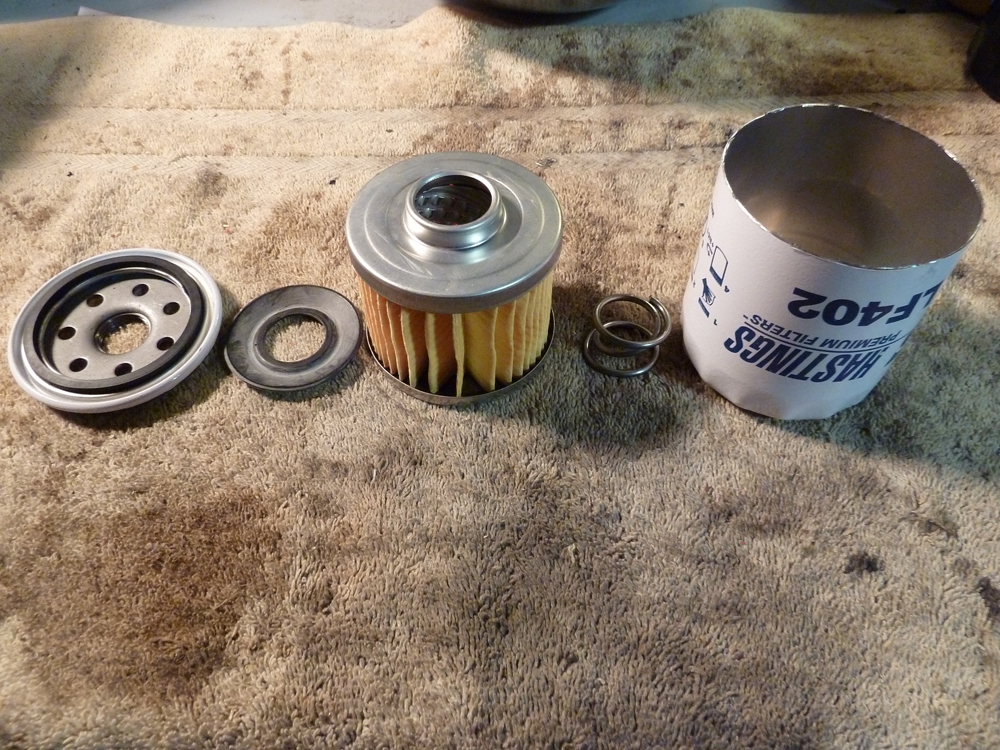
Part Number: LF402
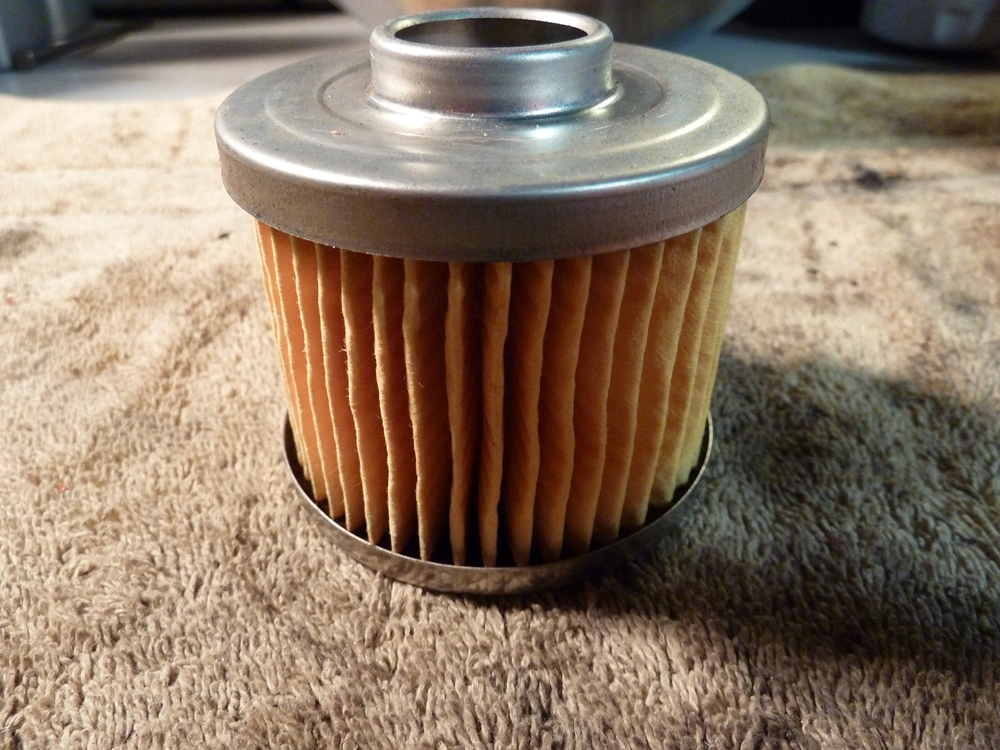
Media Type: Cellulose
Micron Rating: 18μm Nominal
By-pass Valve Rating: 18-20psi
Flow Rate: 5gpm
Burst Pressure: 200psi
Media Surface Area: 120sq in
Pleat Count: 45
Drain Back Value Material: Nitrile
Country of Manufacture: USA


Name: e1baf1a3.jpg Views: 0 Size: 584.0 KB
Name: P1020528.jpg Views: 0 Size: 659.9 KB
Name: P1020529.jpg Views: 0 Size: 551.8 KB

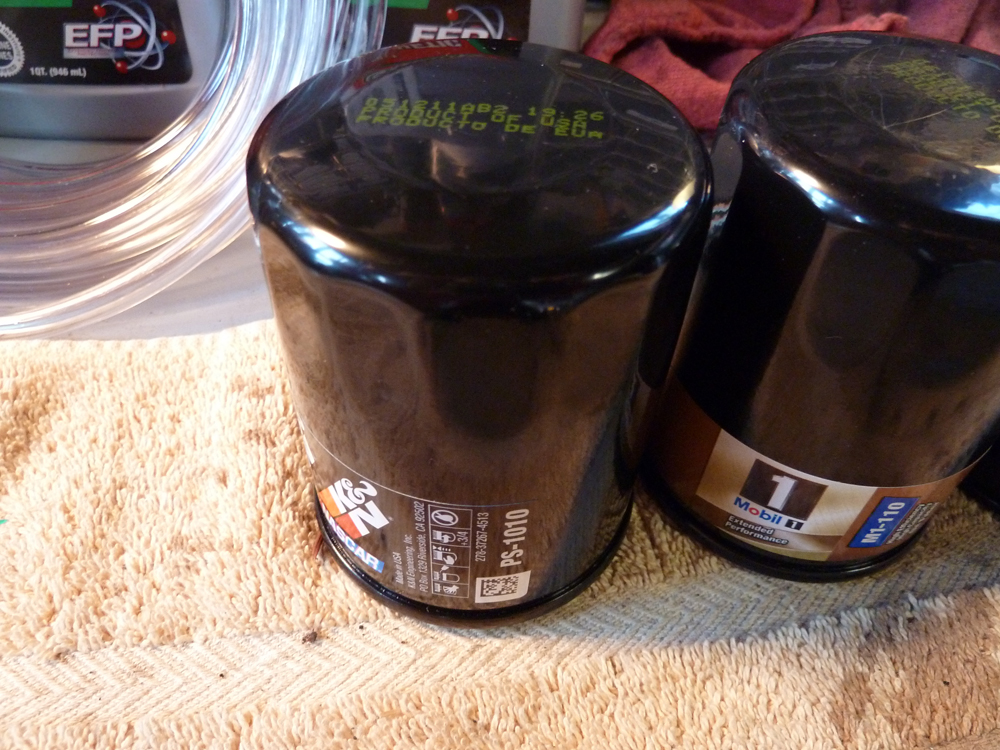
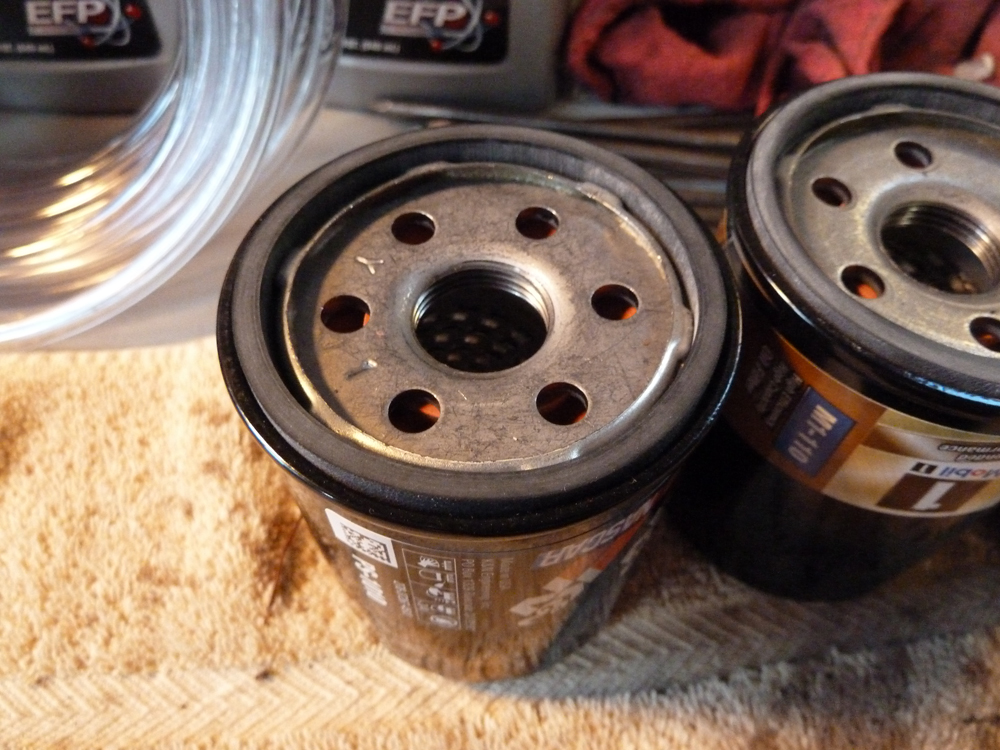
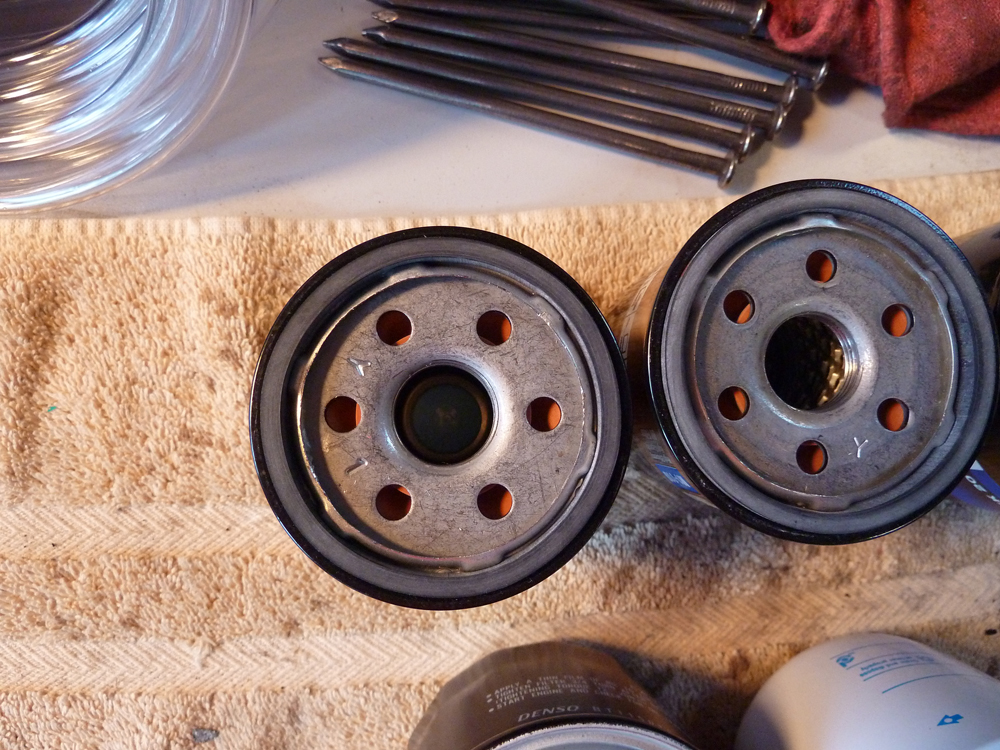
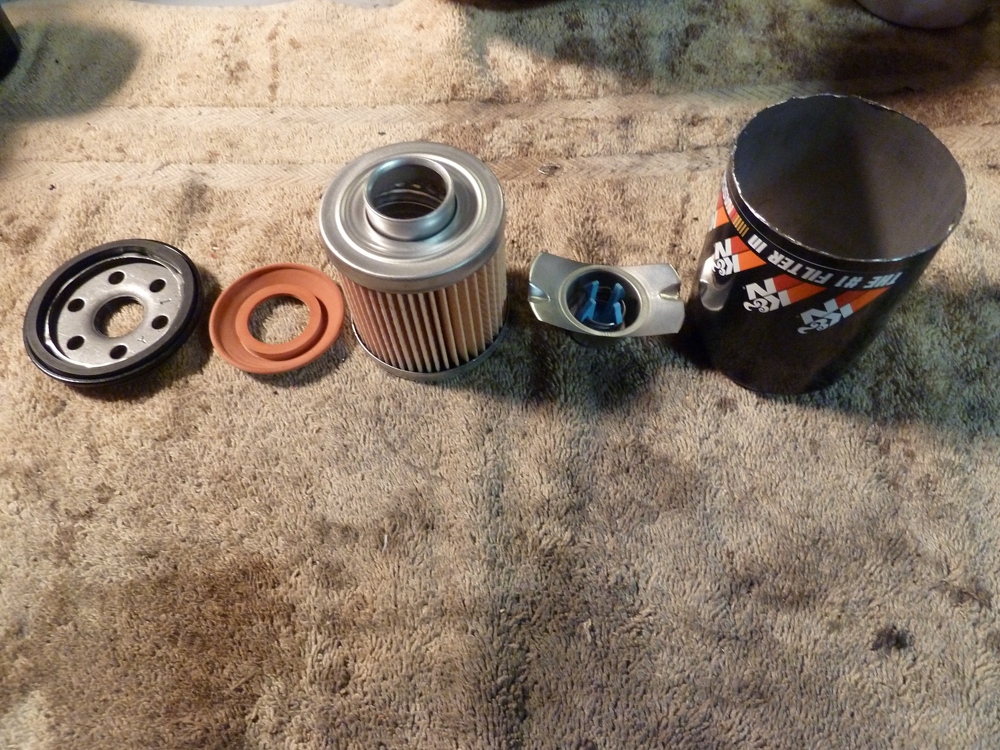
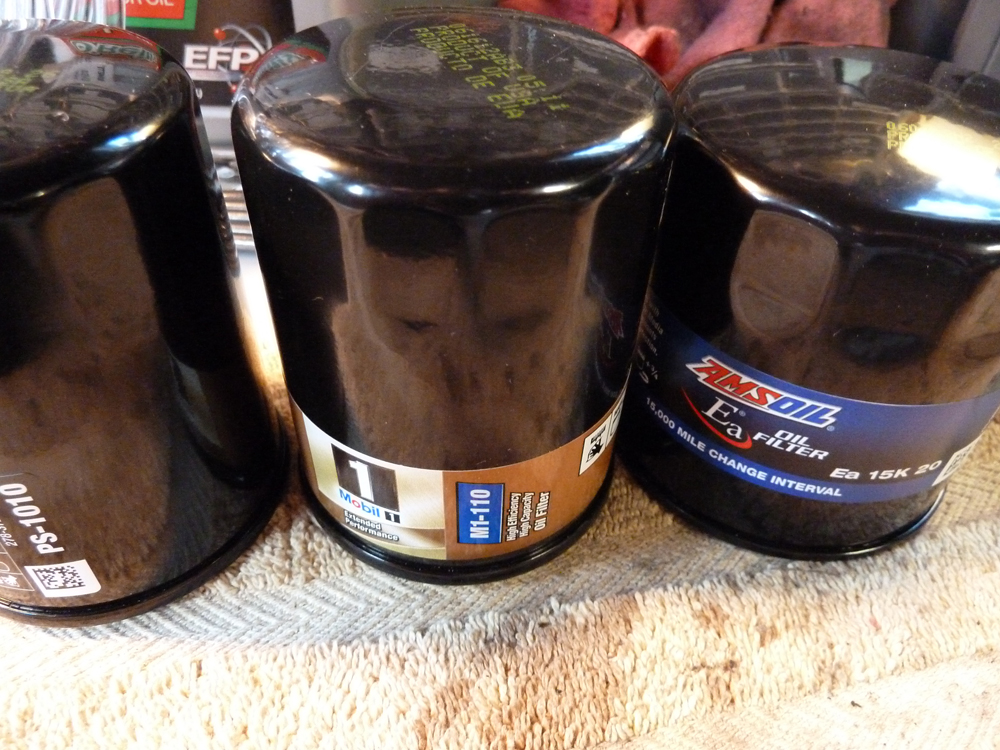
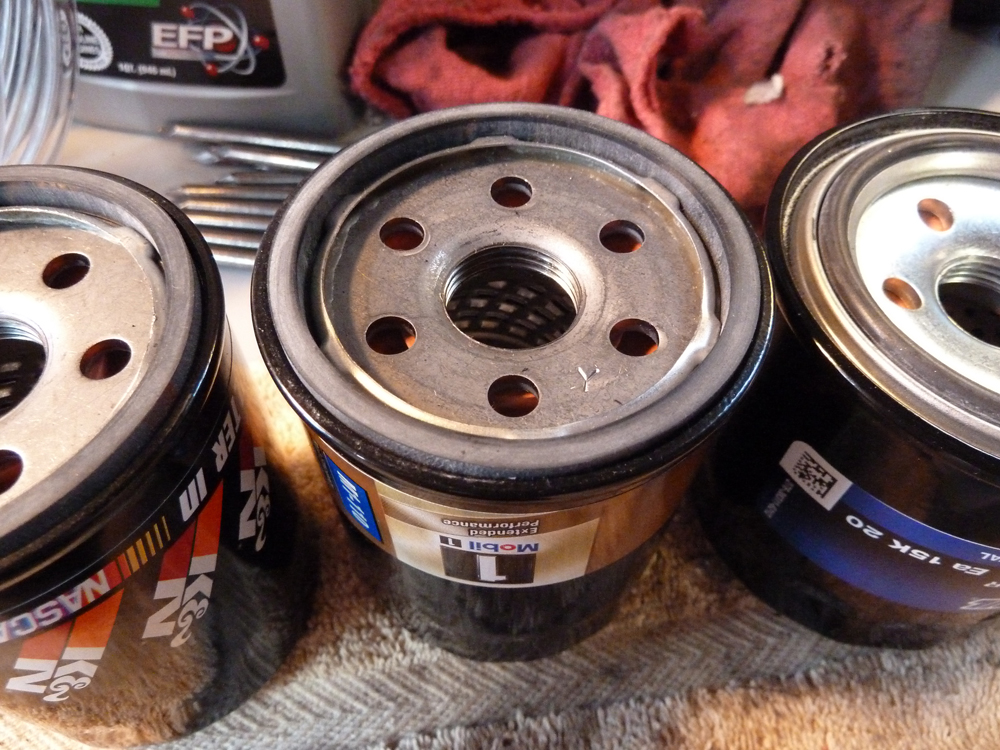
K&N  
Manufacturer: Champion Laboratories
Part Number: PS-1010
Media Type: Cellulose
Micron Rating: 20μm Nominal
By-pass Valve Rating: 11-17psi
Flow Rate: 9-11gpm
Burst Pressure: 300psi
Media Surface Area: 105 sq in
Pleat Count: 47
Drain Back Value Material: Nitrile
Country of Manufacture: USA

Name: b4725a99.jpg Views: 0 Size: 583.7 KB
Name: 52cfcc51.jpg Views: 0 Size: 511.4 KB
Name: 1c78f8e5.jpg Views: 0 Size: 601.2 KB
Name: P1020524.jpg Views: 0 Size: 659.0 KB
Name: P1020525.jpg Views: 0 Size: 523.1 KB

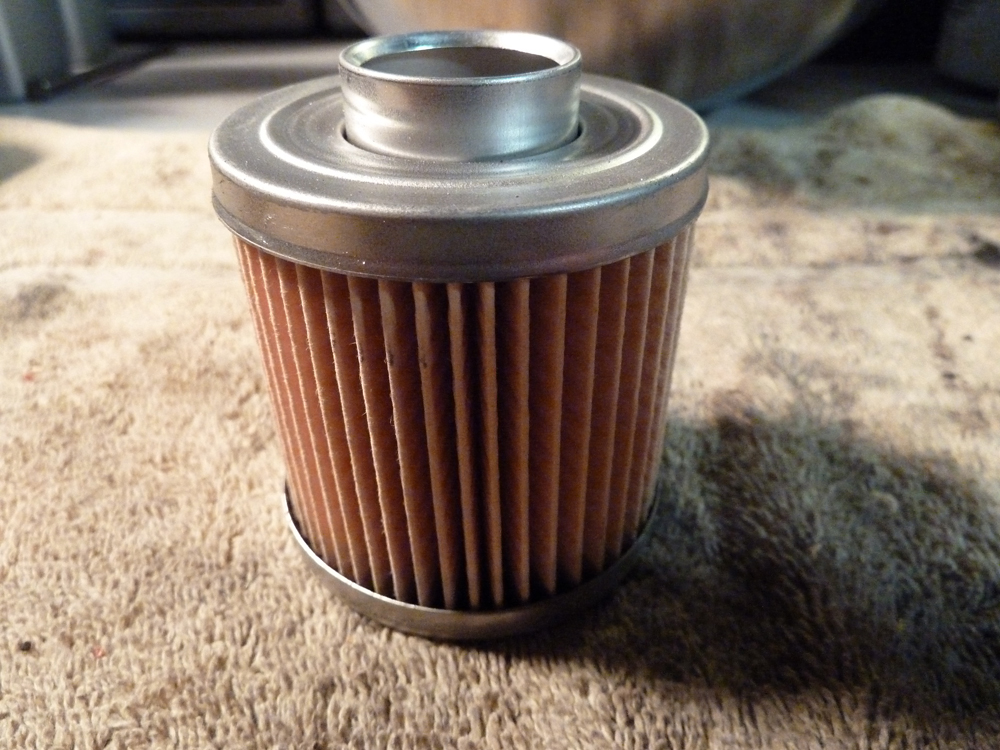
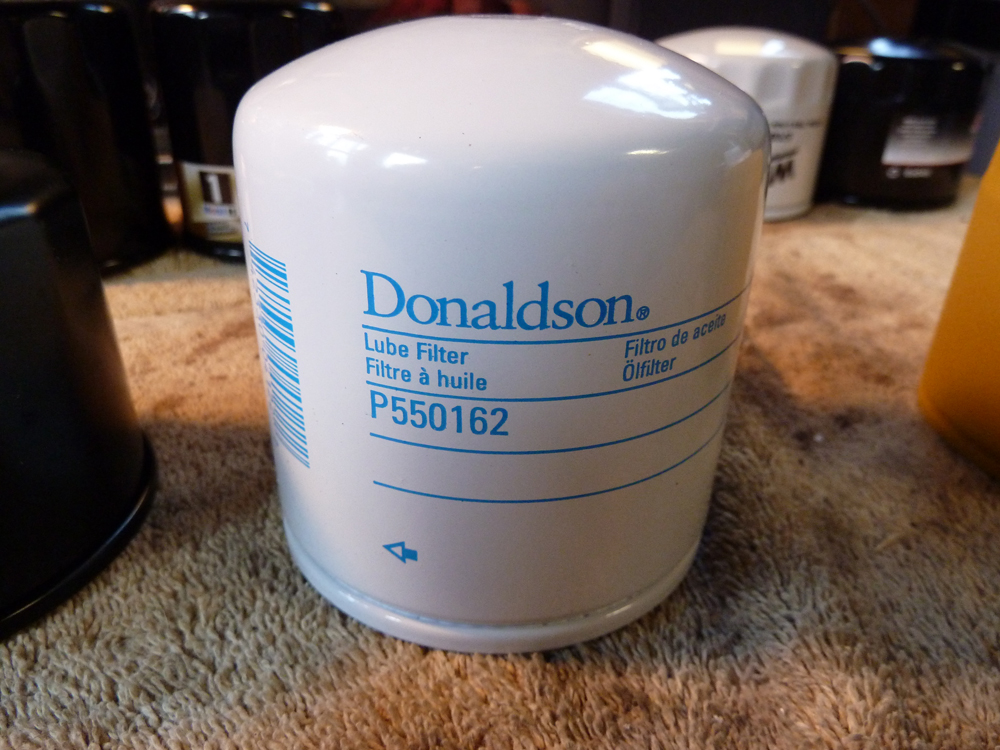
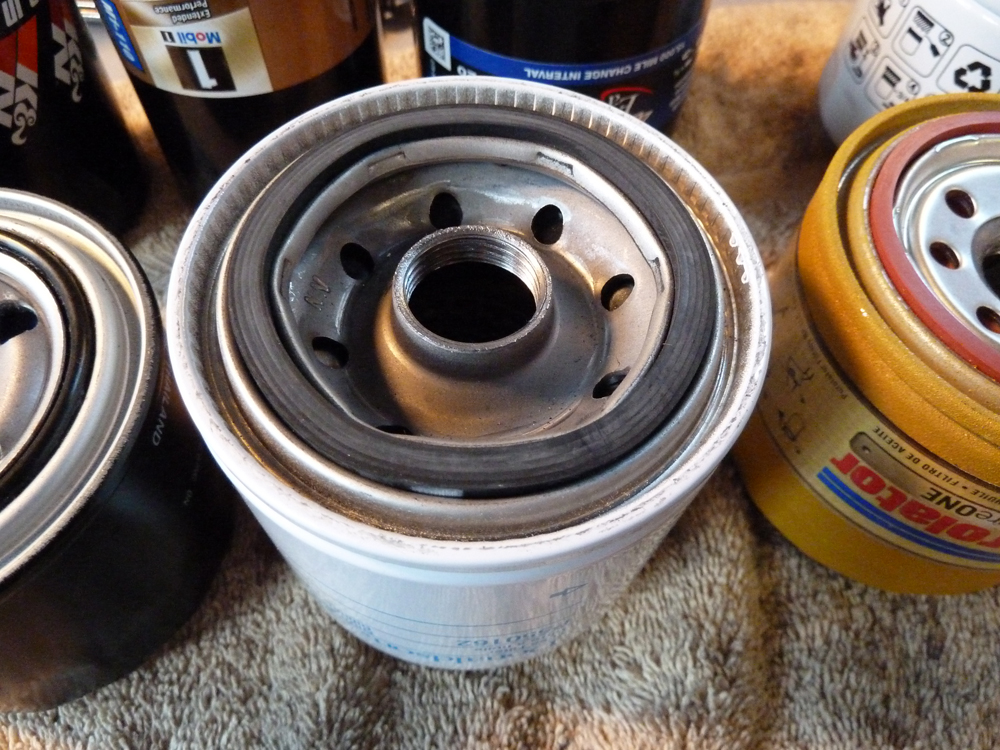
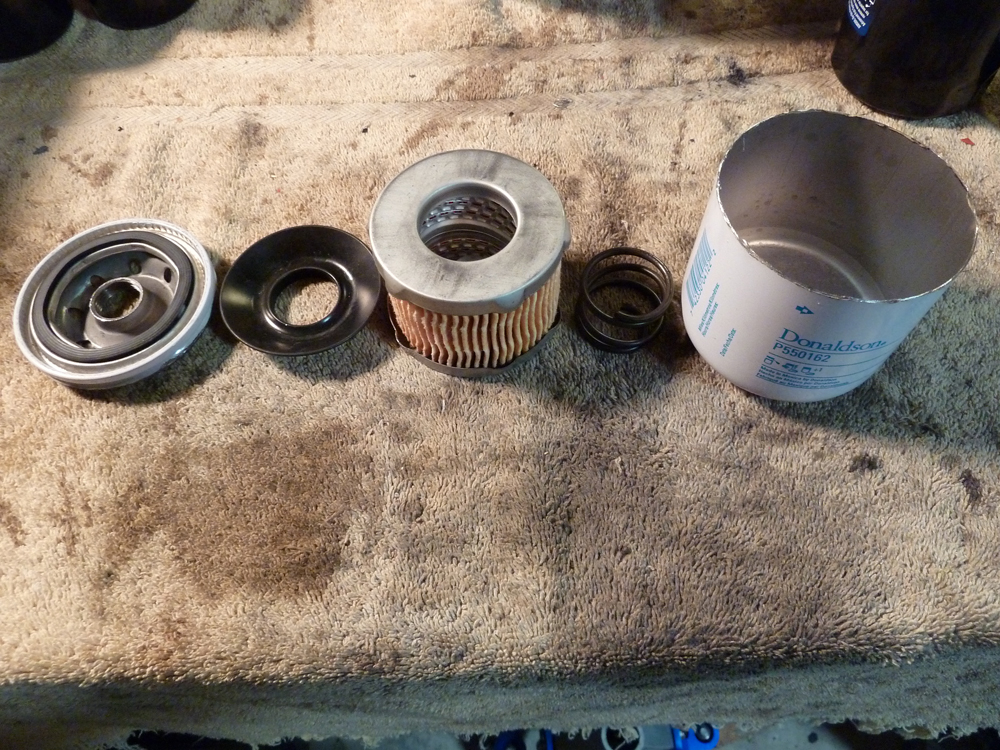
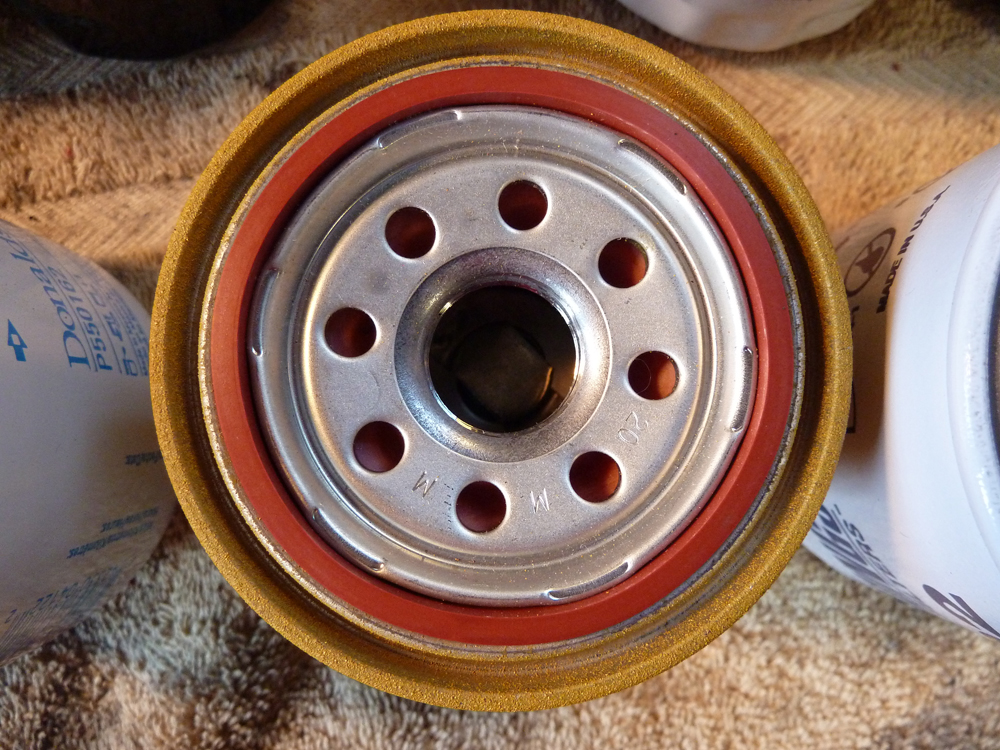
Donaldson  
Manufacturer: Donaldson
Part Number: P550162
Media Type: Cellulose
Micron Rating: 39μm Nominal
By-pass Valve Rating: 11-17psi
Flow Rate: 5gpm
Burst Pressure: 300psi
Media Surface Area: 113 sq in
Pleat Count: 56
Drain Back Value Material: Silicone
Country of Manufacture: USA

Name: b5a43fb8.jpg Views: 0 Size: 484.9 KB
Name: 3bd33e9e.jpg Views: 0 Size: 576.4 KB
Name: 5d3c7cd8.jpg Views: 0 Size: 604.5 KB
Name: P1020519.jpg Views: 0 Size: 672.0 KB
Name: P1020520.jpg Views: 0 Size: 551.0 KB

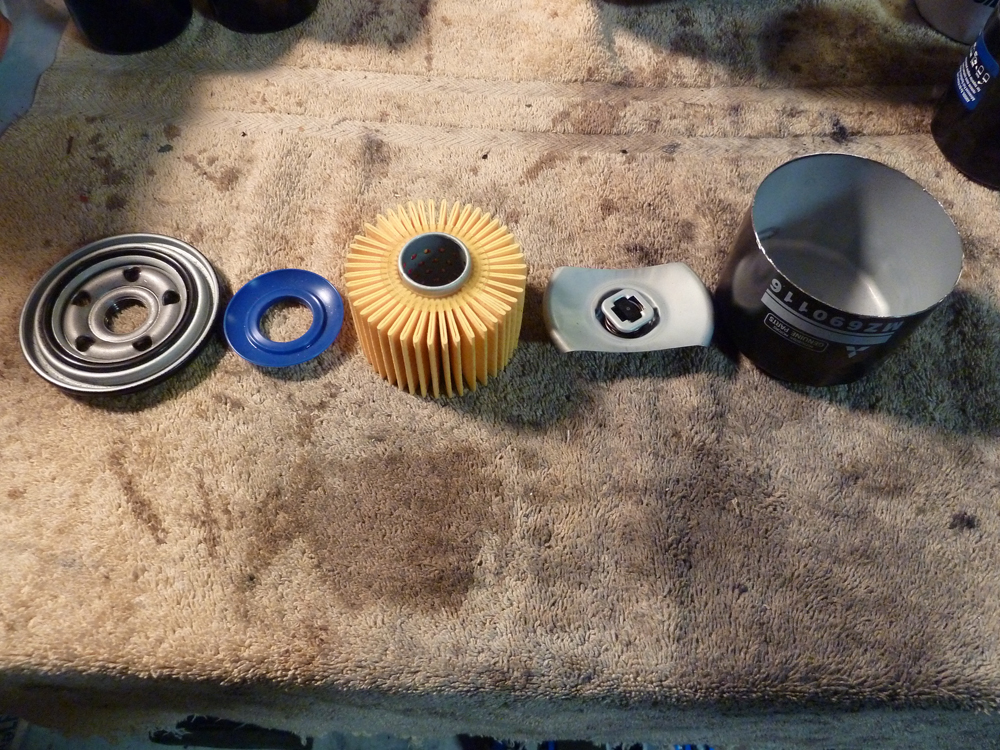
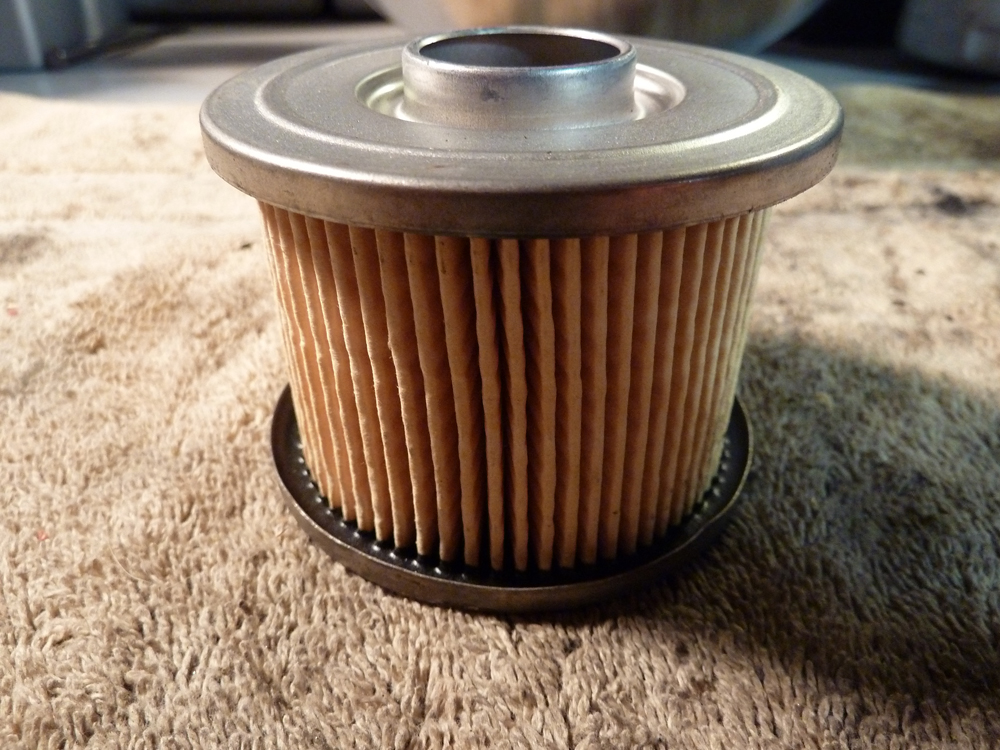
Mitsubishi  
Manufacturer: DENSO
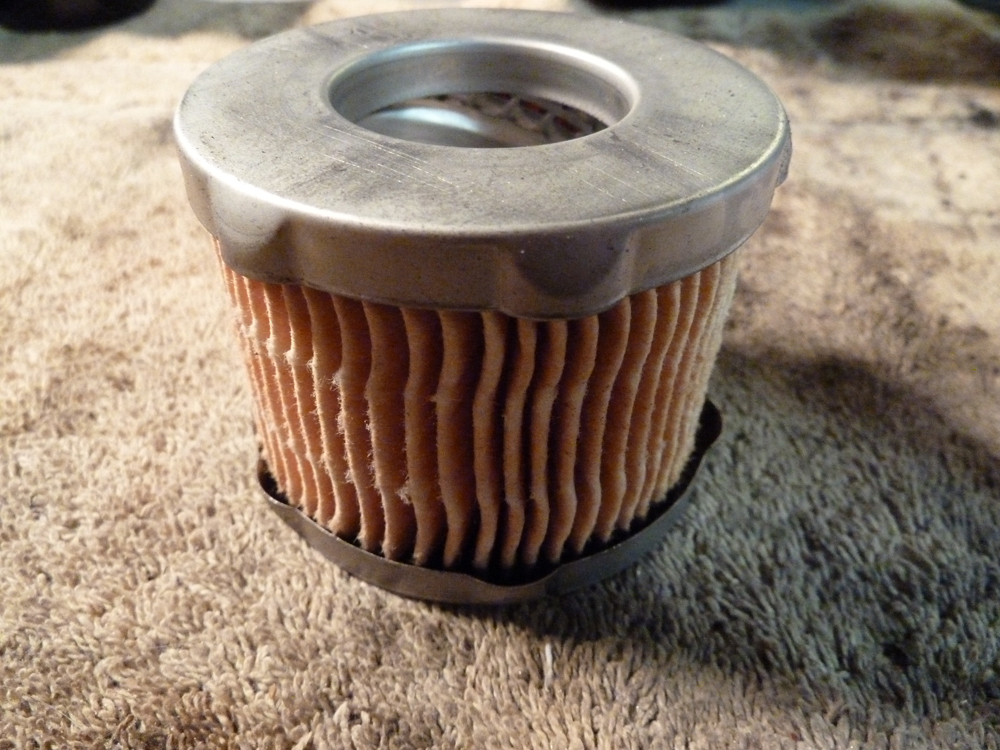
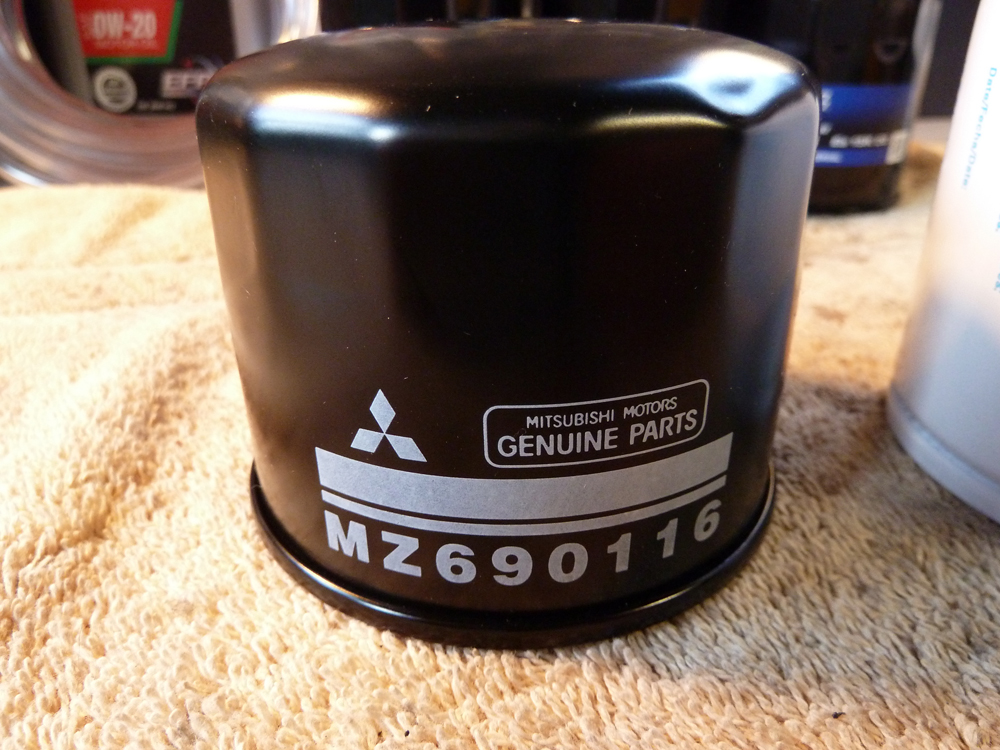
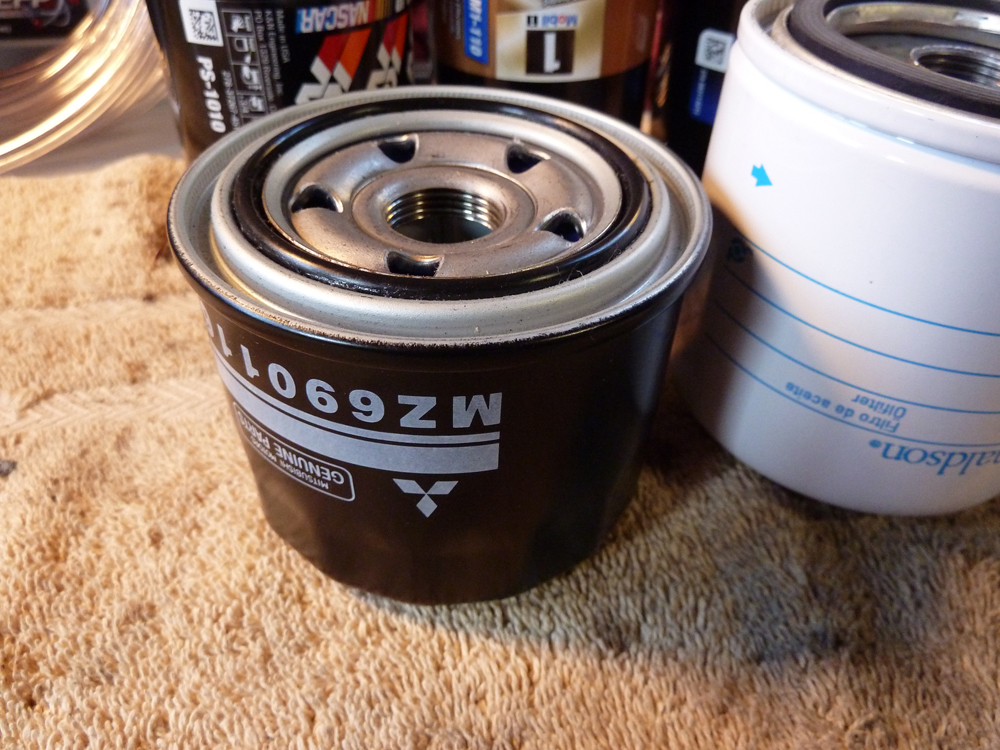
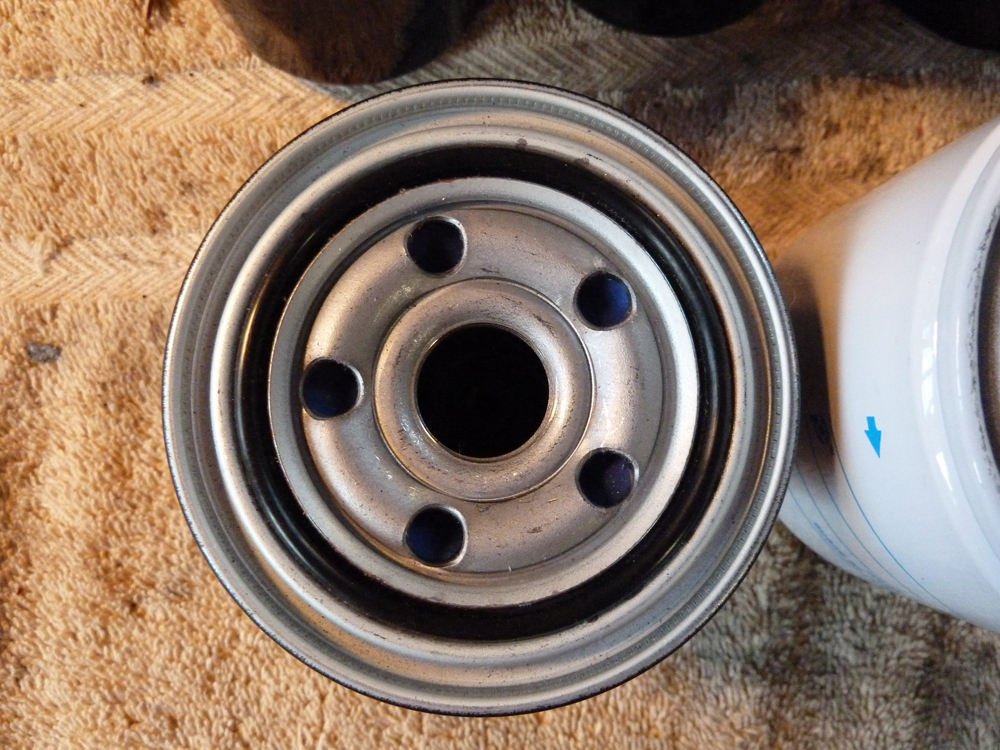
Part Number: 150-1010 (Mitsubishi# MZ690116)
Media Type: Cellulose
Micron Rating: 40μm Nominal
By-pass Valve Rating: 13psi
Flow Rate: *UNKNOWN*
Burst Pressure: *UNKNOWN*
Media Surface Area: 109 sq in
Pleat Count: 43
Drain Back Value Material: Silicone
Country of Manufacture: Thailand

Name: 74b018b5.jpg Views: 0 Size: 502.9 KB
Name: 8feec917.jpg Views: 0 Size: 544.0 KB
Name: 519899cc.jpg Views: 0 Size: 570.4 KB
Name: P1020518.jpg Views: 0 Size: 677.1 KB
Name: P1020523.jpg Views: 0 Size: 503.1 KB

Blended Media
Mobil 1  
Manufacturer: Champion Laboratories
Part Number: M1-110
Media Type: Cellulose + Synthetic Blend (Polyester)
Micron Rating: 25μm Nominal
By-pass Valve Rating: 13psi
Flow Rate: 3gpm
Burst Pressure: 300psi
Media Surface Area: 105 sq in
Pleat Count: 49
Drain Back Value Material: Nitrile
Country of Manufacture: USA

Name: 2abe7491.jpg Views: 0 Size: 559.9 KB
Name: a188f65e.jpg Views: 0 Size: 564.9 KB
Name: 58ef3c05.jpg Views: 0 Size: 569.6 KB
Name: P1020526.jpg Views: 0 Size: 684.2 KB
Name: P1020527.jpg Views: 0 Size: 514.9 KB

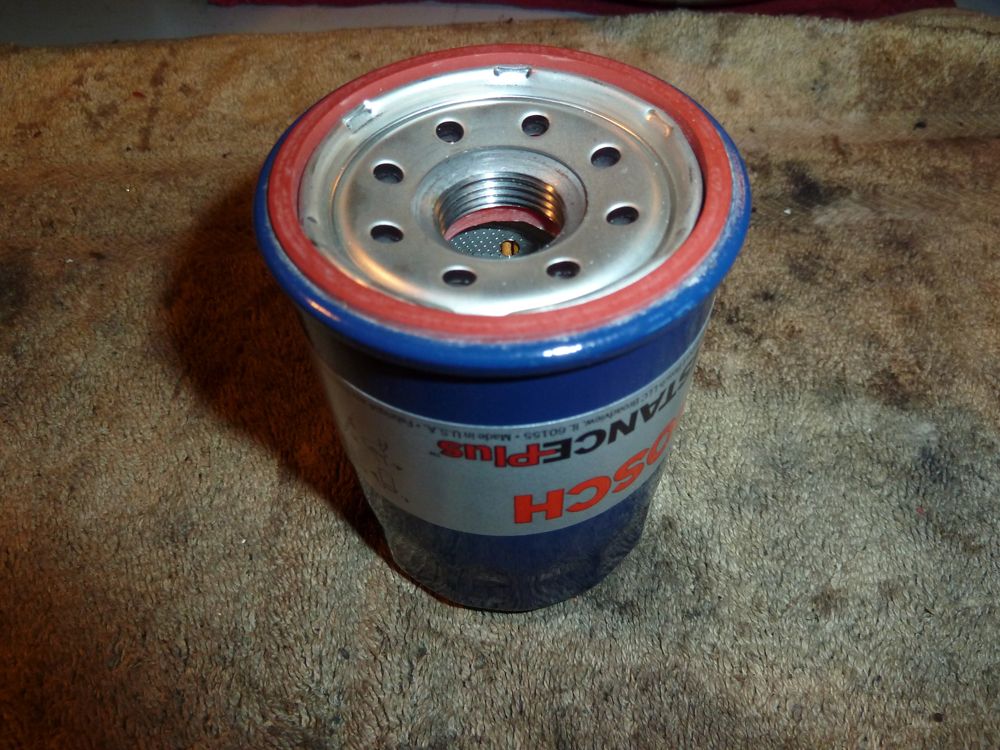
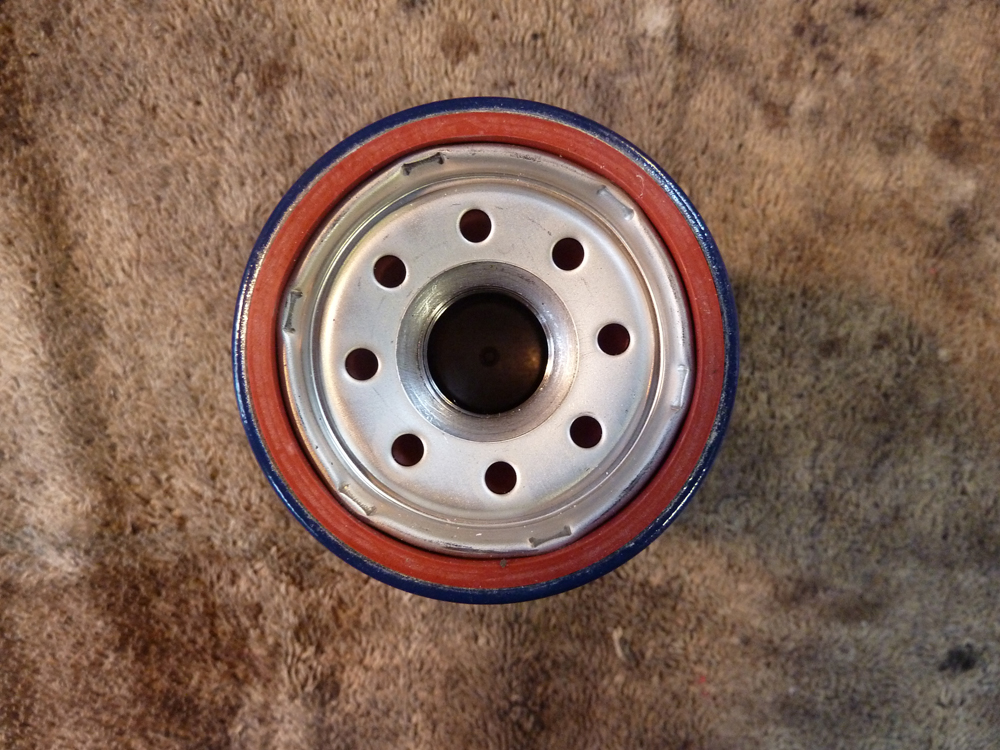
Bosch  
Manufacturer: Purolator
Part Number: D3323
Media Type: Cellulose + Synthetic Blend
Micron Rating: 30μm Nominal
By-pass Valve Rating: 14-18psi
Flow Rate: 9-11gpm
Burst Pressure: 500psi
Media Surface Area: 64sq in
Pleat Count: 53
Drain Back Value Material: Silicone
Country of Manufacture: USA


Name: P1020736_zps628c7267.jpg Views: 0 Size: 570.7 KB
Name: P1020743_zps522fcf5c.jpg Views: 0 Size: 645.7 KB
Name: P1020746_zps75dab1df.jpg Views: 0 Size: 547.9 KB

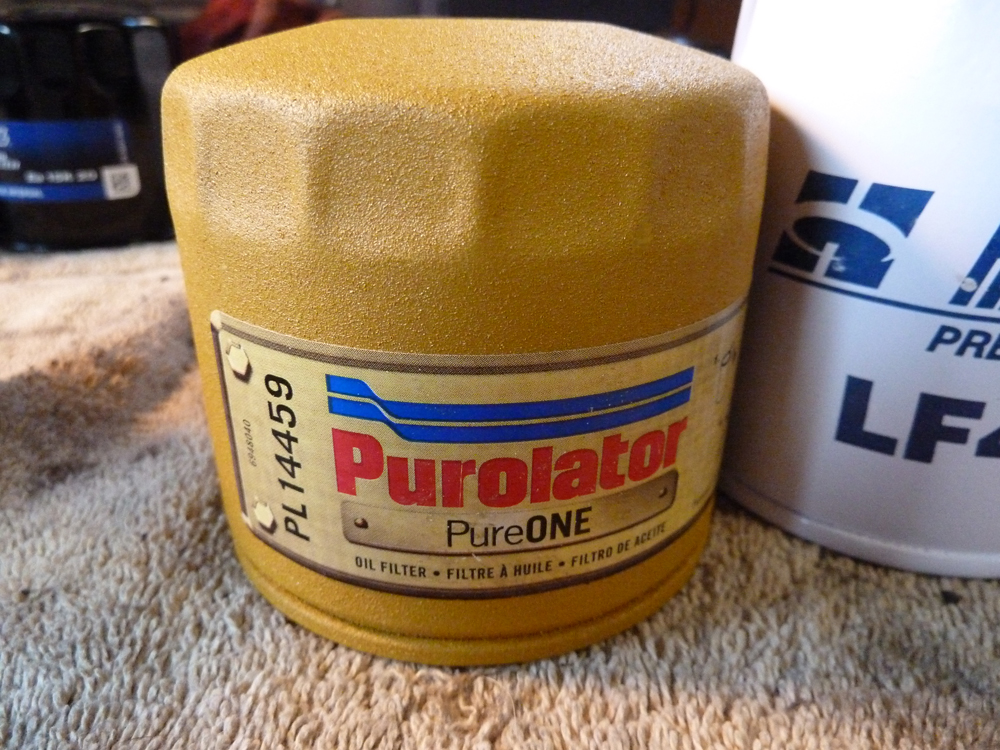
Purolator  
Manufacturer: Purolator
Part Number: PL14459
Media Type: Cellulose + Synthetic Blend
Micron Rating: 20μm Nominal
By-pass Valve Rating: 12-15psi
Flow Rate: 9-11gpm
Burst Pressure: 300psi
Media Surface Area: 102 sq in
Pleat Count: 61
Drain Back Value Material: Nitrile
Country of Manufacture: USA

Name: 6f98cdff.jpg Views: 0 Size: 580.2 KB
Name: 35c4d11d.jpg Views: 0 Size: 579.5 KB
Name: 12355e0a.jpg Views: 0 Size: 630.0 KB

Name: P1020531.jpg Views: 0 Size: 537.1 KB

Synthetic Media
Royal Purple  
Manufacturer: Champion Laboratories
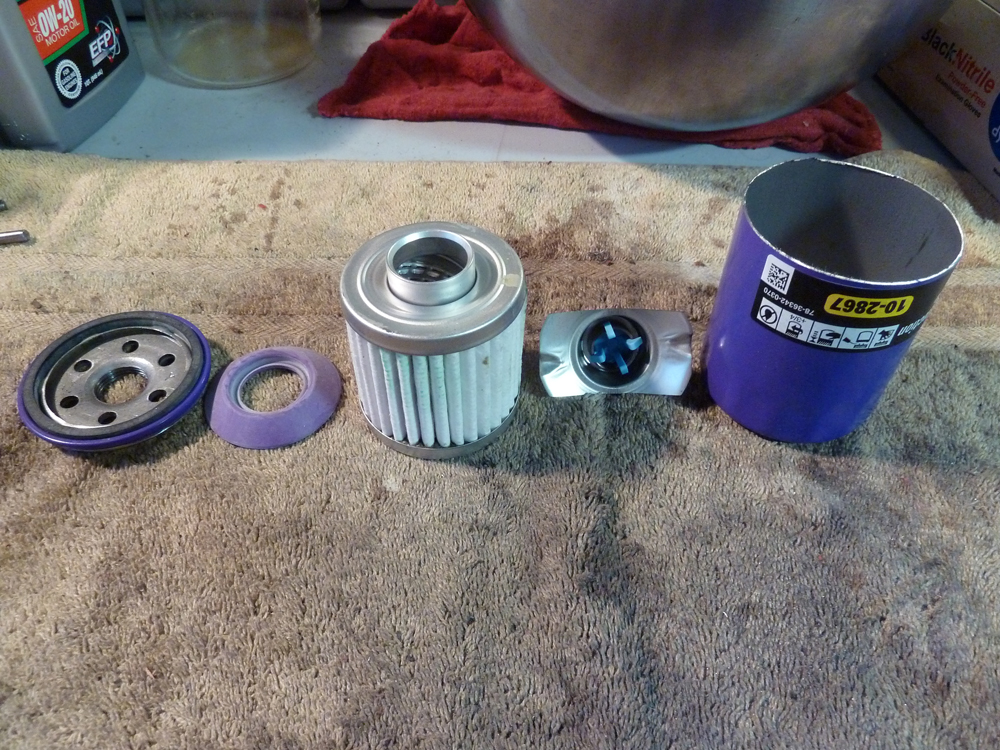
Part Number: 10-2867
Media Type: Synthetic
Micron Rating: 25μm Nominal
By-pass Valve Rating: 11-17psi
Flow Rate: 9-11gpm
Burst Pressure: 600psi
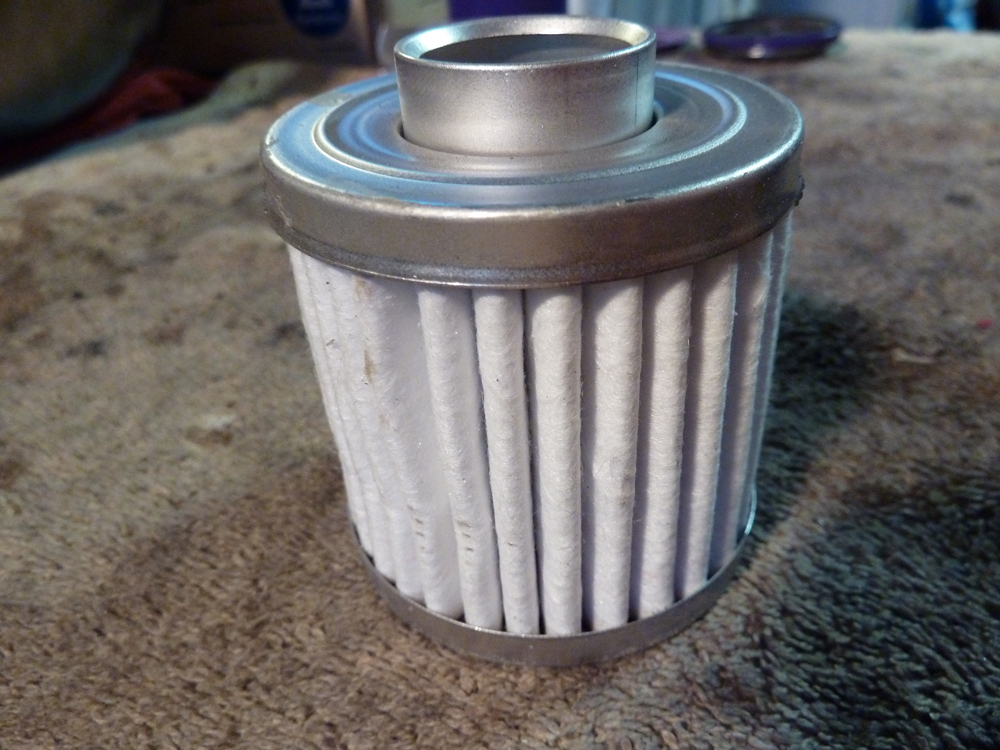
Media Surface Area: 72sq in
Pleat Count: 32
Drain Back Value Material: Nitrile
Country of Manufacture: USA


Name: P1020769_zps84846f23.jpg Views: 0 Size: 538.4 KB
Name: P1020771_zps0f8d4bde.jpg Views: 0 Size: 576.5 KB
Name: P1020773_zps894e5619.jpg Views: 0 Size: 658.0 KB
Name: P1020775_zpscef12100.jpg Views: 0 Size: 502.7 KB

AMSOIL  
Manufacturer: WIX
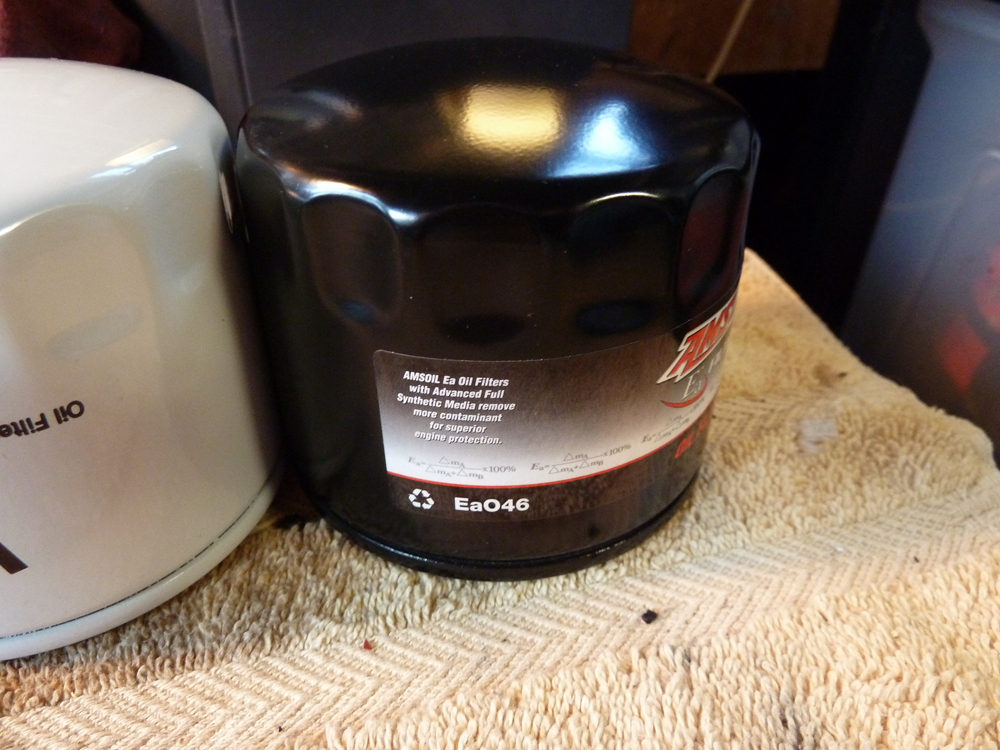
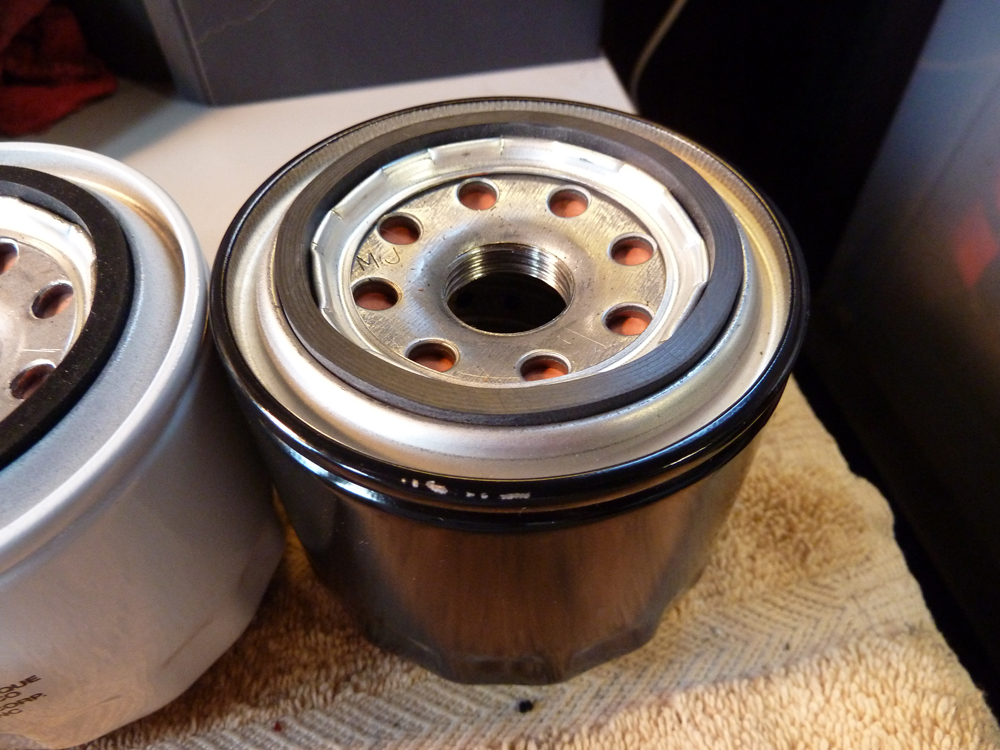
Part Number: Ea046 (deprecated)
Media Type: Nano-Fiber (Donaldson Synteq media)
Micron Rating: 20μm Absolute
By-pass Valve Rating: 14psi
Flow Rate: 9-11gpm
Burst Pressure: 330psi
Media Surface Area: 77 sq in
Pleat Count: 35
Drain Back Value Material: Nitrile
Country of Manufacture: Mexico

Name: a7a022aa.jpg Views: 0 Size: 492.4 KB
Name: b3431716.jpg Views: 0 Size: 502.6 KB
Name: bcd3b5ac.jpg Views: 0 Size: 548.9 KB
Name: P1020534.jpg Views: 0 Size: 617.2 KB
Name: P1020535.jpg Views: 0 Size: 531.5 KB

AMSOIL  
Manufacturer: Champion Laboratories
Part Number: Ea15k20
Media Type: Nano-Fiber (Donaldson Synteq media)
Micron Rating: 20μm Absolute
By-pass Valve Rating: 8-11psi
Flow Rate: 9-11gpm
Burst Pressure: 280psi
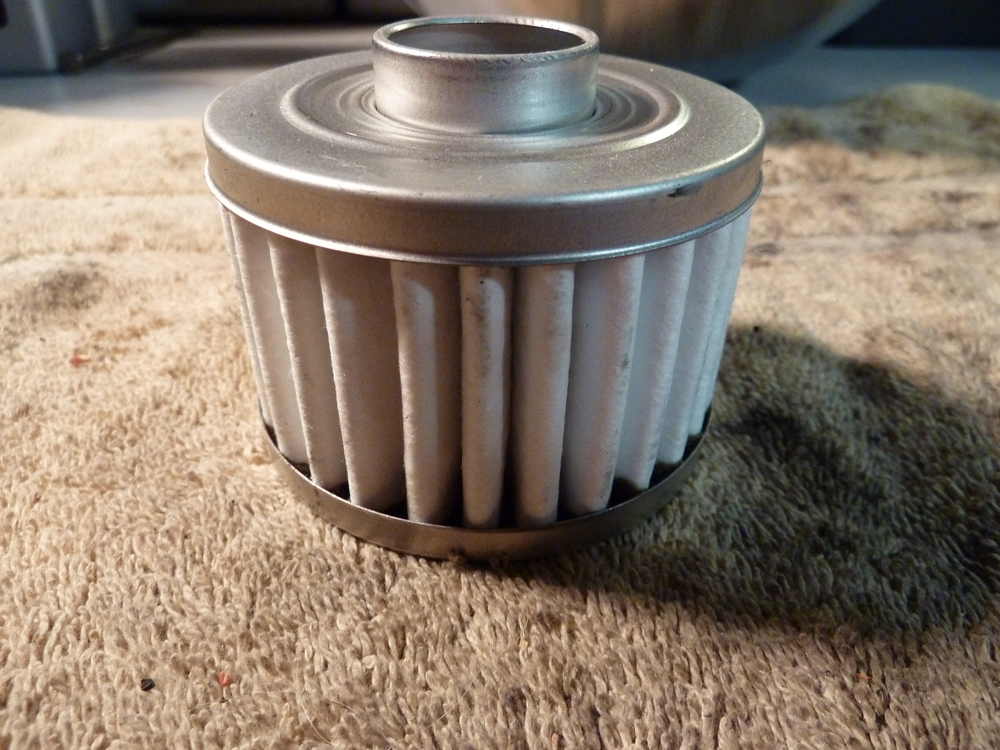
Media Surface Area: 56 sq in
Pleat Count: 32
Drain Back Value Material: Nitrile
Country of Manufacture: USA

Name: fce20f2e.jpg Views: 0 Size: 569.9 KB
Name: fdfc1689.jpg Views: 0 Size: 550.2 KB
Name: dcf4bdd4.jpg Views: 0 Size: 588.9 KB
Name: P1020536.jpg Views: 0 Size: 657.5 KB
Name: P1020537.jpg Views: 0 Size: 542.7 KB

Attached Thumbnails

The OFFICIAL Oil Filter Testing and Results Thread (4G63T/4B11T)-a0cbc61a.jpg   The OFFICIAL Oil Filter Testing and Results Thread (4G63T/4B11T)-p1020737_zps18e206c0.jpg  


Last edited by golgo13; Oct 17, 2014 at 10:10 AM.

golgo13 is offline  
Reply With Quote
Old Nov 22, 2012, 10:59 PM
  #3  
EvoM Super Moderator
Thread Starter
iTrader: (132)
 
golgo13's Avatar


Join Date: May 2007
Location: @ a track near you
Posts: 3,599
Thanked 16 Times in 12 Posts
 

A few things to keep in mind:

I don’t have the hundreds of thousands of dollars to purchase the same equipment the ISO testing group uses.

It is a single pass simple bench test using an equal contaminant to oil ratio per filter at room temperature with gravity drawing the filtrate through the media.

  • This is not a test to give percent efficiency at a certain particle size.
  • This test is not an official SAE or ISO test that filter manufacturers use to rate their oil filters.
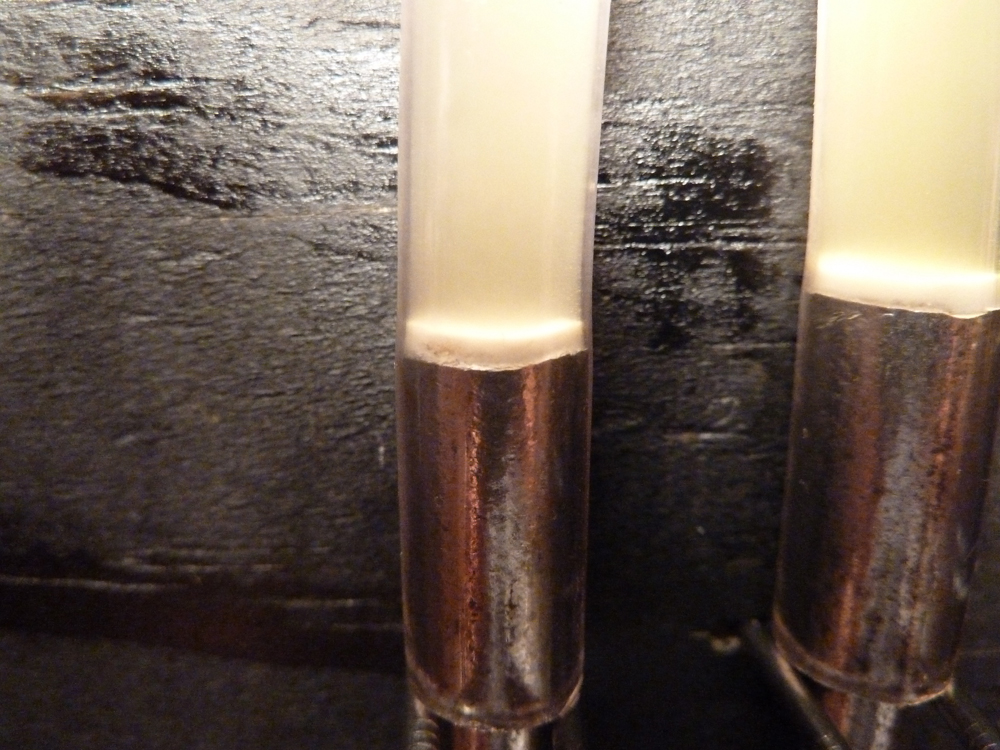
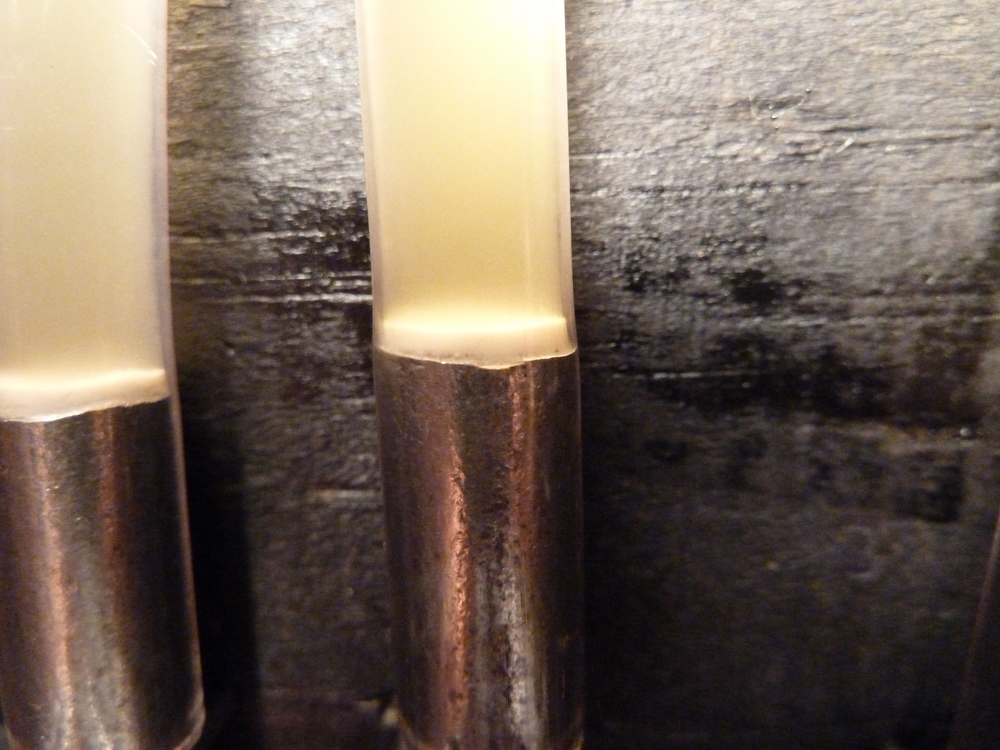
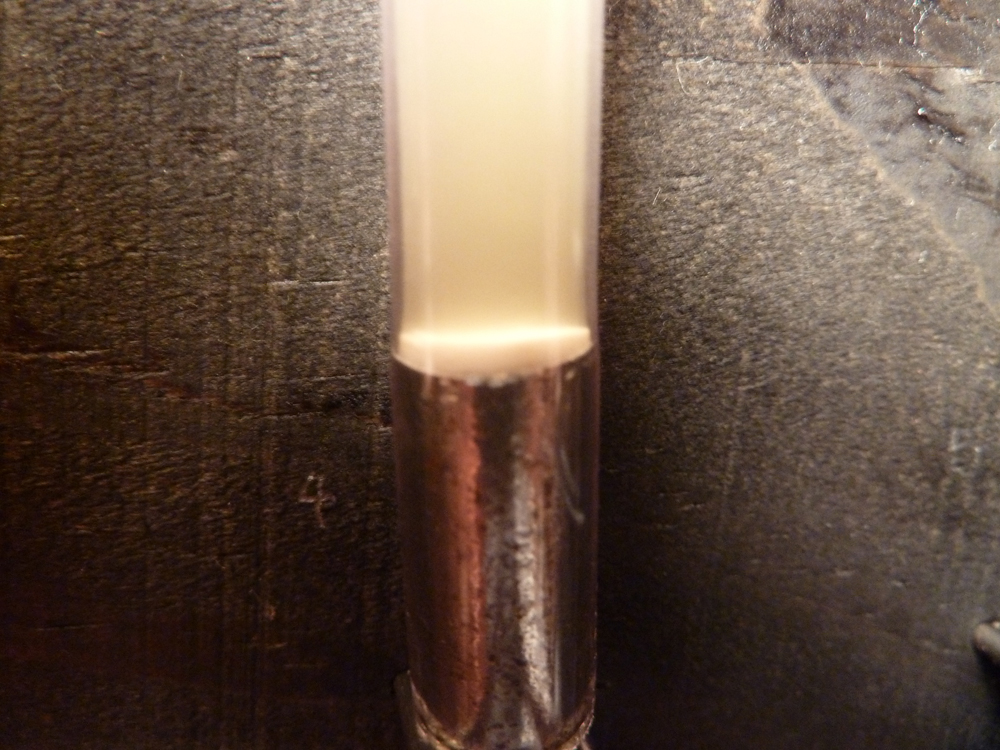
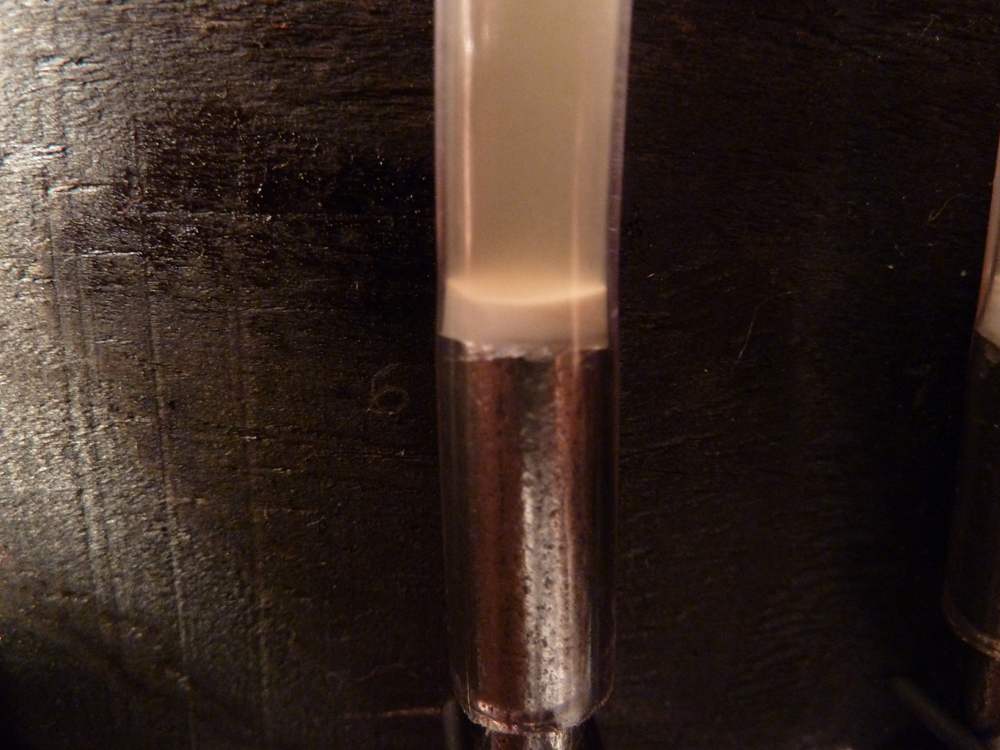
  • This is just a simple bench test to give a visual comparison of how easily contaminants passed though the media elements with the oil, and approximately how easily cold oil passed through as well.


Every effort was made to keep things even and fair within the limitations of the testing procedure. I had no favorites going into the testing. I believe the results are quite reasonably valid and seem to correlate well with the comparative filter efficiency ratings given by the manufacturers who publish these ratings.

Obviously, this test will not include the same heat and pressure as found in the 4G63/4B11 motor, so take that into consideration.


The Goal:

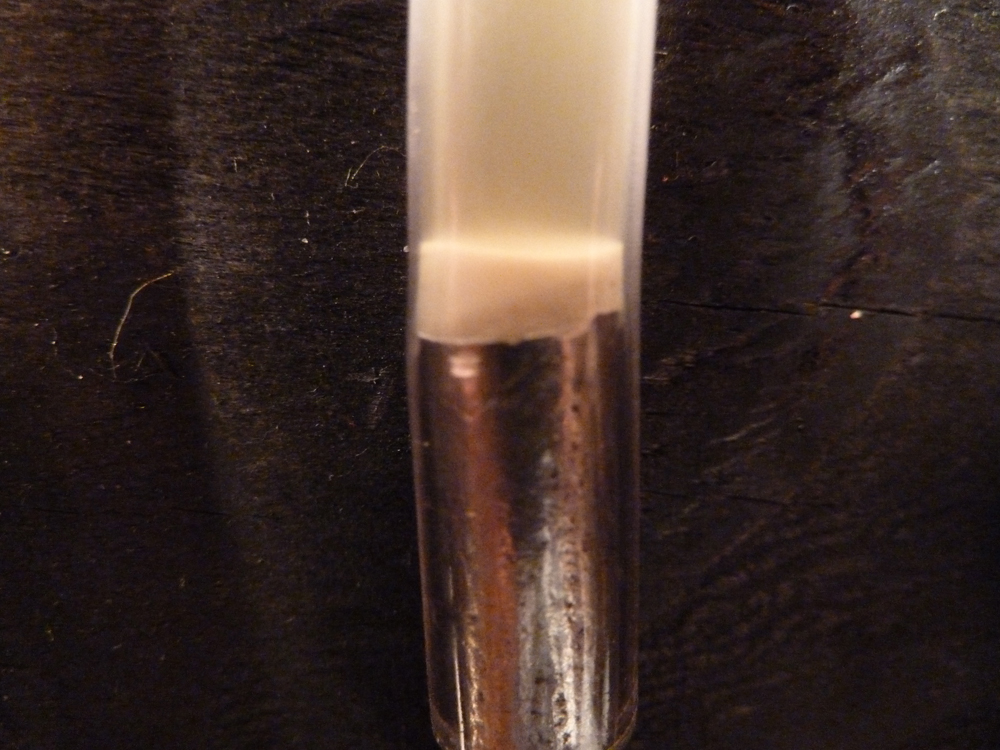
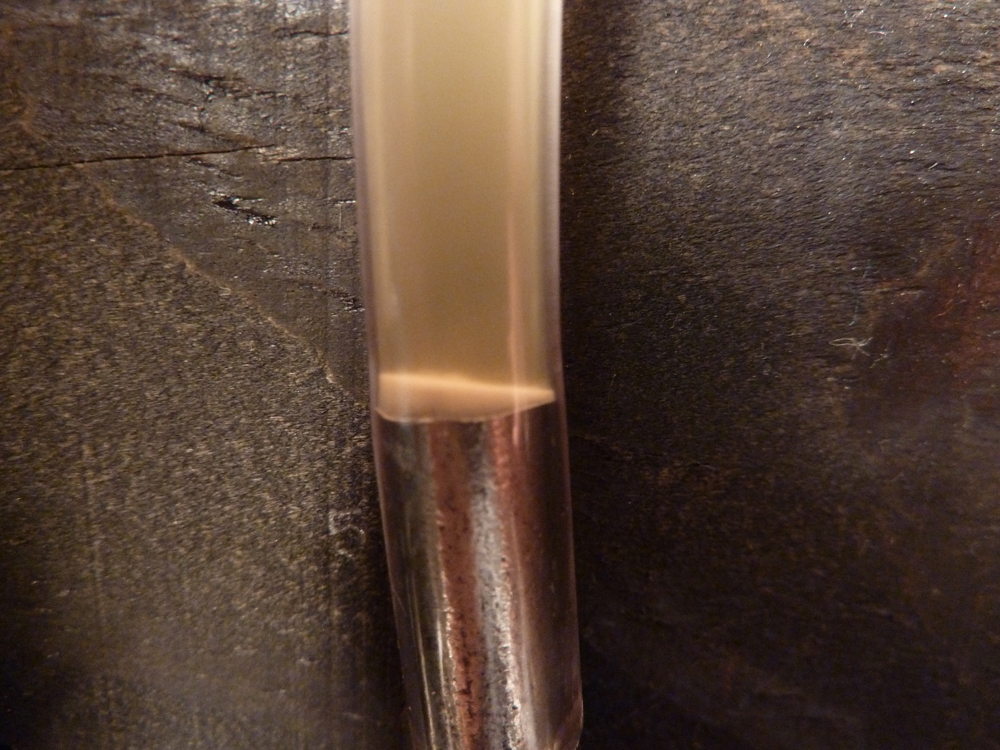
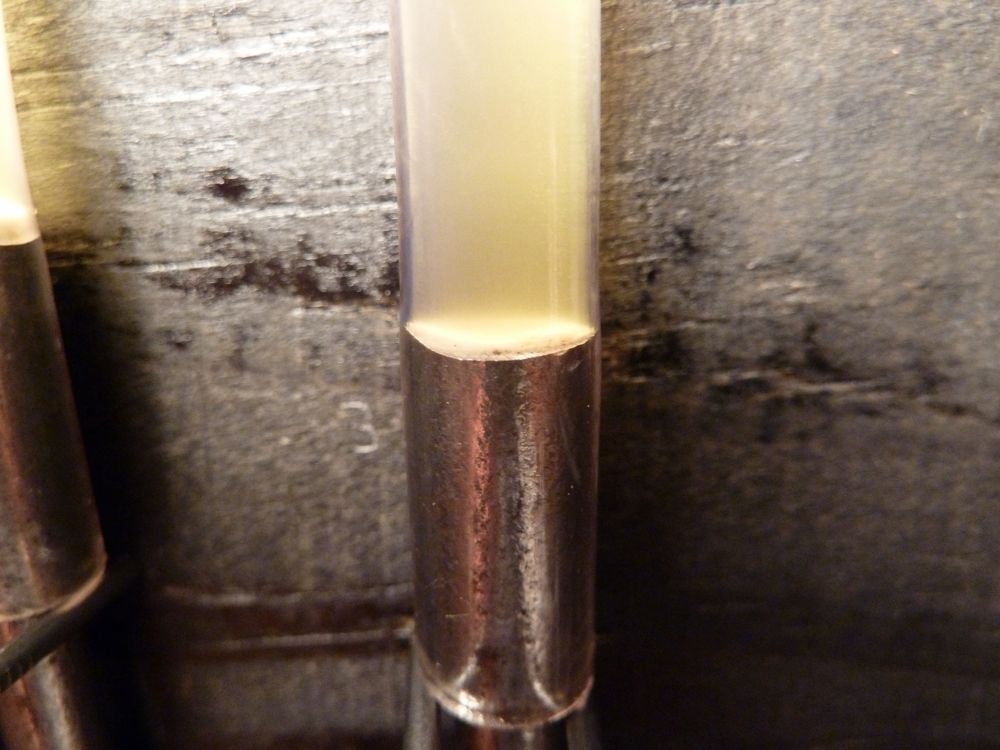
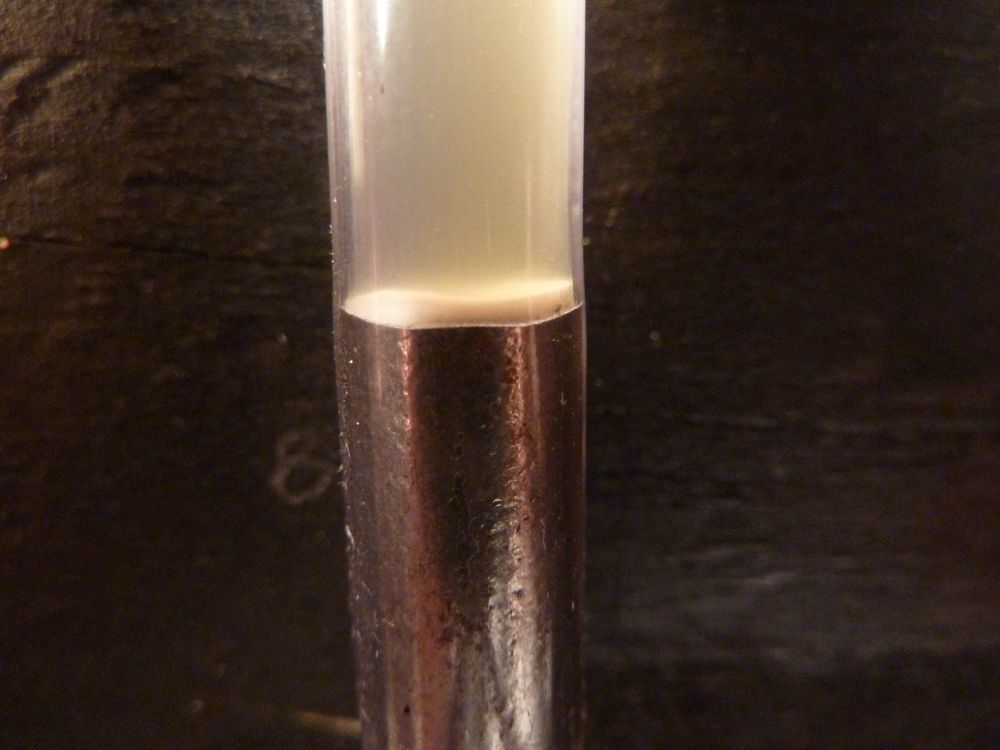
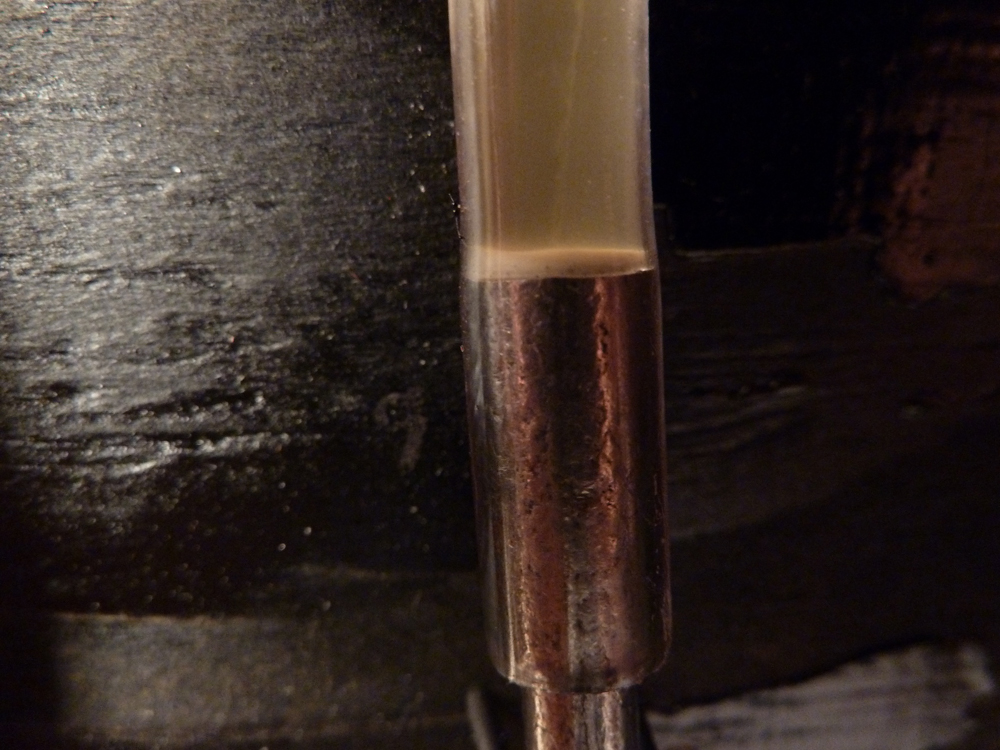
To obtain a visual representation of single pass filter efficiency while keeping the testing parameters consistent between each filter within the scope of the test. Using a filtrate contaminated with particles at or below the size known to cause increased wear to the motor (10-20μm), we should visually see how much filtrate was allowed to pass through the media.


The Procedure:

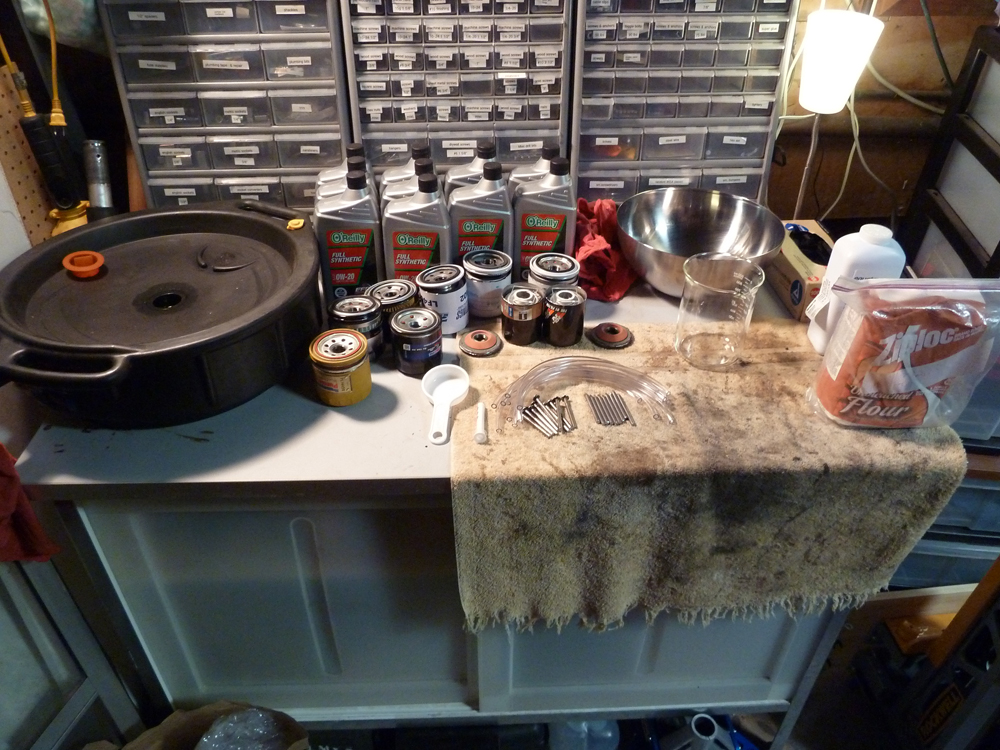
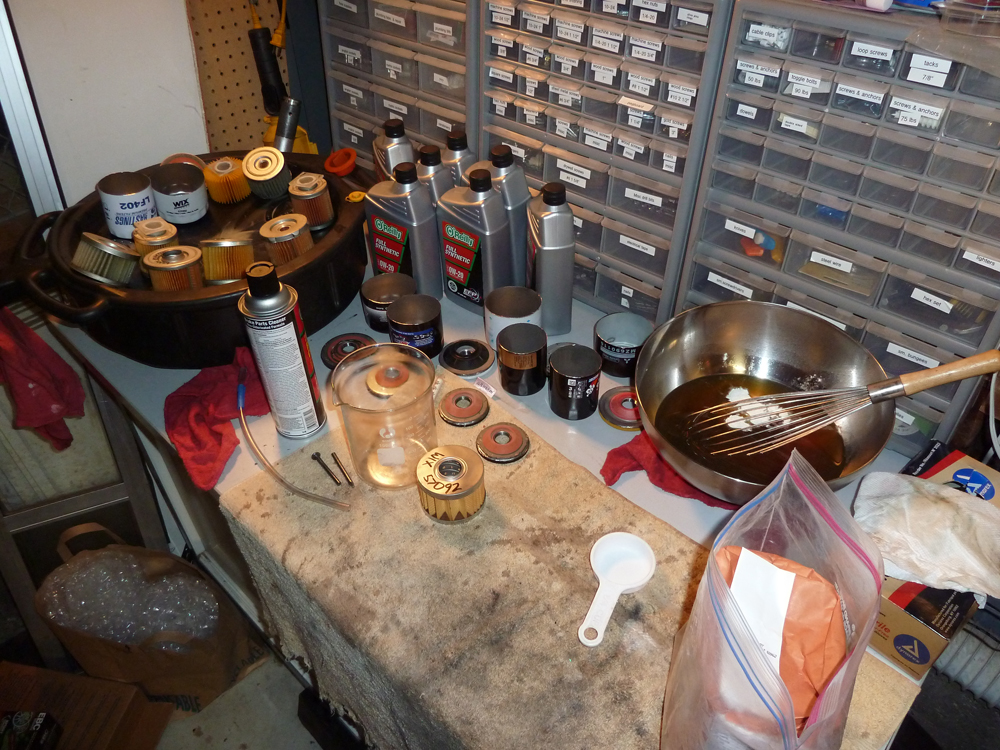
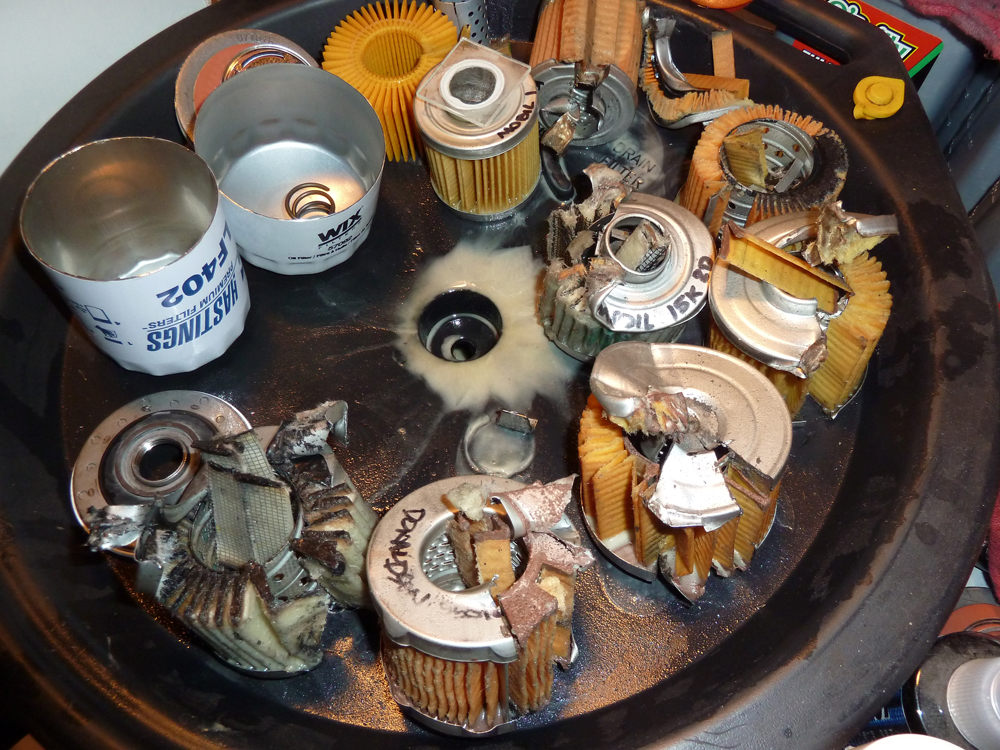
Each filter was carefully cut open along the baseplate with a dremel using a cutting disc to extract the media without damaging it. Filters that were open on each end were sealed with water tight caulk and a sheet of clear acrylic to allow for oil to only enter the center tube by passing through the media.

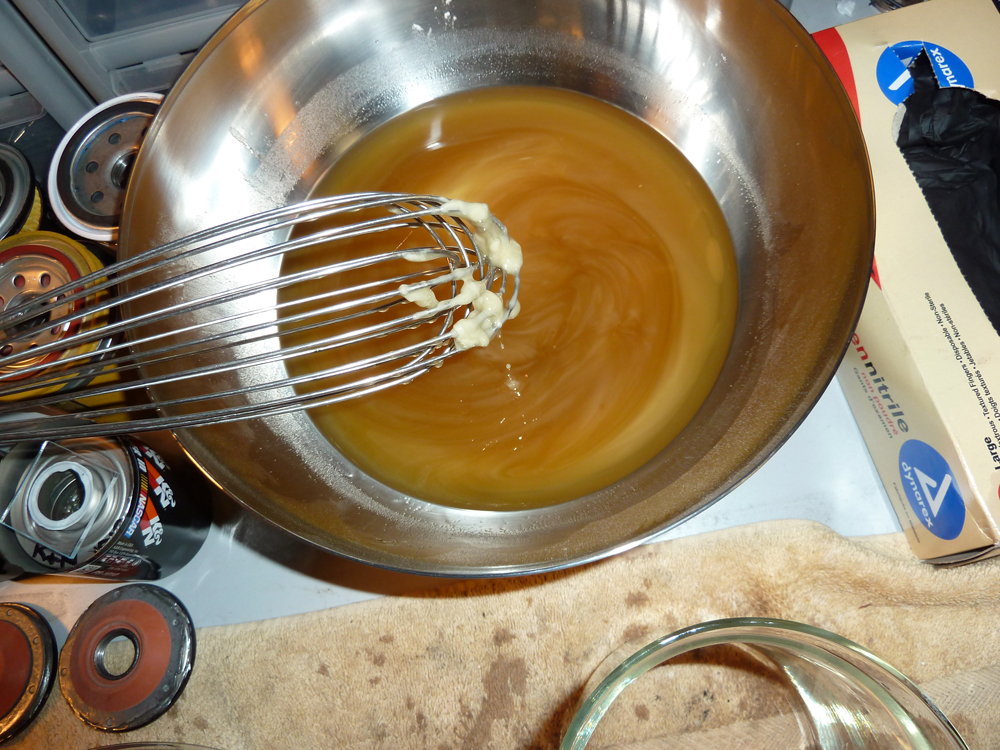
Each filter was then placed in a beaker containing intentionally contaminated synthetic motor oil with a 50/50 mixture of flour 1-100μm and talc ~10μm. These filters were done twice prior to the final results you see below, as this was necessary to allow for the media to be completely saturated with oil and contaminants. Since some of the filters contain more surface area and media of different thicknesses, I wanted to make sure that each filter was completely saturated to allow for a more accurate sample.

The filtrate was stirred prior to filling the beaker and placing in the filter to ensure enough particulates were diffused through the oil as gravity and air pressure worked to push the filtrate through the media.

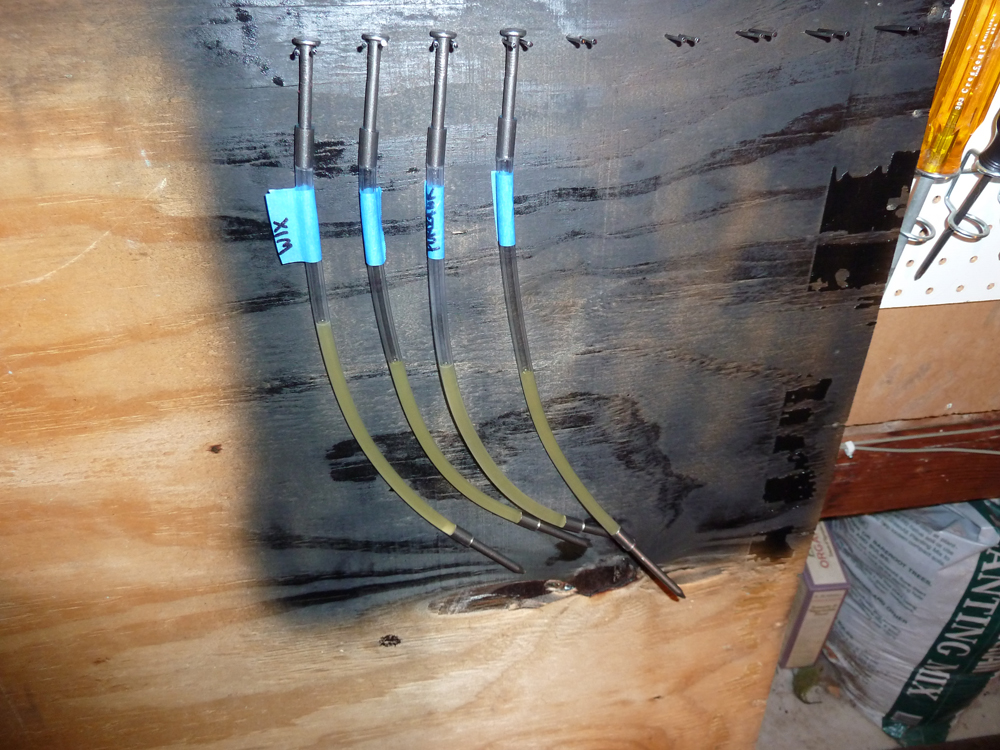
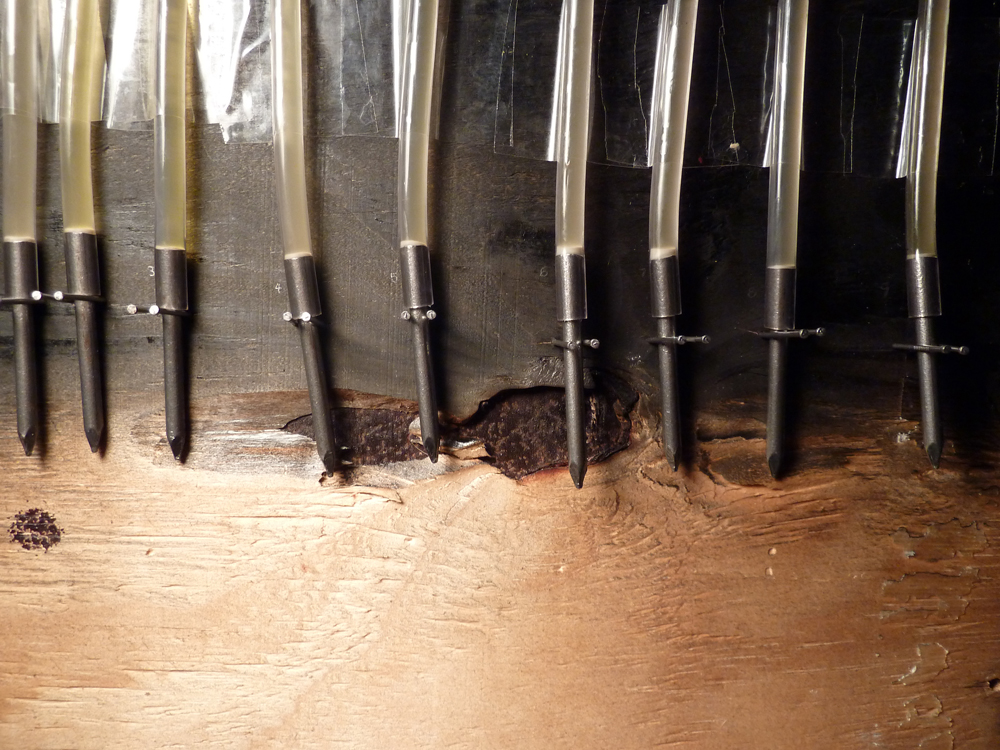
Each sample was collected using brand new 12″ sections of 3/16″ O.D. clear vinyl tubing with a syringe stuck into the opposite end. Once the center tube was filled at the same level as the surrounding filtrate, I gently stirred the contaminated oil in the center tube and then pulled on the syringe to draw a sample. I promptly plugged the business end of the tube with some nails I had previously cut in half and then the other end with the head of the nail.

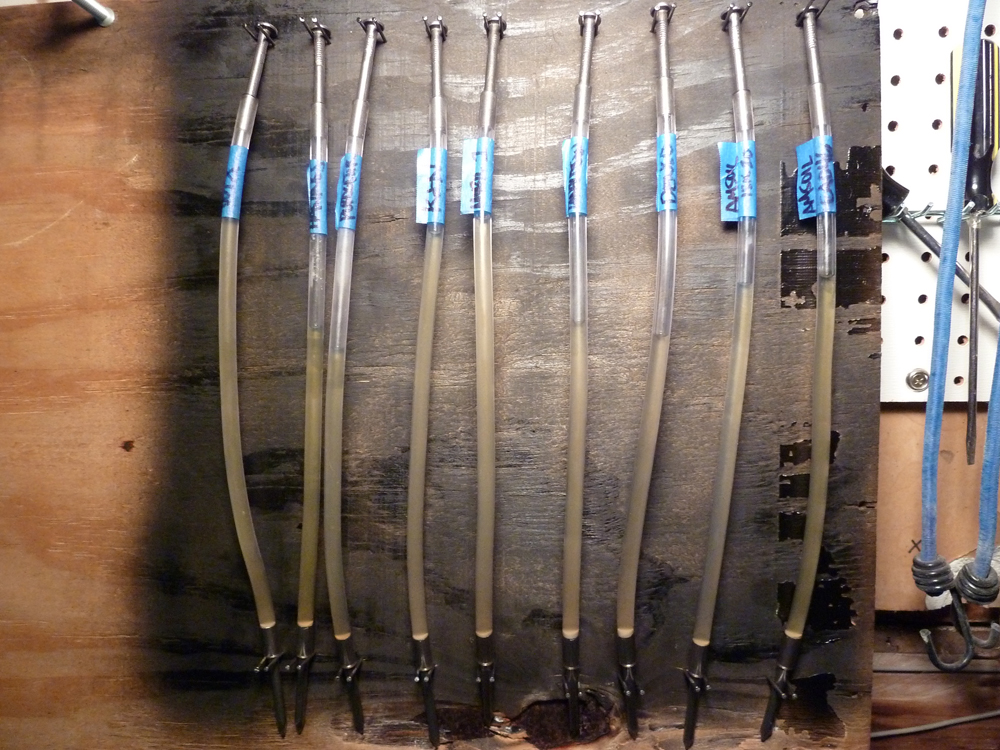
Once plugged, each tube was cleaned and then hung to allow for gravity to pull the particulates to the bottom of the sample in each respective tube. The samples were allowed to sit for 48 hours prior to taking pictures of the piles of particulates.

Name: fd2cd122.jpg Views: 0 Size: 566.8 KB

Name: P1020538.jpg Views: 0 Size: 587.0 KB

Name: P1020578.jpg Views: 0 Size: 642.3 KB

Name: P1020541.jpg Views: 0 Size: 668.3 KB

Name: P1020581.jpg Views: 0 Size: 612.7 KB

Name: P1020548.jpg Views: 0 Size: 567.5 KB

Name: P1020654_zps38246471.jpg Views: 0 Size: 579.7 KB

Name: P1020703_zps6d9b11ad.jpg Views: 0 Size: 571.5 KB


The Results:

Cellulose Media


WIX 57092
Name: P1020679_zps77db3991.jpg Views: 0 Size: 514.9 KB

NOTES: This seems to be the average amount of particulate for a cellulose media oil filter.

Hastings LF402
Name: P1020675_zpsd7bde70f.jpg Views: 0 Size: 482.7 KB

NOTES: As with the WIX filter, this is average. Nothing to write home about.

K&N PS-1010
Name: P1020680_zpsc5749a47.jpg Views: 0 Size: 508.3 KB

NOTES: I guess you pay for the name when you buy K&N? I want a filter that works, not just a name. That amount of particulate looks pretty average to me.

Donaldson P550162
Name: P1020694_zps9b5b2347.jpg Views: 0 Size: 488.5 KB

NOTES: Disappointing filtration. I was hoping even with cellulose media that the Donaldson was going to perform better.

Mitsubishi/DENSO 150-1010
Name: P1020698_zpsb4dd33e2.jpg Views: 0 Size: 473.7 KB

NOTES: Lots of people trust OEM (Hell, I’m one of them) but after this test I’ll suggest something other than DENSO.

Blended Media


Mobil 1 M1-110
Name: P1020683_zpseb3eb377.jpg Views: 0 Size: 531.1 KB

NOTES: Lots of people swear by Mobil 1. Looks like average filtration to me. This coupled with the poor construction of the filter itself means I won’t be running this filter anytime soon.

Bosch D3323


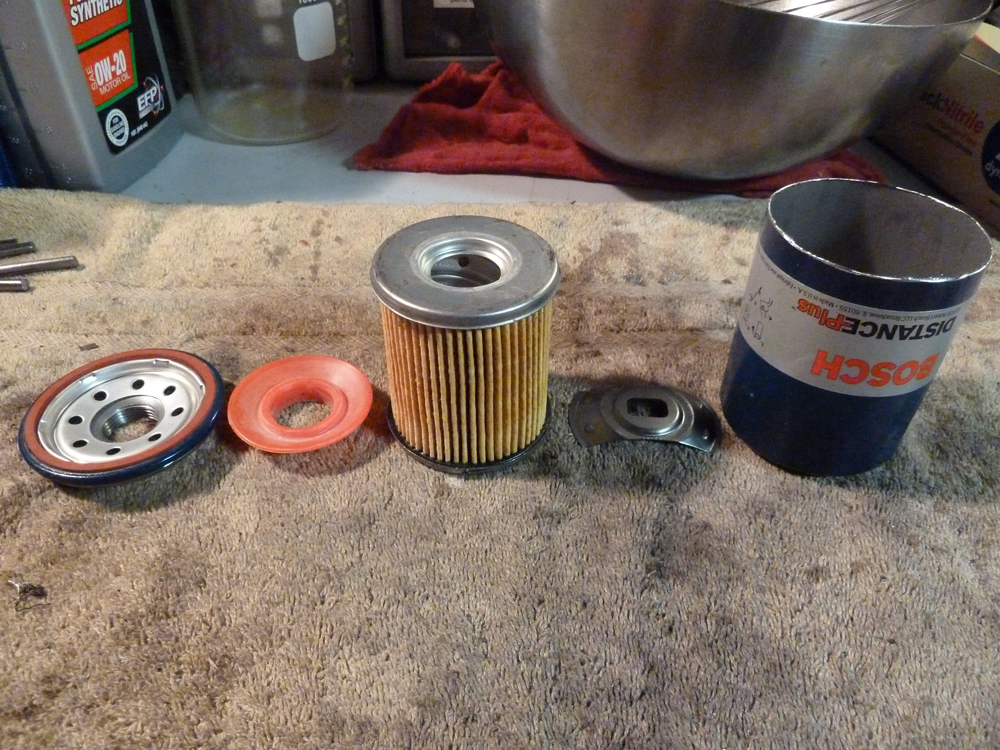
NOTES: Filter sent to me by TommiM for testing. For a blend, it fell below the Purolator, but performed better than the Mobil 1. I would consider this to be an “average” filter and since it’s being marketed as a Distance Plus filter, I would have expected better filtration, personally. The Regional Manager I spoke to on the phone said this filter is good for 12,000 miles so take that FWIW.

Purolator PL14459


NOTES: Impressively low particulate amount here. The cellulose and synthetic blend looks to be doing its job.

Synthetic Media:


Royal Purple 10-2867


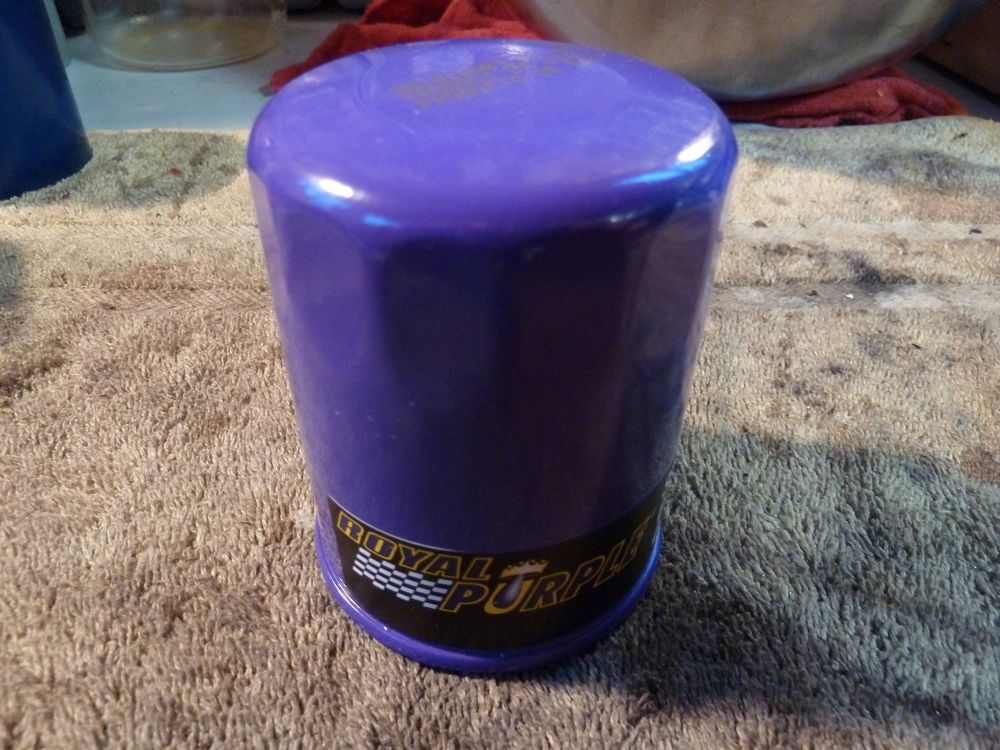
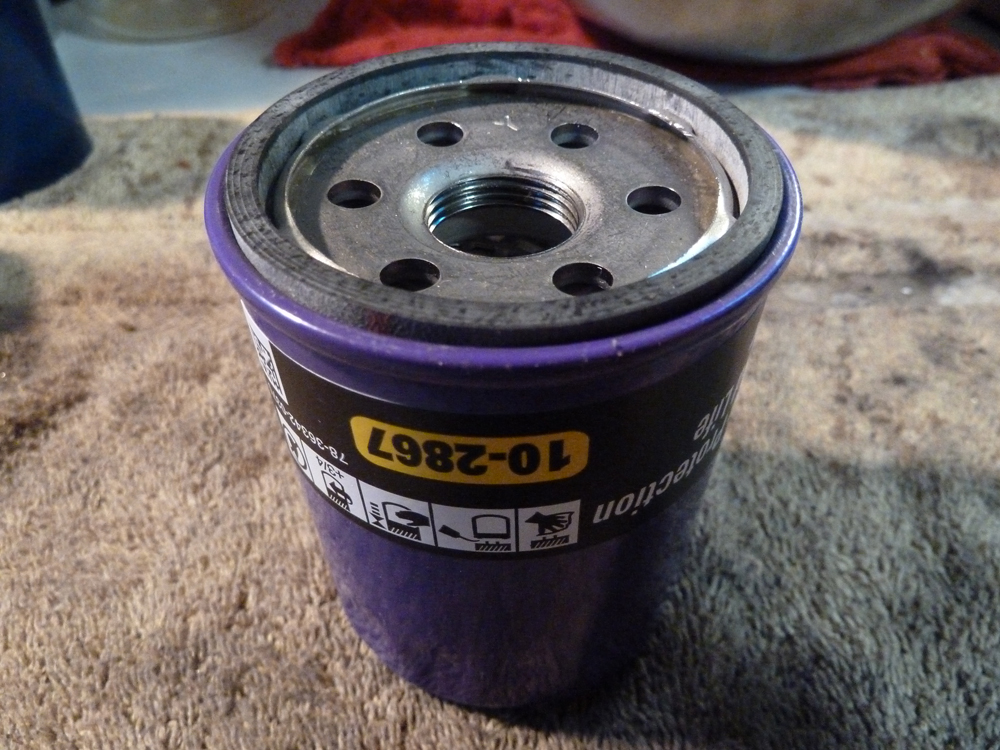
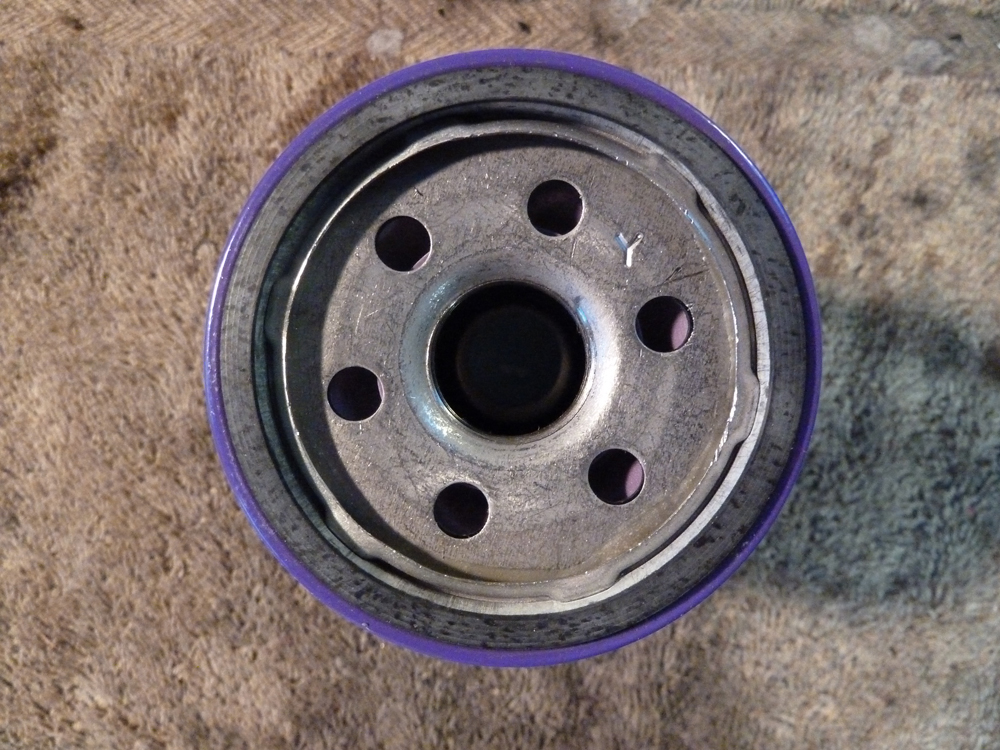
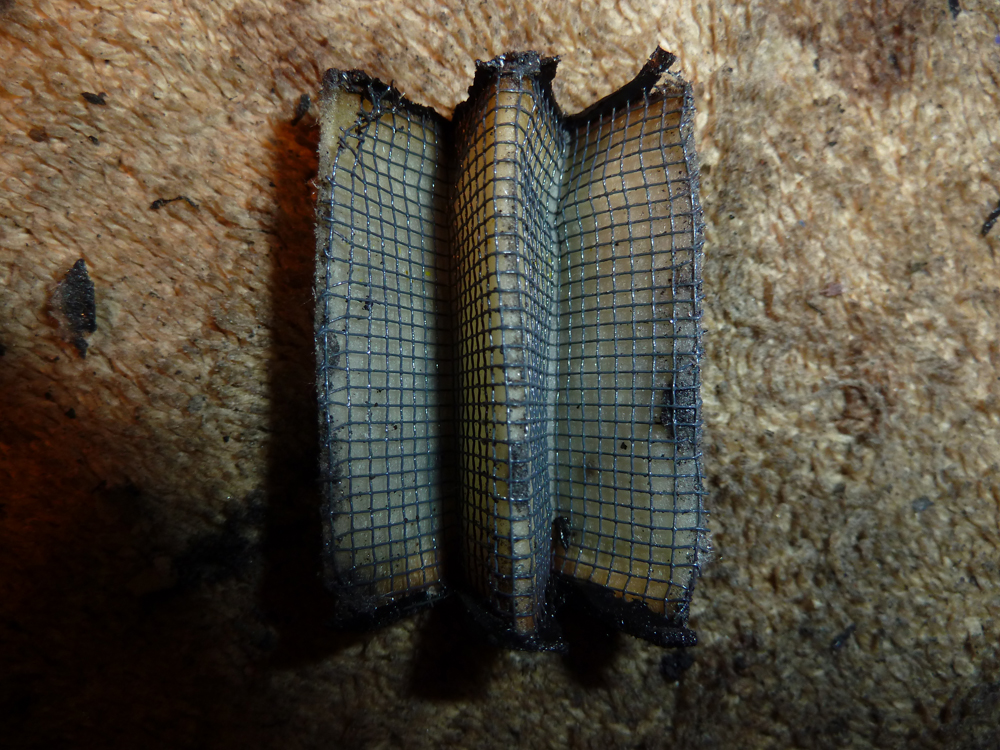
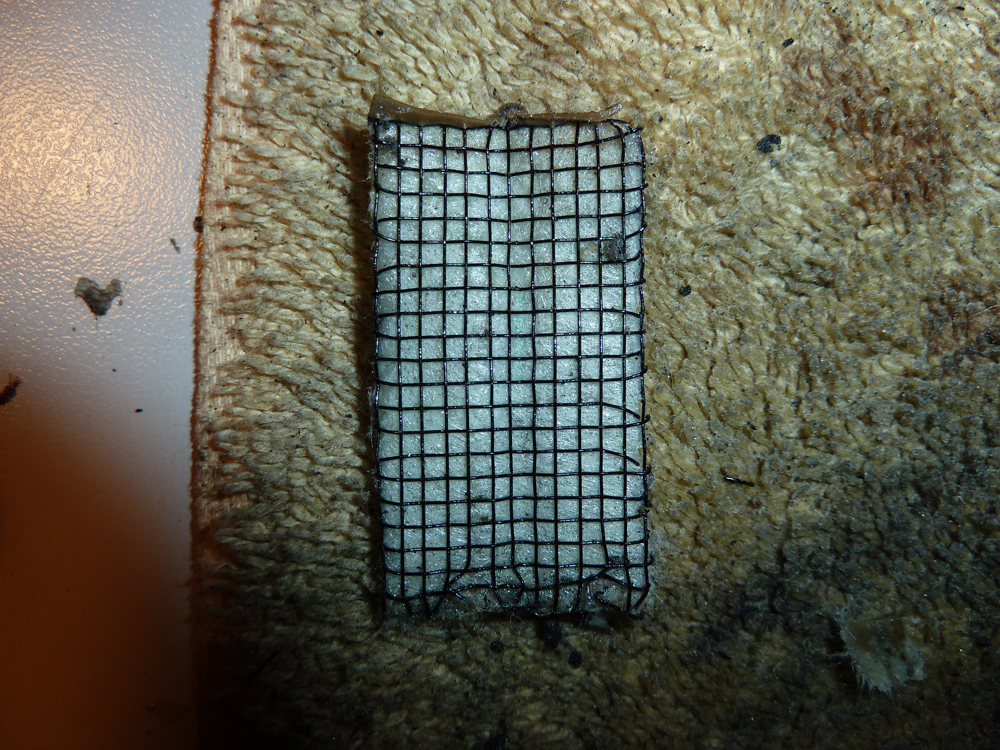
NOTES: Same construction as the other Champion Labs filters I tested, but the gentleman I spoke with on the phone claims it’s rated to withstand race conditions. The filtration was very good, on par with the AMSOIL filters I tested below. The wire mesh that lines the filter element is the exact same as that used in AMSOIL Ea15k20, which isn’t surprising since they’re both made by Champion Labs.

AMSOIL Ea046


NOTES: That old adage of, “You get what you pay for” couldn’t be any closer to the truth. Excellent filtration for sure.

Name: P1020647_zps72a347e9.jpg Views: 0 Size: 660.9 KB

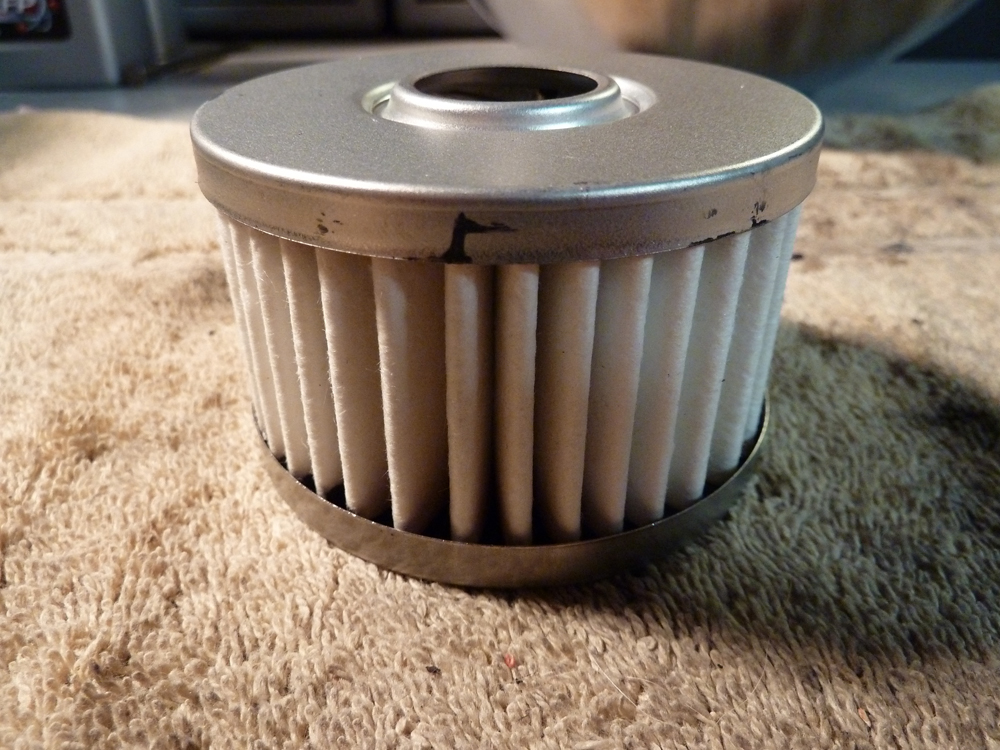
NOTES: The wire holding this filter media was a bit thinner than their newer stuff, but the media was quite durable. Not as durable as cellulose, but it didn’t fall apart when I cut out a sample with a razor blade. The down side to having this wire mesh, is that it takes up room inside the filter which would probably account for the smaller surface area of this filter when compared directly to the cellulose media version of the same WIX filter.

AMSOIL Ea15k20
Name: P1020702_zps6328115a.jpg Views: 0 Size: 454.0 KB

NOTES: Like its older brother above, this filter does its job for sure. I just don’t like the poor quality of filter construction offered by Champion Laboratories.

Name: P1020649_zpsd2445926.jpg Views: 0 Size: 853.6 KB

NOTES: The wire mesh seems to really hold the media together. As I was cutting out a media sample for measurement, the media literally fell apart. I wasn’t very happy to see that, but that must explain for the thicker wire, as I couldn’t cut through it with a razor blade.


Name: P1020651_zps41f5add7.jpg Views: 0 Size: 665.2 KB


Conclusion:

I’ll start by saying that I’m pretty happy I did this, as it validates quite a few of my assumptions surrounding filtration efficiency and just who was making filters for whom. AMSOIL is worth the money, so all you guys slanging AMSOIL (apagan01, I’m looking at you) keep on, keepin’ on. The Royal Purple filter is also a synthetic, so if you can source one for less than the current AMSOIL filter, you may want to consider it.

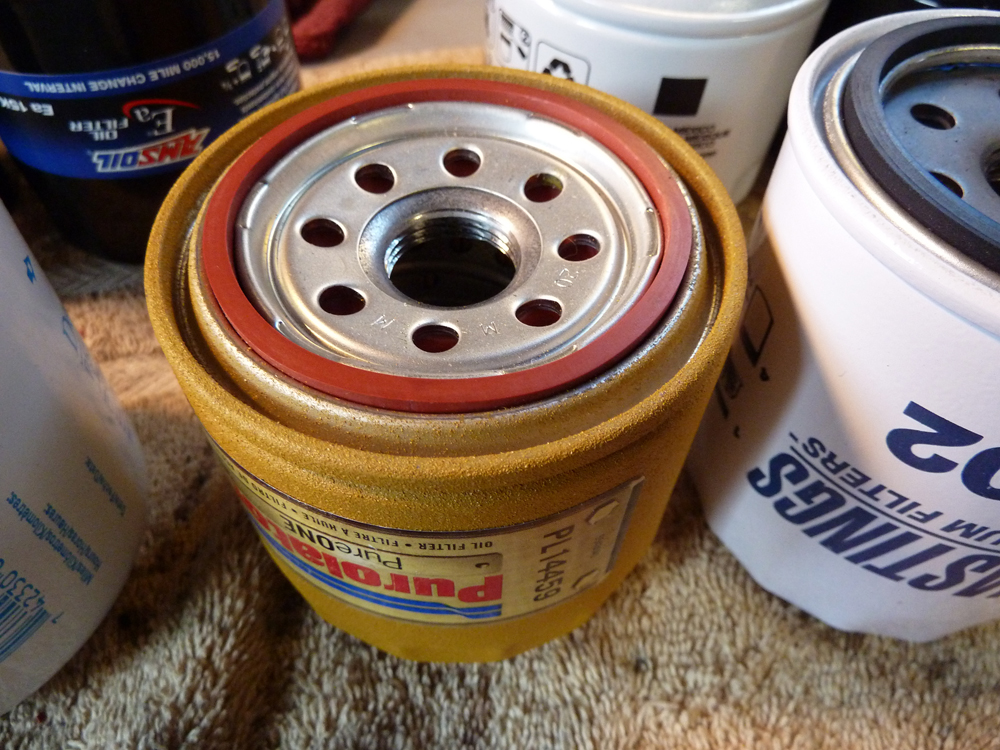
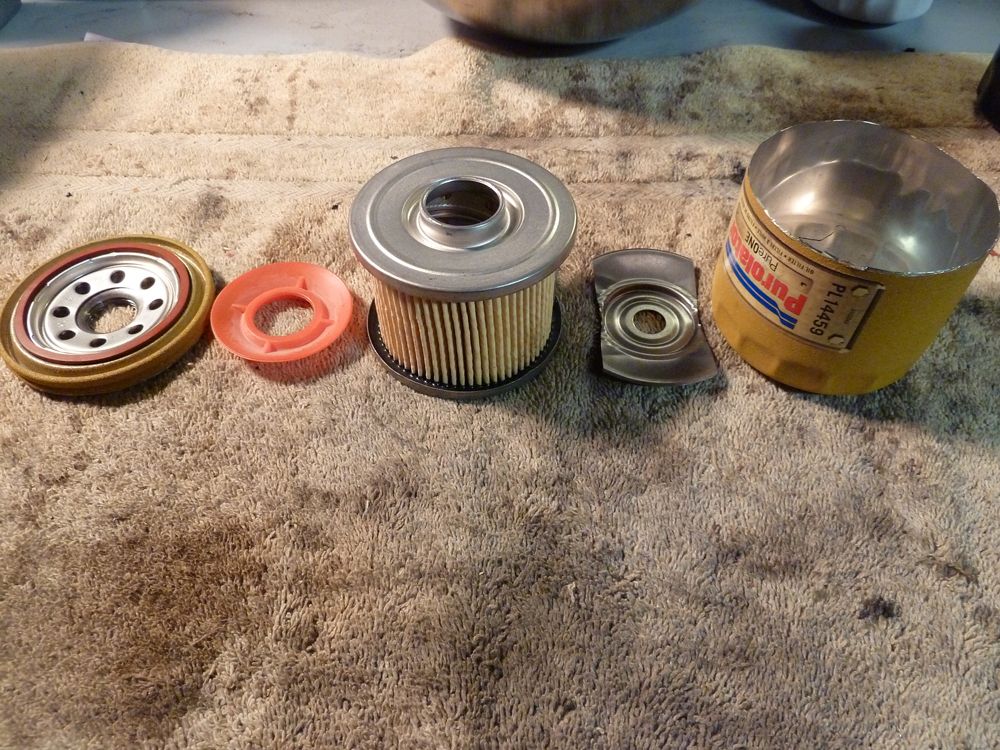
I was surprised by just how good the Purolator filter actually was. Being a cellulose + synthetic blend would account for it’s filtering efficiency. I think the quality of filtration combined with the surface area of the Purolator filter and the price makes it a really good option for sure. I will say that the quality of construction of the Purolator was quite poor, even the filter arrived with a huge dent in the side. Once I cut it open, I could see just how thin the housing was. Since the filters in the 4G63 sit so low to the ground, all it would take to pop that filter would be a single rock bouncing off the ground if you’re not running an under tray.

I was disappointed to see the Mobil 1 filter performing as poorly as a cellulose filter (K&N comes to mind, since they’re both made by Champion Laboratories), even though it is also a synthetic blend similar to the Purolator. I also found that the filter construction from all of the Champion Laboratories were pretty poor. I’m saddened by the fact that AMSOIL switched to them to build their current Ea15k20, as that’s the filter they now stock. If you can get your hands on an Ea046, that’s the filter to get. The lack of surface area in the Ea046 is a bummer, but the filtration quality makes it totally worth it.
I had expected the DENSO to perform poorly and it didn’t disappoint. The construction of the filter felt pretty decent, but looking at the internals and the filter design lead me to believe that it wasn’t going to do well. I will say that having all of that surface area will allow you to catch quite a bit of contaminants, but what good will that do if it’s only catching particulates over 30μm?

The other filters I was pulling for were just average. The WIX, Donaldson and Hastings seem to be sort of middle of the road filters that will do the job just fine if you’re okay with settling for average. The surface area of the WIX and Hastings beat out the Donaldson and the higher flow rate of the WIX beats out the Hastings. The quality of construction of all three is top notch. These filters should be fine for your average daily driven car that would see regular oil change intervals.


Additional resources:

http://www.gmtruckcentral.com/articl…lterstudy.html

Attached Thumbnails

The OFFICIAL Oil Filter Testing and Results Thread (4G63T/4B11T)-p1020786_zps094fe17a.jpg   The OFFICIAL Oil Filter Testing and Results Thread (4G63T/4B11T)-p1020816_zps3e4be3b2.jpg  


Last edited by golgo13; Oct 17, 2014 at 10:24 AM.

golgo13 is offline  
Reply With Quote


Posted on Leave a comment

The Big Fuel Test: E85 Versus All—The Winner is Crowned!


This article is the fifth and last of our Big Fuel Test series (Article 1: Introduction, Article 2: BOOSTane, Article 3: Meth Injection, Article 4: Race Fuels Fight Back), which spanned 13 different test fuels, octane additives and injections. During this final installment of the series, we review the ethanol-based fuels (E85, C85) and get the results of this power-making shootout, all of which was performed at The Tuning School’s facility in Odessa, Florida.

After all this testing, it was clear there would be two fuels left slugging it out for the victory. Ethanol (E85) and methanol injection were the two clear winners leading up to this pivotal point in the article series.

The results of all tests are in, so let’s get to it!

Testing in this final round were the following fuels and injections:

  • Pump E85 from a local station (40-percent as tested from the pump)
  • VP Racing’s C85 (40-percent for consistent testing and fuel system limitations as well)
  • VP Racing C85 plus meth injection (40-percent for consistent testing and fuel system limitations)
  • VP Racing C16 plus meth injection

Just to be clear: we were limited to 40-percent ethanol testing for two reasons. The first reason is simple—that’s what actually came out of the pump when we bought “E85,” which typically varies from tank to tank. This means that the concentration of ethanol was actually only 40-percent, and gasoline made up the remaining 60-percent. We would have preferred it be what it claimed (85-percent ethanol, 15-percent gasoline) but that’s what it actually was. As it turned out anyway, due to fuel system limitations, we couldn’t run any higher than 40-percent ethanol. The volume of fuel the car required exceeded our test car’s ability to provide it. So for those reasons, we didn’t increase the concentration and performed all tests at 40-percent ethanol concentration. This is a common issue with direct injected vehicles without heavy fuel system modifications.

Results:

Here are the results for the pump E85 versus 93 octane pump gas:

 Pump E85 was a killer fuel after tuning, as it made a solid 618 rear-wheel horsepower on our Mustang Dynamometer, soundly defeating our baseline fuel of pump 93 octane gasoline at 574 rear-wheel horsepower. It also beat 93 octane plus meth injection (we’ll call that 93+MI) by 2 horsepower—and as you know I’m going to point out, that’s in the margin of error; which means it’s not enough to call a true winner.

That’s right, if you recall from article #3 of this series, our 93+MI runs resulted in a roller spin measured at 616 rwhp.

Let’s take a moment to let the internet burn to the ground. That’s the end result??? The power output of pump fuel plus meth injection against E85 showed virtually the same result? I can only imagine the flame wars brewing in the interwebs! We just started automotive World War III, so to speak.

Not happy with leaving this alone—having a shared winner for our series—we performed several more tests to help us declare a final winner. With pump E85 now sharing the winner’s crown with 93+MI in a tie for the victory of the entire test series, we thought maybe VP Racing’s C85 could be a clear victor. So we drained the pump E85 out and filled up with C85.

As we hoped, the race fuel came through and made a show of its strengths. Check out the results below. 93+MI results are the solid lines, and dashes are VP Racing’s C85.


Now with a clear victory in hand, we should have stopped. 629 rwhp was clearly the best result to date, and made a solid case for VP Racing C85’s superiority over 93+MI… the debates began among our own staff. We knew the cries of the meth injection junkies would be coming in fast and furious upon reading these results; how we needed a race fuel version of E85 to beat meth injection and lowly pump gas… How it wasn’t really pump E85 that won. VP Racing’s C85 won: the pure race version was needed to make it the winner. What could we do?

So, we ran two more tests—and the surprises kept on coming. The roller coaster had two more twists before we were able to close out this series and call a real winner.

In order to be fair, we decided to give the meth injection camp another chance to win, by running the best non-ethanol fuel we had tested (VP Racing’s C16) with meth injection on top. Surely this would bring the meth injection camp the glory we know they seek. Sadly for them, the car made less power with C16 plus meth injection than it did with 93+MI. We were able to make only 605 rwhp after exhaustive testing. We had suspected this could happen, with too much octane creating such a slow burn that we simply couldn’t make the power we hoped for.

So, as we said earlier, we had a clear victor and should have stopped. But we took a request from the meth injection camp for one last and final test. What if we tested VP Racing’s C85 plus meth injection?

What if we combined both for one last test, just to see? That’s where the internet begins to burn down again. Behold, the Final Test Results and the winning fuel combination of the entire series:

Making 632 rear-wheel horsepower and 558 lb-ft of torque, the winner of our series is… the combination of VP Racing C85 with meth injection!

Again, we’re left with one inescapable conclusion—E85 and meth injection are both amazing options and both are better than pump gas alone. They fight for each last horsepower and came out virtually identical in all our testing, and when combined together, they worked even better. Maybe that will help quench the internet fire over the superior solution. Maybe it will just generate more chatter. Who knows—but it’s up to you, the reader, tuner, engine builder, whomever is reading this, to look at the charts and determine what’s best for your actual combination.

To help with that, here’s some more data.

Here’s our final results chart, with all fuels, octane enhancers and injections we tested:

Below is a chart showing percentage gains:

The 5-10-percent gains you see above (30-60 rwhp gains) using just different fuels are very impressive. When you understand that a decent camshaft upgrade on an LS/LT Engine will also net 5- to 10-percent gains (30-60 rwhp gains) over a stock camshaft, you can see how important it is to choose and tune the correct fuel for your application!

There is one more way to look at these results. You can look at these from a perspective of dollars versus improvements. In the chart above, we can look at the results from 93 and BOOSTane (4.2-percent) to VP Racing’s C16 (5.4-percent) and see a trend. You can get about 5-percent more power than pump gas for a small upfront investment. That means, you can simply add BOOSTane into the tank, or any of those race fuels and with the right tuning, gain about 5-percent power over 93 octane pump fuel; about 30 rwhp in our example.

However, in the chart above, it looks like once you start getting about 6-percent gains and higher the costs go up pretty quickly. Looking from 93 plus Boost Juice (5.9-percent) and higher gains, the up front costs go up at least $500 due to the parts needed for a good meth injection kit. Assuming you’re going to inject methanol, you’ll need a good kit of about $500-$750.

Assuming you’re going to run one of the ethanol-based fuels, you’ll need larger injectors ($500-$1,000) and potentially more fuel system components (another $500-$1,000). So, depending on your budget, you can have roughly 5-percent more power for very little cost up front, or 6- to 10-percent more power with a bit more money outlay ($500-$2,000 for fuel system upgrades).

E85 Pros

  • Made the highest power of all testing we performed, including the best race fuels
  • Ongoing costs of operation are very low compared to race fuels
  • Average cost per gallon comparable to pump gas
  • Easily available in many states
  • Well supported and commonly used in the aftermarket performance industry

E85 Cons

  • Up front costs to set up your vehicle to run it can be high (injectors, fuel pump, lines, etc.)
  • Quality and concentration can vary from pump to pump (E85 may not always be 85-percent Ethanol)
  • Quality and concentration can vary from season to season (winter blend is different than summer)
  • Cold starts can be difficult
  • Tuning make take more time and cost, but most can be automated to adjust for changes in fuel quality

Tuning Notes:

Ethanol-based fuels are not something we recommend a beginner tuner attempt to work with. To do a good job and not wash down the cylinders, the tuner should be able to tune the combo in question on pump gas in his sleep. In relation to that, we always recommend you finish tuning the vehicle on pump gas first before going and switching to an ethanol-based fuel. We do this for a few reasons, the first being most tuners can easily recognize issues with the tune when working with pump gas. They can easily spot a mechanical problem and not mistakenly cover it up with tuning changes. Second, it allows you to show a baseline pull or pulls, with power progressing as you make spark changes, until you finish and find the best possible power on pump gas. After that, you can change out the fuel for an ethanol-based fuel, retune and know for sure what kind of gains really came from changing fuels.

The ethanol-based fuels are also best tuned using Lambda method instead of air/fuel ratio due to changing stoichiometric ratios from the changes in fuel quality. For example, filling up with “E85” that turned out to be only 43-percent ethanol, would have a stoichiometric value of 12.18:1, but E85 has a stoichiometric value of 9.77:1. Due to the fact that these are constantly changing from fill up to fill up, it’s easier to tune using Lamba—because Lambda never changes. If you aren’t familiar with how this works, have a look at the table below, taken from The Tuning School’s GM Advanced Level 2 course.

In this case, VP Racing’s C85 preferred Lambda of .85-.87, while pump “E85” preferred .82-.84, a bit richer. Look at the chart above to equate that to gasoline AFR, if you are used to working or thinking like that.

VP Racing’s C85 also preferred 23 degrees of spark advance, while “E85” preferred 22-23.

Tuning for wide open throttle is simple, once you get the correct Flex Fuel tuning set up with a good Ethanol content sensor. Without such a sensor, you are constantly monitoring the Ethanol content of each fillup, and then manually changing the Stoichiometric value in the tune, which is a real pain and reiterates the need for a quality Flex Fuel tune. Another aspect of the tuning process with ethanol-based fuels to keep in mind is your wideband sensor and gauge. If your wideband reads in AFR, then you will see the same AFR you are used to working with during gasoline based tuning, unless it has an option to change it to know what fuel it is working with, and you have changed it to know it’s working with ethanol. If your wideband reads in Lambda, then it will not be affected—which is another reason to tune using Lambda when working with any ethanol-based fuels.

One last component to this evaluation is the human factor. We decided to ask a few industry expert friends and a few who work with us. We asked if they preferred meth injection or E85, and why.

Ron Mowen, owner of Vengeance Racing, said: “I think they both will ultimately make similar power, but E85 is much safer in the long run if you can justify the fuel system costs associated with it.” Vengeance Racing is known for building some of the nation’s fastest LS/LT powered vehicles, including road race and airstrip attack cars.

Tony Gonyon, owner of Tuners Inc. and also The Tuning School’s Ford course instructor, said he “prefers E85 if they have the proper supporting mods, if not then meth injection is fine.” Tuners Inc. is known as one of the premier tuning shops in the nation.

Stephen Taylor from VCM Performance in Melbourne, Australia noted that E85 is far more popular in Australia’s performance market.

Brett McClelland, one of our instructors at The Tuning School, noted that E85 is most popular among the students they teach.

Our other instructor, Josh Hofstra, noted that E85 is great for knock control in high-horsepower builds (1,000-plus) from experience, and meth injection can also be great.

My personal opinion is that the correct answer depends on the engine and build you have, who the customer really is, and how much budget can be put into the vehicle. If you can commit to the money needed for an ethanol-based solution, you have good ethanol-based fuel readily available in your area, and you are going to have a proper Flex Fuel tune done, then you have a great option for maximum power. However, I still prefer meth injection for most solutions, due to ease of installation and history of performance, as I have used this solution personally and professionally since 2003 with success.

I have seen too much variance in ethanol’s performance to consider it any type of reliable replacement for a race fuel in a high-dollar build. I do believe race fuels are still best when you aren’t building on a tiny budget, and you have a lot of money in the engine that could be saved with a quality fuel. If ethanol is still your hangup, they make C85 for that: a known-quality ethanol-based race fuel I can live with on the expensive builds.

Tuning Results & Fuel Evaluation:

Testing and tuning of the ethanol-based fuels was as difficult as doing the meth injection tuning. If you or your tuner isn’t familiar with tuning either E85 or meth injection, you’re in for a long day on the dyno. Just like tuning meth injection, ethanol or E85 is fuel you are introducing into the combustion process. Unlike gasoline, it burns differently and at different rates. The quantities needed are different: more E85 is needed than gasoline, typically 20- to 35-percent more. E85 is the designation for an ethanol-blended fuel where ethanol makes up 85-percent of the content, and gasoline 15-percent.

E85 has a few issues you need to take into account before using it.

Understanding why E85 makes better power than pump gas is important. Depending on who you ask, your answers will vary – but we have a few of those reasons from our conversation with Freddy Turza, Technical Manager at VP Racing. One of those reasons worth mentioning that you probably haven’t already heard is called Hydrodynamic Pressure. This term means that due to the extreme rich mixture required of E85 to produce power, a byproduct is extra compression from the space taken up by the fuel in the combustion chamber. Extra compression creates extra power, plain and simple. However, Freddy noted that the E85 craze is subject to poor quality from pump to pump or time to time.

From our perspective, this makes it even more important that your tuner perform a good flex-fuel tune so the ECM can recognize the ethanol content as the fuel flows into the engine from the tank. This means your tune will automatically adjust the Stoichiometric air/fuel ratio and spark settings as required by the changing ethanol content from pump to pump.

The final evaluation of what fuel is right for you rests in your hands. In summary, you can gain about 5-percent more power than high-octane pump gas for very little investment because of great products like BOOSTane, and VP Racing’s MS103 or MS109. Just drop it in the tank, tune it and roll. When you want 6- to 10-percent more power is where the questions begin to arise, and the winning combination of fuel plus meth injection or E85/C85 will be entirely up to you to evaluate. I’d suggest keeping an open mind for your combination, and to even test and see what benefits your combination best.

Remember this – to be the winning racer doesn’t necessarily mean you have the newest and best stuff. Sometimes the winner is the one with the most time testing and experience to really dial in their combo, making the most power possible from the build, right down to knowing the best possible fuel. Thanks for reading our series, and stay tuned for our next series – where we test injections like you’ve never seen or heard of before.

Posted on Leave a comment

Engine Builders Are Moving To Thinner Rings—And Here’s Why

The supporting mechanical reasons for this rush to be too thin are nearly universally beneficial. Let’s start with a discussion of how a ring actually seals to the cylinder wall. If you’ve ever assembled an engine, you know that piston rings need to be compressed slightly to fit into the cylinder and it requires a bit of effort to shove the piston down, especially if the piston is fitted with the old standard 5/64-inch ring package that was almost universally used for engines right up to roughly 20 years ago.

When the radial depth of the ring is reduced, so is the tension. Gas ports are one way to get a ring to seal well on the combustion stroke, while reducing friction on the other three strokes (intake, compression, exhaust).The effort required to push the rings against the cylinder wall is generated by the ring’s radial tension. A given load is required to create sufficient sealing against the cylinder wall. Basic physics tells us that the larger the ring face area touching the cylinder wall, the more radial tension is required to achieve the desired load. This greater outward tension creates more friction as the piston travels up and down the bore.


      Less Friction Equals More Performance

Conventional wisdom holds that roughly 50- to 60-percent of the total friction generated by a typical internal combustion engine can be traced to the piston and rings. Even more amazing is that a solid 50-percent of the piston and ring friction can be traced to just the rings, so we’re talking about measurable gains for anyone looking to reduce friction as a path toward “free” horsepower. The potential gain is even greater for engines with increased stroke because the piston travels a greater distance, creating more friction.
Given that a large percentage of friction occurs in the interface between the piston rings and the cylinder wall, even the OEMs are paying attention. Production engines like the Gen III/IV LS families have addressed this by reducing ring thickness down to 1.5mm. The current gasoline direct-injected LT4 supercharged Corvette engines are now fitted with an even thinner 0.8mm/0.8mm/ 2.0mm ring package.

In some applications JE custom ring services grinds and laps rings to custom thickness. They can also back-cut and coat rings for racers looking for that something extra.

Taking this one step further, we calculated the actual contact area of an older 5/64-inch (0.078-inch) ring for a 4.00-inch bore cylinder and then compared that to a more modern 1mm (0.0393-inch) ring by calculating the circumference times the face thickness. To make it simple, we assumed a ring with a zero gap. The actual contact area numbers are less important than the difference in in contact area expressed as a percentage. The smaller 1mm ring produces nearly a 50-percent reduction in area.
It makes sense that just making the rings thinner would reduce friction, but the benefits are even greater. A specific ring thickness must create a given static load or pressure against the cylinder wall to help it seal. A thicker ring requires more outward (radial) tension because of its larger surface area. But by reducing thickness, this allows the designer to also reduce the radial pressure to compensate for the reduced surface area in contact with the cylinder wall.

There is only so much real estate on the crown of a piston. In addition to reducing friction, thinner rings make stroker pistons with very short compression heights possible.

This may be difficult to grasp so let’s use an analogy. Let’s say you weigh 200 pounds and decide to take a walk in deep snow in the woods. Standard shoes sink into the snow, but snow shoes with a larger contact area create a reduced load per square inch. Applying this analogy to a thinner ring (a smaller contact patch on the cylinder wall) calls for a reduced total load since the contact area is smaller. The thinner ring demands a reduced axial load so the thinner ring’s load per square inch is similar to that of the older, thicker version, albeit without the friction tax.

JE offers several custom ring services that were previously top-secret Pro Stock and NASCAR-grade tech.

Within the three-ring package on a typical automotive piston, the oil rings create the highest individual tension or load. This load is applied through the design of the middle portion of the ring called the expander. Recent improvements in expander design have reduced the friction while still allowing the ring to remove oil from the cylinder wall.

Drag racers have known for decades that one way to minimize friction is to reduce the tension of the oil ring by using an expander designed for a slightly smaller bore. While this does reduce friction and improve power, the tradeoff is increased oil consumption. This is generally not a problem for a limited-use drag race engine but certainly not a wise move for street or endurance engines.

Modern rings are made from stronger material and can have profiled faces that assists in sealing and oil control.


      In The Dyno Cell

JE recently contributed to a test performed by Evan Perkins in which the Westech Performance Group, led by Steve Brule’, dyno-tested a 377ci small-block Chevy fitted with a set of JE pistons configured with a 5/64-, 5/64-, 3/16-inch standard performance ring package. This 377ci engine was configured with a 4.155-inch bore and a 3.48-inch stroke. With the average power recorded over three runs, they disassembled the engine and replaced the pistons with an identical set machined for a thinner 1.2mm/1.2mm/3mm JE ring package. The results revealed a peak horsepower improvement of 6.8 hp and a peak torque increase of 3.8 lb-ft on an engine making 458 hp and 433 lb-ft of torque.

Just as this stack of coins illustrates, cylinders are often not straight. Even if machined perfectly straight, under operation, cylinder pressure and loading in the block can distort them. This is especially prevalent in aluminum engines with thin sleeves.

While many in attendance were surprised that the improvement increase was not a greater number, there are several factors at work here. The peak horsepower numbers were generated at 6,000 rpm. Had this engine generated peak horsepower at higher engine speeds, the results would have been even greater. Another variable is stroke. Had this test been performed on a longer stroke engine like a 4.25-inch stroke big-block, the results would have been commensurately greater.

This trend toward thinner rings also enhances ring seal because the thinner ring has a better chance of sealing to a cylinder bore that is usually not completely round or concentric. Think of a cylinder bore under dynamic load as a tall stack of dimes. When measuring cylinder bore, imagine that you are measuring it in the area occupied by just one of those dimes. If the bore is measured in several places, the diameter may read the same which many would then assume “proves” the bore is round over its entire height. However, when the cylinder is viewed from the side, the bore may in fact be more in an S-shape as opposed to being perfectly “square” top to bottom. Assuming the bore is distorting under load, a thinner ring will have a much better chance of conforming and sealing to that S-shaped cylinder wall.

Thinner piston rings are made from carbon steel, which allows them to be stronger than thicker, cast iron rings, while still reducing friction.

Any discussion of “thin” rings must also include what the ring engineers call axial ring width, or the width of the ring as viewed from the top. The SAE has established a standard automotive piston ring axial width using the formula bore diameter divided by 22. So a 4.00-inch bore / 22 = an axial width of 0.182-inch. However, reducing this standard width lowers the radial ring tension even further. Often this is done to improve strength in race pistons where the ring package is very close to the top of the piston, leaving very little room between the back side of the top ring and the valve relief. This reduced axial ring width is an option on many JE pistons.

For reference, here is a racing-style top ring as compared to a well-worn dime.

In Conclusion

If you decide that a thinner ring package should be part of your next engine build, it’s likely JE already has that ring package on the shelf. The most common standard JE and SRP ring package for performance and race pistons is the 1.2mm/1.5mm/3.0mm ring package. Of course, custom ring services and packages are also available, such as grinding, lapping, coatings and others. For a full run-through on JE’s custom ring programs, click HERE.

Being rich and thin are often associated with fame and rock star status, but when it comes to thin rings, that’s just something that will make your engine a bit more powerful. And that’s just a whole lot more fun.

WhatsApp WhatsApp us